Interview candidates who can actually do the job.
Hire from the network where engineers actively build and learn. Pre-qualified through behavioral intent, so every conversation counts.
"I interviewed 3 people and hired 1. Usually it takes 20."
Trusted by engineers from leading teams















See what they are building now.
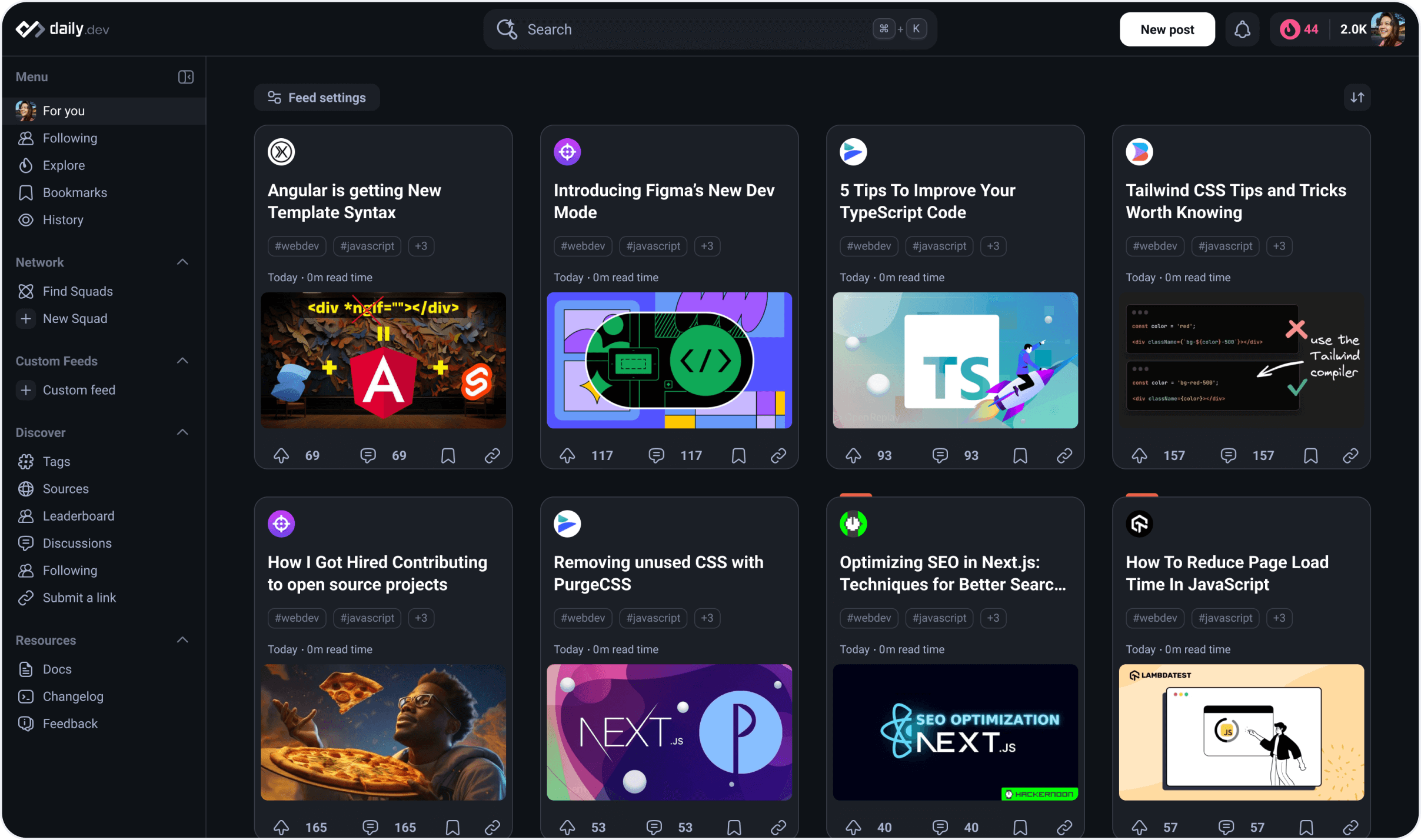
Resumes are historical documents. They tell you what someone did three years ago. daily.dev is a living feed of what engineers are learning right now.
This channel gives you a direct line to developers who are actively upskilling in your stack. You're not hiring from a database of static profiles; you're hiring from a community of active builders.



How you hire on daily.dev
A pipeline built on technical reality.
Set the technical bar
Define the actual stack and depth you need. We use this to filter the network for real capability.
Identify active builders
We find developers who are reading, sharing, and debating these technologies in the network right now.
Receive qualified intros
Developers opt-in to meet you. You get a shortlist of candidates who are both qualified and interested.
Interview for depth
Skip the basic screening. Start the interview discussing the problems they are solving and the code they are reading.
Why this works now
Assumptions that fail
- Hiring from static databases
- Outreach is read
- More applicants = better choice
- Interviews are 'free'
Current reality
- Hiring from a living community
- Intent reflects current interests
- Intros happen with mutual interest
- Smaller, focused stream of candidates
Your time is valuable
Engineering hours are expensive. Behavioral pre-qualification means you spend them on candidates who can actually do the job.
Time your team can spend shipping instead of interviewing misaligned candidates.
Double your conversion rate with better upstream filtering.
Candidates aligned with your specific stack and depth requirements.
Filter the noise automatically.
You keep meeting candidates who look fine on paper but clearly aren't right by minute ten of the call.
Our platform acts as a behavioral firewall. We filter out the low-intent candidates who are just spraying resumes, so you only see developers with proven interest and activity in your stack.
What's actually broken in hiring
Too many low-intent interviews
You keep meeting candidates who look fine in the ATS but clearly aren't right by minute ten of the call. Your team is burning hours on screens that should never have happened.
The best engineers aren't on job boards
The people you'd actually hire are rarely trawling job boards. They're busy building. You're left hoping a great candidate happens to be 'on the market' at the exact same time as your open headcount.
Invisible funnel quality
Most tools show volume, not quality. You can't see where technical time is being wasted or how many interviews existed only to validate obvious misalignment.
More candidates won't save you. Better intent will.
The bottleneck isn't candidate volume. It's knowing which candidates are worth serious engineering time.
Integrates with how you work
Better inputs, same process.
ATS Integration
Your ATS remains the operational hub.
- Candidates pushed as a distinct source
- Stages and loops stay as they are
- Compare sources in the same reports
Recruiting Collaboration
Easier to align on what 'good' looks like.
- Intros have verified intent and context
- Give specific feedback on fit
- Iterate on the brief instead of blaming the market
Sourcing Tools
Complements existing tools for critical roles.
- A new channel for your hardest roles
- Source for critical roles without hammering the same pool
- Push for quality over speed
Frequently asked questions
Frequently Asked Questions
Your next hire is already on daily.dev.
Start with one role. See what happens.