LinkedIn Recruiter isn’t always the best tool for hiring developers. Why? Developers often ignore generic outreach, and the platform doesn’t focus on technical contributions like GitHub activity or Stack Overflow reputation. Here are four better options tailored for tech hiring:
- daily.dev Recruiter: Integrates job postings into developers’ daily tech news feeds and uses a double opt-in system for meaningful connections. Pricing is transparent and avoids costly InMail fees.
- GitHub Talent Sourcing: Leverages developers’ live code contributions, repositories, and collaboration history for sourcing. Offers free tools for recruiters but can be time-intensive.
- Stack Overflow Jobs: Focused on developers with peer-voted reputation scores and tech-specific tags. Job postings cost $400–$600, offering a cost-effective alternative.
- Developer Communities and Job Boards: Platforms like Dice and Reddit allow direct interaction with actively engaged developers. Pricing varies, with Dice subscriptions ranging from $2,000 to $5,000 annually.
Each platform offers unique benefits depending on your hiring priorities, such as technical validation, active engagement, or sourcing candidates on a tight budget. A blended strategy often works best.
Quick Comparison
| Platform | Focus Area | Key Features | Pricing |
|---|---|---|---|
| daily.dev Recruiter | Active developer engagement | Double opt-in, activity-based signals | Transparent, no hidden fees |
| GitHub Talent Sourcing | Code contributions | Repository insights, advanced search | Free tools; paid plans start at $4/user/month |
| Stack Overflow Jobs | Developer reputation | Peer-voted scores, tech-specific tags | $400–$600 per posting |
| Developer Communities | Real-time engagement | Direct interaction, niche audiences | Dice: $2,000–$5,000/year |
Choose the right platform based on your team size, hiring goals, and budget.
::: @figure 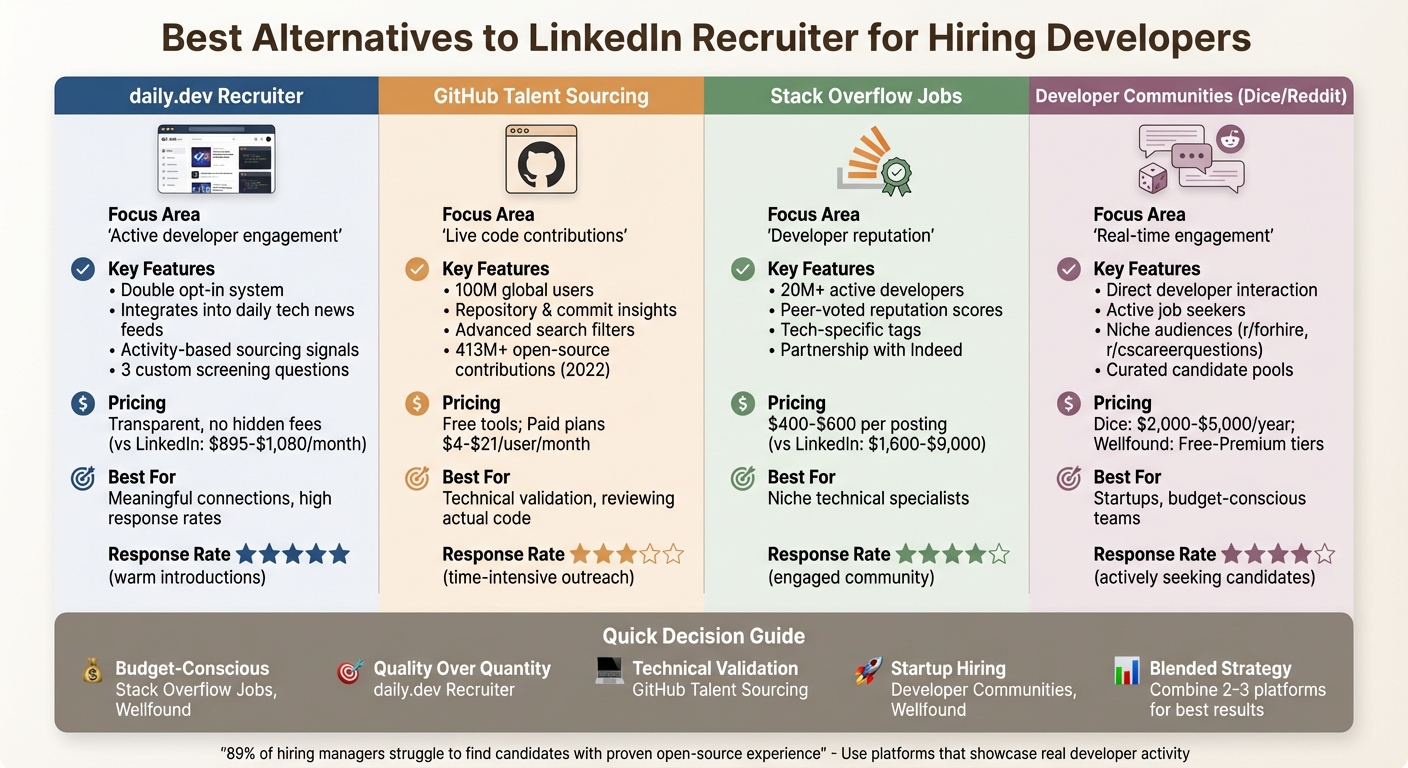 {LinkedIn Recruiter Alternatives Comparison: Features, Pricing & Best Use Cases}
1. daily.dev Recruiter
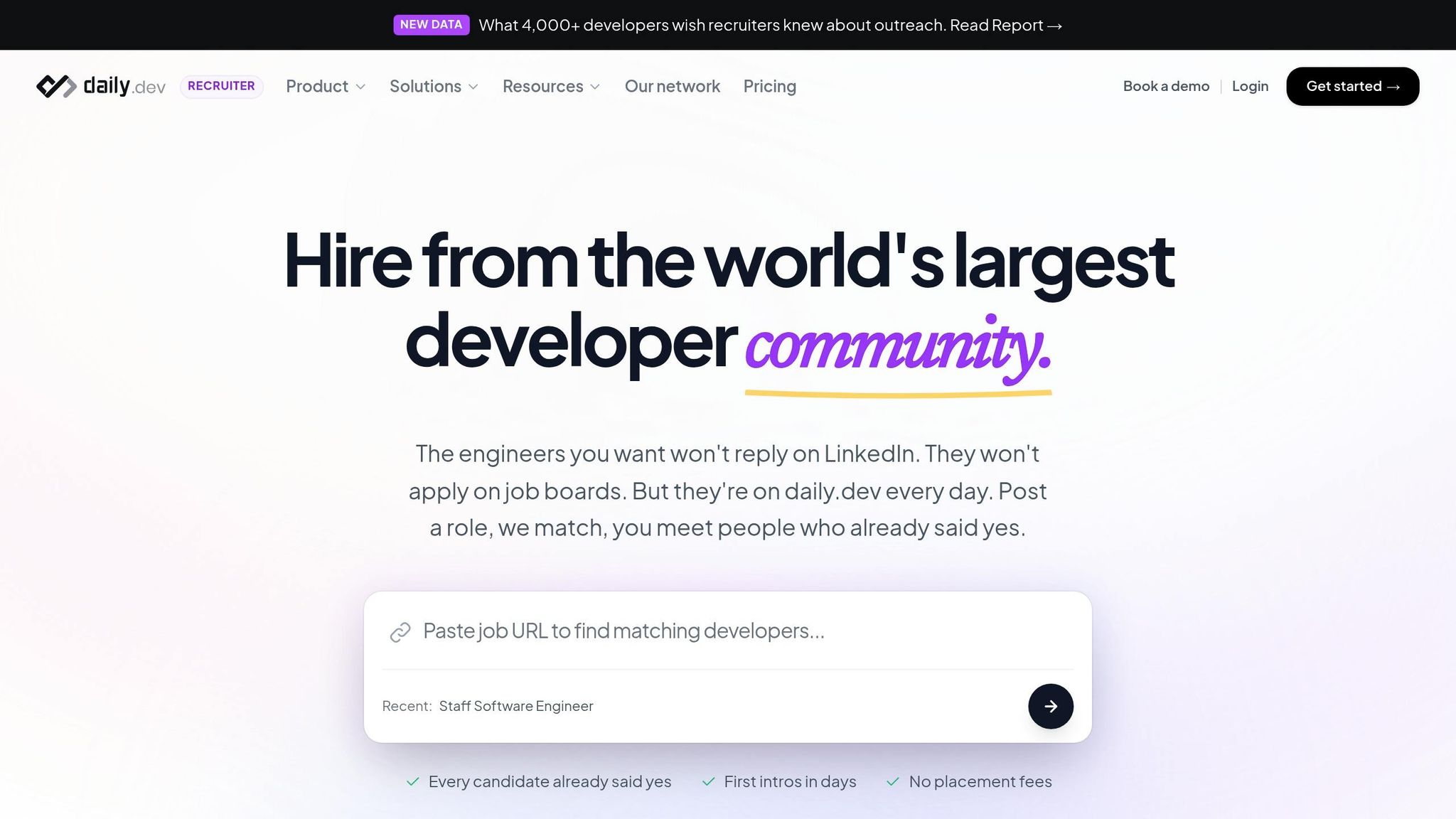
daily.dev Recruiter flips the script on traditional developer hiring by tapping into an active developer network instead of relying on outdated, static profiles. Rather than cold outreach, it connects recruiters with developers who are already engaged - browsing tech articles, exploring new frameworks, and keeping up with industry trends through their daily.dev homepage.
Developer-Centered Approach
This platform seamlessly integrates job opportunities into developers' professional news feeds, which double as their browser homepage. Your job postings show up where developers naturally spend their time, making the process feel organic rather than disruptive. It's a way to meet developers in their daily routines without interrupting their flow.
### Improving Response Rates
daily.dev Recruiter employs a double opt-in system, ensuring that both recruiters and developers agree to connect before starting a conversation. This eliminates the frustration of spammy messages that often flood LinkedIn InMails. Developers only see roles they’ve shown interest in, and recruiters engage with candidates who are genuinely interested. Plus, you can include up to three custom screening questions to pre-qualify candidates, streamlining the process and saving time. This system puts the focus on meaningful interactions and quality connections.
Quality Sourcing
Using activity-based sourcing, daily.dev tracks real-time behavioral signals to understand what developers are reading, the technologies they’re exploring, and the topics they engage with most. This provides a dynamic view of their current interests and skills, going beyond outdated resumes or profiles that might not reflect their latest expertise.
Pricing Transparency
While LinkedIn Recruiter costs between $895 and $1,080 per month for Corporate seats (with additional InMails priced at $10–$15 each) , daily.dev Recruiter offers straightforward pricing with no hidden fees for individual contacts. Instead, you’re investing in access to an engaged developer network, not just paying for the chance to send messages that might never be read.
Hiring engineers?
Connect with developers where they actually hang out. No cold outreach, just real conversations.
2. GitHub Talent Sourcing
GitHub takes a unique approach to talent sourcing by focusing on live code contributions instead of static profiles. With a global community of 100 million users, including 5.9 million in North America, it offers an extensive pool of developer talent .
Sourcing Quality
GitHub profiles function as dynamic portfolios, showcasing actual contributions and collaborations. Recruiters can dive into repositories, commits, and pull requests to verify a candidate’s technical abilities . This hands-on review provides direct proof of what developers can build, shifting the focus from passive resumes to active, real-world contributions.
"A commit message shows whether a developer is a good collaborator." – Peter Hutterer, Who-T blog
The platform also offers advanced search tools to refine talent searches. Filters like programming languages, technology stacks, location, and follower counts help identify the right candidates. For instance, the pushed: filter highlights developers who have recently updated their repositories, ensuring they are active contributors . In 2022 alone, GitHub recorded over 413 million open-source contributions, illustrating the scale of activity .
Developer Focus
Unlike generalist platforms, GitHub is tailored specifically for engineers, making it easier to assess technical skills without the noise of unrelated signals . Beyond coding expertise, it also provides insights into soft skills through open-source interactions. Collaborative efforts, problem-solving, and communication are evident in commit messages and pull requests . However, despite these advantages, 89% of hiring managers report difficulties in finding candidates with proven open-source experience . These insights are crucial for organizations when determining the value of investing in GitHub’s sourcing tools.
Pricing
GitHub offers free access for sourcing, though its Jobs board was discontinued on August 19, 2021 . Paid plans start at $4 per user per month for teams, while Enterprise plans with advanced security and compliance features are priced at $21 per user per month . However, the real cost often lies in the time spent researching candidates and crafting personalized outreach. In the next section, we’ll explore other platforms that also provide developer-focused insights.
3. Stack Overflow Jobs
Stack Overflow has revamped its job board by teaming up with Indeed, maintaining its strong focus on the developer community .
Developer Focus
Stack Overflow’s foundation is its developer-driven approach. With a massive community of over 20 million active developers, the platform serves as a hub for solving technical problems and showcasing expertise. Its unique reputation system, built on peer-voted scores and technology-specific tags, provides a reliable measure of a developer's skills - offering more credibility than traditional self-reported abilities .
Pricing
Stack Overflow Jobs stands out with a more adaptable pricing structure. Previously, it operated on an annual subscription model, starting at around $5,000, with basic packages priced at $5,699 per year . This setup often discouraged smaller startups. Today, job postings cost between $400 and $600 each, making it a more accessible option. In comparison, LinkedIn Recruiter charges subscription fees ranging from $1,600 to over $9,000, giving Stack Overflow a competitive edge in affordability .
Sourcing Quality
Through its partnership with Indeed, Stack Overflow broadens its reach, connecting employers with a wider range of candidates beyond its core developer audience . At the same time, its reputation system continues to provide valuable insights into a candidate's skills, offering a layer of information that goes beyond what a resume can convey.
4. Developer Communities and Job Boards
When it comes to tech recruiting, developer communities and specialized job boards offer a refreshing alternative to traditional methods. Platforms like Reddit and job boards such as Dice and Wellfound create spaces where developers are actively engaged, allowing for real-time interaction and meaningful connections. These community-driven platforms work hand-in-hand with specialized developer sourcing tools, offering recruiters dynamic ways to connect with talent.
Developer Focus
Unlike static profiles, these platforms prioritize real-time engagement, giving recruiters a clearer picture of a developer's current skills and interests. For example, Dice is a U.S.-centered platform that uses advanced filtering and candidate quotas to help recruiters find top-tier tech talent . On the other hand, Reddit communities like r/forhire and r/cscareerquestions are popular hubs where developers actively seek new roles . This direct interaction not only highlights up-to-date skills but also ensures a more genuine connection with candidates.
Sourcing Quality
The real strength of these platforms lies in their ability to leverage data-driven recruitment strategies rather than relying solely on self-reported information. Unlike traditional resumes, which can sometimes feel static or outdated, these platforms provide continuous activity-based validation. This allows recruiters to identify candidates whose skills have been proven through their engagement and contributions, adding an extra layer of credibility.
Response Rates
Engagement levels on these platforms often outshine those of traditional cold outreach. Dice stands out with its curated candidate pools and quota-based system, ensuring recruiters connect with responsive talent. Wellfound, designed for startups, links developers who are actively on the hunt for new opportunities . Compared to the often low response rates on platforms like LinkedIn, these community-focused channels provide a much more engaged and interested audience, making it easier for recruiters to build connections.
Pricing
The pricing models for these platforms are designed to be flexible, catering to a range of budgets. Dice operates on an annual subscription basis, with costs typically falling between $2,000 and $5,000 per year, depending on candidate quotas . Wellfound offers everything from free job postings to premium features, making it a viable choice even for startups with limited resources . Additionally, tools like AmazingHiring provide real-time data aggregation without requiring fixed contracts . These flexible pricing options - whether through annual subscriptions or tiered premium features - offer cost-effective solutions for recruiters of all sizes.
Comparison: Pros and Cons
When weighing alternatives to LinkedIn Recruiter, it's crucial to examine features, pricing, and engagement strategies to make an informed decision.
Platforms like sourcing developers through GitHub and Stack Overflow stand out by offering a deeper look into a developer's professional activity, which can lead to better conversion rates - if used thoughtfully. However, accessing this talent often requires third-party sourcing tools. These tools vary widely in cost, ranging from as much as $8,000 per year to more affordable options with unlimited searches for around $100 per month. This stark difference in pricing underscores the need to align your choice with both your hiring needs and budget.
daily.dev Recruiter takes a different approach by using a warm, double opt-in introduction system. This ensures developers engage voluntarily, shifting recruiting from cold outreach to a more trust-driven process. Additionally, its straightforward pricing structure offers an appealing alternative to LinkedIn Recruiter's higher fees.
Developer communities and job boards also provide flexible pricing and can help you connect with actively engaged talent. However, the competitive nature of these spaces can sometimes dilute the effectiveness of your outreach.
Each option comes with its own set of trade-offs. The best choice will depend on your priorities - whether it's real-time behavioral insights, cost efficiency, or higher response rates from active developer communities.
Conclusion
Choosing the right alternative to LinkedIn Recruiter comes down to your hiring goals and budget. For startups or smaller teams, affordable platforms with strong search tools offer a better fit than LinkedIn's pricier plans.
daily.dev Recruiter stands out for its warm, double opt-in approach, powered by a complete engagement suite, which helps cut through the noise of traditional outreach methods like LinkedIn InMails. This makes it a great choice for teams seeking meaningful, high-quality conversations rather than sheer volume.
On the other hand, GitHub Talent Sourcing gives recruiters direct insight into developers' technical contributions, while Stack Overflow Jobs excels at connecting with niche technical talent.
A blended strategy could be the most effective. For instance, use GitHub to evaluate candidates' technical expertise, daily.dev Recruiter to engage senior developers with high response rates, and Stack Overflow to target specialists in hard-to-fill roles. The key is aligning your toolset with your team size, budget, and whether your focus is on speed, cost, or candidate quality. By balancing these factors, you can build a stronger, more capable developer team.
FAQs
Which alternative works best for senior developers?
For experienced developers, platforms that emphasize real-time activity and proven expertise are a perfect fit. GitHub and Stack Overflow shine in this area by displaying code contributions and active participation in developer communities - clear signals of senior-level proficiency. Additionally, daily.dev Recruiter offers a unique advantage by facilitating warm, double opt-in introductions. This approach not only boosts reply rates but also fosters deeper, more meaningful interactions, which are crucial when recruiting seasoned professionals.
How can I verify a developer’s skills before outreach?
To get a clear picture of a developer's skills, dive into their actual coding work and contributions. Start by examining their GitHub portfolio. Look for the quality of their code, how they collaborate with others, and the types of projects they’ve worked on. Next, check their activity on Stack Overflow. This can give you insight into their problem-solving abilities and technical expertise. Finally, pay attention to their involvement in developer communities or coding platforms. These steps help confirm their skills are authentic and applicable before making contact.
What’s the cheapest way to hire developers fast?
The cheapest way to hire developers quickly is by tapping into free or low-cost sourcing channels like GitHub, Stack Overflow, and various developer communities. These platforms let you evaluate candidates based on their actual contributions and interactions. Another smart move is using referrals, as they often bring in trusted candidates. Plus, writing clear and specific job descriptions can help attract the right talent faster. By combining these strategies, you can save both time and money while finding skilled developers.
.png)