Developers aren’t actively searching job boards - they’re thriving in online communities. If you want to hire top talent, you need to meet them where they are. Platforms like Stack Overflow, daily.dev, and Hacker News attract skilled developers by offering spaces for collaboration, problem-solving, and knowledge sharing.
Here’s what you need to know:
- daily.dev: A news platform with senior developers who prefer private, interest-based job matches over cold outreach.
- Hacker News: A hub for experienced developers engaging in technical discussions.
- Reddit: Programming subreddits like r/webdev or r/iOSProgramming connect you with niche groups.
- Dev.to: A blogging platform where developers showcase expertise through articles and projects.
- Stack Overflow: A Q&A site with reputation scores that reflect technical skills.
Recruiting here isn’t about posting jobs - it’s about how to hire in developer communities by building trust and contributing value, like answering questions or improving open-source projects. Developers value honesty and technical understanding, so tailor your approach to their priorities. Metrics like response rates and quality of hire can help measure success. These communities aren’t just places to recruit - they’re spaces to build lasting connections.
Top Developer Communities for Recruiting
::: @figure 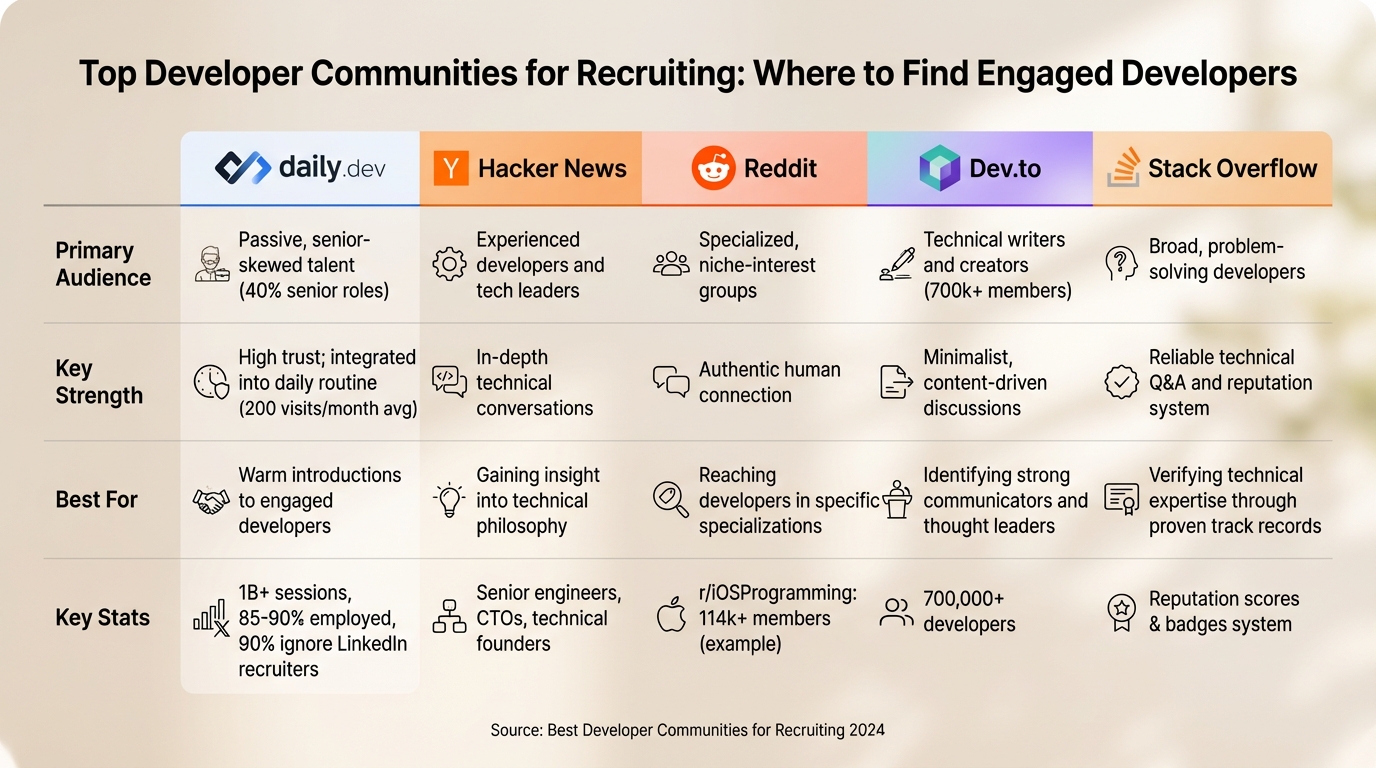 {Top 5 Developer Communities for Recruiting: Platform Comparison Guide}
Developers often build their reputations in online communities rather than traditional job boards. Each platform attracts a unique group of talent and requires a tailored approach for engagement.
daily.dev: Curated News and Developer Network
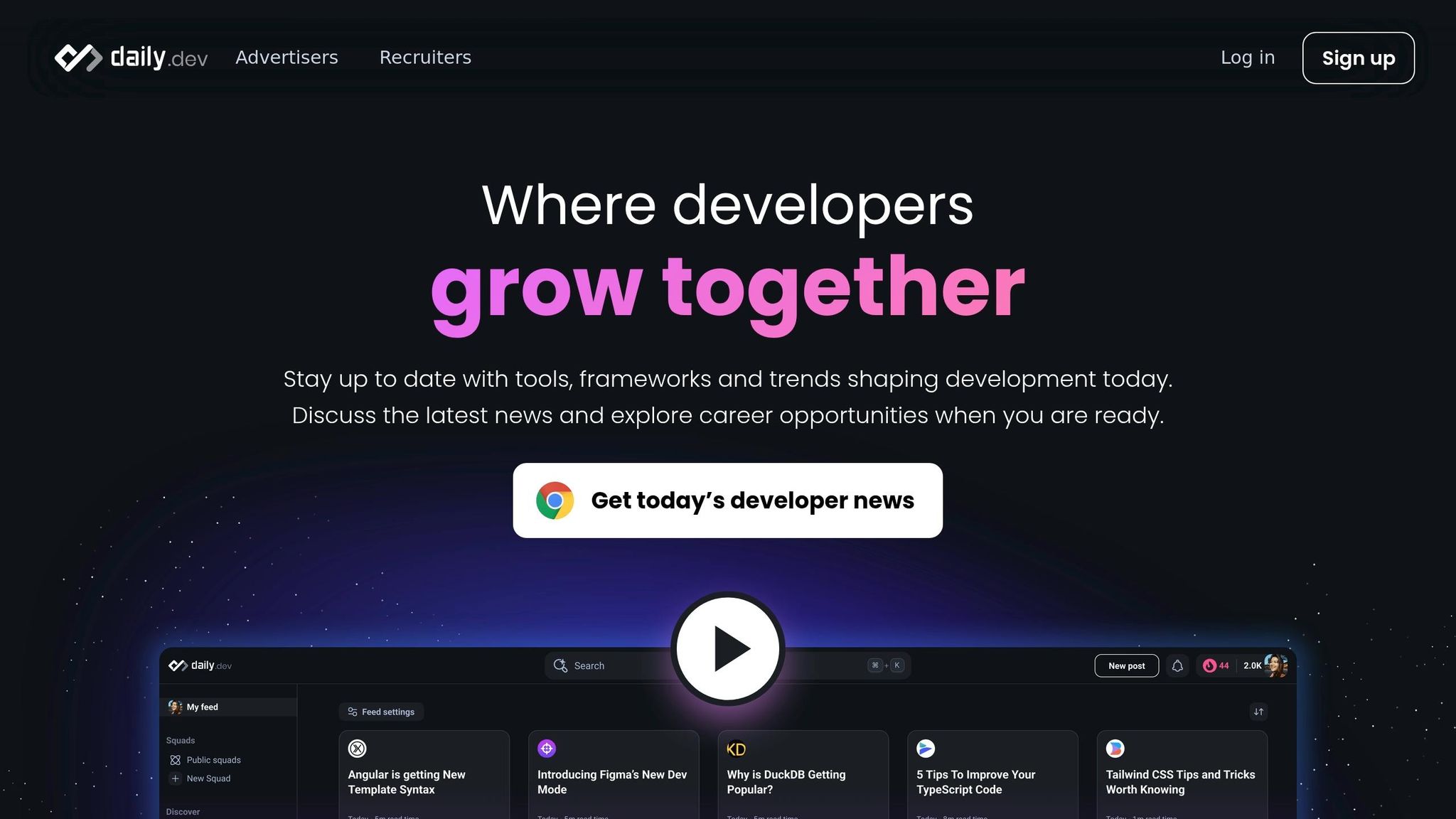
daily.dev is a news platform that logs over one billion sessions, helping developers stay on top of tech trends. On average, users visit more than six times a day - about 200 visits per month. Most users (85%-90%) are already employed, with 40% holding senior roles like staff engineers or engineering managers. Interestingly, 90% of these professionals usually ignore recruiters on LinkedIn or job boards.
The platform offers daily.dev Recruiter, a feature that uses a Smart Career Match system to connect employers with developers based on their interests and activities - not just their resumes. Its double opt-in model ensures that job opportunities appear privately in a developer's feed, and only those who express interest will connect with recruiters. This eliminates cold outreach and prioritizes meaningful connections.
"We built a place where engineers can turn off the noise. To enter this space, you don't need a hack. You need trust."
- Nimrod Kramer, CEO & Co-Founder, daily.dev
Pricing is straightforward at $350 per month per role, with no placement fees or annual contracts. Recruiters can add up to three screening questions to filter candidates, and the system integrates with best hiring tools for technical roles like ATS platforms for a smoother hiring process.
After building trust on platforms like daily.dev, many experienced developers transition to spaces like Hacker News for deeper discussions.
Hacker News: Technical Discussions for Experienced Developers
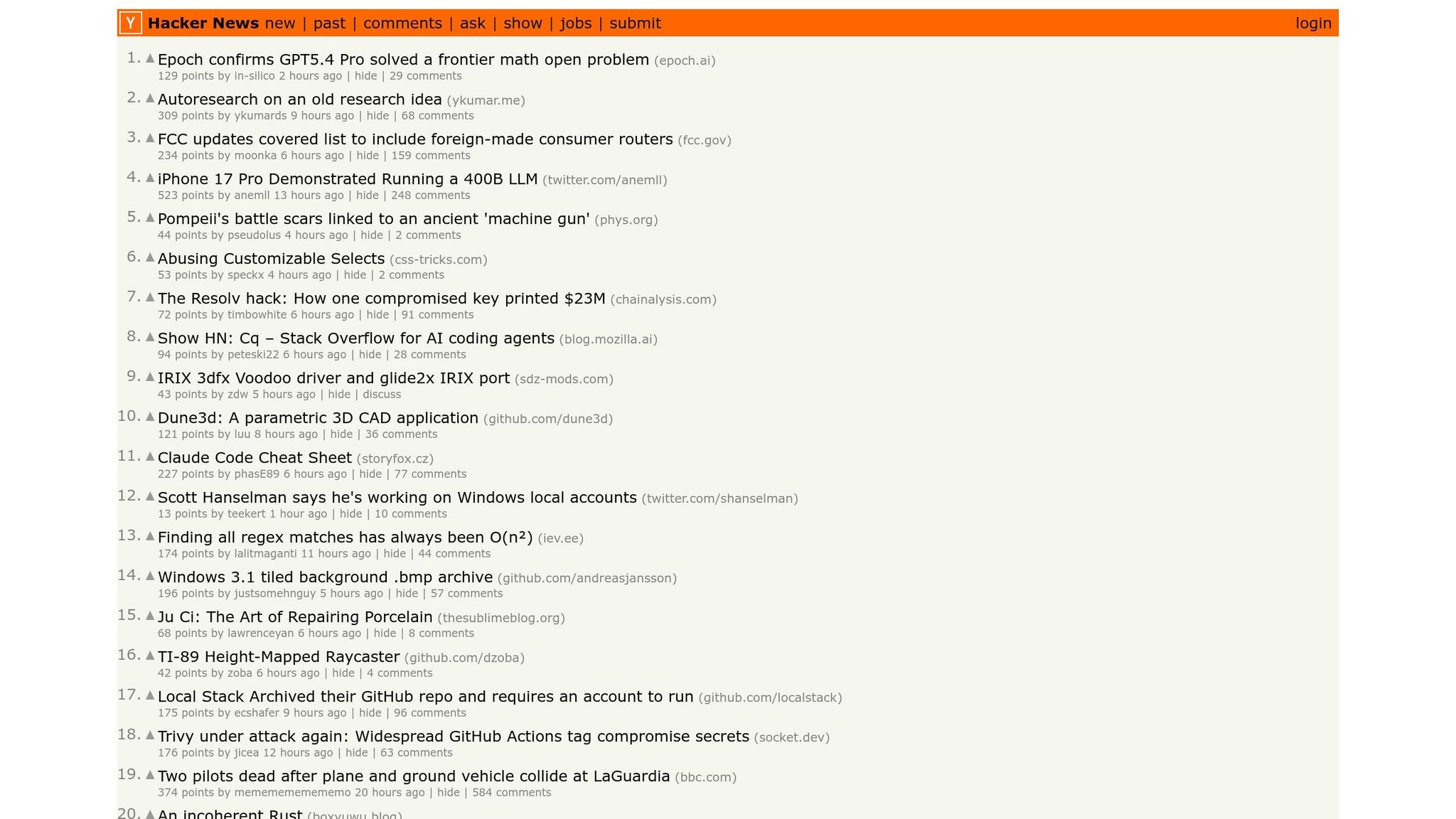
Hacker News is a hub for seasoned developers and tech professionals who thrive on thoughtful, technical conversations. This community focuses on innovation, industry trends, and detailed discussions rather than quick tips or tutorials. Senior engineers, CTOs, and technical founders often use the platform to debate system architecture, explore new programming languages, and discuss scalable design solutions.
For recruiters, Hacker News offers a window into a developer's technical mindset and problem-solving approach, making it a valuable space for understanding candidates beyond their resumes.
Reddit Programming Subreddits: Specialized Developer Forums
Reddit is home to countless programming-focused communities catering to developers at all career stages. Subreddits like r/programming cover general tech news, while niche groups like r/iOSProgramming (114,000+ members) focus on specific areas like Apple development. Other examples include r/webdev for web developers and r/cscareerquestions for career advice.
The platform thrives on authentic interactions, with its upvote system highlighting the most valuable contributions. To engage effectively, it's important to understand the unique culture and rules of each subreddit.
Dev.to: Developer Blogging and Knowledge Sharing
Dev.to is a platform where over 700,000 developers share articles, projects, and insights. It's a go-to space for professionals interested in career growth and emerging technologies like AI product management or prompt engineering. The community prioritizes high-quality content, making it ideal for spotting active contributors and technical writers. Many users showcase their expertise through detailed tutorials and project breakdowns, offering recruiters a chance to connect with skilled communicators and thought leaders.
Stack Overflow: Q&A Platform with Reputation Scores
Stack Overflow’s reputation system and badges provide clear evidence of a developer's skills and problem-solving abilities. By monitoring trending tags like AI Ethics, LLM Debugging, and Quantum Computing, recruiters can identify specialists and assess their expertise through their contributions. The platform’s extensive Q&A archive serves as a record of how developers approach and solve complex problems, making it an excellent tool for verifying technical skills.
Engaging authentically in these communities builds trust, a critical first step before introducing job opportunities. This trust sets the stage for more effective recruitment strategies.
| Community | Primary Audience | Key Strength | Best For |
|---|---|---|---|
| daily.dev | Passive, senior-skewed talent | High trust; integrated into daily routine | Warm introductions to engaged developers |
| Hacker News | Experienced developers and tech leaders | In-depth technical conversations | Gaining insight into technical philosophy |
| Specialized, niche-interest groups | Authentic human connection | Reaching developers in specific specializations | |
| Dev.to | Technical writers and creators (700k+ members) | Minimalist, content-driven discussions | Identifying strong communicators and thought leaders |
| Stack Overflow | Broad, problem-solving developers | Reliable technical Q&A and reputation system | Verifying technical expertise through proven track records |
Hiring engineers?
Connect with developers where they actually hang out. No cold outreach, just real conversations.
How to Engage in Developer Communities Without Spamming
Developers can easily identify recruiters who only show up to post job listings. The most meaningful developer communities thrive on trust and mutual support, not transactional interactions. To truly connect, you need to earn your place and build genuine relationships. Here’s how to do it the right way.
Provide Value Before Recruiting
Start by contributing to the community without jumping straight into recruiting. Focus on being helpful - answer questions, share useful resources, and participate in discussions on platforms like Stack Overflow and Reddit. If your organization uses open-source tools, contribute by improving documentation, adding test cases, or assisting with bug fixes on GitHub. Writing technical blog posts that solve real-world problems, such as tutorials or detailed project breakdowns, can also help establish credibility.
Additionally, consider engaging in local tech events. Volunteer to mentor at hackathons or give a short talk about a recent project challenge. These consistent contributions show that you’re genuinely invested in the community, not just there to recruit.
Learn and Follow Community Rules
Every developer community has its own culture and rules, especially when it comes to recruiting. For example, some subreddits completely ban job postings, while others only allow them in specific threads or on designated days. Hacker News prioritizes thoughtful, technical discussions over promotional content, while Dev.to emphasizes creating a safe space for feedback and collaboration .
Take the time to observe how members interact, review the community guidelines, and identify what types of content resonate with the group. A good rule of thumb: ask yourself, “How does this help developers right now?” If it doesn’t, rethink your approach. Developers are quick to dismiss brands that only show up during hiring sprees or product launches .
"A company should never join if they have no intention of engaging on a regular basis. Developer audiences can always spot imposters."
- Darren Yuen, Iron Horse
Build Relationships, Not Contact Lists
Mass outreach often fails because it lacks a personal touch. Building genuine relationships takes time and consistent effort. Participate in discussions, offer thoughtful feedback on projects, and connect with others over shared technical interests. Collaborate with community leaders on guest posts or interviews to foster deeper connections - not just when you’re hiring.
When you do reach out about job opportunities, be upfront about the role and its requirements to avoid mismatches that can erode trust. Instead of simply broadcasting job ads, highlight your company’s interesting projects or unique culture in ways that spark conversations.
This approach aligns with the broader goal of fostering authentic engagement in developer communities.
| Contribution Type | Recommended Platforms | Best Practices |
|---|---|---|
| Q&A / Discussions | Stack Overflow, Reddit, GitHub | Provide honest answers and share resources without promoting yourself. |
| Technical Writing | Dev.to, Medium, Personal Blog | Write "how-to" guides and detailed project breakdowns. |
| Open Source | GitHub, GitLab, CNCF Projects | Start small - focus on documentation or bug fixes to build credibility. |
| Events | Meetup.com, Devpost, LinkedIn | Host workshops or volunteer as a hackathon judge. |
Best Practices for Community-Based Recruiting
Once you've established trust within developer communities, it's crucial to align your recruiting strategy with their norms to keep your credibility intact.
Match Your Message to the Community
Every developer community has its own unique culture and technical focus. A message that works on one platform might fall flat on another. Instead of using generic keywords, tailor your outreach to address specific technical challenges developers face - like scaling an app from 1 million to 10 million users or tackling low-latency issues. This "problem-first" approach shows you understand their priorities.
Each platform has its own set of expectations. For example:
- The React.js subreddit uses monthly "mega threads" specifically for recruitment.
- Discord communities often expect recruiters to provide value first, such as offering resume reviews, before starting a conversation.
It's also worth noting that developers generally dislike being labeled with terms like "ninja", "wizard", "guru", or "hacker." They prefer straightforward titles like "developer" instead.
"And no, I'm not a ninja/wizard/guru/hacker, I'm a developer"
- Sjamilla van der Tooren, Tech Sourcer
On top of this, hyper-personalized outreach can make a big difference. Emails that reference specific code contributions see a 25% higher response rate . However, personalized messaging only works when paired with transparency.
Be Clear and Honest About Your Intentions
Transparency is key to earning trust in developer communities. When reaching out about a job, be upfront about the role and its requirements to avoid mismatches that can harm your reputation. Developers value honesty and technical understanding far more than flashy marketing language . If you're working with teams like Sales or Product, make that clear as well to maintain credibility .
"No Perceived Value Equals Spam"
- Sandra Feldmann, Founder, itsatalent.business
To show genuine interest in the community, share technical content or resources that aren't tied to your brand before discussing job opportunities. Developers overwhelmingly prefer learning through platforms like Stack Overflow - 90% of them, in fact . Participate in discussions and answer technical questions authentically before posting job openings .
Once you've engaged authentically, it's important to measure the effectiveness of your efforts.
Measure Your Recruiting Results
Tracking your recruiting metrics helps refine your strategy and maximize results. Start by monitoring the Source of Hire (SoH) to identify which platforms - like GitHub, Reddit, or Stack Overflow - are providing the most hires . Use tools like an Applicant Tracking System (ATS) or Google Analytics to tag sources and calculate which communities offer the best return on investment.
You should also monitor outreach response rates to see if your messaging is effective. Personalized emails typically yield response rates between 15% and 25%, while employee referrals can achieve rates of 30–40% . Divide replies by delivered messages to measure how well your outreach resonates .
Beyond response rates, evaluate the Quality of Hire by looking at performance ratings and first-year retention rather than just application numbers . For example, a low application completion rate could signal that your process is too long or complicated - especially since nearly 75% of professional developers are under 35 and less tolerant of slow processes .
Lastly, compare your time-to-hire with industry benchmarks. Engineering roles typically take 28–33 days to fill, compared to the overall average of 41 days across industries . If sourcing from these communities is speeding up your hiring process, you're on the right track.
Conclusion
Recruiting developers through online communities isn't just about dropping job ads and hoping for the best. It's about showing up consistently, adding value, and earning trust over time. Platforms like daily.dev, Stack Overflow, and Reddit's programming subreddits are where developers naturally gather. By engaging in these spaces, you're connecting with them on their terms - without resorting to cold outreach that often gets ignored.
In 2024, 67% of tech companies missed product roadmaps due to hiring bottlenecks . Meanwhile, U.S. software revenue is expected to reach $380 billion this year , making the competition for talent fiercer than ever. A long-term strategy like this helps you build a stronger, more engaged talent pool.
This method doesn't just stand out from generic outreach; it also builds trust and credibility:
"When you reach someone in a place they actually care about and use daily, you're not competing with a wall of noise. That's been the biggest shift for recruiters... Trusted space changes everything."
- Dafna Ran, daily.dev
Developers pay attention to how they're treated. Many have walked away from hiring processes after a bad experience . Your reputation in these communities is more influential than any job posting. Be responsive, keep your process transparent, and make sure to address hiring pipeline drop-offs to keep your process moving.
FAQs
Which developer community should I start with for my role?
Begin with Stack Overflow for technical Q&A and tapping into a community of developers who actively share knowledge. It's an excellent platform to ask specific programming questions or find solutions to common challenges.
Next, dive into Reddit programming subreddits like r/programming. These spaces are great for broader discussions, industry insights, and staying updated on trends. Subreddits often foster lively conversations, making them a valuable resource for learning and networking.
When engaging, make sure to participate authentically. Follow community rules and contribute thoughtfully to discussions. Building genuine connections within these communities can open doors for collaboration and even recruitment opportunities down the line.
How can I engage without getting flagged as spam?
To steer clear of being flagged as spam, prioritize genuine engagement and focus on offering value to the community. Start by following the platform's rules and etiquette. Share meaningful contributions - whether it’s answering questions, offering thoughtful insights, or actively participating in discussions.
Avoid overdoing self-promotion or posting repetitive content, as these behaviors can quickly erode trust. Instead, aim to build credibility through consistent, helpful interactions. When your participation feels authentic and beneficial, others are more likely to view your involvement positively rather than as spam.
What metrics prove community recruiting is working?
When it comes to measuring the success of community recruiting, there are a few key indicators you should focus on:
- Quality of hire: This metric evaluates how well new hires perform in their roles, helping you understand the long-term value they bring to your organization.
- Source of hire: Tracking where your successful candidates come from shows which community engagement efforts are working best.
- Time to fill: This measures how quickly you can fill open roles, reflecting the efficiency of your recruiting process.
- Applicant-to-hire ratio: This ratio highlights how many applicants are needed to make a single hire, offering insight into the effectiveness of your screening and selection process.
By keeping an eye on these metrics, you can fine-tune your strategy and ensure your efforts in developer communities translate into successful and impactful hires.
.png)