Recruiters face a big challenge: earning developers' trust. Developers are wary of vague job descriptions, impersonal messages, and recruiters who disappear mid-process. This trust gap makes it harder to connect with top talent. Here's how to stand out:
- Be transparent: Share clear details about pay, tech stacks, and processes upfront.
- Respect developer spaces: Platforms like GitHub, Stack Overflow, Discord, and daily.dev have their own rules. Engage meaningfully, not with unsolicited pitches.
- Show consistency: Build trust by contributing regularly, sharing helpful resources, and avoiding self-promotion.
- Leverage tools like daily.dev Recruiter: Use double opt-in systems to ensure developers only engage when interested.
Success comes from building relationships, not treating recruitment as a numbers game. Focus on adding value, staying genuine, and respecting developers' time. Trust is earned through actions, not promises.
How Developer Communities Work
::: @figure 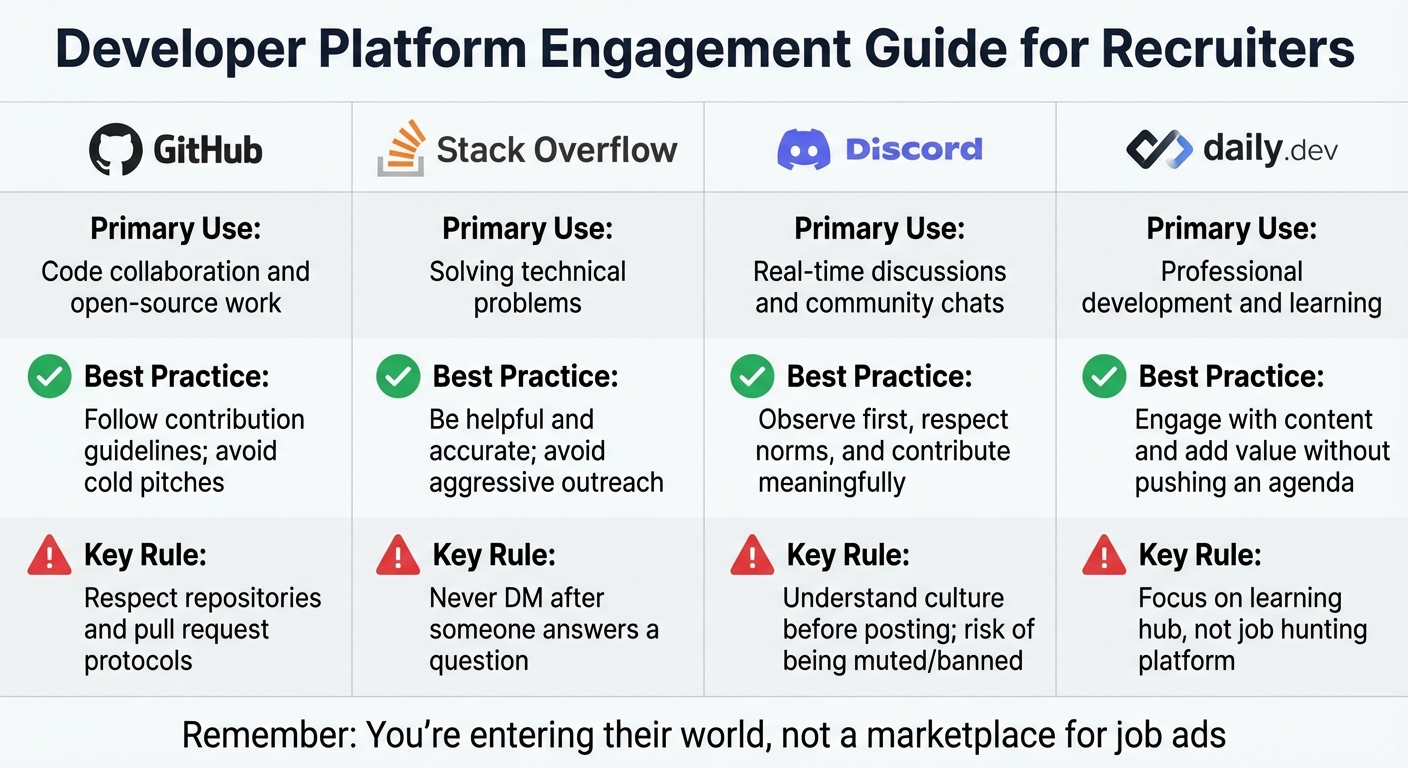 {Developer Platform Comparison: Best Practices for Recruiter Engagement}
Developer communities thrive on earned respect, not flashy titles or sales pitches. These spaces are built for learning, solving problems, and collaborating - not for recruiting. Developers come together to share knowledge, debug code, and stay updated on the latest tech trends. When recruiters treat these communities like talent pools, they stand out for all the wrong reasons and are quickly dismissed.
Each platform has its own vibe and rules, and understanding how to recruit developers through open source and communities is critical. What works on one platform could completely backfire on another. Developers are protective of their spaces, and they won’t hesitate to call out anyone who crosses the line. The bottom line? You're stepping into their world, not a marketplace for job ads. Let’s break down some popular platforms and their distinct norms.
Popular Platforms and What Makes Them Different
GitHub is all about coding and collaboration. Developers use it to host projects, contribute to open-source work, and review code. Everything revolves around repositories, pull requests, and strict contribution guidelines. If you’re thinking about sending unsolicited pitches here, think again - respect the space and follow the rules .
Stack Overflow is the go-to spot for solving technical challenges. Developers ask questions, provide detailed answers, and build their reputation by being helpful and accurate. Sliding into someone’s DMs after they’ve answered a question? That’s a surefire way to come across as opportunistic.
Discord servers are fast-moving chat communities centered around specific technologies, tools, or interests. The tone is casual but focused. Jumping in with job posts right away, without understanding the flow of the conversation or the culture, will likely get you muted - or worse, banned.
daily.dev is where developers kick off their day. It’s a hub for reading articles, discovering tools, and engaging with content that’s relevant to their work. This platform is about learning and professional growth, not self-promotion or job hunting.
| Platform | Primary Developer Use | Recruitment Best Practice |
|---|---|---|
| GitHub | Code collaboration and open-source work | Follow contribution guidelines; avoid cold pitches |
| Stack Overflow | Solving technical problems | Be helpful and accurate; avoid aggressive outreach |
| Discord | Real-time discussions and community chats | Observe first, respect norms, and contribute meaningfully |
| daily.dev | Professional development and learning | Engage with content and add value without pushing an agenda |
What to Do and What to Avoid
Do focus on adding value before making any requests. Share helpful resources, answer questions when you can, and join discussions with no hidden motives. Consistent, meaningful participation earns trust.
Don’t treat these spaces as recruitment pipelines. Posting job ads in general channels, mass messaging users, or starting with "I have an exciting job for you" will ruin your credibility. Developers have seen it all before, and these tactics never work.
Do respect the platform’s purpose. If a community has rules against recruiting, follow them. Some spaces have dedicated job-posting channels - use those sparingly and only when allowed.
Don’t fake technical expertise. Developers can spot someone pretending to understand their work from a mile away. It’s far better to admit you’re a recruiter trying to learn than to misuse buzzwords and lose trust entirely.
Creating a Genuine Online Presence
Your online presence isn't just a static profile - it’s a trust signal that tells others whether you’re worth their time. In the developer community, authenticity is key. An incomplete or inactive profile can look like spam, while a well-maintained, active profile signals genuine engagement and credibility.
To build trust, consistency is crucial. Show up regularly, contribute meaningfully, and align with the platform’s purpose. Platforms like daily.dev even offer specific tools to help you establish credibility right from the start.
Setting Up Your Profile for Trust
First impressions matter, and your profile needs to immediately look legitimate. Developers are unlikely to engage with someone who seems like they just signed up to post jobs or self-promote, which is a common reason why developers ignore recruiters. On daily.dev, completing your profile with a DevCard is a great way to showcase your expertise and reputation within the community .
Reputation points are central to building trust on daily.dev. Every new user starts with 10 points , but your score grows based on how much value you add to the platform. This score is visible to others, and starting in 2025, it will directly impact how your content ranks in visibility algorithms . A higher reputation means your posts are more likely to be seen - and trusted.
If you’re representing a company, using a Verified Company Badge is essential . This badge confirms your affiliation with the organization, removing any doubts about your legitimacy. It’s a small but impactful way to enhance developer trust for better recruitment outcomes.
"We built a place where engineers can turn off the noise. To enter this space, you don't need a hack. You need trust." - Nimrod Kramer, CEO & Co-Founder, daily.dev
Once your profile is set up, the next step is consistent, meaningful engagement.
Demonstrating Real Activity
A polished profile without activity won’t get you far. Developers care about what you do, not just what you say you are. On daily.dev, this means actively engaging with the community - sharing insights, commenting on discussions, and contributing without pushing an agenda.
Reputation points are earned through genuine contributions. For example, an upvoted comment earns you +50 points, while an approved source suggestion gives you +200 . However, only upvotes from users with 250+ reputation points count toward your score . This ensures that trust is built through feedback from established members, not random accounts.
| Activity | Reputation Points |
|---|---|
| Approved source suggestion | +200 |
| Comment upvoted | +50 |
| Post upvoted | +10 |
| Post/Comment downvoted | -10 / -50 |
| Post banned or removed | -100 |
Focus on actions that add real value. Share articles on trending technologies, summarize technical content in a way that’s easy to grasp, or provide constructive feedback in discussions. Avoid low-effort posts or anything that could violate platform rules - a banned post will cost you -100 reputation points , which can seriously damage your credibility.
Reaching 250+ reputation points is a significant milestone. At this level, your upvotes start contributing to others’ scores, you can suggest new content sources, and you gain the ability to post directly via "New Post" . This signals to others that you’re not just passing through - you’re an active, trusted member of the community.
It’s important to build your reputation honestly. Manipulating your score through artificial engagement, known as reputation farming, can lead to suspension or even a ban . Developers are quick to spot inauthentic behavior, and platforms like daily.dev are designed to penalize it. The only way to earn trust is through consistent, genuine contributions. These efforts lay the groundwork for meaningful interactions and opportunities within the developer community.
Adding Value Without Pitching Jobs
Using developer communities as a way to generate leads is a quick way to lose credibility. Developers tend to dismiss outright job pitches. Instead, focus on helping first and hiring later. By consistently sharing useful knowledge and engaging in genuine conversations, you position yourself as a respected member of the community - not just another recruiter with an agenda.
This approach works because most professionals aren’t actively job hunting. In fact, 70% of the global workforce consists of passive candidates - people who aren’t searching for jobs but are open to the right opportunity . Developers might ignore your pitches, but they remember the recruiters who provide solutions or share valuable resources.
Sharing Industry Knowledge and Resources
One effective way to contribute is by using what are called "Micro" and "Macro" strategies .
Micro strategy: Focus on helping individuals with specific technical problems. Whether it’s troubleshooting installation errors, fixing syntax issues, or providing configuration tips, these small actions show empathy and a deep understanding of the challenges developers face daily.
Macro strategy: Take insights from these one-on-one interactions and turn them into reusable content. For instance, if many developers struggle with AWS permissions, create a guide on configuring AWS IAM for deployments. Use clear, search-friendly titles that make the content easy to find - skip the clever, pun-based headlines.
Additionally, sharing insights about what developers want and tools that improve their workflow can be incredibly impactful . By doing so, you make it easier for them to explore new technologies and establish yourself as a helpful resource, not just someone trying to sell something.
"If you help without expecting anything in return, you will eventually get something in return"
Another way to build goodwill is by amplifying community content. Retweet posts, share links, or highlight interesting projects. These small gestures foster respect and set the stage for deeper, trust-based connections.
Participating in Conversations Meaningfully
When it comes to engagement, quality trumps quantity. Instead of commenting on every post to stay visible, focus on discussions where you can genuinely contribute. Share thoughtful, detailed answers to technical questions, provide useful resources, or offer context from your own experience. Avoid generic comments that don’t add value.
When you do engage, resist the urge to steer the conversation toward job openings. For example, if a developer shares a challenge with a specific framework, offer a solution or link to a helpful guide. Ask thoughtful follow-up questions about their projects or technical hurdles. Over time, these meaningful interactions build rapport and foster trust.
The evolving approach to recruiting is summed up perfectly:
"The future belongs to companies that earn attention, not interrupt it." – Rex Bigger, Author, Cabiri
Using daily.dev Recruiter for Trust-Based Connections
Building ethical tech recruitment credibility is often a slow process - but what if trust was already baked into the system? That’s the promise of daily.dev Recruiter. Instead of relying on cold emails or mass outreach, this platform facilitates warm, double opt-in introductions. Every conversation starts with mutual interest, creating a foundation for genuine engagement.
The platform thrives within a vibrant developer community where engineers spend their time consuming technical content, learning, and growing. Job opportunities appear seamlessly within their daily feed, alongside the trusted content they already value. As Nimrod Kramer, CEO & Co-Founder of daily.dev, explains:
"We built a place where engineers can turn off the noise. To enter this space, you don't need a hack. You need trust."
How Double Opt-In Builds Trust
The double opt-in system eliminates the spam that plagues traditional recruiting methods. Developers review your job posting privately and decide if they’re interested before any contact is made. This ensures you’re only connecting with candidates who are genuinely curious about the role. In fact, 90% of developers on the platform won’t respond to recruiters on other platforms .
This system respects developers' autonomy. They control when to engage, how they prefer to be approached, and which roles align with their goals. Additionally, the platform enforces a strict "Recruiter Compact", requiring detailed role briefs and timely communication. Recruiters who spam or ghost candidates are removed, maintaining a high-trust environment.
| Feature | Traditional Job Boards | daily.dev Recruiter |
|---|---|---|
| Outreach Style | Cold, mass outreach | Warm, double opt-in |
| Talent Status | Static profiles/resumes | Active, learning community |
| Matching Basis | Keywords and titles | Real-time activity and intent |
| Accountability | Minimal for recruiters | Strict (Recruiter Compact) |
| Developer Sentiment | High "noise" and ghosting | High trust and engagement |
This trust-driven approach sets the stage for personalized and meaningful outreach.
Writing Context-Rich Introductions
Once a developer opts in, your first message is crucial - it sets the tone for the entire interaction. Generic templates won’t cut it. Instead, use real-time insights from the platform to craft a personalized introduction. For instance, you could start with, "I noticed you’ve been exploring GenAI and LLMs", to show you’ve done your homework.
Be clear and specific about the role. Skip vague phrases like "exciting challenges" and focus on tangible tasks, such as "redesigning an authentication system to support OAuth 2.0." Include key details upfront - salary ranges, tech stack (e.g., React 18, Python 3.11), team size, and methodologies like TDD or CI/CD. This transparency not only builds trust but also respects the developer’s time.
To ensure alignment before the first conversation, use the platform’s custom screening questions. Create up to three short, role-specific questions to gauge whether the candidate meets your technical requirements. Avoid buzzwords like "rockstar" or "ninja" and instead highlight the role’s real impact and growth opportunities. For example, mention perks like dedicated learning budgets or time set aside for skill development. As daily.dev Recruiter advises:
"Be human. Be specific. Engineers respond to genuine technical challenges and honest team culture."
Hiring engineers?
Connect with developers where they actually hang out. No cold outreach, just real conversations.
Maintaining Consistent and Respectful Engagement
Once you've established a genuine online presence and made thoughtful, context-rich introductions, the next step is to maintain consistent engagement. This is where trust and reliability take center stage. Building credibility isn't about one-off interactions - it’s about demonstrating a long-term commitment. Developers notice when recruiters vanish after an initial conversation or fail to deliver on promises. Such behavior erodes trust and undoes any progress you've made.
Think of every interaction as part of an ongoing conversation, not just a transactional exchange. Even if a developer isn’t ready to consider new opportunities right now, staying in touch periodically shows that you’re invested in the relationship. Over time, these consistent check-ins reinforce the connection you’ve started to build.
Responding Quickly and Professionally
Timing is everything. When a developer takes the time to respond to your message or agrees to a conversation, your prompt reply matters. Delayed responses can come across as disinterest or disorganization, which can quickly undermine trust. Aim to schedule your outreach mid-week for the best chance of engagement.
Personalization is equally important. Generic compliments like "Great work on your projects" don’t stand out. Instead, highlight specific achievements: “I saw your work on optimizing database queries to cut load times - that’s exactly the type of problem-solving we value.” This kind of tailored communication shows you’re genuinely paying attention and treating them as an individual, not just another name in your database.
Clarity in communication is another cornerstone of building trust. When discussing roles, be upfront with details like compensation ranges, tech stacks (e.g., React 18 or Python 3.11), team structures, and timelines for decision-making. If you promise to follow up in two weeks or send additional resources, make sure you follow through. Failing to honor commitments is one of the quickest ways to lose credibility.
Monitoring and Improving Your Approach
To keep improving, actively monitor feedback and response rates. Adjust your messaging and outreach cadence based on what works. Don’t hesitate to ask for direct input with questions like, “How can I make my outreach more relevant to you?” If multiple developers mention that your job descriptions lack technical depth, take the hint and add more specifics about challenges and the tech stack. If they prefer monthly check-ins over quarterly ones, update your CRM or ATS to reflect those preferences and tailor future interactions accordingly.
Analyze what’s working and what isn’t. For instance, compare how double opt-in introductions perform versus traditional cold outreach. Lean into the strategies that yield better results. This kind of continuous improvement shows developers that you’re not only listening but also evolving. Over time, this reinforces the trust and authenticity you’ve worked hard to establish.
Tracking Your Credibility-Building Results
Measuring credibility requires keeping an eye on the right metrics. Without tracking these, it’s hard to know if your efforts are hitting the mark. Thankfully, modern platforms provide plenty of data to help you assess and fine-tune your strategy. Let’s dive into some key metrics that can validate your credibility-building efforts.
Metrics to Monitor
When it comes to building trust within developer communities, measurable results speak volumes. A great place to start is by looking at reply rates. These rates give you a clear sense of whether developers find your outreach relevant and trustworthy. For instance, if you’re using double opt-in introductions through daily.dev Recruiter, compare those response rates to traditional cold outreach. Trust-driven approaches consistently outperform cold emails, leading to higher engagement and better connections.
Reputation scores are another critical metric. These scores quantify the trust you’ve earned through your contributions. On platforms like daily.dev, actions such as receiving upvotes add +50 points, approved source suggestions earn +200, while downvotes subtract 50, and banned posts cost you 100 points. Once you hit a reputation of 250 points or more, you unlock perks like suggesting new content sources and contributing directly, which can further enhance your visibility and credibility .
Don’t overlook Fit Scores if your platform offers intelligent matching. These scores evaluate how well job opportunities align with a developer’s skills and career goals. Additionally, track candidate drop-off rates and the number of screening calls needed to land a quality hire. If you’re finding it takes too many calls to identify strong candidates, it might be time to rethink your sourcing or messaging strategies.
These metrics not only provide insights into your current approach but also help you refine how you engage with developers through daily.dev Recruiter, ensuring every interaction is built on trust.
Using Analytics to Refine Your Strategy
Numbers don’t just tell you where you are - they show you where to go next. By integrating your applicant tracking system (ATS) with community engagement data, you can see which sourcing methods and messages are actually converting into hires. This streamlined approach connects your credibility-building efforts directly to your hiring pipeline.
On daily.dev Recruiter, analytics give you a breakdown of how your content performs and how developers interact with your profile. Starting in 2025, higher reputation scores will boost the visibility of your content in developer feeds . If certain posts or comments consistently earn upvotes, double down on that style or topic. On the flip side, if some content gets downvoted or ignored, it’s a signal to rethink your tone or subject matter.
Another handy tool is using up to three custom screening questions during the opt-in process. These questions can provide valuable qualitative insights into candidate fit and motivation. This feedback not only helps you refine your outreach but also shapes how you present roles in future conversations. Regularly auditing your hiring tools ensures you’re operating efficiently and keeping your approach developer-focused.
Conclusion
Earning trust within developer communities takes consistent effort and a focus on creating real value. The approach is simple: combine your expertise with regular, meaningful visibility, while respecting developers' time and being transparent in your intentions. By sharing knowledge, engaging in authentic conversations, and offering help without expecting anything in return, you shift from being seen as just another recruiter to becoming a respected member of the community. This relationship-first mindset sets the stage for all future interactions.
This shift away from transactional outreach to building genuine connections is what separates long-term, reliable talent pipelines from short-lived strategies. In this space, credibility acts as a bridge, opening the door to conversations with developers who might otherwise ignore cold outreach.
Leveraging tools designed for thoughtful engagement can strengthen this trust. For example, platforms like daily.dev Recruiter emphasize double opt-in introductions and provide context for every connection, ensuring interactions begin with mutual respect. When developers see that you’ve taken the time to understand their work, they’re more likely to respond, turning initial conversations into meaningful discussions.
Tracking your progress is crucial to refining your approach. Keep an eye on metrics like developer response rates and candidate drop-off points to adjust your strategy while maintaining a personal touch. Reference specific projects or contributions, celebrate individual accomplishments, and check in regularly - even when there’s no immediate job opening. Often, the strongest hires emerge from relationships cultivated over months or even years.
Credibility in developer communities isn’t built overnight. It’s earned through consistent actions, sincerity, and a genuine drive to contribute. Every thoughtful comment, shared resource, or moment of recognition helps build a reputation that, over time, becomes invaluable.
FAQs
What’s the best way for recruiters to build trust with developers on platforms like GitHub and Stack Overflow?
To earn the trust of developers, recruiters should engage with these platforms as genuine contributors, not as salespeople. On GitHub, take part in a meaningful way by reviewing code, joining discussions, and adhering to community norms. Including a clear CONTRIBUTING file or a Code of Conduct can create a more inviting atmosphere. Actively engaging in issues and pull requests demonstrates a sincere commitment to the project’s success - something developers truly appreciate.
On Stack Overflow, focus on sharing well-thought-out answers that include reproducible code examples. Cite official documentation, steer clear of self-promotion, and stick to the platform's quality standards. By consistently offering value, you position yourself as a knowledgeable and trustworthy peer. Genuine, respectful interaction is the foundation for transforming cold outreach into lasting, meaningful connections.
What are the best ways to build trust in developer communities?
Building trust within developer communities hinges on genuine interactions and offering real value. Share practical insights that developers can actually use - things like technical solutions, code snippets, or case studies that tackle common pain points. Be upfront about your processes, including any challenges or trade-offs, as this honesty goes a long way in building credibility.
Stay actively involved by joining discussions, reviewing code, or showing up at community events. Make your interactions personal - whether it’s through thoughtful comments or tailored messages - and always keep your promises. If you’re a recruiter, craft outreach that’s clear and relevant, highlighting important details like job responsibilities, tech stacks, and compensation. Acknowledge contributions, celebrate milestones, and keep communication open and reciprocal to show that you’re truly invested in the community’s growth.
At the heart of it all, consistency, openness, and meaningful engagement are what help build lasting trust and connections.
How does daily.dev Recruiter’s double opt-in system improve hiring outcomes?
The double opt-in system flips the script on traditional recruiting by ensuring developers actively show interest before recruiters reach out. Instead of cold, impersonal outreach, this method creates warm, consent-based connections, building trust and removing the annoyance of unsolicited emails.
By focusing on mutual interest, this system not only boosts response rates but also simplifies communication. It ensures recruiters connect with developers who are genuinely open to new opportunities, making every conversation both purposeful and productive.
.png)