Passive developers - those who are employed but open to new opportunities - make up 70% of the global workforce. Engaging with them isn't about sending generic job offers; it's about building trust and long-term relationships. Here's how you can stand out:
- Understand their persona: Research their technical interests, career goals, and workplace preferences.
- Be present in their communities: Engage on GitHub, Stack Overflow, and at industry events.
- Add value first: Share technical insights, participate in discussions, and avoid transactional outreach.
- Personalize communication: Reference specific projects or contributions to show genuine interest.
- Leverage employee networks: Encourage referrals and share authentic employee stories.
The key is shifting from a "hire now" mindset to creating meaningful connections that may lead to future opportunities. Developers value personalized, respectful, and relevant interactions over impersonal recruitment pitches.
::: @figure 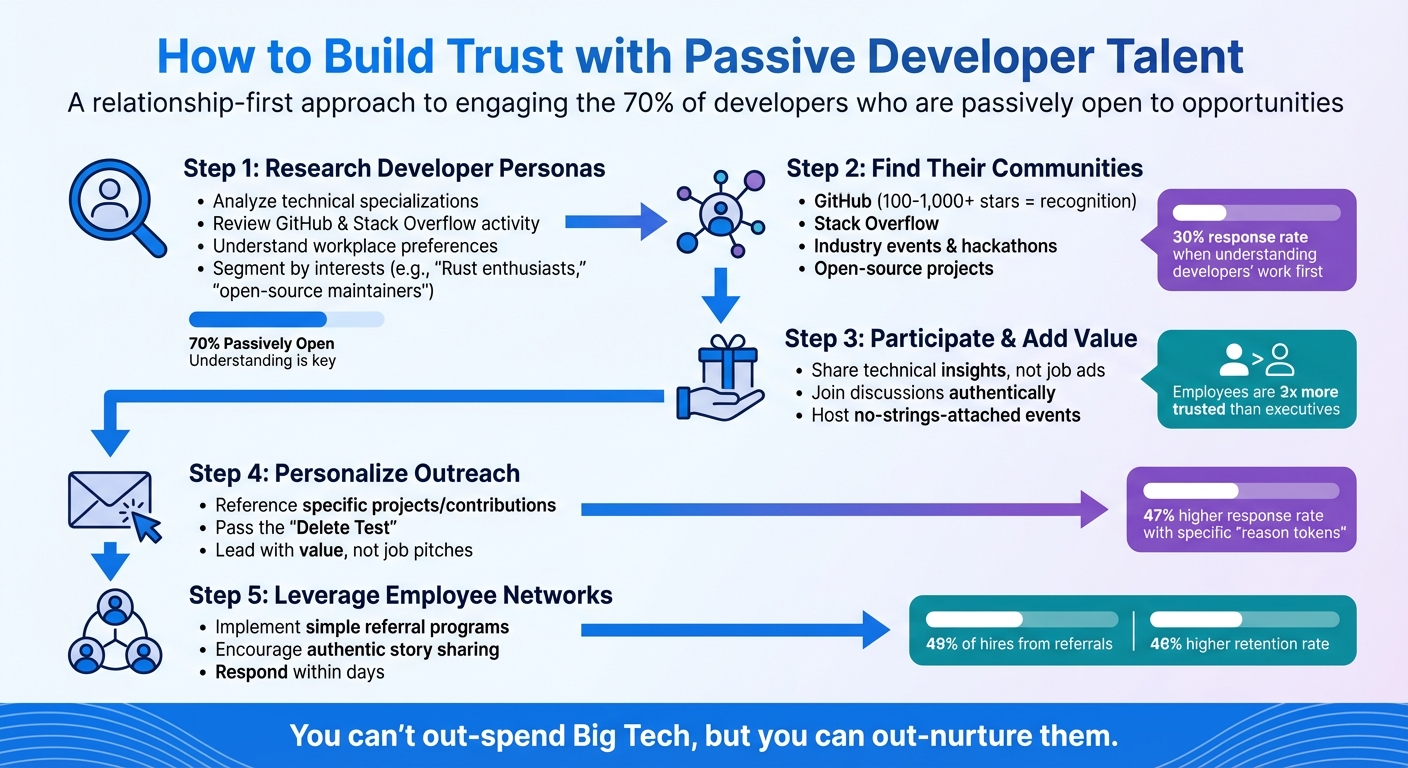 {5-Step Strategy to Build Trust with Passive Developer Talent}
Research Developer Personas and Communities
To connect with passive developers effectively, you first need to understand who they are and where they spend their time. This means going beyond job titles and digging into their technical interests, career paths, and how they engage with their communities. By conducting this research, your outreach can feel personalized rather than generic. A great starting point is to develop detailed developer personas to guide your approach.
Create Developer Personas
Strong developer personas go beyond surface-level details. Instead of just filtering by keywords, focus on technical specializations - such as front-end, back-end, embedded systems, or mobile development - since each area comes with its own unique interests and challenges . For instance, a React developer working on user interfaces will have very different priorities compared to a backend engineer focused on database optimization.
Take a close look at developers' open-source activity on platforms like GitHub. Are they creating original projects, or do they prefer contributing to existing ones? Their activity on Stack Overflow can also reveal how willing they are to assist others and the depth of their technical expertise . Additionally, consider their current workplace - whether it’s a fast-paced startup or a well-established enterprise - to understand what might motivate them to make a change, such as the desire for more impact or greater job stability . Reviewing their career history can also provide clues about their risk tolerance. Developers who stay in roles for several years may be more cautious compared to those who switch jobs frequently .
"Passive candidates are much less likely to take a risk on a new position unless they are confident that the value proposition exceeds their current role." – Regina Welle, Global Staffing Manager, Revelo
Segmenting developers by their technical interests and readiness to make a move is key. Grouping them into categories like "Rust enthusiasts", "open-source maintainers", or "diversity in tech advocates" helps you craft messages that genuinely resonate with their passions .
Find Where Developers Gather
Passive developers don’t typically hang out on job boards - they’re more active in technical communities for sourcing developers. Platforms like GitHub are invaluable for assessing code quality and contributions. For example, a project with 100 stars suggests solid work, while one with 1,000 stars reflects significant recognition. Contribution graphs can also offer insights into a developer’s activity and communication style .
Other professional networks, like Stack Overflow and LinkedIn, provide additional context about a developer’s skills and career trajectory . Many developers also engage in open-source communities surrounding projects like Django, React, Webpack, Firefox, and Chromium. These spaces can give you a glimpse into their technical interests and how they collaborate with others .
Industry events - such as hackathons, meetups, technical conferences, and webinars - are another great way to meet developers. These events create a relaxed setting where developers focus on learning and networking rather than actively job hunting . Being present at these events, whether as an attendee or sponsor, helps you establish credibility within the community.
One recruiting team saw a 30% response rate on GitHub by first understanding developers’ work and then crafting tailored messages . The secret? Build relationships well before pitching an opportunity. Follow their projects, leave thoughtful comments, and join discussions. By the time you reach out, you’ll already be seen as a trusted and familiar presence.
Build Trust Through Community Participation
Once you've pinpointed where developers gather, the next step is to show up consistently and provide genuine value. Developers aren't actively seeking recruiters - they're looking for meaningful insights, practical solutions, and authentic connections. By actively engaging in their spaces, you can transition from being seen as "just another recruiter" to becoming a reliable industry ally.
The secret? Lead with value, not job postings. Developers can quickly spot a transactional approach, and it’s a surefire way to lose their trust. Instead, focus on building relationships by engaging thoughtfully and showing a genuine interest in the community. This approach lays the groundwork for sharing content and fostering real conversations that resonate.
Share Useful Content, Not Job Ads
Developers value content that respects their time and expertise. Instead of bombarding them with job postings, share insights that can make their work easier or more interesting. For instance, a post detailing how your engineering team tackled a challenge - like "How We Scaled Kafka to 5 Billion Messages Per Day" - not only establishes technical credibility but also sparks curiosity without coming across as a hiring pitch .
Content created by employees can be particularly effective. According to Edelman's Trust Barometer, employees are three times more trusted than executives when it comes to sharing what it’s really like to work at a company . Encourage your developers to write about their experiences, share technical blog posts, or talk about challenges they've overcome. This type of peer-driven content feels authentic and naturally builds trust, opening the door to deeper conversations.
Another idea? Host events that come with no strings attached, like virtual roundtables or peer-to-peer insight sessions. Make it clear there’s no recruitment agenda involved . These events remove any pressure, making it easier for developers to engage with your company. Over time, consistently sharing value builds familiarity, turning future conversations into a natural next step.
Participate in Discussions
Being part of developer communities isn’t just about posting content - it’s about joining the conversation. Platforms like daily.dev, GitHub, and Stack Overflow are where developers share ideas, troubleshoot challenges, and collaborate. By contributing meaningfully to these discussions, you demonstrate that you understand their world and care about their interests .
Start by observing conversations to understand what developers are passionate about and what challenges they face. When you do engage, focus on thoughtful contributions - ask insightful questions or offer relevant advice, but steer clear of promoting job opportunities. For example, if a developer has written an article or presented at a conference, ask a follow-up question that reflects genuine interest in their expertise . This approach makes your interactions more personal and impactful.
Engaging in these discussions also gives you valuable insights into developers' technical strengths and communication styles, which can inform how you approach them later. The goal here isn’t immediate recruitment - it’s about building a presence so that when you do reach out, they already recognize and trust your name.
"You can't out-spend Big Tech, but you can out-nurture them." – Index.dev
Personalize Your Outreach
Once you've established trust through consistent community engagement, it's time to take the next step: reaching out. But here's the thing - generic, cookie-cutter messages can ruin all the trust you've built. Developers can easily spot a template, and nothing turns them off faster than an impersonal approach. To stand out, your outreach needs to show that you've done your homework and genuinely understand their work and interests. This thoughtful effort makes your message more likely to resonate.
Write Messages That Reference Specific Work
Personalization isn’t just about dropping someone's name into a template. It’s about digging deeper - looking at their career milestones, projects, or contributions across platforms like GitHub, personal blogs, or even social media. For example, instead of a vague compliment like "Your background is impressive", try something specific: "I came across your GitHub project on optimizing Redis caching. The way you reduced latency was fascinating!"
This level of detail passes the "Delete Test." If you remove the recipient's name and your message could apply to anyone, it’s not personal enough. Including a specific detail, like a project or an award, significantly increases engagement. In fact, messages that include such "reason tokens" see a 47% higher response rate. Candidates are also nearly three times more likely to reply to outreach that aligns with their unique interests, values, or career goals .
Instead of diving straight into a job pitch, lead with value. For example, ask a thoughtful question about a recent conference talk they gave, share an insight related to their expertise, or invite them to participate in a technical roundtable. This approach shows that you appreciate their work and view them as more than just a candidate for a role. Keep your focus on their professional achievements and public contributions to build a stronger connection.
Use daily.dev Recruiter for Warm Introductions
Once you've crafted personalized messages, you can take your outreach a step further by leveraging platform-based introductions. Warm, double opt-in introductions are a game-changer because they eliminate the awkwardness of cold emails vs. warm introductions. With daily.dev Recruiter, you can connect with developers who are already active on the platform - reading articles, engaging in discussions, and staying updated on industry trends.
The double opt-in process ensures that both you and the developer are on the same page before any conversation begins. Developers get role insights upfront, while you gain valuable context about their skills and interests. This method removes the "spammy" feeling of unsolicited messages. Instead of interrupting their day, you’re engaging with someone who has already shown interest in opportunities that align with their expertise.
Additionally, the platform offers real-time insights into what developers are currently exploring - whether it’s React, cloud architecture, or DevOps. This makes it easier to tailor your outreach to their current interests, keeping your communication relevant and timely. By shifting from cold outreach to a relationship-first approach, you’re building trust and creating meaningful connections that go beyond just filling a position.
Hiring engineers?
Connect with developers where they actually hang out. No cold outreach, just real conversations.
Tap Into Employee Networks
Your employees hold the key to reaching passive talent networks that traditional recruiting methods often overlook. When your team members recommend candidates, their endorsements carry weight, thanks to the trust they've built within their professional communities. Passive developers are much more likely to respond to a colleague's recommendation than to a cold email from a recruiter.
Employee referrals play a huge role in hiring success. In fact, they account for up to 49% of new hires in high-performing referral programs . Plus, candidates hired through referrals stick around longer, boasting a 46% higher retention rate compared to those hired via job boards . By empowering your internal networks, you can amplify this external trust.
Make the referral process as simple as possible. The most effective programs follow the "Keep It Simple" rule. Ideally, employees should only need to provide a name and contact info, leaving the recruiting team to handle the rest . But simplicity isn’t enough - you also need to train employees on how to use the system, what technical skills or values to prioritize, and what the candidate experience will look like after the referral is submitted .
Timely communication with referred candidates is critical.
"The single worst mistake a company can make with its referral program is to not contact referred candidates when an employee expects them to" .
Reaching out within a few days - even if it’s just to provide a status update - shows respect for the candidate’s time and protects the employee’s reputation. This matters because 54% of applicants drop out of the hiring process due to poor or infrequent communication .
Set Up Employee Referral Programs
A strong referral program can turn your entire engineering team into active talent scouts. Start by making sure your employees know about open roles. Many potential referrers simply aren’t aware of the positions you're trying to fill. Weekly emails highlighting hard-to-fill developer roles or quick mentions during all-hands meetings can boost participation .
Give employees clear criteria for candidates and explain how the role impacts the company. For example, instead of saying, "We need a backend engineer", try, "We’re looking for someone passionate about distributed systems who can help scale our API to handle 10 million requests per day."
Consider offering incentives beyond cash bonuses. Public recognition during team meetings, travel opportunities, or charitable donations in the referrer’s name can encourage genuine participation . And don’t forget to remind employees to tap into their own professional networks - sometimes the best candidates are people they’ve previously worked with who’ve since gained new skills.
Have Employees Share Their Stories
Nothing builds trust like authentic employee stories. Research shows employees are three times more trusted than executives when talking about their workplace experiences . While a streamlined referral system helps drive numbers, personal stories deepen trust and connection. Encourage your team to share their professional journeys - the projects they’re excited about, the challenges they’ve tackled, and the growth they’ve experienced.
For example, Gem held themed social events every two to four weeks, dedicating 30 minutes to inviting friends and referrals. This approach helped them hire 75% of their founding team through passive referrals after about 500 touchpoints .
Make it easy for employees to share their experiences. Provide simple prompts or templates for platforms like LinkedIn or Twitter. For instance: "Just shipped a feature that reduced our database query time by 40%. Here’s what I learned about optimizing PostgreSQL..." These behind-the-scenes glimpses can help passive candidates picture themselves thriving in a similar role.
Measure and Improve Your Approach
Building trust with passive developers isn’t a one-and-done effort; it’s an ongoing process that requires consistent evaluation and fine-tuning. By combining personalized outreach with active community engagement, you can create a strategy that evolves and stays effective. Start by tracking key metrics like conversion rates - from the first outreach to the offer acceptance stage . For instance, if you notice a high drop-off after the initial email, it might be time to rework your messaging or tweak the timing of your follow-ups.
Keep an eye on source-of-hire data to figure out which platforms are bringing in the best candidates. For example, if employee referrals consistently outperform cold outreach in terms of quality hires, it’s clear where your efforts should focus. Did you know that sourced candidates are hired at more than twice the rate of inbound applicants? That’s a statistic worth leveraging.
Also, don’t overlook unsubscribe and spam reports - they’re a direct reflection of how your outreach is being received. High unsubscribe rates could mean your messages are too frequent or not relevant enough. Protecting your employer brand is crucial since it can lower hiring costs by 50% and reduce turnover by 28% . These metrics aren’t just numbers; they’re tools to help you refine your strategy over time.
Track Response and Engagement Metrics
Reply rates are just the tip of the iceberg. To get a clearer picture of engagement, look at how deeply candidates interact with your emails. Are they spending time reading, clicking on links to technical content, or exploring your company culture resources? Even if someone doesn’t reply, clicking multiple links signals interest - they might just need a more personalized follow-up.
Experimentation is key here. A/B test subject lines, email openings, and calls-to-action to see what resonates with different developer personas . Small tweaks, like using reason tokens, can make a noticeable difference in engagement . Don’t underestimate the impact of these adjustments, as even minor changes can significantly improve response rates .
Your offer acceptance rate is another critical metric. It reveals how attractive your organization is to top-tier talent . If passive developers make it through your hiring process but decline your offers, it’s a sign that while your trust-building efforts are working, your value proposition might need some enhancement. Additionally, comparing time-to-hire for sourced candidates versus active applicants can be eye-opening. A well-maintained talent pipeline can slash time-to-hire by up to 50%, offering a clear return on your investment .
Listen to Developer Feedback
Numbers tell part of the story, but qualitative feedback from developers fills in the gaps. Directly asking for feedback - especially when a candidate declines an offer or isn’t interested - can provide valuable insights into what matters most to them . These "not interested" responses can reveal priorities like remote work options, access to specific technologies, or opportunities for career growth.
"The difference between a great sourcer and a sub-par sourcer is in how much discipline someone has in following up... Response rates on that initial outreach might be 15%, but they might be 50% on the follow-up." - Angela Miller, Head of Talent Acquisition, Moloco
Including short surveys in your follow-up emails is another way to gather insights into candidates’ career goals . This feedback can help you refine everything from your messaging to your job descriptions. Given that 54% of applicants drop out of the hiring process due to poor or infrequent communication , understanding how you’re communicating - and how often - is crucial. By listening and adapting, you’ll not only improve your outreach but also build stronger connections with passive talent.
Conclusion
Winning the trust of passive developer talent isn’t about bombarding inboxes or casting the widest net possible - it’s about shifting from transactional approaches to meaningful relationships. By understanding developer personas, engaging sincerely within their communities, and tailoring your outreach to their specific work, you show genuine interest. As tech recruiting expert John Vlastelica says, "The foundation of personalization is research" . That effort pays off when developers see you as a trusted connection rather than just another recruiter trying to meet a quota. These personalized approaches are the heart of a tech recruiting strategy built on trust.
The numbers back this up. When you lead with value, acknowledge their technical contributions, and use tools like daily.dev Recruiter for warm, opt-in introductions, you’re aligning with what developers value most. Trust matters - developers who trust your organization are 120% more likely to feel motivated to make a meaningful impact on your business .
This kind of recruitment takes patience. A developer who says "not now" today might be the perfect hire later if you maintain a thoughtful, low-pressure connection. Tactics like employee referrals, authentic storytelling, and consistent community involvement help solidify trust and build a reputation that attracts passive candidates over time.
Looking ahead, technical hiring best practices for passive developers lie in offering opportunities that spark curiosity and provide real value - steering clear of generic job pitches. By combining personalized outreach, active participation in developer spaces, and tools that enable context-rich, mutually respectful conversations, you’ll create stronger connections. These connections lead to better hires and, more importantly, developers who are genuinely excited to hear from you.
FAQs
What’s the best way to research and create developer personas?
To craft developer personas that resonate, it’s essential to recognize that developers are a distinct audience with their own set of motivations and decision-making habits. They tend to prioritize genuine interactions, hands-on experiences, and recommendations from peers or communities over flashy sales tactics. A well-rounded persona should capture their actual behaviors - like the tools they prefer, how they learn, and the way they assess opportunities.
Start with a data-first strategy. Leverage analytics tools, such as daily.dev Recruiter, to uncover trends in the languages they use, their tech stacks, and how they engage with content. Pair this with qualitative insights by having direct conversations with developers. Explore their challenges, career aspirations, and what influences their decisions. From there, segment them into groups based on behaviors and intent - think categories like "early adopters" or "open-source advocates." Identify their pain points and what drives them.
Once your personas are defined, put them to the test through tailored outreach. Use the feedback to fine-tune your approach, and revisit these personas regularly to ensure they reflect current trends. This iterative process helps maintain relevance and fosters trust, ultimately strengthening your connection with this audience.
How can I build trust and connect with passive developer talent effectively?
To connect with developers who might not be actively looking for opportunities, it's important to meet them where they already spend their time. Engage in the communities they trust - whether that's forums, meetups, or open-source projects. Offer value by answering questions, sharing helpful resources like tutorials or code snippets, and staying genuinely involved. This positions you as a peer who understands their world, rather than someone with a "sales-first" agenda.
When reaching out directly, make your messages personal and relevant. Reference a recent project, talk, or blog post they've worked on to demonstrate genuine interest. Avoid cookie-cutter messages - thoughtful, customized communication always resonates better.
You can also explore tools like daily.dev Recruiter, which integrates with developers' daily workflows and connects you with pre-qualified candidates. The platform uses warm, double-opt-in introductions, helping developers feel respected and more open to engagement. By consistently showing up, listening, and offering meaningful interactions, you can build trust over time, making it easier to connect when the right opportunity comes along.
How can I reach out to passive developers in a personalized and respectful way?
When reaching out to passive developers, start with a friendly and personalized introduction. Highlight something specific they've recently contributed to or shared within the daily.dev community - like a project, article, or talk. This small effort demonstrates genuine interest and thoughtfulness.
Avoid generic pitches. Instead, ask a well-crafted question that resonates with their interests or expertise. This not only makes your outreach feel more relevant but also builds trust and encourages meaningful engagement without coming across as pushy.
.png)