Building trust with developers is key to successful recruiting. Developers often ignore generic, impersonal outreach and value transparency, respect for their time, and clear communication. To stand out, focus on:
- Understanding their priorities: Salary, modern tech stacks, career growth, work-life balance, and flexibility (e.g., remote or hybrid work).
- Engaging in developer communities: Participate meaningfully in forums, open-source projects, and platforms like daily.dev.
- Creating transparent job posts: Share salary ranges, tech stacks, and honest details about roles.
- Using opt-in outreach methods: Respect developers’ preferences and avoid spammy tactics.
- Providing feedback and updates: Be clear about processes, timelines, and constructive feedback.
Step 1: Learn What Developers Care About
::: @figure 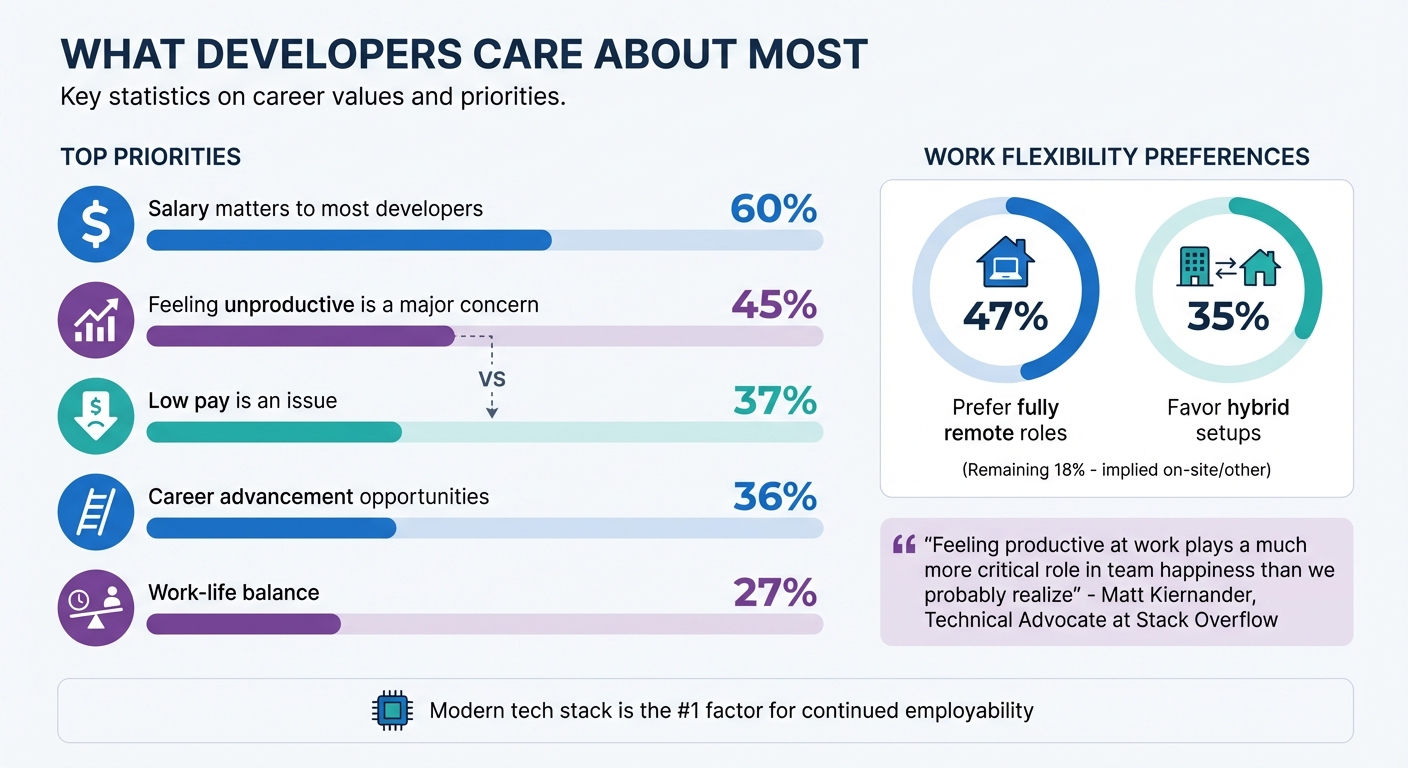 {What Developers Value Most in Job Opportunities: Key Statistics}
Before reaching out to developers, it’s crucial to understand what developers want and what influences their career choices. A modern tech stack is a top priority, as it directly impacts their future employability. Denilson Nastacio, Operations Architect, explains it well:
"From a continued employability perspective, a product technology stack is the most crucial factor for employees" .
Developers tend to view outdated or overly niche technologies as career risks, so they’ll carefully evaluate the frameworks and tools your company uses.
While the tech stack is important, it’s not the only factor. Developers also value career advancement (36%) and work-life balance (27%). Salary, of course, matters to most (60%), but feeling unproductive (45%) is a bigger issue than low pay (37%) . Matt Kiernander, Technical Advocate at Stack Overflow, highlights this point:
"Feeling productive at work plays a much more critical role in team happiness than we probably realize" .
Another key factor is flexibility. Remote work is now the norm, with 47% of developers preferring fully remote roles and 35% favoring hybrid setups. This reflects a strong demand for autonomy and adaptability .
Join Developer Communities
Developer communities aren’t just job boards - they’re spaces for collaboration and knowledge-sharing. To build trust, engage authentically in forums, open-source projects, or platforms like daily.dev. The goal is to listen and learn, not to flood these spaces with job postings.
By observing technical discussions, you’ll gain insight into what excites developers, what frustrations they face, and which tools they respect. This approach also helps you understand the workplace dynamics they value and the ones they avoid. When you focus on learning the culture instead of selling, you’ll develop the credibility needed for meaningful engagement.
Find Out What Motivates Developers
Developers are driven by more than just a paycheck. Here’s what truly motivates them:
- Meaningful Work: Solving complex problems and building products that make an impact.
- Autonomy: Having the freedom to choose tools and make technical decisions without micromanagement.
- Career Growth: Clear opportunities for advancement, mentorship, and leadership roles.
- Learning Opportunities: Time and resources to explore new frameworks and technologies without fear of being penalized.
- Technical Culture: Emphasis on code quality, best practices, and collaboration with peers.
Instead of relying solely on resume keywords, ask open-ended questions like, “What does your ideal role look like?” Pay attention to what they read or build in their free time - it often reveals their future interests. By focusing on these intent-based signals, you’ll gain a better understanding of where they want to go, not just where they’ve been.
| Developer Motivator | Description |
|---|---|
| Meaningful Work | Solving challenging problems and creating impactful products. |
| Autonomy | Freedom to choose tools and make technical decisions without micromanagement. |
| Career Growth | Clear paths for advancement, mentorship, and leadership opportunities. |
| Learning Opportunities | Time and resources to experiment with new frameworks and technologies. |
| Technical Culture | A focus on code quality, best practices, and peer collaboration. |
Step 2: Build an Honest Online Presence
Developers have a knack for detecting anything that feels fake. Your online presence should offer real insights and reflect genuine interaction with the developer community. Honesty always beats over-polished content - developers value straightforward communication about the roles you're hiring for far more than a glossy but shallow social media feed.
What sets credibility apart from noise is specificity. Developers appreciate details. Sharing clear salary ranges (e.g., $120,000–$150,000 for senior positions) and precise technical requirements (e.g., React, Node.js, Kubernetes) shows you respect their need to fully evaluate opportunities.
Once you've established an authentic voice online, keep it consistent by sharing content that’s practical and transparent.
Post Content That Developers Actually Care About
Focus on creating and sharing content that resonates with developers, such as:
- Technical tutorials
- Salary transparency reports
- Conference recaps
- Updates on your company's toolchain
Highlighting open-source contributions or sharing takeaways from tech conferences demonstrates your expertise and commitment to the industry. But don’t make every post about recruitment - prioritize sharing value. When developers see you consistently offering useful and actionable information, like market trends, deep dives into technical topics, or candid discussions about engineering culture, they’ll remember you when they’re ready to explore new opportunities.
Platforms like daily.dev Recruiter work well for this strategy. These platforms align with developers’ daily habits of learning and exploring, rather than being focused solely on job hunting.
And don’t stop at just posting - be part of the conversation.
Engage Authentically in Developer Communities
When you join developer networks, focus on meaningful contributions rather than bombarding them with job ads. Add value by answering career-related questions, sharing hiring tips, or offering constructive feedback on technical discussions. This kind of engagement naturally builds trust.
It’s also important to respect the purpose of these spaces. Developer communities are meant for learning and collaboration, not for recruitment spam. By showing up authentically and contributing to these conversations, you’ll create a foundation of trust that will make your outreach far more effective when the time comes.
Step 3: Communicate Clearly and Honestly
After establishing a genuine presence, it's crucial to ensure your outreach and job descriptions reflect that same level of honesty. Developers can easily spot vague or overly polished language, and nothing undermines trust faster than a job post filled with clichés like "rockstar" or "ninja" but lacking real technical details. Clear communication naturally reinforces the authenticity you've worked to build.
Be specific: instead of using generic terms, provide exact details like "$130,000–$160,000 + equity" for compensation or "React 18, TypeScript, AWS Lambda" for the tech stack. Holding back on this information may signal either a lack of transparency or uncertainty about the job's actual requirements.
Write Detailed Job Descriptions
Transparency in your job descriptions is just as important as in your online presence. A well-detailed job post helps establish trust during recruitment processes. Include information about the project, tech stack, team structure, required experience, and work setup (e.g., "remote" or "2 days per week in the Austin office"). Highlight any technical perks as well.
Make your postings easy to scan. Use clear headers like "What You'll Build" and "Technical Requirements", and keep bullet points concise, focusing on the 3–4 most important technologies. Be precise about experience requirements - "3–5 years of JavaScript in production environments" is far better than vague phrases like "mid-level experience." If the role involves challenges like technical debt or legacy systems, be upfront about it. Developers value honesty about potential hurdles much more than exaggerated descriptions that oversell the role.
Don’t forget to mention technical perks that matter, such as equipment options (e.g., "MacBook Pro provided"), budgets for professional development, or allocated time for learning and growth.
Use Opt-In Outreach Methods
Clear messaging is only effective when paired with respectful outreach. Developers prefer communication that aligns with their consent and preferences. Cold messages that begin with "I have a great opportunity for you" often fall flat because they show little understanding of the recipient's interests or career goals.
Opt-in systems, like those offered by daily.dev Recruiter, can make a big difference. These platforms ensure introductions are both welcome and relevant by requiring developers to agree to connect after privately reviewing role details. This approach builds on the credibility you've already established, further strengthening trust.
Such platforms also use real-time behavioral data - tracking what developers read, follow, or engage with - to create more meaningful matches. Instead of sending out generic, mass messages, this method allows you to connect with developers who have already shown interest in opportunities that align with their skills and goals.
Step 4: Be Transparent and Follow Through
Building trust with developers doesn’t happen overnight. It’s a process that requires consistent communication at every stage of hiring. Any lapse in updates can send the wrong message, signaling a lack of respect for their time and effort. This not only harms your relationship with the candidate but can also tarnish your reputation within the developer community. Let’s break down how to maintain transparency and follow through effectively.
Give Honest Feedback
No one enjoys delivering rejection, but how you handle it can leave a lasting impression. Developers put in a lot of effort preparing for technical assessments and interviews, so when things don’t work out, they deserve more than a generic response. A simple "no" can feel dismissive, leaving candidates frustrated and uncertain about what went wrong. On the other hand, a "no" paired with thoughtful feedback shows respect and professionalism.
Make it a priority to provide feedback within 3–5 days of reaching a decision. Be specific and constructive. For example, instead of saying, "You’re not a good fit", explain that their system design needed more depth or their coding solution, while functional, could have been more efficient. This kind of detailed feedback turns rejection into a learning opportunity, and developers will remember you for taking the time to help them grow.
Even candidates who don’t land the job can still become valuable connections. By staying in touch through regular, non-sales-focused check-ins, you build genuine relationships. When the right role opens up in the future, they’ll think of you as someone who cared about their career, not just filling a vacancy.
Share Clear Hiring Process Information
Ambiguity creates stress. Developers want to know what’s next in the hiring process, and uncertainty can lead to doubts about whether things are progressing or stalling. Set clear expectations upfront, like saying, "You’ll hear from us by Friday, January 17 at 3:00 PM EST", or "Your technical interview is scheduled for Tuesday, January 21 at 10:00 AM EST with Maria Chen, our senior engineer."
Outline the entire hiring process, including all stages, key contacts, and specific timelines. If delays occur - and they often do - communicate promptly with an explanation and an updated timeline. Most developers understand that hiring schedules can shift, but they won’t appreciate being left in the dark. Use your ATS to keep track of previous interactions, ensuring every update aligns with earlier conversations.
Step 5: Use Developer-First Platforms
Finding the right candidates is just as important as reaching out to them. Traditional recruiting methods often rely on outdated resumes, scraped profiles, and cold outreach - tactics that many developers find frustrating and intrusive. Developer-first platforms take a different route, focusing on connecting you with developers who are already active, engaged, and open to the right opportunity. These platforms cater to how developers work and interact, rather than prioritizing recruiter convenience. This aligns well with the themes of transparency and honesty emphasized in earlier steps.
A great example of this is daily.dev Recruiter. Unlike other platforms, it’s built directly on a thriving developer community where engineers spend their time reading articles, learning new skills, and connecting with peers. Instead of bombarding developers with unsolicited messages, this platform facilitates warm, double opt-in introductions. That means both you and the developer have expressed mutual interest, creating a smoother, frustration-free starting point for conversations.
Make Personalized Introductions
Developers are quick to dismiss generic, copy-paste outreach. Taking the time to craft personalized, context-rich messages shows you’ve done your homework and genuinely understand their skills and interests. Reference specific technologies they’ve used, projects they’ve worked on, or topics they engage with frequently. For instance, instead of a vague "I have a great backend engineering role for you", try something like, "I noticed you’ve been working with Rust and distributed systems. Our team is building a high-performance data pipeline and could really use your expertise." Always suggest a short, 20–30 minute call and provide specific time options in their time zone to make it easy for them to respond.
This tailored approach helps you avoid mismatched opportunities, like offering a Java role to someone who specializes in Python, or presenting compensation far below what they’d expect.
Avoid Spam with Opt-In Connections
The line between effective outreach and spam boils down to intent and consent. Opt-in connections ensure developers have already shown interest before you reach out, and both parties confirm their willingness to engage. This shifts the dynamic - you’re responding to their openness rather than imposing on their time.
Keep your outreach respectful by limiting follow-ups to just one after a few business days. If a developer declines the opportunity, honor their decision and take note of their preferences for future roles. Pay close attention to your success metrics, like the conversion rate from introduction to interview and the reasons for drop-offs. If feedback like "irrelevant role" or "not what I expected" decreases over time, it’s a sign that your approach is building trust. Developers who remain open to future roles or refer their peers are another strong indicator that you’re earning credibility.
Conclusion
Earning trust with developers starts with showing respect, being transparent, and offering real value. The five steps in this checklist aren’t just about recruiting - they’re about shifting from a transactional approach to one that builds meaningful relationships. By understanding what developers value, maintaining an authentic online presence, communicating clearly, honoring your commitments, and using tools tailored to how developers work, you’re doing more than filling positions - you’re creating a reputation that naturally draws in top talent.
Recruiting is evolving from chasing resumes to nurturing trust-based connections. Developers expect clarity and honesty - things like upfront compensation details, specific tech stacks, and opportunities that genuinely align with their skills and goals. They can easily recognize generic outreach, and they won’t engage with recruiters who fail to respect their time.
This is why platforms designed for authentic, opt-in interactions are becoming critical. Tools like daily.dev Recruiter focus on fostering warm, double opt-in connections, cutting through the noise of spam and creating real engagement.
FAQs
How can I connect with developer communities without coming across as intrusive?
To effectively connect with developer communities, focus on providing real value rather than simply advertising job opportunities. Share resources that developers truly find helpful - like code snippets, detailed technical guides, or open-source tools that address common challenges. Being open about your expertise and recognizing your limitations can go a long way in building trust.
When engaging in discussions, make your responses specific to the project or technology at hand. Avoid generic or copy-paste replies - personalized interactions demonstrate respect for their time and effort. Keep your approach developer-first by communicating clearly and concisely, referencing their recent work, and being transparent about important details like salary ranges and job expectations. Developers appreciate straightforwardness and tend to shy away from anything that feels like spam.
By consistently sharing meaningful content, maintaining honest communication, and approaching outreach with respect, you'll establish yourself as a trusted and valued member of the developer community.
What do developers value most when considering a new job opportunity?
Developers seek roles that genuinely respect their expertise, time, and career aspirations. They gravitate toward positions where a supportive work culture is evident, with access to reliable tools, meaningful autonomy, and a clear path for growth and mentorship. Transparent salary details and alignment with their preferred technology stack are also high on their list, along with flexible work arrangements like remote or hybrid options.
Equally critical is trust. Developers value recruiters who are straightforward about job specifics, steer clear of generic or vague outreach, and maintain honest communication throughout the process. By addressing these priorities, recruiters can build strong connections and successfully attract top-tier talent.
How can I make sure my outreach to developers is respectful and aligns with their preferences?
To connect effectively with developers, start by crafting personalized messages that feel genuine. Skip the generic openings and instead reference something specific about their work - maybe a recent project they’ve completed or a technology they’re passionate about. Make it clear how the role you’re presenting aligns with their career aspirations. This extra effort shows you’ve done your homework and avoids coming across as superficial.
Be upfront and transparent right from the start. Include essential details like the tech stack, team responsibilities, and salary range (e.g., $120,000–$140,000). Developers appreciate clarity, so avoid vague descriptions or buzzwords that don’t add value. Aim for a tone that’s professional but approachable - ditch the slang, steer clear of overly robotic language, and never rely on mass emails that feel impersonal.
Leveraging a developer-focused platform like daily.dev Recruiter can elevate your outreach. These tools emphasize consent-based, context-rich introductions, making it more likely for developers to engage with your message. By blending thoughtful personalization, clear communication, and respect for their time, you’ll foster trust and build meaningful connections with developers.
.png)