

LinkedIn Recruiter often struggles to meet the needs of developer hiring. Outdated profiles, generic outreach, and low engagement make it less effective for finding top engineering talent. Developers prefer platforms that showcase real-time activity - like GitHub contributions or Stack Overflow participation - over static resumes. To improve hiring outcomes, focus on tools that prioritize data quality, developer trust, and workflow integration. Here's what you need to know:
- Why LinkedIn Falls Short: Outdated data, spam-heavy communication, and low response rates.
- What Developers Value: Real-time activity data, warm introductions, and skill-based insights.
- Key Features to Look For:
- Multi-dimensional profiles with project contributions and certifications.
- Double opt-in communication to avoid spam.
- ATS integrations and transparent pricing.
- Types of Alternatives:
- General sourcing platforms: Broad reach but often outdated data.
- Talent databases: Pre-vetted candidates but high costs.
- Developer-first platforms: Smaller, curated pools with engaged candidates.
Next Steps: Test a developer-first platform with a short pilot for 1–3 roles. Compare metrics like response rates, time-to-hire, and cost per hire against LinkedIn to find the best fit for your hiring needs.
LinkedIn's Weaknesses for Developer Recruitment
How Developers View LinkedIn
LinkedIn might boast over 900 million members and impressive hiring statistics , but for developers, it often feels like a hub for spam. While profiles may attract plenty of views, only about 18–25% of these interactions actually turn into messages .
When recruiters do reach out, the messages are frequently generic and fail to align with the developer's actual skills or interests. This flood of impersonal outreach makes it easy for even genuinely appealing opportunities to get buried. As a result, ghosting becomes common, and the platform's reputation as a spam-heavy space grows. At the heart of this issue lies a deeper problem: poor data quality.
Poor Data Quality
One of LinkedIn's core limitations for developer recruitment is its reliance on static resumes. A developer might list skills like "React" or "Kubernetes", but there’s no indication of how recently they’ve used these tools or their level of expertise.
Job titles and skill lists often become outdated, especially for passive candidates who rarely update their profiles. For example, a title like "Senior Frontend Engineer" offers little clarity about current capabilities. On top of that, resumes are often padded with buzzwords, masking the lack of real-world experience. This forces recruiters to spend extra time manually verifying candidates - a costly and time-consuming process. To make matters worse, a bad hire can cost up to 30% of the employee's first-year salary . These challenges highlight the need for more reliable ways to assess a candidate’s actual skills and experience.
What Developers Prefer: Activity-Based Data
Developers show their expertise through their work - the projects they tackle, the problems they solve, and the skills they continue to refine. Platforms like GitHub provide real-time insights into their technical abilities through ongoing contributions and projects. Similarly, Stack Overflow reputation scores reveal problem-solving skills, while engagement with technical content can indicate a developer's active learning and interests.
"LinkedIn is a database of resumes. daily.dev is a living community. You meet engineers where they learn, not where they look for jobs." - daily.dev Recruiter
For instance, a developer who frequently reads articles about React performance optimization demonstrates a stronger fit for a React-focused role than someone who simply listed the skill on their profile years ago. This kind of real-time activity data reflects the dynamic nature of software development, where continuous learning and hands-on experience are far better indicators of a candidate's abilities than static job titles or outdated resumes.
Required Features in a LinkedIn Alternative
Must-Have Features
For a platform to truly stand out as an alternative to LinkedIn for hiring developers, it needs to tackle common pain points like outdated profiles, vague skill indicators, and low engagement from developers. A strong solution would offer multi-dimensional profiles that move beyond static resumes. These profiles should highlight side projects, open-source contributions, certifications, and even technical talks . This approach paints a clearer picture of what developers actually do, rather than just listing what they claim to know.
Another crucial feature is double opt-in communication. This means both the recruiter and the developer must agree to connect before any messages are exchanged. Not only does this reduce spam and respect developers' time, but it also ensures you're talking to candidates who are genuinely interested in hearing from you. When developers have control over their visibility and engagement, response rates naturally improve.
Instead of relying on outdated keyword searches, platforms should adopt activity-based matching. This uses real-time data - such as what developers are reading, learning, or contributing to - to provide more accurate insights into their current skills. For example, profiles with five listed skills might get 17 times more views , but real-time activity data offers confirmation of which skills are actually up to date.
In addition to these core features, platforms should also include tools that make the hiring process more efficient.
Additional Useful Features
Features like candidate deduplication can save time by preventing you from reaching out to developers who are already in your pipeline . This avoids unnecessary overlap and streamlines communication.
ATS integrations are another valuable addition, allowing you to seamlessly transfer candidates from discovery to hire without tedious manual data entry or switching between tools. Transparent pricing is also important, ensuring that costs remain predictable. Lastly, any platform you consider should comply with U.S. hiring regulations, including equal opportunity employment laws and data privacy standards. This protects both your company and the candidates throughout the hiring process.
How to Evaluate LinkedIn Alternatives: A Checklist
Use this checklist to assess platforms based on how they perform in practice, not just on their promises.
Data Quality and Matching
Start by looking into the platform's data sources and how up-to-date they are. Profiles should reflect what developers are doing now, not outdated resumes. Prioritize platforms that highlight real-time signals - like recent project contributions, ongoing learning activities, or recent work - over static keyword-based profiles. Ensure the platform provides filters important for U.S. hiring, such as location preferences and budget compliance. Additionally, check if their matching system uses real-time activity data rather than relying on simple keyword searches. Lastly, consider whether the platform has earned the trust of the developer community.
Developer Experience and Trust
A platform's reputation among developers speaks volumes. Check if it uses double opt-in communication, which respects developers' time and avoids spam. Look for published satisfaction metrics or feedback from developers themselves. Platforms that integrate naturally into developers' daily routines - places where they already go to learn, collaborate, or read - tend to build more trust. Transparency also matters: platforms that provide clear job details upfront, like salary ranges and required tech stacks, show respect for developers' decision-making process.
Workflow, Integrations, and Reporting
Beyond data quality and trust, evaluate how smoothly the platform fits into your current hiring workflow. Confirm that it integrates seamlessly with your ATS (Applicant Tracking System) to prevent duplicate data entry and minimize workflow disruptions - problems that lead 77% of candidates to abandon applications . Make sure the platform offers candidate deduplication to avoid paying for introductions to developers who are already in your pipeline. Also, ask about the platform’s reporting features. Can it help you track which sourcing channels yield the best hires, pinpoint bottlenecks in your hiring process, and measure improvements in time-to-hire? Companies with well-integrated systems often see hiring times cut by 50% and a 30% drop in hiring costs .
Pricing and Business Model
Once you've confirmed data quality and developer experience, dive into the pricing model. Transparent pricing often reflects a vendor's priorities. Be cautious of models that focus on volume rather than quality. Look for pricing structures tied to outcomes - like active job postings, successful hires, or subscription tiers - rather than rigid seat licenses that can stifle team collaboration. Flexibility is key: can you start with a trial or pilot program before committing to a long-term contract? Understanding whether the platform’s business model aligns with your hiring goals is essential. If their profits depend on maximizing message volume, you might end up spamming developers instead of connecting with qualified candidates.
Types of LinkedIn Alternatives
::: @figure 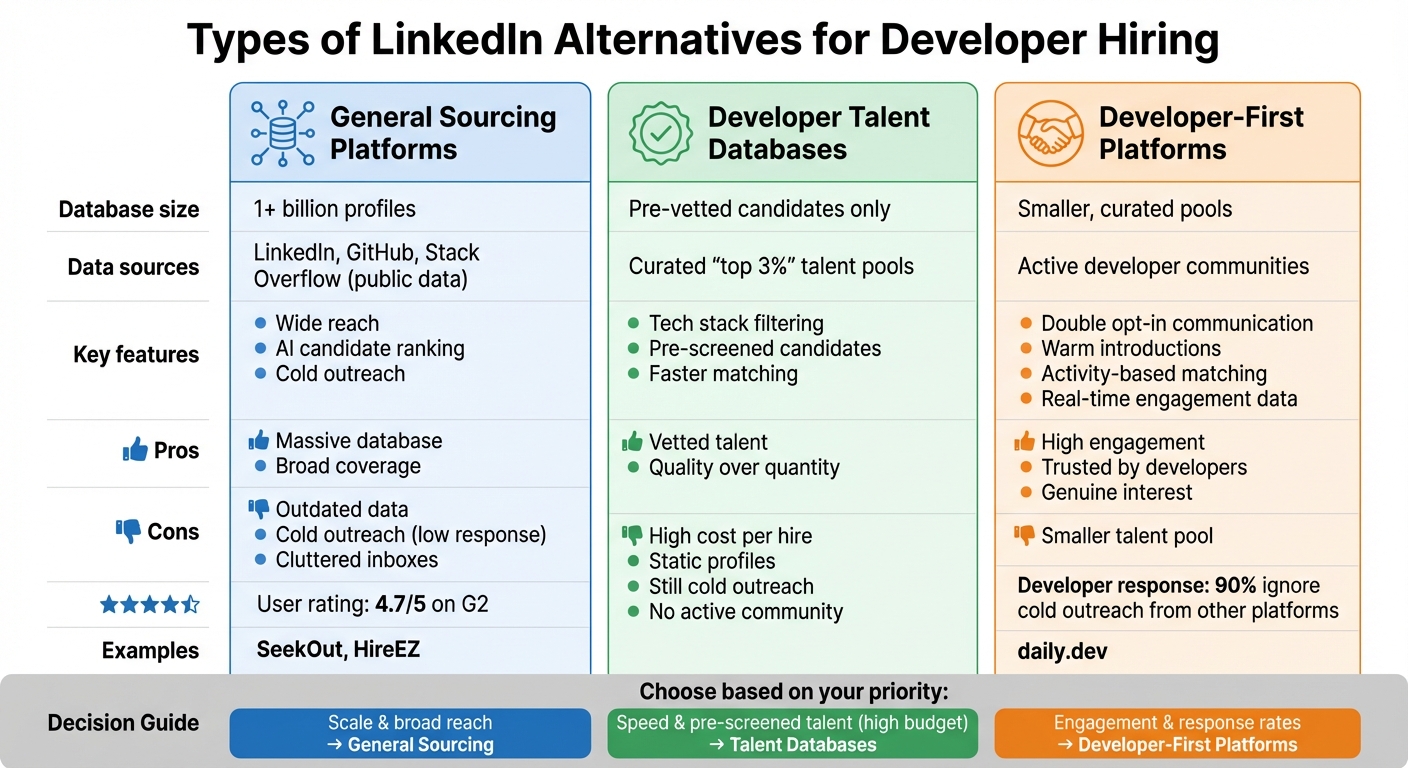 {Comparison of LinkedIn Alternatives for Developer Hiring: Features and Platform Types}
Not every platform marketed as a LinkedIn alternative functions the same way. Knowing these differences can save you from wasting time and resources on tools that don’t address your specific hiring needs. One key consideration is whether the platform provides broad access to public sources.
General sourcing platforms pull data from multiple public sources like LinkedIn, GitHub, and Stack Overflow, creating massive databases with over 1 billion profiles. These platforms boast wide reach and use AI to rank candidates. However, they rely heavily on cold outreach, which often clutters inboxes, and their data is frequently outdated, failing to reflect candidates' current projects or roles. For example, both SeekOut and HireEZ have high user ratings (4.7/5 on G2) , but even great reviews don’t solve the core issue: developers rarely respond to unsolicited messages sent through these platforms.
While general platforms focus on quantity, some tools emphasize technical screening. Developer talent databases provide access to pre-vetted candidates, often branded as the "top 3%" of talent. These platforms allow filtering by specific tech stacks and offer faster matches than general sourcing tools. The downside? They come with steep costs per hire and lack active community engagement. Candidates in these databases are static profiles, not part of a dynamic community, meaning outreach is still cold - just to a smaller, vetted group.
Developer-first hiring platforms take a different approach by prioritizing trust and engagement over sheer database size. These tools are built within active developer communities and require developers to opt in, creating warm introductions instead of cold outreach. As Nimrod Kramer, CEO of daily.dev, explains:
"Trust is the only hack. Engineers already come to daily.dev to grow. They already trust the platform... When your role shows up inside that flow, it doesn't feel like outreach. It feels like an opportunity" .
Although the talent pools on these platforms are smaller and more curated, they foster genuine engagement. This is crucial, considering that 90% of developers say they ignore cold outreach from other platforms .
Ultimately, the best choice depends on your priorities. If you need broad reach and have the resources to craft personalized cold messages, general sourcing platforms might suffice. If speed and access to pre-screened talent are your focus - and budget isn’t a concern - talent databases could work. But if you’re frustrated by low response rates and want developers who are genuinely interested, developer-first platforms offer the most meaningful connections. The decision comes down to whether you value scale or engagement, setting the stage for further evaluation.
How to Run a Low-Risk Pilot Program
Setting Up Your Pilot
To get started, focus on testing 1–3 roles in the same location or time zone. Choose roles that are consistently in demand and have clear requirements - like mid-level backend engineers proficient in Python or Node.js - rather than highly specialized positions. This ensures you generate enough data to evaluate performance without spreading your resources too thin. Keep the pilot short, limiting it to 4–8 weeks. This timeframe allows you to spot trends in response rates and early-stage conversions without committing to a lengthy contract . These parameters align with the earlier evaluation checklist, helping you achieve measurable and actionable results.
Set clear success thresholds using key metrics such as response rate, time-to-interview, and cost per hire. Track these metrics consistently, including the number of qualified profiles reviewed, candidates contacted, days to the first interview, conversion rates at each funnel stage (from outreach to screening and technical interviews), and the total cost per hire in USD, factoring in subscription fees and recruiter time .
To keep financial risks low, negotiate flexible terms like month-to-month agreements or a 3-month pilot with no automatic renewal. Limit access to just 1–3 recruiters initially . At the same time, continue using your existing recruitment channels. Running both side by side for the same roles allows for direct performance comparisons and provides a backup if the new platform doesn’t deliver as expected .
Analyzing Pilot Results
When the pilot ends, dive into the results using the metrics you established earlier. Create a side-by-side comparison in your ATS, evaluating LinkedIn, the new platform, and any other channels for the same roles . Break down data like outreach volume, response rate, interview rate, offer and acceptance rates, time-to-hire metrics, cost per hire (in USD), and recruiter hours spent per source. Collect quick feedback on the relevance of candidate profiles, technical fit, and engagement levels.
Before analyzing, define what success looks like. A strong outcome might mean the new platform outperforms LinkedIn on at least three of four key metrics - response rate, interview rate, time to hire, and cost per hire - while maintaining or improving candidate quality . If the platform meets or exceeds your benchmarks, it’s worth scaling up to more roles or adding more recruiter seats. If its performance is within 10% of LinkedIn’s, it could still serve as a secondary channel. However, if it consistently underperforms, you can exit without incurring unnecessary costs and move on to explore other options.
Conclusion: Choosing a Developer-First Hiring Platform
Key Points to Keep in Mind
When selecting an alternative to LinkedIn for hiring developers, focus on three essential aspects:
- Data Quality & Signal: Look for platforms that rely on activity-based signals from sources like GitHub, Stack Overflow, and developer communities, rather than outdated, static résumés.
- Developer Experience & Trust: Prioritize platforms that use warm, double opt-in introductions. This ensures you’re connecting with candidates who are genuinely interested, rather than sending out cold, impersonal messages.
- Workflow Integration & Transparent Pricing: Choose tools that integrate seamlessly with your ATS and offer clear, outcome-based pricing tied to hires or meaningful conversations - not just the number of profiles viewed.
Developer-focused platforms like daily.dev Recruiter help you engage with engineers in spaces where they’re already active - whether they’re learning, sharing, or contributing to technical content. This approach enables you to tap into passive talent: developers who aren’t actively job hunting but are open to the right opportunity. Each introduction is tailored and relevant to both parties. As Nimrod Kramer, CEO of daily.dev, puts it:
"Trust is the only hack. Engineers already come to daily.dev to grow. They already trust the platform... When your role shows up inside that flow, it doesn't feel like outreach. It feels like an opportunity."
By focusing on these dimensions, you can make meaningful changes to your hiring process.
What to Do Next
Start by identifying 1–3 critical developer roles you need to fill, such as a senior backend engineer or a frontend specialist. Then, document your current LinkedIn metrics: the number of profiles reviewed, contacts made, response rates, interview rates, and your cost per hire in USD.
Run a controlled pilot over 30–60 days using the same roles. Limit your spending and recruiter seats, and track comparable metrics at every stage of the hiring funnel. After 6–8 weeks, compare the results.
If the new platform outperforms LinkedIn in at least three out of four key areas - response rate, interview rate, time to hire, and cost per hire - while maintaining or improving candidate quality, it’s time to scale up. If the results are close, consider using it as a secondary channel. If it underperforms, you can exit without long-term commitments. This low-risk pilot approach ensures your decision is backed by real data.
Ready to explore a developer-first hiring platform? Check out daily.dev Recruiter to see how warm introductions, activity-based matching, and a trusted developer community can transform your approach to technical hiring.
FAQs
Why are developer-first platforms better than LinkedIn for hiring developers?
Developer-first platforms stand out when it comes to hiring developers because they focus on genuine, actionable signals like contributions to code repositories, expertise in specific tech stacks, and active participation in developer communities. Unlike LinkedIn, which often suffers from outdated or incomplete profiles, these platforms provide a clearer picture of a developer's current skills and relevance.
Another key advantage is their emphasis on opt-in introductions. Developers are only contacted when they’ve expressed interest, leading to much higher response rates compared to traditional cold outreach - which many developers tend to ignore. By connecting with candidates through platforms they actively use and trust, recruiters can establish more meaningful and productive interactions.
On top of that, these platforms simplify the hiring process by automating tasks such as filtering candidates by skills and integrating with existing systems. This allows recruiters to focus on what truly matters: building strong relationships and assessing top talent, rather than wasting time on unqualified leads. The blend of precise insights, consent-based outreach, and streamlined efficiency makes developer-first platforms a smarter choice for hiring developers.
How does real-time activity data enhance developer hiring?
Recruiters can gain instant insights into developers' ongoing contributions and engagement by analyzing real-time activity data. This allows them to pinpoint candidates who are not only active but also skilled and responsive - key traits for finding the right fit for open positions.
By honing in on recent, relevant activity, recruiters can zero in on top-tier candidates, streamline the hiring process, and create a better experience for both hiring teams and developers.
What should I consider when choosing an alternative to LinkedIn Recruiter for hiring developers?
When searching for a LinkedIn Recruiter alternative to hire developers, focus on platforms that offer insight into real projects and tech stacks. This helps you evaluate candidates based on their actual work, not just resumes. Tools with behavior-based signals are especially useful, as they can identify active, engaged developers. Also, look for features like opt-in introductions to ensure candidates are genuinely interested in connecting.
It's also important to choose solutions that promote developer satisfaction. Platforms that engage with active developer communities, provide smooth integrations with your ATS or workflow, and utilize AI-powered tools for matching or skill assessments can make a big difference. Opt for a platform with global reach, clear pricing, and a commitment to delivering a positive experience for candidates throughout the hiring process.
.png)