Generic job boards fail to deliver quality when hiring developers. They attract irrelevant applications, rely on outdated profiles, and miss top talent who aren’t actively job hunting. Here’s why specialized platforms are better:
- Irrelevant applications: Broad job boards bring in candidates without the skills you need.
- Outdated data: Profiles often list old or unused skills, leading to mismatches.
- Missed top talent: The best developers aren’t browsing these boards - they’re busy excelling in their roles.
Specialized developer platforms solve these issues:
- Pre-qualified candidates: Focused on active, skilled developers aligned with your needs.
- Real-time insights: Tracks developers’ current skills and interests, not outdated resumes.
- Better experience: Double opt-in introductions ensure meaningful, spam-free connections.
When comparing technical vs non-technical hiring approaches, platforms like daily.dev Recruiter streamline the process, cutting screening time and improving matches by connecting with engaged developers in the tech community.
Why Generic Job Boards Fail for Developer Recruitment
Generic job boards struggle to meet the unique demands of tech recruitment. These platforms are designed to serve a wide range of industries and roles, from entry-level to executive positions. As a result, when you post a developer job on sites like Indeed or Monster, your listing quickly gets buried under unrelated postings. This creates three major problems for hiring developers.
Too Broad: Irrelevant Applications Flood Your Pipeline
Generic job boards cast a wide net, attracting candidates from every industry and experience level. This often results in a flood of applications from people who lack the specific technical skills you need. For example, a job posting for a Senior React Developer might draw applications from junior developers with no React experience, career changers new to programming, or professionals from unrelated fields who match a few keywords.
"Generic job boards cater to everyone - from fresh graduates to experienced professionals across industries. As a result, postings often attract a flood of unqualified or mismatched candidates." – Skillfuel
This isn't just frustrating - it’s a major drain on time and resources. Around 30% of employers say that identifying qualified candidates is one of their biggest challenges . These delays make it harder to connect with the skilled developers that specialized platforms are better equipped to reach.
High Volume, Low Signal: Spam Drowns Out Quality Candidates
Features like "Easy Apply" are designed to simplify the application process, but they often lead to a flood of low-effort submissions . Many candidates apply to dozens of jobs without carefully reading the requirements or considering whether they’re a good fit. To make matters worse, profiles on these platforms are often outdated, self-reported, and unverified . A developer’s profile might list skills they haven’t used in years, yet it still shows up in keyword searches.
Even with a high number of applications, you may still miss out on the most qualified candidates - the ones who aren’t actively applying to jobs.
Missing the Best Talent: Passive Developers Don't Browse Job Boards
The biggest issue is that top-tier developers rarely use these generic platforms, highlighting the difference between active vs passive developer recruitment. Many highly skilled professionals are already thriving in their roles and aren’t spending time browsing job boards. With around four job openings for every available developer , the best candidates have plenty of opportunities and don’t need to actively search. This disconnect underscores why platforms tailored specifically for developers are a better fit for tech recruitment.
Hiring engineers?
Connect with developers where they actually hang out. No cold outreach, just real conversations.
How Developer-Specific Platforms Solve These Problems
Developer-specific platforms are changing the way recruitment works, especially when it comes to hiring tech talent. Unlike generic job boards that focus on volume, these platforms are built to refine the process, ensuring every interaction is meaningful. They don’t just attract developers - they create an ecosystem where only engaged, qualified candidates participate. It’s not just about where you post jobs; it’s about rethinking what’s broken about developer hiring.
Targeted Audience Means Pre-Qualified Candidates
On platforms designed solely for developers, every visitor is already a potential fit. These platforms act as an initial filter, ensuring that the candidates you encounter are relevant. For example, daily.dev Recruiter uses real-time data to track what developers are reading, learning, and building. This goes beyond the static information found on resumes, offering insights into their current skills and interests .
The result? Screening time is cut in half . Instead of sifting through irrelevant applications, you’re engaging with candidates whose skills align with your needs. This targeted approach also improves the experience for developers, as they’re matched with roles that genuinely suit their expertise.
Better Experience for Developers
Generic job boards often frustrate developers with irrelevant job postings and spammy outreach. Developer-specific platforms fix this by focusing on what developers care about: privacy, transparency, and meaningful connections. Features like anonymity until mutual interest, clear compensation details, and direct communication with engineering managers make these platforms far more appealing .
"Recruiting should be built on context, not spam. Developers shouldn't have to sift through irrelevant offers from strangers who don't understand their work." – Nimrod Kramer, CEO, daily.dev
Platforms like daily.dev Recruiter take it a step further with double opt-in introductions. Both the recruiter and the developer must express interest before a connection is made . This eliminates the cold outreach that developers dislike and ensures that every conversation begins with mutual intent. The result? Developers feel valued, which leads to higher engagement.
Higher Response Rates and Better Matches
When developers have a better experience, they’re more likely to respond - and that’s exactly what these platforms deliver. By shifting from cold outreach to intent-driven hiring, companies see better results. Unlike generic job boards that rely on outdated resumes and keyword matching, developer-specific platforms use real-time engagement data to identify candidates who are actively building their skills and contributing to the tech community .
Here’s a quick comparison:
| Feature | Generic Job Boards | Developer-Specific Networks |
|---|---|---|
| Outreach Style | Cold outreach / InMails | Warm, double opt-in introductions |
| Efficiency | Time-consuming screening required | Streamlined with high-signal matches |
| Data Source | Self-reported, often outdated resumes | Real-time engagement and technical signals |
This approach doesn’t just save time - it transforms your hiring pipeline. Instead of chasing after outdated resumes or sending mass messages, you’re connecting with developers who are already open to the right opportunities. That means faster hires and candidates who are a better fit for your team in the long run.
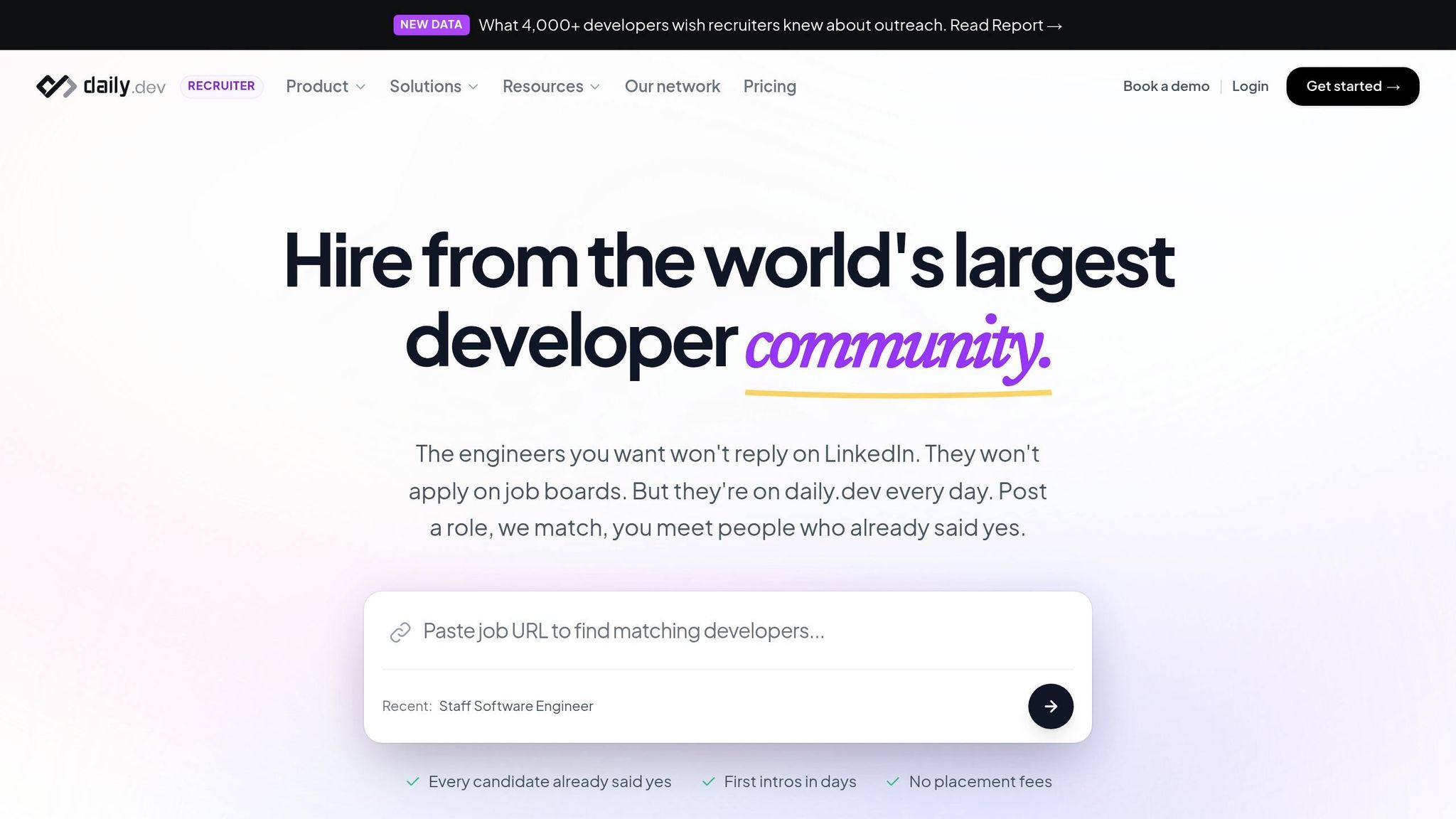
Generic Job Boards vs. daily.dev Recruiter
::: @figure 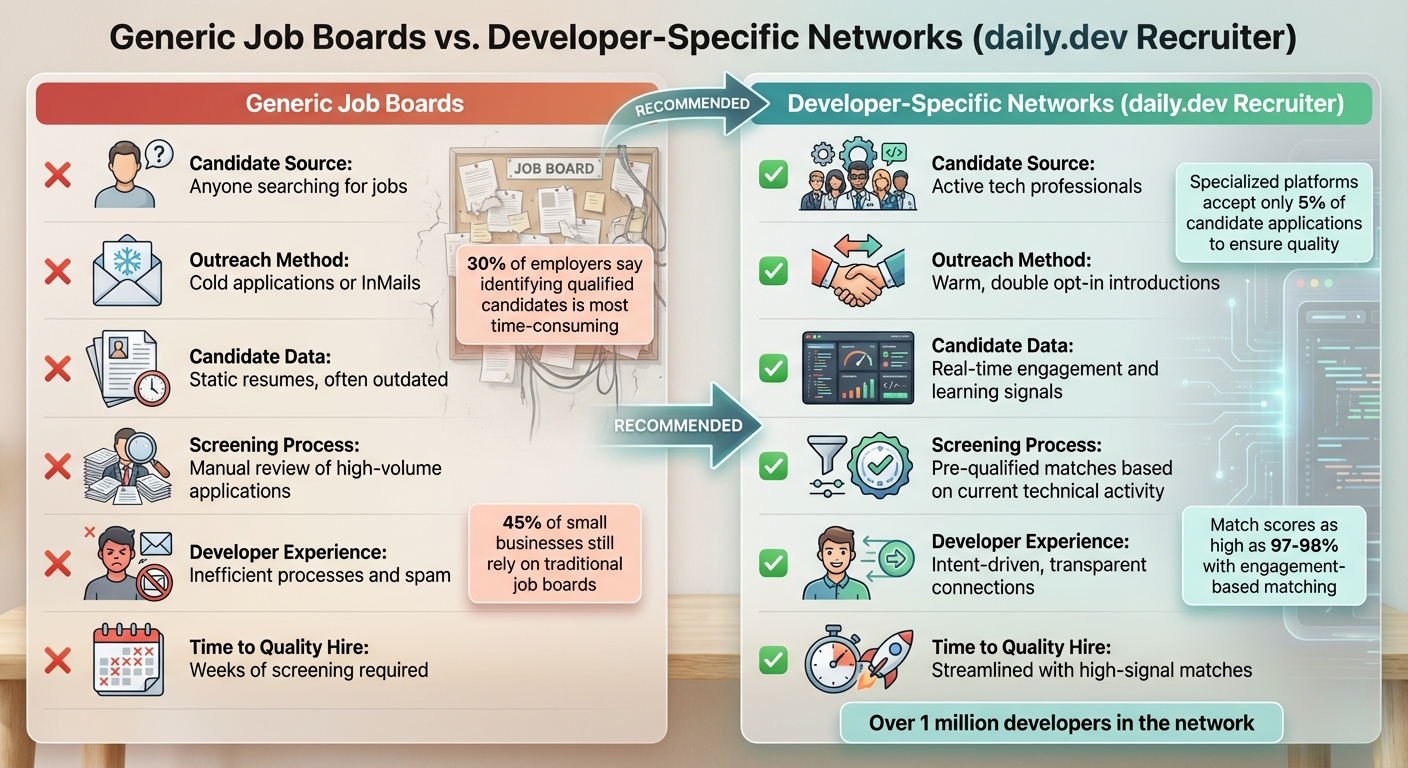 {Generic Job Boards vs Developer-Specific Platforms Comparison}
The gap between generic job boards and daily.dev Recruiter goes beyond just features - it’s about a completely different approach. Generic platforms tend to focus on sheer volume, casting a wide net that leaves you buried under a mountain of applications. daily.dev Recruiter takes a more targeted path, prioritizing relevance and mutual interest from the outset. Let’s break down how daily.dev Recruiter transforms the hiring process by addressing the challenges faced with traditional platforms.
Candidate Quality: Volume vs. Relevance
Generic job boards often attract an overwhelming number of applicants, many of whom lack the necessary skills for the role. In fact, 30% of employers say identifying qualified candidates is their most time-consuming task .
"Job boards... are useful for finding a wide range of candidates in a short span, but less so for actually sourcing a unicorn that has the right level of experience and the right skill sets." – The Betts Team, Betts Recruiting
With daily.dev Recruiter, you’re connecting directly with developers who are already active in the tech community. These candidates are continuously engaging with technical content, honing their skills, and participating in developer discussions. Instead of chasing outdated resumes, you’re meeting developers where they’re already growing, ensuring higher-quality connections. This focus on quality also impacts response dynamics.
Response Rates: Opt-In vs. Cold Outreach
Generic job boards often leave developers dealing with clunky application processes or impersonal cold outreach from recruiters. Unsurprisingly, this leads to low response rates. daily.dev Recruiter tackles this issue with a double opt-in model, ensuring that both recruiters and developers express genuine interest before any interaction happens. This mutual opt-in approach eliminates spam and fosters meaningful conversations, creating a better experience for everyone involved.
Feature Comparison: Generic Job Boards vs. daily.dev Recruiter
Here’s a side-by-side breakdown of how these platforms differ:
| Feature | Generic Job Boards | daily.dev Recruiter |
|---|---|---|
| Candidate Source | Anyone searching for jobs | Active tech professionals |
| Outreach Method | Cold applications or InMails | Warm, double opt-in introductions |
| Candidate Data | Static resumes, often outdated | Real-time engagement and learning signals |
| Screening Process | Manual review of high-volume applications | Pre-qualified matches based on current technical activity |
| Developer Experience | Inefficient processes and spam | Intent-driven, transparent connections |
| Time to Quality Hire | Weeks of screening required | Streamlined with high-signal matches |
While 45% of small businesses still rely on traditional job boards , this often results in an overwhelming flood of applications, requiring significant time and effort to sort through. On the other hand, specialized platforms like daily.dev Recruiter maintain high standards, accepting only 5% of candidate applications to ensure quality . This selectivity means you’re more likely to find the right developer in a matter of days instead of weeks.
How to Select the Right Platform for Hiring Developers
What to Look for in a Developer Recruitment Platform
When it comes to hiring developers, the platform you choose can make or break your recruitment efforts. Start by focusing on specialization - the best platforms are designed with developers in mind, attracting those who actively engage with technical content. These aren’t just places to upload resumes; they’re hubs where developers learn, grow, and connect.
Another critical factor is real-time developer engagement tracking. Platforms that monitor what developers are reading, the technologies they’re exploring, and the discussions they’re joining provide insights that static resumes can’t. For instance, developers use daily.dev approximately 200 times a month (around six times daily), offering behavioral data that helps match candidates based on their actual interests and expertise . This approach is far more effective than relying solely on keyword searches.
Additionally, technical features can refine your hiring process. Look for platforms that provide match scores derived from developer activity rather than just profile keywords. Tools like daily.dev Recruiter achieve match scores as high as 97-98% by analyzing reading habits and technical preferences . In one example, a recruiter discovered that their salary range was a sticking point. After adjusting it, they saw a 40% boost in acceptance rates overnight . These kinds of insights can help you optimize your recruitment strategy.
By focusing on these elements, platforms like daily.dev Recruiter stand out as highly efficient tools for tech hiring.
Why daily.dev Recruiter Works Better for Tech Hiring
Daily.dev Recruiter sets itself apart by addressing common frustrations in tech hiring. Traditional platforms often overwhelm recruiters with volume, but daily.dev Recruiter tackles a deeper issue: 61% of developers feel recruiters don’t understand their needs, and only 15% believe recruiters are doing a good job . This platform flips the script by engaging developers through their daily learning activities instead of interrupting them with unsolicited outreach.
The platform’s double opt-in model eliminates spam and fosters meaningful connections. As Nimrod Kramer, CEO of daily.dev, puts it:
"We built a place where engineers can turn off the noise. To enter this space, you don't need a hack - you need trust."
This trust-first approach ensures every interaction starts with mutual interest. For senior roles, the combination of traditional CVs and engagement data creates more precise match scores .
Daily.dev Recruiter also offers real-time tracking for your hiring funnel. From initial reach to introductions, the platform breaks down the process into clear stages - Reached → Considered → Decided → For Review → Introduced. With live data on interest and acceptance rates, you can quickly identify and address bottlenecks before losing valuable time on ineffective strategies .
Conclusion
The limitations of generic job boards highlight the need for a more tailored approach to hiring. These platforms often prioritize quantity over quality, relying on outdated keyword matching systems that fail to connect employers with top-tier, passive candidates. Considering that 30% of employers say identifying qualified applicants is the most time-consuming part of hiring , it's clear the traditional methods are falling short.
Developer-focused platforms offer a smarter alternative by engaging engineers where they naturally spend their time - on platforms designed for learning, reading, and sharing technical content. Instead of relying on cold outreach, these platforms use double opt-in introductions to ensure mutual interest. As Nimrod Kramer, CEO of daily.dev, points out, effective recruiting is about building connections in the right context, not spamming inboxes .
The difference comes down to trust and relevance. Unlike generic boards that depend on outdated profiles, daily.dev Recruiter connects employers with developers who are actively engaged in the community. With a network of over 1 million developers , the platform facilitates warm introductions to pre-qualified talent who are genuinely interested in hearing from potential employers.
This targeted approach doesn’t just save time - it fosters stronger, trust-based relationships. And with only 3% of small businesses currently using specialized online HR tools , those who adopt these platforms gain a clear edge in hiring. By choosing a solution built around how developers work and learn, companies can position themselves ahead in the competitive tech hiring landscape.
FAQs
How is developer activity measured in real time?
Developer activity is tracked in real time by analyzing coding contributions and interactions on platforms like GitHub and Stack Overflow. Unlike traditional resumes that provide a static snapshot, these platforms highlight real-time technical activity - such as code commits and community engagement - making it easier to spot developers who are both active and skilled.
What does “double opt-in” mean for recruiter outreach?
"Double opt-in" in recruiter outreach refers to a process where candidates must actively confirm their interest before moving forward in the hiring process. This approach prioritizes mutual consent, aligns with privacy standards, and fosters a clearer and more respectful communication dynamic between recruiters and candidates.
How can I tell if my job post is causing low responses?
Low response rates to your job post often suggest it’s not connecting with the right, engaged developers. This can happen if your targeting is too broad or your filters aren’t effective, leading to a flood of applications from unqualified candidates. Take a closer look at the responses - do they match your expectations? If not, it might be time to explore platforms that cater specifically to developers. These networks often emphasize community-driven engagement and interest-based matching, which can help you attract better-suited candidates and improve response rates.
.png)