Recruiters face a trust crisis with developers. On average, developers rate their trust in recruiters at just 2.5 out of 5. This gap has real consequences: while 74% of developers are open to new roles, 38% ignore outreach entirely. The main issue? Generic, high-volume messaging that feels impersonal and AI-driven.
Developers expect recruiters to:
- Share salary details upfront (69% demand this).
- Clearly outline the tech stack and role scope (71% prioritize this).
- Specify work model options (remote, hybrid, onsite).
Failing to meet these expectations leads to disengagement. Building trust requires personalized outreach, technical accuracy, and transparency. Platforms like daily.dev, which connect recruiters with developers in their natural environments, show promise with response rates as high as 85–90%.
The takeaway: Trust isn’t optional - it’s the only way to recruit effectively in today’s developer-driven market.
::: @figure 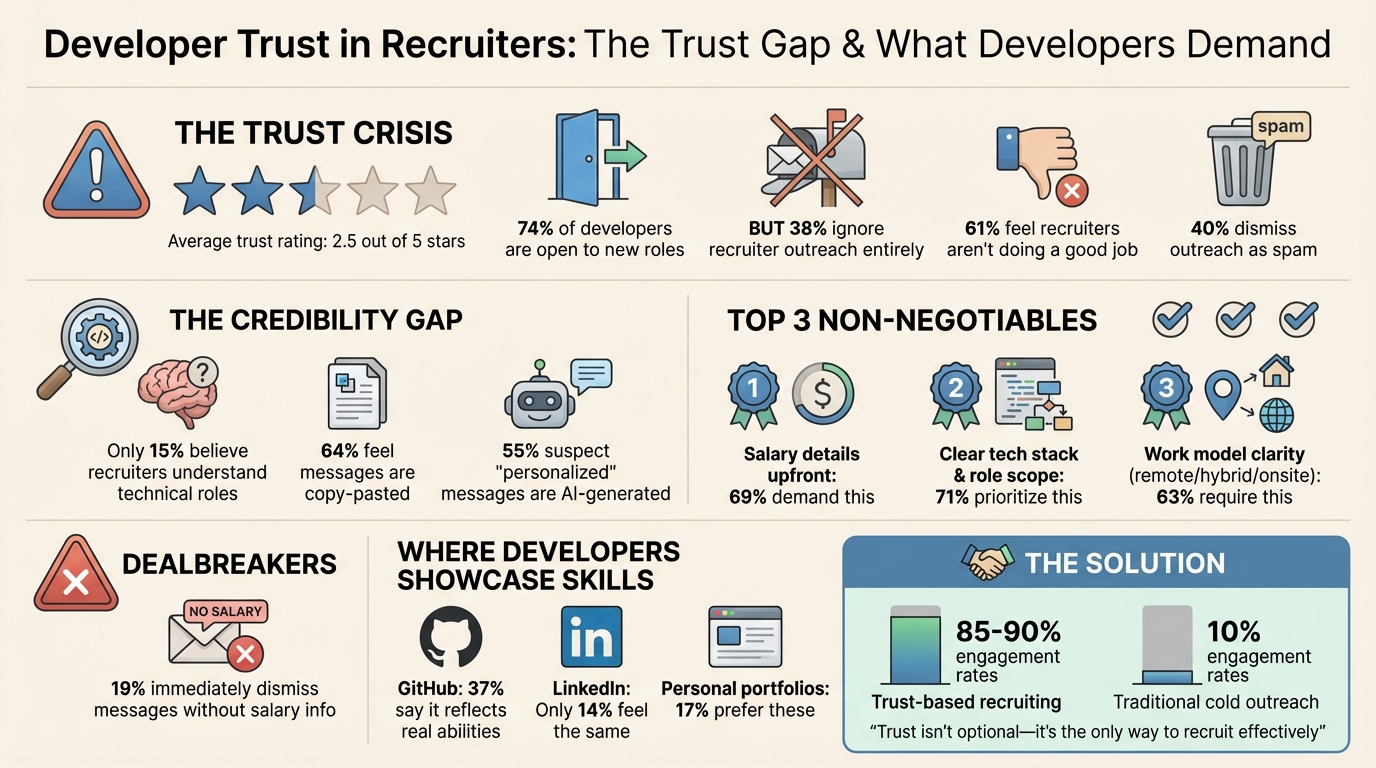 {Developer Trust in Recruiters: Key Statistics and Expectations}
How Developers Think and What They Expect
What Makes Developers Different as Candidates
Developers approach job opportunities with a healthy dose of skepticism. In fact, only 15% believe recruiters truly understand the technical roles they’re pitching . Mistakes like confusing Java with JavaScript or using titles like "senior" and "lead" interchangeably can instantly damage a recruiter’s credibility. These errors make developers question whether the recruiter has any real grasp of the roles they’re trying to fill.
Another challenge? Traditional recruitment tools like resumes and LinkedIn profiles often fail to capture the full scope of a developer's skills. Instead, 37% of developers prefer using GitHub, and 17% lean on personal portfolios to showcase their current capabilities . For them, what they can create today matters far more than what they’ve done in the past.
This mindset drives what developers expect from recruiters - and those expectations are non-negotiable.
What Developers Want from Recruiters
Developers have clear priorities when it comes to recruiter outreach. They want transparency and precision. Specifically, they expect:
- Salary details upfront: A must for 69% of developers.
- A clear breakdown of the tech stack and role scope: Important to 71%.
- Work model options (remote, hybrid, onsite): Essential for 63% .
Failing to meet these expectations can be a dealbreaker. For instance, 19% of developers will immediately dismiss a recruiter’s message if salary information is missing . This isn’t about being overly demanding - it’s about valuing their time and avoiding the frustration of vague or irrelevant job postings.
When recruiters skip these basics, they don’t just lose attention - they risk being actively ignored. Developers prize transparency, technical know-how, and respect for their time. A personalized, straightforward approach isn’t just appreciated - it’s essential for building trust and turning interest into meaningful engagement.
How to Build Trust with Developers
Customize Your Outreach
If you want to connect with developers, personalization isn’t optional - it’s essential. Why? Because 64% of developers feel recruiter messages are copy-pasted, and 40% ignore outreach that looks like generic spam . Even worse, 55% of developers suspect that so-called "personalized" messages are AI-generated . This makes it clear: developers can spot insincerity a mile away.
To stand out, reference something specific about their work, like a GitHub project, blog post, or an open-source contribution. Explain how their skills directly align with the role you're offering. This isn’t about flattery - it’s about showing you’ve done your homework. In fact, 49% of developers want recruiters to explain why their background is a match in the initial message .
Start your outreach with high-value details: the tech stack, salary range, and work model. These are the things developers care about most, and leading with them shows you respect their time. When you combine technical accuracy with meaningful personalization, you lay the groundwork for trust.
Once you've nailed personalization, the next step is to be upfront and honest.
Be Transparent and Honest
Transparency isn’t just nice to have - it’s a must. Developers are quick to spot vague job descriptions or dodgy answers, and it’s no wonder the average trust score for recruiters among developers is a lackluster 2.5 out of 5 .
Be upfront about the essentials: salary, tech stack, and work model. Leaving out this information is a dealbreaker for many developers. For example, 19% will walk away if salary details are missing, while 71% prioritize knowing the tech stack and 63% need clarity on the work model . Keeping these details hidden doesn’t create curiosity - it creates doubt.
And if you don’t know the answer to a technical question? Admit it. Developers value honesty over pretense. Instead, connect them with someone who does have the answer. Being open about role challenges, company culture, or even budget constraints shows authenticity, which goes a long way in earning their trust.
Once you’ve established transparency, the next step is to meet developers where they’re already active.
Meet Developers Where They Already Are
Cold outreach isn’t cutting it anymore. Developers are telling us where their skills shine: 37% say GitHub reflects their real abilities, while only 14% feel the same about LinkedIn . LinkedIn might show a résumé, but it doesn’t showcase current projects or passions. This disconnect is why mass outreach often misses the mark.
Instead, focus on platforms where developers are already engaged. For example, daily.dev offers a space where developers naturally interact, turning recruitment into a collaborative process rather than an interruption. With its double opt-in system, every introduction is mutual, creating a warmer, more meaningful connection.
Developer communities are another goldmine. These spaces rank as the #2 most trusted source for job opportunities, second only to personal referrals . Engaging with developers in these trusted environments transforms recruiting into relationship-building, where you’re not just another message in their inbox - you’re someone who genuinely understands their world.
Tools and Methods That Build Credibility
Using daily.dev for Developer Recruitment
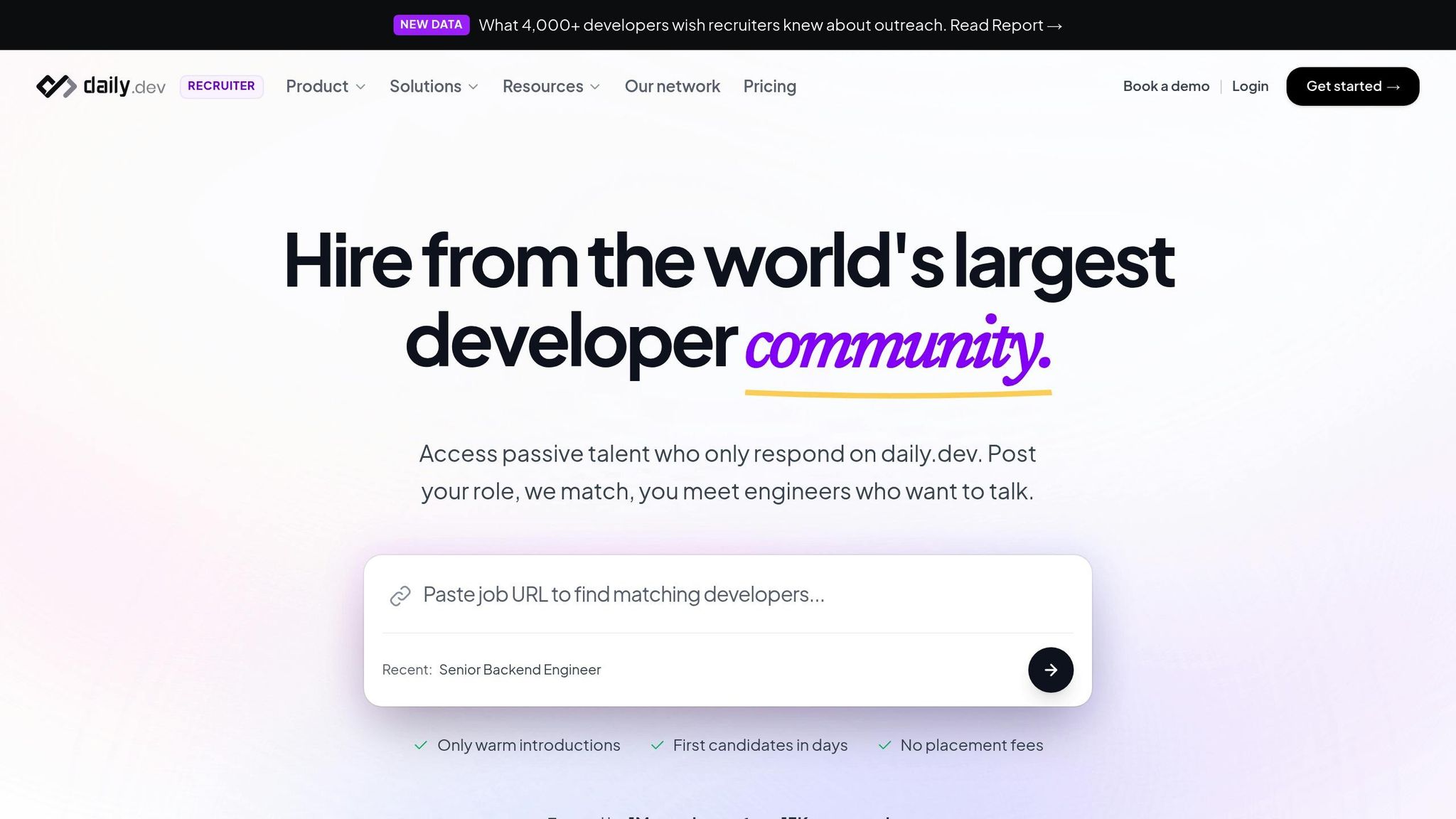
daily.dev Recruiter brings a fresh approach to developer recruitment through its warm, double opt-in system. This method connects recruiters with developers directly in their day-to-day environment of coding and learning. Features like "Smart Career Matches" integrate seamlessly into developers' content feeds, making introductions feel natural and mutually beneficial rather than intrusive. This approach leads to impressive response rates, often reaching 85–90%, far surpassing traditional recruitment methods.
"Trust is the only hack. Engineers already come to daily.dev to grow. They already trust the platform, engage daily, and treat what they see here as signal." - Nimrod Kramer, CEO & Co-Founder, daily.dev
Unlike traditional platforms relying on outdated, static profiles, daily.dev Recruiter uses real-time context to match developers based on their current activity. The "Recruiter Compact" ensures that interactions remain relevant and free from spam.
This focus on personal, context-aware connections sets the stage for the next discussion: balancing automation with a human touch.
When to Automate and When to Stay Personal
Striking the right balance between automation and personalization is essential for building trust. While automation can streamline recruitment, it should never replace genuine human connection. Developers are quick to ignore generic, automated messages, so it’s critical to use automation thoughtfully.
Automation works best for delivering high-value details upfront - like the "Big Three": tech stack, salary range, and work model. These are non-negotiables for developers, with 69% stating they want salary information in the first message.
However, your first outreach must always feel personal. Avoid generic templates; instead, reference a specific project or blog post to show you’ve done your homework. This effort demonstrates respect and builds a stronger connection.
"The outbound model - blasting strangers and hoping someone replies - is dying. AI is making it worse by flooding both sides with noise: automated outreach on one end, AI-generated résumés on the other." - Nimrod Kramer, CEO & Co-Founder, daily.dev
In short, automation can handle the basics, but the initial contact must remain personal. This approach ensures your outreach feels genuine and stands out in a crowded field.
Hiring engineers?
Connect with developers where they actually hang out. No cold outreach, just real conversations.
Why Trust-Based Recruiting Pays Off Long-Term
Building a Competitive Advantage That Lasts
Fostering trust through personalized and transparent interactions creates long-term benefits that competitors can’t easily replicate. While matching salary offers is straightforward, building genuine, sustained trust establishes credibility that stands the test of time.
Here’s a telling statistic: 61% of developers feel recruiters aren’t doing a good job . This highlights a major opportunity for companies that prioritize trust. Developers who’ve had positive experiences with recruiters often turn into advocates for your brand, referring colleagues and creating a steady talent pipeline. Instead of relying on cold outreach, this approach taps into the 70% of passive talent - professionals who typically ignore traditional recruiting efforts.
"Trust isn't the 'soft' side of recruiting. It's the moat. It's the currency. And it's the future." - Nimrod Kramer, CEO & Co-Founder, daily.dev
By building trust, you’re not just filling roles today; you’re setting the foundation for a strong, enduring employer reputation.
Improving Your Employer Reputation
Trust-based recruiting doesn’t just help with hiring - it transforms your employer brand. Transparency is key here. Sharing critical details upfront - like the tech stack, salary range, and work model - immediately sets you apart. Even small gestures, like providing feedback after rejections, resonate deeply with candidates, especially in close-knit developer communities where reputations spread quickly.
Take Cadence, for example. In 2023, they revamped their campus outreach strategy, targeting undergraduates from a broader range of universities and focusing on internal training for computer science roles. This effort wasn’t just about casting a wider net; it was about demonstrating a genuine commitment to candidates. The result? A 25% year-over-year increase in women hired . Their success came from building trust through transparent and respectful processes.
The benefits don’t stop with individual hires. Companies that adopt standardized hiring practices - like competency-based interviews and incorporating diversity advocates - create consistently respectful experiences. Over time, these practices enhance their reputation within the developer community . A strong reputation naturally draws top talent, reducing the need for aggressive sourcing efforts and improving the quality of candidates - all without increasing recruitment budgets.
Conclusion
Recruiting is evolving, and sticking to outdated methods just won't cut it anymore. With 61% of developers feeling recruiters aren't doing a good job and 40% dismissing outreach because it comes across as spam , it's clear that trust is the missing ingredient. Building genuine trust with developers isn't just a nice-to-have - it’s the only sustainable way to recruit effectively, no matter how big your budget or how advanced your tools are.
To earn that trust, recruiters need to be upfront about key role details and show enough technical understanding to avoid common mistakes. Platforms like daily.dev offer a way to create meaningful, double opt-in connections, which aligns perfectly with the actionable strategies we've discussed.
The payoff? Trust-based recruiting delivers 85–90% engagement rates , far surpassing the 10% seen with cold outreach. Even better, it turns developers into advocates, creating a talent pipeline that practically runs itself.
"This isn't a sourcing problem. It's a trust problem." - Nimrod Kramer, CEO & Co-Founder, daily.dev
So, the choice is yours: keep chasing numbers and watch response rates decline, or focus on trust and build a lasting advantage. Developers notice more than just who reaches out - they notice who earns their respect. Trust-based recruiting doesn’t just work better now; it’s the key to staying ahead in the future.
FAQs
Why is building trust with developers essential for successful recruiting?
Earning trust from developers is crucial. It helps break through skepticism, encourages genuine interactions, and sets the stage for lasting relationships. When developers feel respected and understood, they’re far more likely to engage positively.
By prioritizing trust, recruiters can differentiate themselves in a crowded field, improve communication, and show real consideration for developers' goals and priorities. This not only increases response rates but also creates a lasting edge in attracting top-tier talent.
What are the best ways for recruiters to personalize their outreach to developers?
To make outreach more effective, recruiters should focus on creating messages that genuinely connect with a developer's specific skills, projects, and career aspirations. Mentioning particular details about their work or achievements shows that you’ve taken the time to understand their background and interests. Tailor your message to align with their technical expertise and future goals.
It’s also helpful to present opportunities that match what they care about - whether that’s tackling challenging technical problems or working with tools and technologies they love. Engaging with developers on platforms they already use can foster more natural, two-way conversations, helping to build trust and credibility. By showing you truly understand and value their individuality, you’re more likely to capture their attention and get a positive response.
Why is transparency important for building trust with developers?
Transparency plays a crucial role in earning developers' trust. It signals honesty and shows respect for their time, skills, and career aspirations. Developers often encounter job postings with vague descriptions or unclear communication, which can lead to doubt and hesitation. By openly sharing key details - like salary ranges, technical skills required, company values, and the steps in the hiring process - recruiters can build credibility and show they mean business.
Being clear and upfront isn’t just about ticking boxes; it’s about standing out in a highly competitive field. Developers value honest communication, and when they feel informed and respected, they’re far more likely to engage positively. This creates stronger connections and leads to better hiring results. In the tech world, transparency isn’t optional - it’s the foundation for lasting success in recruiting.
.png)