Hiring developers at an enterprise level is a complex process that demands structured systems and cross-department coordination. Traditional methods often fail when scaling for teams of 500+ engineers, leading to longer hiring timelines (68 days for senior developers) and higher costs (average $32,000 per hire). Key challenges include aligning departments, managing compliance, and streamlining workflows.
Key Takeaways:
- Challenges: Misalignment across teams, compliance requirements, and inefficiencies in tools/processes.
- Solutions: Workforce planning, specialized hiring roles, and integrating developer hiring platforms and ATS.
- Metrics to Track: Time-to-hire, skills gap closure, retention rates, and cost-per-hire.
- Technology's Role: AI-powered tools, automated assessments, and integrated platforms reduce manual tasks and improve hiring speed.
To succeed, enterprises need scalable systems, efficient tools, and a focus on data-driven decisions to improve hiring outcomes while ensuring a positive candidate experience.
::: @figure 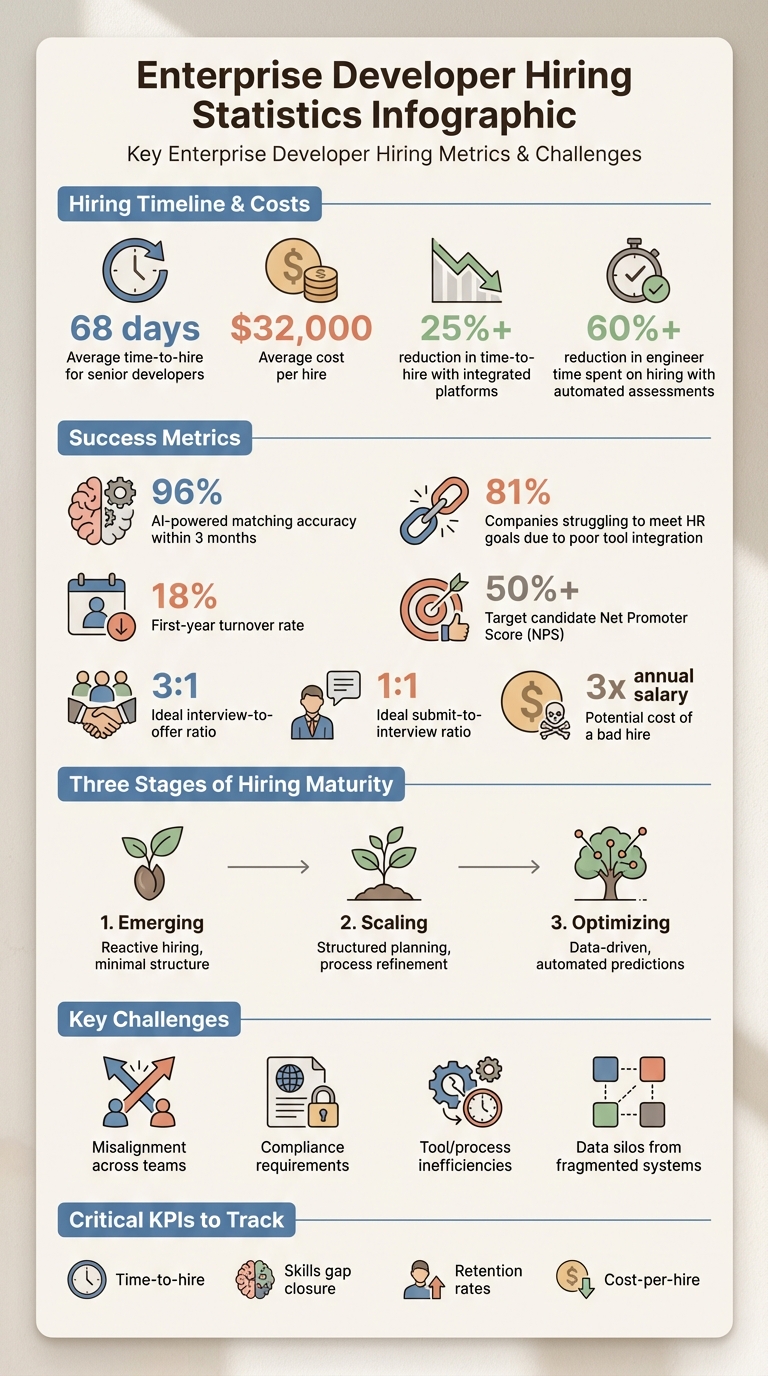 {Enterprise Developer Hiring: Key Metrics and Challenges}
Building an Internal Developer Hiring Machine at Scale
Workforce Planning for 500+ Engineering Teams
When you're supporting hundreds of engineering teams, hiring can't be left to chance. Companies typically move through three stages of hiring maturity. At the Emerging stage, hiring is reactive with minimal structure. As they grow, organizations transition into the Scaling phase, where structured planning and process refinement begin to take shape. The final step, Optimizing, uses data and automation to predict hiring needs and fill roles efficiently .
The secret to scaling workforce planning lies in cross-departmental alignment. Without clear coordination between teams like marketing, technology, and talent acquisition, hiring slows down, and quality suffers. Structured planning ensures that everyone is aligned on mission-critical goals. Leadership training across departments helps reinforce this alignment, so each team understands how their efforts contribute to successful hiring .
Once structured planning is in place, introducing specialized roles can make hiring workflows even more efficient.
Specialized Roles and Efficient Workflows
At an enterprise level, generic hiring processes just don't cut it. To handle large-scale hiring, organizations need specialized roles. For example:
- Sourcing teams focus exclusively on identifying and engaging top candidates.
- Technical assessment coordinators manage evaluations, ensuring consistent standards.
- Candidate experience managers oversee the journey from application to offer, making the process smoother.
This kind of specialization eliminates bottlenecks and keeps everything running smoothly, even during high-volume hiring periods.
Another key factor? Reducing the time engineers spend on recruitment. Studies show improved technical hiring funnels can cut the time engineers dedicate to hiring tasks by over 60% . Automated technical assessments take care of initial screenings, so senior developers only meet candidates who’ve already proven their skills. This lets engineers focus on what they do best: building products.
Carrie Weidenbach, COO of Ascend, highlights the importance of testing and flexibility in hiring workflows:
Code's expensive to change... but we start tweaking with testing .
Her advice? Experiment with small candidate pools before rolling out major changes. Whether it’s adjusting interview formats or trying new communication styles, testing helps refine the process without unnecessary risk. These experiments ensure workflows are efficient and effective before scaling them up.
As workflows become more streamlined, technology plays a crucial role in managing the demands of high-volume hiring.
Using Technology to Handle High-Volume Hiring
Without the right tools, managing hundreds of hiring processes at once is impossible. Modern ATS systems (Applicant Tracking Systems) and sourcing platforms simplify candidate tracking and identification. This is especially important for entry-level and university hiring, where the sheer volume of applications can overwhelm traditional resume screening methods .
AI-powered tools are game-changers for talent teams. They prioritize actions, flagging candidates with the best skill matches, suggesting interview times based on team schedules, and automating routine tasks like follow-ups. This allows recruiters to focus on meaningful interactions rather than getting bogged down in admin work .
Standardized technical assessment platforms add another layer of efficiency. They help reduce bias, ensure consistency, and improve the overall candidate experience. By combining these tools with structured processes, organizations can handle high hiring volumes without sacrificing quality. This balance is essential for scaling developer teams while maintaining strong recruitment outcomes .
Hiring engineers?
Connect with developers where they actually hang out. No cold outreach, just real conversations.
Vendor Consolidation: Moving from 5+ Tools to Integrated Platforms
Problems with Managing Multiple Recruitment Tools
Enterprise talent teams often juggle a mix of tools for tasks like sourcing, assessments, scheduling, and tracking. This patchwork approach drains efficiency. Recruiters spend countless hours transferring candidate data between systems, which increases administrative work and the likelihood of errors. On top of that, without a unified system, candidates can end up being contacted by multiple recruiters - a frustrating experience that can tarnish your employer brand.
Data silos are another headache. If your ATS doesn't sync with your sourcing platform, and your CRM operates in isolation, you lose critical insights. For instance, it becomes challenging to identify which hiring sources are most effective or pinpoint where candidates drop off in the process. Research shows that 81% of companies struggle to meet HR goals due to poor integration between tools .
This fragmentation is especially problematic in developer hiring, where personalized outreach is crucial. When systems don’t communicate, recruiters are forced into time-consuming manual processes, which often lead to generic, impersonal messages. These inefficiencies highlight the need for a more connected and streamlined approach.
Advantages of Integrated Recruitment Platforms
Integrated platforms bring everything together - your ATS, CRM, sourcing tools, and HRIS - using event-driven APIs to automate updates. For example, when a candidate advances to the "Onsite" stage in your ATS, the system can automatically schedule interviews and notify the hiring manager, cutting out manual steps.
"The remedy is not 'more features.' It's a system-of-systems design: a shared data language, well-chosen integration patterns, event-driven automation, and clear governance." - Ameya Deshmukh, EverWorker
The benefits are clear. Enterprise recruitment automation can slash time-to-hire by 25% or more , while AI-powered tools can achieve up to 96% matching accuracy within just three months . These platforms also simplify compliance by embedding requirements like EEOC recordkeeping, GDPR consent management, and data retention policies directly into workflows. For enterprises managing hundreds of roles across different countries, this eliminates the compliance challenges that fragmented systems create.
How daily.dev Recruiter Fits the Enterprise Stack
ATS Integration for Candidate Management
daily.dev Recruiter works seamlessly with your current Applicant Tracking System (ATS), streamlining data management and enriching candidate profiles with insights tailored to developers. This eliminates time-consuming manual data entry compared to ATS integration. Once a warm introduction is made, all candidate details are automatically added to your ATS. Beyond basic information, the platform enhances profiles with unique developer-specific data, such as technical interests, learning habits, and career growth patterns - details that traditional resumes often lack.
The platform also includes automated deduplication, ensuring the same developer isn’t contacted multiple times. This feature safeguards your employer brand and ensures a professional experience for candidates, which is especially valuable when managing hundreds of open roles across multiple teams. Additionally, custom screening questions are integrated directly into the workflow, providing a standardized yet efficient process for high-volume technical hiring across various engineering teams.
Volume Sourcing with Warm, Double Opt-In Introductions
With ATS integration as a foundation, daily.dev Recruiter takes candidate sourcing to the next level. Instead of relying on cold emails to random contact lists, the platform provides introductions to developers who have already shown interest in hearing about opportunities. These are passive candidates who are actively engaging in professional growth and networking on daily.dev - not actively job hunting, but open to the right role.
Every introduction is double opt-in and includes rich context, ensuring developers feel respected and recruiters only connect with candidates genuinely interested in engaging. This approach results in significantly higher reply rates compared to traditional cold outreach. For companies hiring at scale - like filling 500+ engineering roles - this balance between quality and volume is essential. By reaching developers where they naturally spend their time, recruitment becomes less about noisy outreach and more about meaningful, trust-based connections.
Compliance Features: SSO, SLAs, and Data Residency
In addition to sourcing and ATS integration, daily.dev Recruiter includes robust compliance tools designed to meet enterprise standards. The platform supports enterprise-grade compliance, including features like Single Sign-On (SSO), Service Level Agreements (SLAs), and options for data residency. The pay-per-job pricing model ensures you only pay when actively hiring, and the 30-day free trial - offering unlimited job postings and seats - lets you evaluate the platform’s value before committing.
"Automated screening tools ensure that every applicant goes through the same evaluation criteria, reducing bias and supporting fair hiring practices." - Samuel Guilmore, Content Writer, DISA Global Solutions
Automation within the platform ensures consistent screening processes, which not only reduce bias but also provide transparency for audits. For enterprises hiring developers across multiple countries with varying regulations, this consistency eliminates compliance risks often caused by fragmented tools. By embedding compliance directly into its workflows, daily.dev Recruiter offers a well-rounded solution tailored to the unique challenges of enterprise tech hiring.
Enterprise Hiring KPIs That Actually Matter
Time-to-Hire and Skills Gap Metrics
Time-to-hire tracks the speed of your recruitment process, starting from the first contact with a candidate to when they accept an offer. This metric is crucial because top-tier candidates don’t stay available for long. As Marc Holliday, Sr. Product Marketing Manager at NetSuite, points out:
"Top talent can be off the market within a few weeks, as they're desirable candidates. So, keeping the time-to-hire as short as possible can boost your quality of hire and lower costs" .
To make this metric actionable, break it down by department, team, and hiring manager. This approach helps identify bottlenecks that may be slowing down the process across multiple open roles .
Another key metric is skills gap closure, which evaluates whether new hires truly address the technical needs of your organization. Post-hire evaluations and skill assessments at 30-, 60-, and 90-day intervals can help confirm if your hiring process is accurately identifying the right candidates . Additionally, tracking ramp time - how long it takes for a new hire, such as a developer, to become fully productive - provides valuable insights for workforce planning and forecasting .
Retention Rates and Developer Experience
Speed and skills alignment are only part of the equation. Retention and the overall experience for candidates and employees are just as critical for long-term success.
First-year turnover rates, which hover around 18%, often point to challenges with onboarding and integration rather than recruitment itself . To assess hiring effectiveness, monitor candidate Net Promoter Score (NPS) - aim for a score above 50% - as well as hiring manager satisfaction at 3, 6, and 12 months post-hire . Charlie Fossell from TriCom emphasizes:
"Hiring isn't just about getting someone in the door; it's about keeping them" .
This underscores the importance of focusing on retention strategies from the very beginning of the hiring process .
Cost-per-Hire for Large Engineering Teams
For enterprises managing large engineering teams, controlling hiring costs is just as important as finding the right talent.
Cost-per-hire becomes particularly complex when dealing with multiple tools, global locations, and compliance requirements. To maintain efficiency, aim for a 3:1 interview-to-offer ratio and a 1:1 submit-to-interview ratio. Falling short of these benchmarks can lead to expensive mistakes, with a bad hire potentially costing over three times the annual salary when factoring in replacement and productivity losses .
Conclusion: Building a Scalable Enterprise Hiring Process
Refining a hiring system for enterprises goes beyond simply adding tools - it’s about striking the right balance between automation and human insight while keeping the developer experience front and center. Poorly designed processes can lead to costly hiring mistakes, underscoring the need for a streamlined, scalable approach that avoids these pitfalls .
To transition from reactive to proactive, data-driven hiring, organizations need strong alignment across departments and should approach their recruitment funnel as they would a product . As Mickey Winter, CEO of Ascend, highlights:
"It's not always what's happening with the customer [candidate], internal processes must also be critically evaluated... lack of cross-departmental alignment... can really prohibit the overall brand from successfully moving forward" .
This alignment is crucial. Without support from HR, engineering leadership, and executives, even the best strategies can falter.
Automation plays a key role in handling repetitive tasks like scheduling, keyword filtering, and administrative duties. Meanwhile, humans should focus on areas that require judgment, such as defining what success looks like for a role, evaluating nuanced decisions, and closing candidate conversations . For example, automated, skills-based assessments can cut the time engineers spend on initial screenings by over 60% , freeing them to focus on more strategic decisions. These steps transform fragmented processes into a cohesive, scalable hiring system.
Organizations that thrive in enterprise hiring make key shifts: moving from pedigree-based to skills-based evaluations, replacing cold outreach with warm, opt-in introductions, and replacing disjointed workflows with integrated recruitment platforms. These changes are critical in developer hiring, where efficiency and respect for candidates' time and expertise are paramount. Hiring isn’t just about filling roles - it’s about building a system that attracts, evaluates, and retains top talent.
Start small with pilot programs, track developer recruitment KPIs, and refine your approach using data. Whether managing a team of 500 engineers or more, prioritizing transparency, efficiency, and an exceptional candidate experience - backed by integrated systems and meaningful metrics - can set your organization apart in today’s competitive hiring landscape.
FAQs
How do I get engineering and HR aligned on headcount plans?
Getting engineering and HR teams on the same page about headcount plans starts with clear communication and shared goals. From the outset, involve both teams in conversations about growth projections, hiring timelines, and the specific skills needed. This ensures that hiring efforts stay aligned with the broader business objectives.
To keep everything running smoothly, rely on standardized processes, shared KPIs, and consistent updates. These measures help both teams stay informed and work cohesively. Using integrated tools - like sourcing platforms, ATS (Applicant Tracking System) integrations, and compliance management - can make collaboration more seamless. This approach reduces misalignment and supports scalable hiring efforts, especially in large-scale enterprise environments.
What should we consolidate first when we have 5+ recruiting tools?
To get started, take a close look at the tools you're currently using. Dive into vendor details, how often each tool is used, and their costs. This will help you spot any overlaps or inefficiencies. Look for opportunities to simplify workflows by integrating tools where possible. Prioritize those that can handle growth, ensure compliance, and make it easier for multiple teams to work together - these are key for meeting enterprise-level demands.
What do I need from vendors for SSO, SLAs, and data residency?
To ensure secure and compliant hiring processes for enterprises, vendors need to offer key features like Single Sign-On (SSO), well-defined Service Level Agreements (SLAs), and strong data residency protocols. These elements help maintain reliability, scalability, and alignment with enterprise standards.
.png)