

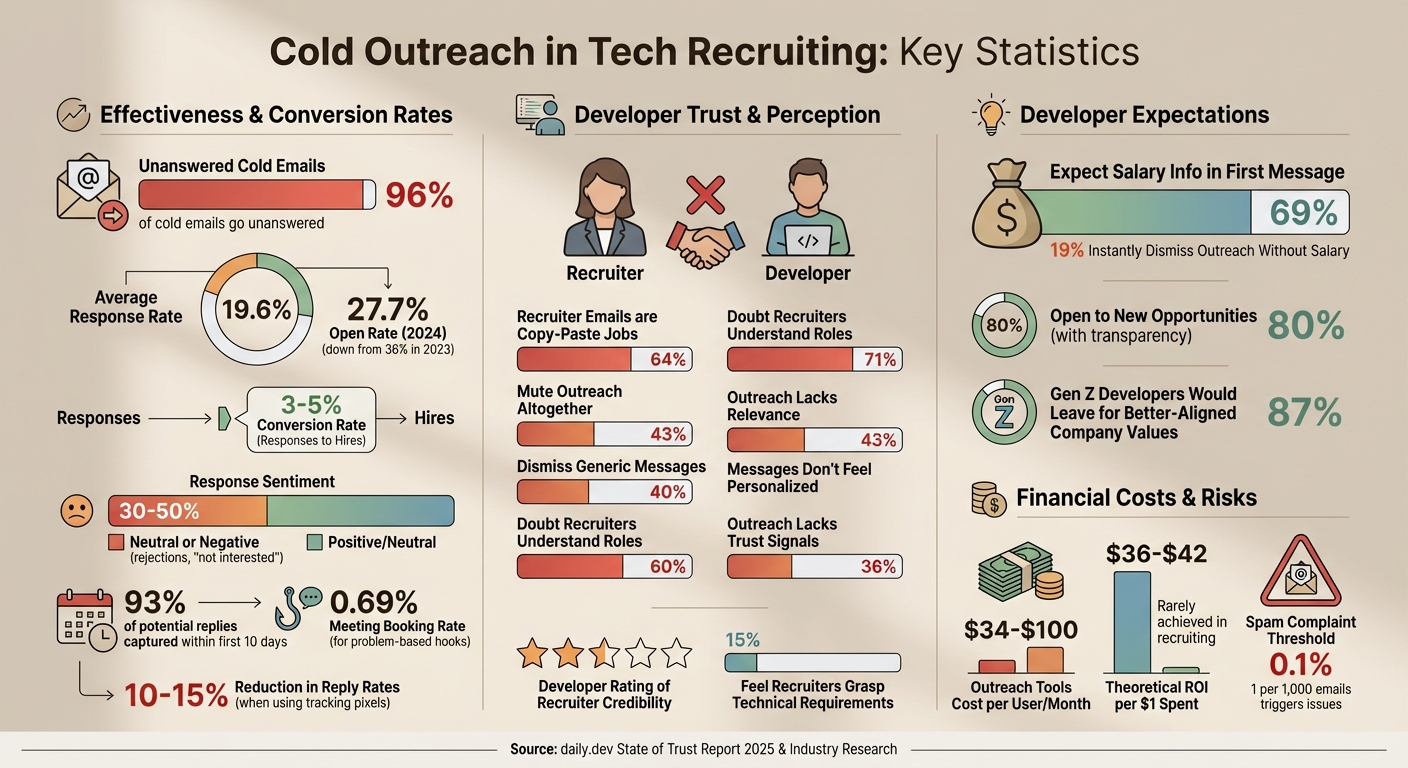
Cold outreach in tech recruiting is expensive, inefficient, and often counterproductive. Recruiters spend hours crafting emails and messages, yet 96% go unanswered, and response rates barely reach 19.6%. Worse, even when candidates reply, conversion rates hover at just 3% to 5%, making this method a poor use of time and resources.
Key issues with cold outreach include:
- Wasted resources: Time spent on research, follow-ups, and tools adds up, yet results are minimal.
- Brand damage: Generic, irrelevant messages alienate candidates and hurt employer reputation.
- Low engagement: Developers demand specifics like salary, tech stack, and work model upfront, but most outreach fails to deliver.
Instead of cold emails, focus on warm, trust-based recruiting:
- Build connections with developers already interested in your roles.
- Engage them on platforms like GitHub or through technical communities.
- Share detailed, personalized job briefs that align with their skills and interests.
Platforms like daily.dev Recruiter offer a better approach by enabling double opt-in introductions with pre-qualified developers, improving response rates and reducing wasted effort. This method not only saves money but also strengthens your brand by prioritizing meaningful, relevant interactions.
The Hidden Costs of Cold Outreach
Cold outreach isn’t just falling short on effectiveness - it’s quietly draining your recruiting budget in ways that don’t show up in traditional calculations. Beyond the low response rates, tech recruiting teams face a ripple effect of hidden costs that eat into time, damage your brand, and lead to disappointing results. Let’s break down how these factors add up to undermine your recruiting efforts.
Wasted Time and Resources
Here’s the reality: 96% of cold emails go unanswered . This forces recruiters to send out an overwhelming number of emails just to spark a handful of conversations. On top of that, 30–50% of the responses are neutral or outright negative - things like "not interested", "wrong person", or flat-out rejections . Manny Medina, CEO of Outreach, sums up the issue perfectly:
"Performing outreach to a candidate cold and not locking in that candidate is probably the largest cost driver in terms of working on placement."
Think about the time spent: recruiters pour hours into researching profiles, tracking down contact details, and crafting tailored messages. Yet, 93% of potential replies are captured within the first 10 days . Beyond that, follow-ups rarely pay off and only increase the chances of spam complaints.
Damage to Employer Brand
The inefficiencies of cold outreach don’t just waste time - they can also hurt how your brand is perceived. Sending generic, irrelevant messages risks alienating candidates and even triggering spam filters. For example, just one spam complaint per 1,000 emails can cause problems under Gmail’s 0.1% threshold for 2025 .
And here’s why developers are ignoring recruiting emails: 71% lack relevance, 43% fail to feel personalized, and 36% lack trust signals . This is especially problematic with Gen Z developers, a group that values alignment with company values. In fact, 87% of them would consider leaving their current job for a company with better-aligned values . A poorly executed cold email could be the first - and last - impression they have of your brand.
Low Engagement and Conversion Rates
If response rates are bad, conversions are even worse. Email open rates dropped from 36% in 2023 to 27.7% in 2024 , but the real issue lies in turning those opens into meaningful results. For instance, emails that use problem-based hooks only achieve a 0.69% meeting booking rate . And tracking pixels? They might help measure engagement, but they actually reduce reply rates by 10–15% because they can trigger spam filters .
Even when candidates do respond, the gap between activity metrics (like open or reply rates) and actual hires is glaring. Teams may celebrate small wins, but metrics like time-to-hire and cost-per-hire continue to rise, showing how little these efforts contribute to real recruiting success.
Financial Costs of Outreach Tools and Labor
Let’s not forget the price tag attached to cold outreach. Tools alone cost between $34 and $100 per user each month . Add in the expenses for domain warming services, authentication protocols like SPF, DKIM, and DMARC, and access to lead databases, and the costs pile up before you’ve even sent an email.
While email marketing can, in theory, deliver a return of $36–$42 for every $1 spent , recruiting teams often fall far short of this benchmark. Poor targeting, uninspired messaging, and the technical challenges of maintaining deliverability mean the actual ROI rarely justifies the investment in tools and labor hours.
Why Cold Outreach Fails with Developers
Cold outreach doesn’t just struggle with inefficiency - it faces outright rejection from developers. Unlike other professionals who might tolerate generic recruiting messages, developers have developed a strong aversion to them. This resistance significantly reduces the effectiveness of traditional outreach methods and adds to the hidden costs already mentioned.
Developers' Resistance to Spam
Developers don’t just ignore generic recruiter emails - they actively block and dismiss them. The numbers speak for themselves: 43% mute outreach altogether, 40% dismiss messages that feel generic, and 64% believe recruiter emails are nothing more than copy-paste jobs. Trust is at an all-time low, with developers rating recruiter credibility at just 2.5 out of 5 .
The skepticism doesn’t stop there. Six out of ten developers doubt recruiters’ ability to understand the roles they’re trying to fill, and only 15% feel recruiters have a solid grasp of the technical requirements involved . A senior backend engineer captured this frustration perfectly in the daily.dev State of Trust Report 2025:
"We want to skip the business BS and just have an honest conversation."
This widespread distrust and active avoidance only make cold outreach less effective and more frustrating.
Preference for Trust-Based Connections
Given this distrust, developers gravitate toward direct and transparent communication. While 80% of developers are open to hearing about new opportunities, they tend to reject messages from recruiters who fail to demonstrate an understanding of their work . As the daily.dev State of Trust Report succinctly puts it:
"This isn't a sourcing problem. It's a trust problem."
Developers are tired of vague, generic pitches. They want specifics. For instance, 69% expect salary information in the very first message, and 19% will instantly dismiss outreach that doesn’t include it . After years of hearing about "exciting opportunities" that don’t align with their skills or interests, developers now demand recruiters lead with what the report calls the "Big Three": the tech stack, salary range, and work model. Without these details and a sense of credibility, cold outreach is destined to fall flat .
A Better Approach: Warm Leads and Trust-Based Recruiting
Forget cold emails. Instead, focus on warm, trust-based recruiting. Tech recruiters who adopt this strategy see far better response rates and hiring results. The key? Prioritize quality over quantity by engaging with developers who’ve already shown interest or taken steps to connect.
Using Warm, Double Opt-In Introductions
Double opt-in introductions take the guesswork out of recruiting. Rather than sending out hundreds of generic messages, you’re reaching out to candidates who’ve specifically indicated they want to hear from you. This approach transforms recruiting from a disruptive cold call into a conversation both sides look forward to.
The numbers speak for themselves. Cold emails often struggle to hit even single-digit response rates. Meanwhile, warm introductions consistently perform better because they’re built on mutual intent. When a developer opts in, they’re not just tolerating your outreach - they’re curious about what you’re offering. This eliminates the trust barrier that usually derails cold messages. Plus, this method naturally leads recruiters to connect with developers in spaces they already frequent.
Engaging Developers Where They Are Active
Developers aren’t hanging out on LinkedIn all day or endlessly scrolling job boards. They’re on platforms like GitHub, contributing to open-source projects, or reading technical content on sites like daily.dev. Reaching out to them in these environments instantly boosts your credibility.
A great way to connect: invite developers to join technical roundtables or private Slack groups tailored to their expertise - like Golang communities - before bringing up job opportunities . This “value-first” approach shows you understand their world and aren’t just another recruiter chasing a placement. As James Milsom, Head of Marketing at Hunter.io, puts it:
"Success isn't about being seen, it's about being answered" .
Building Trust Through Personalized Job Briefs
Warm introductions are just the beginning; personalized job briefs seal the deal. Developers are tired of generic job descriptions. They want specifics right away - like the tech stack, salary range, and work setup. But real personalization goes beyond listing details. It’s about showing you understand the role and why this developer is a great match.
Here’s the impact: personalized subject lines can increase open rates by 26% . Detailed, tailored briefs take it further, transforming your outreach from spammy noise into a genuine opportunity. Reference a developer’s recent GitHub project, mention a technical article they wrote, or highlight a specific contribution they made. This level of effort shows you’ve done your homework and makes your message worth their time.
How daily.dev Recruiter Replaces Cold Outreach
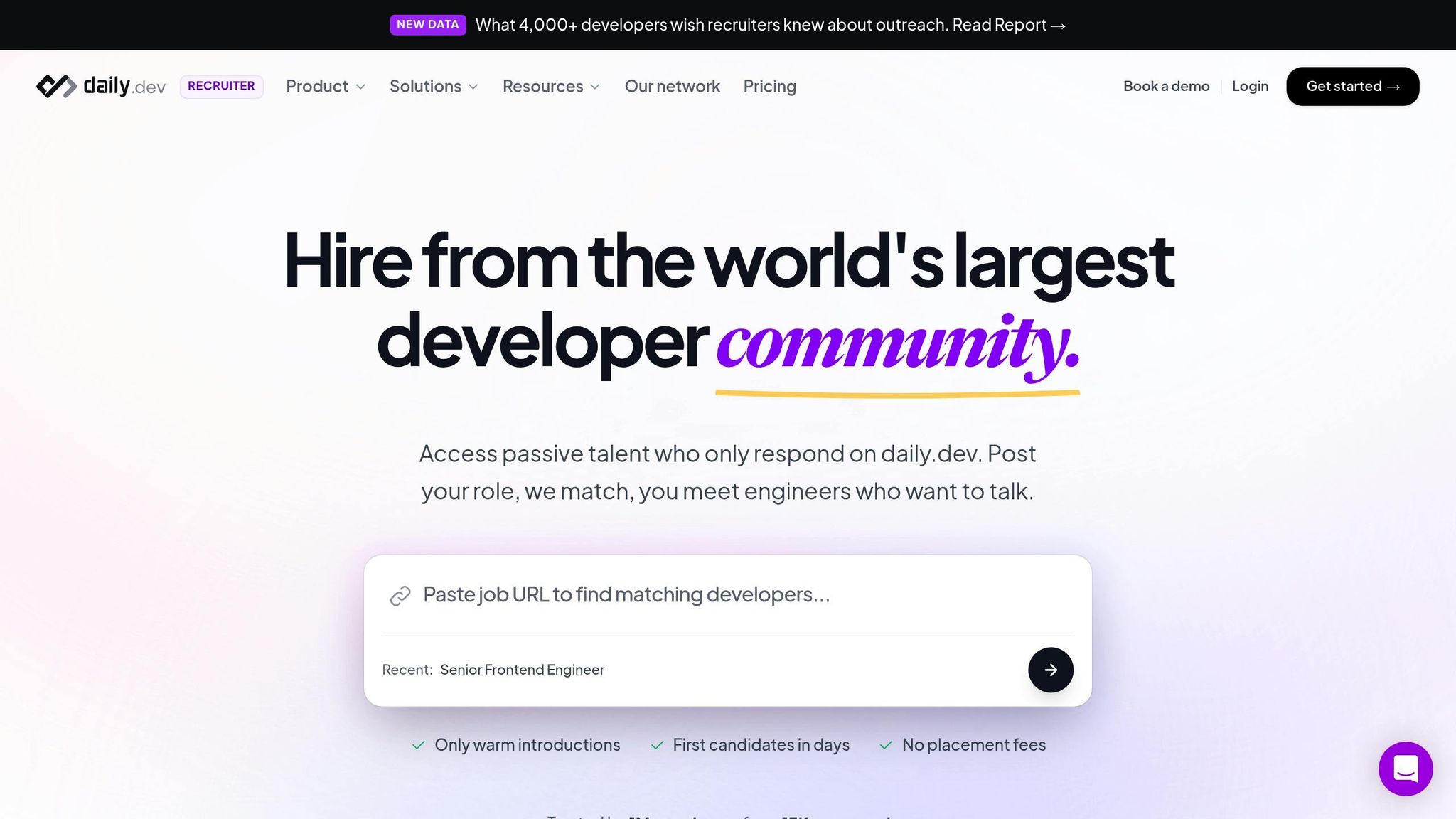
daily.dev Recruiter transforms the recruiting process by focusing on trust and meaningful connections. Instead of relying on cold outreach, it enables warm introductions with developers who are actively engaged in their professional growth. These are developers who spend their time reading technical content and staying up-to-date with industry trends. With insights from over 1 billion developer sessions, the platform provides real-time data on what developers are currently interested in, allowing for highly targeted and relevant connections.
Warm, Pre-Qualified Developer Connections
Every connection made through daily.dev Recruiter is double opt-in, ensuring that you’re only interacting with developers who are genuinely open to opportunities. These aren’t just job seekers - they’re professionals focused on expanding their skills, making them more likely to engage when presented with the right role.
The platform uses intent signals, such as the technical articles developers read or the technologies they research, to align job opportunities with their current interests. For example, if a developer is exploring content about transitioning from React to Vue or diving into TypeScript migrations, you can reach out with a role that directly aligns with what they’re learning. This tailored approach shifts recruiting from being a disruptive process to a natural, engaging conversation.
Developer-Centric Features
daily.dev Recruiter is designed with developers in mind, ensuring that every interaction feels relevant and valuable. Job briefs emphasize technical details - like the tech stack, challenges in the codebase, and the real-world impact of the role - rather than generic corporate language. You can also identify qualified technical candidates using custom criteria before initiating introductions, saving time and ensuring better matches.
To make the process even smoother, the platform integrates seamlessly with your ATS, automatically syncing candidate data and eliminating the need for manual data entry or repetitive outreach. It also serves as a dynamic channel for real-time interactions with developers, meeting them where they’re already active and engaged. This approach enhances your credibility from the very first contact.
Proven Results for Tech Recruiting Teams
Shifting from cold outreach to warm introductions delivers tangible benefits. With developers opting in and each introduction being highly contextual, response rates are much higher compared to traditional cold emails. This targeted method not only reduces wasted effort but also shortens the time-to-hire by focusing only on candidates who are genuinely interested in engaging. Plus, because the platform is built with developers’ preferences in mind, it leads to better candidate experiences, protecting and even enhancing your employer brand.
Conclusion
Cold outreach is an outdated and inefficient way to recruit, often doing more harm than good. A striking 64% of developers feel that outreach messages are copy-pasted, and 6 out of 10 believe recruiters are falling short in their efforts . These numbers highlight how traditional "spray-and-pray" methods not only waste time and money but can also tarnish your employer brand.
It's clear that a new approach is needed - one rooted in trust and genuine connection. As James Milsom, Head of Marketing at Hunter.io, puts it:
"Success isn't about being seen, it's about being answered" .
Modern recruiting isn’t just about finding candidates; it’s about earning their attention and trust through authentic, transparent communication. To stand out, meet developers where they are, and prioritize openness - share details like your tech stack, salary range, and work model upfront. Instead of blasting out 100 generic messages, focus on crafting a few personalized, high-quality ones that resonate.
This is where daily.dev Recruiter comes in. By leveraging warm, pre-qualified introductions, using proven strategies for developer introductions, it connects you with developers who are already open to opportunities. The result? Higher response rates, quicker hires, and a recruiting process that strengthens - not weakens - your employer brand. Replacing cold outreach with warm intros through this trust-based approach not only saves resources but also ensures your efforts leave a positive, lasting impression.
FAQs
What challenges and hidden costs come with cold outreach in tech recruiting?
Cold outreach in tech recruiting often carries hidden drawbacks that can quietly drain resources and tarnish your employer brand. For starters, response rates are shockingly low - fewer than 24% of emails are even opened, and reply rates hover around a mere 4.1%. This means a lot of time and effort goes into crafting messages that rarely lead to meaningful results.
But the damage doesn’t stop there. Sending impersonal or irrelevant messages can make your company come across as spammy or indifferent to candidates' time. This not only harms your reputation but also creates a barrier to building trust with potential hires. Over-relying on cold outreach can leave candidates feeling like just another name on a list, making your recruiting efforts seem insincere.
A better alternative? Shift toward more personalized, relationship-driven methods like warm introductions. These approaches foster trust and engagement, leading to stronger connections and better hiring outcomes.
How does building trust with candidates improve response rates?
Building trust with candidates is key to boosting response rates. When you take the time to form meaningful connections and show genuine interest in their career goals, it can make all the difference. A personalized message that speaks to a candidate's unique background and aspirations feels far more respectful and engaging than a generic cold email, which often comes off as impersonal - or worse, intrusive.
Recruiters who adopt trust-focused strategies, like using warm leads and crafting messages that align with a candidate’s interests, tend to see better results. These tailored efforts not only reduce the chances of your outreach being dismissed as spam but also build a sense of credibility and professionalism. The outcome? Higher response rates and a smoother path to successful hiring.
Why do developers prefer personalized job offers over generic outreach?
Developers are drawn to personalized job offers because they show an appreciation for their specific skills, experience, and interests. In contrast, generic messages often come across as impersonal and irrelevant, especially when they lack technical details or suggest roles that don’t align with the developer’s expertise. These kinds of messages can result in low response rates and may even leave a negative impression of the recruiter.
Taking the time to tailor outreach demonstrates respect for a developer’s knowledge and time. Mentioning specific projects they’ve worked on, highlighting their skills, or acknowledging recent achievements can help recruiters build trust and show genuine interest. This thoughtful approach not only boosts engagement but also enhances credibility, leading to higher response rates and more successful hiring efforts.
.png)


