Hiring engineers for a startup without a known brand is tough, but not impossible. With only 1% of software engineers unemployed and 72% prioritizing engineering culture over salary, startups need a strong strategy to stand out. Here’s how to attract top talent:
- Build an Engineering Brand: Share your mission, technical challenges, and team culture through blogs, open-source contributions, and community engagement.
- Be Transparent: Include salary ranges, equity details, and company runway in job postings to build trust.
- Highlight Ownership Opportunities: Emphasize roles where engineers can take full ownership of projects and grow with the company.
- Leverage Referrals and Communities: Use team networks, niche forums, and developer events to connect with talent.
- Streamline Hiring: Move fast with clear, practical interviews and competitive offers.
Focus on authenticity, clarity, and speed to attract engineers who align with your startup's vision.
::: @figure 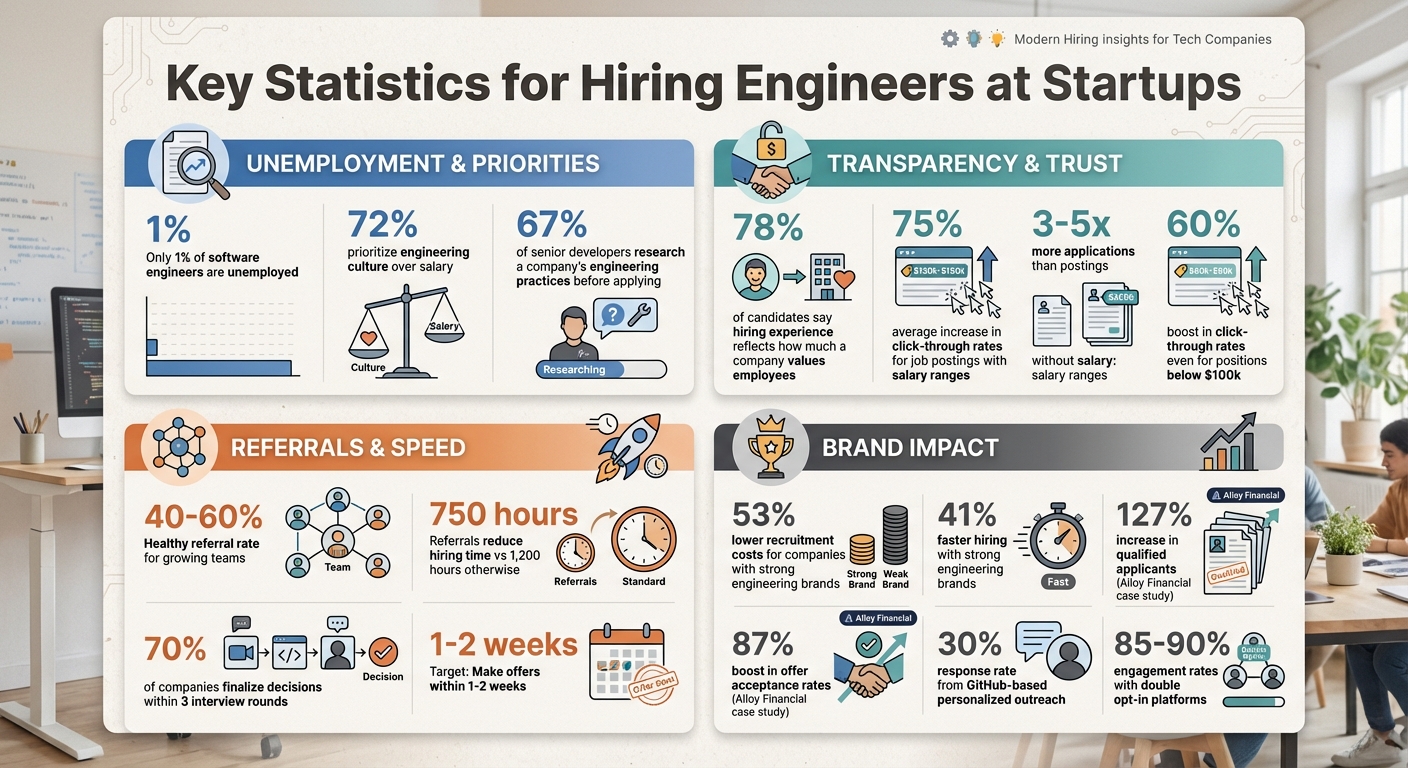 {Key Statistics for Hiring Engineers at Startups}
Create a Clear Employee Value Proposition
Your Employee Value Proposition (EVP) is the backbone of your recruiting strategy. It’s a straightforward, honest declaration of what makes your startup a place worth joining. This clarity sets the stage for highlighting your mission, opportunities for growth, and commitment to fair treatment throughout the hiring process.
In 2017, Clover Network, a point-of-sale startup, demonstrated the power of a well-defined EVP. Under the guidance of Head of Recruiting John Vormbaum, Clover hired 135 engineers in just one year, with a cost per hire of only $7,000. Their efforts helped them achieve transaction volumes that rivaled Square. The secret? Crystal-clear communication about what they offered and consistent delivery of that message.
Show Your Mission and Impact
Engineers want to know that their work matters. They’re not just looking to write code - they want to see how their efforts translate into real-world outcomes. When describing technical roles, go beyond phrases like “build features.” Instead, explain how those features solve meaningful problems for actual users.
Take Alloy Financial, a fintech company with 270 employees, as an example. They openly shared their journey of transitioning from a monolithic architecture to microservices. This transparency led to a 127% increase in qualified applicants and an 87% boost in offer acceptance rates. By being candid about their technical debt, they attracted engineers eager to tackle those challenges head-on.
Authenticity is key. Misleading candidates about your company’s challenges can lead to unmet expectations and hurt retention. As Brian Chesky, Co-founder and CEO of Airbnb, aptly said:
"Companies around for a really long time had a clear mission. A clear sense of values, and they had a shared way of doing something that was unique to them and was really special".
Offer Growth and Ownership Opportunities
While startups may not always compete with big tech on salary, they can offer something equally compelling: ownership and autonomy. Just as transparency builds trust in your mission, providing genuine ownership opportunities encourages engineers to invest in your company for the long haul. At early-stage startups, engineers often take full ownership of features - from architectural decisions to deployment. They’re not just completing tasks; they’re shaping the product.
Position your startup as a place where early employees can grow alongside the company. Highlight specific technical challenges they’ll tackle. For instance, “Refactor payment processing system for 10x scale” is far more engaging than a vague “work on backend systems.” Engineers want to solve problems they can be proud of.
Harness, a portfolio company of Unusual Ventures, approached hiring like product development. They built a brand centered on an engineering-first culture and showcased team activities and mission statements on their website. This strategy resulted in dozens of elite engineering hires through referrals and inbound interest within two years.
Be Transparent About Compensation and Equity
A whopping 78% of candidates say that their experience during the hiring process reflects how much a company values its employees. Few things build trust faster than being upfront about compensation. Include salary ranges in USD in your job postings to save time and demonstrate respect.
Be equally clear about equity. Candidates want to know the details: How much equity are you offering? What’s the vesting schedule? What’s your current valuation and runway? These aren’t awkward questions - they’re critical for candidates weighing the risks and rewards of joining a startup. While over 50% of engineers might accept lower pay for an excellent culture or brand, they need the full picture to make an informed decision.
Here’s a quick breakdown of when to discuss key compensation elements:
| Compensation Element | Why It Matters | When to Discuss |
|---|---|---|
| Salary Range | Shows respect and builds trust | Include in the job posting |
| Equity Details | Highlights long-term commitment | During the first or second interview |
| Company Runway | Offers clarity on stability | During vision-alignment discussions |
| Bonus Structure | Sets performance expectations | At the formal offer stage |
As Caleb Kaiser from AngelList Talent advises:
"Discuss compensation openly. No vagueness, no posturing for negotiations".
For startups with less brand recognition, transparency isn’t just a courtesy - it’s a competitive edge.
Connect with Niche Developer Communities
Developers often hang out on platforms like GitHub, Discord, forums, and other tech-centric spaces. These aren't just job boards - they're opportunities to build real connections long before you need to hire. If you're a startup without a big name, showing up in these spaces with meaningful contributions can make a bigger impact than flashy marketing. This groundwork helps establish authentic relationships that can later lead to successful recruiting.
Take a "give first" approach by offering value before asking for anything in return. Sponsor local meetups, share helpful technical resources, or have your engineers actively engage in discussions about architecture or coding challenges. For example, Codility's tech recruiting team successfully filled two engineering roles between 2022 and 2023 by sourcing candidates directly through GitHub activity. Their personalized outreach, based on actual contributions, resulted in a 30% response rate, which is significantly higher than the typical cold recruiting methods.
Contribute to Open Source and Community Projects
Start by looking at the open-source tools your team already relies on. If you're using frameworks like React, Django, or PostgreSQL, consider giving back to those projects. Even small contributions - like fixing typos in documentation or reporting bugs - can help your company stand out among developers who are already engaged with these tools.
Encourage your team to share draft pull requests or work-in-progress branches. This shows a willingness to collaborate and invites feedback, aligning with the values of open-source communities. When scouting talent, look for developers with notable GitHub activity - those with around 100 stars on their projects can be a good starting point, while contributors with 1,000+ stars often indicate a higher level of recognition. That said, focus on the quality of their issue reports and code reviews rather than just the numbers.
Join Developer Forums and Groups
Developers are increasingly shifting to specialized communities like Reactiflux for React enthusiasts, Kaggle for data scientists, and niche Slack or Discord groups. Each community has its own culture and rules. Use designated #jobs channels, avoid sending unsolicited direct messages, and only promote your opportunities when it genuinely adds value.
When reaching out, it's better for hiring managers or senior engineers to initiate contact instead of recruiters. Developers value technical credibility. Reference specific contributions in your outreach, such as: "I came across your solution for optimizing query performance in project XYZ, and it’s exactly the kind of challenge we’re working on." This level of detail shows that you’ve done your homework and respect their expertise.
Use daily.dev Recruiter for Warm Introductions
With daily.dev Recruiter, you can skip the awkwardness of cold outreach. The platform uses a double opt-in process, so developers are already open to connecting before you reach out. This results in 85-90% engagement rates, a huge improvement over the single-digit response rates common with traditional email campaigns.
The tool matches candidates to your criteria and provides introductions based on their actual activity - not outdated LinkedIn profiles. For startups without strong brand recognition, this solves one of the biggest hurdles: getting noticed. Instead of interrupting developers, you’re meeting them in a trusted space, with a process that respects their preferences.
Write Clear and Transparent Job Postings
Your job posting is often the first interaction candidates have with your startup. If it’s confusing or filled with buzzwords, potential applicants - especially engineers - might skip it altogether. Engineers value straightforward communication over flashy marketing language. Focus on the technical challenges, ownership opportunities, and clear role expectations rather than drowning the posting in corporate jargon.
Including a salary range can make a huge difference. Job postings with salary ranges see a 75% average increase in click-through rates. Even for positions with salaries below $100,000, adding a range boosts click-through rates by 60%. For startups that lack the name recognition of larger companies, being upfront about pay builds trust and helps attract candidates who align with your budget.
Focus on Technical Challenges and Ownership
Developers thrive on solving interesting problems. Instead of listing generic experience requirements, highlight the outcomes of the role. For example, say, "scale microservices to handle 10 million requests per day" instead of "5+ years of backend experience required".
"If your job description is built around checklists of requirements, it will be a lot less compelling to candidates than if it is built around the challenges and impact of the work - the outcomes." - Holloway Guide to Technical Recruiting
Make it clear which product features the engineer will own and the specific challenges they’ll tackle. Use second-person language to help candidates picture themselves in the role. Keep the list of required skills short - ideally one to three must-haves - and limit the total list to about seven. A long list of requirements can discourage qualified applicants.
While focusing on technical details is key, it’s equally important to be transparent about compensation.
Include Salary Ranges and Remote Options
Transparency about pay is a game-changer. Job postings that include a salary range attract 3–5 times more applications than those that don’t. Be specific - state the range in USD (e.g., "$100,000–$150,000") - and clearly outline your remote work policy to attract talent beyond your local area.
If your company offers equity, explain how it works and what percentage of ownership it represents. This level of detail helps candidates make informed decisions quickly and shows that you respect their time.
Use Developer-Friendly Language
Speak the language developers understand. Avoid quirky job titles; stick to clear ones like "Senior Backend Engineer". Developers care deeply about how decisions are made, not just the tech stack. Instead of vague phrases like "we move fast and break things", describe your processes for code reviews, testing, and documentation.
"Culture isn't about beer on Fridays. It's about how decisions get made on Tuesdays." - Ralph Sanchez, Technical Recruiter
Be upfront about technical debt and challenges. For example, in 2024, Alloy Financial shared details in their job postings about transitioning from a monolith to microservices. This transparency led to a 127% increase in qualified applicants and an 87% improvement in offer acceptance rates. Candidates value honesty about the real challenges they’ll face far more than vague promises of smooth collaboration. Authenticity builds trust and attracts the right talent.
Hiring engineers?
Connect with developers where they actually hang out. No cold outreach, just real conversations.
Build Credibility Through Referrals and Networks
After establishing transparent job postings and clear EVPs, tapping into referrals and networks can significantly boost your startup's reputation. Your team's personal connections are, without a doubt, one of your most valuable recruiting tools. Referrals allow you to skip the initial hurdles of introductions and trust-building - your current employees have already vouched for your company’s credibility. In fact, referrals can cut hiring time down to 750 hours, compared to 1,200 hours for companies with lower referral rates.
"By at least a 10x margin, the best candidate sources I've ever seen are friends and friends of friends." – Sam Altman, Chairman, Y Combinator
The secret lies in making referrals a structured process rather than a sporadic effort. A healthy referral rate for a growing team typically falls between 40% and 60%. Exceeding this range risks creating a homogenous team, while falling below it means wasting time on cold outreach.
Use Team Referrals
While most employees are willing to help with hiring, they often don’t actively think about their networks. Instead of asking vague questions like "Who do you know?", give them specific prompts. For example, ask, "Who was the best debugger at your last job?" - this can help surface overlooked talent.
Consider organizing "Sourcing Jams" - one-hour team sessions where employees comb through their LinkedIn or GitHub networks together. Make it engaging with snacks, music, and a shared spreadsheet to keep things productive and fun. Some companies, like Uber, incentivize referrals by offering rewards such as 500 shares for successful engineering hires. Others, like Digital Ocean, add a charitable twist to their referral programs, encouraging broader participation.
Streamline the process by drafting short, forwardable intro emails that your team can send to their contacts without much editing. Use double opt-in introductions - always confirm with the candidate before making a formal connection. Recognize and reward the effort, not just the result. Even if a referral doesn’t lead to a hire, small thank-you gestures for qualified leads help sustain participation.
Don’t stop with employees - leverage your extended network. Ask investors, advisors, and even candidates who declined your offer for recommendations. These connections can often lead to untapped talent, making your hiring process both faster and more effective.
Partner with Bootcamps and Non-Traditional Talent Sources
Looking beyond internal referrals, partnerships with external groups can expand your talent pool. Coding bootcamp graduates and self-taught engineers often bring determination, adaptability, and diverse experiences that align well with startup environments. Many bootcamp grads transition from other careers, bringing maturity and complementary skills to the table. Focus on what candidates can achieve, rather than their academic credentials - degrees may be static, but people are capable of growth.
Forge relationships with local bootcamps by offering mentorship opportunities, hosting guest lectures, or setting up office hours. This gives you early access to motivated individuals before they enter the broader job market. When evaluating candidates from non-traditional backgrounds, look for signs of self-directed learning, such as GitHub contributions, side projects, or technical blog posts. These are strong indicators of the resourcefulness that startups thrive on.
To address any skill gaps, provide structured onboarding and mentorship. Pair junior hires with senior team members who can guide them through your workflows and codebase. This upfront investment often pays off quickly, especially with candidates who are eager to prove themselves.
Attend Developer-Focused Events
Digital outreach is important, but nothing beats the trust built through face-to-face interactions. Events like meetups, hackathons, and conferences let you connect with developers in a meaningful way. These interactions allow people to see your team’s problem-solving abilities firsthand, cutting through the noise of online recruiting. When your engineers speak at conferences or participate in panels, they become authentic ambassadors for your brand. Developers are far more likely to trust insights from peers than from recruiters.
Adopt a "give first" approach at these events. Sponsor local meetups, host workshops, or open your office space for community gatherings. Share your expertise by answering technical questions or discussing challenges your product has faced. Building these relationships without an immediate hiring pitch establishes goodwill. Then, when you mention job opportunities, people are already familiar with your team and respect your work.
After meeting developers at events, follow up digitally to maintain the connection. This bridges the gap between in-person interactions and formal recruiting conversations, making your outreach feel personal rather than transactional.
Improve Your Interview and Offer Process
After building trust through referrals and community engagement, your interview and offer process needs to maintain that momentum. Focus on being fast, clear, and genuine, rather than relying on lengthy assessments. Respect candidates' time while highlighting why your startup is an exciting place to work. With trust already established, the interview is your opportunity to clearly share your vision.
Present Your Vision Early in Interviews
Start with a 30-minute call to outline your mission, the role, and its potential impact. This helps build rapport while giving candidates a glimpse of your startup's direction. Jyoti Bansal, founder of AppDynamics, personally spoke with every candidate in the early days. His enthusiasm and detailed business plans left a lasting impression, often serving as a key factor in closing top talent.
"The key to hiring world-class engineers is to share your story, and help them see where they fit in it. You're not just offering them a job, you're selling them on the next chapter of their life." – Caleb Kaiser, AngelList Talent
At the final interview stage, shift into "pure selling mode." Share details like growth plans, technical challenges, and your vision for the future. Inspire candidates by painting a vivid picture of what lies ahead. A "recruiting dossier" - a document that highlights technical challenges, big ideas, and team culture - can be a valuable tool to address common questions upfront.
Use Practical and Collaborative Technical Challenges
After sharing your vision, let candidates experience the job through realistic tasks. Generic algorithm puzzles don’t reflect the day-to-day work engineers will face. Instead, use practical assessments. For example, Coinbase has candidates spend one or two days with their development team, fixing real bugs and building features. This approach not only evaluates skills but also gives candidates a sense of the work environment.
For candidates with tight schedules, consider pair programming or collaborative code reviews. Keep assessments concise - 2–4 hours or 60–90 minute live sessions work well. Allow candidates to work in a focused environment, free from interruptions, so they can showcase their natural workflow. To ensure fairness, ask every candidate for the same role identical questions, which helps maintain consistency across interviews.
Move Fast With Competitive Offers
Speed is your secret weapon against larger tech companies. Aim to make offers within 1–2 weeks of the initial application. Nearly 70% of companies finalize hiring decisions within three interview rounds, and dragging out the process risks losing candidates to faster-moving competitors. Debrief within 24 hours of interviews and communicate decisions quickly.
"One of your biggest assets is the speed at which you operate compared to a big tech company, and so offering quickly is a big win for you." – AngelList Talent
Be transparent about salary and equity early on to accelerate decisions. If you can’t match the salaries of big tech firms, highlight performance-based bonuses, meaningful equity, and the growth opportunities your startup offers. Once an offer is extended, use quick communication channels to address any questions. Since 78% of candidates see the recruitment process as a reflection of how a company values its people, every interaction matters in securing their commitment.
Conclusion
Building trust is essential when your brand is still growing. Focus on authenticity, transparency, and speed to attract top talent. These principles guide every step, from crafting a clear Employee Value Proposition (EVP) to making swift job offers. Start by creating an EVP that highlights your mission, technical challenges, and opportunities for meaningful ownership. As Brian Chesky, Co-founder and CEO of Airbnb, once said:
"Companies around for a really long time had a clear mission. A clear sense of values, and they had a shared way of doing something that was unique to them and was really special."
Authenticity is key when engaging with developer communities. Build credibility by offering value first - whether through blog posts, open-source contributions, or sharing real engineering challenges. This approach resonates with developers, especially since 72% of them prioritize engineering culture and problem-solving practices over compensation . Highlighting how your team tackles challenges can make a stronger impression than simply listing benefits.
Transparency also plays a major role. Including details like salary ranges, remote work options, and technical specifics in your job postings helps establish trust. With 67% of senior developers researching a company’s engineering practices before applying , providing clear and upfront information makes their decision easier.
Finally, speed can set you apart. Companies with well-regarded engineering brands see 53% lower recruitment costs and can hire 41% faster . Streamline your interview process and aim to extend offers within 1–2 weeks. A fast and respectful hiring experience reflects your startup’s efficiency and makes it more appealing to top candidates.
FAQs
How can a startup with no brand recognition attract skilled engineers?
Startups looking to bring in skilled engineers need to focus on building a strong employer brand that genuinely reflects what sets them apart. Whether it’s the company’s mission, its work environment, or the potential for growth, these elements should form a story that speaks to engineers who thrive on making an impact, tackling challenges, and being part of a close-knit team.
Meeting engineers where they already spend their time is key. Platforms like GitHub, Stack Overflow, or local tech meetups are great places to engage. By being active in these spaces - whether through helpful contributions, answering questions, or sharing expertise - startups can establish trust and credibility. Sharing your team’s knowledge through blog posts, technical videos, or even open-source projects is another way to highlight your company’s technical strengths and show engineers the meaningful work they could be a part of.
By focusing on authenticity and creating a sense of community, even smaller or lesser-known startups can carve out a space to attract top engineering talent.
Why is transparency important when hiring engineers for a startup?
For startups, transparency is a game-changer when it comes to building trust and credibility - especially if your company isn't a household name yet. By openly sharing your mission, values, and what it's like to work at your company, you can attract engineers who feel genuinely aligned with your vision.
Being upfront about job expectations, benefits, and opportunities for growth adds another layer of authenticity. This kind of openness can make your startup stand out, giving skilled engineers the confidence to join your team, even without the backing of a big-name brand.
How can startups attract engineers through niche developer communities?
Startups looking to hire engineers should consider diving into niche developer communities where skilled professionals are already active. These spaces include platforms like GitHub, Stack Overflow, local meetups, and open-source initiatives. By genuinely participating - whether it’s sharing expertise, engaging in discussions, or collaborating on projects - startups can establish trust and gain credibility among developers.
Being part of these communities also offers a chance to assess potential candidates based on their contributions and interactions. Reaching out with personalized messages that align with a developer's interests or past work can foster meaningful connections. This strategy makes it easier to attract top-tier talent, even if your startup isn't a household name. Developers who value authenticity and technical depth are far more likely to respond positively to this approach.
.png)