If you're tired of cold outreach yielding poor results, it’s time to rethink your approach. Warm intro pipelines allow you to connect with developers through mutual connections and trusted channels, drastically improving engagement and hiring success rates. Here’s a quick breakdown:
- Why Warm Intros Work: Referred leads are 4x more likely to convert and have a 37% higher retention rate than traditional hires.
- Key Steps:
- Define Roles and Personas: Identify high-demand developer roles and create detailed profiles based on workflows, tools, and interests.
- Source Developers: Engage with developers in active spaces like GitHub, Stack Overflow, or platforms like daily.dev Recruiter.
- Pre-Qualify and Segment: Use lightweight screening and categorize candidates (Ready-Now, Warm, Nurture) for targeted outreach.
- Nurture Relationships: Share tailored, role-specific content and automate drip campaigns to maintain engagement.
- Activate When Needed: Personalize outreach to convert warm leads into active candidates. Using non-spammy recruiter emails is key to maintaining this trust.
Warm intros save time, improve conversion rates, and build lasting relationships with technical talent. The secret? Focus on trust and relevance, not mass outreach.
::: @figure 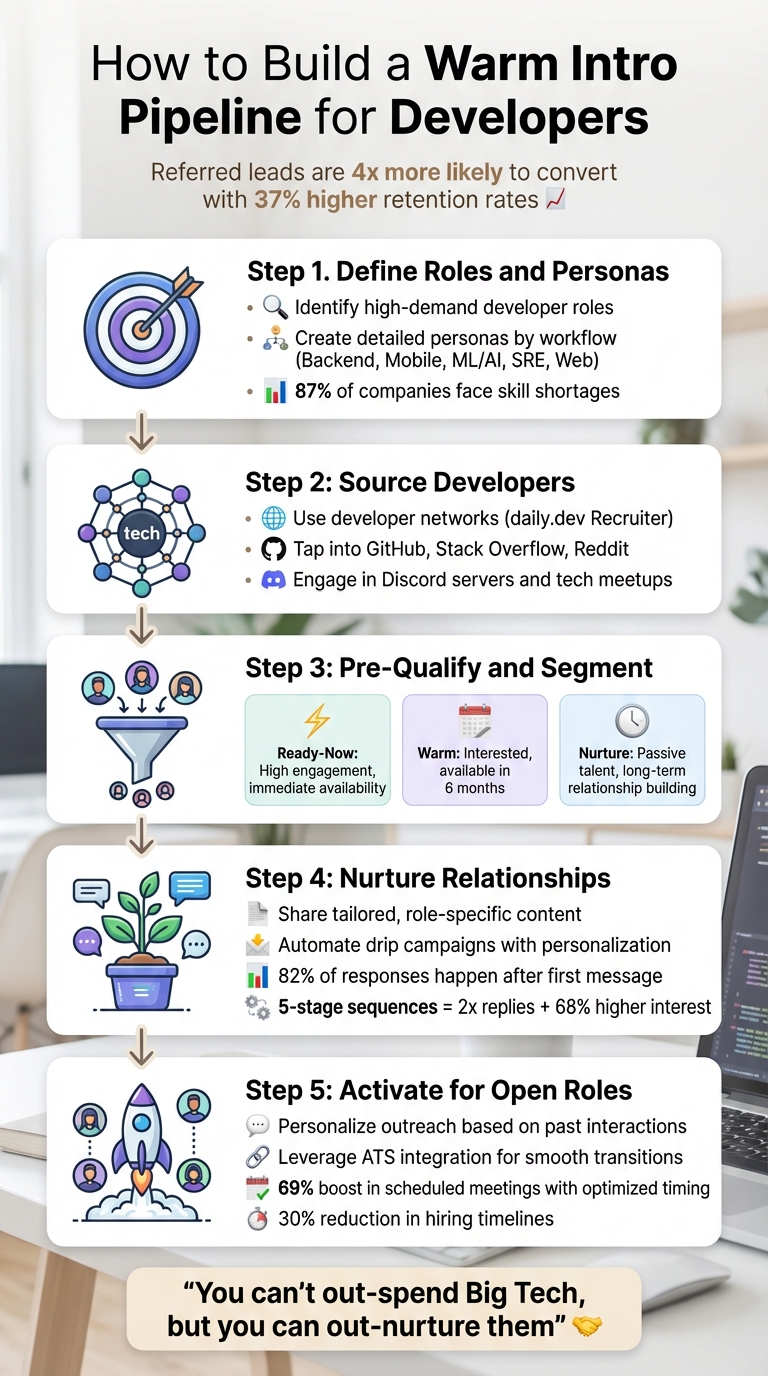 {5-Step Warm Intro Pipeline for Developer Recruitment}
Step 1: Define Developer Roles and Target Profiles
Start by clearly identifying which developers you need to reach. Think of recruitment as building a well-structured talent framework . The more specific you are about the roles and profiles, the more effective your outreach will be.
Identify High-Demand Developer Roles
Pinpoint the developer roles that bring the most value to your business. With 87% of companies facing or expecting skill shortages , prioritizing the right roles is critical. Focus on roles that combine high value with unique skill sets .
These "Criticals" might include senior backend engineers designing your core systems, DevOps specialists maintaining production environments, or machine learning engineers developing proprietary models. Evaluate each role based on factors like revenue impact, potential for innovation, and associated risks .
Collaborate with hiring managers, HR teams, and current employees in similar positions to ensure your role descriptions align with actual business needs . Plan for future talent demands by considering how digital transformation and emerging skills will shape your company’s needs over the next 12–24 months .
Once you’ve identified these critical roles, use this information to build detailed developer profiles.
Create Developer Personas
To make your outreach resonate, create specific developer personas. Instead of relying on broad job titles like "Backend Developer", segment developers by their primary workflows - Backend, Mobile, ML/AI, SRE, or Web . A more precise persona captures the nuances of their technical challenges and daily tasks.
Each persona should include a descriptive name (e.g., "API Integrator Alex"), goals, pain points, preferred communication channels, and the tools they use daily . Leverage data from your ATS, product analytics, and engagement metrics to understand what matters to these developers . For instance, if you’re targeting backend engineers, find out which codebases they work on, whether they prefer Java/Spring or Python/Django, and what CI/CD tools they use .
Conduct interviews with engineers to uncover real-world challenges and motivations . Update these personas regularly - ideally every quarter - using new data and feedback from engineers . Some companies even designate "Persona Champions" - engineers who represent a specific persona - to analyze survey data and ensure the profiles stay accurate . By making your personas highly detailed and relevant, you can turn generic outreach into meaningful connections, significantly improving your chances of success.
Step 2: Source Developers from Active Communities
Once you’ve nailed down your developer profiles, the next move is to go where they already are. The best way to build meaningful connections is by tapping into spaces where developers are active, engaged, and open to conversations. This approach sets the foundation for a warm introduction pipeline.
Use Developer Networks Like daily.dev Recruiter
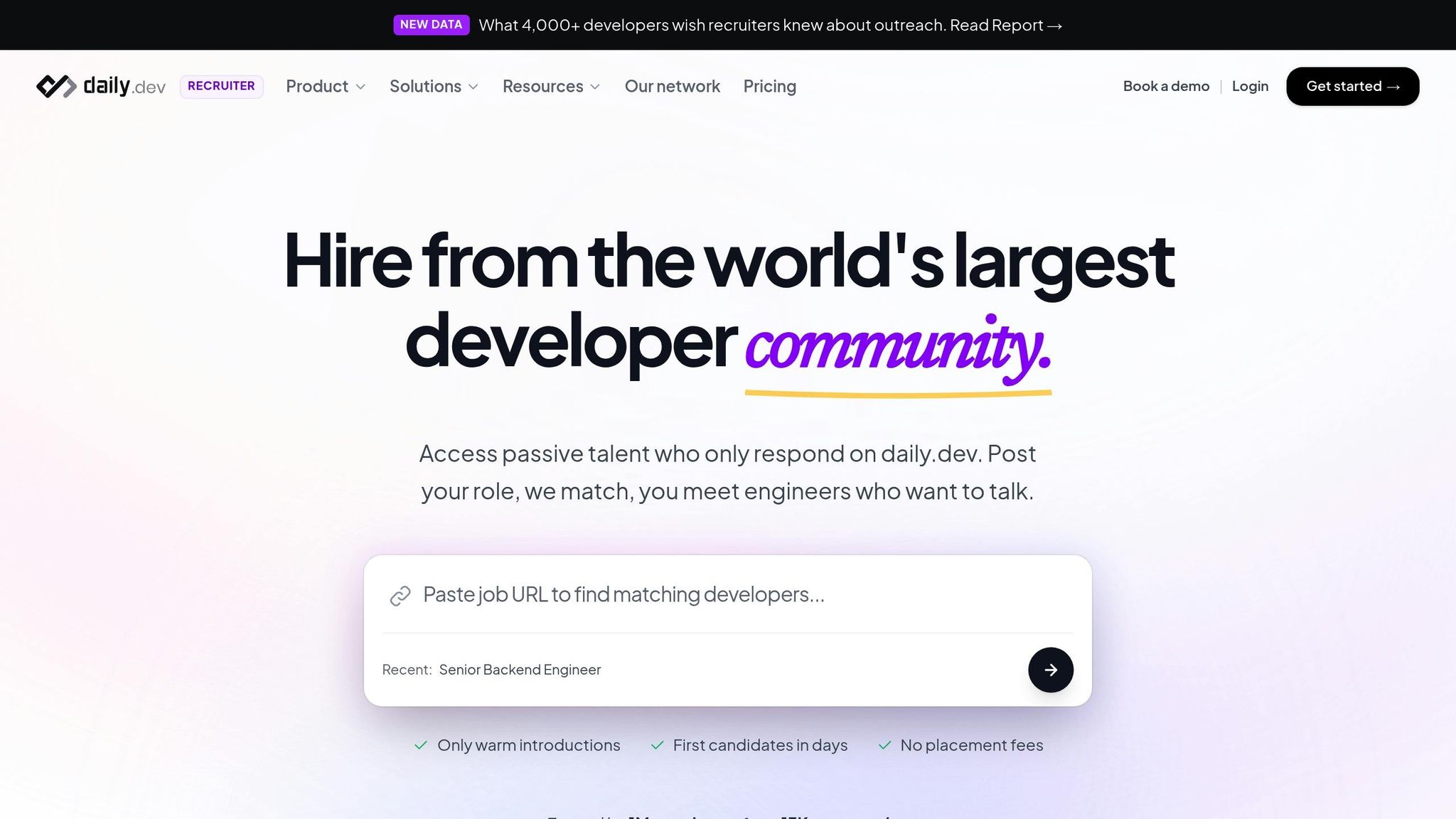
daily.dev Recruiter offers a unique way to connect with developers. It’s built on a platform where developers actively engage with technical content, making it far more effective than traditional job boards or databases. What sets it apart is its double opt-in system, which ensures developers explicitly express interest before any introduction happens. This eliminates the dreaded cold outreach vibe.
Instead of chasing outdated resumes or stale LinkedIn profiles, this platform connects you with developers who are actively engaged and open to opportunities. It transforms recruiting into a trust-based process, where intent and credibility take center stage - no endless screening calls required.
Tap Into Forums, GitHub, and Tech Meetups
If you’re looking for developers with proven skills, platforms like GitHub are goldmines. GitHub acts as a live portfolio, showcasing contributions to repositories and recent activity through the "green" contribution graph. Mentioning a specific pull request or repository in your outreach can make your message stand out.
Stack Overflow is another excellent resource. Developers’ reputation scores, badges, and tags (like React or Python) highlight their expertise. Personalizing your outreach by referencing a specific answer or discussion they’ve contributed to can go a long way.
For niche communities, Reddit is a great option. Subreddits like r/MachineLearning or r/rust are filled with developers discussing specialized topics. Engage with a value-first approach to build genuine connections. Similarly, platforms like Dev.to and Hashnode feature developers who share their knowledge, giving you a peek into their technical depth and communication skills.
Don’t overlook Discord servers and Slack channels dedicated to open-source projects. These spaces offer direct, informal ways to build relationships with developers who are already collaborating on projects.
When reaching out, be upfront about key details like tech stacks, challenges, and salary ranges. Developers appreciate transparency, and it sets the tone for a genuine, productive conversation.
Step 3: Pre-Qualify and Segment Your Pipeline
Once you've sourced developers, the next step is to establish a process for evaluating and organizing candidates. Pre-qualification helps you filter out mismatches early, saving time and effort. Segmentation, on the other hand, ensures you're engaging developers with messages that align with their interests and readiness.
Use Lightweight Screening Tools
Start by gathering just enough information to make an initial assessment. For instance, GitHub's pinned repositories can give you a window into a developer's proudest projects and technical expertise. Pay close attention to the quality of README files - they can reveal a lot about a candidate's communication skills, which are just as important as their technical abilities.
Another key aspect to watch for is intent signals. Actions like visiting your website, viewing your LinkedIn profile, or engaging with technical content indicate interest and potential readiness. Focus on candidates with active, recently updated repositories to ensure they're currently engaged in their craft.
Tools like daily.dev Recruiter can simplify this process by collecting explicit interest from developers through quick, targeted screenings. This way, you can evaluate technical fit or compatibility before initiating contact, ensuring a more efficient and focused approach.
Once you've screened candidates, the next step is to organize them based on their level of readiness.
Segment Developers Into Categories
After pre-qualification, grouping developers into categories allows you to tailor your outreach strategies. Here's how you can segment candidates:
- Ready-Now: These candidates show high engagement, meet technical qualifications, and are immediately available. They’re ready for direct outreach and scheduling.
- Warm: These developers have shown interest - such as responding to messages or participating in polls - but may not be available right away. They could be open to opportunities within the next six months.
- Nurture: This group includes passive talent with niche skills or high seniority. Building long-term relationships is key here, as they may require more time and effort before considering new opportunities.
It's essential to track interactions like email opens, link clicks, and replies in your CRM or ATS. This data helps you identify when a nurture candidate becomes warm enough for a more direct pitch. For nurture candidates, consider automating periodic updates every three to four weeks. These could include technical insights or product news to keep your company on their radar without overwhelming them. Additionally, tagging developers based on specific interests - like Rust or open-source contributions - lets you personalize future outreach.
| Segment Category | Criteria/Tags | Engagement Strategy |
|---|---|---|
| Ready-Now | High engagement score, immediate availability, passed screening questions | Direct outreach and immediate scheduling |
| Warm | 2+ meaningful replies in 6 months, poll voters | Personalized check-ins, technical roundtable invites |
| Nurture | Passive talent, high seniority, niche skills (e.g., Rust, Go) | Quarterly technical insights, product updates, Slack community invites |
Step 4: Build and Nurture Relationships with Developers
Once you've segmented your pipeline, the next challenge is turning those groups into meaningful, trust-filled relationships. This step is all about keeping developers engaged over time by offering consistent, relevant communication that they actually value. Developers can spot generic, impersonal outreach a mile away, so your goal is to become a trusted resource they want to hear from.
Share Tailored, Role-Specific Content
Nobody likes generic newsletters - they're easy to ignore. Instead, focus on sending content that aligns with each developer's specific interests, skillset, and career goals. For example, a backend engineer working with Kafka isn’t likely to care about updates on frontend frameworks. They're more interested in topics like scaling distributed systems or boosting message throughput.
Your content strategy should center around technical value rather than sales pitches. Think about sharing detailed case studies, inviting developers to niche technical groups, or showcasing impactful open-source projects. Use tagging to organize developers by their interests - whether it's Rust, DevOps, or open-source contributions - and tailor your messages accordingly. This approach turns your communication into something developers actually want to engage with, rather than background noise.
Automate Drip Campaigns for Consistent Engagement
Automation is key to scaling your efforts, but it needs to feel personal. Use dynamic tokens in your email campaigns to include personalized details like a developer’s GitHub handle, recent blog post, or starred projects. This small touch makes each message feel custom-crafted, even when it's part of a larger campaign. Personalized outreach like this consistently leads to higher recruitment funnel conversion rates .
Keep the conversation flowing by replying in the same email thread for follow-ups. This continuity makes the interaction feel like an ongoing dialogue rather than a series of disconnected cold emails . Research shows that 82% of responses happen after the first message, emphasizing the importance of thoughtful, persistent follow-ups .
To maintain a personal connection, schedule quarterly manual check-ins. Data shows that five-stage email sequences generate double the replies and achieve nearly 68% higher "interested" rates compared to standalone messages . Modern CRMs can also help by triggering specific actions based on engagement. For instance, if a developer opens three technical articles you’ve sent, the system could automatically invite them to a relevant tech talk . This method ensures your communications are guided by genuine interest rather than a rigid calendar. Combining smart automation with occasional personal outreach keeps your pipeline active and strengthens relationships over time.
Hiring engineers?
Connect with developers where they actually hang out. No cold outreach, just real conversations.
Step 5: Activate the Pipeline for Open Roles
When a developer in your pipeline matches an open role, it's time to act with precision. Building on the trust you've cultivated during the nurturing phase, treat every outreach as a chance to create a meaningful connection. The goal? Turn those warm relationships into active candidates by focusing on relevance and eliminating unnecessary hurdles.
Personalize Outreach for Maximum Impact
When reaching out to a developer, make your message feel uniquely tailored to them. Mention their specific skills, highlight recent projects, or reference past interactions you've had. This level of personalization not only reinforces the trust you've built but also demonstrates that the opportunity aligns with their career goals.
Timing plays a huge role here. According to Rootly, there’s a 69% boost in scheduled meetings and a 640% rise in LinkedIn outreach success when timing is optimized . Use this insight to prioritize developers who’ve shown the most interest - those who have opened multiple emails or clicked on technical content. These engaged individuals are more likely to respond positively.
Keep a close eye on your pipeline metrics to pinpoint the right moment for re-engagement. Companies with accurate forecasting are 10% more likely to see year-over-year revenue growth . For example, track "deal age" or look for leads that have been inactive for 30 days. Reaching out before they disengage completely can make all the difference. As Gert-Jan Lagas, AVP in Revenue at Mural, explains:
"Predictive metrics show you how fast you're moving and whether you're headed in the right direction" .
Leverage Platforms to Simplify Hiring
Once your outreach resonates, make the next steps easy by utilizing tools that streamline candidate movement. Integration with Applicant Tracking Systems (ATS) like Greenhouse or Beamery allows you to monitor every interaction - opens, clicks, and replies - so you know exactly when a developer is ready to move forward .
Platforms like daily.dev Recruiter take this a step further by offering warm, double opt-in introductions to pre-qualified developers who are already interested in new opportunities. Instead of wasting time on cold outreach, you connect with engaged developers in real time. The platform’s ATS integration ensures candidates transition smoothly from initial contact to interviews, saving time and maintaining the trust you’ve worked hard to establish. This efficient process keeps momentum going, making it easier to secure top talent without delays.
Tools and Technology for Managing Warm Intro Pipelines
Once your warm intro pipeline is set up, having the right tools can make all the difference. They help organize what might otherwise be scattered spreadsheets into a structured, repeatable system. These tools streamline tasks like sourcing developers, automating outreach, and tracking interactions, allowing you to focus on building meaningful connections instead of getting bogged down in administrative work.
Recommended Tools for Developer Recruitment
daily.dev Recruiter is a standout tool for warm intro pipelines, as it operates directly within an active developer network. Rather than relying on outdated profiles, this platform connects you with developers who are actively engaged - reading technical articles, exploring new frameworks, and signaling their interests in real time. This approach eliminates cold outreach and ensures you're speaking with developers who are genuinely interested in opportunities. Plus, it integrates with your ATS, ensuring smooth data flow throughout the hiring process.
For automating employee referrals, Zapier offers a practical solution. Their "Warm Intro Recruiting" system uses a Chrome extension to capture LinkedIn profiles from your employees' networks. It then sends personalized Slack messages using pre-built templates. Responses are tracked in Zapier Tables, giving you a clear, centralized view of your referral efforts . This transforms your team's professional connections into a reliable referral engine without the need for constant manual follow-ups.
Finally, platforms like Lever serve as powerful ATS and CRM tools. They let you tag candidates, set up automated drip campaigns tailored to specific roles, and manage relationships over time. By integrating these tools with your sourcing efforts, you avoid duplicate records and maintain a complete history of candidate interactions.
Comparison of Warm Intro Tools
| Tool | Primary Strength | Key Feature | Best Use Case |
|---|---|---|---|
| daily.dev Recruiter | Warm, consent-based connections | Double opt-in introductions, developer-focused network | Connecting with developers already open to opportunities |
| Zapier | Network automation | Automated referral workflows via Slack and Chrome extension | Turning employee networks into a referral engine |
| Lever | Candidate relationship management | Role-specific drip campaigns, advanced reporting | Building and managing long-term relationships with passive talent |
The tools you choose should align with how your target developers interact online and how much automation you want in your process. Platforms like daily.dev Recruiter are ideal for finding engaged, pre-qualified candidates, while tools like Zapier simplify employee referral workflows. For long-term relationship management, CRMs like Lever are indispensable. By integrating these tools, you can create a streamlined and efficient warm intro pipeline that works seamlessly from start to finish.
Conclusion and Key Takeaways
Review of Core Steps
Creating a warm intro pipeline is all about being proactive and intentional. The five steps outlined in this guide help shift your approach from scrambling to fill roles at the last minute to building meaningful, long-term relationships with developers. Here’s a quick recap:
- Define your target developer roles and personas: Get crystal clear on the skills, experience, and qualities you're looking for.
- Source from active developer communities: Engage with developers where they already hang out, like daily.dev Recruiter, GitHub, or local tech meetups.
- Pre-qualify and segment your pipeline: Organize candidates by factors like seniority, tech stack, or how soon they’re ready to make a move.
- Nurture relationships consistently: Share technical insights or helpful content every few weeks to provide real value, not just job offers.
- Activate strategically when roles open: Reach out with personalized, thoughtful messages to candidates who are already warmed up and pre-qualified.
This approach doesn’t just save time - it can cut hiring timelines by 30% while keeping a steady pool of talented developers ready for when you need them .
Final Thoughts on Warm Intros
When you think about it, warm intros are a game-changer. As Index.dev puts it, "You can't out-spend Big Tech, but you can out-nurture them" . Instead of cold, impersonal outreach, warm intros build trust, mutual understanding, and genuine interest. Developers are more likely to accept offers quickly - sometimes within just 10 days . The key is to focus on relationships, not transactions.
By consistently investing in these connections, you create a smoother transition from passive engagement to active recruitment. This approach respects developers' time and priorities, resulting in better conversations, stronger technical and personal matches, and improved retention rates. When you show you understand their world - whether that’s discussing tech stacks or tackling real-world challenges - you stand out as someone worth listening to.
What’s more, this isn’t just about filling today’s openings. A well-maintained warm intro pipeline becomes a living network of talented developers who stay engaged over time. Even if they’re not ready to move now, they’ll think of you when the timing is right. And because your touchpoints are consistent and genuinely helpful - not just constant hiring pitches - you stay relevant without being pushy.
Start small but stay consistent. Over time, trust will do the heavy lifting, turning your warm intro pipeline into one of your most reliable tools for finding and hiring top talent. It’s an approach that pays off not just now, but for years to come.
FAQs
How can I create detailed developer personas for better recruitment?
To build developer personas that truly connect, start by diving into their specific preferences, challenges, and goals. Developers tend to prioritize honesty, technical expertise, and community impact when weighing opportunities, so your approach should reflect these values.
Gather real insights about their technical abilities, favorite tools, and professional ambitions. Steer clear of assumptions - rely on hard data from platforms like GitHub or Stack Overflow to get a clear picture of their work and interests. Make your outreach personal by referencing their projects or offering solutions to the challenges they regularly encounter.
When your personas are grounded in accurate, well-researched information, you’ll be able to create engagement strategies that feel tailored and meaningful. This approach not only strengthens connections but also boosts response rates.
What are the best platforms to connect with developers in active communities?
Some of the best places to connect with developers in active communities are GitHub and Stack Overflow. GitHub serves as a central hub for open-source projects and code sharing, making it a great spot to assess a developer’s skills by reviewing their contributions and collaborations. On the other hand, Stack Overflow is a go-to forum where developers tackle challenges, share insights, and demonstrate their technical expertise.
In addition to these global platforms, exploring local meetups or joining niche open-source communities can be a great way to connect with developers in specific regions or specialized fields. Engaging in discussions and contributing meaningful insights in these spaces helps build trust and strong relationships. These platforms are especially valuable for reaching developers who aren't actively job hunting but might be open to the right opportunity when approached with care.
How can I personalize outreach to better connect with developers?
To connect with developers in a meaningful way, focus on personalized communication that goes beyond just addressing them by name. Dive deeper - mention their specific projects, highlight their skills, or reference shared interests. This shows you’ve taken the time to understand their work and expertise. Generic, cookie-cutter messages? Skip those. Instead, include details like relevant technical achievements or career goals they’ve shared.
Be upfront about the role. Share clear expectations, salary ranges, and potential challenges that align with what they’re looking for. Developers value transparency, and being direct builds trust. Another great way to connect is by engaging in their communities or joining technical discussions. This not only helps you understand their world but also lays the groundwork for authentic relationships. Thoughtful, tailored outreach isn’t just polite - it shows respect for their craft and significantly boosts engagement.
.png)