When hiring gets tough, many recruiters turn to expensive tools like LinkedIn Recruiter or new tracking systems. But here’s the truth: tools can’t fix weak relationships with candidates. Instead of relying on more software, building a recruiting channel focuses on creating long-term connections with developers. This approach prioritizes trust and engagement over cold, transactional outreach.
Key Takeaways:
- Why Tools Fall Short: Overlapping systems increase costs and don’t address the deeper issue - developers distrust recruiters.
- The Solution: Build a community where developers feel valued. Share helpful content, host events, and use employee referrals to create a reliable talent pipeline.
- Proven Results: Companies that invest in relationships reduce time-to-hire by 40% and improve candidate quality.
- Practical Steps: Engage in developer communities, personalize outreach, and offer transparency (e.g., salary details upfront).
Instead of wasting time juggling tools, focus on trust-driven strategies to attract top talent and streamline your hiring process.
Why Build a Recruiting Channel Instead of Buying More Tools?
The Problems with Tool Dependency
Recruiting teams today are drowning in tools, and costs keep climbing. But here's the kicker: more tools don't necessarily mean better hires. In fact, they often make things worse.
Recruiters face "operational drag" , juggling countless tabs, different search methods, and the tedious task of manually piecing together candidate profiles. This process not only wastes time but also leads to missed opportunities and incomplete data . Then there's the "access versus efficiency" dilemma , where companies invest in overlapping databases, hoping for better results. Yet, 80% of top tech talent remains passive and out of reach, leaving businesses with bloated expenses and slower hiring cycles.
Premium tools like LinkedIn Recruiter are another pain point. With monthly costs running into the thousands, many features go unused, adding little value. Meanwhile, developers are growing increasingly disillusioned. A whopping 61% feel recruiters aren't doing a good job, and recruiters' average trust score is a lackluster 2.5 out of 5.0 . Add to that, 64% of developers say recruiter messages feel like copy-paste jobs, and 43% have muted recruiters entirely . Clearly, throwing money at tools won’t solve the deeper trust and engagement issues.
"This isn't a sourcing problem. It's a trust problem." - daily.dev State of Trust Report
The solution? Move away from tool overload and focus on building genuine relationships.
The Benefits of Long-Term Recruiting Channels
Shifting to a recruiting channel changes everything. Instead of bombarding developers with cold messages, you show up where they already are - spaces they trust and value. This approach emphasizes meaningful connections over sheer volume, ditching the "spray and pray" mindset .
The results speak for themselves. Companies that streamlined their sourcing methods and ditched fragmented tools saw a 40% reduction in time-to-hire within just three months . By zeroing in on the right candidates and prioritizing trust, you create a ripple effect: developers engage with your content, refer friends, and remember you when they’re ready for a career move.
Trust-based recruiting channels also tackle one of the biggest issues in cold outreach: lack of transparency. These days, 69% of developers expect salary details in the first message, and 19% will ignore outreach if it’s missing . A well-crafted recruiting channel eliminates vague job descriptions, instead offering clear details about tech stacks, salary ranges, and role expectations. This transparency builds credibility right from the start.
Moving from a tool-heavy approach to building recruiting channels isn’t just about cutting costs. It’s about creating a reliable, trust-driven talent pipeline. And no software subscription can buy that.
How to Build an Effective Recruiting Channel
::: @figure 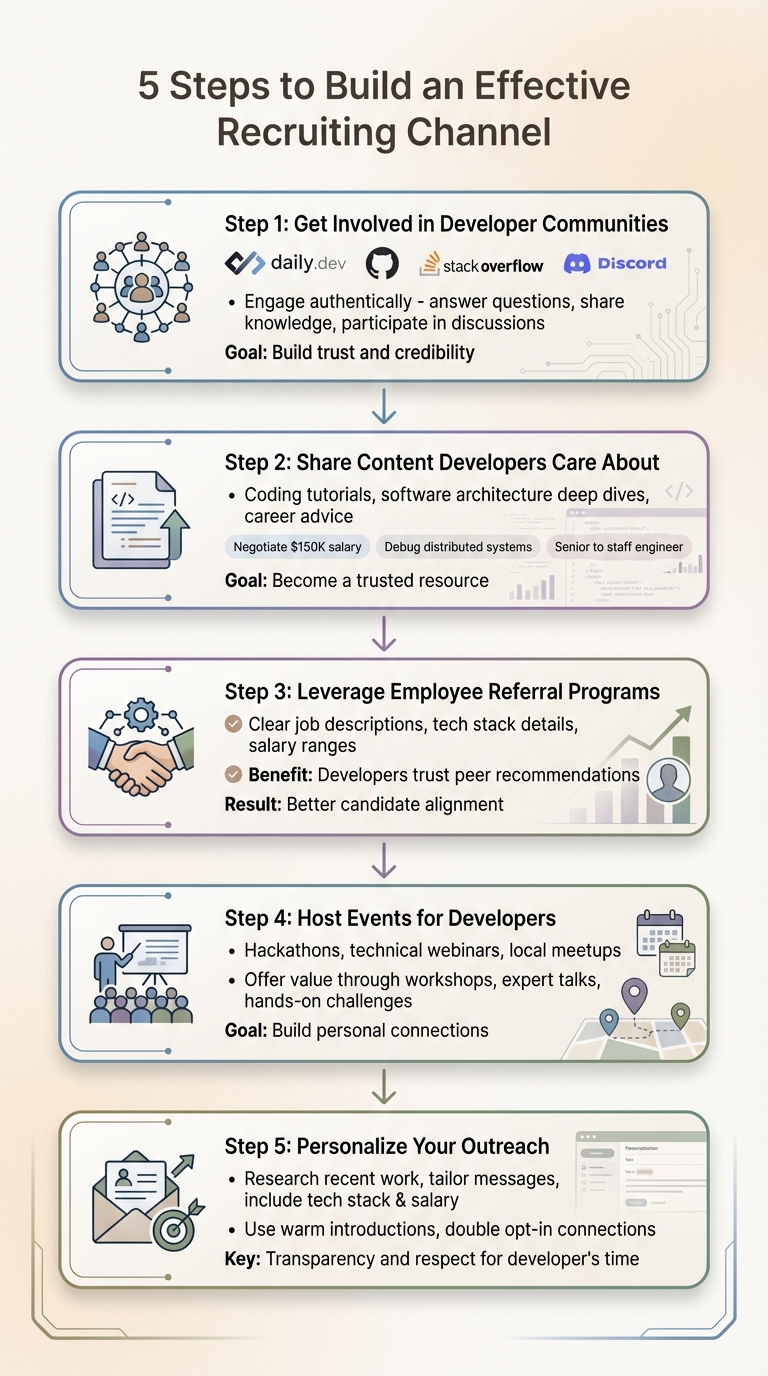 {5-Step Process to Build an Effective Developer Recruiting Channel}
Creating a strong recruiting channel involves consistently connecting with developers where they already spend time and offering genuine value. Here’s how you can turn your efforts into a sustainable recruiting pipeline.
Step 1: Get Involved in Developer Communities
Developers often gather on platforms like daily.dev, GitHub, Stack Overflow, and niche Discord servers. To build trust, avoid being a silent observer or pushing job ads. Instead, focus on contributing meaningfully.
Engage authentically by answering questions, sharing knowledge, and participating in discussions. You can comment on articles, upvote helpful content, or show interest in developers' projects. This kind of consistent interaction helps you establish trust and recognition. When the time comes to discuss opportunities, you'll already have credibility as someone who adds value to the community.
Step 2: Share Content Developers Care About
Content can be a great way to build trust and credibility. Share resources that help developers grow their skills, navigate career challenges, or stay informed about industry trends. For example, you could post coding tutorials, deep dives into complex topics like software architecture, or advice on career transitions.
Think about addressing real challenges developers face. Articles like "How to negotiate your first $150,000 salary", "Debugging distributed systems: lessons from production", or "Moving from senior to staff engineer" can resonate deeply. When developers find your content useful, they’re more likely to remember you as a trusted resource, not just another recruiter.
Step 3: Leverage Employee Referral Programs
Your existing engineering team can be one of your strongest recruiting tools. Developers trust recommendations from their peers far more than cold outreach from recruiters. Set up a structured referral program that encourages your team to share job openings with their networks.
Make it easy for your employees by providing clear job descriptions, detailed tech stack information, and salary ranges. Offering meaningful incentives can also motivate them to participate. Referrals often lead to candidates who are not only more likely to accept offers but also align better with your team’s dynamics.
Step 4: Host Events for Developers
Hosting events is a great way to build personal connections that email or LinkedIn messages can’t achieve. Consider organizing hackathons, technical webinars, or local meetups where developers can engage with your company while showcasing their skills.
Choose your event format wisely. Public hackathons can help raise awareness about your brand, while private events might provide more focused feedback on your products. Whatever you choose, prioritize offering value - like sessions on new technologies, hands-on workshops, or talks from industry experts. Realistic challenges that reflect actual job tasks can also give you a better understanding of candidates' skills. Follow up with additional resources or invitations to future events to keep the connection alive.
Step 5: Personalize Your Outreach
When reaching out directly, make sure your messages are tailored to each developer. Generic templates or mass emails are easy to ignore. Take the time to research their recent work, projects, and background. Highlight why they’re a great fit by including details like the tech stack, salary range, and role expectations.
Be upfront and transparent. Use platforms that allow for warm introductions, where both parties show interest before moving forward. This approach not only respects developers' time but also increases the chances of a positive response. Double opt-in connections, in particular, can help you stand out while maintaining professionalism.
Measuring and Improving Your Recruiting Channel
Setting up a recruiting channel is just the starting point - the real challenge lies in tracking its performance and making the right adjustments. The key is to focus on metrics that measure the quality of your connections, not just the quantity of outreach.
Here are some metrics to keep an eye on: aim for an open rate of 45%, a reply rate of 10% or higher, and a pipeline conversion rate of around 15% from initial outreach to the "ready candidate" stage . By taking a proactive approach, you can reduce your time-to-hire by 30% and achieve a 12-month retention rate of over 90% .
Once you’ve gathered data, dig into the details to find areas for improvement. By mapping your hiring funnel into clear stages, you can see exactly where candidates might be dropping off. For example, if developers are engaging with your content but not responding to outreach, it might be time to tweak your messaging. If candidates lose interest after initial responses, your interview process may need a closer look. This kind of stage-by-stage analysis allows you to focus on the channels that consistently bring in high-quality candidates.
Feedback loops are essential for refining your process. Consider sending short surveys right after interviews to gather immediate insights. Regularly audit your Applicant Tracking System (ATS) to clean up duplicate entries and ensure your data is well-organized. Tools like live dashboards can also help you quickly pivot when certain strategies aren’t performing as expected.
Recruiting channels have distinct advantages over traditional tools. Channels built on trust and community engagement often lead to higher reply rates, shorter hiring timelines, and stronger long-term retention. While conventional tools might generate a higher volume of initial interest, recruiting channels tend to attract candidates who are more likely to accept offers and stay with your team. The result? Faster hires, lower turnover costs, and a more cohesive team in the long run.
Hiring engineers?
Connect with developers where they actually hang out. No cold outreach, just real conversations.
How daily.dev Recruiter Can Amplify Your Efforts
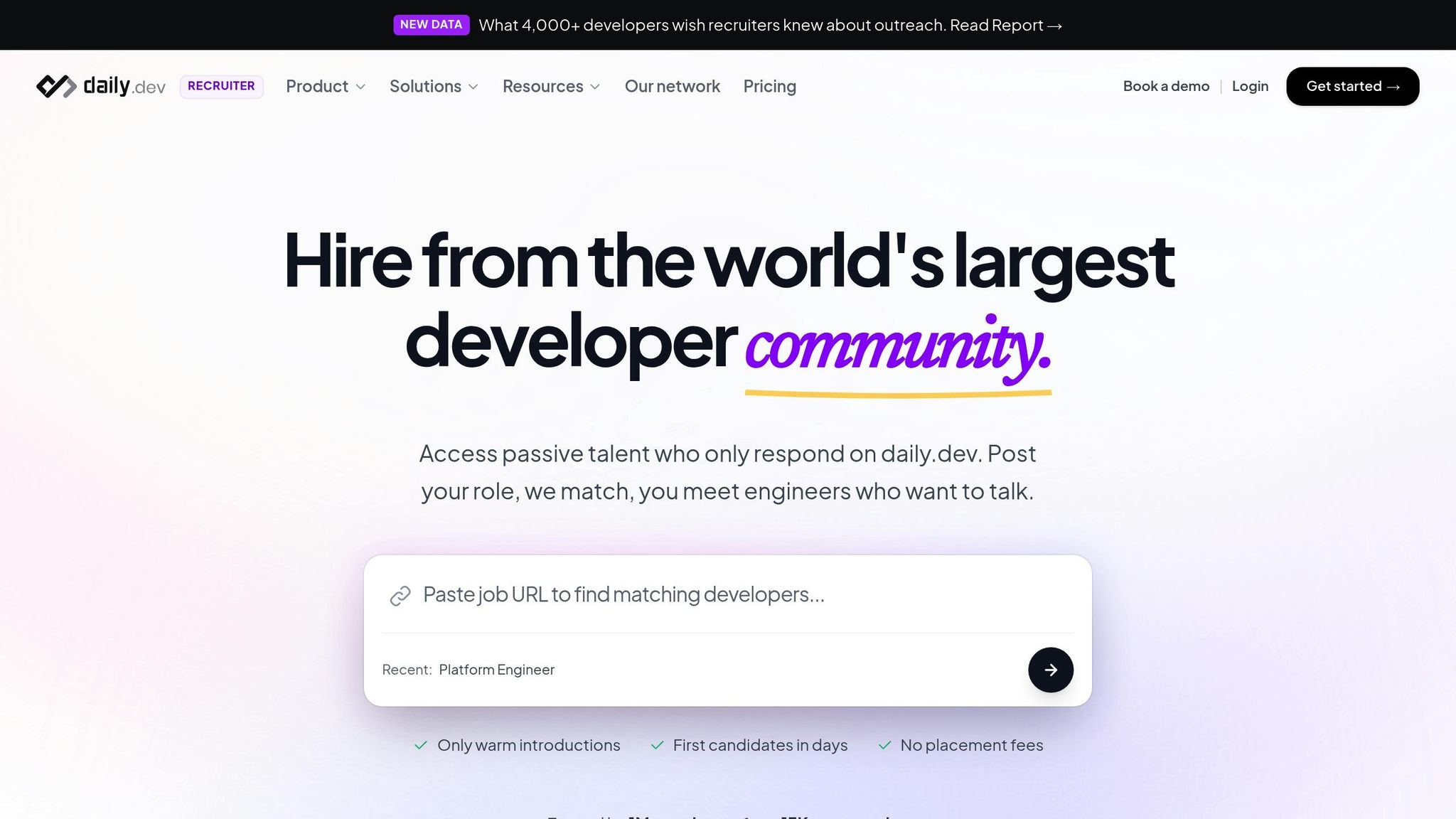
Recruiting developers is no small feat. It takes time to build a reliable channel, but daily.dev Recruiter speeds up the process by connecting you with developers who are already engaged and open to new opportunities. Instead of starting from scratch, you gain access to a network where trust is already established. Here’s how it helps you strengthen connections at every stage.
Warm Introductions with Pre-Qualified Developers
Forget the frustration of cold outreach vs. warm introductions. With a double opt-in process, daily.dev Recruiter ensures every interaction starts with mutual interest. Here’s how it works: developers privately review your role, and only those who are genuinely interested agree to connect. That means no more unanswered messages or wasted effort.
To put it into perspective, traditional methods like cold emails or InMail typically have trust rates between 1% and 5%. In contrast, daily.dev Recruiter achieves a 100% developer opt-in rate - you’re only speaking with people who want to hear from you .
Advanced Targeting and ATS Integration
This platform doesn’t just rely on keyword matching. It uses behavioral data - like what developers are reading, saving, or building - to identify intent and align candidates with your roles. It also verifies key details like tech stack expertise, seniority, timezone, and location, so you’re always working with accurate, up-to-date profiles.
Better yet, daily.dev Recruiter integrates directly with popular ATS platforms like Greenhouse, Lever, Ashby, and Workable. Candidate profiles sync automatically as soon as they opt-in, eliminating the need for manual data entry. Users report 3x higher engagement from day one and save an average of 37 hours per hire .
Developer-First Experience
What sets daily.dev Recruiter apart is its developer-first approach. Job posts are transformed into engaging, developer-friendly briefs that highlight tech stacks and real-world challenges. Developers also have control over when and how they interact with opportunities, creating a more respectful and appealing process.
This approach doesn’t just fill roles faster - it builds trust and credibility, laying the groundwork for easier and more effective hiring in the future. It’s a win-win for both recruiters and developers.
Conclusion
Shifting your recruiting approach from one-off tool purchases to fostering long-term relationships can completely transform how you hire. By investing in developer communities and sharing meaningful content, you’re not just filling roles faster - you’re building a talent pipeline that grows stronger with every interaction. Companies that focus on nurturing talent communities report a 40% boost in hire quality, and 78% of candidates evaluate employers based on their recruitment experience .
The strategies in this guide - whether it’s engaging with developer communities, sharing content tailored to developers, launching referral programs, hosting events, or utilizing warm outreach - create a recruitment system built on trust. As Barb Bruno from Good as Gold Training explains, "Your goal should be to move from vendor to trusted advisor. When you become the person they turn to for advice and consultation, you've succeeded" . This kind of shift turns recruitment into a sustainable, relationship-driven process rather than a constant race to fill positions.
There’s also a clear financial upside. With the average cost-per-hire projected to fall between $4,500 and $5,000 by 2025 , creating channels that reduce time-to-hire and improve candidate quality can significantly cut costs. At the same time, it ensures a better experience for developers, who increasingly expect recruiters to respect their time and understand their unique needs.
daily.dev Recruiter complements this approach by connecting you with developers who are already engaged and open to opportunities. Instead of relying on cold outreach, you can tap into a network built on trust. With features like a double opt-in system, advanced targeting, and a developer-first focus, the platform aligns perfectly with the strategies outlined in this guide.
You don’t need to tackle everything at once. Start small - maybe join a developer Slack group or host your first tech meetup - and stay consistent. The recruiting channel you build today will save time, enhance the candidate experience, and make hiring more effective for years to come.
FAQs
How does building a recruiting channel help establish trust and engage developers?
Building a recruiting channel isn’t just about filling roles - it’s about creating genuine connections with developers. Instead of focusing on one-off interactions, the goal should be to build long-term relationships. By actively engaging in developer communities - whether through answering questions, sharing useful insights, or contributing to discussions - recruiters can show they’re invested in the community. Over time, this builds credibility and trust.
Another critical element is transparency. Being upfront about job details, salary ranges, and the hiring process demonstrates respect for a developer’s time and expertise. Personalized outreach, especially when it references a developer’s specific work or interests, also goes a long way in showing genuine interest. This approach helps reduce skepticism, fosters trust, and encourages developers to see recruiters as partners rather than just intermediaries.
What are the best ways to connect with developer communities?
If you want to connect with developer communities, focus on two key principles: building trust and offering value. Developers often gather in places like GitHub, Stack Overflow, Reddit, or even local meetups. To make meaningful connections, start by engaging in these spaces. Answer questions, share your expertise, or contribute to open-source projects. These efforts not only help you stand out but also establish your credibility within the community.
When discussing job opportunities, be upfront about details like compensation and expectations, but always respect the norms of the group. Instead of diving straight into job pitches, consider sharing useful resources or industry trends to build rapport first. Personalized outreach makes a big difference too - acknowledge a developer’s unique contributions or interests to show you’ve done your homework.
At the end of the day, it’s all about being genuine and consistently bringing value to the table. That’s how you create meaningful, long-term relationships with developer communities.
How can building trust with developers speed up hiring and improve candidate quality?
Building trust with developers can make hiring faster and attract better candidates by creating stronger connections and boosting engagement. When recruiters emphasize transparency, personalized communication, and meaningful interactions, developers are more likely to respond positively and promptly. This approach not only cuts down the time spent sourcing candidates but also ensures the talent pool is filled with motivated and skilled individuals.
Focusing on long-term relationships instead of short-term, transactional interactions helps recruiters build a solid reputation within developer communities. This reputation encourages high-quality referrals and ensures a better match between candidates and job opportunities, leading to more successful hiring outcomes.
.png)