Finding senior backend engineers through cold outreach is no longer effective. Response rates are painfully low, often below 5%, and cold emails damage trust with candidates. Instead, leading teams are using trust-based recruitment to connect with developers in professional communities like GitHub, Stack Overflow, and daily.dev. This strategy focuses on warm introductions, personalized engagement, and real-time activity insights, resulting in:
- 30–50% response rates (vs. 2–5% for cold emails).
- 40–60% faster hiring timelines.
- Better retention and performance, with 25–35% lower turnover rates.
Developers respond better when recruiters reference specific contributions (e.g., GitHub projects or technical posts) and offer clear, transparent job details. Tools like daily.dev Recruiter simplify this process by linking recruiters with active, engaged candidates based on their real-time interests. The key takeaway? Ditch cold outreach and focus on meaningful, context-rich connections to hire faster and smarter.
::: @figure 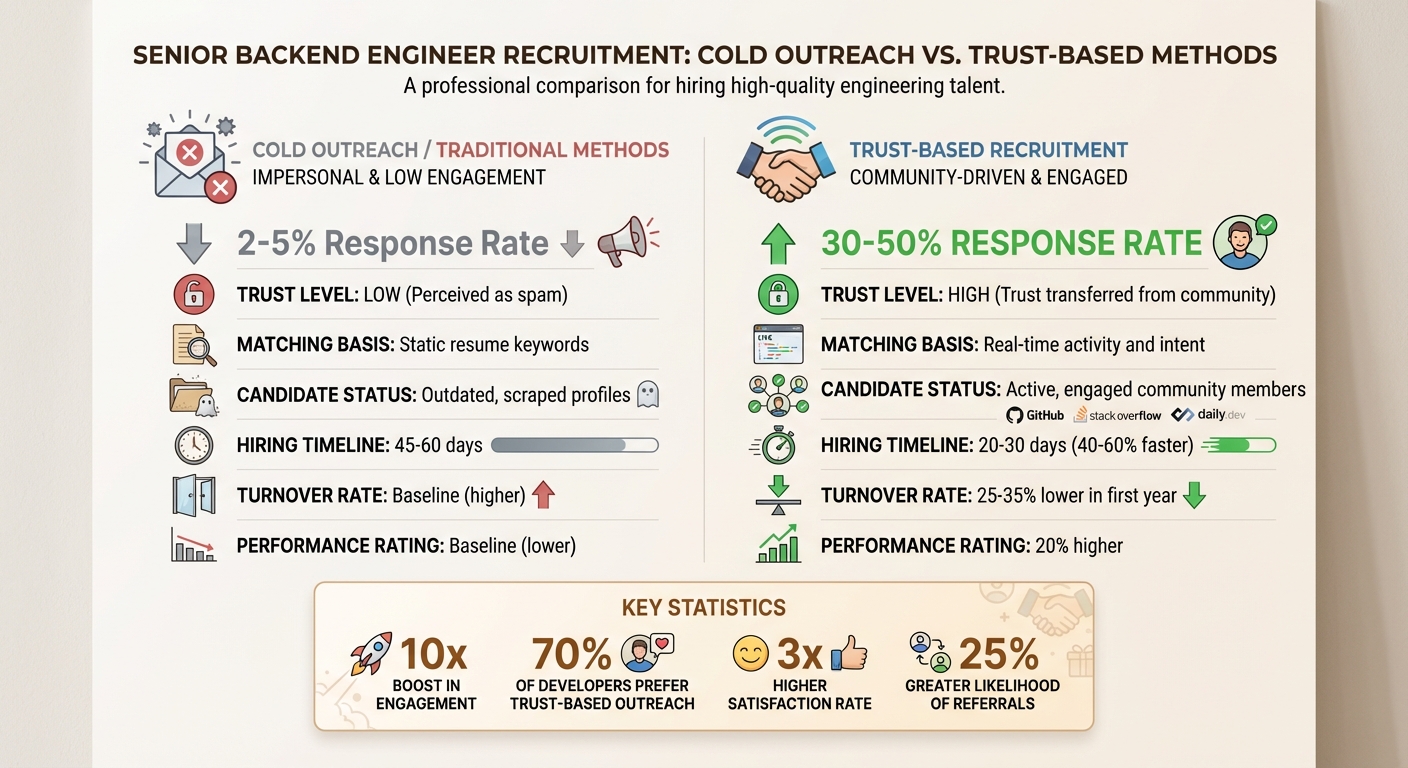 {Cold Outreach vs Trust-Based Recruitment: Performance Metrics Comparison}
Why Developer Communities Matter for Recruiting Senior Backend Engineers
Professional developer communities operate differently from traditional recruiting channels. Platforms like GitHub, Stack Overflow, and daily.dev thrive on collaboration and earned respect. When recruiters engage with these spaces, they tap into a pre-existing network of trust instead of building it from scratch through cold outreach. This trust allows recruiters to use real-time behavioral signals as part of their hiring process.
The way candidates are identified in these communities is a game-changer. Traditional methods rely heavily on keywords, which often fail to reflect a candidate’s current skills or interests. On the other hand, developer communities provide dynamic insights based on what engineers are actively coding, reading, or learning. For instance, if a senior backend engineer is diving into microservices architecture or Kubernetes, their engagement with these topics gives a far clearer picture of their expertise than an outdated resume listing.
This shift - from keyword-based searches to behavioral insights - reshapes recruitment. Instead of guessing a candidate’s interest based on a scraped job title, recruiters can connect with developers who are actively exploring new technologies and are primed for the right opportunity.
Why Cold Emails and Scraped Databases Don't Work
Cold emails often fall flat because they rely on outdated data and generic templates. Engineers are quick to dismiss these messages, especially when they lack context. Without recent activity - like a GitHub contribution or participation in a technical discussion - these emails come across as irrelevant or even spam. The trust factor with cold outreach is virtually nonexistent.
Warm introductions, however, leverage the rapport already established within developer communities, leading to more meaningful connections.
How Warm Introductions Build Trust in Developer Networks
Warm introductions use a double opt-in system, ensuring both the recruiter and the developer agree to connect before any interaction takes place. This approach prioritizes meaningful and context-rich engagement, eliminating the awkwardness of unsolicited outreach. Think of it as the "Tindev" model - where mutual interest is established upfront, reducing the chances of ghosting and creating a foundation of trust.
The trust transfer happens naturally. When a developer opts into a conversation through a community they already value, they signal genuine openness to opportunities. Recruiters aren’t starting from a place of skepticism; instead, they’re engaging with candidates who are already inclined to respond. These community-driven introductions consistently outperform cold outreach in response rates, quality interactions, and successful hires.
| Metric | Cold Outreach / Scraped Lists | Community-Based / Warm Intros |
|---|---|---|
| Trust Level | Low (often perceived as spam) | High (trust transferred from the community) |
| Matching Basis | Static resume keywords | Real-time activity and intent |
| Candidate Status | Outdated, scraped profiles | Active, engaged community members |
Hiring engineers?
Connect with developers where they actually hang out. No cold outreach, just real conversations.
How Top Teams Are Reaching Senior Backend Engineers Without Cold Search
Use daily.dev Recruiter for Context-Rich Connections
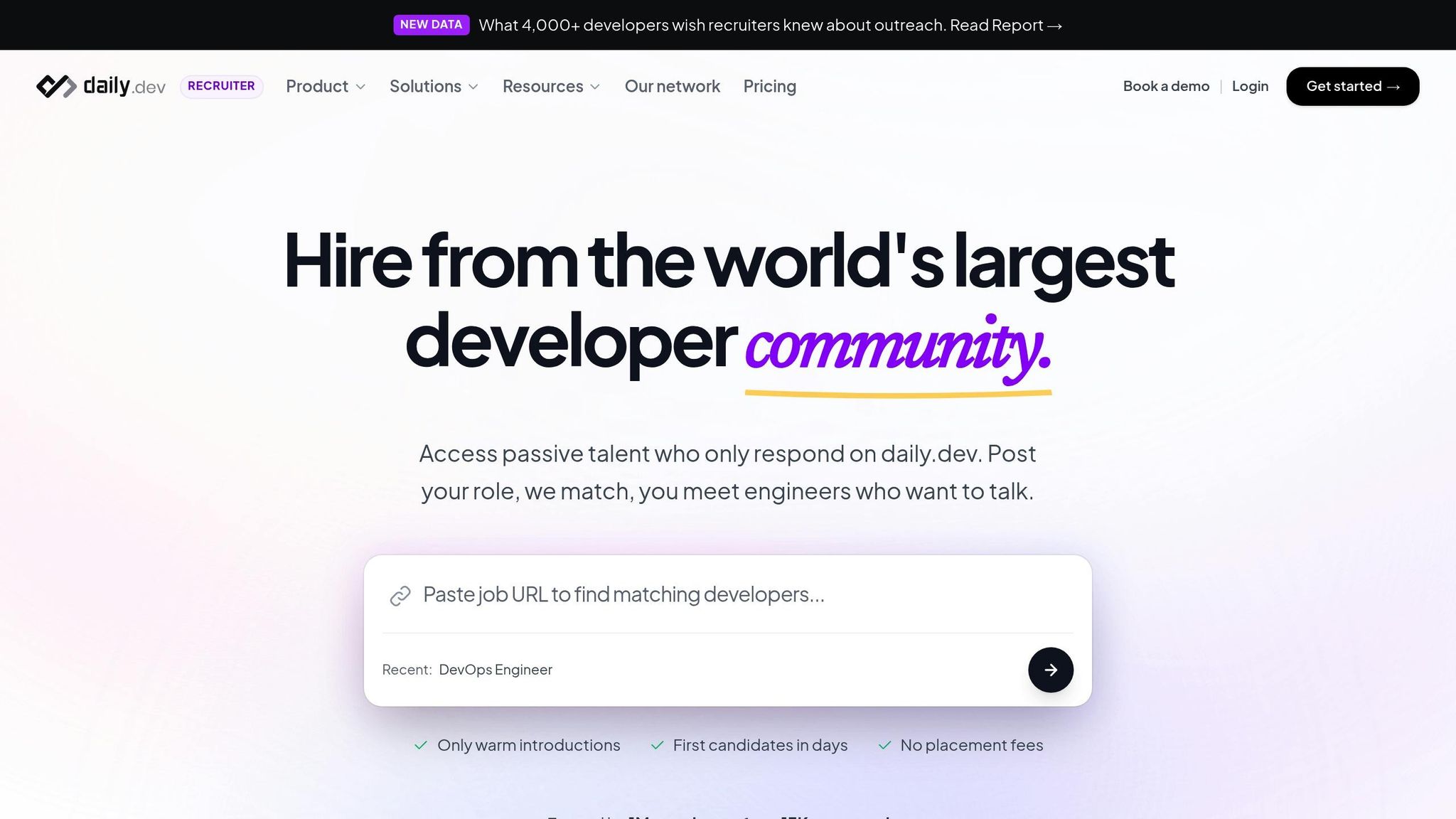
daily.dev Recruiter takes a fresh approach to hiring by connecting roles with developers based on their real-time activity. For example, if a developer is actively commenting on backend topics like Node.js scalability or Kubernetes orchestration, it’s a clear signal they’re engaged with solving technical challenges. This method prioritizes relevance over sheer volume, making your outreach far more effective.
With custom screening tools, you can narrow your candidate pool to those who meet specific criteria - like 5+ years of experience in cloud-native systems, contributions to open-source projects with over 1,000 stars, or recent participation in discussions about AI orchestration. When you reference a specific post they’ve written about multi-agent systems in your message, you immediately establish a personal connection that feels authentic.
Once these context-driven connections are established, the next step is to focus on candidates who are active contributors in technical communities.
Find Active Contributors in Professional Communities
Imagine this: a senior backend engineer submits a pull request to fix race conditions in a distributed database. That action alone demonstrates a level of expertise that no resume could fully convey. Platforms like GitHub, Stack Overflow, Reddit’s r/backend, and Dev.to are goldmines for finding these kinds of contributors. Look for recent activity - within the last 30 days - and focus on profiles that stand out with high-reputation answers, detailed technical posts, or meaningful contributions to production-level projects.
Why does this matter? In 2026, as demand for senior backend engineers in areas like AI orchestration is expected to exceed supply by 40–50%, candidates sourced from active communities have shown 25% higher retention rates. Why? Their skills have already been vetted through their contributions. For instance, if someone recently wrote a blog post on post-quantum cryptography, reaching out with a thoughtful comment about their work can spark a meaningful conversation - no cold pitch required.
Write Job Briefs That Developers Actually Want to Read
When it comes to attracting senior backend engineers, your job brief needs to stand out. Start with something personal: "I came across your post on scalable backends for AI - our team is tackling similar challenges." This makes your outreach feel tailored and relevant.
Be clear about what the role entails. For example, mention responsibilities like "end-to-end orchestration for enterprise AI systems." Highlight key requirements such as 5+ years of experience with Go or Rust and production-level Kubernetes expertise. Transparency is crucial - state the compensation upfront, like a base salary of $160,000–$190,000, and emphasize perks like fully remote work across the U.S. Hiding salary details often discourages passive candidates from engaging.
Finally, focus on what makes the role appealing. Talk about opportunities for real impact, exciting projects, and career growth - like advancing to a principal engineer role. Wrap it up with an easy, low-pressure call to action: "Interested? Let’s set up a quick 15-minute chat." This approach feels approachable and respects their time.
Benefits of Trust-Based Recruitment Methods
Better Response Rates and Quality of Hires
Recruiting through trust-based methods delivers response rates of 30–50%, a massive leap compared to the 2–5% typically seen with cold emails . That’s a 10x boost in engagement when reaching out to developers within trusted networks.
This approach doesn’t just improve engagement - it also speeds up the hiring process. By focusing on trusted connections, hiring timelines shrink by 40–60%, cutting the usual 45–60 days down to just 20–30 days . For example, one tech company saw its response rate jump from 3% to 42%, enabling them to hire 15 senior backend engineers in just 25 days instead of 55 . They targeted developers who had already demonstrated expertise in areas like microservices and observability through their open-source contributions. These hires hit the ground running, immediately improving scalability within the company.
And the benefits don’t stop there. Trust-based hires tend to stick around longer, with 25–35% lower turnover rates in the first year. They also perform better, showing 20% higher performance ratings . By recruiting engineers who’ve already proven their abilities - whether through deploying APIs, managing cloud services, or writing production-ready code - companies ensure new hires are a perfect fit from the start. These advantages not only speed up the hiring process but also lead to happier, more productive employees.
Better Experience for Candidates
For candidates, trust-based recruitment feels far more personal and engaging. One standout tactic is the use of double opt-in introductions, where both the recruiter and the engineer agree to connect before any conversations begin. This simple step boosts response rates to 40–60%, a 4–6x improvement over traditional outreach . It also eliminates the impersonal, spammy vibe that often makes developers ignore recruiters.
Adding a personal touch - like referencing a specific GitHub contribution or a forum discussion on system design - can further increase engagement by 50% . Developers clearly appreciate this approach: 70% of them prefer trust-based outreach, reporting three times higher satisfaction and a 25% greater likelihood of making referrals . For senior backend engineers, this means more meaningful conversations about roles that genuinely align with their skills and interests. No ghosting, no wasted time - just authentic interactions that lead to real opportunities. These results highlight why connecting with developer communities is so effective for attracting top-tier backend talent.
Conclusion
Hiring senior backend engineers doesn’t have to rely on generic outreach methods that yield just a 2% response rate. By shifting toward trust-driven recruitment, you can achieve 30–50% engagement and reduce hiring time by up to 40%. These results come from prioritizing relevance and respect over impersonal, high-volume tactics.
The secret lies in connecting with developers where they naturally spend time learning and growing. daily.dev Recruiter makes this possible by linking you with developers based on their real-time activities - what they’re reading, building, and contributing to. Instead of spamming outdated databases or sending generic InMails, you’ll engage with candidates who have already opted in, ensuring genuine interest and minimizing the chances of being ignored. This approach simplifies the process and fosters authentic connections that align talent with the right opportunities.
As Nimrod Kramer, CEO & Co-Founder of daily.dev, explains:
"Trust is the only hack. Engineers already come to daily.dev to grow. They already trust the platform... When your role shows up inside that flow, it doesn't feel like outreach. It feels like an opportunity."
This method not only speeds up the hiring process but also results in hires who are better suited to your team’s needs and more likely to succeed in the long run. For candidates, the experience is elevated with personalized outreach, clear communication, and roles that align with their skills and aspirations.
Ready to leave outdated recruitment methods behind? daily.dev Recruiter equips your team with the tools to build authentic connections with senior backend engineers. Say goodbye to cold outreach and embrace a system that prioritizes trust and engagement for real results.
FAQs
How do I start warm intros in developer communities?
To initiate warm introductions in developer communities, start by tapping into mutual connections and trusted networks. Pinpoint developer roles that are in high demand and search for candidates within active spaces like developer forums, GitHub, or open-source communities. Take the time to pre-screen candidates and focus on building authentic relationships through regular interaction and meaningful contributions. By establishing trust and offering real value, you can seamlessly activate these connections when roles open up, making introductions feel natural and productive.
What activity signals best predict senior backend fit?
When trying to predict whether someone might be a great fit for a senior backend engineer role, certain activity signals stand out. These include updating their professional profiles, earning new technical certifications, joining specialized developer communities, and interacting with technical content. Collectively known as digital body language, these behaviors often indicate that a developer is sharpening their skills and possibly exploring new opportunities. By keeping an eye on trends like spikes in learning or active community involvement, recruiters can engage with candidates early, improving their chances of finding the right match.
How do I personalize outreach without sounding creepy?
To make your outreach feel personal without crossing boundaries, aim for honest and respectful communication. Mention specific details that show you've done your homework - like their GitHub projects or recent LinkedIn posts. Be upfront about important information, such as the tech stack, salary range, and work setup, to establish transparency. Trust grows when you actively engage in the same communities they are part of and craft messages based on thoughtful research instead of relying on generic templates or making assumptions.
.png)