Recruiters face a trust crisis. Developers find outreach generic, AI-like, and misaligned with their skills. Static profiles and cold messages don’t work, with 43% muting recruiters and 40% ignoring messages. A new approach is overdue.
Here’s the solution: A developer-first platform. Unlike LinkedIn, it connects recruiters with developers who are actively signaling interest. Key features include:
- Real-time insights: Understand current skills and activity instead of outdated profiles.
- Double opt-in introductions: Engage only with developers who’ve shown interest, boosting response rates to 85–90%.
- ATS integration: Sync with tools like Greenhouse and Lever to avoid duplicate outreach.
- Transparent pricing: Flat fees or pay-per-hire models reduce costs compared to LinkedIn’s licenses and InMail credits.
This shift isn’t just about better tools - it’s about building trust. Developers value platforms that respect their time, focus on relevant opportunities, and prioritize meaningful connections. Recruiters can save time, improve response rates, and hire faster by adopting this approach.
| Metric | LinkedIn Recruiter | Developer-First Platform |
|---|---|---|
| Sourcing Method | Static keyword searches | Real-time activity matching |
| Outreach Approach | Cold InMail | Warm, permission-based |
| Response Rates | 10–30% | 85–90% |
| Pricing | Per seat + InMail fees | Flat subscription or per hire |
Recruitment isn’t just about finding candidates; it’s about connecting with the right ones. A developer-first platform makes that possible.
What a LinkedIn Recruiter Replacement Must Do
A successful alternative to LinkedIn Recruiter needs to go beyond simply finding candidates - it must address trust issues and foster real connections with developers who have opted in. This means moving past basic keyword searches and impersonal cold outreach.
Instead of relying on manual Boolean searches, an AI-driven discovery system should be used. By analyzing real-time signals, such as a developer's current interests or what developers want based on their activity with specific frameworks, recruiters can identify early interest signals. This allows them to connect with developers before they even update their resumes, eliminating the inefficiencies of cold outreach .
The key is warm, double opt-in introductions. These ensure that every interaction begins with developers who have actively expressed interest, creating a connection with a 100% trust score from the start. Developers can privately review opportunities without the pressure of public visibility, which respects their time and builds credibility . Building these genuine connections requires not only effective discovery but also smooth integration with existing recruitment tools.
Integration is non-negotiable. A seamless two-way sync with applicant tracking systems (ATS) like Greenhouse, Lever, and Ashby is critical to avoid duplicate outreach and maintain accurate candidate profiles . With 95% of Fortune 500 companies relying on ATS software, this level of connectivity is essential for modern recruitment processes .
Transparent pricing also plays a vital role. It ensures recruiters can manage their budgets effectively while focusing on quality rather than quantity. With 90% of developers being less responsive on other platforms, investing in a thoughtful, developer-first approach is crucial . By prioritizing meaningful connections and efficient processes, this strategy creates a recruitment experience that works for both developers and recruiters.
Hiring engineers?
Connect with developers where they actually hang out. No cold outreach, just real conversations.
LinkedIn Recruiter vs. a Developer-First Platform
::: @figure 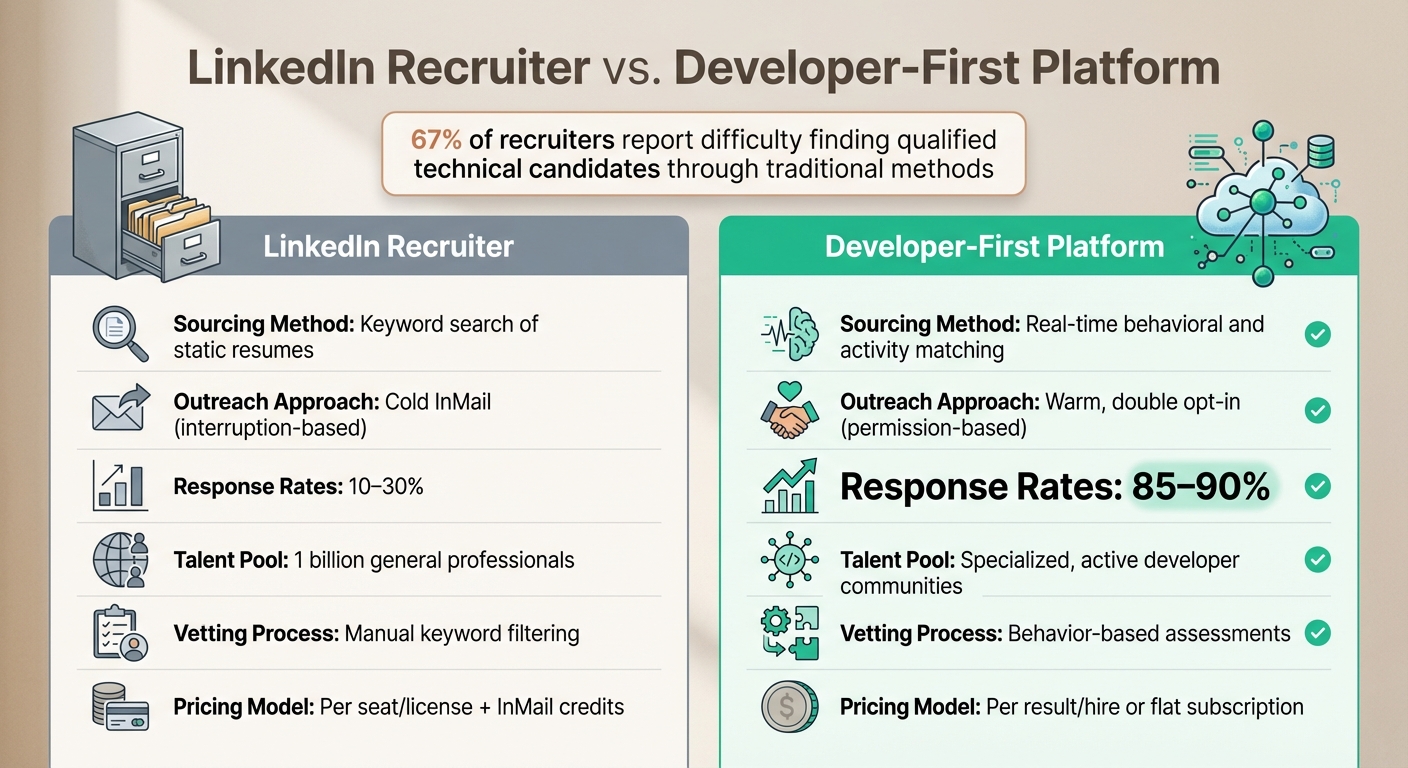 {LinkedIn Recruiter vs Developer-First Platform Comparison}
The key distinction between LinkedIn Recruiter and a developer-first platform lies in how they connect with and engage developers. LinkedIn functions as a static database of resumes, relying on keyword searches and cold InMails to reach individuals who may not even be job hunting. In contrast, a developer-first platform operates within an active community where developers are already participating, learning, and signaling their interests in real time.
"LinkedIn is a database of resumes. daily.dev is a living community. You meet engineers where they learn, not where they look for jobs."
– daily.dev Recruiter
This shift is more than just a new approach - it transforms the way candidates are sourced, fostering trust that is often missing in traditional recruitment.
The numbers speak for themselves. Cold InMails on LinkedIn typically see response rates of 10–30%, while warm, double opt-in introductions on a developer-first platform achieve an impressive 85–90% response rate . To put that into perspective, it’s the difference between sending 100 messages to spark 10 conversations and starting 90 meaningful dialogues. Considering that 67% of recruiters report difficulty in finding qualified technical candidates through traditional methods , this change is a game-changer.
Cost structures also differ significantly. LinkedIn Recruiter charges per seat or license, with additional fees for InMail credits. On the other hand, developer-first platforms often use flat subscriptions or pricing based on successful hires. Take the example of CloudMetrics, a SaaS startup based in San Francisco. In March 2025, the company used a developer-first platform to build its distributed team. By avoiding the usual platform markups, they saved $125,000 on a $250,000 developer budget. This allowed them to reinvest in infrastructure and launch their MVP within just six months . This pricing model not only enhances cost efficiency but also aligns with the developer-first approach to recruitment.
Feature and Cost Comparison Table
| Metric | LinkedIn Recruiter | Developer-First Platform |
|---|---|---|
| Sourcing Method | Keyword search of static resumes | Real-time behavioral and activity matching |
| Outreach Approach | Cold InMail (interruption-based) | Warm, double opt-in (permission-based) |
| Response Rates | 10–30% | 85–90% |
| Talent Pool | 1 billion general professionals | Specialized, active developer communities |
| Vetting Process | Manual keyword filtering | Behavior-based assessments |
| Pricing Model | Per seat/license + InMail credits | Per result/hire or flat subscription |
The choice comes down to this: interrupting candidates with cold outreach or engaging with developers who are already open to new opportunities. Recognizing these differences is the first step toward adopting a recruitment strategy that truly resonates with today’s developer community.
How to Implement a Developer-Focused Recruitment Strategy
Shifting to a developer-first recruitment approach means tailoring your roles, outreach, and relationship-building efforts to what developers value most. These steps build on earlier strategies to improve candidate trust and simplify the hiring process.
Set Up Screening Criteria and Write Better Job Briefs
Work closely with your engineering team to identify 3–5 core skills that are truly essential for the role, rather than overwhelming candidates with a laundry list of technologies or arbitrary experience requirements . Outdated job descriptions often exclude qualified candidates, which is a major issue - 95% of tech leaders in 2024 reported difficulties in hiring the right talent .
Don’t just focus on technical skills. Assess softer skills like communication and problem-solving. A developer who can clearly explain complex systems may bring more value to a team than one with advanced technical expertise but poor collaboration skills . Partner with hiring managers to ensure your criteria are relevant and up-to-date. By refining these requirements, you can cut down the global average of 68 days it takes to fill tech roles .
Use Double Opt-In Features to Connect with Interested Developers
Double opt-in methods ensure both parties are genuinely interested, reducing wasted time on uninterested candidates . Once you identify a potential match, send an opt-in request right away to engage them while their interest is fresh . Keep your message short and include one clear call to action .
"It's critical to be clear and concise with confirmation statements. With today's short attention spans, you want to compel that lead to take the next action quickly and avoid them abandoning the process midstream."
– Brian Sullivan, Strategy Director of Email Deliverability Services, Oracle Digital Experience Agency
If you don’t hear back within two days, send a single follow-up. If there’s still no response, remove the candidate from your pipeline . This approach keeps your outreach targeted and prevents your process from feeling like spam.
Tap into Developer Communities for Better Matches
To find top candidates, hire in developer communities where they already gather. Developers often connect in professional communities where they share knowledge and stay engaged. Reaching out in these spaces adds credibility that cold emails simply can’t achieve. When you approach candidates through platforms they trust and use daily, your opportunities feel more relevant and appealing.
This strategy shifts recruitment from a numbers game to a trust-driven process. Developers can explore opportunities on their terms . Many modern platforms even allow opted-in candidates to sync directly with your ATS, such as Greenhouse or Lever, keeping your pipeline clean and focused on candidates who are genuinely interested .
Conclusion: Moving to a Developer-First Recruitment Platform
Shifting from cold outreach to a trust-based recruitment model is no longer optional - it's essential. Traditional platforms, with their reliance on static resumes and intrusive messaging, often fail to resonate with developers. A developer-first approach changes the game by focusing on engineers who are actively engaged and open to new opportunities.
This approach leans on real-time behavioral insights instead of outdated profiles, giving your outreach more credibility. By connecting with developers where they’re already learning and building, you’re meeting them on their terms. The use of double opt-in systems ensures that every conversation begins with mutual interest, creating higher-quality matches and reducing time-to-hire. As highlighted earlier, this strategy delivers actionable insights that lead to better results.
"The ideal recruiting tech stack is minimal, interconnected, and maps directly to specific business outcomes." – Abhishek Sharma, SEO Lead, Recruiterflow
Integration is another key element. ATS integration syncing with tools like Greenhouse, Lever, and Ashby ensures a streamlined candidate pipeline . Combining seamless integration with proven engagement strategies creates a recruitment process that truly connects with candidates.
FAQs
How does a developer-focused platform help build trust between recruiters and developers?
A platform aimed at developers builds trust by emphasizing genuine interactions, honesty, and respect for the developer community. It focuses on creating meaningful connections rather than relying on impersonal or unsolicited outreach. For instance, features like opt-in introductions let developers take the lead, ensuring they engage only when they’re interested. This approach fosters a more positive and respectful experience.
When recruiters respect developer-focused spaces like GitHub or Stack Overflow and provide clear, detailed job descriptions, it shows they value the time and expertise of developers. This not only increases the likelihood of responses but also strengthens credibility. Developers are more likely to trust and engage when their preferences and boundaries are honored, paving the way for stronger, more productive relationships.
Why are real-time insights better than static profiles in recruitment?
Real-time insights provide recruiters with the latest information, enabling them to spot trends, respond to market shifts, and make more informed decisions. Unlike static profiles that may become outdated quickly, real-time data showcases a candidate's most recent skills, current activity, and availability.
This approach boosts the precision of candidate matching while also making outreach efforts more relevant and timely. By leveraging real-time insights, recruiters can enhance engagement, build trust, and create stronger connections with candidates.
Why is it important for recruitment platforms to integrate with ATS systems?
Integrating with ATS systems is a game-changer for recruitment workflows. It automates time-consuming tasks like managing candidate data and tracking their progress, freeing up your team to focus on what really matters - building relationships with top talent.
It also ensures seamless communication between tools, cutting down on errors and enhancing the candidate experience. When everything is connected, recruiters can work smarter, streamline their efforts, and make better hiring decisions.
.png)