Hiring tech talent is challenging, but tracking the right metrics can simplify it. These metrics help identify bottlenecks, improve efficiency, and enhance the candidate experience. Key metrics include:
- Time-to-Hire: Tracks how long it takes to fill a role. Using strategies for reducing time-to-hire helps identify and eliminate delays in the hiring process.
- Offer Acceptance Rate: Measures the percentage of accepted offers. A low rate signals issues like misaligned compensation or unclear expectations.
- Candidate Satisfaction Score: Gauges candidate feedback through surveys to improve their experience.
- Quality-of-Hire: Evaluates new hires' performance and retention, helping refine hiring strategies.
- Source of Hire: Tracks where top candidates come from, allowing better allocation of resources.
- Cost-per-Hire: Calculates recruitment expenses per hire to optimize budgets.
- Diversity Hiring Rate: Measures progress toward hiring from underrepresented groups.
- Applicant-to-Interview Ratio: Indicates whether job descriptions or sourcing strategies attract the right candidates.
Using tools like daily.dev Recruiter can automate tracking these metrics, provide real-time insights, and improve hiring efficiency. By focusing on measurable data, you can streamline your recruitment process and attract top tech talent.
::: @figure 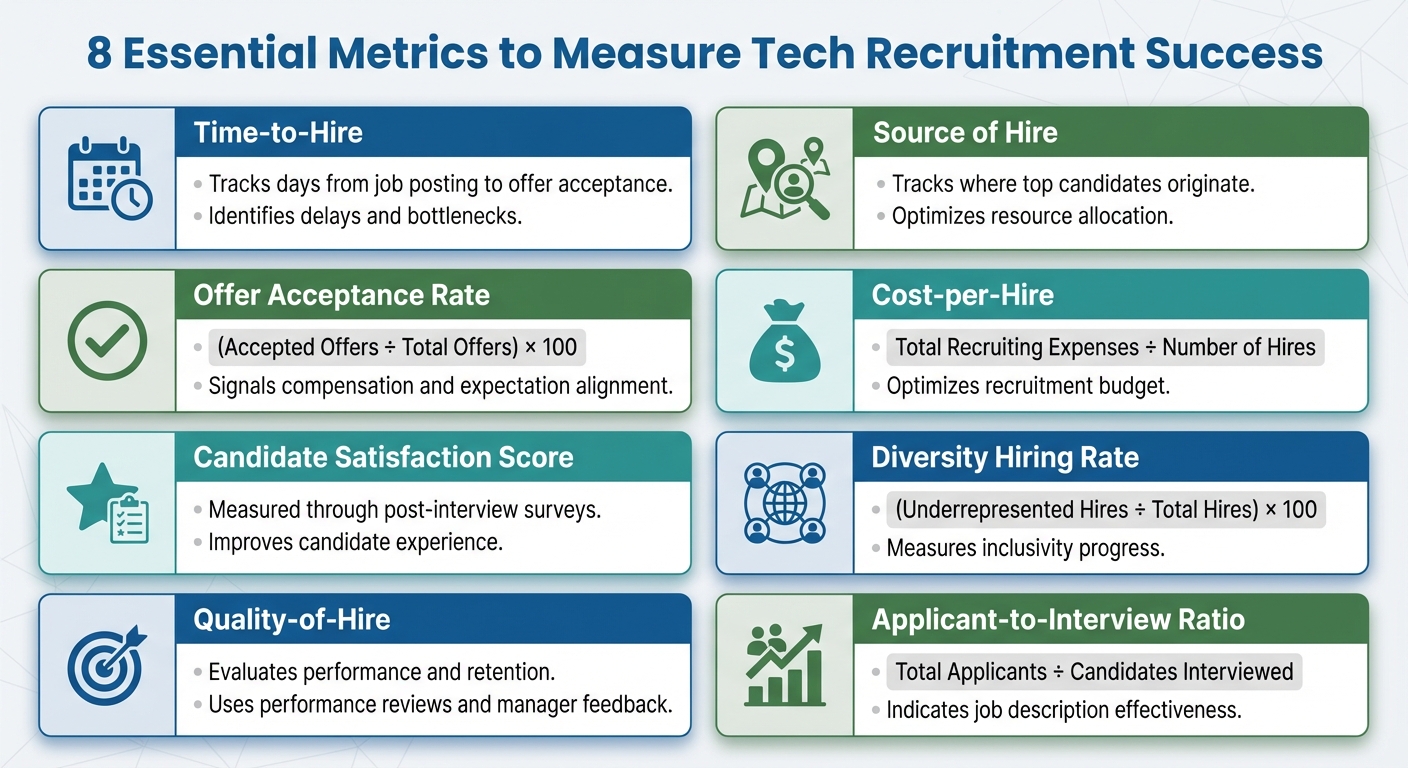 {8 Essential Tech Recruitment Metrics to Track for Hiring Success}
Core Metrics for Tech Recruitment Success
When it comes to tech recruitment, tracking the right recruitment KPIs is key to understanding how well your strategies are working. Let’s break down some of the most important ones and see how they can guide smarter hiring decisions.
Time-to-Hire
This metric tracks the number of days between posting a job and getting that all-important offer acceptance. Breaking it down by role type can reveal where delays happen - like drawn-out interviews or administrative bottlenecks. By addressing these issues, you can speed up the process. Tools like daily.dev Recruiter can also help you connect with qualified candidates faster, making your hiring process more efficient.
Offer Acceptance Rate
Your offer acceptance rate is calculated by dividing the number of accepted offers by the total offers made, then multiplying by 100 to get a percentage. This number reflects how well your job offers align with what candidates are looking for. If it’s lower than you’d like, it might be time to revisit your approach - think about whether compensation, job expectations, or candidate alignment need improvement. Clear communication and a responsive hiring process can go a long way in boosting this rate.
Candidate Satisfaction Score
Want to know how candidates feel about your recruitment process? Ask them! Use post-interview surveys with open-ended questions to uncover what’s working and what’s not - whether it’s communication gaps, unclear job descriptions, or a confusing interview structure. Online survey tools or features in applicant tracking systems make it easy to collect this feedback. These insights can help you fine-tune the candidate experience.
Quality-of-Hire
This metric evaluates how well your new hires perform and how long they stay. Use data like performance reviews, retention rates, and manager feedback to assess the effectiveness of your recruitment efforts. By connecting hiring success directly to employee performance, you can identify and replicate winning strategies.
Source of Hire
Knowing where your best candidates come from is invaluable. Track applicants by their source - whether it’s referrals, job boards, or platforms like daily.dev Recruiter. This data helps you see which channels consistently deliver high-quality hires and strong retention rates. With these insights, you can focus your resources on the most effective sourcing methods for long-term success.
Additional Metrics for Better Recruitment Results
Beyond the primary indicators, there are other metrics that can add depth to your recruitment analysis. These additional measurements provide a clearer view of your hiring efficiency and inclusivity, giving you the tools to improve your tech talent acquisition process.
Cost-per-Hire
This metric is calculated by adding up all recruiting expenses - like job board fees, recruiter salaries, software subscriptions, and advertising costs - and then dividing that total by the number of hires. Keeping an eye on tech recruiting costs helps you see if your recruitment budget is being used wisely and can reveal areas where spending might be trimmed or redirected.
Diversity Hiring Rate
To measure this, take the number of hires from underrepresented groups, divide it by the total number of hires, and multiply by 100. This percentage gives you a clear picture of how inclusive your hiring process is, helping you identify whether you're meeting diversity goals.
Applicant-to-Interview Ratio
This ratio is determined by dividing the total number of applicants by the number of candidates interviewed. A high ratio could signal that job descriptions or developer sourcing channels need adjustment to attract more qualified candidates. Paying attention to this metric can help fine-tune your recruitment efforts, making the process more efficient and effective.
Hiring engineers?
Connect with developers where they actually hang out. No cold outreach, just real conversations.
How daily.dev Recruiter Helps Track Recruitment Metrics
Built-In Analytics for Tracking Metrics
With daily.dev Recruiter, you get built-in analytics that make tracking your hiring pipeline a breeze. The platform automatically keeps tabs on key metrics like reducing time-to-hire and offer acceptance rates. This means you can easily monitor how your recruitment process is progressing and pinpoint any areas that might be slowing things down. These insights allow you to tweak your approach in real time for better results.
Using Real-Time Data to Improve Recruitment
The real-time data provided by daily.dev Recruiter empowers you to make smarter hiring decisions on the spot. You can quickly see which job postings are hitting the mark and adjust your strategy accordingly. Following a developer hiring checklist can help ensure no step is missed during these adjustments. This immediate feedback ensures your recruitment efforts stay on track and as efficient as possible, saving you time and resources.
Improving Candidate Experience with Warm Introductions
daily.dev Recruiter uses a double opt-in model, meaning developers only receive opportunities they’ve shown an interest in. This reduces unnecessary communication and creates a more personalized experience. By fostering trust and meaningful interactions, this approach not only boosts offer acceptance rates but also leaves candidates with a positive impression of your hiring process.
Conclusion
Recruitment metrics are your go-to tools for figuring out what’s working and where you can improve. By tracking indicators like time-to-hire, offer acceptance rates, candidate satisfaction, and quality-of-hire and soft skills, you can make smarter decisions and stay ahead in the hiring game.
But metrics alone aren’t enough - they need to lead to action. With daily.dev Recruiter, analytics and a candidate-focused strategy come together to streamline hiring. Its developer-first, double opt-in approach ensures you connect with candidates who truly align with your needs, increasing offer acceptance rates and improving retention.
FAQs
What are the best ways to increase offer acceptance rates in tech recruitment?
To improve offer acceptance rates in tech recruitment, start with clear and open communication from the very beginning. Be upfront about salary ranges, benefits, and job expectations to ensure there are no surprises later on.
Focus on creating a great candidate experience by keeping candidates informed throughout the process, streamlining interviews, and showing genuine interest in their career goals. Work closely with hiring managers to put together competitive offers that reflect both market conditions and the importance of the role.
Finally, take the time to address any concerns candidates may have with care and urgency. A thoughtful, personalized approach can go a long way in making candidates feel valued and confident about their decision to join your team.
How can I improve the quality-of-hire in my tech recruitment process?
To boost the quality of hire, begin by implementing structured interviews. This approach ensures a consistent and fair evaluation process across all candidates. Pair this with clearly defined performance criteria for each role, so you can more effectively measure how new hires contribute to your team’s success.
It doesn’t stop at hiring. Regular check-ins during onboarding - and even after - can help you monitor both performance and job satisfaction. Dive into data from your top-performing hires to spot patterns, like specific skills or traits that correlate with success. Use these insights to fine-tune your sourcing and screening methods. Over time, continuously tweaking your strategies based on feedback and results is the secret to improving this metric.
What does the applicant-to-interview ratio reveal about your tech recruitment process?
The applicant-to-interview ratio serves as a vital measure of how efficiently your recruitment process identifies suitable candidates. A low ratio indicates that your screening techniques are doing their job well, helping you zero in on qualified applicants and cutting down the time spent sifting through unqualified ones.
Prioritizing quality over sheer volume not only simplifies your hiring process but also saves valuable resources. Plus, it increases your chances of landing top tech talent quickly - an essential advantage in today's competitive job market.
.png)