Starting a technical role can be overwhelming without a clear plan. A 30-60-90 day onboarding plan provides structure, helping new hires transition smoothly by breaking the first three months into manageable phases:
- Days 1-30: Learn systems, set up tools, and tackle small tasks to build familiarity and confidence.
- Days 31-60: Contribute to meaningful projects, participate in team processes, and strengthen collaboration.
- Days 61-90: Take ownership of features, lead tasks, and propose improvements.
This approach reduces uncertainty, speeds productivity, and improves retention. Companies using onboarding checklist see up to 60% better retention rates and employees feel 2.6x more satisfied. Regular check-ins and measurable goals ensure alignment and success for both new hires and teams.
::: @figure 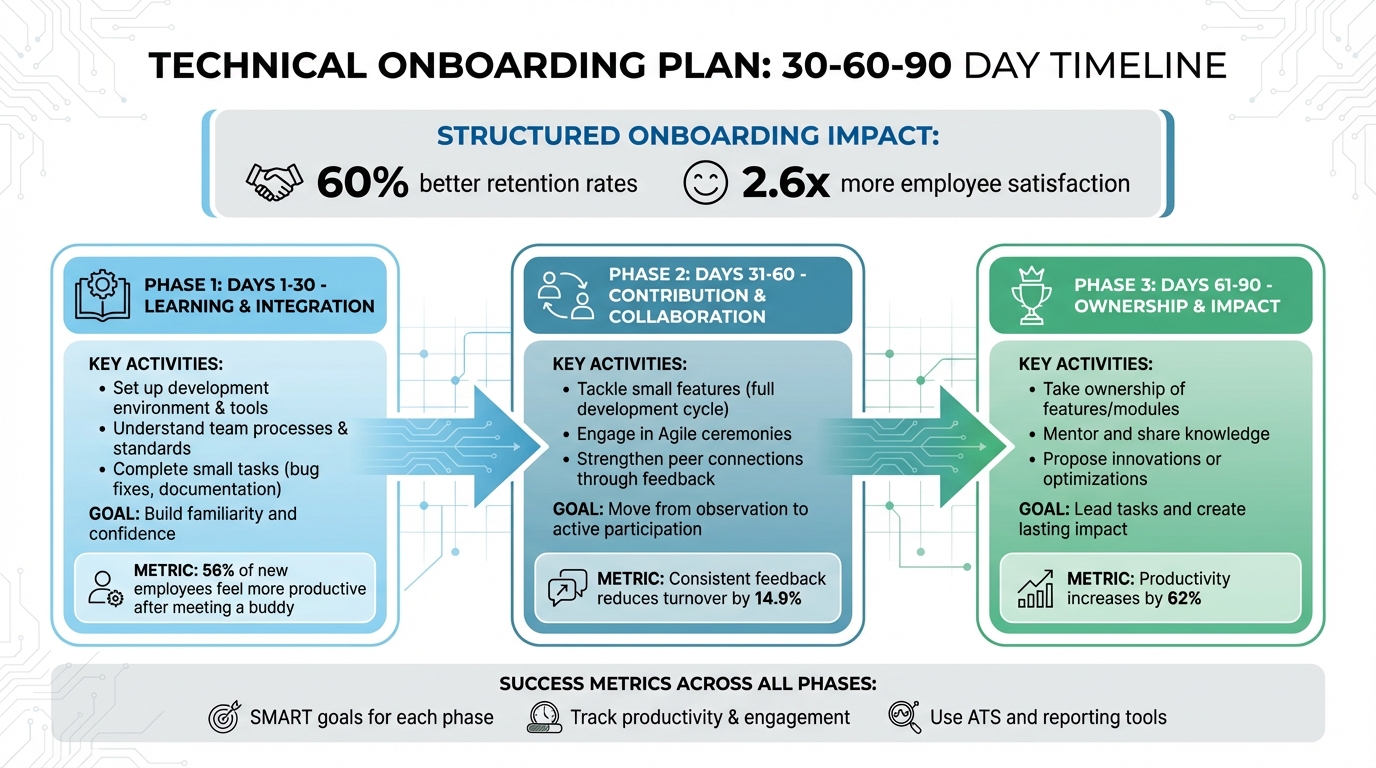 {30-60-90 Day Technical Onboarding Plan with Key Milestones and Metrics}
Days 1-30: Learning and Integration
The first month is all about laying a strong foundation. This period is your chance to dive into the company’s mission, values, systems, and team dynamics. For technical hires, the focus should revolve around three key areas: setting up the development environment, understanding team workflows, and tackling small tasks to build confidence. A well-documented and smooth technical setup is a great starting point.
Setting Up Development Environments and Tools
Productivity starts with the right tools. In the first week, new developers should configure their IDEs, set up Git, integrate with CI/CD pipelines, and secure any necessary internal permissions. Clear documentation or a helpful buddy can make this process much smoother. By the end of the week, they should be able to clone repositories, run the application locally, and know exactly where to go for help when needed.
Understanding Team Processes and Standards
Every team operates a little differently. New hires need to get acquainted with coding standards, workflows, and project management practices to contribute effectively. Encourage them to observe daily standups, join code reviews, or even shadow on-call duties to understand how the team works. Reviewing past projects and pull requests can also give them a clear idea of what “good work” looks like in the organization. Research shows that 56% of new employees feel more productive after meeting a buddy at least once . This kind of support sets the stage for active engagement in the coming weeks.
Completing Small Tasks for Hands-On Learning
In the first few weeks, assign small, manageable tasks like fixing minor bugs, updating documentation, or performing light refactoring. These tasks are perfect for building confidence and helping new hires get familiar with the codebase without overwhelming them. Avoid assigning anything mission-critical or overly complex at this stage. Modern onboarding emphasizes structured, supportive learning, so track their progress closely and address any roadblocks quickly to ensure they feel supported and ready to grow.
Days 31-60: Contribution and Collaboration
By the second month, it's time for new hires to step up from observation to active participation. This phase focuses on putting knowledge into action while deepening connections within the team. After spending the first 30 days building foundational knowledge, new hires now shift to delivering meaningful work. The goal? Move beyond minor fixes to tackling impactful features, fully engage in team rituals, and establish relationships that will support long-term success. This stage ensures new hires not only contribute but also integrate more deeply into the team’s workflow.
Tackling Small Features
Introduce tasks that allow new hires to explore the full development cycle. These could include bug fixes with broader impacts, creating new API endpoints, or improving user interface elements that make a noticeable difference. The idea is to assign work that’s manageable but meaningful. By giving them ownership of a complete task - from design to deployment - you help build their confidence and reinforce their ability to contribute effectively.
Engaging in Agile Ceremonies
Encourage new hires to actively participate in stand-ups, sprint planning, and retrospectives. These ceremonies are essential for understanding the team’s rhythm and their role within it. Whether they’re sharing updates, asking questions, or offering ideas, active involvement helps them grasp how decisions are made and how the team functions. Regular participation accelerates their integration and boosts their productivity.
Strengthening Peer Connections Through Feedback
Feedback isn’t just about improvement - it’s also a great way to build relationships. Activities like code reviews, paired programming, and feedback loops are critical for skill development and team bonding. Encourage new hires to seek reviews from different team members, ask questions like “What could I have done differently?”, and participate in reviewing others’ work. Data shows that consistent feedback can reduce turnover by 14.9% . Regular one-on-one check-ins with managers are also key for discussing progress and addressing challenges. Pairing new hires with senior developers for collaborative coding sessions can further accelerate their learning while fostering stronger team connections.
Days 61-90: Ownership and Impact
As the onboarding journey reaches its final stage, new hires transition from contributing team members to taking charge of their own projects. By this point, their productivity has increased significantly - by 62% - as they step into roles of greater responsibility and influence.
Taking Ownership of Features or Modules
This phase is all about stepping up. Assign new hires full responsibility for a feature, module, or technical initiative. From the initial design to deployment and ongoing maintenance, they take the lead. This includes making architectural decisions, collaborating with cross-functional teams, and being accountable for the outcomes. For example, they might oversee a microservice, a critical feature, or a system component. This kind of ownership not only sharpens their skills but also strengthens their connection to the product.
Mentoring and Sharing Knowledge
Encourage new hires to share their growing expertise. This could mean mentoring peers on specific tools or design patterns, documenting architecture decisions, or creating playbooks for handling edge cases. These activities not only solidify their own understanding but also enrich the team’s collective knowledge. Managers should gauge their readiness for mentoring roles through open conversations, which can also help identify potential for leadership development. This approach fosters a culture where expertise is shared, and everyone grows together.
Proposing Innovations or Optimizations
New hires should be encouraged to diagnose challenges and suggest improvements during team discussions. Whether it’s streamlining code, refining workflows, or removing bottlenecks, their fresh perspective can bring valuable ideas to the table. Managers play a crucial role here by validating their contributions - highlighting examples of implemented changes and creating an environment where ideas are welcomed. When new hires present their innovations, it’s a clear signal that they’re ready to make a lasting impact on the team and the organization.
Hiring engineers?
Connect with developers where they actually hang out. No cold outreach, just real conversations.
Measurable Goals and Success Metrics Across Phases
Setting clear, measurable goals for each phase ensures that both managers and new hires have a solid understanding of what success looks like and where to focus their efforts.
SMART Goals for Each Phase
First 30 Days: The initial phase is all about laying the groundwork. New hires should focus on setting up their development environment, familiarizing themselves with team processes, and completing smaller tasks. Goals during this time might include successfully configuring their work environment, submitting minor code fixes or documentation updates, and attending team meetings to gain a solid grasp of workflows.
Days 31 to 60: This phase shifts the focus toward making meaningful contributions. New hires can start working on small features or updates, actively participate in code reviews, and improve their overall productivity. Key goals might include delivering a fully functional feature ready for quality assurance and regularly engaging in review sessions to streamline turnaround times.
Days 61 to 90: By this stage, the emphasis moves to ownership and creating a broader impact. New hires are encouraged to take responsibility for specific modules, mentor teammates by sharing their growing expertise, and suggest improvements to existing processes. A significant milestone could involve leading a project component or spearheading an optimization initiative that enhances team efficiency.
This structured approach not only clarifies expectations but also creates a strong foundation for tracking progress effectively.
Tracking Productivity and Engagement
To measure progress, managers can monitor both quantitative and qualitative indicators. Quantitative metrics might include pull request merge rates, review turnaround times, and code quality assessments, while qualitative signals could focus on active participation in discussions and constructive feedback. Together, these provide a balanced view of both productivity and engagement.
Using ATS and Reporting Tools
Leverage tools like daily.dev Recruiter's ATS to connect milestones with performance tracking. Features like automated 30-, 60-, and 90-day check-ins and detailed reporting dashboards allow managers to compare cohorts, identify bottlenecks, and continuously improve the onboarding process. These tools make it easier to stay organized and ensure every new hire is set up for long-term success.
Conclusion
A well-structured 30-60-90 day plan can completely reshape the technical onboarding process. Instead of leaving new hires to figure things out on their own, this approach provides clear guidance at every step. The first month focuses on setup and learning, the second centers on making meaningful contributions, and by the third, new hires are ready to take ownership of their roles. Each phase builds on the previous one, creating a solid foundation for team success.
Onboarding shouldn’t be treated as a one-and-done event - it’s an ongoing process. By setting SMART goals and regularly tracking performance, you can spot challenges early and adjust strategies as needed. This data-driven recruitment strategies ensure the onboarding process continually improves, benefiting both the new hire and the team. It’s not just about hitting performance targets; it’s about protecting the significant investment you’ve made in your talent.
Bringing a new developer on board is a commitment of resources - salary, team time, and training. A thoughtfully executed 30-60-90 day plan ensures that this investment pays off by offering structure and support from day one.
Careful planning and consistent follow-through aren’t just about short-term wins. They pave the way for lasting success for both your new hires and your organization.
FAQs
What are the key advantages of using a 30-60-90 day plan to onboard technical hires?
A 30-60-90 day onboarding plan gives new technical hires a clear path to follow during their first three months. By outlining specific expectations and creating a structured timeline, it helps them quickly develop the skills they need, build confidence in their role, and align their efforts with the company’s objectives.
This type of plan also encourages open communication, improves team connections, and tracks progress in measurable ways. The result? Lower chances of early turnover and a stronger foundation for long-term productivity.
What steps can new technical hires take to integrate into their team during the first 30 days?
New technical hires can make the most of their first 30 days by prioritizing active involvement and building relationships. Engaging in onboarding sessions, shadowing experienced team members, and attending team meetings are great ways to get familiar with workflows and tools. Taking the time to ask meaningful questions and jotting down key processes can also help in quickly aligning with team norms and expectations.
Equally important is connecting with colleagues and stakeholders to encourage collaboration. By stepping up, showing curiosity, and being eager to learn, new hires can set the stage for meaningful contributions down the line.
What are the key metrics to measure the success of onboarding for technical roles?
To measure the success of onboarding, keep an eye on key metrics like milestone completion, goal achievement rates, and time-to-productivity. For technical roles, it’s also helpful to track indicators such as code quality, task accuracy, and contributions to team projects. Beyond these, gathering feedback from stakeholders and observing how well the new hire integrates with the team can offer deeper insights.
By focusing on these areas, you can ensure that new team members are making steady progress, meeting expectations, and becoming valuable contributors within the expected timeframe.
.png)