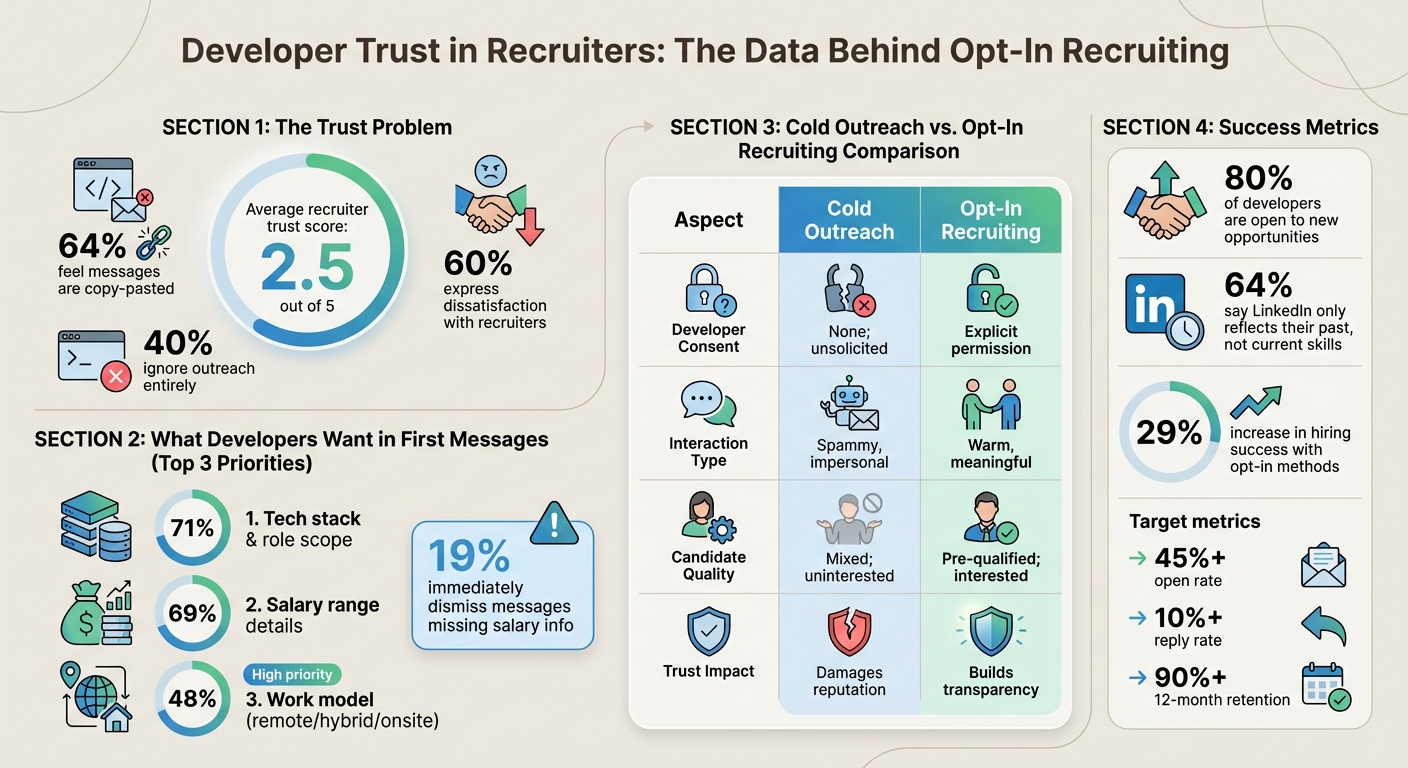
Developers don’t trust recruiters. The average trust score is just 2.5 out of 5, with 64% feeling messages are copy-pasted and 40% ignoring outreach entirely. Opt-in recruiting offers a solution by flipping the process - developers give explicit consent to be contacted, ensuring respect for their time and preferences.
Here’s why it works and how to implement it:
- Consent First: Developers agree upfront to receive job-related communication, reducing spam and improving engagement.
- Transparency Matters: Share key details like tech stack, salary, and work model in your first message. 71% of developers value this clarity.
- Where to Find Them: Focus on platforms like GitHub, Stack Overflow, and niche communities where developers are active.
- Build Trust: Use personalized outreach, avoid personalization mistakes, and regularly update candidate data to maintain credibility.
Opt-in recruiting isn’t about sending more messages - it’s about sending the right ones to the right people. Start small, respect developer autonomy, and watch your hiring success improve.
What Is Opt-In Recruiting and Why Developers Trust It
Opt-in recruiting is a hiring approach where developers explicitly grant permission to be contacted before any outreach takes place . This consent is typically gathered through methods like a checkbox on a career page, a response to a text message, or a confirmation email. Unlike cold outreach, which relies on unsolicited messages, opt-in recruiting ensures that developers willingly express their interest upfront.
Beyond being a smart strategy, opt-in recruiting is a legal requirement. In the U.S., regulations demand user consent for A2P (Application-to-Person) messaging . Skipping this step can lead to spam filters blocking messages, compliance issues, and potential harm to a company's reputation.
But the advantages go beyond just staying compliant. Opt-in recruiting empowers developers by giving them control over the type of job-related information they receive. This means fewer irrelevant messages cluttering their inbox and a higher likelihood of meaningful engagement. For recruiters, it creates a pool of candidates who are genuinely interested, leading to better engagement and fewer complaints about spam . This sets the stage for understanding why unsolicited outreach often backfires and how a permission-first approach fosters trust.
Why Cold Outreach Fails with Developers
Cold outreach - like sending unsolicited emails - often backfires. These messages frequently end up in spam folders, prompt recipients to opt out immediately, and erode trust before any real conversation begins. Developers, who are often bombarded with irrelevant and generic pitches, quickly grow wary of such approaches.
On top of that, mass-produced, impersonal communications are more likely to be flagged by email providers and messaging carriers, which prioritize messages from opt-in contacts. Worse still, these unsolicited tactics can run afoul of TCPA regulations, leaving companies exposed to legal risks.
How Permission-Based Recruiting Creates Trust
Permission-based recruiting, particularly through a double opt-in process, builds trust from the ground up. Here’s how it works: after signing up with their email, developers confirm their interest by clicking a link or replying to a message . This extra step verifies the contact information and ensures the developer’s genuine willingness to engage. The result? Higher response rates and more meaningful interactions .
Additionally, having clear, documented consent minimizes spam complaints and keeps recruiters compliant with privacy laws. Here’s a quick comparison:
| Aspect | Cold Outreach | Opt-In Recruiting |
|---|---|---|
| Developer Consent | None; unsolicited | Explicit permission required |
| Interaction Type | Spammy, impersonal | Warm, meaningful |
| Candidate Quality | Mixed; many uninterested | Pre-qualified; genuinely interested |
| Recruiter Reputation | Damaged by spam signals | Strengthened through transparency |
| Developer Control | Minimal | Full control over contact frequency and method |
Matching Your Approach to What Developers Want
The disconnect between what recruiters send and what developers actually want is a major reason for low response rates. Here’s the reality: 71% of developers care most about the tech stack and role scope, and 69% expect salary details in the first message . Yet, many outreach efforts completely skip these essentials, treating developers as if they’re interchangeable or misunderstanding what they look for in job descriptions. By understanding what developers value and aligning your communication with their priorities, you can turn ignored messages into meaningful conversations. The key is knowing what matters to developers before crafting your outreach.
Learning What Developers Look For in Jobs
Developers approach job opportunities differently from most professionals. Flexibility is no longer a bonus - it’s the baseline. They also want clear paths for career growth, whether that’s moving into leadership, project management, or honing expertise in areas like AI or blockchain .
Start by researching what drives individual developers. Dive into their GitHub repositories to see which technologies they’re passionate about. Check their LinkedIn activity and pay attention to discussions in technical communities like Reddit’s r/webdev or niche Slack groups. For example, if a developer is actively contributing to Rust projects and advocating for open-source software, you can tailor your message to reflect those interests instead of sending a one-size-fits-all job description.
When reaching out, include the essentials upfront: tech stack, salary range (in USD), and work model . This shows you respect their time and understand their priorities. Developers are far more likely to engage when they see that your message aligns with their needs and interests.
Finding Developers Where They Already Spend Time
Here’s an important stat: 80% of developers are open to new opportunities . But they’re not scrolling through job boards. Instead, they’re reading technical blogs, contributing to open-source projects, and participating in communities where they learn and share their expertise. That’s where you need to meet them.
Focus your efforts on platforms where developers naturally showcase their skills. Sites like GitHub, Stack Overflow, daily.dev, and specialized Discord servers are where developers spend their time. Unlike LinkedIn - which 64% of developers say only reflects their past - these platforms highlight their current projects and interests. Reaching out here feels less intrusive and more like a natural part of their professional engagement.
Use targeted strategies to connect. Boolean searches can help you identify developers with recent open-source contributions. Engage with community leaders in niche Slack or Discord groups. Even consider referral programs that reward quality hires . For instance, if you find a developer maintaining a popular React library or actively answering questions in a Python forum, you’ve likely found someone deeply engaged in their work - and much more likely to respond to a relevant opportunity. This approach not only builds trust but also respects the opt-in nature of modern recruiting.
Creating a Clear and Organized Candidate Pipeline
Building trust with developers is just the beginning. To maintain that trust, you need a well-structured, transparent pipeline that keeps candidates at the center of your process. A developer-focused pipeline should be more than just organized - it needs to reflect how developers approach their careers. The aim? To connect the right talent with the right opportunities at the right time, without reducing individuals to mere entries in a database. Let’s explore two crucial components: candidate segmentation and ensuring data accuracy.
Organizing Candidates by Skills and Interests
Developers aren’t one-size-fits-all. A frontend React expert isn’t going to thrive in a backend Go role, and mismatched placements only lead to frustration. That’s why it’s essential to segment your pipeline based on technical expertise (e.g., Frontend, Backend, DevOps), seniority levels (Junior, Mid, Senior), and specific interests like open-source contributions or a passion for Rust . This approach allows you to share tailored opportunities instead of sending out generic messages.
To make this even more effective, create dedicated talent pools for high-demand roles or ongoing needs, such as software engineering or data science . Use dynamic filtering - factors like work history, location, or diversity metrics - to keep your pipeline flexible and up-to-date. Additionally, tracking engagement metrics (such as email opens, clicks, and responses) can help you gauge a candidate’s interest and readiness. This way, you’ll know who’s actively looking and who might consider a new opportunity in the next 6–12 months .
Keeping Candidate Data Accurate and Private
Outdated information is a trust killer. In fact, 64% of developers believe platforms like LinkedIn fail to represent their current skills and potential . Relying solely on static profiles is a mistake. Instead, use tools like a CRM or ATS to centralize candidate information, automate updates, and parse resumes for real-time skill changes . Regular check-ins, such as quarterly 1:1 conversations with “warm bench” candidates, can help you stay updated on their status, career goals, and willingness to relocate .
Equally important is protecting candidate privacy. Implement audit trails to monitor changes and ensure no one falls through the cracks . Clear naming conventions - like prefixing entries with "TP" for Talent Pool followed by the role or skill set - can also prevent duplicate efforts within your team . When candidates see that you’re handling their data responsibly and keeping it current, they’re more likely to stay engaged. Remember, nearly half (49%) of tech candidates have turned down offers because of a poor experience . Mismanaged data doesn’t just hurt your process; it damages the trust you’ve worked so hard to build. Accurate, secure data is the backbone of a strong candidate experience, reinforcing the trust that started with your initial outreach.
Reaching Out to Developers the Right Way
With a well-organized pipeline and accurate data in hand, the next step is reaching out - and this is where many recruiting efforts stumble. The stats are clear: 40% of developers ignore messages because they feel like generic spam, and 64% dismiss recruiter messages as copy-pasted or outdated . As we've discussed, every word in your outreach plays a role in establishing trust.
These days, finding developers isn't the real challenge - getting them to engage is. To succeed, your outreach must be permission-based, personalized, and well-timed. Let’s break down how timing and thoughtful messaging can transform your efforts.
Setting Up Outreach That Respects Developer Time
Outreach timing isn’t just about the clock; it’s about understanding the developer’s career trajectory. A useful strategy is to analyze tenure patterns. For instance, if a developer tends to stay in roles for three years and is nearing the 2.5-year mark, they might be more open to new opportunities . Using this insight, you can time your messages to align with their potential openness to change.
Mass outreach is rarely effective. Instead, focus on dedicated outreach sessions . If a developer shows interest but isn’t ready to move forward, don’t vanish. Follow up in a few months with a short, relevant update - like news about a product launch or a team milestone. This approach signals that you’re invested in their journey, not just trying to fill a role.
Writing Messages That Address Developers' Priorities
Timing is essential, but your message content is just as critical. Developers are clear about what they value in recruiter messages. To stand out, address their priorities directly. For example, 71% of developers want details about the tech stack and role scope, 69% expect salary information upfront, and work model details are also high on their list . Skipping salary information? That’s an easy way to lose 19% of your audience immediately .
Personalization matters, and it goes far beyond just using a developer’s name. Reference something specific about their work or interests. Did they contribute to an open-source React library? Mention it. Have they spoken at a conference or written a technical blog post? Acknowledge it. These small details show that you’ve done your homework and value them as individuals, not just potential hires. Yes, it takes extra effort, but this level of personalization can make all the difference in building trust and sparking a response.
Providing Value Beyond Job Postings
Building trust with developers means thinking beyond job listings and becoming a true career ally. It’s about offering meaningful support throughout their career journey, not just when there’s an open role to fill.
"Stop optimizing filters. Start optimizing value. The candidates are there, but they just don't trust you enough to reply." - daily.dev State of Trust Report
This approach shifts the focus from transactional interactions to establishing genuine partnerships. Here are two strategies to create lasting value and strengthen trust:
Sharing Career Resources and Technical Content
Developers thrive on staying informed and sharpening their skills. Share content that aligns with their expertise - whether it’s the latest industry developments, detailed technical guides, or curated learning materials. The key is to keep it relevant. For instance, if a developer specializes in React, provide updates on new features or performance optimization techniques instead of broad career tips.
Linear exemplifies this by sending quarterly newsletters to its research and candidate panel. These newsletters highlight product features influenced by developer feedback, fostering transparency and engagement. This approach has led to an impressive 85% attendance rate for their engagement sessions, far surpassing the industry average of 75% . When developers see their input valued, they’re more likely to remain engaged.
Running Events and Q&A Sessions
Create opportunities for developers to connect directly with your engineering leadership through events and Q&A sessions. These interactions allow developers to ask questions, gain insights into your company’s technical approach, and get a sense of your culture.
Notion, for example, uses a "survey-to-interview" pipeline. They send brief in-product surveys about specific features and invite the most thoughtful respondents to participate in technical Q&A sessions. This method has converted about 12% of active users into an engaged talent community .
Loom takes a different route by adding a simple recruitment option at the end of support tickets. They ask users if they’d like to contribute to improving the product, which has led to 15% of those interactions turning into signups for their developer panel .
To respect developers’ time, consider offering compensation for these sessions. For 30- to 60-minute engagements, typical rates range from $50 to $125 for general developers and $75 to $150 for those with specialized B2B expertise . These sessions are mutually beneficial: developers gain early access to new tools and insights into your team’s work, while you assess their skills in a low-pressure setting and build loyalty without the formality of an interview process.
Connecting Pipeline Candidates to Open Roles
Building a reliable pipeline is just the beginning. The real challenge kicks in when a position opens up, and you need to activate the right candidates quickly. The goal? Avoid scattershot approaches and instead focus on aligning candidates with what they genuinely care about, leveraging the trust you've already built. This is where your well-organized pipeline becomes a game-changer, helping you connect with candidates who are already familiar with and trust your process.
Matching the Best Candidates to Each Role
Once you have an up-to-date candidate profile, it's time to focus on what developers prioritize most - often referred to as the "Big Three": tech stack/role scope, salary range, and work model (remote, hybrid, or onsite). These three factors are critical: 71% of developers value clarity on tech stack/role scope, 69% want a clear salary range, and work model details are non-negotiable. Missing even one of these can cause 19% of candidates to dismiss your outreach altogether.
To streamline this process, use your CRM to segment candidates by key criteria like seniority (Junior, Mid, Senior), skillset (Frontend, Backend, DevOps), and availability (immediate or within 6–12 months). For example, if a Senior React Developer role opens, your pipeline should allow you to quickly generate a shortlist of pre-qualified React experts who are at the right career stage and open to new opportunities soon. Keeping this "warm bench" of pre-screened engineers ensures you're ready to move the moment a role becomes available.
When reaching out, always include clear details on the tech stack, role scope, salary, and work model. Even if you're using automation, add a personal touch - like referencing a candidate's GitHub handle or a recent blog post - to make your message feel authentic rather than robotic.
Using Referrals and Developer Advocates
Once you've nailed the candidate matching process, take it a step further by tapping into peer recommendations. Developers trust their colleagues far more than they trust recruiters. In fact, personal referrals are the most trusted source for job opportunities, while recruiters score a modest 2.5 out of 5 on trustworthiness. This trust factor gives referrals a significant edge, bypassing the skepticism that often accompanies cold outreach.
When a position opens, reach out to pipeline members who may not be immediately available and ask them to recommend qualified peers. Tailor these referral requests by specialty - ask your Rust experts to refer other Rust developers, or request DevOps engineers to suggest infrastructure specialists. This targeted approach significantly boosts the chances of finding the right match, with reply rates for double opt-in introductions reaching an impressive 85–90%.
Additionally, build relationships with developer advocates who are genuinely passionate about your company's mission or technical projects. These advocates can introduce you to their networks in a way that feels more authentic and credible than traditional recruiter pitches.
"You can't out-spend Big Tech, but you can out-nurture them." - Anastasia Dontova, Technical Sourcer at Index.dev
Tracking and Improving Your Recruiting Pipeline
Once your opt-in pipeline is up and running, it's time to dig into the numbers and listen to feedback. The goal here isn’t to chase vanity metrics - it’s about understanding if your trust-first approach is working and spotting where candidates might drop off. By combining data and developer insights, you can fine-tune your recruitment process for better results.
Metrics That Show Pipeline Performance
Start by focusing on key metrics like open rates, reply rates, and reducing time-to-hire. Ideally, you should aim for an open rate of at least 45% and a reply rate of 10% or higher . Falling short? Take another look at your outreach. Are you including the essentials - like the tech stack, salary range, and work model? Keep in mind that 40% of developers skip over messages that feel like generic spam .
Another critical metric is your 12-month retention rate. Hitting 90% or more indicates that what you promised during recruitment aligns with the actual job . If retention is low, it’s a sign your pipeline might not be accurately reflecting the role, which can harm trust and your employer brand over time.
Engagement metrics like email opens, content clicks, and replies can also tell you a lot. These insights help you determine the best time to reconnect with passive candidates for active roles instead of relying on guesswork .
While these numbers provide a snapshot of your pipeline’s performance, developer feedback adds the context you need to understand the "why" behind the trends.
Using Developer Feedback to Improve
Numbers can show what’s happening, but developer feedback reveals why it’s happening. With recruiter trust averaging just 2.5 out of 5 and 60% of developers expressing dissatisfaction , feedback is essential for identifying areas to improve.
Send out short surveys after key stages like initial outreach, screening calls, and final interviews. Keep them brief - three questions or fewer - to respect developers’ time. Ask direct questions like: Was the salary range clear? Did the tech stack match what you were told? Did the recruiter seem to understand your experience?
Don’t limit yourself to internal surveys, though. Check Glassdoor reviews and social media mentions for unfiltered insights into your candidate experience . If recurring issues pop up - like vague job descriptions or slow responses - address them head-on. Fixing these pain points shows developers you’re serious about building trust and improving the process.
Conclusion
Opt-in recruiting represents a major shift in how companies approach hiring developer talent. By focusing on permission and transparency, this method directly addresses the trust gap many developers feel toward traditional recruitment practices . It prioritizes respect for their time, preferences, and privacy, creating a foundation for a talent pipeline rooted in genuine, long-term engagement.
The strategies we've discussed - tailoring your approach to developers' needs, offering value beyond just job postings, and tracking metrics that truly matter - work together to build a stronger, more effective recruitment process. Instead of relying on impersonal outreach, you're fostering meaningful relationships with developers who value a respectful and thoughtful approach.
Key steps like leading with the "Big Three" (tech stack, salary range, and work model), committing to 48-hour screening SLAs, and continuously improving your process based on developer feedback can make a real difference. In fact, recruitment platforms that embrace these principles report a 29% increase in hiring success rates .
Finding the right software developer remains a significant challenge for 75% of companies . But by consistently applying these strategies, you can transform your recruitment efforts and stand out in a competitive market. Organizations that honor developer autonomy and embrace opt-in recruiting will gain an edge over those sticking to outdated, generic outreach methods.
The key is to start small but start now. Build your opt-in pipeline one trusted connection at a time, and you’ll create a recruitment system that not only attracts top talent but also fosters meaningful, lasting relationships. Trust and transparency aren’t just buzzwords - they’re the foundation for turning today’s hiring challenges into opportunities for success.
FAQs
What makes opt-in recruiting more effective at engaging developers than traditional methods?
Opt-in recruiting takes a refreshing approach by emphasizing trust, transparency, and respect for developers' preferences. Instead of bombarding developers with unsolicited messages, it ensures they're contacted only when they’ve shown genuine interest. The result? A more positive, less intrusive experience for everyone involved.
This method focuses on personalized communication, cutting down on spammy outreach and fostering meaningful connections. By building trust and prioritizing what developers value - authenticity and clear communication - opt-in recruiting not only strengthens relationships but also boosts response rates. It’s a smarter, more respectful way to engage with talent.
What are the best platforms to connect with developers open to opt-in recruiting?
When it comes to finding developers open to opt-in recruiting, the best places to start are platforms where they actively engage and showcase their skills. GitHub and Stack Overflow are prime examples. These platforms not only let you explore developers' contributions and projects but also give you a clear sense of their technical expertise.
Beyond these, niche communities like daily.dev, Reddit, and even local meetups provide a more personal and collaborative environment. By joining discussions, sharing meaningful insights, and tailoring your outreach, you can build genuine connections and attract developers who are truly interested in exploring new opportunities.
How can recruiters build trust with developers while respecting their time?
Recruiters can earn developers' trust by prioritizing clear, personalized communication. Begin with a double opt-in process - this ensures developers are genuinely interested before moving forward. It’s also crucial to share detailed, transparent job descriptions that clearly lay out responsibilities, expectations, and benefits right from the start.
Respecting developers' preferences and steering clear of spammy or generic outreach helps create a more positive interaction. This approach not only saves time for everyone involved but also builds credibility, paving the way for stronger, long-lasting professional relationships.
.png)