Passive software engineers - those not actively seeking jobs - require a different approach. Traditional cold outreach often fails because it interrupts their workflow and lacks personalization. Instead, focus on building trust and connecting with them in spaces they already frequent, like developer-centric platforms or technical communities. Here's a quick breakdown:
- Who they are: Employed engineers open to the right opportunity but selective about offers.
- What they value: Career growth, competitive compensation, technical challenges, remote work, and respectful communication.
- How to reach them: Use platforms like daily.dev Recruiter that integrate job opportunities into their routines. These platforms prioritize warm, opt-in introductions over unsolicited messages.
- Key strategy: Write clear, specific job briefs tailored to their skills and interests. Share technical content and engage authentically in developer communities to build credibility.
The goal is to respect their time and preferences while aligning opportunities with their professional goals.
::: @figure 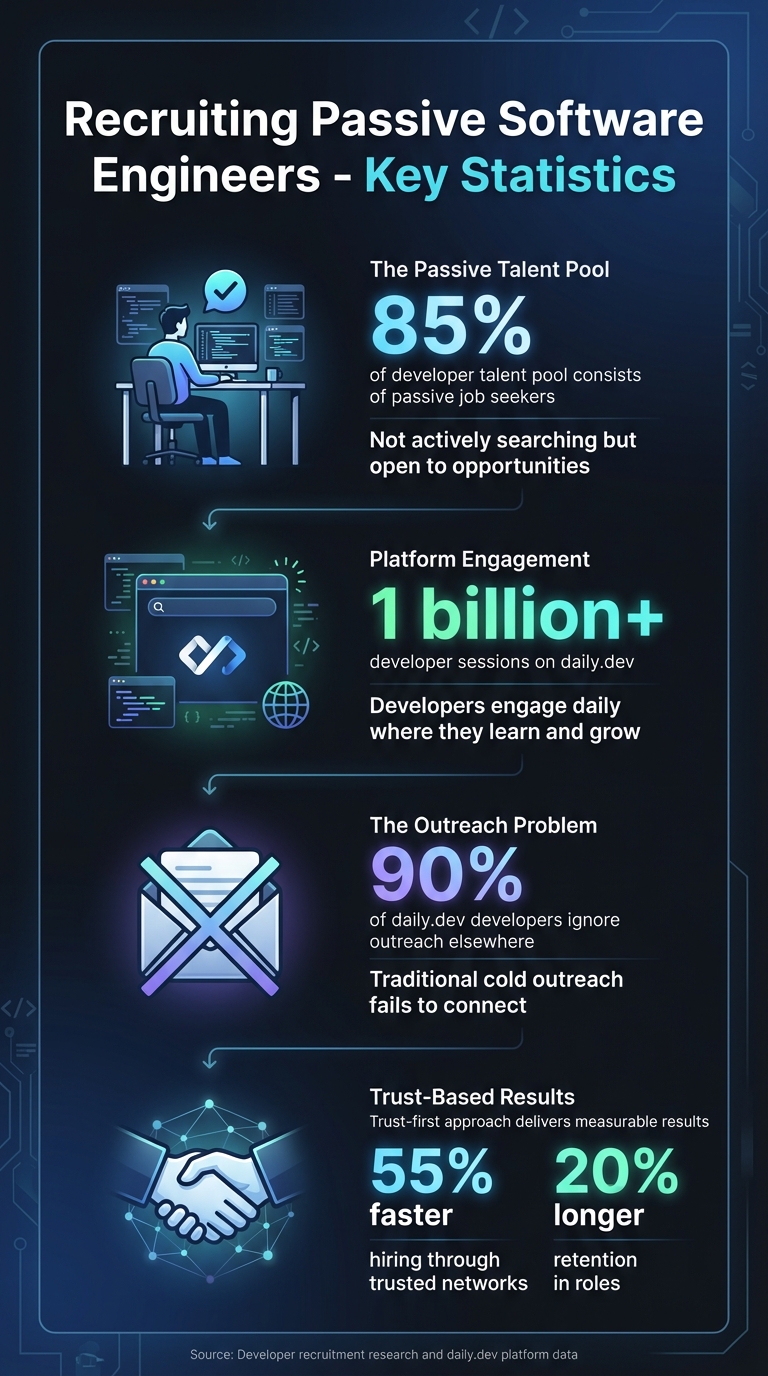 {Key Statistics for Recruiting Passive Software Engineers}
Understanding Passive Software Engineers
Who Are Passive Software Engineers?
Passive software engineers are developers who are currently employed but open to exploring the right opportunity. Unlike active job seekers who actively browse job boards and polish their resumes, passive engineers are more focused on excelling in their current roles, delivering impactful work, and tackling technical challenges.
What makes passive engineers stand out is their high level of selectivity. They’re not interested in just any job offer; it takes a compelling opportunity to catch their attention. Most outreach efforts fall flat because they lack depth or feel impersonal. Passive engineers are drawn to roles that align with their priorities and values, making their decision-making process deliberate and thoughtful.
What Passive Engineers Look for in Job Opportunities
Because of their selective mindset, passive engineers prioritize opportunities that promise career growth and advancement. They’re looking for roles that offer promotions, new responsibilities, or the chance to master sought-after skills that elevate their careers. Simply moving sideways in their career isn’t enough to tempt them away from a stable position.
Compensation is another key factor - they expect roles with meaningful salary increases. But it’s not just about the paycheck. They’re drawn to positions that offer technical challenges, opportunities to work with emerging technologies, and the satisfaction of solving complex problems. A healthy work-life balance, including remote work options, is also crucial for their long-term success and well-being.
On top of technical and professional considerations, passive engineers value workplaces with flat, collaborative structures and shared values. They gravitate toward companies with strong reputations and growth potential, especially those investing in innovation rather than simply maintaining outdated systems. Perhaps most importantly, they expect their professional boundaries to be respected. They prefer opt-in introductions over cold, unsolicited outreach that disregards their time or preferences, underscoring their need for privacy and control in their job search.
Using Developer-Centric Platforms for Recruitment
Why Developer-Centric Platforms Work
Developer-centric platforms succeed because they connect with engineers where they already spend their time. Instead of relying on traditional job boards, these platforms blend seamlessly into developers' routines - whether they’re browsing GitHub, participating in technical discussions, or exploring open-source projects.
What sets these platforms apart is trust. Developers see them as professional spaces rather than transactional job hubs. When job opportunities are presented in an environment where they’re already learning, contributing, or solving technical problems, those opportunities feel natural and relevant, not like spam. This level of credibility is something cold emails and LinkedIn messages just can't replicate.
The data supports this approach. Developer-focused platforms report that 85% of their talent pool consists of passive job seekers. By embedding job opportunities into developers' daily activities, these platforms create a natural and effective way to connect with top talent.
How daily.dev Recruiter Connects You With Passive Talent
daily.dev Recruiter takes this trust-based approach to the next level. With a network of millions of developers who use the platform daily for learning and engagement, it has logged over 1 billion developer sessions. By integrating job opportunities directly into a developer’s browser homepage, the platform ensures that opportunities feel like a natural part of their workflow - not an interruption.
"Trust is the only hack. Engineers already come to daily.dev to grow. They already trust the platform, engage daily, and treat what they see here as signal. When your role shows up inside that flow, it doesn't feel like outreach. It feels like an opportunity." - Nimrod Kramer, CEO & Co-Founder, daily.dev
daily.dev Recruiter focuses on creating meaningful connections. Every introduction is warm and double opt-in. Developers only see roles that align with their interests, and they express interest by answering up to three custom screening questions before you’re introduced. This ensures you’re speaking with candidates who are genuinely interested and meet your technical expectations.
The platform also provides valuable context for every introduction. For example, you might learn that "Ethan is actively learning Rust", giving you an immediate conversation starter based on their current interests. With 90% of daily.dev developers ignoring outreach elsewhere, this platform offers a rare chance to engage with passive talent that’s otherwise hard to reach.
Building Trust Through Content and Community Engagement
Software engineers, especially those not actively seeking new opportunities, aren’t interested in flashy sales pitches. What truly resonates with them is authentic technical expertise and a genuine understanding of their craft. Building trust requires consistent presence in developer spaces, offering meaningful content and authentic participation - not blatant self-promotion.
Creating Content for Developers
Developers are quick to spot shallow marketing efforts. They value content that dives deep into technical topics and provides practical, actionable solutions. A well-rounded content strategy often includes about 70% hands-on tutorials and 30% thought leadership, delivering both immediate value and unique insights .
For inspiration, explore developer hubs like Stack Overflow or Reddit to identify recurring challenges. Use this knowledge to create detailed blog posts or tutorials. For example, a piece like "How We Scaled Kafka to 5 Billion Messages Per Day" showcases not just technical expertise but also a real-world solution developers can learn from .
"Anybody can replicate keyword research, but nobody can replicate your worldview." - Karl Hughes, Founder, Draft.dev
By blending in-depth tutorials with thought leadership, you can build credibility while addressing real issues developers face. Pair this with active participation in relevant community discussions to reinforce your presence and trustworthiness.
Participating in Developer Communities
When engaging with developer communities, focus on offering value over promotion. Share meaningful insights, join programming-focused Slack groups, or highlight interesting open-source contributions. Avoid spamming job opportunities; instead, prioritize trust-building content like lessons from redesigning a CI/CD pipeline or invitations for peer reviews on open-source projects.
A quarterly sequence that shares non-recruitment content - such as technical case studies or open-source updates - can keep developers engaged without overwhelming them with job pitches . This approach nurtures authentic connections while demonstrating your commitment to their interests and expertise.
Hiring engineers?
Connect with developers where they actually hang out. No cold outreach, just real conversations.
How to Reach Passive Engineers Without Cold Outreach
Once you've established trust, the next step is to let passive engineers discover your job opportunities on their own. This involves crafting job briefs that genuinely connect with developers, leveraging the right targeting tools, and focusing on warm, opt-in connections instead of mass cold emails. Here's how you can make that happen.
Writing Job Briefs That Speak to Developers
Generic job descriptions? Developers can spot those a mile away. Instead of using overused buzzwords like "rockstar" or "ninja", focus on technical details that matter. Be clear about the tech stack, the challenges involved, and the problems the role will address. For example, skip vague phrases like "seeking a passionate full-stack engineer" and try something more specific: "Looking for a backend engineer skilled in Go and Kubernetes to scale our microservices architecture, which handles 10 million daily requests."
To go a step further, research candidates' work on platforms like GitHub, Stack Overflow, or even their personal blogs. Tailor your job briefs to reflect their expertise - whether it's working with specific technologies, tackling scalability issues, or contributing to open-source projects. Once your brief is polished, you’ll need the right tools to get it in front of the right audience.
Leveraging Targeting Tools to Reach Developers
Not all job boards are created equal, and generic platforms often fall short when it comes to connecting with developers. Developer-focused platforms, however, allow you to filter candidates based on the skills they use and the content they engage with. For instance, tools like daily.dev Recruiter enable you to narrow down your search by specifying technologies, experience levels, and even geographic preferences. This ensures your job postings are seen by the right people - those who are actually interested in and qualified for the role. It’s a time-efficient way to present opportunities that developers will find relevant and worth considering.
Building Connections Through Warm Introductions
Warm introductions are far more effective than cold outreach. Why? Because developers who opt into these connections are already open to hearing about opportunities. Platforms with double opt-in models ensure that both the recruiter and the developer are interested in engaging before any conversation begins. This leads to higher response rates and more meaningful interactions. Instead of chasing uninterested candidates with endless follow-ups, you’ll be building relationships based on genuine mutual interest. That’s the kind of connection that lasts.
Conclusion
Reaching passive software engineers isn’t about bombarding them with cold outreach. It’s about creating spaces where opportunities naturally align with their interests and goals. The strategies shared here highlight a simple yet powerful idea: trust is the cornerstone of effective developer recruitment.
As Nimrod Kramer from daily.dev aptly puts it, their platform thrives on trust, not shortcuts. This mindset should guide every interaction - whether it’s writing clear, technical job descriptions, engaging authentically in developer communities, or leveraging platforms where engineers already spend their time learning and improving.
This trust-first approach delivers real results. Unlike traditional platforms that rely on static résumés and keyword searches, daily.dev Recruiter connects roles with engineers based on what they actually read, code, and explore in their daily routines . The outcome? Faster hires and stronger retention. In fact, candidates referred through trusted networks are hired 55% faster and stay in their roles 20% longer .
So, instead of interrupting developers, meet them on their own terms. Speak their language, engage authentically, and invite them into conversations that matter. This way, you not only respect their time but also build meaningful connections that lead to better hiring outcomes.
FAQs
What are the best ways to engage passive software engineers without interrupting their workflow?
To connect with passive software engineers effectively, focus on building trust and being visible in the spaces they already frequent. Share engaging and useful content like technical articles, open-source projects, or problem-solving videos on platforms they love - think GitHub, Stack Overflow, or developer communities on daily.dev. This approach lets you interact with them naturally, without disrupting their routine.
When reaching out, opt for asynchronous communication, such as personalized emails or LinkedIn messages. This gives them the flexibility to respond when it suits them. Make your outreach stand out by referencing their recent work, preferred tech stack, or professional goals. Skip the generic job descriptions and instead emphasize how your opportunity aligns with what they care about most.
Beyond initial contact, focus on building long-term relationships. Participate in virtual meetups, hackathons, or use employee referrals to share real stories about your team and workplace. Stay engaged by leaving thoughtful comments or checking in occasionally on LinkedIn. By respecting their workflow and fostering genuine connections, you’ll not only earn their trust but also increase the likelihood they’ll consider your opportunity when the timing feels right.
What should a job brief include to attract passive software engineers effectively?
To draw in passive software engineers, your job brief needs to be clear, concise, and tailored to what they value most. Start with a strong job title and a single-sentence summary that emphasizes the role’s purpose or impact - something like, "Build AI-powered analytics tools that transform decision-making."
Be upfront about compensation by including a salary range in U.S. dollars, along with any details about bonuses or equity. Mention the tech stack and tools they’ll be using, so they can quickly determine if the role aligns with their expertise.
Clarify location flexibility - whether the position is remote, hybrid, or on-site - and note if relocation support is available. Share insights about the team structure and work culture, focusing on aspects like collaboration, autonomy, and how decisions are made. Don’t forget to spotlight growth opportunities, such as mentorship programs, career progression paths, or involvement in advanced projects.
Wrap up with a short list of core responsibilities and success metrics, giving candidates a snapshot of their potential day-to-day tasks and long-term contributions. A well-crafted, transparent job brief like this builds trust and boosts engagement with passive candidates.
Why are developer-focused platforms better for connecting with passive software engineers than traditional job boards?
Developer-focused platforms work so well because they blend right into the places where software engineers already spend their time - think technical blogs, open-source repositories, or developer forums. Unlike active job seekers, passive engineers aren’t scrolling through traditional job boards. Instead, they come across opportunities organically within the tools and platforms they use daily. This method feels natural and far less intrusive, aligning perfectly with their interests.
On the other hand, traditional job boards rely on candidates actively searching for roles, which doesn’t match how passive engineers operate. To connect with this audience, recruiters need to engage in developer-first spaces. Whether it’s sharing valuable content, contributing to open-source projects, or jumping into meaningful discussions, these efforts build trust and credibility. This approach leads to stronger connections and better engagement with top-tier tech talent.
.png)