Finding passive developers is about trust, not tactics. While 74–80% of developers are open to new opportunities, most ignore generic recruiter messages. Why? Poor communication and lack of transparency. Developers rate recruiters a low 2.5 out of 5 in trust, with 40% ignoring outreach that feels impersonal.
Here’s how to connect with passive developers ethically and effectively:
- Know your audience: Build detailed developer personas by analyzing GitHub and LinkedIn profiles. Focus on skills, career goals, and values.
- Use the right tools: Platforms like GitHub and daily.dev Recruiter provide insights into developers’ work and interests, enabling meaningful connections.
- Personalize outreach: Reference specific projects, share salary ranges, and align opportunities with developers’ priorities like tech stacks and work models.
- Build relationships: Stay relevant by sharing updates developers care about, like industry news or tech trends. Avoid aggressive follow-ups.
- Track performance: Monitor response rates and feedback to refine your approach. Tools like daily.dev Recruiter offer analytics to improve engagement.
The takeaway? Developers value respect, transparency, and genuine connections. Ditch generic messages and focus on long-term relationships to stand out.
::: @figure 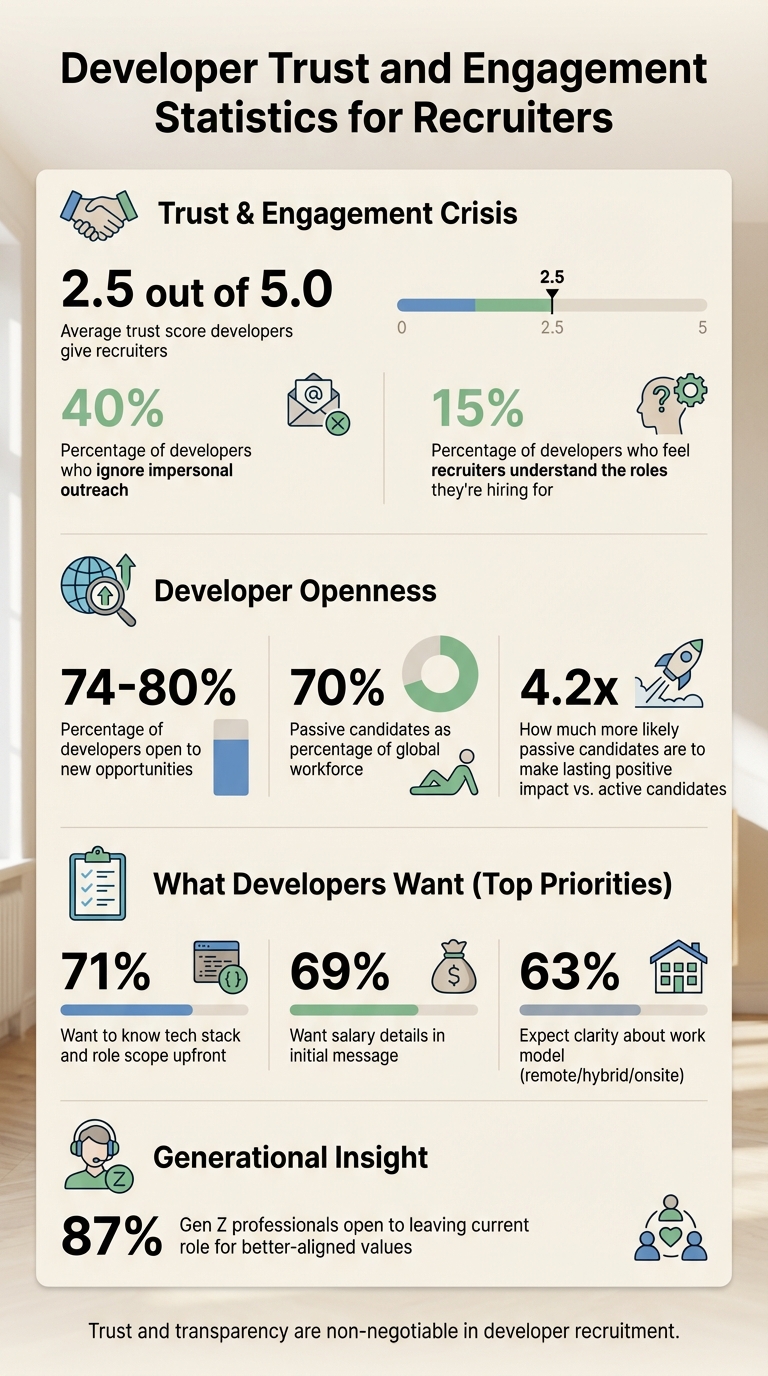 {Developer Trust and Engagement Statistics for Recruiters}
Creating Detailed Developer Personas
Before reaching out to any developer, it’s essential to know exactly who you’re looking for. A strong developer persona goes beyond listing programming languages - it’s about understanding their technical expertise, career goals, and professional values. Without this clarity, your outreach can feel random, and developers can sense when you haven’t done your research.
Start by mapping out the key traits of your ideal candidate. Separate must-have skills from nice-to-have qualities, and think about the career paths and attitudes that would thrive in your team environment . Consider what contributes to long-term success, not just immediate technical requirements.
Dive into their digital presence on platforms like GitHub, Stack Overflow, or even niche Slack communities. These platforms offer a window into their technical strengths and interests . For example, open-source contributions can highlight collaboration and initiative, while Stack Overflow activity can reveal problem-solving abilities and a willingness to share knowledge. These insights are often more telling than a traditional resume. To refine your developer persona even further, focus on analyzing profiles on GitHub and LinkedIn or recruiting through open source projects.
Reviewing Developer Profiles on GitHub and LinkedIn
GitHub profiles can reveal details that resumes often leave out. When reviewing repositories, pay attention to commit frequency, project complexity, and collaborative efforts. Are they managing long-term projects? Experimenting with cutting-edge tools? Writing clear documentation? Their approach to code reviews and pull requests can also offer clues about how they work with others.
LinkedIn, on the other hand, provides a broader professional context. Look at their career trajectory, the companies they’ve worked for, and the technologies they’ve used in real-world settings. Notice how they describe their experiences - developers who can clearly explain technical challenges and solutions often excel in communication. Patterns in their career progression can also be telling: are they looking to step into leadership roles, or do they prefer to deepen their technical expertise? These observations help you align the developer persona with your specific hiring needs.
Matching Personas to Job Requirements
Once you’ve built a detailed persona, it’s time to align it with your job requirements. Match candidates based on their technical skills, career milestones, and growth ambitions. For instance, a senior developer who’s been in the same role for five or more years might be ready to step into a principal-level position . Offering them a mid-level role could waste time and hurt your credibility.
Instead of relying on strict keyword matches, use contextual insights. For example, someone labeled as a "UI engineer" might still be a great fit for your "frontend developer" role, even if the titles don’t align perfectly. While tools like natural language processing can help identify overlaps, human judgment is irreplaceable. Think about whether your role’s tech stack, projects, and growth opportunities match the developer’s aspirations. When these align, it sets the stage for a strong, trust-based relationship.
It’s worth noting that passive candidates vs active candidates - are 4.2 times more likely to make a lasting positive impact on your organization compared to active candidates . This makes the effort of crafting detailed personas not just valuable, but essential. By targeting developers whose goals naturally align with what you offer, you’re not just filling a role - you’re building meaningful, long-term connections.
Using Developer-Focused Sourcing Tools
Picking the right tools to connect with developers is key to building trust and engaging them through ethical tech recruitment. Old-school methods like scraping profiles, sending cold InMails, or blasting out generic emails often do more harm than good. Instead, recruiters must find better ways to find passive developer candidates without damaging their reputation. These tactics can make developers feel like mere data points instead of respected professionals with individual preferences. Instead, platforms like GitHub can offer genuine insights into a developer's skills.
GitHub provides a clear view of a developer's work. Look for repositories with well-written documentation, detailed README.md files that include setup instructions and usage examples, and evidence of teamwork. Commit messages can reveal much about a developer's thought process - clear explanations and disciplined, atomic commits are great signs of professionalism. You can also assess their technical maturity by checking for security practices like using Dependabot, secret scanning, or branch protection rules. But steer clear of superficial metrics like commit counts or lines of code, as these can be misleading and don’t necessarily reflect code quality or real impact .
For a more dynamic approach, consider a tool like daily.dev Recruiter. This platform skips scraped profiles and instead connects you with developers through real-time signals from an active community . Developers opt in by reviewing your job brief and agreeing to the introduction, ensuring that every conversation starts with mutual interest . Job postings are shown within their content feed as relevant suggestions, making the process feel organic rather than intrusive. As Nimrod Kramer, CEO and Co-Founder of daily.dev, explains:
We built a place where engineers can turn off the noise. To enter this space, you don't need a hack. You need trust .
daily.dev Recruiter also allows you to add screening questions to pinpoint candidates with specific skills or shared values before initiating contact . The platform integrates smoothly with your workflow and operates on a pay-for-results model, meaning you only pay for successful connections . With over 20,000 GitHub stars and recognition as Product of the Year on Product Hunt, daily.dev Recruiter has earned respect within the developer community.
Writing Personalized Outreach Messages
Once you've built detailed developer personas and ethically sourced candidates, the next step is crafting a message that grabs attention and inspires a response. Personalized outreach - especially when referencing specific projects or milestones - can significantly boost response rates . But personalization alone won’t cut it. Developers value transparency just as much. In fact, 69% want salary details upfront, 71% prioritize knowing the tech stack and role scope, and 63% expect clarity about the work model (remote, hybrid, or onsite) .
Mentioning Specific Developer Work
Start by referencing something tangible from their GitHub or LinkedIn activity. Look for notable repositories, recent commits, or open-source contributions that align with your position. For example, instead of a generic "I saw your impressive work on GitHub", say something like, "I noticed your README.md for [Project Name], where you detailed Docker and Kubernetes setups. We're building a similar microservices architecture and could use that expertise."
Keep subject lines short and specific - seven words or fewer works best, such as "Question about your [Project Name] on GitHub." This shows you’ve done your homework and aren’t sending a mass message. Avoid outdated terms like "rockstar" or "ninja", and skip overused openers like "I hope this finds you well." Aim for brevity: 80–125 words total, or three to five sentences, so the message is easy to scan. Most importantly, demonstrate genuine familiarity with their work to establish a meaningful connection right away.
Highlighting Job Fit with Developer Priorities
Once you’ve acknowledged their work, connect it to what they care about. Start with the "Big Three" must-haves: tech stack, salary range (in U.S. dollars), and work model . For instance: "We're hiring a Senior Backend Engineer to work with Go, PostgreSQL, and AWS. The role is fully remote, offering a salary range of $140,000–$170,000." This level of transparency not only builds trust but also respects their time.
Next, tailor the opportunity to address potential gaps in their current role. Maybe they’re working with outdated tech and want to explore modern frameworks, or they’re limited by budget constraints on their current projects. As Mark Ackers, Co-Founder and Head of Sales at MySalesCoach, explains:
The ultimate questions to be answered are: what is top of mind for your prospect when they go to work? When they get home in the evening, what are they moaning about?
With 87% of Gen Z professionals open to leaving their current role for better-aligned values , your message should reflect what matters most to them - whether that’s career advancement, flexible hours, or the chance to make an impact. A well-crafted, personalized approach not only catches their attention but also sets the stage for long-term engagement.
Hiring engineers?
Connect with developers where they actually hang out. No cold outreach, just real conversations.
Building Long-Term Developer Relationships
Turning personalized outreach into long-term engagement shifts recruiting from a transactional process to one rooted in trust and connection. A single message won’t establish lasting credibility. With recruiters averaging a trust score of just 2.5 out of 5.0 , earning trust requires consistent, respectful communication. Think of passive developers as a long-term talent pool, not just short-term prospects. The recruiters who succeed are those who stay relevant without being overbearing - sharing useful insights, reaching out thoughtfully, and treating developers as equals. This approach lays the groundwork for meaningful, ongoing interactions.
Sharing Industry News and Helpful Updates
To build credibility, share information that developers genuinely care about. This could include updates like new framework releases, security alerts, or articles on emerging technologies that align with their technical interests. Considering that only 15% of developers feel recruiters understand the roles they’re hiring for , showing technical awareness can help bridge that gap.
Timing is key. Aim to share updates every two to four weeks, and tie these to moments when developers are most engaged - like after they’ve pushed a new commit or joined a community discussion . For instance, if a developer recently contributed to an open source project, you could send them a quick note about Rust’s latest performance enhancements or highlight an upcoming talk on the subject. The focus should always be on their interests, not just your job openings. Thoughtful, personalized updates naturally pave the way for ongoing conversations, especially when using tools like daily.dev Recruiter.
Maintaining Contact Through daily.dev Recruiter
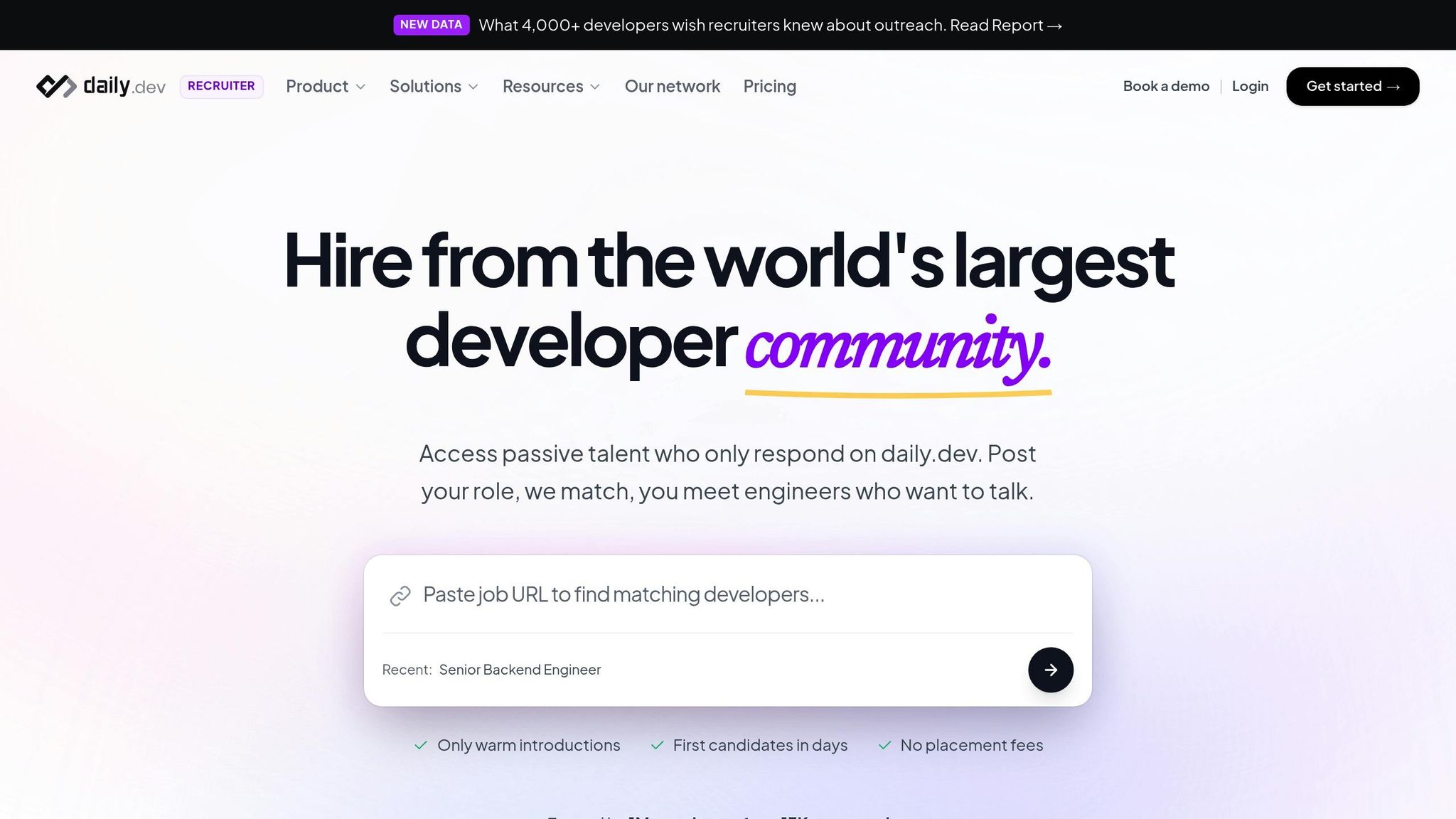
daily.dev Recruiter simplifies long-term engagement by connecting you with developers in spaces they already frequent - places where they read, learn, and interact with their professional community. Instead of relying on cold follow-ups, the platform enables warm, contextual interactions through its screening and targeting features. Plus, with double opt-in contacts, developers only engage when they’re genuinely interested.
Leverage the platform to reconnect with past candidates, check in with developers who weren’t ready to make a move months ago, or explore referrals from your network . These consistent touchpoints help build trust over time. By integrating developer hiring platforms with ATS and CRM systems, you can turn informal interactions into structured pipelines , tracking every contact, shared resource, and follow-up. This approach shifts recruiting from a numbers-driven game to a relationship-first strategy, respecting developers’ time while fostering trust through steady, meaningful engagement.
Tracking and Improving Sourcing Performance
Once you’ve established personalized outreach strategies, the next step is to refine them using data. Tracking your sourcing efforts helps you identify what fosters trust - and what doesn’t. With 40% of developers ignoring generic messages , monitoring patterns allows you to adjust your approach and ensure every interaction feels respectful and intentional.
Monitoring Response Rates and Developer Feedback
Pay attention to response rates to uncover problems with your messaging, timing, or targeting. Analyze your data by factors like message length, personalization, and specific details included, such as tech stack, salary range, or work model. Considering that 69% of developers prefer salary details upfront , including this information in your initial message can make a big difference.
Feedback from developers is equally valuable. When someone responds, ask what stood out in your message or how you could improve. Anonymous feedback and tracking through ATS systems can also highlight where candidates disengage - like over-aggressive follow-ups. Regularly reviewing these trends helps you refine your approach, ensuring it aligns with ethical and respectful practices while staying compliant with data privacy laws .
Using daily.dev Recruiter Analytics
Platforms like daily.dev Recruiter provide real-time insights into opt-in, reply, and engagement rates, helping you identify where adjustments are needed in your pipeline. With two-way ATS integration for tools like Greenhouse, Lever, and Ashby, you can automatically sync candidate status and eliminate manual updates, giving you a clear, up-to-date view of your pipeline .
Behavioral data is another powerful tool. For instance, if a developer actively engages with technical content but doesn’t respond to your outreach, it’s a sign to tweak your messaging to better match their interests. Custom screening questions can also help refine your understanding of candidate fit. By continuously fine-tuning your strategy with these insights, you not only improve your sourcing efforts but also build trust with passive candidates. When used thoughtfully, analytics becomes more than just a numbers game - it’s a way to create meaningful, respectful connections.
Conclusion
Reaching out to passive developers successfully hinges on ethical practices, thoughtful personalization, and building long-term relationships. With passive candidates making up 70% of the global workforce , the potential is massive - but only if approached with genuine respect and care.
The data speaks volumes: recruiters average a trust score of just 2.5 out of 5 . This highlights a crucial point - trust isn’t just a nice-to-have; it’s the backbone of effective sourcing.
Personalized outreach is key. Addressing the "Big Three" - tech stack, salary range, and work model - covers what developers want from recruiters. For example, up to 69% of developers value salary transparency in initial messages . But personalization goes beyond ticking boxes. It’s about digging deeper - reviewing GitHub profiles, understanding current interests, and crafting outreach that acknowledges their skills and contributions. When developers feel recognized and respected, they’re more likely to engage. This approach not only builds trust but also lays the groundwork for meaningful, ongoing connections.
Tools like daily.dev Recruiter make this process smoother. Its double opt-in model ensures mutual interest right from the start. Instead of relying on outdated resumes, real-time behavioral signals provide insights into what developers are learning and creating. Plus, with two-way ATS integration and built-in analytics, you can keep your pipeline organized and refine your messaging based on actual engagement data .
The shift from generic sourcing to genuine engagement is no longer optional. Developers are quick to mute recruiters or ignore impersonal messages. But when trust and connection take center stage, recruiters gain a real edge - turning passive sourcing into lasting talent relationships.
FAQs
How can recruiters earn the trust of passive developers?
To build trust, recruiters need to adopt a clear, tailored, and respectful approach. Start by focusing on what developers care about most - this includes sharing specific details about the role, like the salary range, the nature of technical challenges, and opportunities for professional growth. These are the essentials developers want to know upfront.
Make your outreach personal. Reference their projects or contributions on platforms like GitHub, and craft your message to reflect their unique skills and interests. This extra effort shows you’ve done your homework and aren’t just sending out generic messages.
Steer clear of impersonal mass emails or vague job descriptions - they can make you seem untrustworthy. Instead, focus on open and honest communication. Be consistent, respect their professional boundaries, and avoid being overly aggressive. By being upfront about expectations and providing useful insights without pushing too hard, you’ll show genuine interest in their career. Trust grows when developers feel that you value their expertise and long-term goals, paving the way for stronger professional relationships.
What are the key components of an effective developer persona?
An effective developer persona captures the technical skills, motivations, and communication preferences of developers. This approach allows recruiters to engage in a way that feels genuine and respectful.
Here’s what makes up a solid developer persona:
- Technical interests: The programming languages, tools, and platforms they rely on, such as GitHub or Stack Overflow.
- Career goals: Insights into what fuels their growth, like the types of projects or challenges they seek.
- Communication preferences: Their preferred methods of contact - whether it’s email, messaging platforms, or something else - and the tone they respond best to.
- Community behaviors: How they interact with others in forums or developer groups, offering clues about their collaboration style.
By focusing on these areas, recruiters can create tailored outreach that respects developers' values and builds trust, leading to stronger, more meaningful connections.
Why is personalized outreach crucial when recruiting developers?
Reaching out to developers with a personal touch shows that you respect their time and value their individuality. Developers are often bombarded with generic, cookie-cutter messages, which makes a tailored approach an effective way to stand out. It signals genuine interest in their specific skills and career aspirations.
When you take the time to craft thoughtful, relevant messages, it helps build trust and fosters a stronger connection. This not only increases the chances of a response but also opens the door to more meaningful conversations. A personalized approach allows you to connect with developers in a way that respects their professional boundaries and aligns with what they value most.
.png)