Finding developers without relying on LinkedIn is not only possible but often more effective. Many developers are either inactive on LinkedIn or see it as overly crowded with recruiter messages, leading to low response rates. Instead, platforms like GitHub, Stack Overflow, and developer forums provide better insights into a developer's skills, contributions, and interests. Here's how you can adjust your strategy:
- GitHub: Use advanced searches and repository metrics to identify active contributors. Look for recent commits, popular projects, and clean pull requests.
- Stack Overflow: Focus on reputation scores, tag expertise, and badges to find specialists. Analyze their answers to gauge technical and communication skills.
- Developer Communities: Engage on platforms like Reddit, DEV.to, and niche forums. Build relationships by participating in discussions and sharing resources.
- Warm Outreach Tools: Platforms like daily.dev Recruiter connect you with pre-qualified developers who opt-in for conversations, improving response rates.
- Referrals and Passive Talent: Build networks through open-source collaborators or community interactions. Stay connected with passive candidates through periodic, value-driven outreach through cold emails or warm intros.
These methods require time and effort but yield higher-quality connections by focusing on developers' actual work and interests.
Finding Developers on GitHub
GitHub is an excellent alternative to LinkedIn for finding developers, offering real-time insights into their work. With over 100 million developers as of early 2026, it’s the largest hub for technical talent . According to Stack Overflow surveys, 68% of top engineers are discovered via GitHub . Even more compelling, 83% of technical hiring managers view GitHub profiles as more reliable than traditional resumes .
What makes GitHub especially useful for hiring is the data it provides. For example, teams that recruit active contributors - those with 3 or more commits weekly - report 68% higher retention rates . These developers are typically more engaged and up-to-date with the latest technologies.
To make the most of GitHub, use its advanced search tools and repository metrics to zero in on the best candidates.
How to Identify Quality Developers on GitHub
Finding standout developers requires combining GitHub’s advanced search capabilities with a strategic approach. For instance, using queries like language:rust stars:>100 lets you find skilled Rust developers with well-regarded projects. Similarly, language:typescript "full stack" pushed:>2025-07-01 highlights active full-stack TypeScript developers . Google X-Ray searches can also uncover profiles that GitHub’s search might miss. For example: site:github.com "senior software engineer" (react OR javascript) inurl:readme .
Once you’ve identified potential candidates, dive deeper into their repositories. Look for projects with at least 500 stars, 100+ forks, and recent commits (within the last 90 days) to ensure they’re active . Quality pull requests are another key indicator - clean, well-documented code and evidence of solving real issues in popular repositories are great signs of expertise .
In 2026, many recruiters use the GitHub API to analyze bulk data, identifying the top 1% of developers before reaching out manually . This method streamlines the process and ensures you’re focusing on highly skilled candidates.
After identifying strong candidates, the next step is to reach out in a way that resonates with them.
Outreach Best Practices on GitHub
Personalized outreach is crucial on GitHub. Referencing a specific commit or pull request in your message can boost response rates to 60% . Before contacting anyone, check if their profile includes a "hireable" tag, which signals openness to job opportunities .
A great way to start is by engaging in technical discussions. Comment on an issue or join a conversation in their repository to build rapport before transitioning to email . Always review the README.md and CONTRIBUTING.md files to understand the project’s guidelines and show respect for open-source etiquette .
When sending a direct message, include proof that you’ve done your homework. Mention a specific repository or commit in the subject line. It’s also more effective if an engineering manager or technical peer reaches out instead of a recruiter. Highlighting your tech stack and specific challenges helps developers decide if the opportunity aligns with their skills and interests. This approach builds trust and credibility, making your outreach more meaningful.
Sourcing from Stack Overflow and Coding Platforms
Stack Overflow and competitive coding platforms like HackerRank and TopCoder offer a fresh way to spot talented developers. These platforms focus on problem-solving abilities and community recognition, moving beyond just project portfolios. The key is understanding how to interpret the signals these platforms provide.
Finding Top Contributors on Coding Platforms
Stack Overflow reputation scores can give you a sense of community trust, but don’t stop there. Dig deeper by analyzing tag specialization and badges. For instance, a high score in tags like React, Python, or Scikit-learn highlights a developer’s specific areas of expertise. Badges, especially gold and silver ones, reveal consistent contributions and recognized skills in technical domains.
To refine your search, tools like the Stack Exchange Data Explorer (SEDE) can help. You can run custom SQL queries to filter profiles by location, reputation, specific tags, or number of answers. Another effective method is using targeted Google X-ray searches with queries like:site:stackoverflow.com/users "location" "skill"
This strategy uncovers relevant profiles. From there, review accepted or highly upvoted answers to assess not just technical accuracy but also how well they communicate their ideas. Lastly, check that the developer has been active in the past 90 days to ensure they’re still engaged with the technologies you’re interested in.
Once you’ve identified potential candidates, the next step is to approach them thoughtfully.
Building Credibility Before Reaching Out
After evaluating technical contributions, it’s crucial to focus on authentic engagement in developer communities. Developers on platforms like Stack Overflow value genuine participation over direct recruitment pitches. Avoid cold outreach. Instead, spend time engaging with the community - comment on discussions, upvote insightful answers, and even contribute your own expertise. This builds familiarity and shows that you’re there for more than just recruitment.
When you’re ready to make contact, personalize your outreach. Reference specific contributions that stood out to you, such as a detailed answer or an innovative solution. This demonstrates that you’ve done your research and respect their work. For an even better approach, have an engineering manager or technical peer initiate the conversation. This adds credibility and helps establish a more meaningful connection.
Engaging in Developer Communities and Forums
In developer communities, technical contributions matter far more than job titles. Platforms like DEV.to, HashNode, Reddit (via programming subreddits), and DZone serve as hubs where developers exchange ideas, troubleshoot issues, and discuss industry trends. To make an impact here, recruiters need to approach these spaces with authenticity. Jumping straight into recruitment without building credibility often backfires, as developers value genuine interaction over transactional outreach. By engaging meaningfully, you set the stage for sourcing talent effectively on these platforms.
The move toward skills-based sourcing has made it essential to evaluate actual contributions rather than just resumes. These communities offer a window into how developers think, collaborate, and solve problems. However, tapping into this talent pool requires patience and a commitment to real participation.
Selecting the Right Communities to Join
Start by identifying the platforms where your target developers are most active. For example:
- DEV.to and HashNode attract developers who enjoy sharing technical tutorials and project write-ups.
- Reddit subreddits like r/webdev, r/javascript, and r/cscareerquestions host discussions on everything from debugging tips to career advice.
- DZone caters more to senior engineers, with a focus on enterprise-level content.
You might also explore Hacker News' "Who's Hiring" thread - a monthly space where recruiters post jobs and candidates actively search for opportunities. For those prioritizing diverse hiring, platforms like Women Who Code, Black Girls Code, and Code for America connect you with underrepresented groups in tech. Considering that networking accounts for 85% of job placements, being active in these communities can significantly enhance your sourcing efforts.
Contributing Value to Build Trust
Engagement isn’t just about observing - it’s about adding value. This could mean commenting on technical posts, sharing helpful resources, or answering questions where you have expertise, even if your expertise lies in hiring or career advice rather than coding. When reaching out to developers, make it personal. Reference their blog posts, forum discussions, or open-source projects to show you’ve taken the time to understand their work.
Avoid sending generic messages. Thoughtful, consistent interaction builds trust and ensures your outreach feels genuine, not transactional.
Using daily.dev Recruiter for Warm Introductions
Cold outreach often leads to disappointing results, with response rates typically falling between 1% and 5% . That’s why daily.dev Recruiter takes a completely different approach, eliminating cold outreach altogether.
The platform uses a warm, double opt-in system. This means both you and the developer must express mutual interest before any conversation begins. The result? A 100% trust score, far outpacing the low success rates of traditional cold outreach . This system creates a smoother and more effective recruitment process.
How daily.dev Recruiter Simplifies Sourcing
daily.dev Recruiter connects you to a vibrant network of over 1 million developers who actively engage with tech content and stay current with industry trends. Your job posts are only shown to developers who match your criteria - whether it’s based on specific tech stacks, years of experience, or preferred locations. This ensures your roles are seen by a pre-qualified, relevant audience.
The platform also integrates seamlessly with popular ATS tools like Greenhouse, Lever, Ashby, and Workable. With one click, you can export candidate information and update your pipeline automatically. When a developer opts in, their data - including skills, GitHub links, and opt-in confirmation - syncs directly to your system. This integration not only saves time but also keeps your candidate management process efficient. For example, a recruiter at a Series B startup sourced 15 mid-level React developers in just one month, achieving a 55% response rate and making three hires .
Why Warm, Double Opt-In Introductions Work
It all comes down to intent and context. Traditional sourcing relies heavily on scraped profiles or outdated resumes, but daily.dev Recruiter takes a different route. It factors in what developers are reading, the technologies they engage with, and whether they’ve indicated interest in new opportunities . With this approach, response rates soar to 40%-60%, compared to the 5%-15% typically seen on platforms like GitHub or Stack Overflow .
Developers within the daily.dev community actively choose to interact with recruiters. Thanks to the mutual opt-in system, your outreach isn’t just another unsolicited message - it’s a relevant opportunity the candidate has already considered. For instance, one enterprise recruiting team cut their time-to-hire for backend roles by 40% using ATS-integrated pipelines . This approach highlights the value of modern recruitment strategies that focus on meaningful, data-driven connections.
Building Referral Networks and Nurturing Passive Talent
Referrals from developer networks perform significantly better than cold outreach, converting 4x more effectively . Platforms like GitHub and Stack Overflow are ideal for building these trusted connections, but it takes time and consistent effort to nurture them.
Getting Developer Referrals
To earn referrals, you need to contribute meaningfully to developer communities. This could mean answering questions, commenting on repositories, or participating in discussions on platforms like Reddit's r/programming. These actions help establish your credibility organically, making it easier to ask for referrals from trusted peers with similar skills once those relationships are built .
GitHub, with its 14 million active developers, is a treasure trove for referral networks . By analyzing contribution graphs, you can identify not only standout developers but also their collaborators and frequent contributors to shared projects. These connections are invaluable because developers tend to trust recommendations from people they’ve worked with. According to AmazingHiring users, sourcing GitHub collaborators for technical roles leads to 2–3x higher response rates than other methods .
When requesting referrals, keep your ask simple - just a name and contact info - and consider offering nonmonetary incentives like exclusive resources or public recognition as a token of appreciation .
While building your network through referrals is essential, maintaining relationships with passive candidates can ensure a steady pipeline of talent over time.
Staying Connected with Passive Candidates
Passive candidates, though not actively job hunting, are worth the effort. They tend to have 20–30% higher retention rates over two years . To stay connected, focus on consistent but non-intrusive outreach.
A good rule of thumb is to check in every 4–8 weeks. Keep these touchpoints brief and value-driven. For instance, you could share curated technical content like updates on emerging tech stacks, interesting repository activity, or relevant articles through a monthly digest. Tools like Zoho Recruit can streamline this process by automating personalized follow-ups based on candidate engagement . Following the 80/20 rule - where 80% of your communication provides value and only 20% mentions opportunities - can make your outreach more effective .
Hosting or sponsoring events like virtual meetups, hackathons, or AMAs is another way to build trust while staying visible in developer circles. Similarly, contributing to discussions on GitHub or Stack Overflow keeps your presence natural and consistent. Research shows that event-based nurturing can boost referral likelihood by 50% . These efforts mirror the organic interactions developers value, positioning you as a trusted industry partner instead of just another recruiter chasing leads.
Running Targeted Ads and Outreach Campaigns
Paid advertising can be a powerful way to connect with developers, especially those who aren't actively job hunting. With 70% of developers classified as passive talent , platforms like Reddit, Google, and Facebook enable you to reach potential candidates who might otherwise miss traditional job postings. Combining organic efforts with social media campaigns and data-driven ad strategies can help you stand out in a crowded space.
Setting Up Targeted Ads
Reddit is ideal for reaching niche developer communities. By focusing on subreddits such as r/learnprogramming and r/reactjs, you can tailor your ads to specific interests while applying U.S. location filters. Set a budget between $0.50 and $2.00 per click, and craft ad copy that speaks directly to developers, like: "Join our team building scalable React apps - remote U.S. roles." Experiment with A/B testing for headlines and visuals to identify what resonates most .
Google Ads shines when targeting users based on intent. Use keywords like "mid-level software engineer jobs" or "React developer salary" and pair them with in-market audiences for software development. Focus on U.S. audiences aged 25–44, and leverage remarketing to re-engage site visitors. Aim for a click-through rate (CTR) of 2–5% and keep your cost-per-application under $50 by tracking conversions through form submissions .
Facebook (Meta Ads) offers targeting options based on interests like "GitHub", "Stack Overflow", or "AWS certification", as well as job titles such as "Software Developer." Start with daily budgets of $10–50 per ad set, scaling to $500–2,000 weekly as you find successful combinations. For U.S.-focused campaigns, expect 1–3% CTRs in tech recruitment .
Regardless of the platform, authenticity is key. Use ad copy that highlights your tech stack, such as: "Help scale our Node.js microservices at a remote-first startup." Include social proof like "Backed by Y Combinator" to build credibility. Short videos (15–30 seconds) showcasing your company’s developer culture can increase engagement, while dynamic keywords can boost response rates by 20–30% . These strategies can also be extended to attract junior talent.
Connecting with Entry-Level Talent
Paid ads can also help you reach candidates at the start of their careers. University computer science (CS) departments and coding bootcamps are excellent entry points for connecting with junior developers. For example, companies like Google achieve 15–20% hire rates from fresh graduates by running programs at universities like Stanford . You can increase your visibility by sponsoring career fairs, delivering guest lectures on relevant technologies, or co-hosting hackathons.
Coding bootcamps such as General Assembly, Flatiron School, and App Academy graduate over 10,000 developers annually in the U.S. . Partnering with their career services teams allows you to match specific skills - like React expertise - with your open roles. You can also sponsor demo days or post job openings on alumni job boards for direct access to candidates. Recruiters who personalize their outreach by referencing bootcamp alumni already working at their company see 25–40% placement rates . Offering trial projects or paid assessments is another way to evaluate entry-level talent while giving them a chance to showcase their abilities and learn about your team.
Comparing Sourcing Methods
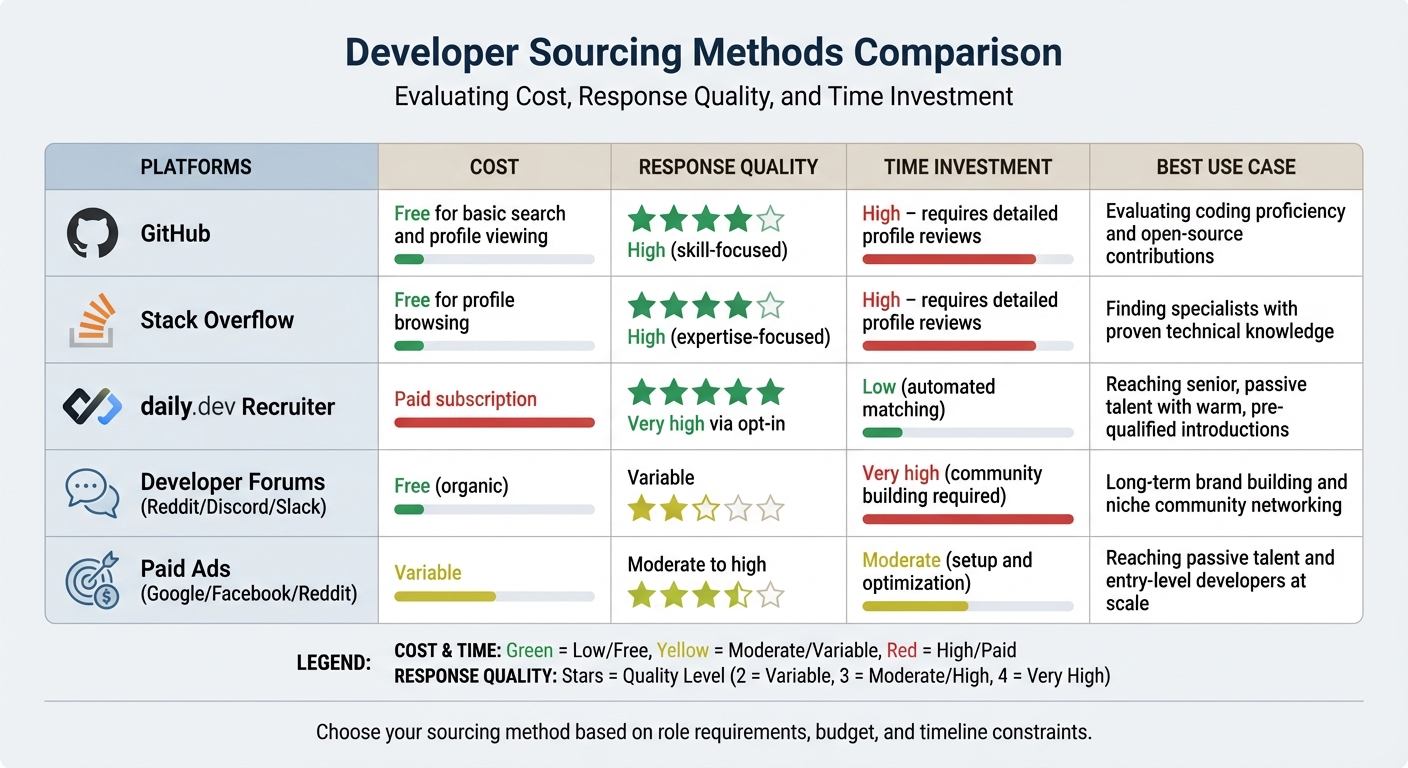
This section breaks down the strengths and challenges of various sourcing methods, helping you allocate your recruiting resources effectively. Each approach varies in cost, effort, and the quality of candidate responses, making it crucial to match the method to the specific role you're hiring for.
Sourcing Methods Comparison Table
Here’s a quick overview of the key aspects of each sourcing method:
| Platform | Cost | Response Quality | Time Investment | Best Use Case |
|---|---|---|---|---|
| GitHub | Free for basic search and profile viewing | High (skill-focused) | High – requires detailed profile reviews | Evaluating coding proficiency and open-source contributions |
| Stack Overflow | Free for profile browsing | High (expertise-focused) | High – requires detailed profile reviews | Finding specialists with proven technical knowledge |
| daily.dev Recruiter | Paid subscription | Very high via opt-in | Low (automated matching) | Reaching senior, passive talent with warm, pre-qualified introductions |
| Developer Forums (Reddit/Discord/Slack) | Free (organic) | Variable | Very high (community building required) | Long-term brand building and niche community networking |
| Paid Ads (Google/Facebook/Reddit) | Variable | Moderate to high | Moderate (setup and optimization) | Reaching passive talent and entry-level developers at scale |
This table provides a snapshot of how each method balances cost, quality, and effort, helping you decide which to prioritize based on the role's demands.
For example, Stack Overflow is excellent for targeting specialists by referencing their technical contributions, though it requires significant manual effort. On the other hand, daily.dev Recruiter simplifies the process with automated matching and pre-qualified, opt-in candidates, making it a great choice for engaging senior developers. If you're looking to build long-term relationships, developer forums like Reddit or Slack can connect you with niche communities, though this requires consistent effort to establish your presence.
Conclusion
Modern developer sourcing is all about reaching professionals where they naturally engage and contribute. Platforms like GitHub and Stack Overflow have become essential hubs for identifying talent, often outperforming LinkedIn in showcasing developers' real-world skills. GitHub, for instance, highlights active engineers through their actual code contributions, while Stack Overflow connects you with a massive network of 14 million developers, validated by their answers and participation in technical discussions .
What sets these platforms apart is their ability to reveal genuine expertise - something a traditional resume can't fully capture. Developers on these sites respond better to authentic interactions, especially when recruiters offer value before initiating recruitment efforts . Whether it's analyzing code repositories, engaging in discussions on forums, or leveraging tools like daily.dev Recruiter for opt-in introductions, the key is respecting the norms and culture of developer communities.
Your sourcing strategy should align with the specific role and available resources. For example, GitHub and Stack Overflow allow for detailed candidate evaluations, while active participation in developer communities requires consistent engagement. Tools like daily.dev Recruiter streamline the process by connecting you with pre-qualified candidates .
Start by identifying where your target candidates are most active. Dedicate 2–4 weeks to contributing meaningfully to those spaces before reaching out . Track your results - genuine engagement on these platforms often boosts response rates from developers by 20–30% compared to LinkedIn-only approaches . By leading with value and fostering authentic connections, you can significantly enhance your recruitment outcomes.
FAQs
How do I verify a GitHub profile reflects real-world impact?
To get a clear sense of a developer's real-world impact on GitHub, start by examining their contribution history. Look for consistent and relevant activity across various repositories, as this can reveal their level of commitment and expertise. Pay attention to quality contributions in open-source projects or participation in meaningful community discussions - these are strong indicators of their skills and collaborative spirit.
Next, check for links to personal portfolios or blogs. These can provide additional context about their background, projects, and areas of interest. Finally, review engagement metrics like stars, forks, or comments on their repositories. These numbers can help you understand how their work is recognized and valued within the developer community. Together, these steps go beyond surface-level activity, offering a more authentic view of their contributions.
What’s the best way to contact someone from GitHub or Stack Overflow?
Engaging with their activity on platforms like GitHub and Stack Overflow is a smart way to start. On GitHub, take a look at their contributions, projects, and repositories. Sometimes, their profile or repositories might include contact details. On Stack Overflow, review their answers to gauge their expertise and see if their profile lists any contact information. When reaching out, make sure your message is personalized and comes across as genuine - this helps build trust and improves the chances of getting a response.
How long does it take to see results from community-based sourcing?
Community-based sourcing often begins yielding noticeable results within 6 to 8 weeks. However, this timeline can shift based on the platform you're using and the level of engagement you maintain with the community. Consistent interaction and active participation can play a big role in speeding up the process.
.png)