Ghosting in tech hiring is a two-way issue: candidates and recruiters both cut off communication without explanation. This creates frustration, wastes time, and damages trust. The article outlines 10 actionable strategies to reduce ghosting by focusing on transparency, speed, and personalization. Key takeaways include:
- Be Transparent: Clearly communicate salary, timelines, and expectations upfront. Provide regular updates, even if there’s no new information.
- Act Fast: Offer feedback within 48 hours, shorten hiring processes, and eliminate unnecessary steps.
- Build Trust: Respect candidates’ time and treat them as individuals. Honest and consistent communication fosters mutual respect.
- Use Technology: Leverage tools like AI, Applicant Tracking Systems (ATS), and chatbots to automate updates and predict disengagement.
- Personalize Outreach: Avoid generic messages. Tailor communication to candidates’ skills, goals, and preferences.
- Engage Candidates: Create two-way dialogue to understand their priorities and address concerns early.
- Strengthen Employer Branding: A positive hiring experience reflects how much a company values its people, reducing the risk of ghosting.
::: @figure 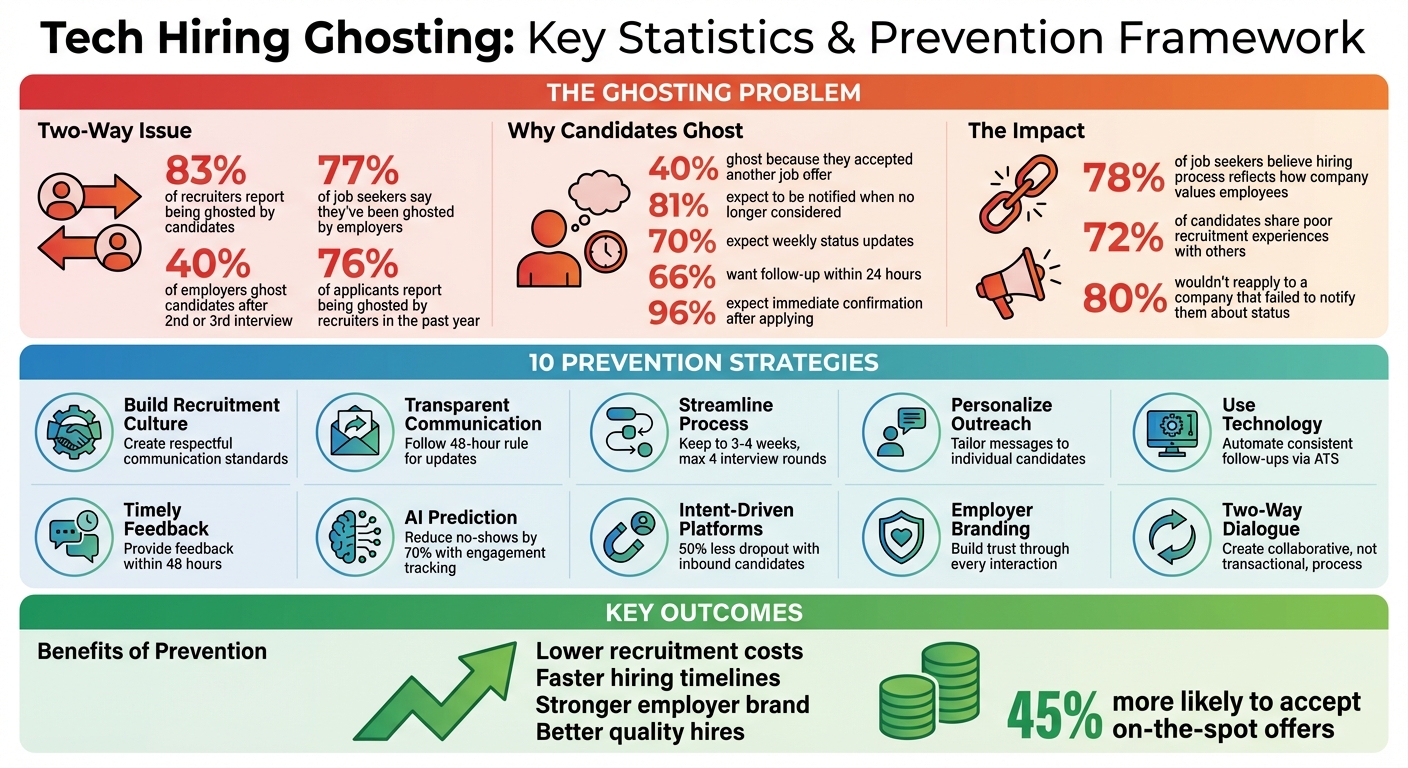 {Tech Hiring Ghosting Statistics and Prevention Strategies}
1. Build a Recruitment Culture That Prevents Ghosting
Ghosting isn't just a candidate issue - it often points to flaws in internal hiring processes. Delayed feedback, for example, can make candidates feel like they’re being overlooked . To address this, create a recruitment culture where everyone involved - from senior leaders to third-party agencies - prioritizes respectful and timely communication with candidates . Here’s how to make that happen:
Clarity of Communication
Set clear expectations from the start. Be upfront about compensation, the number of interview rounds, and the timeline for decisions . Surprises - like discovering a "remote" job is actually hybrid - can turn candidates off quickly. Regular updates throughout the process also help maintain their interest and engagement .
Efficiency of Hiring Process
Speed is critical, especially when top developers often accept the first strong offer they get . Strive to provide feedback within 48 hours after each interview stage. Keep technical assessments brief - no more than two hours - to avoid frustrating candidates. Regularly review your hiring process to identify and fix delays, whether they stem from legal reviews, managerial holdups, or complicated approval workflows .
Level of Personalization
Generic communication can alienate candidates, but personalized interactions can make a big difference . Go beyond mass emails - use phone or video calls to establish a genuine connection . A great example is Spreetail, which in 2024 introduced post-interview surveys. They found that rejected candidates appreciated receiving personalized feedback. By using their LeverTRM platform to tailor responses, Spreetail successfully hired over 1,000 people while maintaining strong relationships with candidates for future roles .
Trust-Building Potential
Alongside clear communication and personalized outreach, building trust is essential. Encourage open and honest conversations - ask candidates about their progress with other companies to promote transparency. This matters because 40% of candidates ghost employers after accepting another offer . Additionally, 78% of job seekers believe the hiring process reflects how a company values its employees . Every interaction, no matter how small, either strengthens or weakens that trust.
2. Use Transparent Communication
To maintain a respectful recruitment process, transparent communication is key to reducing ghosting. When candidates are left in the dark, uncertainty often leads them to disengage. The solution? Be upfront and clear from the very beginning.
Start by discussing salary in your job posting or during the initial conversation. Lay out an interview roadmap that includes the number of rounds, preparation tips, and specific timelines . If your hiring process typically takes three weeks, let candidates know upfront so they can plan accordingly instead of feeling uncertain or misled.
Follow the "48-hour rule" to keep communication flowing: 70% of candidates expect updates at least once a week . Even a short message like, "We're still gathering feedback, and you can expect to hear from us by Friday", can go a long way . This small effort prevents the silence that often causes candidates to disengage.
Additionally, ensure that 81% of candidates receive notification when they're no longer being considered . A short, polite rejection email not only protects your employer brand but also leaves the door open for future opportunities.
"Candidates often ghost hiring managers when they don't know where they stand in the process."
- Matt Thomas, President and Founder, WorkSmart Systems, Inc.
Use a mix of email, phone, and text to provide timely updates, and communicate any delays as soon as possible to keep candidates engaged. When candidates feel respected and informed, they’re more likely to reciprocate. Transparent, consistent updates not only reduce ghosting but also foster a culture of mutual respect throughout the hiring journey.
3. Streamline the Hiring Process
A drawn-out, overly complicated hiring process can quickly turn off top developers. While the average hiring time across industries is about 3–4 weeks , tech talent often moves at a faster pace - especially when multiple companies are competing for their attention.
Efficiency of Hiring Process
Cut out unnecessary steps. If your process includes more than four interview rounds or take-home assignments that require over two hours, you risk losing candidates. For instance, Atlassian addressed this issue by creating a "Talent Community" managed through their ATS. They sent 20,000 nurture messages, achieving a 62% open rate and nearly 300 hires while growing their community by 47.5% annually .
Act fast - reach out to strong candidates within 24–48 hours to stay ahead of competitors. Similarly, aim for a 48-hour turnaround on feedback between interview stages. Research shows that 70% of candidates expect weekly updates on their application status , and 66% hope for updates within 24 hours .
"A quick hiring process decreases your likelihood of being ghosted by top candidates while increasing the quality of your hires overall."
- Matt Thomas, President and Founder, WorkSmart Systems, Inc.
Streamlining your process not only accelerates decision-making but also demonstrates respect for the candidate’s time, ultimately building trust.
Trust-Building Potential
Speed sends a message of commitment. When you stick to timelines and move quickly, candidates feel valued and confident in your organization. If administrative delays hold up the formal offer, extend a verbal offer immediately to keep the momentum going. In 2024, Spreetail enhanced their hiring experience by introducing Net Promoter Score (NPS) surveys and offering personalized feedback to every candidate they interviewed. This approach helped them hire over 1,000 people while scaling their operations .
Using an Applicant Tracking System (ATS) can also help prevent candidates from slipping through the cracks. Consistent follow-ups through an ATS show candidates that you respect their time as much as they respect the opportunity to work with you.
4. Personalize Candidate Outreach
Level of Personalization
Sending out generic messages is a surefire way to get ignored. In fact, 83% of recruiters report being ghosted by candidates - a problem often linked to outreach that feels impersonal or spammy.
To stand out, focus on adding a personal touch. Reference a candidate’s specific skills, mention a standout project in their portfolio, or highlight how their career goals align with the role. For example, in July 2024, Spreetail overhauled its communication strategy to include personalized feedback for every interviewee. This approach not only helped them build stronger relationships with successful hires but also left a positive impression on candidates who weren’t selected, keeping the door open for future opportunities. Thoughtful, tailored communication doesn’t just grab attention - it helps you build meaningful connections.
Trust-Building Potential
Personalized outreach does more than just get noticed - it builds trust. When candidates feel like they’re more than just a number, they’re more likely to engage openly. Research shows that 40% of applicants ghost recruiters because they’ve accepted another job offer. But when recruiters take on a career-coach mindset, candidates are often more willing to share what’s really going on.
"Candidates will feel more comfortable telling the recruiter what's really happening, instead of just disappearing."
- Matt Staney, Talent Acquisition and Employer Branding Expert
Start by asking about their career aspirations rather than simply assessing their qualifications. Communicate through their preferred channel - whether that’s LinkedIn, email, or a quick phone call. When candidates feel seen as individuals, they’re far less likely to disengage.
"Developers don't ghost recruiters they respect - they ghost processes that feel like spam or waste their time."
- Nimrod Kramer, daily.dev
5. Use Technology for Consistent Follow-Ups
Clarity of Communication
Keeping candidates informed - even when there’s no update - makes a huge difference. 96% of candidates expect immediate confirmation after applying, and 66% want a follow-up within 24 hours. By automating updates through your ATS, you can ensure that applicants receive an acknowledgment email as soon as they hit "submit." Beyond that, set up weekly "pulse" messages to let candidates know their application is still being reviewed. These simple updates can prevent feelings of neglect that often lead to ghosting.
For more immediate interactions, consider deploying 24/7 chatbots on your career site. These bots can handle common questions like "What’s the next step?" or "When will I hear back?" without requiring recruiters to be online. Since 70% of candidates expect status updates at least once a week, chatbots can help you meet this demand while maintaining round-the-clock responsiveness. This steady communication also simplifies scheduling and follow-ups, making the entire process smoother.
Efficiency of Hiring Process
Streamlining scheduling is another way to improve the candidate experience. Forget back-and-forth email chains - tools like Calendly or Google Calendar allow candidates to book interviews directly, cutting down on delays and showing respect for their time. Adding automated reminders for both candidates and hiring managers reduces no-shows and ensures everyone stays on track.
Automated outreach isn’t just about saving time; it’s also a proven way to keep candidates engaged throughout the process.
Trust-Building Potential
Regular follow-ups demonstrate dependability. When candidates see that you honor timelines and communicate proactively, it builds trust. Use your ATS to send automated "no-update" updates every seven days, and consider SMS or WhatsApp for urgent messages - channels many tech candidates check more often than email. And don’t overlook rejection notices: 81% of job seekers expect to be notified when they’re no longer being considered. Automating these messages with a thoughtful tone ensures candidates aren’t left wondering about their status.
"78% of jobseekers believed the overall candidate experience was an indication of how a company values its people."
Consistency doesn’t stop after the offer is accepted. Use pre-boarding automation to keep new hires engaged during their notice period. Send welcome videos, onboarding schedules, and team introductions to build excitement and reduce the risk of last-minute dropouts. These touchpoints help create a seamless transition from candidate to employee, reinforcing their decision to join your team.
6. Provide Timely Feedback After Interactions
Keeping communication clear and consistent during the hiring process is just one piece of the puzzle. To truly minimize ghosting, providing timely feedback is equally important.
Clarity of Communication
Weekly updates can make all the difference in keeping candidates engaged. When candidates are left in the dark after an interview, they may assume the worst - that you've moved on without them - and start looking elsewhere. Here's a telling stat: 81% of job seekers expect to be notified if they're no longer being considered. Yet, shockingly, nearly 40% of employers ghost candidates after the second or third interview. Even a quick message like "We're still gathering team feedback" can reassure candidates and keep them in the loop. The secret? Consistency. Sending weekly status updates - even when there’s no big news - helps candidates feel valued and prevents them from feeling abandoned.
Efficiency of Hiring Process
Dragging out the hiring process is a surefire way to lose top talent. Long delays between stages often lead candidates to accept competing offers. To avoid this, aim to provide feedback within 48 hours of an interview. Speed matters: 45% of workers are more likely to accept a job offer if it’s made on the spot during the interview. If internal approvals are slowing down the process, consider extending a verbal offer to show your interest while the formalities are being finalized.
Level of Personalization
Nobody likes receiving a cookie-cutter rejection email. Candidates can spot generic responses a mile away, and these impersonal messages can leave a sour taste. Taking the time to craft personalized feedback shows candidates that you see them as individuals, not just another resume in the pile. This small effort can leave a lasting positive impression, even when the outcome isn’t in their favor.
Trust-Building Potential
Timely feedback goes beyond keeping the process moving - it reinforces the trust you’ve worked hard to build. Candidates are far less likely to ghost when they feel respected and valued. Nimrod Kramer from daily.dev sums it up perfectly:
"Developers don't ghost recruiters they respect - they ghost processes that feel like spam or waste their time."
Hiring engineers?
Connect with developers where they actually hang out. No cold outreach, just real conversations.
7. Use AI to Predict Engagement
Artificial intelligence isn't just for sorting resumes - it can also spot early signs of candidate disengagement. AI-powered tools analyze behavioral patterns like email open rates, response times, or frequent rescheduling of interviews. These tools assign each candidate a "likelihood score", estimating their chances of dropping out mid-process. This gives recruiters an opportunity to step in and re-engage before it's too late.
Efficiency of Hiring Process
Predictive AI doesn't just flag disengagement - it actively streamlines the hiring process. For example, these tools can reduce interview no-shows by as much as 70%. Many tech companies have seen faster hiring times and better placement rates by using AI-driven hiring assistants. By integrating these tools with your Applicant Tracking System, engagement analytics become seamlessly embedded into your workflow.
Level of Personalization
Modern AI tools excel at maintaining a personal touch. They monitor signals like resume updates and application activity, sending real-time alerts so recruiters can respond with timely, personalized outreach. The idea isn’t to replace human interaction but to focus your efforts where they’ll have the most impact. This proactive use of AI enhances earlier strategies aimed at keeping the hiring process transparent and responsive.
Trust-Building Potential
Ghosting remains a major challenge for 51% of employers. Automating status updates ensures every candidate is promptly informed about their application, addressing the expectations of the 81% who want to stay updated on their progress. When candidates see that you’re leveraging technology to remain transparent and responsive, they’re more likely to mirror that level of communication. By predicting disengagement early, AI helps foster the trust and transparency that are essential to a strong hiring process.
8. Use Intent-Driven Platforms Like daily.dev Recruiter
If you're tired of candidates ghosting you, it might be time to rethink your approach. Instead of relying on cold outreach, consider platforms like daily.dev Recruiter. These platforms connect you with developers who have already shown interest. With a double opt-in system, you're only engaging with candidates who are genuinely interested in the opportunity.
Clarity of Communication
Platforms like daily.dev Recruiter set the tone for clear and transparent communication. Developers who opt in through such platforms understand the hiring process, including the steps and timelines involved. This upfront clarity meets their expectations for prompt and straightforward communication. By engaging with developers in a space where they are already active, you bypass the noise of cold outreach and create a direct, meaningful connection. The result? A hiring process that’s quicker and more effective.
Efficiency of the Hiring Process
Here’s a compelling stat: inbound candidates are 50% less likely to drop out than those reached through outbound methods. daily.dev Recruiter leverages this by connecting you with developers in their natural habitat - places where they’re already learning, engaging, and growing. This approach eliminates unnecessary barriers, reducing the risk of candidates falling through the cracks. Considering that 76% of applicants report being ghosted by recruiters in the past year, this level of efficiency is more than just a time-saver; it’s a game-changer. It speeds up hiring while also building a positive rapport with candidates.
Trust-Building Potential
Trust is the backbone of any successful recruitment process, and intent-based platforms excel at fostering it. By ensuring every interaction is mutual and purposeful, these platforms help eliminate the broken processes that often lead to ghosting. Developers appreciate recruiters who communicate clearly and provide relevant updates.
"If recruiters are honest and communicative, then candidates are less likely to ghost them"
- Matt Staney, Talent Acquisition and Employer Branding Expert
With daily.dev Recruiter, trust is built into the system. Every connection is based on mutual interest, not spammy outreach. This approach is especially crucial when 80% of job seekers say they wouldn’t reapply to a company that failed to notify them about their application status. Starting with intent-driven engagement creates a solid foundation that cold outreach simply can’t replicate.
9. Improve Your Employer Brand
Your employer brand plays a crucial role in reducing candidate ghosting. A poor hiring process often signals to candidates that employee treatment might be just as uninspiring. In fact, 78% of job seekers believe the way they’re treated during the hiring process reflects how much a company values its employees.
Clarity of Communication
Clear communication goes a long way in building trust. Did you know that 81% of candidates expect to be informed when they’re no longer being considered? To meet this expectation, make sure you’re upfront about key details like salary ranges, timelines, and the steps involved in the process. If delays arise, even a brief explanation can help maintain credibility.
Efficiency of the Hiring Process
Timeliness is everything. Responding to candidates within 48 hours can make a huge difference. Every day you wait increases the likelihood of losing top talent. Take a closer look at your internal processes to identify and fix any bottlenecks. This isn’t about rushing - it’s about showing you value the candidate’s time.
Building Trust Through Actions
A strong employer brand fosters trust. Candidates who experience a transparent and efficient hiring process are far less likely to ghost you. On the flip side, 40% of candidates are less likely to re-engage with a company that has ghosted them in the past. Every interaction, no matter how small, either strengthens or erodes trust. Treat candidates with the same professionalism you’d expect in return.
"The ghosting actions of a single recruiter or hiring manager can send a message that the company and its employees are disrespectful and incapable of common courtesy."
- Michelle Sargent, Recruitics
Investing in your employer brand creates a foundation for meaningful, trust-filled interactions with candidates.
10. Create Two-Way Dialogue
Recruitment should feel like a collaboration, not an interrogation. When candidates feel included in the process, they’re more likely to stay engaged. In fact, 70% of candidates expect weekly updates during the hiring process. Opening the door to two-way communication can go a long way in reducing ghosting.
Clarity of Communication
Start by being direct. Ask candidates about their current job prospects to understand their level of urgency. If a top candidate is close to accepting another offer, you can adjust your timeline or even make a verbal offer while finalizing the paperwork. Matt Staney, a talent acquisition expert, emphasizes the importance of transparency:
"Let them know that you will be honest with them, and in return, if they are seriously considering another opportunity, [that you hope they will] reciprocate".
This kind of open communication helps you stay ahead and shows candidates you respect their time and decisions.
Level of Personalization
Go beyond the typical questions about skills and experience. Find out what truly matters to the candidate. Are they looking for long-term growth? Do they prefer updates via text or phone calls? These small details can make a big difference. Steve Browne, Chief People Officer at LaRosa's Inc., explains it perfectly:
"I want people to feel like they are opting in, instead of me convincing them".
When you tailor your approach to their preferences, you show that you’re invested in their goals - not just filling a position.
Trust-Building Potential
Open dialogue fosters trust. When candidates feel comfortable sharing concerns - whether it’s about salary, remote work policies, or other priorities - you can address potential issues before they escalate. Even when it’s necessary to reject a candidate, providing brief, personal feedback can leave a positive impression. This approach not only preserves future opportunities but also protects your reputation. After all, 72% of candidates share poor recruitment experiences with others.
Conclusion
Ghosting in tech hiring isn’t just a candidate issue - it’s a systemic problem. With 83% of recruiters reporting they’ve been ghosted by candidates and 77% of job seekers saying they’ve been ghosted by employers, it’s clear the hiring process often feels impersonal and broken. The good news? This cycle can be disrupted by focusing on building genuine relationships instead of relying on impersonal, transactional approaches.
The strategies discussed here boil down to one key principle: developers don’t ghost recruiters they trust - they ghost processes that feel like spam or a waste of their time. By fostering trust through clear communication, fast feedback (ideally within 48 hours), and personalized interactions, you can turn recruitment into a meaningful connection rather than a numbers game. When candidates feel seen and valued as individuals - not just as another résumé in your ATS - they’re far less likely to disappear without a word.
Speed plays a huge role too. Nearly 40% of candidates who ghost do so because they’ve accepted another offer. Your competition isn’t slowing down, so neither should your hiring process. Eliminate unnecessary steps, ensure every candidate gets closure (81% expect it), and use the notice period to engage them through pre-boarding activities that reinforce their decision to join your team.
The benefits of these changes go beyond filling positions. Companies that prioritize these strategies often experience lower recruitment costs, faster hiring timelines, and stronger employer brands that naturally attract top talent. Since 78% of job seekers see the candidate experience as a reflection of how a company values its people, every interaction is an opportunity to strengthen - or weaken - your reputation. And with 72% of candidates sharing poor experiences with others, the stakes couldn’t be higher.
Take action now. Review your hiring process, commit to quicker feedback, and treat every candidate with the respect they deserve. As Nimrod Kramer from daily.dev wisely says: "Reduce noise, add trust. Fewer ghosts, better hires." The developers you’re eager to hire are paying attention to how you treat people - make sure you’re sending the right message.
FAQs
How does clear communication help prevent ghosting in tech hiring?
Clear and open communication is key to building trust and keeping candidates engaged during the hiring process. When recruiters provide regular updates about a candidate's status, outline next steps, and set clear timelines, it removes uncertainty and shows that the candidate’s time and effort are appreciated.
Sharing important details upfront - like salary ranges, interview schedules, and decision timelines - reflects respect for the candidate’s career aspirations. This transparency creates a sense of reliability, making candidates more likely to stay engaged and reducing the chances of them disappearing from the process.
How can technology help reduce candidate ghosting in tech hiring?
Technology has become a game-changer in creating a hiring process that keeps candidates interested while minimizing the risk of ghosting. Tools like daily.dev Recruiter tap into real-time developer activity - such as what they’re reading, learning about, or discussing - to detect intent-driven signals. This helps recruiters approach candidates at the right time, ensuring every interaction feels timely and meaningful.
Instead of relying on impersonal cold emails, recruiters can use warm, double-opt-in introductions to build trust and make communication feel more genuine. These platforms also simplify follow-ups, keep track of communication timelines, and encourage transparency. This approach helps recruiters maintain a steady, respectful rhythm of engagement, resulting in a hiring experience that developers can trust and stay invested in.
Why does personalized outreach matter in tech recruiting?
Personalized outreach plays a key role in tech recruiting because it demonstrates genuine appreciation for a candidate’s specific skills, experiences, and career aspirations. When recruiters reference a developer’s recent projects or areas of interest in their messages, it fosters trust and shows respect. This thoughtful approach makes candidates more inclined to respond rather than dismiss the outreach.
On the flip side, generic or impersonal communication is one of the main reasons candidates disengage or "ghost" during the hiring process. By crafting messages that are relevant and context-driven, recruiters can build stronger connections and encourage open, two-way communication. This not only minimizes ghosting but also enhances the hiring experience for everyone involved.
.png)