Data-driven recruitment is changing how companies hire by replacing guesswork with measurable, objective strategies. Here's why it matters:
- 58% of recruiters struggle to verify candidates' technical skills.
- 18% of new hires leave during probation due to mismatched expectations.
- Companies using hiring data see 38% lower turnover and faster processes, like Canva cutting interview scheduling time by 84%.
Key metrics like Time to Hire, Quality of Hire, and Diversity data ensure smarter hiring decisions. Tools like daily.dev Recruiter and Applicant Tracking Systems (ATS) streamline processes, while AI and analytics identify top talent and improve outcomes.
Why it works: Data helps recruiters predict performance, reduce hiring time, and improve retention. It also highlights inefficiencies like assessment bottlenecks or bias, enabling continuous improvement.
This guide dives into the tools, metrics, and best practices for building a recruitment strategy driven by data. Using a data-driven recruitment checklist can help ensure no critical metrics are overlooked.
::: @figure 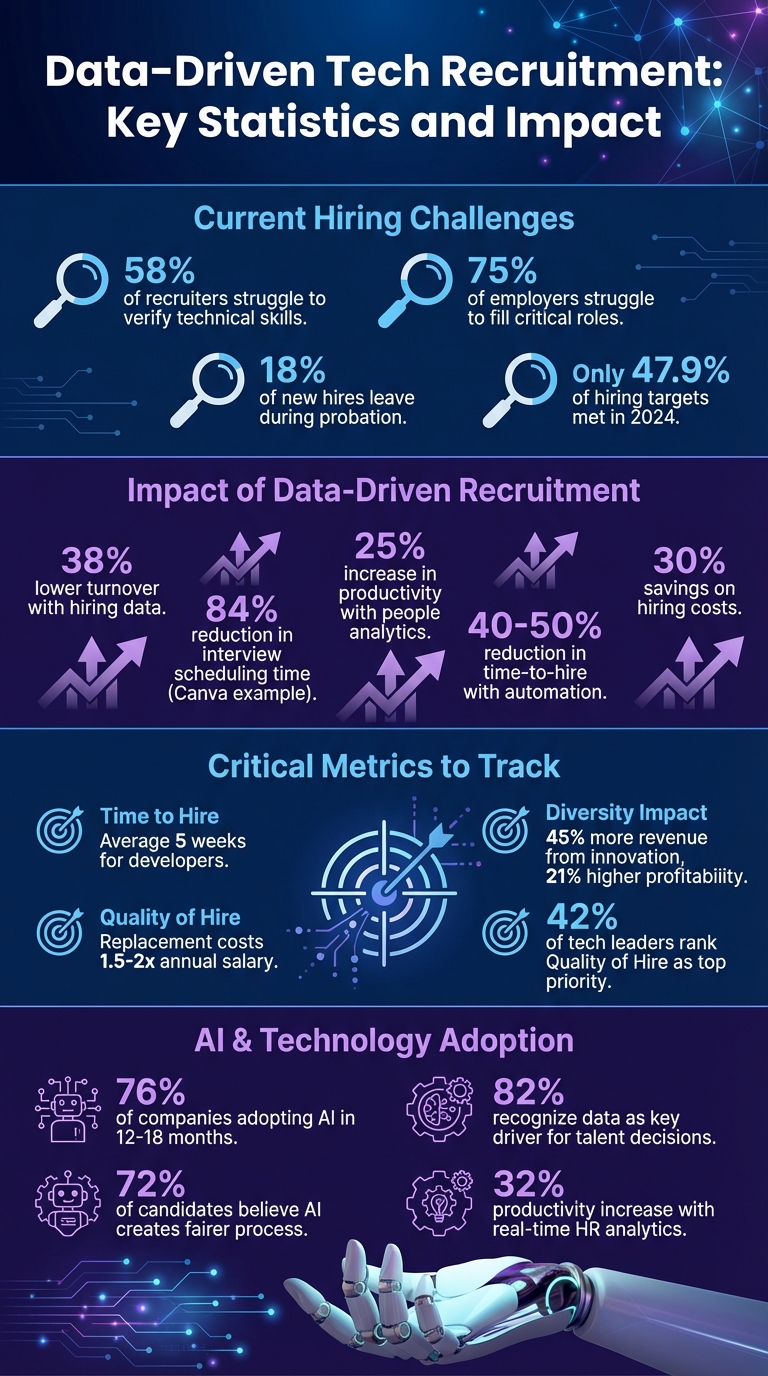 {Data-Driven Tech Recruitment: Key Statistics and Impact Metrics}
Key Metrics for Measuring Recruitment Performance
Tracking the right metrics takes recruitment from a guessing game to a more strategic approach. Among these, 42% of tech leaders rank Quality of Hire as their top priority , highlighting the importance of long-term success over just filling roles quickly.
The real challenge lies in identifying which metrics truly make an impact on your hiring success. Research shows that effective people analytics can increase productivity by 25% , making it crucial for technical teams to measure both recruitment efficiency and the lasting value of their hires.
Time to Hire
Time to Hire tracks the number of days from a candidate's application to their acceptance of an offer. For developers, this process averages about 5 weeks . This metric is critical because top talent often juggles multiple offers, and every extra day in the hiring process increases the chance of losing them.
In 2024, 69% of tech companies reported slower hiring timelines, citing delays caused by assessment bottlenecks and scheduling challenges . Tools like AI-powered scheduling systems, automated coding tests, and rescheduling platforms - offered by 48% of companies - are helping to speed up the process, which is especially important for candidates navigating competing offers.
While speed is important, it’s equally critical to reduce time to hire without sacrificing quality or long-term contributions.
Quality of Hire
Quality of Hire focuses on a new hire’s long-term contributions, considering factors like performance, retention, and alignment with team values. Unlike Time to Hire, these outcomes take time to fully assess .
This metric is vital because replacing a technical hire can cost 1.5x to 2x their annual salary . Early turnover is particularly expensive, as engineers typically take 6–12 months to reach peak productivity . Tracking early departures can reveal mismatches between what candidates expect and what the role actually demands.
To ensure better hiring outcomes, realistic assessments such as live coding or system design challenges are more effective than abstract puzzles . Additionally, 78% of developers and 81% of recruiters agree that soft skills are as important as technical skills . This highlights the need to assess collaboration and communication abilities alongside technical expertise.
Diversity and Inclusion Metrics
Diversity metrics complement speed and quality by providing insights into inclusivity and team innovation. Companies with above-average diversity generate 45% more revenue from innovation , and those in the top 25% for gender diversity are 21% more likely to be profitable . Clearly, diverse teams deliver measurable business advantages.
Analyzing diversity data can also uncover hidden biases in the hiring process. For example, if candidates from underrepresented groups perform well during resume screenings but drop off during technical assessments, it may indicate unintended bias. Using the "Four-Fifths Rule" - ensuring that the selection rate for any protected group is at least 80% of the highest-performing group - can help identify areas where the process may not be equitable .
Simple changes can lead to big improvements. Job postings with gender-neutral language attract 42% more applicants , and blind resume reviews that omit identifiers like age and gender help focus evaluations on skills . Diversifying interview panels also reduces unconscious bias, as candidates who see diverse teams during the hiring process report better experiences .
"A diverse mix of voices leads to better discussions, decisions, and outcomes for everyone." - Sundar Pichai, CEO, Google
Despite these advantages, only 4.77% of developers consider DEI a top-three factor when evaluating job offers . This suggests that while diversity metrics are critical for building stronger teams, they should be part of a broader strategy to appeal to candidates rather than a standalone focus.
Tools for Data-Driven Tech Recruitment
When it comes to data-driven recruitment, choosing the right tools is just as important as tracking the right metrics. These tools simplify the hiring process by enabling decisions backed by data. While 82% of companies recognize data as a key driver for talent acquisition decisions , only about 50% measure recruiting effectiveness . That’s a significant gap, underscoring the need for platforms that don’t just gather data but also make it actionable.
Recruitment tools generally fall into three main categories: connecting with candidates, managing pipelines, and analyzing data. Let’s explore how platforms like daily.dev Recruiter fit into this framework.
daily.dev Recruiter
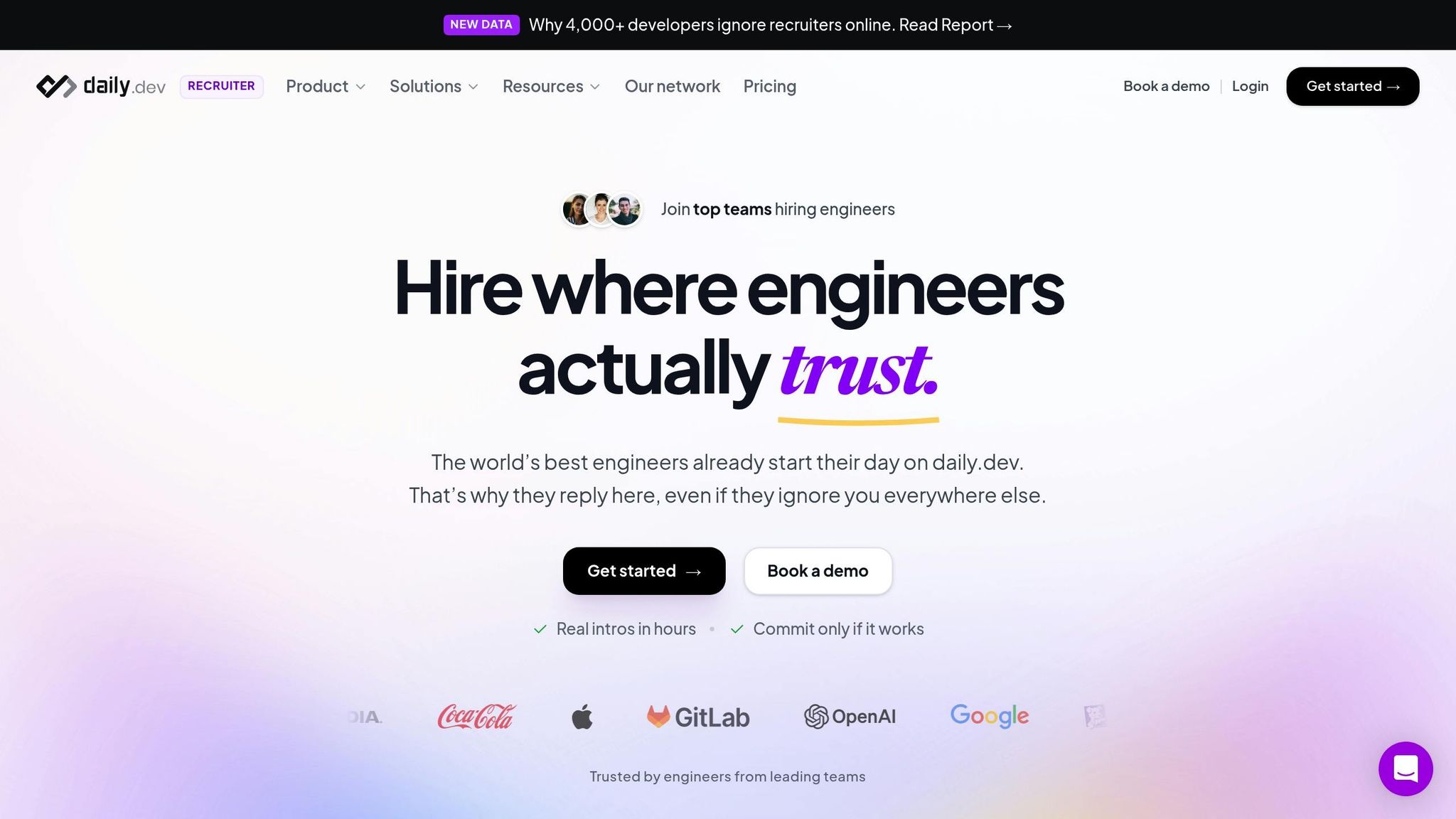
daily.dev Recruiter offers recruiters a direct line to developers within an engaged professional network. With over 1 billion developer sessions logged, it’s a platform where candidates are already active and engaged as part of their daily routines .
Rather than relying on cold outreach, daily.dev Recruiter uses warm, double opt-in introductions. Recruiters can set up to three custom screening questions that candidates must answer before moving forward . This ensures candidates align with technical requirements from the start. The platform also transforms traditional job descriptions into developer-friendly briefs that resonate better with technical audiences .
One standout feature is its live match signals - real-time insights like "Ethan is actively learning X, exploring Y, and open to Z roles" . This replaces outdated resume screening with automated, activity-based verification. With 40% of the community comprising senior individual contributors or technical leaders , recruiters gain access to a pool of passive talent that’s already pre-qualified and genuinely interested.
"We built a place where engineers can turn off the noise. To enter this space, you don't need a hack. You need trust." - Nimrod Kramer, CEO & Co-Founder of daily.dev
Every introduction on the platform is tied to measurable outcomes, helping recruiters fine-tune their strategies based on what resonates with developers.
Applicant Tracking Systems (ATS)
Managing candidates efficiently is another critical piece of the puzzle, and that’s where Applicant Tracking Systems (ATS) come in. These platforms act as centralized hubs for all candidate and performance data . They provide transparency into areas like where candidates drop off or where delays occur .
Modern ATS tools automate tasks like data entry, backups, and record audits to avoid duplications . They also track key metrics such as time-to-hire, cost-per-hire, source effectiveness, and offer acceptance rates, presenting these insights in user-friendly dashboards . By integrating automated screening, companies can reduce time-to-hire by 40% to 50% , and those adopting data-focused methods can save up to 30% on hiring costs .
For example, in July 2024, Cogent Biosciences revamped their hiring process using Lever ATS and its "Visual Insights" analytics tool. By analyzing full-cycle recruiting data through pre-built dashboards, the company improved metrics like time-to-hire and offer acceptance rates, meeting hiring goals faster than ever .
"It's not about perfection [when it comes to using talent acquisition insights]. It's about reviewing the data, adjusting accordingly, and keeping the train on the track." - Christina Schmit, Director of Talent & Culture at Renewal by Andersen
These systems create a continuous improvement loop, helping recruiters refine their strategies over time.
Analytics and Reporting Platforms
Analytics tools take recruitment data and turn it into meaningful insights. Dashboards track metrics like pipeline growth, offer acceptance rates, and candidate quality . They also pinpoint bottlenecks - specific stages where candidates tend to drop out - allowing recruiters to address issues before losing top talent .
Some platforms now incorporate AI simulations and multimodal analysis to assess both technical and soft skills before interviews . This is crucial given that 89% of hiring failures are linked to missing soft skills .
The shift toward skills-based assessments is replacing traditional resume-based evaluations. These tools use objective frameworks to evaluate candidates, integrating these assessments directly into analytics workflows . With 49% of candidates asking about DEI programs during interviews and 44% considering DEI efforts a key factor in accepting offers , analytics platforms also measure the impact of inclusive hiring practices on candidate engagement and satisfaction.
Best Practices for Implementing Data-Driven Recruitment
Turning data-driven recruitment from theory into practice requires a clear plan. While 87% of talent professionals track candidate outreach data , many struggle to convert that information into actionable strategies. The starting point? Conduct a thorough audit of your existing data.
Set Clear Goals and Benchmarks
Start by assessing your current data collection and processes. This gives you a baseline to identify what’s working and where gaps exist. From there, collaborate with key stakeholders to define metrics that align with your hiring objectives. Different roles demand different benchmarks - for instance, engineering positions might prioritize technical assessment scores, while sales roles could focus on past quota achievements. With top performers delivering 800% more output and 2.6 times the ROI compared to average employees , setting the right standards is essential.
Make your goals SMART - Specific, Measurable, Attainable, Relevant, and Time-bound. Instead of a vague goal like "improve hiring", aim for something like "reduce turnover from 20% to 10% within a year." Tailor metrics to address specific challenges. For example, if your offer acceptance rates are declining, focus on candidate experience scores and interview feedback to identify where candidates might be dropping off.
"Over the next ten years, data-driven recruiting will become the norm and not the exception. Today you can gain a competitive advantage by getting ahead of the curve." - Tigran Sloyan, CEO, CodeSignal
Begin with a pilot program in one department to test your approach. Use this controlled rollout to gather insights and refine your methods before expanding. Regular check-ins - like monthly 30-minute reviews - help you compare current metrics with past performance and adjust strategies as needed. Once your objectives are in place, real-time analytics can help you refine and adapt quickly.
Use Real-Time Analytics
Real-time analytics turn recruitment into a proactive process. Dashboards allow you to address bottlenecks as they arise instead of waiting weeks to identify issues. For example, if one job board isn’t delivering quality candidates, you can pivot immediately, saving both time and budget.
Break down your hiring funnel into stages - Engage, Source, Assess - to pinpoint where delays occur. If candidates breeze through sourcing but stall during assessments, you know where to focus your efforts.
"Today's biggest challenge in competitive intelligence isn't access to data – it's speed, accuracy, and context." - Laurynas Gružinskas, Head of Product at Coresignal
Set specific action thresholds to trigger responses. For instance, if time-to-fill for a tech role exceeds 45 days, schedule a triage meeting to diagnose the issue .
Don’t overlook mobile optimization. With over 60% of job searches happening on mobile devices , a complicated application process can drive candidates away. Simplify forms if you notice high drop-off rates at specific fields.
Collect real-time feedback by sending automated surveys immediately after interviews. This helps you adjust processes quickly before losing more candidates. Keep in mind that AI-powered interviews and automated screening can cut time-to-hire by 40-50% . However, the key is acting on the data promptly to make meaningful improvements.
While analytics are invaluable, focusing on optimizing candidate experience for technical roles is equally critical.
Focus on Developer-Centric Approaches
Data-driven recruitment doesn’t just improve processes; it also shapes how candidates perceive your company. Developers, in particular, often share their recruitment experiences on platforms like Glassdoor or in industry communities. A poorly executed hiring process can harm your reputation within the tech world . That’s why a developer-focused approach is essential for attracting top talent.
Take B/E Aerospace as an example. In December 2025, they shifted from generic job ads to a data-driven strategy. By analyzing competitor talent movement, they identified aerospace engineers open to new opportunities. This targeted approach enabled them to attract highly qualified candidates more effectively than traditional methods .
Use data to eliminate unnecessary hurdles in the hiring process. For instance, if a specific degree doesn’t correlate with job performance, remove it from the requirements . Streamlining job descriptions can make roles more accessible to a broader pool of talent.
72% of candidates believe AI-driven, objective interviews create a fairer recruitment process . However, while automation can improve efficiency, it’s important to balance it with a personal touch during interviews and offers to build trust.
For developer hiring, platforms like daily.dev Recruiter help connect you with professionals already exploring new opportunities. Their double opt-in introductions ensure mutual interest, while live match signals provide insights into what developers are currently learning. This approach respects their time and fosters trust, which is crucial for successful recruitment.
Finally, track metrics like candidate experience and time-to-productivity alongside technical and collaboration assessments. Since 89% of hiring failures stem from a lack of critical soft skills rather than technical ability , evaluating both technical expertise and teamwork potential is essential throughout the hiring process.
Hiring engineers?
Connect with developers where they actually hang out. No cold outreach, just real conversations.
Future Trends in Data-Driven Recruitment
The recruitment landscape is undergoing a major transformation, especially when it comes to sourcing and engaging tech talent. With 76% of companies planning to adopt AI technology within the next 12–18 months to maintain a competitive edge , the way organizations approach hiring is changing dramatically. These trends are reshaping how employers connect with, evaluate, and hire developers.
AI and Machine Learning in Talent Matching
AI is shifting recruitment from a passive process to a proactive strategy. Instead of waiting for candidates to apply, machine learning algorithms can now identify high-potential talent before they even submit an application . By analyzing data from top-performing employees, AI creates "success profiles" that help screen new applicants more effectively. Recruiters can also use a tech candidate fit analyzer to quantify how well a developer's experience aligns with specific role requirements.
A particularly impactful shift in tech hiring is the move toward skills-based matching. Traditional methods often rely on factors like university credentials or previous employers, but AI focuses on measurable, job-relevant skills. This addresses a major challenge: 88% of executives admit that rigid HR algorithms can mistakenly reject qualified candidates due to gaps in work history or overly specific skill requirements .
"AI's real power lies in its ability to shift recruitment from a reactive process to a proactive strategy. With predictive capabilities, AI can surface high-potential candidates before they even apply."
- Monica Montesa, Senior Content Marketing Manager, Phenom
Generative AI is also revolutionizing how recruiters interact with candidates. It can craft personalized outreach, tailor job descriptions, and even generate structured interview questions - tasks that used to consume up to 30 hours of manual effort . The next step? Autonomous AI agents capable of managing the entire recruitment journey, from job discovery to interview prep.
AI also plays a key role in promoting diversity. By anonymizing candidate profiles - removing identifiers like names and genders - it ensures that hiring decisions are based purely on skills and experience. This reduces bias and improves accuracy, which is particularly important when a bad hire can cost a company around $17,000 per employee . Data-driven hiring also boosts retention rates, with companies three times more likely to keep employees when initial matches are better informed .
These AI-driven tools also provide real-time insights into how candidates engage with the hiring process.
Real-Time Developer Engagement Insights
Knowing when a developer is open to new opportunities is just as important as knowing their qualifications. Real-time engagement tools track how developers interact with technical content, online communities, and learning platforms . This dynamic approach goes beyond static resumes, capturing live signals of interest.
Platforms like daily.dev Recruiter are designed to connect employers with developers in their natural environments - whether they're reading technical articles, participating in forums, or exploring new tools. Instead of relying on outdated profiles, recruiters can engage with developers who are actively signaling interest. A double opt-in model ensures that these interactions are meaningful, avoiding spam while ensuring candidates are genuinely interested.
Companies that leverage real-time HR analytics report a 32% increase in productivity and a 25% boost in retention rates . Acting quickly on engagement data is crucial. AI-powered behavioral analytics track interactions across SMS, email, and chat to gauge engagement levels and even identify potential bias . Sentiment analysis, for example, can assess emotional responses in communication, flagging early signs of disengagement . Real-time dashboards also highlight where candidates drop out of the application process, enabling immediate adjustments. For tech roles, tracking which tools or technologies candidates are exploring provides valuable context for personalized conversations.
As engagement strategies evolve, mobile recruiting and remote hiring are further redefining how companies attract talent.
Mobile Recruiting and Remote Hiring
The rise of remote work has fundamentally changed the talent acquisition landscape. With 88% of employers now offering hybrid work options and 93% of employees in remote-capable roles preferring at least some remote work , recruitment has expanded from local to global markets. Data-driven insights into regional talent pools have become essential.
Statistics back up this shift: 72% of talent acquisition leaders say remote roles are easier to fill, while 52% believe strict office mandates make hiring harder . For tech professionals, flexibility is a top priority. Companies that emphasize remote options in their branding gain a clear advantage in attracting top candidates .
"Your best candidates are going where the flexibility is."
Mobile optimization is another critical factor. Today, 42% of candidates expect a response from a hiring manager within 48 hours, and the majority of job searches happen on mobile devices . A clunky mobile application process can deter candidates before they even complete their submissions. Data-driven platforms can pinpoint bottlenecks in the hiring process, such as drop-offs during virtual interviews or assessments .
Global hiring adds another layer of complexity. Tools like Employer of Record solutions help manage challenges like legal compliance, payroll, and administrative tasks across multiple countries . These platforms also provide data to benchmark salaries, ensuring companies remain competitive by transparently sharing pay ranges in job postings - a key factor in building trust with remote candidates . Skills-based searches further improve hiring outcomes, with companies 12% more likely to make quality hires . For remote roles, where local networks and face-to-face interviews aren't always possible, data insights help identify regions with specialized tech talent, allowing companies to design agile hiring strategies that prioritize flexibility over traditional office setups .
"Expanding the search beyond your local market can give you access to specialized skills and let you fill roles faster."
Conclusion: Building a Data-Driven Recruitment Strategy
In today's competitive hiring environment, relying on gut instinct simply won't cut it anymore. Consider this: 75% of employers struggle to fill critical roles , and in 2024, talent acquisition teams met just 47.9% of their hiring targets . The takeaway? The most effective recruiters focus on tracking metrics at every stage - from sourcing to offer acceptance - so they can pinpoint roadblocks and adapt their strategies in real time.
The foundation of a solid data-driven recruitment strategy lies in setting SMART goals. These are specific, measurable objectives, such as aiming to "reduce time-to-fill by 20% within six months" . Companies like Coda have achieved this by standardizing job postings based on data insights, while DoorDash used inclusivity metrics to increase applicants from underrepresented groups by 30% . These examples highlight the importance of continuous iteration - using data to refine and improve results over time. This clarity not only sharpens your strategic goals but also helps you choose the right technology to support them.
"It's not about perfection. It's about reviewing the data, adjusting accordingly, and keeping the train on the track."
- Christina Schmit, Director of Talent & Culture, Renewal by Andersen
Choosing the right tools is just as important as collecting the data itself. Platforms like daily.dev Recruiter connect you with over 1 million active developers through warm, double opt-in introductions - reaching candidates where they already engage with technical content. This approach is vital for understanding developer needs and building long-term trust.
However, technology alone won't solve everything. Data hygiene and team alignment are equally critical. Start by auditing your ATS to eliminate duplicate entries and standardize how data is recorded. Bring key metrics into intake meetings to ensure teams are aligned and working toward shared goals . With 77% of organizations anticipating AI to boost HR productivity and 87% of top talent being passive candidates , the real edge goes to teams that combine the right tools with disciplined, data-driven practices.
The message is clear: start small, focus on measurable outcomes, and let data guide your next steps. By doing so, you'll set your team up for long-term recruitment success.
FAQs
How does data-driven recruitment help reduce employee turnover?
Data-driven recruitment minimizes employee turnover by enabling better alignment between candidates and roles. By relying on measurable metrics and consistent evaluation standards, businesses can pinpoint individuals who not only meet the job's demands but also fit seamlessly into the company's culture.
On top of that, tracking and analyzing hiring results over time helps recruiters fine-tune their strategies and make smarter decisions. This method results in stronger hires - people who are more likely to thrive in their roles and remain with the company for the long haul, bringing stability and cutting down on the expenses tied to turnover.
What metrics should I track to improve my recruitment process?
To improve your recruitment process, it’s important to focus on metrics that shed light on efficiency, cost, and the quality of candidates. Start with time-to-fill - the number of days it takes from posting a job to securing an accepted offer. This metric helps pinpoint delays in the hiring process. Another key metric is cost-per-hire, calculated by dividing total recruitment expenses by the number of hires, which helps manage your budget effectively. Don’t forget to measure quality of hire, often assessed through new-hire performance, retention rates, or feedback from hiring managers.
Other metrics worth monitoring include candidate conversion rates - such as the ratio of views to applications or applications to interviews - which reveal how effective your job postings are. Additionally, tracking source-of-hire performance can help identify which channels consistently bring in the best candidates. Pay attention to your offer-acceptance rate too, as a low rate might signal issues with compensation packages or the hiring process itself. Lastly, gathering feedback on the candidate experience through surveys can provide insights to strengthen your employer brand and build stronger talent pipelines.
Tools like daily.dev Recruiter make it easier to stay on top of these metrics. With real-time dashboards, you can make data-driven decisions, optimize resource allocation, and speed up hiring for top developer talent.
How does AI improve the tech recruitment process?
AI is reshaping tech recruitment by taking over tedious tasks and offering insights backed by data. With advanced AI tools, recruiters can scan through thousands of developer profiles in no time, pinpointing candidates whose skills and experience perfectly match the job requirements. This not only slashes the time spent on sourcing but also ensures that recruiters can zero in on the most qualified candidates.
But AI's role doesn't stop at sourcing. These tools can also evaluate coding tests, gauge problem-solving abilities, and even handle initial video interviews. The feedback provided is consistent and objective, removing potential biases. Predictive analytics further enhance the process by estimating a candidate's likelihood of accepting an offer or excelling in the role, allowing for more focused and effective communication. Platforms like daily.dev Recruiter integrate these AI-driven features, connecting hiring teams with engaged, pre-screened engineers. The result? A recruitment process that’s faster, more efficient, and tailored to individual candidates.
.png)