Hiring developers in 2026? If Wellfound (formerly AngelList Talent) isn't meeting your needs, you're not alone. While it connects startups with active job seekers, it struggles with passive candidates, vetting, and lengthy hiring timelines. Here are 7 alternatives that address these gaps:
- daily.dev Recruiter: Targets passive senior engineers using real-time developer activity. Flat rate: $350/month per role.
- LinkedIn Recruiter: Broad reach for active and passive candidates. Pricing: $8,400–$15,600/year.
- Hired: Marketplace with upfront salary transparency. Success-based placement fees.
- Stack Overflow Jobs: Now integrated with Indeed, focusing on tech roles. Pay-per-click pricing.
- Turing: Global marketplace for remote contract developers. Hourly rate model.
- Dice: Long-standing U.S. tech job board. Pay-per-job-posting.
- Arc.dev: Curated platform for vetted remote developers. Success-based fees.
Quick Comparison:
| Platform | Best For | Pricing Model | Passive Reach | Trust Signal |
|---|---|---|---|---|
| daily.dev Recruiter | Passive senior engineers | $350/month per role | ⭐⭐⭐⭐⭐ | Verified activity-based matching |
| LinkedIn Recruiter | Broad searches, employer branding | $8,400–$15,600/year | ⭐⭐⭐⭐ | Verified profiles, endorsements |
| Hired | Salary-first hiring | Success-based | ⭐⭐⭐ | Pre-vetted, salary clarity |
| Stack Overflow Jobs | Developer-specific reach via Indeed | Pay-per-click | ⭐⭐⭐ | Tech-focused reputation |
| Turing | Remote contract developers | Hourly rate | ⭐⭐⭐ | Pre-vetted global talent |
| Dice | U.S. enterprise tech roles | Pay-per-job-posting | ⭐⭐ | Established U.S. IT talent database |
| Arc.dev | Vetted remote developers | Success-based | ⭐⭐ | Rigorous vetting |
Key Takeaway: Choose based on budget, role seniority, and whether you're targeting active or passive candidates. Combining 2–3 platforms often yields the best results.
::: @figure 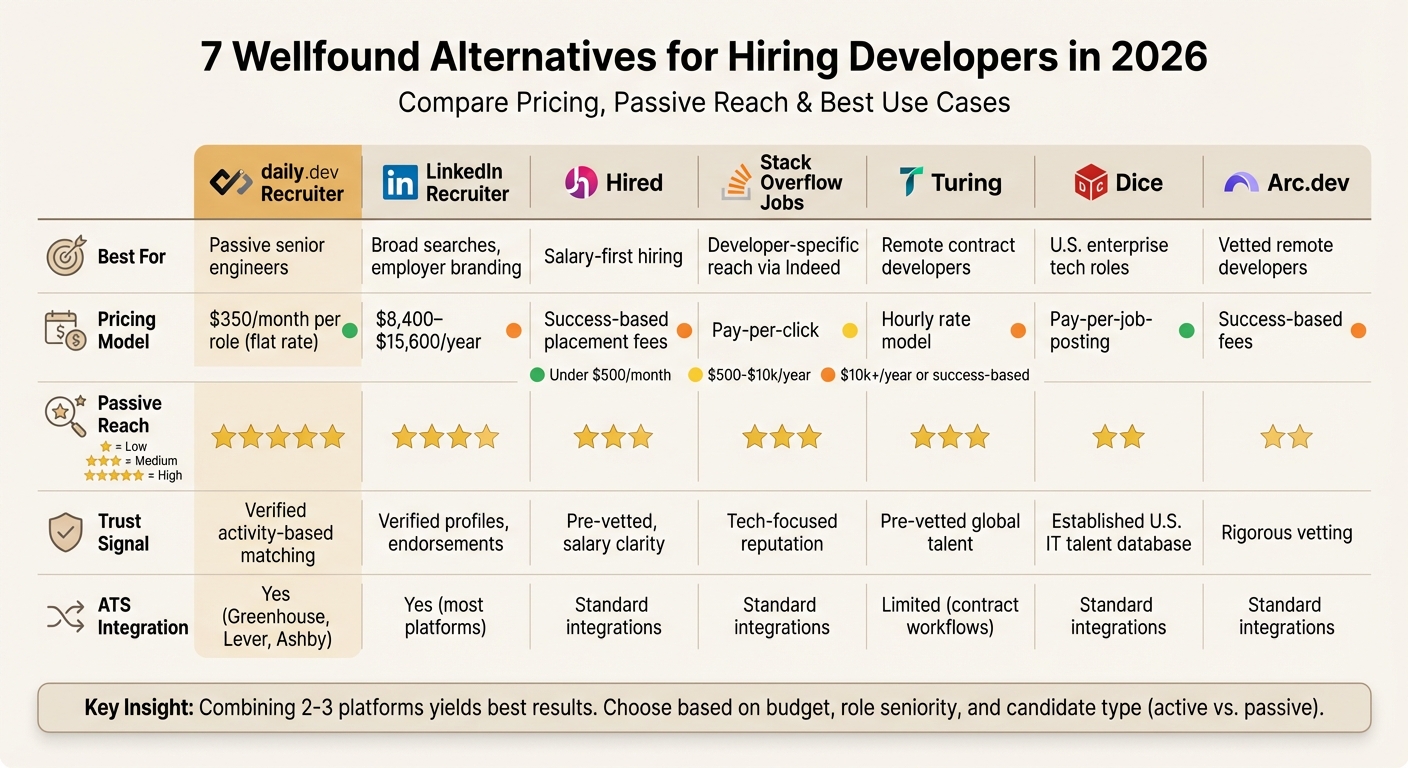 {Wellfound Alternatives Comparison: 7 Developer Hiring Platforms by Pricing, Passive Reach & Best Use Cases}
1. daily.dev Recruiter
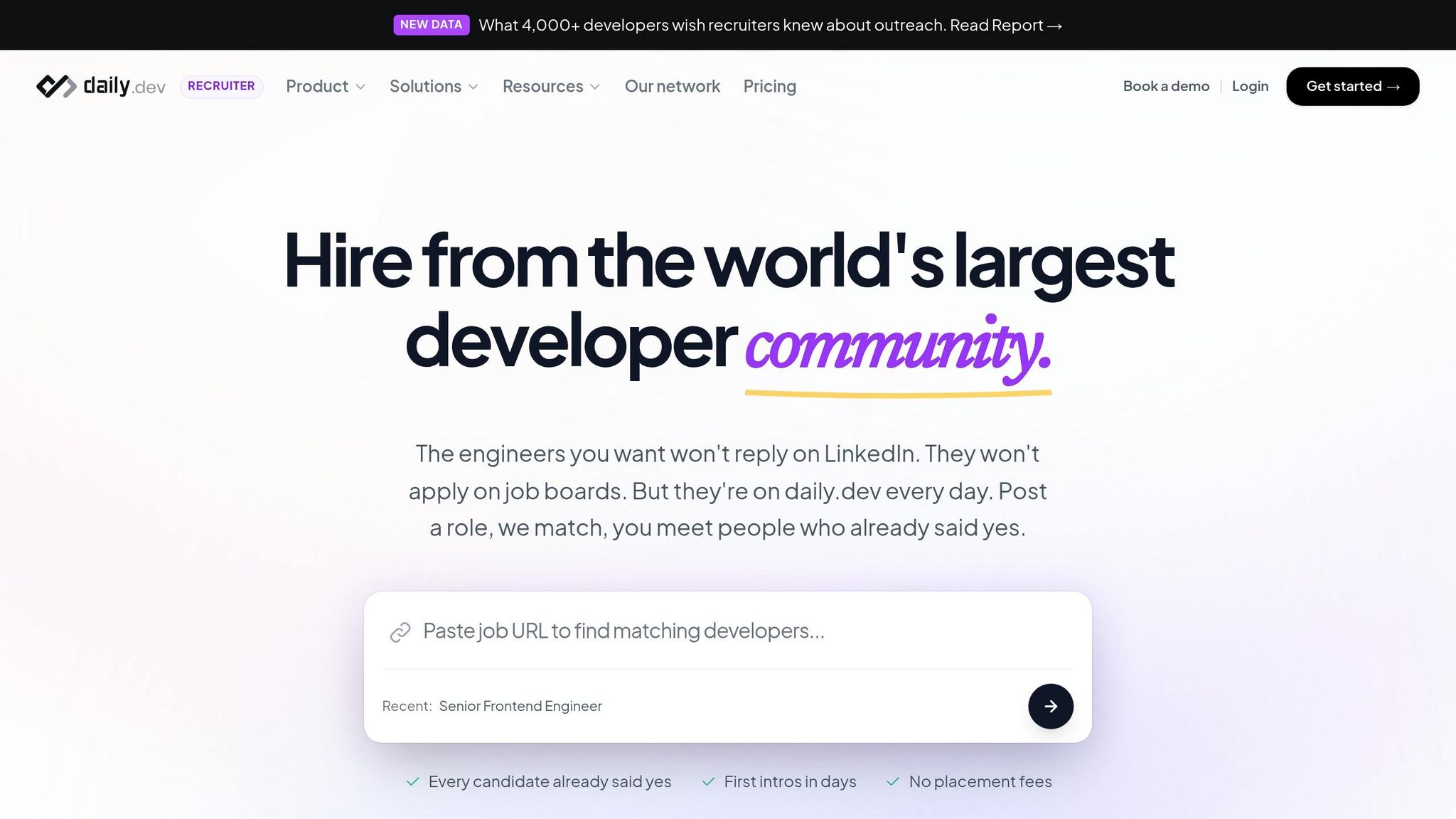
daily.dev Recruiter connects you with over 1 million daily active developers through a platform they already rely on to stay updated with tech news, frameworks, and coding practices. By targeting what developers are reading and building daily, it leverages live behavioral signals to help you find the right talent.
Now, let’s look at how daily.dev Recruiter’s passive reach helps you connect with experienced engineers who aren’t actively job hunting.
Passive Reach
One of the platform’s standout features is its ability to engage passive senior engineers - those who rarely browse job boards but use daily.dev as their go-to professional resource. This means you’re reaching the 90% of developers who are too focused on their projects to actively seek new roles. Using a double opt-in system, known internally as "TinDev", the platform ensures that both parties express interest before any conversations begin. This mutual approach cuts down on ghosting and ensures your hiring process is focused on developers genuinely open to opportunities.
Pricing Model
The pricing is straightforward: $350/month per role, with no additional placement fees or per-hire commissions. This subscription model allows for unlimited sourcing and introductions, giving you a predictable cost structure while speeding up your hiring process.
But it’s not just about cost - it’s also about the quality of matches.
Trust Signal
By analyzing real-time, verified developer activity, daily.dev Recruiter achieves 97–98% relevance in its matches. Instead of relying on outdated resumes, the platform uses behavioral data to show what developers are actually doing day-to-day. This provides a much clearer picture of their skills and expertise.
Best Fit
daily.dev Recruiter is perfect for sourcing passive senior engineers and specialists, especially for startups and tech teams working on core tech stacks. The platform offers pre-filtered profiles based on specific technologies, making it easier to find developers with the right expertise. It also integrates seamlessly with major ATS systems like Greenhouse, Lever, and Ashby through two-way sync. This integration simplifies the hiring process, making it a practical choice for teams looking for a daily.dev Recruiter vs. Wellfound comparison.
Hiring engineers?
Connect with developers where they actually hang out. No cold outreach, just real conversations.
2. LinkedIn Recruiter

LinkedIn Recruiter taps into the world's largest professional network, boasting over 1 billion members, including millions of developers with active profiles. The platform allows for advanced searches using filters tailored to programming languages like Python or React, experience levels, and specific developer roles. Recruiters can send InMail messages and access unlimited profiles.
When measured against key hiring criteria - trust, reach, and signal quality - LinkedIn Recruiter offers extensive access to candidates with verified credentials.
Passive Reach
This platform shines in its ability to connect with a wide range of developers, from entry-level engineers to CTOs. However, its effectiveness with active vs passive developer recruitment, particularly high-demand senior developers, can be limited by infrequent profile updates and InMail response rates of just 18–25%.
Pricing Model
LinkedIn Recruiter’s pricing begins at around $8,400 annually for the Lite version, which includes 30 InMails per month and basic search filters. The full version, offering unlimited searches and 150 InMails per month, costs up to $15,600 per year per seat. If you want the Talent Insights add-on, expect to pay an additional $2,000+ annually. The platform doesn’t charge placement fees.
Trust Signal
LinkedIn provides tools like verified endorsements and profile completeness scores to help assess candidates. Its algorithm prioritizes active professionals, and studies suggest recruiters can find 3x more qualified candidates compared to free searches. However, the platform depends on user-provided information and lacks real-time behavioral insights, such as recent coding activity.
Best Fit
LinkedIn Recruiter is well-suited for broad searches and employer branding, making it an excellent tool for established companies and enterprises with high-volume hiring needs across multiple roles. It's particularly effective when sourcing mid-to-senior developers across various tech stacks or blending active and passive candidates into one workflow. Additionally, it integrates seamlessly with applicant tracking systems like Greenhouse, Lever, and Workable, simplifying hiring processes for teams managing large pipelines.
Up next, we’ll dive into another option that uses a transparent marketplace model to offer its own set of advantages.
3. Hired
Hired functions as a marketplace platform where developers set up profiles, and companies actively compete to attract their attention. Candidates specify their salary expectations upfront, while companies make interview requests with compensation details clearly outlined from the start. This approach helps reduce misaligned expectations and avoids wasting time on conversations that don't lead anywhere.
Here’s a closer look at how Hired operates and its key features:
Passive Reach
Hired’s candidate pool consists of pre-vetted developers who are actively seeking new roles. This ensures a more engaged audience compared to cold outreach to passive developers. However, it does have its limitations - you're only reaching developers who are already interested in exploring new opportunities. The platform primarily focuses on the US and UK markets, which can limit the range of geographic diversity.
Pricing Model
Hired uses a success-based pricing model, meaning companies pay a placement fee only when they successfully hire a candidate through the platform. This is different from subscription-based models and may make budgeting harder for companies planning multiple hires. The fee structure varies depending on the contract, positioning Hired as more of a full-service hiring partner rather than a simple monthly tool. The emphasis on quality is reinforced by the platform’s rigorous vetting process for candidates.
Trust Signal
One of Hired’s standout features is its pre-vetting process. Developers undergo a thorough profile review before joining the platform, which helps maintain high standards across the candidate pool and builds trust with hiring companies.
Best Fit
Hired is particularly suited for companies that prioritize transparent, salary-focused hiring. It works well for US-based startups and mid-sized businesses looking to hire full-time developers who value upfront salary clarity and want to skip drawn-out negotiations. Teams comfortable with the marketplace model and success-based fees will find Hired’s approach straightforward and effective for their needs.
4. Stack Overflow Jobs
Stack Overflow Jobs has undergone a transformation since merging with Indeed. What used to be a standalone platform for hiring developers is now integrated into Indeed, combining Indeed's broader infrastructure with a nod to Stack Overflow's technical roots.
Passive Reach
The integration has shifted how the platform connects with developers. Instead of focusing solely on Stack Overflow's engaged technical community, it now operates more like a traditional job board. This means you're reaching developers who are actively searching for jobs on Indeed's general platform, rather than those showcasing their technical expertise through contributions on Stack Overflow.
This change highlights the differences between developer platforms and job boards, influencing its updated pricing structure.
Pricing Model
Stack Overflow Jobs now operates on a pay-per-click or sponsored listing model. Instead of paying a flat subscription fee, costs are based on factors like job category, location, and competition for similar roles. This approach prioritizes visibility and flexibility in spending.
Trust Signal
One of the platform's key strengths lies in its technical verification heritage. Stack Overflow has long been recognized for valuing demonstrated expertise over traditional resumes. While the integration with Indeed has diluted some of this focus, the platform still benefits from the trust and recognition it holds among developers. Job postings can leverage this reputation to attract technically skilled candidates.
Best Fit
Stack Overflow Jobs is ideal for companies already active on Indeed that want to target developers more directly. It works especially well for U.S.-based enterprise tech roles where reaching a higher volume of candidates is more important than focusing on niche audiences. If your employer brand is already strong on Indeed and you’re looking to enhance your visibility among developers, this integration offers added reach without requiring a separate platform subscription.
5. Turing
Turing is a global remote developer marketplace designed to connect companies with developers from around the world. Unlike platforms that cater to full-time hiring, Turing focuses on contract-based roles and staff augmentation, making it a go-to choice for businesses needing flexible developer support.
Passive Reach
Instead of relying on traditional methods to find candidates, Turing provides access to a pre-vetted pool of developers. These developers have already passed technical assessments, ensuring they're ready for contract work.
Pricing Model
Turing operates on an hourly rate pricing structure. You pay only for verified hours worked, with the platform adding a markup to the developer's base rate. This model includes services like vetting, matching, and handling administrative tasks. Unlike subscription-based job boards that charge a flat monthly fee, Turing’s costs are usage-based, scaling with the hours you require.
Best Fit
Turing is ideal for hiring remote developers globally that need contract developers or temporary staff to augment their teams. It’s particularly effective for scaling engineering teams with vetted talent across multiple time zones. However, it may not be the best option if your primary focus is building a full-time, permanent team.
This flexible approach is a strong complement to broader recruitment strategies, offering a remote solution for teams with changing staffing needs.
Before making a final decision, it's important to understand how to choose a developer hiring platform that aligns with your specific technical requirements. Next, we’ll dive into a comparison of pricing, reach, and integration features across platforms.
6. Dice
Dice stands out as a long-standing platform for tech hiring in the U.S., maintaining a traditional approach to connecting employers with skilled technology professionals, contrasting with modern job boards vs. developer networks.
Dice operates on a job posting fee model, where companies pay to list their open positions and gain access to a database of tech talent. This straightforward pricing approach makes it easy to predict costs for each job listing .
Passive Reach
Dice provides a searchable database of tech professionals, allowing employers to filter candidates by specific skills and technologies. The platform primarily attracts individuals who have actively created profiles, making it a go-to option for reaching engaged job seekers .
Pricing Model
The platform follows a pay-per-job-posting structure, offering clear and predictable expenses for businesses looking to hire .
Trust Signal
With its established reputation in the U.S. tech industry, Dice is a trusted name among both employers and job seekers. Its longevity and focus on technology roles contribute to its credibility.
Best Fit
Dice is particularly well-suited for senior-level engineering roles within U.S.-based enterprises. If you're looking for a reliable, fee-based job board with a strong track record in tech hiring, Dice is a solid choice .
7. Arc.dev
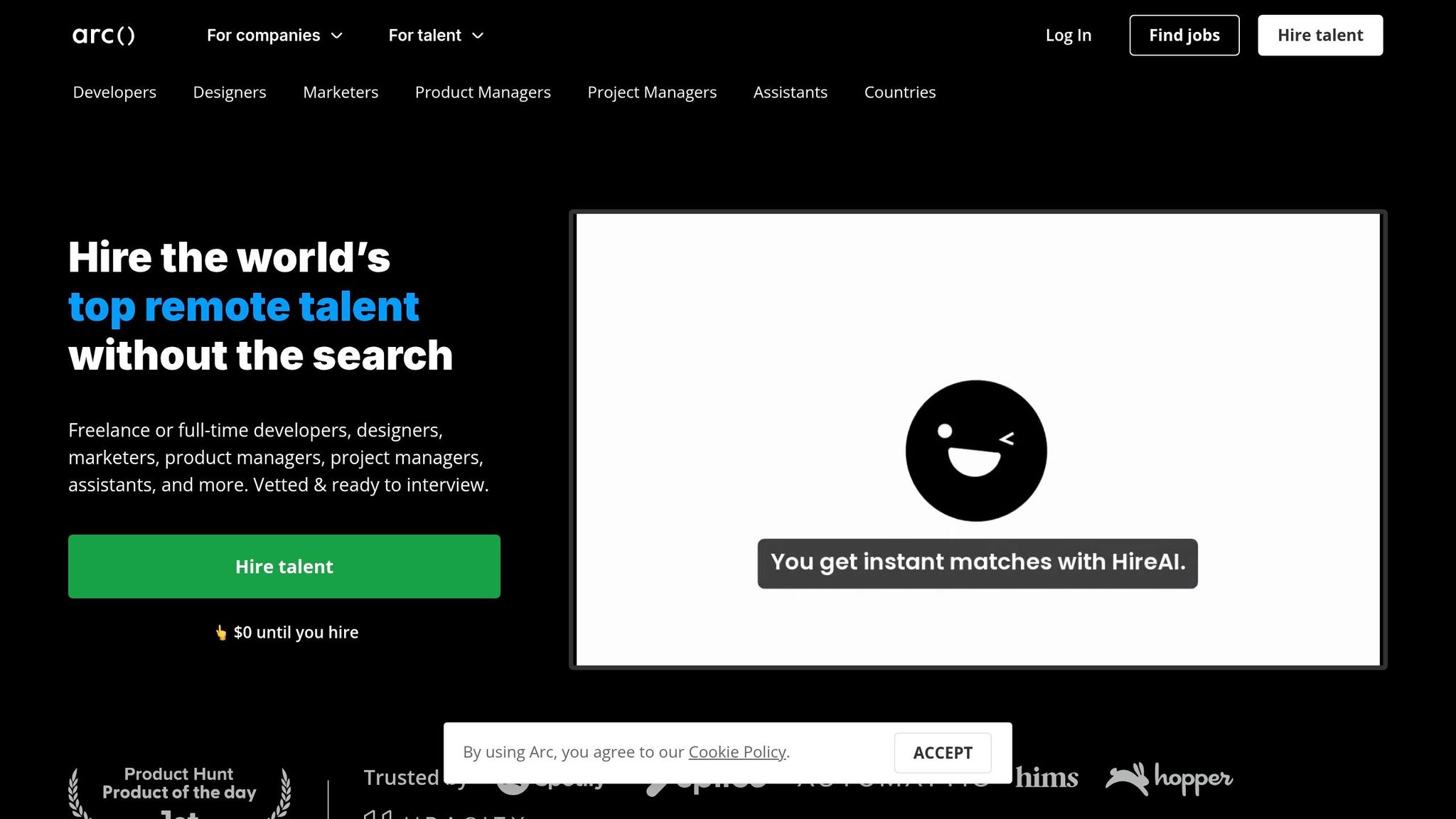
Arc.dev is a specialized platform designed to connect businesses with pre-screened remote developers. It focuses on quality over quantity, offering a curated selection of candidates through detailed profiles. Let’s break down its main features:
Passive Reach
Since Arc.dev prioritizes quality, the platform doesn't emphasize casting a wide net. Instead, it provides access to a smaller, highly vetted pool of developers.
Pricing Model
Arc.dev operates on a success-based pricing system. You only pay a placement fee when you successfully hire a candidate through their marketplace.
Trust Signal
The platform's rigorous vetting process ensures that all developers meet specific technical standards, giving you confidence in the skills and expertise of potential hires.
Best Fit
Arc.dev works well for startups or businesses looking to quickly hire remote developers or contractors with verified skills.
Platform Comparison Table
Choosing the right platform is much easier when you can compare options side by side. Below is a table summarizing key insights to help recruiters evaluate platforms based on their specific needs.
| Platform | Best For | Pricing Model | Passive Reach | Trust Signal | ATS Integration |
|---|---|---|---|---|---|
| daily.dev Recruiter | Reaching passive senior engineers not on job boards | Flat rate starting at $350/month per role, no placement fees | ⭐⭐⭐⭐⭐ | Double opt-in system based on what developers read and build | Yes, with auto-filtering tools |
| LinkedIn Recruiter | Enterprise-scale passive reach and employer branding | Subscription (~$8,999/year Corporate) | ⭐⭐⭐⭐ | Verified professional history | Yes, integrates with most ATS platforms |
| Hired | Transparent salary-first hiring | Success-based placement fee | ⭐⭐⭐ | Candidates set salary expectations upfront | Standard ATS integrations |
| Stack Overflow Jobs | Companies on Indeed seeking dev-specific reach | Pricing available upon inquiry | ⭐⭐⭐ | Community-proven technical expertise | Standard integrations available |
| Turing | Remote-first companies hiring globally | Success-based for contract placements | ⭐⭐⭐ | Pre-vetted for remote work capability | Limited, focused on contract workflows |
| Dice | US-based enterprise tech roles | Job posting fee per role | ⭐⭐ | Pre-vetted North American IT talent database | Standard integrations available |
| Arc.dev | Startups hiring vetted remote developers quickly | Success-based placement fee | ⭐⭐ | Rigorous technical vetting process | Standard ATS integrations |
This comparison highlights the factors recruiters need to consider when choosing an alternative to Wellfound. Higher passive reach often leads to better response rates and access to senior talent. For instance, while 87% of recruiters use LinkedIn, InMail response rates remain relatively low, ranging from 18–25% .
Pricing structures vary across platforms and generally fall into three categories:
- Subscription models (e.g., LinkedIn Recruiter) require upfront annual commitments.
- Success-based models (e.g., Hired, Arc.dev, Turing) charge fees only when a hire is made.
- Flat-rate options (e.g., daily.dev Recruiter) offer predictable monthly costs without placement fees, making budgeting easier regardless of hiring volume.
Next, we’ll explore how to choose the platform that aligns best with your team’s hiring goals.
How to Choose the Right Platform for Your Team
Picking the right hiring platform boils down to four key factors: your budget, the role's seniority, whether you're targeting active or passive candidates, and whether your hiring focus is remote or local. These considerations are central when exploring alternatives to Wellfound.
If your budget is tight - under $500 per month - free job postings or basic plans are ideal for junior roles. On the other hand, recruiting senior developers often requires a larger investment, ranging from $350 to over $1,000 per month, for platforms offering features like behavioral matching or access to vetted talent pools. For example, LinkedIn Recruiter costs about $8,999 annually, while flat-rate platforms provide predictable pricing without additional placement fees. Weighing these factors together can help you align your platform choice with your overall hiring strategy.
Seniority of the role is a game-changer. Junior and entry-level developers tend to engage well with traditional job boards. However, senior engineers - especially those with 5+ years of experience - rarely browse these platforms. Instead, they respond better to platforms that leverage real-time activity data to match them with relevant opportunities, eliminating the need for cold outreach. Using vetted marketplaces can dramatically reduce hiring timelines for senior roles - sometimes to as little as a week - compared to the weeks or months it might take with traditional job boards.
When it comes to active versus passive candidates, the approach differs. Active candidates apply directly to job postings, making them easier to reach through conventional platforms. Passive candidates, however, require more tailored engagement. Platforms designed for passive recruiting often use double opt-in systems and warm introductions, ensuring both parties show genuine interest before starting a conversation. This approach leads to significantly higher response rates than traditional cold outreach.
Remote or local hiring also influences your platform choice. If you're building a global or fully remote team, look for platforms with a strong international presence and remote-first talent pools. But if you're hiring for US-based enterprise roles or assembling a local team, focus on platforms that specialize in verified local talent.
Most recruiting teams find success by combining 2–3 platforms. For instance, you might use a broad professional network for employer branding, a developer-focused platform to engage passive senior engineers, and a local job board for entry-level roles. This multi-channel approach not only improves coverage across different talent segments but can also reduce screening times by up to 50%. using diverse developer sourcing channels ensures you're not overly dependent on a single source, giving you flexibility to meet the unique needs of each role.
FAQs
What happened to AngelList Talent?
AngelList Talent has rebranded itself as Wellfound, with a renewed focus on bridging the gap between startups and active job seekers. However, the platform does come with some limitations. It offers access to a smaller pool of candidates and lacks behavioral signals, which are often crucial for identifying the best talent. These constraints have led many recruiters to seek out alternative platforms that better meet their hiring needs.
Is Wellfound free?
Wellfound isn’t free to use. It runs on a subscription or listing fee model, and there doesn’t appear to be any option for a free tier.
What's the best Wellfound alternative for hiring senior developers?
daily.dev Recruiter stands out as the leading alternative to Wellfound for hiring senior developers in 2026. It leverages real-time behavioral data from more than a million active developers to connect recruiters with candidates based on their real-world activities, such as learning new skills or participating in tech communities. With its double opt-in system, it ensures both parties express mutual interest, making it a perfect choice for reaching passive senior engineers who aren’t actively looking for jobs.
Can I use daily.dev alongside Wellfound?
Yes, you can use daily.dev Recruiter alongside Wellfound. While Wellfound is tailored to active job seekers in the startup world, daily.dev Recruiter takes a different approach. It connects with developers based on their real-time activity and behavioral patterns. By combining these tools, you can expand your sourcing strategies and reach a wider pool of talent.
Which Wellfound alternative is cheapest?
Pin stands out as the most budget-friendly alternative to Wellfound, with pricing starting at just $100 per month. It features an AI-powered matching system and even includes a free tier. Compared to pricier options like LinkedIn Recruiter, which starts at around $8,999 per year, Pin is a much more economical choice.
.png)