Recruiters often focus on metrics like InMails sent or profiles viewed, but these don't measure true success. The key is shifting to metrics that show meaningful engagement and hiring efficiency. Here's what matters:
- Candidate Engagement Rate: Tracks how many candidates respond to outreach.
- Time-to-Hire: Measures how long it takes to fill a role, from initial contact to offer acceptance.
- Quality of Hire: Evaluates performance, retention, and productivity of new hires.
- Developer Sentiment Score: Reflects candidates' perceptions of the hiring process.
- Recruitment funnel conversion rates: Shows how candidates progress through hiring stages.
Focusing on these metrics helps improve hiring outcomes, reduces wasted effort, and creates a better experience for candidates. Tools like daily.dev Recruiter simplify this process by emphasizing quality over quantity and tracking meaningful data.
::: @figure 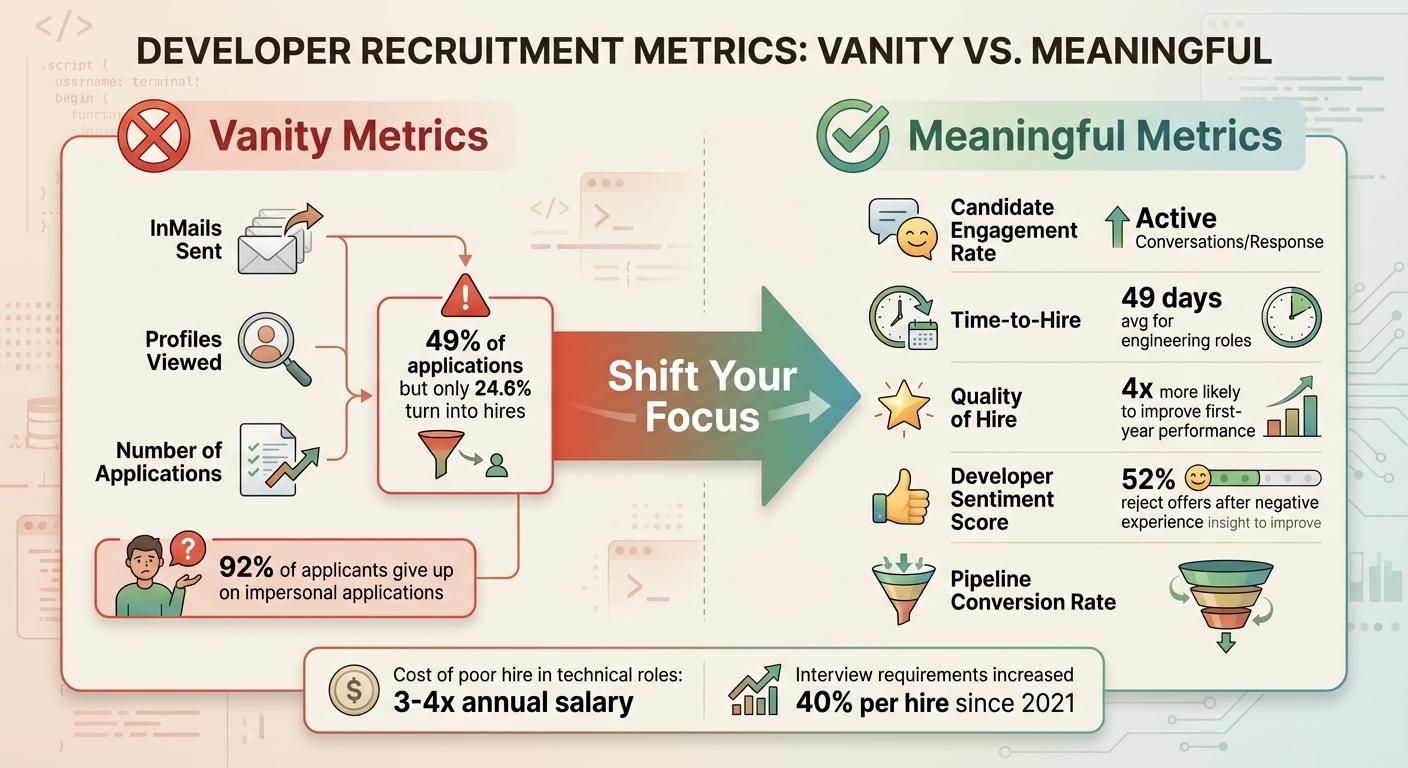 {Vanity Metrics vs Meaningful Recruitment Metrics for Developer Hiring}
Why Vanity Metrics Don't Work for Developer Recruitment
Metrics like the number of InMails sent or profiles viewed might seem like signs of productivity, but they often miss the mark when it comes to what truly matters - whether developers are actually interested in your opportunities. Sending 500 InMails and viewing 1,000 profiles may look impressive on paper, but if those developers don’t engage, the effort adds little value and could even harm your employer brand. Let’s unpack why these traditional outreach metrics fall short in capturing meaningful developer engagement.
How Traditional Metrics Fall Short
Focusing solely on outreach volume can lead to scattershot, impersonal tactics. When recruiters are judged by the quantity of messages sent rather than the quality of the conversations they spark, outreach often feels robotic and is quickly dismissed as spam by developers.
Here’s a telling statistic: job boards and social platforms drive nearly 49% of all applications, but only 24.6% of those applications turn into actual hires . This gap highlights the limitations of relying on surface-level metrics. It’s not about how many people you reach - it’s about how many are genuinely interested and aligned with your opportunities.
Simply reviewing a profile doesn’t confirm anything about a candidate's interest, availability, or whether the role is a good fit for their skills. And the numbers don’t lie: the average time-to-hire for engineering roles is 49 days, compared to just 38 days for sales roles . That extra time often comes from chasing candidates who aren’t qualified or interested, wasting valuable resources and delaying the hiring process.
The Impact on Candidate Experience
Prioritizing volume over quality creates a spam-like experience for candidates, undermining trust. Developers can quickly spot when outreach is generic and disconnected, signaling inefficiency. This approach doesn’t just hurt engagement; it damages your reputation with potential hires.
The stakes are even higher in technical roles, where a poor hire can cost three to four times the employee’s annual salary . When hiring teams spend too much time screening unqualified candidates, it becomes harder to focus on finding the right fit. Metrics that emphasize quality over quantity are essential - not just for improving candidate experience, but also for ensuring better hiring outcomes.
Better Metrics to Track for Developer Recruitment
When it comes to recruiting developers, relying solely on traditional metrics like the number of applications or interviews conducted can be misleading. Instead, it's more effective to focus on metrics that reflect meaningful interactions and the efficiency of your hiring process. Here are some key metrics that can help you better connect with developers and improve your recruitment outcomes.
Candidate Engagement Rate measures how many developers respond to your outreach efforts. For example, if 15 out of 100 developers reply, your engagement rate is 15%. This metric provides direct insight into whether your messaging resonates with your audience. As The Karat Team explains:
"Tracking more data can help you get deeper insights... The quality of your data is more important than the quantity" .
A low engagement rate might indicate that your messaging needs adjustment, while a high rate suggests you're effectively reaching the right candidates.
Time-to-Hire for Developers tracks how long it takes from the initial contact to when a candidate accepts an offer. A prolonged hiring process can frustrate candidates and lead to dropouts. Jen Dewar from JobScore highlights:
"A long hiring process is one of the top reasons candidates withdraw" .
By streamlining your process, you can reduce delays and keep candidates engaged.
Quality of Hire evaluates how well new developers perform and integrate into your team. This can include metrics like job performance ratings, first-year retention rates, and the time it takes for new hires to reach full productivity. Research shows that companies focusing on this metric are four times more likely to see improved first-year performance . For instance, Metro cut its recruitment lead time in half and achieved a 91% candidate satisfaction score by adopting structured interview practices . Identifying sourcing channels that consistently bring in high-performing, long-term employees can also strengthen your team.
Developer Sentiment Score measures how candidates perceive your recruitment process. This is crucial because 52% of candidates will turn down a job offer if they have a negative recruitment experience . Tools like surveys, Net Promoter Score (NPS), and review platforms can help you gauge candidate sentiment. Since over half of candidates drop out when they feel disengaged , monitoring this score can help you identify and address pain points early.
Another important metric is the Pipeline Conversion Rate, which tracks the percentage of candidates who progress through each stage of your hiring funnel - from initial contact to offer acceptance. This helps you identify where candidates are dropping off and refine your strategy to improve their experience.
| Metric Type | Metric Name | What It Measures | Why It Matters |
|---|---|---|---|
| Leading | Technical Interview Passthrough Rate | Sourcing Quality | Indicates whether you're attracting qualified technical candidates. |
| Lagging | Offer Acceptance Rate | Offer Competitiveness | Shows how well your compensation and benefits meet candidate expectations. |
Technical Interview Passthrough Rate reveals how many candidates successfully pass technical interviews, helping you assess the quality of your sourcing efforts. Meanwhile, Offer Acceptance Rate measures how many candidates accept your offers, providing insight into how competitive your packages are in the market.
Hiring engineers?
Connect with developers where they actually hang out. No cold outreach, just real conversations.
How daily.dev Recruiter Supports Better Metrics
daily.dev Recruiter is designed with developers in mind, prioritizing quality over quantity when it comes to hiring data. This approach ensures your recruitment efforts focus on meaningful results rather than just chasing traditional KPIs. Here’s how daily.dev Recruiter helps improve your hiring metrics.
Warm, Double Opt-In Introductions
With a double opt-in model, developers are introduced to roles naturally within their ecosystem. They only engage when they find a position that genuinely interests them. This approach directly increases candidate engagement rates by connecting with developers who are already invested in the opportunity.
Built-In Engagement and Sentiment Tracking
The platform integrates seamlessly with your ATS, ensuring no duplicate outreach and protecting your brand reputation. It also offers custom screening questions, allowing you to confirm technical alignment before making introductions. This ensures that every interaction starts on the right foot. By focusing on candidates who have already expressed interest, you can track your pipeline conversion rate more effectively.
Metrics Aligned with Developer-Friendly Processes
Detailed, context-rich role descriptions empower developers to self-select roles that suit them, improving the quality of hires. Given that the average time-to-hire for technical roles is around 60 days , the platform’s warm introductions and clear expectations help you shorten this timeline without compromising the candidate experience. Instead of relying on vanity metrics, you’ll measure engagement and sentiment scores that truly reflect developer interest and fit.
Conclusion
Metrics like InMails sent or profiles viewed might show how active you’ve been, but they don’t reflect the success of your recruitment strategy. When nearly 92% of applicants give up on impersonal and complicated applications , and interview requirements have increased by 40% per hire since 2021 , it’s clear that focusing solely on volume isn’t working. Developers deserve a more thoughtful and effective hiring process.
Instead, prioritize metrics that matter: candidate engagement, quality of hire, developer sentiment, and pipeline conversion. These indicators reveal whether you’re building trust, shortening time-to-hire, and setting the foundation for long-term success. Considering that technical roles often take around 60 days to fill , improving the quality of your processes can make a noticeable difference to your results - and your bottom line.
Shifting your approach doesn’t have to be complicated. Tools like daily.dev Recruiter make it easier by offering warm, double opt-in introductions and focusing on meaningful metrics. By moving away from cold outreach and starting real conversations with developers who are genuinely interested, you can align your efforts with trust and quality. It’s time to stop tracking activity for activity’s sake and start measuring what truly drives impact.
FAQs
Why should you prioritize candidate engagement rate over the number of InMails sent?
Focusing on the candidate engagement rate is all about prioritizing the quality of your interactions over sheer volume. A strong engagement rate shows that your outreach truly connects with candidates, paving the way for meaningful conversations and increasing the chances of successful hires.
On the flip side, blasting out countless InMails without paying attention to engagement can backfire. It wastes time, dilutes your efforts, and often leaves candidates with a negative impression. By making engagement a priority, you can build trust, make your outreach more impactful, and see better results in your recruiting efforts.
What are the benefits of improving the quality of hire in recruitment?
Focusing on the quality of hire can make a big difference in your recruitment efforts. It brings in candidates who perform better, align more effectively with your team, and stick around longer - key factors that contribute to lasting success.
When you emphasize quality over quantity, you’re not just building a stronger, more engaged workforce - you’re also saving time and resources on future hiring. Plus, this strategy enhances the candidate experience, building trust and boosting your employer brand in the process.
How can I speed up the hiring process for developer roles?
To make hiring developers faster, focus on simplifying your recruitment process. Start by figuring out where things slow down - whether it’s during screening or interview scheduling - and work on fixing those issues. Keep an eye on metrics like time-to-fill and time-per-stage to see exactly where improvements are needed.
Implement clear screening criteria and use tools that evaluate developer activity to quickly spot top candidates. Adding a personal touch to your outreach and maintaining open communication with candidates can also boost engagement and help avoid unnecessary delays. By tracking your workflow and making adjustments based on data, you can not only speed up hiring but also create a better experience for candidates.
.png)