In 2026, developers are finding jobs by showcasing their skills in the communities they already engage with, rather than relying on outdated job boards. Platforms like GitHub, Stack Overflow, and Discord are now central to job hunting, where a developer's contributions and activity serve as a living resume. Open source projects, real-time networking in niche groups, and community-driven job threads have become the go-to strategies for landing roles, especially remote ones. Key highlights:
- GitHub: Recruiters evaluate code contributions, pull requests, and collaboration history.
- Stack Overflow Jobs: Integrates job listings into a developer's workflow, emphasizing technical expertise.
- Discord/Slack: Real-time networking channels provide early access to job opportunities in trusted spaces.
- Hacker News: "Who's Hiring" threads connect developers directly with founders and hiring managers.
- Reddit: Communities like r/webdev and r/experienceddevs offer career advice and job leads.
This shift focuses on skills, collaboration, and visibility in developer communities, making resumes less relevant. Developers who actively engage in these spaces are more likely to connect with employers who value their work.
::: @figure 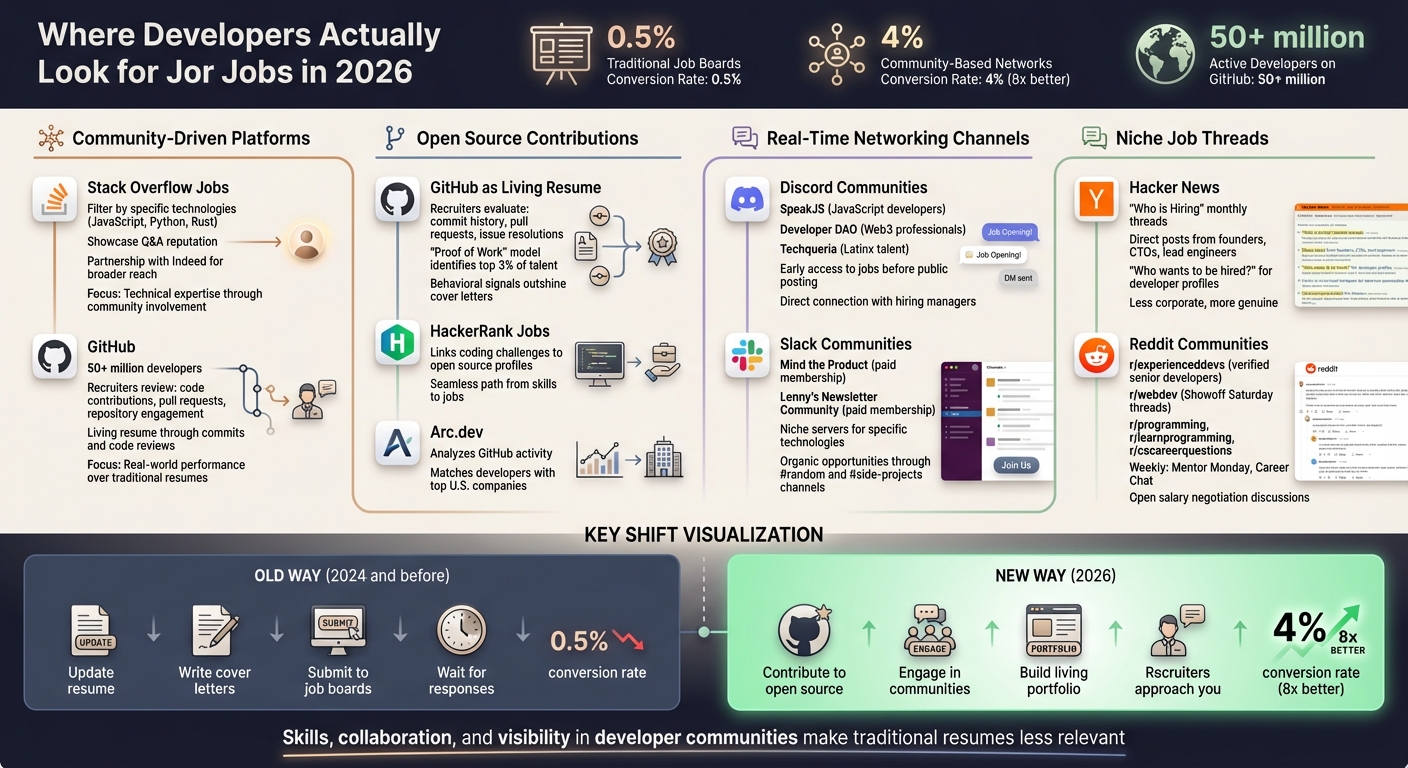 {Where Developers Find Jobs in 2026: Platform Comparison Guide}
1. Community-Driven Platforms
Stack Overflow Jobs is a go-to option for developers because it seamlessly integrates into a platform they already rely on for solving coding challenges. As part of the largest developer Q&A community, its job section fits naturally into a developer's workflow. Job seekers can filter listings by specific technologies like JavaScript, Python, or Rust - aligning with the industry's shift away from outdated job boards. Applications are streamlined, as developers can use profiles that showcase their Q&A reputation and contributions. Plus, its partnership with Indeed broadens its reach while staying developer-focused, allowing employers to connect with candidates based on real technical expertise demonstrated through community involvement.
GitHub, the central hub for over 50 million developers, takes a different approach. Job opportunities often arise organically through a developer's activity - contributions, pull requests, and repository engagement. Instead of browsing traditional listings, developers get noticed when recruiters review their actual work. The quality of their code, their responsiveness to issues, and their participation in open-source projects act as a living resume. A GitHub profile becomes a dynamic portfolio, where every commit and code review speaks to a developer's abilities.
These platforms are changing the game by prioritizing real-world performance over traditional resumes. Developers no longer need to update resumes or write cover letters; their activity on Stack Overflow and GitHub serves as direct evidence of their expertise. This approach simplifies the hiring process for remote developers across the United States, United Kingdom, and Australia by focusing on proven technical skills rather than geographic location.
2. Open Source Contributions
Open source contributions have become a powerful way for developers to showcase their skills, acting as a dynamic portfolio that speaks louder than any traditional resume.
GitHub as a Living Resume has become the go-to approach for developers to get noticed in 2026. Recruiters at U.S. tech firms now dive into GitHub profiles to evaluate commit history, pull requests, and issue resolutions in one streamlined review. Rather than relying solely on resumes, platforms with a "Proof of Work" model focus on tangible contributions. This method helps recruiters identify qualified technical candidates by assessing what developers have actually built and how they’ve collaborated.
The growing emphasis on behavioral signals means that a developer’s activity on platforms like GitHub can outshine even the most polished cover letter. Whether it’s maintaining well-documented repositories, resolving complex issues, or leading as a maintainer, developers essentially broadcast their skills to companies actively searching for remote talent. U.S. employers favor this approach because it provides an unfiltered view of a candidate’s coding ability, teamwork, and problem-solving skills - long before an interview ever takes place. These signals are also being integrated into platforms that connect contributions directly to hiring opportunities.
For instance, HackerRank Jobs links coding challenges to open source profiles, creating a seamless path from showcasing skills to landing a job. A consistent track record - marked by regular commits and active participation in pull request discussions - signals dependability and technical expertise, qualities highly valued in remote roles.
This system flips the traditional job search process. Instead of sending out endless applications, developers focus on refining their craft in public. This shift addresses many of the issues regarding what's broken about developer hiring today. Recruiters then approach them with roles that align with their demonstrated abilities. Similarly, Arc.dev analyzes GitHub activity to match developers with positions at top U.S. companies, making open source contributions a direct gateway to career opportunities.
3. Real-Time Networking Channels
Real-time platforms like Discord and Slack have become essential for recruiting through developer communities, offering developers early access to job opportunities. These platforms often feature private channels where positions are shared before going public. For instance, communities like SpeakJS for JavaScript developers, Developer DAO for Web3 professionals, and Techqueria for Latinx talent provide trusted spaces where members can connect directly with hiring managers. In these environments, developers can ask questions about technical requirements or team dynamics, creating meaningful interactions that go beyond standard applications .
Engaging in non-recruitment channels like #random or #side-projects can also lead to valuable referrals. Building authentic relationships within these communities often results in organic opportunities, as developers prioritize connections formed through collaboration and shared interests. Unsolicited direct messages are increasingly ignored, with many opting to discover roles naturally through their daily interactions. Platforms that seamlessly integrate job discovery into developers' existing workflows - whether through technical discussions, troubleshooting, or peer engagement - tend to see greater success than traditional recruiting tactics. Highlighting shared community ties or referencing specific technical challenges when reaching out can make candidates stand out .
While many Discord and Slack groups are free to join, some curated spaces, like Mind the Product or Lenny's Newsletter Community, require paid memberships to access exclusive job listings. On the other hand, niche servers tailored to specific technologies often feature higher-quality roles with less competition, making them a valuable resource for specialized talent .
4. Niche and Specialized Job Threads
When it comes to finding targeted opportunities, niche job threads offer a more focused approach compared to broader community platforms and open-source collaborations.
Hacker News "Who is Hiring" Threads
Hacker News regularly hosts "Who is Hiring" threads, where founders, CTOs, and lead engineers post job openings directly. For instance, in the February 2026 thread, companies like FUTO sought a Senior Infrastructure & Platform Engineer open to remote candidates in the UK. Similarly, Atomic Tessellator aimed to recruit developers within ±4 hours of UTC+12, specifically for Australia and New Zealand time zones. Charted Sea used the thread to hire a Senior Product & Platform Engineer, requiring a 4-hour overlap with UTC+8 .
"The vibe is different. It's less corporate speak and more genuine enthusiasm for the work they're doing."
- Hacker News: Who's Hiring? Guide
For developers, the "Who wants to be hired?" thread flips the script. Here, they can post profiles to attract outreach from founders directly . These threads also serve as a space for unfiltered feedback on topics like interview experiences and work-life balance . It's a refreshing alternative to traditional resumes, emphasizing tangible contributions and skills.
Reddit's Developer Job Communities
Reddit offers a wealth of career insights and job leads through its developer-focused communities. Subreddits like r/experienceddevs, which cater to senior developers and tech leaders, verify members' professional experience to ensure quality discussions . Over at r/webdev, "Showoff Saturday" threads let developers showcase personal projects and gain visibility through peer feedback .
Larger communities such as r/programming, r/learnprogramming, and r/cscareerquestions provide even broader networking opportunities. Weekly threads like "Mentor Monday" and "Career Chat" create low-pressure spaces for connecting with others in the field . A standout feature of these subreddits is the open exchange of advice on salary negotiations, company concerns, and career pivots - insights that are often missing from traditional job boards.
These niche platforms offer a sharp, targeted approach that complements the broader strategies discussed earlier, giving developers a chance to connect in more personalized and meaningful ways.
Conclusion
By 2026, developers are gravitating towards community-driven platforms rather than relying solely on traditional job boards. Why? Because platforms like GitHub, Stack Overflow, and Discord tech channels allow them to showcase their skills in real time. When recruiters see your open source contributions, thoughtful answers, or active participation in discussions, they gain a deeper understanding of your abilities and how well you might fit into their team - something a static resume just can’t match.
The numbers back this up: while traditional job boards have a conversion rate of about 0.5%, community-based networks perform up to eight times better . Open source contributions not only highlight your technical expertise but also build trust before you even have a conversation with a potential employer. This shift is reshaping how talent is validated and how career opportunities unfold.
For developers aiming for remote roles, niche communities tailored to global work cultures are a goldmine. By consistently contributing to these spaces, you can build credibility and foster strong professional relationships that transcend borders.
As mentioned earlier, engaging in open source projects, participating in technical communities, and sharing your work on specialized platforms are strategies that pay off over time. These efforts place you in environments where opportunities naturally arise.
With automation flooding traditional job boards, developers who focus on building a presence in these communities and demonstrating their expertise through real contributions will stand out to employers who truly value skill and alignment with their team culture.
FAQs
How do I make my GitHub look good to recruiters?
To make your GitHub profile shine, focus on building an impressive portfolio. Start by showcasing key projects with clear descriptions, detailed README files, and links to live demos or repositories. Pin the repositories that best represent your skills and align with your goals.
Keep your contributions consistent to demonstrate active engagement. Use a professional profile picture and craft a compelling bio that highlights your skills, experience, and what you're passionate about. These details help signal your expertise and make your profile more attractive to potential recruiters.
What should I post in Discord or Slack to get noticed without spamming?
To stand out without resorting to spamming, focus on sharing useful and relevant content that invites real interaction. Share insights, practical advice, or updates about your work that align with your area of expertise. Asking open-ended questions can also encourage meaningful engagement. Steer clear of overloading your audience with self-promotion. Instead, join ongoing conversations and offer thoughtful responses to others. This approach fosters trust and showcases genuineness, helping you gain visibility within the community in a natural way.
How do I stand out in Hacker News “Who’s Hiring” threads?
When sharing your experience, be clear and specific about your skills or recent projects. Highlight what you’ve worked on and the impact it had. For example, mention a challenging project you completed successfully or a skill you’ve honed over time.
Engaging authentically with your community also makes a big difference. Whether it’s through thoughtful comments, answering questions, or sharing helpful tips, your consistent participation can help you stand out. Over time, this approach helps build trust and increases your visibility.
.png)