If you're trying to connect with senior DevOps and backend engineers, LinkedIn might not be the best place. Most engineers avoid it, viewing it as a "resume archive" rather than an engaging platform. Instead, they spend their time on specialized platforms like GitHub, Stack Overflow, and developer-focused communities such as daily.dev. These spaces align with their daily workflows, offering real-time insights into their skills, interests, and challenges.
Key Takeaways:
- Why LinkedIn fails: Engineers see it as noisy, outdated, and irrelevant.
- Where they are active: GitHub, GitLab, Stack Overflow, Slack, Discord, and niche platforms like daily.dev.
- How to connect: Engage in technical discussions, respect community rules, and personalize outreach based on their activity and interests.
Recruiters need to shift from cold outreach to engaging engineers where they actively learn and work. Platforms like daily.dev Recruiter simplify this by using real-time signals to connect with engineers who are genuinely interested. Focus on building trust and offering roles that align with their current goals.
::: @figure  {Where Senior Engineers Actually Engage: Platform Comparison Guide}
Why Senior Engineers Avoid LinkedIn
LinkedIn's Low Signal-to-Noise Problem
For many senior engineers, LinkedIn feels less like a dynamic community and more like a stagnant archive for resumes. Profiles often get updated only during job hunts, reinforcing the perception that LinkedIn functions more as a digital filing cabinet than an engaging platform for professionals.
When engineers do log in, they’re often bombarded with irrelevant and generic pitches. The platform’s keyword-based matching system struggles to capture the nuances of what engineers are actually working on - whether it’s AI/ML projects, optimizing React applications, or fine-tuning payment systems. A profile that simply states “5 years of backend experience” doesn’t provide the depth needed to gauge interest in roles involving Kubernetes or machine learning.
This overwhelming amount of irrelevant content buries meaningful technical discussions under layers of recruitment spam and broad, motivational posts. Unsurprisingly, nearly 90% of engineers on technical platforms ignore these types of outreach entirely, highlighting the need for a better LinkedIn strategy to attract passive tech candidates. Given these frustrations, many senior engineers now gravitate toward platforms that better align with their daily work and professional interests.
Platforms Engineers Actually Use
Recognizing LinkedIn’s shortcomings, senior engineers are turning to platforms that seamlessly integrate with their daily workflows and reflect their real-time interests. GitHub, for instance, isn’t just a place to host code - it’s a hub for collaboration, where engineers can showcase their projects and learn from others. Similarly, Stack Overflow and other technical forums provide practical, immediate answers to pressing problems. Developer-focused communities like daily.dev, which has logged over 1 billion sessions, have become essential parts of an engineer’s routine rather than occasional stops for networking.
These platforms offer a clearer window into an engineer’s current focus. Whether it’s reading about distributed systems or diving into database optimization discussions, these spaces provide real-time insights into what matters most to technical professionals. In fact, around 40% of users on these specialized platforms are senior contributors or technical leaders actively seeking to expand their knowledge and skills. As Nimrod Kramer, CEO and Co-Founder of daily.dev, aptly explains:
"LinkedIn is a database of resumes. daily.dev is a living community. You meet engineers where they learn, not where they look for jobs."
Where Senior DevOps and Backend Engineers Spend Their Time
GitHub and GitLab

Open-source repositories are where senior engineers showcase their skills and build their reputations through real-world code contributions. Take the Linux kernel, for example - since 2005, over 13,500 developers from more than 1,300 companies have contributed to this project alone. This level of participation highlights how projects like Linux, Node.js, Ceph, and Gluster become hubs for top-tier talent.
Within these projects, roles are clearly defined. Maintainers oversee subsystems, committers gain direct access through consistent contributions, and contributors submit patches for review. As Stormy Peters, Senior Manager of Community Leads at Red Hat, puts it:
"For many larger projects, we know that most of our contributors are going to be people who work at companies that need to use projects like Ceph and Gluster".
For recruiters, pull requests, issue discussions, and commit histories offer a transparent window into an engineer's technical expertise and collaboration style. Beyond repositories, engineers also demonstrate their skills on Q&A sites and technical forums.
Stack Overflow and Technical Forums
After contributing to code repositories, many engineers turn to forums for troubleshooting and sharing knowledge. Platforms like the Microsoft Tech Community host active discussions on topics such as Azure infrastructure, security, and cloud management. These forums often use gamified reputation systems - like Copper, Silver, and Gold levels - to highlight contributors' reliability and expertise.
Unlike resumes or LinkedIn profiles, which often list generic skills, forum activity reveals how engineers approach and solve problems. For instance, a senior DevOps engineer documenting their process for resolving Kubernetes networking issues or optimizing CI/CD pipelines provides insights into their technical thinking - far more valuable than a simple bullet point on a resume.
Slack and Discord Communities
Real-time chat platforms like Slack and Discord are another favorite hangout for senior engineers. These communities, often organized around specific tools or frameworks, such as Kubernetes or cloud platforms, bring together highly engaged professionals who collaborate daily.
These spaces are less about broad networking and more about solving immediate technical challenges. Engineers participate in real-time discussions, offering genuine technical contributions rather than polished self-promotion.
Developer Content Platforms
Platforms like daily.dev have become indispensable for professional growth. Many engineers use these platforms daily, often setting them as their browser homepages, to stay informed on topics like distributed systems, database optimization, and emerging tools. Unlike traditional job boards, these platforms are more about learning and staying current with industry trends. Nimrod Kramer, CEO and Co-Founder of daily.dev, describes this as a "living community" that reflects an engineer's active technical interests rather than a static career history.
Conferences, Meetups, and Newsletters
Senior engineers don’t just engage online - they also attend industry events. Major conferences like KubeCon + CloudNativeCon, Open Source Summit, and AWS re:Invent are key networking and learning opportunities for these professionals. These events attract technical leaders who present, participate in workshops, and connect with peers facing similar challenges. On a smaller scale, local meetups and user groups offer the same benefits, often spotlighting talented individuals in the area.
In addition to events, curated newsletters deliver tailored technical content directly to engineers' inboxes. These newsletters align with specific interests, such as cloud-native architecture, DevOps practices, or backend optimization. Nithya Ruff, Senior Director of Open Source Practice at Comcast, notes:
"Support from leadership and acknowledgement that open source is a business critical part of your strategy is so important".
How to Participate Without Being Pushy
Start with Curiosity, Not Pitches
Think of developer communities as spaces for collaboration and learning, not as recruitment hubs. When you join a Kubernetes Slack channel or a DevOps Discord server, your first priority should be to observe and understand the culture. These spaces thrive on genuine technical discussion, so jumping in with job offers can feel out of place.
Instead, focus on sharing helpful articles, offering thoughtful insights, and building authentic connections with developers. As Nimrod Kramer, CEO and Co-Founder of daily.dev, wisely says:
"Trust is the only hack."
Job opportunities are best received when they naturally arise from meaningful professional conversations.
Follow Community Rules and Etiquette
Every community has its own unique culture and set of rules. Some Slack groups might have channels specifically for job postings, while others may discourage recruitment altogether. On Discord, you might need to introduce yourself in a designated channel before diving into discussions. Take the time to review and respect these guidelines - it’s key to maintaining both your personal and professional reputation.
Avoid sending unsolicited direct messages unless you’ve already built a connection through public conversations. Instead, use the community’s search tools to find contributors who are actively discussing topics relevant to your role. Engage publicly by commenting, asking thoughtful questions, or sharing useful resources. This approach not only builds trust but also aligns with the norms of most developer communities. Once you’ve established yourself and understand the group’s dynamics, you’ll start noticing how members showcase their expertise.
Reading Signals from Code, Posts, and Talks
Once you’ve built a respectful presence, you can start interpreting technical signals to fine-tune your outreach. Platforms like GitHub, technical blogs, and conference talks offer a wealth of information about an engineer’s skills and interests - far more than a resume ever could.
When exploring a GitHub profile, don’t just count repositories. Pay attention to how the person documents their code, addresses issues, and participates in pull request discussions. For example, a senior DevOps engineer who explains architectural decisions in detailed commit messages demonstrates both technical expertise and excellent communication skills.
Technical blogs provide insight into how engineers solve problems and explain complex ideas, while conference talks and meetup presentations highlight individuals the community respects as thought leaders. These signals can guide your outreach, helping you focus on what’s current and relevant to the person, rather than relying on outdated profiles or assumptions.
Hiring engineers?
Connect with developers where they actually hang out. No cold outreach, just real conversations.
Turning Community Presence into Respectful Outreach
Reference Specific Work in Your Messages
Once you’ve established a presence in developer communities, it’s time to move from observation to action. But don’t rush into it - effective outreach requires thoughtful research. Avoid sending out generic, mass-produced messages; experienced engineers can spot them from a mile away and will likely ignore them.
Instead, focus on tailoring your message to the individual. For example, if a DevOps engineer recently contributed to a Kubernetes monitoring tool on GitHub, mention how your team is tackling similar challenges in observability. Or, if someone wrote a blog post about optimizing React performance, reference their work and explain how their expertise fits into the role you’re hiring for. This kind of specificity shows that you’ve taken the time to understand their interests and skills, rather than just matching them to a keyword search.
Engineers appreciate authenticity and a clear connection to meaningful technical challenges. With 69% of developers having spent time in the past year learning new coding techniques or programming languages , there’s a good chance their recent efforts align with your team’s needs - if you’re willing to dig a little deeper. Let’s look at how you can make your outreach even more effective.
Make It Easy to Say No
After crafting a personalized message, respect the candidate's time by making it clear that declining is perfectly fine. A simple line like, "If this isn’t the right fit or timing, no worries at all - I appreciate you taking a moment to read this," removes any pressure and leaves the door open for future conversations.
Limit your outreach to one initial message and, at most, one polite follow-up. After that, move on. Think of the interaction as offering an opportunity, not demanding attention. Senior engineers, in particular, value their time, and a respectful approach can leave a positive impression - even if they’re not interested right now.
How daily.dev Recruiter Does This for You
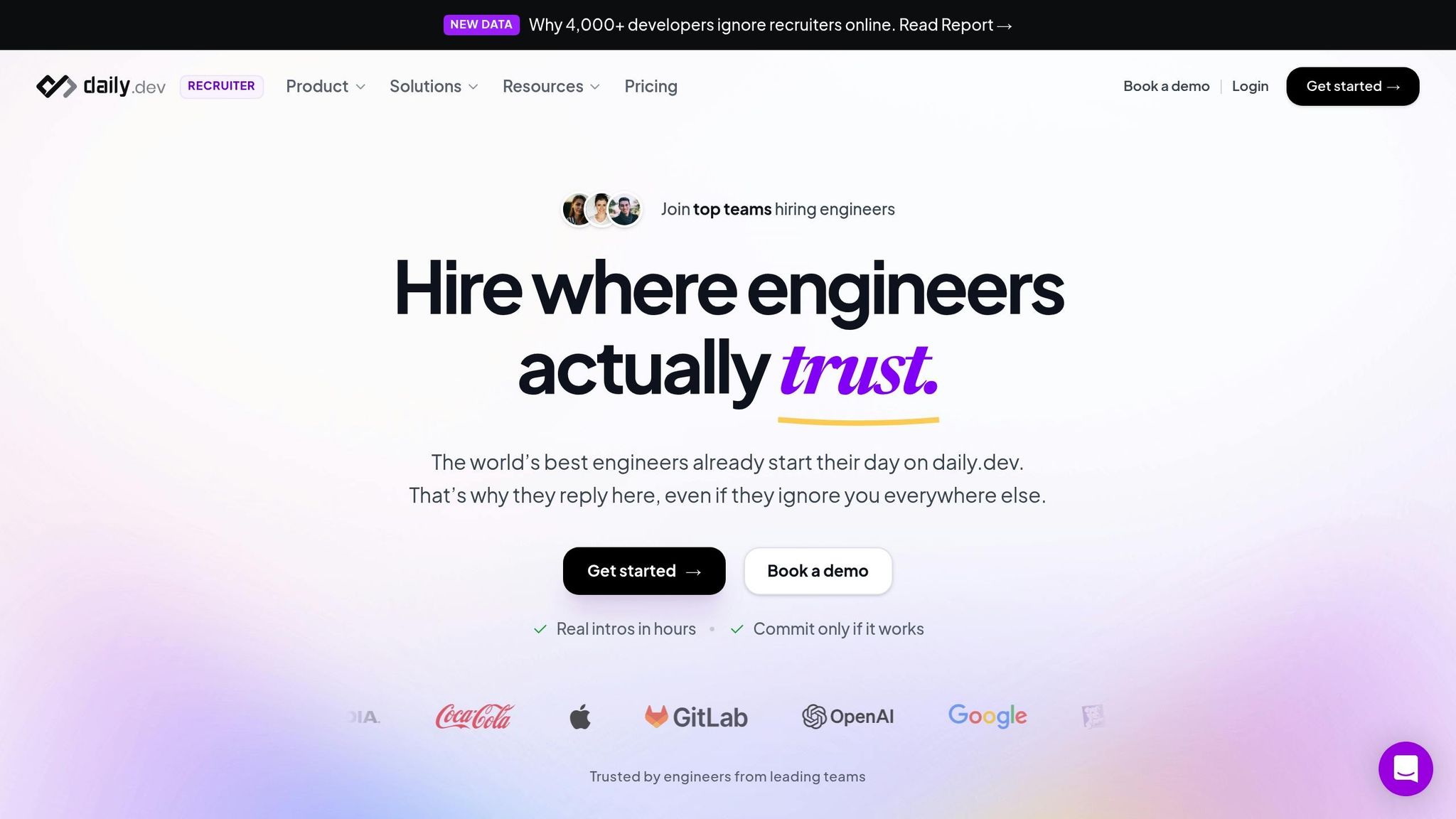
The respectful outreach strategies described above are built into the daily.dev Recruiter platform, which simplifies personalization through automation. Tracking GitHub activity, reading blog posts, and crafting unique messages for every candidate can quickly become overwhelming. That’s where daily.dev Recruiter comes in - it connects you with developers based on live signals, such as what they’re currently reading, learning, or engaging with.
Instead of resorting to cold outreach, the platform enables warm, double opt-in introductions with pre-qualified candidates who are already active and interested. For instance, if a developer is exploring AI/ML topics, they’ll see relevant roles presented as part of their daily workflow, rather than as intrusive spam. The platform even handles initial screening with custom technical questions, ensuring you only engage with candidates who have already expressed interest and alignment.
This thoughtful approach is why 90% of engineers on daily.dev report they don’t respond to outreach from other platforms .
Building a Practical Recruitment Plan
When it comes to recruitment, the key isn't about casting the widest net - it's about meaningful, quality interactions. Instead of bombarding hundreds of people with cold LinkedIn messages, focus on a few active, high-value communities. For example, pick two or three Slack channels or Discord servers where senior engineers discuss backend architecture. Engage authentically there before ever mentioning job opportunities.
While you're connecting in these spaces, refine your internal recruitment strategy to make it more effective and less exhausting for your team. Skip metrics like "messages sent" and instead track the number of warm introductions you secure. Use custom screening questions to filter candidates before scheduling calls - this ensures you're only investing time in the most promising prospects. Thoughtful community engagement paired with a developer hiring platforms vs ATS can make all the difference.
Tools like daily.dev Recruiter simplify this process. Instead of relying on outdated resumes, the platform uses real-time signals to connect you with developers. It integrates seamlessly with your ATS, keeping candidate data organized and free of duplicates. Plus, every introduction is double opt-in, meaning you'll only speak with engineers who are genuinely interested in your role.
This approach shifts recruitment from a numbers-driven grind to a trust-based matchmaking process. Forget static profiles - meet developers where they naturally spend their time. By focusing on their aspirations and what they want to do next, rather than just their past experience, you can create more meaningful matches.
Once you've built this foundation, scale your recruitment efforts thoughtfully. Stay active and consistent in your chosen communities to maintain credibility. At the same time, use tools like daily.dev Recruiter to connect with passive talent - those who may never update their LinkedIn profiles but are still open to the right opportunity. This strategy ensures you're engaging with developers in spaces where they learn, grow, and thrive, not just where they search for jobs.
FAQs
Why do senior DevOps and backend engineers spend more time on GitHub than LinkedIn?
Senior DevOps and backend engineers are drawn to GitHub because it gives them a platform to demonstrate their coding skills, collaborate on impactful projects, and earn credibility through peer-reviewed contributions. While LinkedIn focuses on professional networking and resumes, GitHub stands out by emphasizing technical expertise and practical problem-solving within a community of skilled professionals.
GitHub also offers a stronger way to showcase expertise by highlighting real, hands-on work - whether through open-source projects or private repositories. This approach resonates with engineers who prioritize practical experience, meaningful collaboration, and validation from their peers over conventional networking methods.
How can recruiters connect with senior engineers on platforms like Stack Overflow and Discord?
To connect effectively with senior DevOps and backend engineers, it's essential to engage on platforms where they actively share knowledge and solve problems, such as Stack Overflow and Discord.
On Stack Overflow, take the time to review their answers and contributions. When reaching out, reference specific examples of their work. For instance, you could mention a solution they provided and explain how it aligns with your project or needs. Keep your messages concise, respectful, and easy for them to decline if they're not interested.
On Discord, join relevant servers and participate authentically in ongoing discussions. Contribute by sharing insights or answering questions to build genuine connections. When the time feels right to introduce an opportunity, reference a recent thread or project they discussed. Clearly explain why the role might be a good fit and provide an easy way for them to opt out of the conversation. This approach respects the community's collaborative culture.
By focusing on listening, contributing thoughtfully, and personalizing your outreach, you can transform cold messages into meaningful conversations and build stronger connections with senior engineers.
Why do senior engineers prefer daily.dev for their professional community?
Senior engineers are attracted to daily.dev because it creates a community-focused space designed specifically for them. Instead of relying on generic job boards, the platform delivers personalized content feeds and emphasizes real-world projects, giving engineers a meaningful way to engage and highlight their expertise.
With its double-opt-in model, daily.dev ensures connections are made respectfully and on the engineers' terms. This thoughtful approach not only improves user experience but also strengthens the visibility of skills, making daily.dev a reliable place for professional development and collaboration.
.png)