LinkedIn Recruiter struggles to connect with passive developers because its reliance on cold, generic outreach no longer works. Developers ignore impersonal messages, outdated profiles, and vague job pitches. With response rates dropping to 1–5%, recruiters are pivoting to platforms like daily.dev Recruiter, which focuses on real-time engagement and mutual consent.
Key takeaways:
- Developers want specific, personalized outreach: Mention their GitHub projects or recent work, and provide clear job details like salary ranges ($140,000–$160,000) and tech stacks.
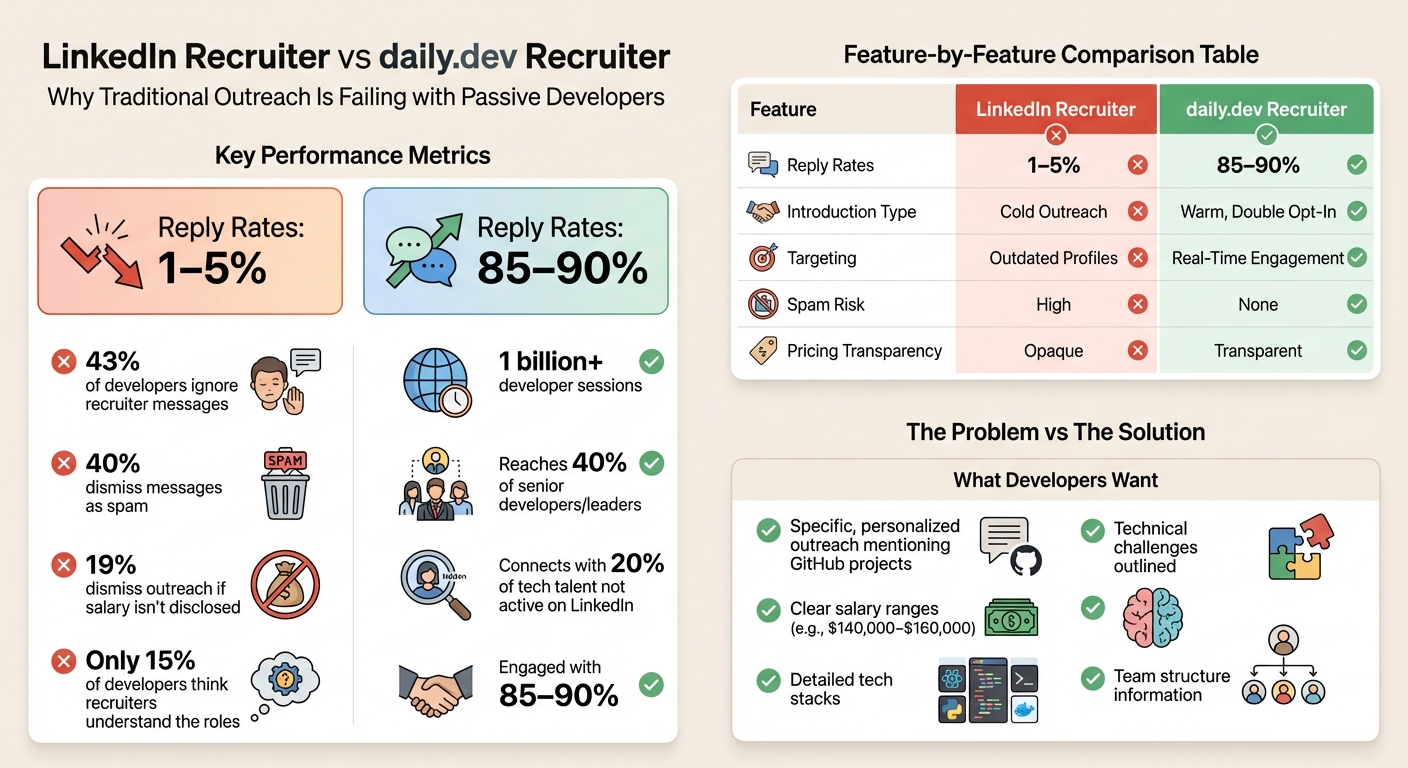
- Generic messages fail: 43% of developers ignore recruiter messages, and 40% dismiss them as spam.
- LinkedIn profiles are outdated: Developers’ current skills and interests are better reflected on platforms like GitHub and Stack Overflow.
- daily.dev Recruiter offers a solution: With a double opt-in system and developer-friendly job briefs, reply rates jump to 85–90%.
Recruiters need to shift from cold outreach to trust-based, relevant connections where developers are already active.
Why LinkedIn Recruiter Fails with Passive Developers
What Passive Developers Actually Want
Passive developers aren't just looking for any job - they're looking for the right job. They want specifics upfront: the tech stack they'll work with, the technical challenges they'll tackle, how the team is structured, and, of course, a clear salary range (e.g., "$140,000–$160,000"). Vague promises or generic buzzwords simply don't cut it.
Here’s the problem: only 15% of developers think recruiters truly understand the roles they’re pitching . When outreach feels like a sales pitch instead of a thoughtful conversation, developers quickly lose interest. What they value is a recruiter who has done their homework - someone who mentions their GitHub projects or references a technical blog post they've written. On the flip side, a copy-pasted message sent to dozens (or hundreds) of other candidates is an instant turn-off.
How Generic Messages Kill Response Rates
Generic, templated messages are a fast track to losing credibility. Starting with something like, "We have an exciting opportunity!" without offering any meaningful context screams laziness. Unsurprisingly, 43% of developers ignore recruiter outreach altogether , and 40% specifically tune out because the messages feel like spam .
Transactional messages - those that ask for a resume or push for an immediate meeting without any effort to build a connection - are especially off-putting. Developers, who often receive 5–10 recruiter messages per week, are quick to ignore anything that doesn't offer immediate, relevant value. If your outreach feels impersonal or pushy, it’s going straight to the digital trash.
InMail Overload and Declining Trust
Developers’ trust in LinkedIn as a platform for genuine career opportunities has taken a hit, thanks to inboxes overflowing with irrelevant messages. For instance, 19% of developers dismiss outreach outright if the salary isn’t disclosed . And automated follow-ups, sent regardless of whether the developer has engaged, only make things worse. These follow-ups often feel intrusive and can lead to recruiters being blocked outright.
"Developers are open to opportunities, but they are increasingly selective about how those opportunities reach them. The challenge is not finding the right candidates, it is getting them to reply." - Nimrod Kramer, Co-Founder and CEO of daily.dev
The damage doesn’t stop at a lack of responses. Generic InMail messages can actively harm your employer brand. Developers remember companies that bombard them with irrelevant or impersonal messages, and they’re far less likely to engage with those companies in the future - even if a genuinely great opportunity comes along.
These missteps in personalization and relevance highlight why LinkedIn Recruiter is struggling to connect with passive developer talent.
How Passive Developers Actually Behave
Where Developers Actually Spend Their Time
Passive developers aren't spending their time scrolling through LinkedIn for new job opportunities. Instead, they're deeply involved in technical communities - reading documentation, contributing to open-source projects, and keeping up with the latest tools and frameworks. Their daily focus revolves around coding, solving technical problems, and staying sharp in their craft.
For example, while a developer's LinkedIn profile might highlight skills in a popular technology, their GitHub activity could tell a different story, showing a growing interest in newer languages or cutting-edge frameworks. Similarly, their contributions on platforms like Stack Overflow reveal the real-time help they're offering to peers, showcasing their expertise and current interests. These platforms provide a more accurate and dynamic view of their skills than a static profile ever could.
This is why traditional profiles often miss the mark. Developers' active engagement on platforms like GitHub and Stack Overflow paints a clearer picture of their evolving technical landscape. Recruiters who focus only on LinkedIn are overlooking the spaces where developers are truly active and engaged.
Why Developers Skip Outdated Profiles and Cold Messages
In the fast-paced tech world, developers quickly outgrow static profiles and lose patience with generic outreach. Their involvement in dynamic technical communities makes cold messages - based on outdated information - feel irrelevant. An InMail referencing old skills or projects assumes too much and fails to address their current focus.
The disconnect is obvious. LinkedIn relies on one-way messaging aimed at profiles that may no longer reflect a developer's reality, which is why many are seeking a LinkedIn Recruiter alternative that prioritizes engagement. In contrast, developers are more likely to respond to personalized outreach that reflects their ongoing projects and interests. They value messages that align with what they’re working on right now, not what they did months - or even years - ago.
How daily.dev Recruiter Solves These Problems
daily.dev Recruiter tackles the challenges of outdated, impersonal outreach by reshaping how recruiters and developers connect. Instead of relying on old profiles or cold messages, the platform introduces a trust-driven approach that engages developers in spaces where they’re already active and in tune with industry trends.
Warm Introductions with Mutual Consent
Forget the awkwardness of cold messaging. daily.dev Recruiter uses a double opt-in system, ensuring that both recruiters and developers agree to connect before any conversation begins. This means recruiters only engage with developers who are genuinely interested, leading to reply rates as high as 85–90%.
"We built a place where engineers can turn off the noise. To enter this space, you don't need a hack. You need trust." - Nimrod Kramer, CEO & Co-Founder, daily.dev
This trust-centered approach ensures every interaction is meaningful. Developers opt in because the opportunity aligns with their interests - not because their profile was randomly pulled from a database. To strengthen these connections, the platform also refines the way job details are shared.
Developer-Focused Job Briefs and Smart Filters
Generic job descriptions? Not here. daily.dev Recruiter introduces developer-friendly job briefs that focus on what truly matters: technical challenges, the tech stack, and growth opportunities. These concise briefs speak directly to developers, addressing the details they care about most when considering new roles.
To make the process even smoother, custom screening questions help pre-qualify candidates before introductions. This step ensures recruiters only connect with candidates who meet specific criteria, saving valuable time for both parties. The platform’s behavioral matching engine takes things further by using real-time data to identify developers based on their current interests - what they’re reading, following, and building right now. This means matches are based on active engagement, not outdated resume keywords from years ago .
Another standout feature is the use of aspiration data. The platform considers what developers want to do next - like transitioning into AI/ML roles - and what they want to avoid, such as moving into management. By aligning opportunities with these preferences, the platform creates stronger matches and boosts engagement .
But it doesn’t stop at better job descriptions. daily.dev Recruiter also connects with developers in the spaces they already frequent.
Reaching Developers in Their Digital Habitat
Instead of disrupting workflows, daily.dev Recruiter integrates job opportunities directly into the daily professional news feed where developers already spend their time. With over 1 billion developer sessions logged on the platform, recruiters gain access to high-quality behavioral data, revealing who’s actively engaged with specific technologies and topics .
This seamless integration makes job opportunities feel like natural suggestions rather than intrusive ads. Developers come across roles while they’re already in a professional mindset - whether they’re reading about a new framework, exploring best practices, or catching up on industry news. The platform also connects with 40% of developers who are senior individual contributors or leaders, including the 20% of tech talent not active on LinkedIn . By meeting developers where they naturally spend their time, daily.dev Recruiter taps into a pool of passive talent that traditional platforms often miss.
Why daily.dev Recruiter Works Better Than LinkedIn Recruiter
daily.dev Recruiter takes a fresh approach to recruiting, tackling the limitations of LinkedIn Recruiter directly by engaging passive developers through personalized, consent-based outreach. While LinkedIn relies on outdated profile data and cold outreach, daily.dev Recruiter connects with developers through real-time engagement and mutual consent. This means matches are based on what developers are actively engaging with, not on skills they listed years ago.
What really sets daily.dev Recruiter apart is its double opt-in system. Developers get to review opportunities before recruiters can reach out, ensuring that only interested candidates are contacted. This leads to an impressive reply rate of 85–90%, compared to the mere 1–5% typical of cold outreach.
Feature Comparison
Here’s a side-by-side look at how these two platforms stack up:
| Feature | LinkedIn Recruiter | daily.dev Recruiter |
|---|---|---|
| Reply Rates | 1–5% | 85–90% |
| Introduction Type | Cold Outreach | Warm, Double Opt-In |
| Targeting | Outdated Profiles | Real-Time Engagement |
| Spam Risk | High | None |
| Pricing Transparency | Opaque | Transparent |
Another key difference is pricing. LinkedIn Recruiter uses a complex, seat-based pricing model that often requires a sales call just to get a quote. In contrast, daily.dev Recruiter offers upfront, transparent pricing, making it easier for hiring teams to plan their budgets.
Conclusion
Outdated cold outreach methods are losing their effectiveness with today’s passive developers. Tools like LinkedIn Recruiter, with its impersonal InMails, often fail to connect meaningfully. Developers are showing a clear preference for trust-based, permission-driven introductions instead of generic messages cluttering their inboxes.
The game-changer here is the move from static profiles to real-time behavioral data. Developers aren’t spending their days polishing LinkedIn profiles - they’re busy reading, learning, and building. Reaching out to them in their natural environments, with tailored, developer-focused job descriptions and mutual consent, not only reduces recruiter fatigue but also builds credibility.
For hiring leaders, this means rethinking their strategies. Be transparent: include clear salary ranges in USD, specify exact tech stacks (e.g., "React 18 and Node.js" instead of just "JavaScript"), and highlight tangible technical challenges. This approach respects developers' time and shows you're serious about finding the right match.
The future of developer recruiting isn’t about casting a wider net; it’s about creating meaningful connections. By prioritizing trust over volume and context over cold outreach, you don’t just fill positions faster - you lay the groundwork for lasting relationships with developers who can truly drive your team forward.
FAQs
Why do passive developers respond better to personalized outreach?
When reaching out to passive developers, a personalized touch can make all the difference. These individuals are far more likely to respond to messages that highlight their unique skills, past projects, or specific interests. Such an approach shows that you’ve put in the effort to understand them, which goes a long way in building rapport. On the flip side, generic or overly broad messages often come across as impersonal and are usually ignored.
To stand out, focus on personalization in your outreach. Clearly outline the details of the role and demonstrate that you’ve done your research. This not only catches their attention but also builds trust, increasing the likelihood of meaningful engagement.
How does a double opt-in system enhance communication with passive developers?
A double opt-in system ensures that developers actively confirm their willingness to hear from a recruiter before any communication begins. This intentional step transforms the interaction into a mutual exchange rather than an intrusive outreach, helping to build confidence and a sense of partnership - both key elements when trying to engage passive talent.
By narrowing the focus to developers who have opted in, recruiters can concentrate on a smaller, more interested group. This not only boosts response rates but also cuts down on the clutter caused by impersonal cold emails. Plus, the opt-in process offers valuable insights into a developer’s preferred way of communicating and the best times to reach out. With this information, recruiters can craft tailored messages that align with the developer’s interests, creating a more meaningful connection and laying the groundwork for long-term relationships.
Why is engaging with developers in real-time more effective than using outdated profiles?
Real-time engagement taps into a developer's current activities and interests, enabling outreach that feels tailored and timely. This kind of personalized communication not only builds trust but also demonstrates genuine effort, increasing the chances of a positive response.
On the flip side, using outdated profiles often leads to generic, one-size-fits-all messages that miss the mark. Developers are quick to ignore outreach that doesn’t align with their present skills, projects, or career aspirations. That’s why staying up-to-date with real-time insights is key to fostering meaningful connections.
.png)