Your ATS could be the reason you're losing top developer talent. Common issues like poor resume parsing, rigid keyword matching, and clunky application processes frustrate candidates and hide qualified applicants. Here’s what you need to know:
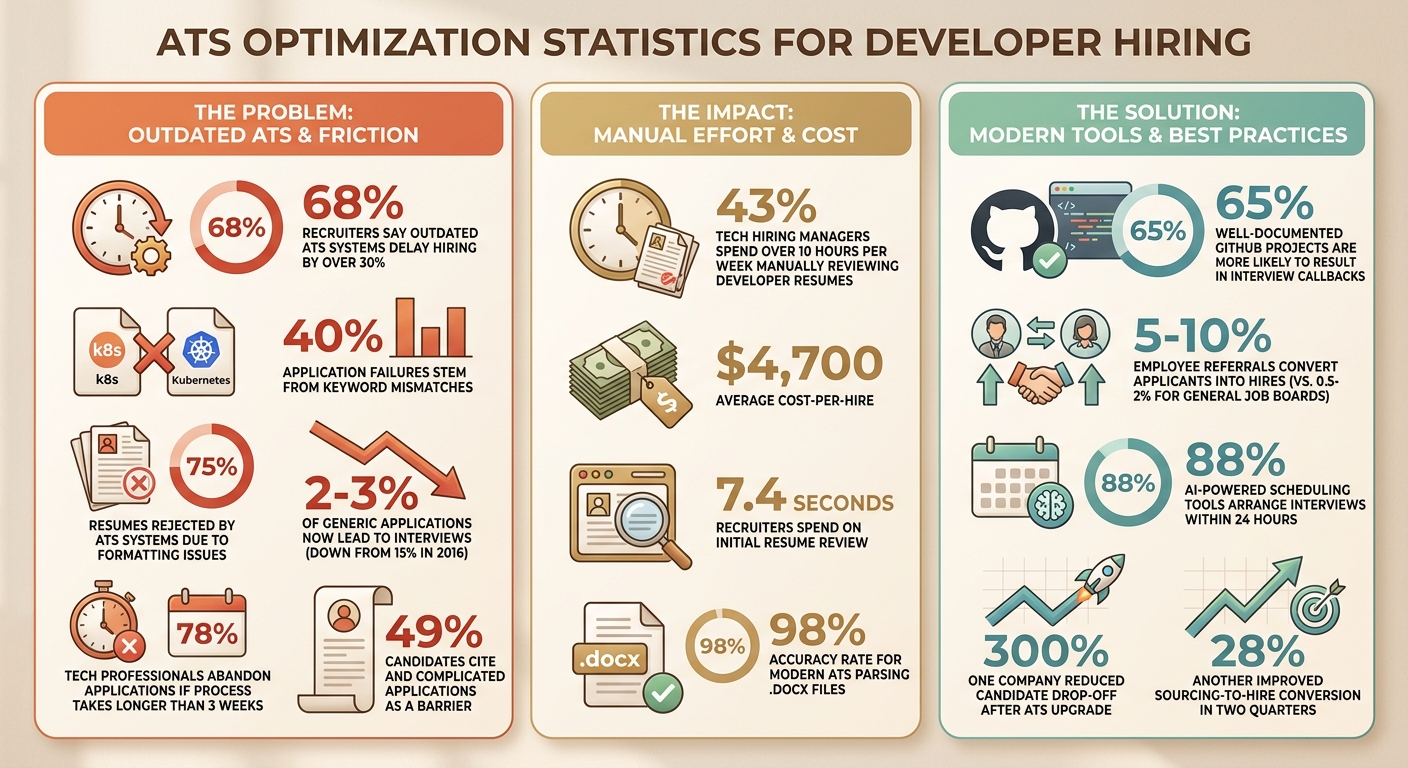
- 68% of recruiters say outdated ATS systems delay hiring by over 30%.
- 40% of application failures stem from keyword mismatches. For example, "k8s" might not match "Kubernetes."
- Developers abandon long, repetitive applications - only 2-3% of generic applications now lead to interviews, compared to 15% in 2016.
- Poorly configured ATS systems often auto-reject resumes due to parsing errors or formatting issues.
To fix this, focus on:
- Simplifying applications: Enable one-click apply and mobile-friendly forms.
- Improving resume parsing and matching: Use AI to analyze skills, not just keywords.
- Integrating developer tools: Connect platforms like GitHub and coding assessments.
- Customizing pipelines: Tailor the process for technical roles with coding tests and structured interviews.
The right ATS features and configurations can save time, reduce drop-offs, and attract top talent. Tools like Greenhouse, Lever, and Ashby offer tailored solutions for tech hiring. Pairing these systems with platforms like daily.dev Recruiter ensures you’re engaging motivated developers from the start.
Why Most ATS Systems Drive Developers Away
Developers are quick to reject hiring processes that come with unnecessary hurdles. A convoluted application process often signals deeper inefficiencies within an organization, leaving candidates wondering if the company is up to the task of managing complex technical challenges. Let’s take a closer look at how long forms, repetitive data entry, and irrelevant questions create this friction.
Long Application Forms Discourage Developers
Lengthy, multi-page application forms are a major turnoff. Top developers simply won’t waste time on applications that demand excessive effort upfront. The bigger issue? Many never complete the process at all.
Rigid keyword matching only makes things worse. For example, a developer who lists "k8s" instead of "Kubernetes" could be unfairly filtered out - not because they lack the skills, but because the system fails to recognize common industry shorthand .
Duplicate Data Entry Wastes Candidate Time
Requiring candidates to re-enter information that’s already in their resume is a surefire way to frustrate them. Modern ATS platforms can parse over 98% of .docx files accurately , yet many still force applicants to manually fill out redundant fields.
When parsing errors occur - often due to nonstandard formatting - candidates may simply give up. Considering that recruiters spend just 7.4 seconds on an initial resume review , it’s clear that accurate, automated data extraction is critical. Inefficiencies like these not only waste time but also reflect poorly on the company’s technical capabilities.
Generic Questions That Miss the Mark
Beyond technical issues, poorly thought-out screening questions can alienate candidates. Questions like "Describe your ability to thrive in ambiguity" or "What are your salary expectations?" feel disconnected from the technical skills required for the role. They suggest the position may be poorly defined or come with responsibilities unrelated to the candidate’s expertise .
"Most companies aren't rejecting you. They're rejecting your pdf's ability to survive a text parser." – Tom Smykowski, Staff Software Engineer
Focusing on vague, soft-skill platitudes instead of technical competencies creates a disconnect between what developers bring to the table and how they’re evaluated. Developers would much rather discuss architectural tradeoffs or coding challenges using developer assessment tools than engage with corporate buzzwords. With the average cost-per-hire nearing $4,700 , losing top talent to an inefficient process is an expensive mistake no company can afford.
ATS Features That Actually Matter for Developer Hiring
Not all ATS platforms are created equal. When it comes to hiring developers, the right features can mean the difference between losing top talent and building a strong pipeline. Many generic recruiting systems fall short because they lack the tools needed to address the unique challenges of tech hiring, like long forms and duplicate data entry. The features below tackle these issues head-on and help streamline the process for engaging with technical talent.
GitHub and Developer Platform Integrations
Integrating your ATS with platforms like GitHub, Stack Overflow, and coding assessment tools can transform how you evaluate candidates. These connections allow you to see a developer’s actual contributions to coding projects, their participation in tech communities, and their technical interests - details that traditional resumes often fail to capture.
For example, platforms like HackerRank, Codility, and CodeSignal can seamlessly sync with modern ATS systems. This means recruiters can access coding test results directly within the ATS, without the hassle of switching tabs or manually transferring data. By centralizing this information, you can cut down on administrative tasks and keep the feedback loop short.
"Your ATS is more than simply a tool; it's an ecosystem decision. Even the most fancy dashboards will fail if they do not match your recruiting process, tech stack, and engineering culture." – Elena Cacean, People and Operations Manager, Index.dev
Automatic Skills Parsing and Matching
AI-powered resume parsing has come a long way. The best ATS systems don’t just pull out job titles and dates - they analyze resumes to identify key technical skills and match them to the requirements of the role. This process goes beyond keyword matching, offering a competency score that ranks candidates based on how well their skills align with your needs.
Considering that 43% of tech hiring managers spend over 10 hours a week manually reviewing developer resumes , an ATS with advanced skills parsing can save significant time and effort. These features help eliminate inefficiencies and set the stage for smoother technical interviews.
Custom Pipelines for Technical Interviews
Hiring developers requires a different approach to recruitment processes than hiring for other roles. Standard recruitment pipelines don’t cut it when you need to incorporate take-home assignments, live coding sessions, and technical assessments. That’s where custom pipelines come in.
Tools like Greenhouse and Ashby allow you to create flexible pipelines tailored to specific technical roles or regions. These pipelines can include structured interview processes and automated tools to detect bottlenecks. With 78% of tech professionals abandoning applications if the process takes longer than three weeks , identifying where candidates drop off - whether during a coding test or a team interview - is crucial. Custom pipelines also support objective scoring and help reduce bias, ensuring fair and consistent evaluations .
The right ATS goes beyond candidate tracking. It actively supports the unique demands of technical hiring, helping you move quickly enough to secure top talent while maintaining a fair and efficient process.
How to Set Up Your ATS for Developer Applications
The way you configure your ATS (Applicant Tracking System) plays a crucial role in whether developers complete or abandon your application process. With nearly half of candidates (49%) citing long and complicated applications as a barrier , every decision you make impacts your ability to attract top talent. By addressing common ATS pitfalls, you can transform the application process into a smooth and efficient experience for candidates.
Enable One-Click Apply
Streamline the application process by enabling one-click apply options through platforms like LinkedIn or GitHub. This allows candidates to submit their existing profiles without the hassle of manually entering data . It’s a simple yet effective way to eliminate duplicate entry issues and encourage more applications.
To further simplify the process, limit the initial application to just the essentials: name, contact information, and a resume or profile link. Save more detailed questions for later stages . Additionally, optimize your application for mobile devices since developers often browse and apply on the go, such as during commutes .
Accept Portfolio and GitHub Links
Make it easy for candidates to showcase their technical skills by adding custom fields in your ATS for "GitHub URL", "Portfolio", or "Code Samples." These fields allow recruiters to quickly access and evaluate coding samples .
Encourage applicants to include live project links, such as deployments on GitHub Pages or Vercel. These live examples, paired with detailed README files, provide a clear demonstration of a developer's abilities. In fact, well-documented projects are 65% more likely to result in interview callbacks .
"A resume tells people what you know, but a GitHub portfolio shows how you use that knowledge." – TalentSprint
Be mindful of technical limitations in some ATS platforms. For instance, pre-signed attachment URLs might expire after seven days. If you’re integrating or syncing data, ensure portfolio files are downloaded and stored locally rather than relying on temporary links .
With the technical portfolio links in place, focus on reducing friction by eliminating unnecessary screening questions.
Limit Screening Questions to What Matters
Keep screening questions to an absolute minimum. Start with the basics - name, contact details, and a portfolio or GitHub link . If additional questions are necessary, ensure they are directly tied to the technical requirements of the role rather than generic administrative details that can be pulled from resumes or profiles.
"The application process often determines whether qualified candidates complete their submissions or abandon them halfway through." – Jen Dewar, JobScore
Test your application flow with sample candidates to identify and remove unnecessary steps . Use automation tools for tasks like scheduling interviews and sending status updates, allowing you to focus on evaluating role-specific qualifications . Keep in mind that around 75% of resumes are rejected by ATS systems due to formatting issues, so clarity and standardization are key .
| Question Category | Priority Level | Purpose |
|---|---|---|
| Technical Portfolio/GitHub | High | Provides direct evidence of coding skills |
| Generic/Administrative | Low | Should be automated to reduce candidate friction |
When Automation Helps and When It Hurts
Automation can either speed up your developer hiring process or unintentionally filter out great candidates before anyone even sees their applications. This ties back to earlier advice about making application systems smoother by fine-tuning your ATS. The trick is figuring out where automation adds value without replacing critical human judgment.
Helpful Automations: Interview Scheduling and Updates
Automation shines when it comes to cutting down on administrative tasks. For instance, sending automated acknowledgments right after someone applies is a small but impactful step - it reassures candidates their application was received . Similarly, interview scheduling tools that sync with calendars can eliminate the back-and-forth of email coordination. In fact, AI-powered scheduling tools have been shown to arrange 88% of interviews within 24 hours .
Automated status updates are another game-changer. Configuring your ATS to send personalized emails as candidates move through the hiring stages - like "Application Received", "Technical Review", or "Interview Scheduled" - keeps applicants informed and engaged. This kind of proactive communication can prevent that dreaded "black hole" feeling, where candidates lose interest and look elsewhere . On the internal side, real-time alerts via Slack or Teams keep your hiring team aligned without constant manual updates .
These automations improve the candidate experience and streamline internal workflows. But if used carelessly, automation can also create barriers.
Auto-Rejection Risks and How to Avoid Them
While automation boosts efficiency, poorly configured systems can accidentally weed out qualified candidates. For example, auto-rejection features based on rigid keyword matching or formatting issues can lead to missed opportunities. Interestingly, only 8% of recruiters set their ATS to auto-reject based on content, using it mostly for organization . However, about 75% of resumes never make it past ATS filters - often due to technical parsing errors rather than a lack of qualifications .
"Overreliance on keyword filters risks overlooking qualified candidates because of terminology or formatting discrepancies." – John Baldino, President of Humareso
Take developers who use design tools like Figma to create portfolios. If they export their resumes as images, most ATS systems can’t process the text .
To avoid losing great talent, ensure a recruiter reviews resumes flagged as low-scoring by the ATS. These systems aren’t foolproof talent evaluators . You can also adopt anonymized screening and structured scoring to reduce AI bias , and regularly review your filtering criteria to catch qualified candidates who might be excluded due to technical issues or unconventional formatting . This aligns with the broader goal of offering a more personalized and thoughtful candidate experience throughout the ATS process.
How to Measure Your ATS Performance
To make the most out of your Applicant Tracking System (ATS), you need clear metrics to evaluate its performance. These insights help you identify where candidates drop off and fine-tune your hiring process. The right data can show whether your system supports or hinders your technical hiring efforts.
Track Time-to-Fill for Developer Roles
Time-to-fill measures the number of days between posting a job and receiving an accepted offer. For developer roles, delays here can mean losing candidates to quicker competitors. Break this metric down by specific roles - like backend, frontend, or DevOps - to uncover unique challenges. For instance, if hiring a senior backend engineer consistently takes over 60 days while competitors fill similar roles in 30–40 days, your ATS workflow may have bottlenecks that need fixing.
Monitor Application Drop-Off Rates
Drop-off rates highlight where candidates are abandoning the process. Key metrics include the percentage of candidates completing applications, moving from screening to interviews, and converting from interviews to offers.
Hot Topic, hiring over 1,500 employees each quarter, reduced candidate drop-off by 300% in 2025 after upgrading to an ATS with custom automation and chatbot features . To identify problem areas, periodically test the application process. For example, a high drop-off during technical assessments could mean the assessments are too lengthy or poorly integrated with your ATS.
When combined with source attribution, drop-off rates provide a full picture of your recruitment funnel's strengths and weaknesses.
Analyze Source Quality and Attribution
Not all candidate sources are equally effective. Track which channels - such as employee referrals, GitHub, LinkedIn, or niche job boards - produce hires who perform well. For example, employee referrals often convert 5–10% of applicants into hires, while general job boards typically see only 0.5–2% conversion . Your ATS should automatically tag candidates by source and calculate conversion rates for each channel. One scale-up improved their sourcing-to-hire conversion by 28% in just two quarters by leveraging ATS and CRM automation to monitor these patterns .
| Metric | What It Reveals | Red Flag Threshold |
|---|---|---|
| Application to Screen | Quality of applicant pool vs. job requirements | Below 5% (misalignment with job/source) |
| Screen to Interview | Effectiveness of initial technical screening | Below 20% (screening criteria too strict) |
| Interview to Offer | Alignment between recruiter and hiring manager | Below 10% (disagreement on candidate fit) |
| Offer to Acceptance | Competitiveness of offers and experience | Below 80% (issues with process or pay) |
ATS Platform Comparison for Tech Recruiting
Once you've evaluated your current ATS performance, it's time to explore platform options that align with your technical hiring needs, team size, and workflow. A well-suited ATS not only improves the hiring process for developer candidates but also reflects your organization's operational efficiency. Here's a breakdown of some leading ATS platforms to help you make an informed decision.
When selecting an ATS for developer hiring, the goal isn't to pick the most popular option - it’s about finding the one that fits your hiring volume, team size, and technical requirements. Let’s dive into the options:
Greenhouse is a favorite among enterprises, offering over 400 integrations with developer-focused tools like HackerRank, Codility, and CodeSignal. It also uses Real Talent AI for predictive candidate scoring . However, it’s worth noting that Greenhouse has a steep learning curve and requires a 4–8 week implementation period .
Lever combines ATS and CRM functionality, making it ideal for nurturing passive developer talent. Features like automated email sequences and long-term pipeline tracking are particularly useful. For example, a 300-person SaaS startup reported a 28% improvement in sourcing-to-hire conversion after adopting Lever . It’s a strong choice for mid-sized teams focused on building talent pipelines over 6–12 months.
For startups experiencing rapid growth, Ashby stands out with its modern, analytics-driven interface. It integrates seamlessly with tools like GitHub and Notion, helping teams identify bottlenecks in technical interviews without relying on third-party add-ons . Plus, it boasts a quick 1–2 day setup time compared to the weeks required by enterprise systems .
Workable caters to small and mid-sized businesses with its AI-powered Interview Copilot, which generates structured notes and flags unconscious bias . It also includes access to a massive 400-million candidate pool, surfacing passive candidates for challenging roles .
Pricing and Technical Compatibility
Pricing varies widely across platforms. Workable offers starter plans at $149–$169 per month, whereas Greenhouse can cost between $6,000 and $25,000+ annually, depending on your hiring volume and system complexity . Before committing, ensure the ATS integrates smoothly with your existing tools - like Slack, GitHub, or coding assessment platforms - by checking vendor integration directories . Running a trial hiring process with simulated candidates is also a smart way to identify potential friction points in the application flow .
Feature Comparison Table
| Feature | Greenhouse | Lever | Ashby | Workable |
|---|---|---|---|---|
| Best For | Enterprise / Structured Hiring | Mid-market / CRM Nurturing | High-growth Startups / Analytics | SMB to Mid-market / AI Sourcing |
| Integrations | 400+ (Extensive) | 200+ (Strong) | 50–200+ (Developer-friendly) | 70+ (Solid) |
| Key Tech Feature | Real Talent AI scoring | CRM pipeline automation | GitHub & Notion integration | AI Interview Copilot |
| Setup Time | 4–8 weeks | 1–6 weeks | 1–2 days | 1–3 days |
| Learning Curve | Steep | Moderate | Easy | Moderate |
| Annual Pricing | $6,000–$25,000+ | $3,500–$20,000 | $6,000–$15,000 | $1,788–$7,188 |
This comparison highlights the key differences between these platforms, helping you determine which ATS aligns best with your technical hiring goals.
Connecting daily.dev Recruiter to Your ATS
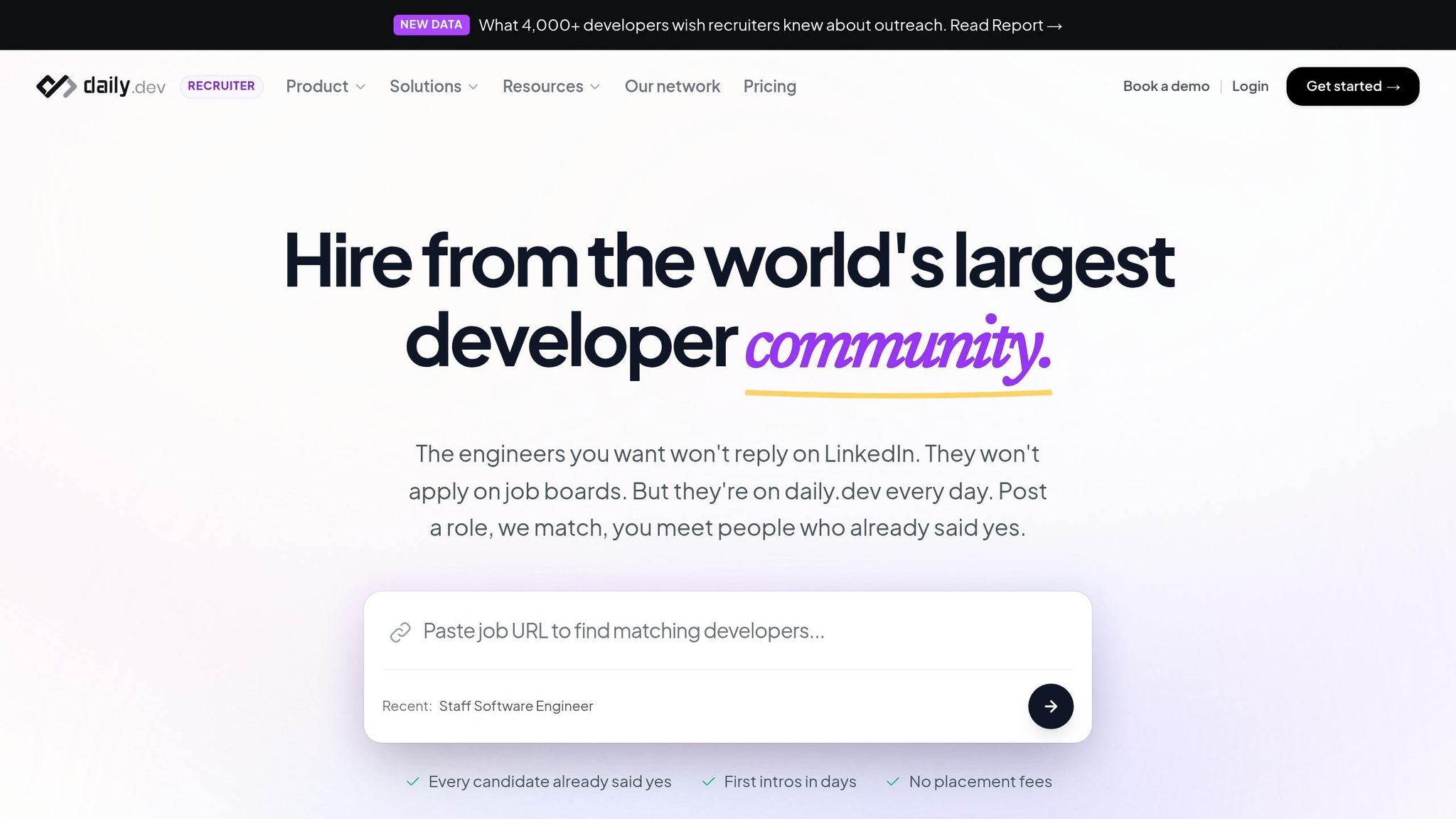
Once your ATS is fine-tuned, the next step is ensuring your pipeline is filled with motivated, qualified developers. That’s where daily.dev Recruiter steps in, working hand-in-hand with your ATS to provide warm, double opt-in connections with developers who are ready to engage.
How daily.dev Recruiter Feeds Your Pipeline
daily.dev Recruiter integrates smoothly with leading ATS platforms like Greenhouse, Lever, and Ashby, making the transfer of candidate information effortless . When a developer on daily.dev reviews your job brief and decides to engage, their profile - including details like what developers want, including technical interests, learning preferences, and career history - flows directly into your ATS.
Here’s the kicker: the integration comes with built-in deduplication. This means you won’t accidentally reach out to the same developer multiple times across platforms. Plus, custom screening questions sync directly to the candidate’s profile, eliminating the dreaded "upload your resume, then re-enter everything manually" scenario that often frustrates candidates and causes them to drop off.
Unlike traditional sourcing tools that flood your system with cold leads, daily.dev Recruiter provides a steady stream of warm introductions. Developers review concise job briefs that emphasize real technical challenges, and only those genuinely interested choose to connect. This double opt-in approach brings only engaged candidates into your pipeline, cutting down on wasted time and ensuring your ATS stays focused on tech recruiting. This transparency is a core component of ethical tech recruitment that builds long-term trust with the developer community.
Better Candidate Experience from First Contact
The benefits don’t stop at automated data syncing. daily.dev Recruiter also enhances the candidate experience by meeting developers in their element - while they’re already immersed in technical content and learning. This means candidates come into your pipeline with a clear understanding of your company and the role, avoiding the confusion often seen with cold applicants.
This approach creates a smoother transition into your ATS process. By aligning candidate expectations from the very beginning, your ATS workflow becomes more efficient. Candidates receive a warm introduction, reducing drop-offs and boosting engagement throughout your hiring funnel. It’s a win-win for both recruiters and developers.
Conclusion
Your ATS serves as the first glimpse developers get of your engineering culture. If the application process makes candidates re-enter resume details, answer generic questions, or deal with a clunky interface, it sends a negative message about your organization - before they even meet your team. The fix? Adjust your ATS to align with developers' workflows and respect their time. This sets the stage for meaningful improvements.
Focus on streamlining the process: enable one-click applications, integrate tools like GitHub and coding platforms, and eliminate redundant data entry. Use smart automations for tasks like interview scheduling and status updates, but steer clear of auto-rejecting candidates based solely on keyword mismatches. Track key recruitment metrics like time-to-fill, drop-off rates at each stage, and source quality attribution to pinpoint where potential candidates fall through the cracks.
ATS platforms such as Greenhouse, Lever, and Ashby each bring specific strengths. Greenhouse is ideal for enterprise compliance, Lever combines sourcing with ATS features, and Ashby provides built-in analytics for teams that rely on data insights. Choosing the right developer hiring platform tailored to your team’s size and goals can make all the difference.
Pairing a well-configured ATS with daily.dev Recruiter takes developer hiring to the next level. By aligning applicant data with what developers expect, daily.dev Recruiter fosters stronger engagement from the first interaction through to the offer stage. Its double opt-in model ensures that candidates enter your pipeline with genuine interest and context, avoiding the cold leads that often disengage after initial outreach - exactly the kind of approach developer hiring demands in 2026.
FAQs
How can I tell if our ATS is rejecting good developers?
When you notice patterns like automatic rejections of candidates with solid experience, overly strict filters that exclude qualified individuals, or a lack of responses even when resumes are tailored to the role, it’s time to dig deeper. These problems often arise from poorly set filters or screening parameters that don’t match the actual needs of the position. To avoid this, take the time to review your ATS settings regularly. Make sure the system emphasizes relevant skills and experience instead of relying on inflexible criteria.
What’s the fastest ATS change that reduces application drop-off?
The fastest way to cut down on application drop-offs is by adding one-click apply and letting developers include links to their portfolios. These options streamline the process, reduce barriers, and make applying much easier for candidates.
Which ATS metrics matter most for developer hiring?
When it comes to hiring developers, two metrics stand out: time to fill and source of hire.
- Time to fill measures how quickly you can close open positions. It’s a direct reflection of how efficiently your hiring process is operating.
- Source of hire tracks where your successful candidates are coming from, giving insight into which sourcing channels are working best.
By keeping an eye on these metrics, you can spot bottlenecks in your process and refine your strategies to make hiring for technical roles smoother and more effective.
.png)