LinkedIn Recruiter is losing favor among tech recruiters due to high costs, limited engagement from developers, and inefficiencies in sourcing talent. If you're looking for better options, here are six platforms that cater to specific hiring needs:
daily.dev Recruiter: Focuses on real-time developer activity and double opt-in connections to avoid spam.
SeekOut: Aggregates data from platforms like GitHub and Stack Overflow, offering AI-driven candidate sourcing.
Hired: A reverse marketplace where companies apply to pre-screened, high-intent candidates.
Stack Overflow Jobs: Reaches developers actively solving technical challenges and engaging on the platform.
GitHub Jobs: Highlights developers' actual code contributions and technical expertise.
AngelList (Wellfound): Tailored for startups, connecting them with candidates passionate about early-stage roles.
Quick Comparison
| Platform | Best For | Key Features | Limitations |
|---|---|---|---|
| daily.dev Recruiter | Passive talent, real-time signals | Double opt-in, behavioral matching | Smaller candidate pool |
| SeekOut | Large-scale, diverse sourcing | AI tools, GitHub/Stack Overflow data | Expensive, steep learning curve |
| Hired | Pre-vetted active candidates | Salary transparency, reverse outreach | Limited passive talent, niche focus |
| Stack Overflow Jobs | Engaged developers | Q&A-based validation, active users | Smaller, niche audience |
| GitHub Jobs | Verified technical skills | Real-time code contributions | Manual sourcing, smaller pool |
| AngelList (Wellfound) | Startup-focused hiring | Free tier, startup-specific filters | Less effective for senior/specialized roles |
Each platform suits different hiring needs. For startups, AngelList’s free tier is a good starting point. For active vs passive developer recruitment, daily.dev Recruiter and GitHub Jobs stand out as top choices for reaching non-active seekers. Enterprises may prefer SeekOut for its scale and diversity tools. Choose based on your budget, hiring volume, and the type of talent you're looking to connect with.
::: @figure 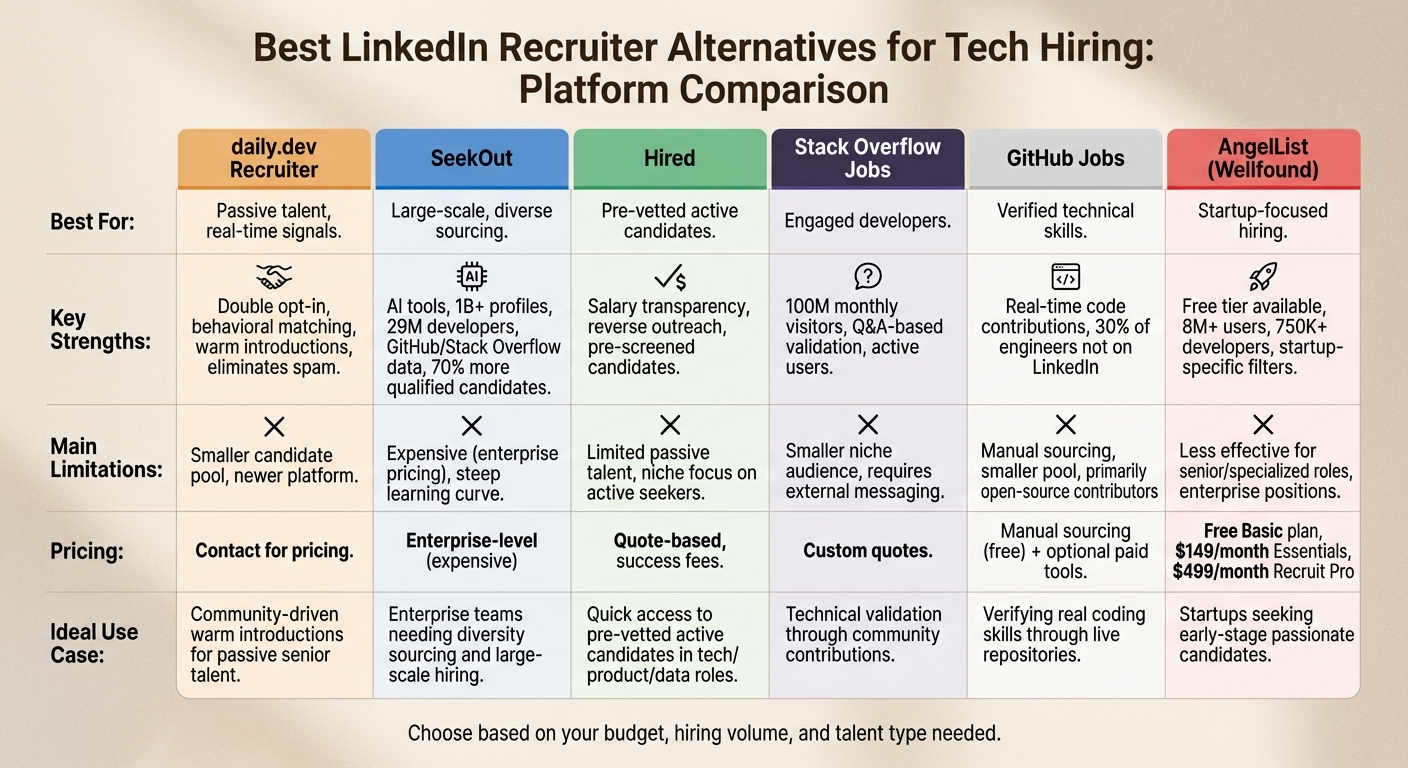 {LinkedIn Recruiter Alternatives Comparison: Features, Strengths and Pricing for Tech Hiring}
1. daily.dev Recruiter
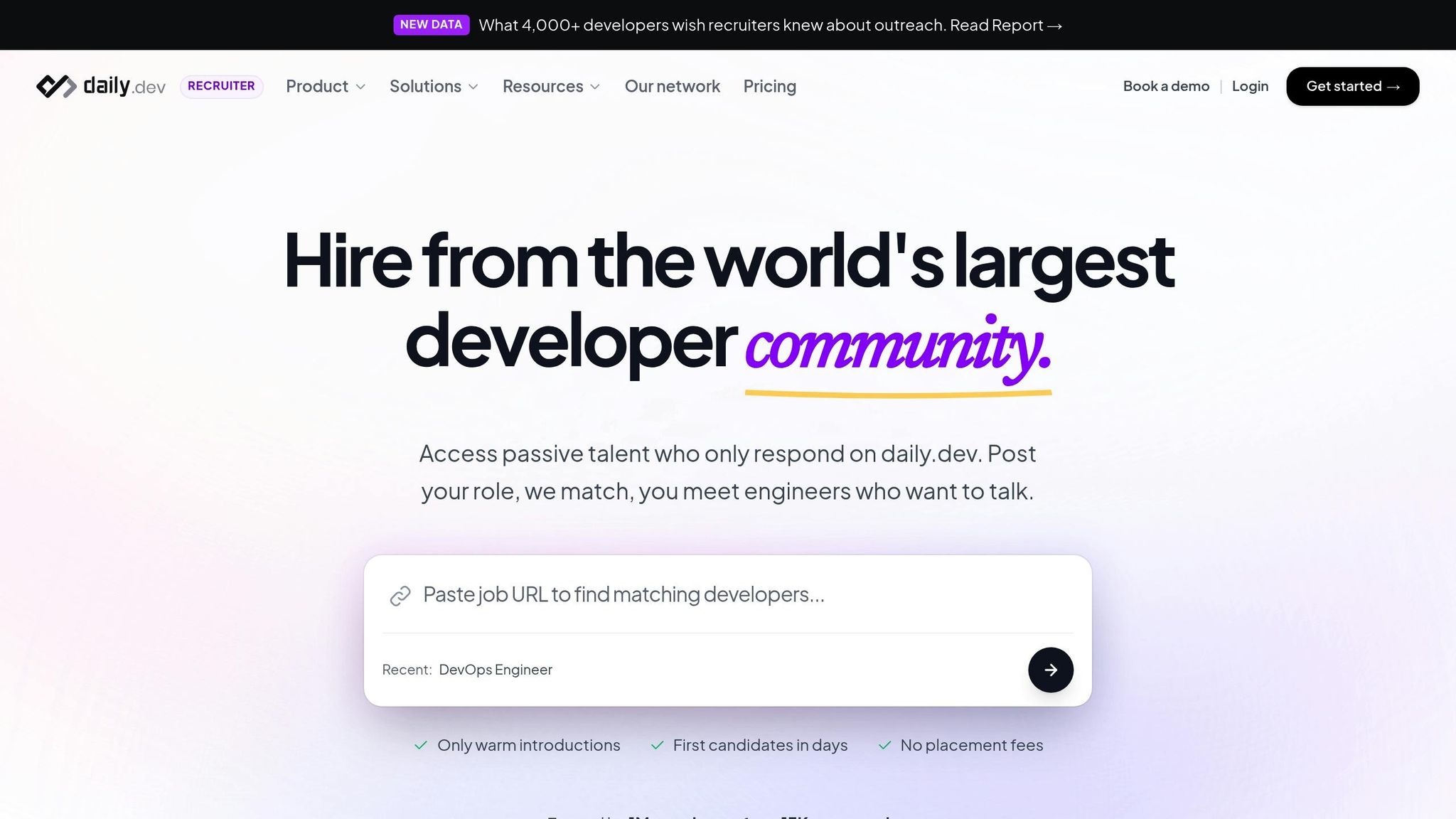
daily.dev Recruiter connects with developers through the tech content they’re already engaging with. Instead of relying on cold outreach - which developers often ignore - the platform uses a double opt-in system. This means both the recruiter and the developer must express interest before any communication begins. This "TinDev" approach eliminates spam and avoids the frustrations that have driven many developers away from platforms like LinkedIn.
Developer Engagement Quality
daily.dev matches opportunities to developers based on real-time behavioral signals, rather than outdated resume keywords. For instance, if a developer is actively reading about Kubernetes, exploring Rust, or diving into distributed systems, these activities inform the opportunities they’re shown. Job postings appear directly in their daily browser feeds, making the process seamless. This ensures developers see roles that align with their current skills and interests - not what they listed on a profile years ago. The platform focuses on creating meaningful, context-driven connections while respecting the developer's time and attention.
Trust and Spam Prevention
The double opt-in model ensures developers remain in control of their contact details, which are only shared after explicit consent. Recruiters can include up to three custom screening questions for developers to answer during the opt-in process, helping to identify qualified technical candidates before any discussions take place. This privacy-first approach fosters secure, intentional connections, replacing the need for intrusive cold emails or endless screening calls. The result is a process built on trust, where both parties engage with clear intent.
Accessing Passive Talent
daily.dev goes beyond active job seekers by connecting with developers who are constantly honing their skills. Unlike static LinkedIn profiles, the platform engages with passive candidates - developers who may not be job hunting but are actively learning, contributing, and consuming tech content. These are professionals refining their craft daily, making them reachable during moments of professional curiosity. With daily.dev, recruiters gain access to a global network of software engineers who might not have updated their profiles in months but are still deeply engaged in their field.
Real-Time Data Accuracy
Thanks to real-time behavioral signals, daily.dev ensures its matching process stays current. It doesn’t rely on outdated, self-reported skills or titles that may no longer reflect a developer’s true abilities. Instead, the platform captures developers' evolving interests and learning journeys as they happen. This gives recruiters insight into where candidates are headed, not just where they’ve been, ensuring better matches and more relevant conversations.
Hiring engineers?
Connect with developers where they actually hang out. No cold outreach, just real conversations.
2. SeekOut
SeekOut compiles public data from platforms like LinkedIn, GitHub, and Stack Overflow into a massive database of over 1 billion profiles. This includes 29 million developers and 13 million GitHub profiles, making it a go-to tool for building large candidate lists through recruiter-driven cold outreach .
Passive Talent Access
By leveraging semantic AI, SeekOut can identify up to 70% more qualified candidates compared to traditional keyword searches . One standout feature is its Position Magnet Tool, which helps recruiters pinpoint candidates with backgrounds similar to engineers at top companies like Google. This tool is particularly useful for market mapping and gaining competitive insights.
For a deeper dive into technical skills, SeekOut integrates with GitHub to provide a "Coder Score", rated on a 1-to-5-star scale. It also consolidates repository collections and coding projects, giving recruiters a snapshot of a candidate’s technical expertise before reaching out. While this AI-powered approach broadens the talent pool, it differs from platforms that rely on real-time behavioral data.
Data Freshness
SeekOut’s strength lies in its scale, but it’s important to note that its data comes from aggregated and inferred public profiles. This means the information might not always reflect the most recent activities or updates from developers, especially if profiles haven’t been updated in a while. Some industry comparisons highlight this as a potential drawback, as it can lead to outdated or less reliable data.
Outreach Methods
Recruiters using SeekOut rely on cold outreach methods such as email, social media, or InMail to initiate contact, as the platform doesn’t enable direct developer engagement. It integrates seamlessly with major ATS platforms like Workday, Greenhouse, iCIMS, Bullhorn, Lever, and SAP SuccessFactors. Pricing is structured around fixed seats or annual subscriptions, catering to teams of varying sizes.
3. Hired
Hired takes a different approach to hiring by flipping the script. Instead of recruiters reaching out to candidates, this platform allows companies to apply directly to pre-screened candidates who are open to new opportunities.
Developer Engagement Quality
Hired offers a talent pool of high-quality candidates. Everyone on the platform is actively interviewing and has already been pre-screened using developer assessment tools for their technical skills. This ensures a focused, high-intent group of professionals, reducing the competition recruiters often face when sourcing talent.
Trust and Spam Levels
The platform's reverse marketplace structure helps minimize spam. Candidates maintain control over who can contact them and share their salary expectations upfront. This creates a more respectful and efficient hiring process, with outreach tailored to what the candidate is looking for.
Pricing Models
Hired uses a quote-based pricing system that typically includes success fees when a hire is made. This means costs are tied to actual results, not upfront fees for access or seat licenses. The exact pricing depends on your company's size and hiring needs.
Passive Talent Access
Hired focuses on a smaller, specialized pool of candidates, concentrating on tech, product, and data roles. If you're building a team in these areas, the platform’s niche focus can be a strong fit.
4. Stack Overflow Jobs
Stack Overflow Jobs has shifted its focus from traditional job postings to prioritizing employer branding, now operating under the "powered by Indeed" model. This change highlights Stack Overflow's emphasis on creating deeper connections with developers.
Developer Engagement Quality
With over 100 million monthly visitors, Stack Overflow provides a space where developers naturally engage with job opportunities while tackling real technical challenges. Unlike platforms like LinkedIn, where profiles may be outdated, Stack Overflow offers a dynamic environment of real-time problem-solving and discussions, ensuring job postings reach active, engaged professionals.
Trust and Spam Levels
To maintain its reputation for technical precision, Stack Overflow prohibits AI-generated content. This commitment to accuracy extends to its recruiting practices, fostering trust among its user base.
ATS Integration
The platform integrates smoothly with applicant tracking systems (ATS), making it easier for recruiters to manage candidates. Applications can flow directly into existing ATS platforms, and automated job distribution through partners like dstribute.io ensures streamlined tracking and performance monitoring in real time.
Pricing Models
Stack Overflow offers flexible pricing tailored to employer requirements and hiring needs. Employers must contact the sales team for customized quotes based on their specific recruitment goals.
5. GitHub Jobs
GitHub Jobs stands out by focusing on a developer's actual work rather than just self-reported skills. It gives recruiters a direct view of live contributions like code commits, repositories, and pull requests. This real-time insight into technical abilities sets it apart from platforms relying on static profiles.
Developer Engagement Quality
GitHub is all about active contributions - think code commits, contribution graphs, and ongoing project work. For targeted searches, you can use advanced qualifiers like language:python location:"san francisco" followers:10..30 to find developers by their tech stack and influence. Plus, GitHub Jobs provides access to 30% of engineers who aren't active on LinkedIn, opening up a broader pool of talent. By engaging with developers where they actively create and share, it avoids the pitfalls of outdated profiles found on more traditional platforms.
Passive Talent Access
To assess a developer's authentic work, focus on their original repositories rather than forks. Check pinned repositories - these are often their standout projects. Green contribution graphs can reveal consistent activity, while well-documented README files showcase their ability to communicate technical details effectively. If contact information isn’t listed publicly, it can often be found in user bios, linked personal websites, or even commit metadata.
Outreach Methods
Once you've evaluated technical skills, personalized outreach becomes key. Mention specific commits or projects in your messages - generic outreach often gets ignored. Developers are more likely to respond when contacted by a hiring manager or engineer, as this peer-to-peer approach builds trust and credibility.
ATS Integration
Although sourcing on GitHub is often manual, tools like AmazingHiring or hireEZ can simplify the process. These third-party AI sourcing tools gather GitHub data and integrate it with major applicant tracking systems (ATS), making it easier to incorporate GitHub insights into your recruitment workflow.
6. AngelList

Wellfound is designed as a platform for candidates actively looking for startup roles, rather than a tool for cold outreach (often compared to social media and cold email strategies). With a user base of over 8 million, including more than 750,000 developers, it connects early-stage and high-growth startups with talent genuinely interested in the startup ecosystem. This unique focus sets Wellfound apart from other tech recruitment platforms.
Developer Engagement Quality
Wellfound’s marketplace model makes it an effective inbound channel, where developers actively apply to job postings. The platform attracts engineers who are passionate about startups. As Amol Sarva of HireNurture puts it:
AngelList attracts knowledgeable engineers specifically interested in real startups.
Candidate profiles include key intent signals - like salary expectations, equity preferences, remote work options, and time zones - making it easier to assess fit quickly.
Trust and Spam Levels
Wellfound prioritizes a spam-free environment by enabling direct communication between founders and candidates. It enforces a strict "no third-party recruiters" policy, which ensures cleaner, more authentic interactions compared to LinkedIn’s recruiter-heavy landscape. However, reviews on Trustpilot (2.3/5) highlight some concerns, such as outdated job posts and stale applications due to insufficient alerts.
Pricing Models
| Plan | Cost | Features |
|---|---|---|
| Basic | Free | Unlimited job postings, branded profile, light ATS |
| Essentials | $149/month | Advanced filters, screening questions |
| Recruit Pro | $499/month | Advanced sourcing, pitch templates, unlimited messaging |
Additional options include Promoted Jobs starting at $200/month and custom pricing for Unlimited Access.
Passive Talent Access
While Wellfound offers advanced filters for sourcing passive candidates within its database of 750,000+ developers, its real strength is in connecting startups with active candidates eager for new opportunities. The platform thrives in startup ecosystems, especially through AngelList Venture, which supports well-funded startups. Premium features like the "Curated" add-on provide a weekly shortlist of top-tier candidates, while "Autopilot" uses AI to source and gauge candidate interest automatically.
Data Freshness
The platform relies on user-maintained profiles, so the freshness of candidate data can vary. Some recruiters have noted issues with expired job posts and outdated applications, as Wellfound doesn’t actively monitor this. To avoid this, it’s best to act quickly when identifying talent.
Outreach Methods
Wellfound’s "Warm Intro" system encourages upfront transparency about salary and equity, which helps attract genuine applications. This clarity supports more targeted outreach, making it ideal for hiring startup-focused candidates and generalists. However, it can be less effective for engaging senior engineers or specialists who are often too busy with their current roles to browse job boards.
ATS Integration
Wellfound includes a built-in applicant tracking system, which integrates smoothly into most recruitment workflows. While its ATS features are simpler compared to enterprise-level systems, they meet the needs of startups and scaling teams, offering a streamlined alternative to LinkedIn’s more complex and expensive options.
Strengths and Weaknesses of Each Platform
Here's a quick breakdown of the key trade-offs for each platform. While every option brings something distinct to the table, their strengths and weaknesses often depend on the specific hiring needs they address, especially when compared to LinkedIn.
| Platform | Key Strengths | Key Weaknesses |
|---|---|---|
| daily.dev Recruiter | Warm, double opt-in introductions foster developer trust through community engagement; real-time activity signals; avoids cold outreach spam | Smaller candidate pool than LinkedIn; newer platform still building its network |
| SeekOut | Combines data from GitHub, Stack Overflow, and code repositories; diversity filters offer access to 330M underrepresented profiles; excels at passive technical sourcing | High enterprise-level pricing; steep learning curve for advanced features; interactions can feel impersonal |
| Hired | Curated marketplace with pre-vetted tech candidates; double opt-in reduces spam; salary expectations visible upfront; flips traditional recruiter-led outreach | Focused on active job seekers; limited access to passive talent; fewer options for highly specialized roles |
| Stack Overflow Jobs | Leverages Q&A activity to confirm real skills before outreach; trusted by developers; insights into expertise from community contributions | Smaller, niche talent pool of active contributors; lacks built-in outreach tools; requires external messaging integration |
| GitHub Jobs | Code repositories showcase technical skills; strong trust through visible work; real-time data from live commits | Primarily targets open-source contributors; smaller pool not ideal for large-scale hiring; limited access to passive candidates |
| AngelList | Tailored for startup hiring; free job posting tier; filters out generic corporate recruiting | Less appealing for enterprise or non-startup roles; lower volumes for senior or specialized positions; advanced features require paid tiers starting at $200/month |
Hired and AngelList are great for connecting with active job seekers quickly, but they may fall short when it comes to passive talent. On the other hand, Stack Overflow Jobs and GitHub Jobs excel at verifying technical skills through community contributions and live code, though their smaller candidate pools make them better suited as secondary sourcing tools.
The real decision comes down to volume versus engagement quality. Platforms like daily.dev Recruiter prioritize warm, community-driven introductions, even if it means a smaller reach. Meanwhile, SeekOut offers extensive data aggregation and diversity filters, making it a strong choice for enterprise teams despite its colder approach.
For startups or scaling teams, AngelList's free tier and startup-centric features can be a cost-effective way to find early hires. If speed and quality are priorities, Hired delivers pre-vetted candidates ready to engage. For enterprise-level hiring needs, SeekOut provides broad, diverse talent pools, though it may require more effort to master its tools. This comparison highlights how each platform aligns with different hiring strategies and goals.
Conclusion
There’s no universal replacement for LinkedIn Recruiter - your best option depends entirely on your hiring needs, budget, and the type of developers you’re aiming to attract. While LinkedIn offers broad reach and large pipelines, its heavy reliance on cold outreach and high costs can make it less appealing, especially when targeting senior developers who are often inundated with recruiter messages.
Different hiring situations call for different tools. Startups, for example, might find Wellfound (formerly AngelList) appealing for its free tier, which attracts candidates with a startup mindset. Meanwhile, daily.dev Recruiter stands out by offering warm, double opt-in introductions, eliminating the need for cold outreach altogether. For growing teams, platforms like Leonar (starting at $89 per user per month) and Juicebox use advanced tools to reduce time-to-hire by up to 50%. Larger enterprises may lean toward SeekOut for its robust diversity sourcing and technical signal aggregation from over 40 platforms - though its enterprise-level pricing and complexity require a steeper learning curve. Each tool addresses specific needs, whether it’s startup flexibility, scalability for mid-sized teams, or comprehensive sourcing for enterprise-level hiring.
Ultimately, it’s a balancing act between volume and engagement quality. As André Farah, Co-founder of Leonar, explains:
If you rely solely on LinkedIn Recruiter and job boards, you are overpaying and seeing a fraction of the available talent .
The evidence is clear: platforms designed with developers in mind consistently achieve higher response rates by meeting engineers where they naturally spend their time.
As this guide has shown, the most effective recruitment strategies often combine LinkedIn for broad visibility, a developer-first platform like daily.dev Recruiter to connect with passive senior talent, and niche tools like Stack Overflow Jobs or GitHub Jobs for technical validation. The key is aligning your outreach strategy with the spaces where developers actually want to engage.
FAQs
How do I choose the right LinkedIn Recruiter alternative for my hiring needs?
When searching for a LinkedIn Recruiter alternative, prioritize platforms that tackle common LinkedIn drawbacks, such as outdated profiles, excessive spam in outreach, and limited engagement from developers. Consider tools that offer real-time activity signals, foster authentic and trust-based interactions, and seamlessly integrate into your existing workflows. For instance, daily.dev Recruiter connects you with actively engaged developers through warm, opt-in introductions. This approach not only boosts response rates but also provides a more predictable, success-based pricing model.
Will switching away from LinkedIn shrink my pipeline?
Switching from LinkedIn Recruiter doesn’t have to mean fewer candidates in your pipeline - especially if you opt for platforms tailored to developer engagement. Tools like daily.dev Recruiter, GitHub, and Stack Overflow help you connect with developers who are active and engaged. These platforms focus on trust-based, opt-in approaches, which often result in better response rates. Many developers steer clear of LinkedIn because of spam and a lack of trust, so using developer-specific platforms can actually help you maintain - or even expand - your pipeline.
Can these tools integrate with my ATS and workflows?
Yes, several tools, including daily.dev Recruiter, are designed to integrate with ATS and existing workflows. daily.dev Recruiter emphasizes fitting naturally into developers' daily routines while maintaining compatibility with ATS systems. Other platforms may provide features like API access or data export capabilities. To find the right fit for your workflow, it's a good idea to explore vendor demos or review integration checklists offered by the tools.
.png)