Tech recruiting in 2026 is shifting from outdated job boards to platforms that connect developers and recruiters through active communities. These platforms leverage real-time data, mutual interest systems, and trusted networks to create efficient hiring processes. Here’s a quick overview of three leading options:
daily.dev Recruiter: Matches recruiters with developers based on real-time activity like coding and reading habits. Features a double opt-in system, AI-driven matching, and ATS integration vs. manual processes. Ideal for passive talent but may not suit urgent hiring needs.
OpenGig: Focuses on transparency and direct collaboration. Developers set their rates, and recruiters can verify skills through open-source projects. Best for hands-on recruiters, though it lacks automation.
Propel: Connects businesses to over 250 niche tech communities globally. Offers end-to-end hiring support, including pre-interview assessments and payroll management. Primarily serves African tech markets.
Quick Comparison
| Platform | Strengths | Limitations |
|---|---|---|
| daily.dev Recruiter | Real-time matching, passive talent focus | Not ideal for urgent roles |
| OpenGig | Transparent, open-source verification | Requires manual outreach |
| Propel | Full hiring support, community network | Limited to African tech markets |
Each platform offers unique benefits depending on your hiring goals, timeline, and target talent pool. Whether you prioritize passive talent, transparency, or hands-on guidance, these platforms cater to modern recruitment needs.
::: @figure 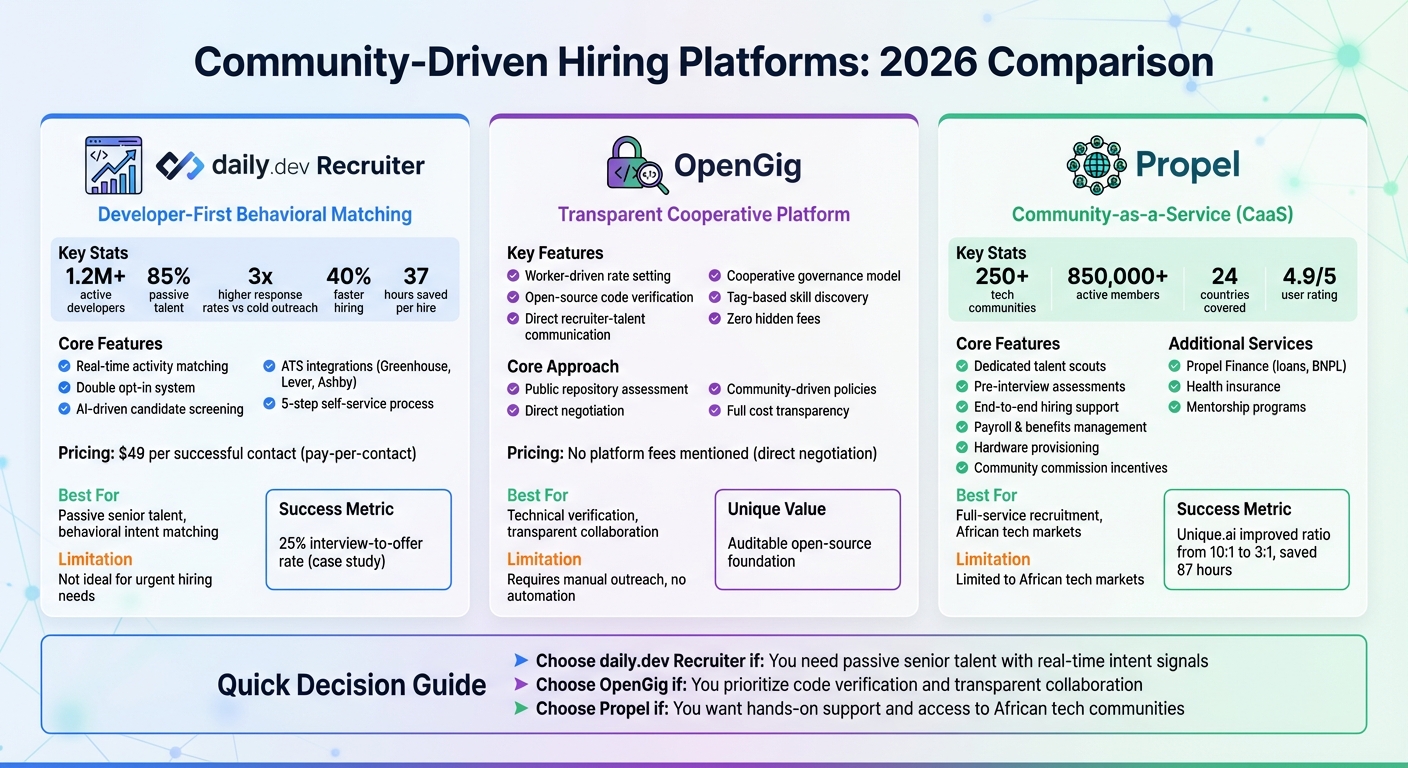 {Community-Driven Hiring Platforms Comparison 2026: Features, Strengths and Limitations}
1. daily.dev Recruiter - The Developer-First Hiring Platform
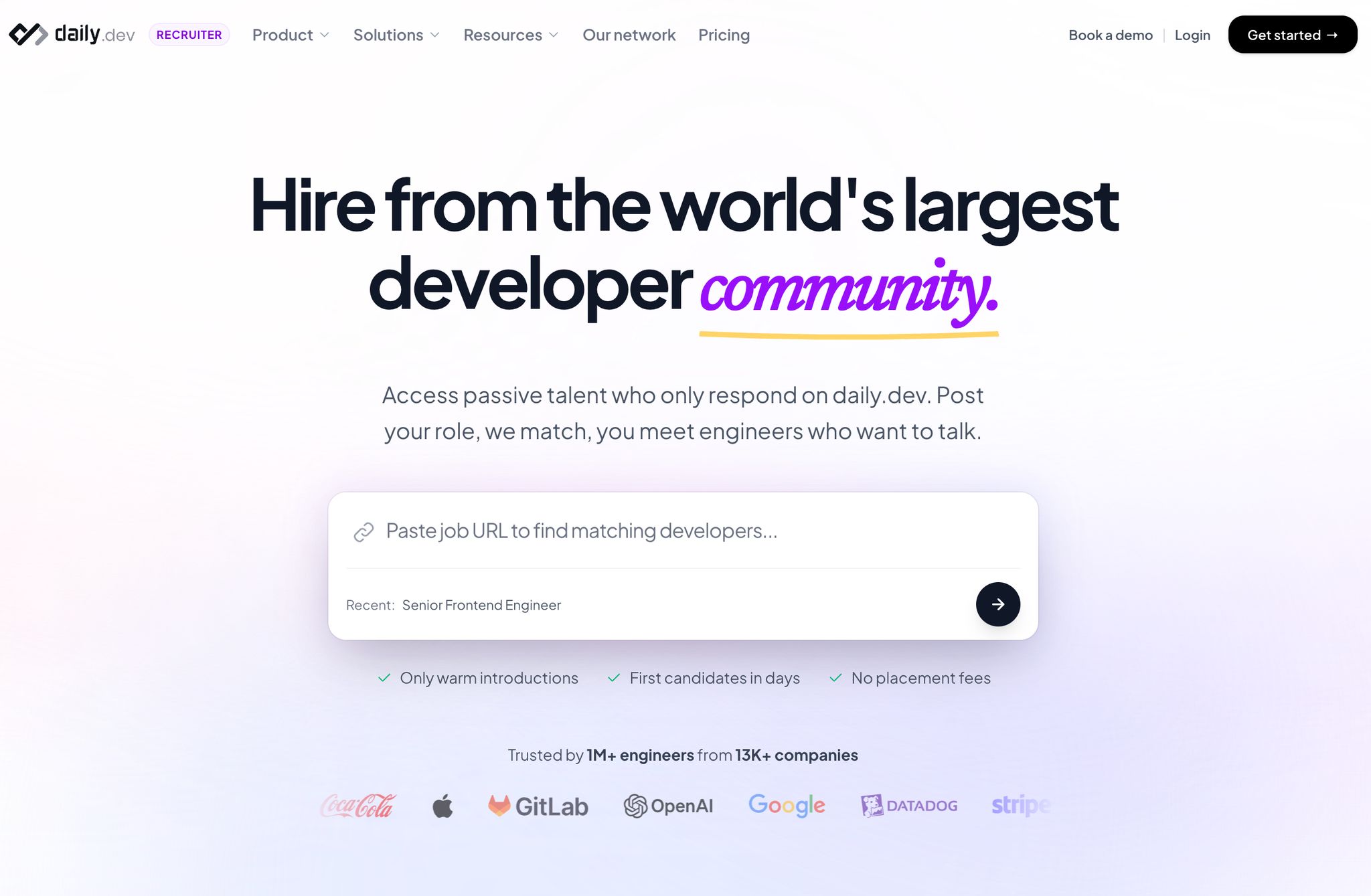
daily.dev Recruiter takes a fresh approach to connecting recruiters with developers. Integrated into a network where over 1.2 million developers actively read, learn, and engage, this platform goes beyond traditional resumes or outdated profiles. Instead, it focuses on real-time developer activities to pair talent with opportunities that truly align with their skills and career goals.
How It Connects Talent
The platform follows a straightforward 5-step self-service process. Recruiters start by creating a role, and AI steps in to extract key details like the job title, required tech stack, location, and compensation. To streamline candidate screening, recruiters can add up to three questions - either AI-suggested or custom-made - to assess factors like work authorization, technical expertise, or availability .
From there, the system uses intelligent matching to connect recruiters with candidates based on their past work, current activity, and career aspirations. It verifies time zones, tech stack usage (based on community involvement), and seniority through behavioral data . With 85% of developers on the platform being passive developer candidates who are open to new opportunities, this targeted approach makes outreach more effective. Developers are more likely to respond when approached through their trusted daily.dev feed .
Engaging the Developer Community
daily.dev Recruiter uses a double opt-in system to ensure developers feel in control. Job opportunities appear naturally in their content feed, and developers must opt in before recruiters receive their profiles. Once they do, recruiters get a detailed candidate brief, including role fit analysis, screening responses, technical highlights, location insights, and engagement data .
This method boosts response rates significantly - reply rates are three times higher compared to traditional cold outreach . For example, a mid-stage startup looking for senior React developers filled three positions in less than two weeks. They achieved a 25% interview-to-offer rate by tapping into profiles validated through platform activity.
Streamlining the Hiring Process
Efficiency is a major focus for daily.dev Recruiter. AI-driven filtering helps recruiters zero in on key technologies like React or AWS, while analytics dashboards track metrics like drop-off rates and response times. This data allows recruiters to refine their approach continuously.
The results speak for themselves: users report hiring 40% faster, with engineering managers saving an average of 37 hours per hire. Integrations with popular ATS platforms like Greenhouse, Lever, and Ashby eliminate manual data entry, further simplifying the process .
Flexible Options for Recruiters
daily.dev Recruiter offers a pay-per-contact pricing model starting at $49 per successful outreach. There are no recurring fees or long-term commitments, making it an ideal choice for businesses of all sizes - from startups to larger organizations scaling up their hiring efforts .
Recruiters can also customize job templates to better match developer preferences and ensure compliance with U.S. labor laws . The platform uses U.S. English, displays prices in USD, and follows the MM/DD/YYYY date format, ensuring a smooth experience for U.S.-based users.
Hiring engineers?
Connect with developers where they actually hang out. No cold outreach, just real conversations.
2. OpenGig
OpenGig is a gig platform designed to connect recruiters and tech talent directly, with a focus on fairness and transparency. Built on cooperative principles, it encourages open collaboration between both parties.
Talent Access Mechanism
OpenGig's process is refreshingly simple. Recruiters start by creating gig postings with clear descriptions and relevant technical tags, making it easy for tech professionals to find suitable opportunities. On the other side, tech workers can either browse these postings or offer their own services. Once a match is found, both parties connect directly to negotiate terms - no hidden fees or confusing payout systems involved. What sets OpenGig apart is its worker-driven model, allowing developers to set their rates and conditions upfront. This approach ensures straightforward pricing and minimizes unnecessary back-and-forth, making the platform user-friendly for everyone involved.
Community Engagement
The platform thrives on a cooperative governance model, where both recruiters and tech talent have a say in shaping its policies and direction. OpenGig’s open-source foundation means its code is fully accessible and auditable, reinforcing its dedication to transparency. This openness builds trust within the developer community, as operational costs and usage statistics are entirely visible, ensuring the platform operates at cost. Instead of focusing on quick, transactional gigs, OpenGig emphasizes building long-term, trust-based relationships. This approach not only benefits recruiters by reducing future hiring efforts but also fosters a sense of community among users.
Hiring Efficiency
OpenGig eliminates unnecessary middlemen and ensures all costs are clear from the start. Its tag-based discovery system connects specific skills with relevant opportunities quickly, while direct communication between recruiters and talent simplifies negotiations. By cutting out administrative hurdles and unexpected fees, the platform makes the hiring process faster and more effective, helping recruiters find the right fit without delays.
3. Propel
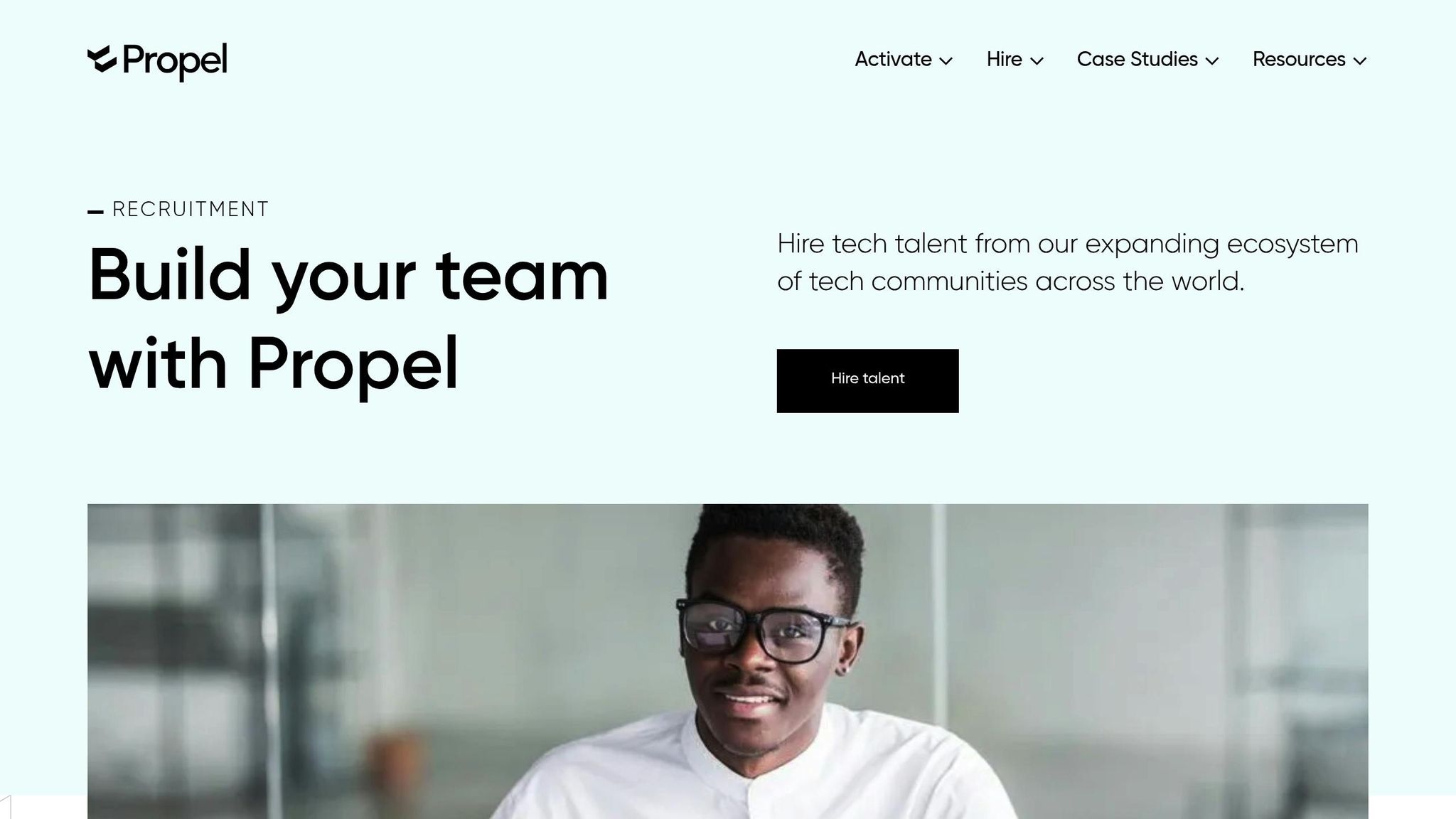
Propel provides "Community-as-a-Service" (CaaS), allowing businesses to tap into an established network of over 250 specialized tech communities across 24 countries, with more than 850,000 active members. These communities are already buzzing with developers who are actively learning, collaborating, and growing in niche areas like Python, DevOps, or UX design. Instead of starting a tech community from scratch, Propel connects you directly to these engaged groups.
Talent Access Mechanism
Propel’s platform is designed to streamline the hiring process. Recruiters input specific skill requirements, and Propel uses its network to identify the best-fit communities. Candidates then go through pre-interview assessments, such as technical challenges or small projects, before moving to the interview stage.
For example, in 2024, Unique.ai needed to fill six highly specialized engineering roles within a month. Using Propel’s network and screening tools, they not only filled seven positions but also improved their interview-to-hire ratio from 10:1 to 3:1. This saved them an estimated 87 hours in screening time. Propel also assigns talent scouts to guide the entire hiring process - from initial discovery calls to onboarding.
Community Engagement
Propel’s approach to community engagement sets it apart. The platform incentivizes participation by paying commissions to communities when their members are hired, fostering a genuine focus on quality matches. Beyond recruitment, Propel supports developers with financial services through Propel Finance, offering personal loans, "Buy Now, Pay Later" options for equipment, health insurance, and mentorship programs. These perks contribute to Propel’s impressive 4.9/5 user rating from its community members.
"Every candidate profile they shared came with solid reasoning behind their recommendation. Thanks to Propel, we hired and onboarded four senior engineers in under two weeks." – Gabriel Makinde, CEO of Coreloops
By aligning incentives and offering valuable services, Propel strengthens its connection with both developers and recruiters.
Hiring Efficiency
Propel simplifies the hiring process by managing end-to-end screening, including refining CVs and providing detailed candidate recommendations. But it doesn’t stop at hiring - Propel goes further by handling payroll, benefits, and even supplying hardware like laptops for new hires. Whether you’re hiring for full-time, remote, hybrid, or contract roles, the platform adapts to your needs, making it a flexible and efficient solution.
Pros and Cons
Here’s a closer look at the strengths and trade-offs of each platform, giving you a clear idea of what to expect based on your hiring priorities.
daily.dev Recruiter focuses on behavioral matching, connecting you with developers based on what they’re actively reading and building in real time. Instead of relying on outdated resume keywords, this platform uses real-time insights to ensure relevance. Its warm, double opt-in system ensures that both parties are genuinely interested before any interaction, significantly reducing ghosting and boosting response rates. Plus, its native ATS sync with tools like Greenhouse, Lever, and Ashby simplifies workflows by mirroring updates and creating profiles automatically. However, because it caters exclusively to passive talent who must opt in, this approach might not be ideal for filling urgent roles.
OpenGig is all about transparency, offering open-source verification through public repositories. This lets you assess actual code quality, which can be a game-changer for technical evaluations. The downside? It requires a lot of manual effort. Recruiters need to dig through projects and reach out directly, as the platform doesn’t offer automated matching or screening tools.
Propel shines with its comprehensive support system. Dedicated talent scouts guide you through a community-driven hiring process, and its commission-based model ensures quality matches. With a strong 4.9/5 user rating, it’s clear the platform delivers results. For example, Unique.ai improved its interview-to-hire ratio from 10:1 to 3:1 while saving 87 screening hours. However, Propel’s reach is largely limited to African tech markets, which could be a drawback if you’re looking for talent in other regions.
Here’s a quick comparison of each platform’s standout features and limitations:
| Platform | Key Strength | Main Limitation |
|---|---|---|
| daily.dev Recruiter | Behavioral intent matching; developer opt-in required | May not be ideal for immediate placements |
| OpenGig | Transparent code verification | Requires manual outreach due to lack of automation |
| Propel | Full-service recruitment with talent scouts | Limited to African tech markets |
When deciding, think about what matters most to you: real-time developer intent (daily.dev Recruiter), transparent technical assessments (OpenGig), or hands-on recruitment support (Propel). Your timeline, budget, and target talent pool will guide the best choice for your needs.
Conclusion
After exploring the features and success stories above, one thing becomes clear: finding the right platform to meet your recruitment goals is key.
daily.dev Recruiter stands out, especially when it comes to connecting with senior or passive talent. Why? It meets developers where they already are - engaging with content, learning, and staying updated in their digital environment. With its warm, double opt-in system, you only interact with candidates who are genuinely interested, avoiding the pitfalls of traditional cold outreach. Plus, its behavioral matching and real-time intent signals help you build a strong pipeline of developers who align with both your technical needs and company culture.
This platform signals a shift in tech recruiting, combining AI and real-time engagement to foster meaningful connections. By detecting developers’ interests and engagement with emerging technologies - often before they even update their profiles - it ensures you connect at just the right moment. This forward-thinking approach integrates smoothly into modern recruitment processes, offering opportunities that resonate with candidates’ career goals.
If you want to stay ahead in tech hiring, aligning your strategy with daily.dev Recruiter could be a game-changer for the years to come.
FAQs
How does daily.dev Recruiter match roles to developers?
daily.dev Recruiter leverages AI to make smarter role matches by analyzing developers' real-time activities within the community. It looks at what developers are reading and building, factoring in details like their timezone, location, tech stack, and seniority. By ranking and connecting developers who are most likely to engage, this system ensures matches are rooted in authentic activity and professional reputation, leading to better hiring results.
What is double opt-in and why is it important?
Double opt-in is a process designed to confirm that someone truly agrees to receive messages or join a service. Here's how it works: after signing up, the person gets a follow-up message asking them to confirm their subscription. This extra step not only builds trust but also helps cut down on spam and improves engagement. It's particularly effective in developer communities, where authenticity matters. For recruiters, this approach lays the groundwork for genuine, trust-based connections with potential candidates.
When is daily.dev Recruiter not a good fit?
If your hiring needs extend beyond developer communities or involve non-technical roles, daily.dev Recruiter might not be the best fit. This platform is tailored for connecting with developers, so industries or roles where developer communities are less relevant could find limited value.
Furthermore, if your recruitment strategy leans heavily on cold outreach, mass advertising, or requires deep integration with advanced HR systems, you might want to explore other platforms that better support those approaches.
.png)