Hiring the right people gets harder as teams grow. This is especially true for tech recruitment, where demand for skilled developers is high, and traditional methods like email and spreadsheets often fall short. Recruiting software can simplify this process by automating tasks, integrating technical assessments, and reducing hiring costs.
Here’s a quick rundown of seven platforms tailored for growing teams:
- daily.dev Recruiter: Connects recruiters with developers already active in the daily.dev community. Focused on developer-specific hiring.
- Talent Pathway: Limited transparency on features and pricing, making it harder to evaluate for tech hiring.
- Pinpoint: Strong integrations with technical assessment tools and a focus on reducing hiring bias.
- Zoho Recruit: Affordable with free and low-cost plans, offering AI-driven matching and technical assessment integrations.
- Breezy HR: Flexible pricing and automation tools for scaling teams, with options for technical assessments.
- Workable: AI-powered sourcing and DEI features, great for finding passive candidates.
- Greenhouse: Comprehensive hiring workflows, with strong integration options and structured hiring tools.
Quick Comparison:
| Vendor | Strengths | Weaknesses | Starting Price |
|---|---|---|---|
| daily.dev Recruiter | Developer-focused hiring | Limited general hiring tools | Custom pricing |
| Talent Pathway | Unclear features | Lack of transparency | Not disclosed |
| Pinpoint | Technical assessment integrations | Higher costs for add-ons | $345/month |
| Zoho Recruit | Affordable, AI matching | Limited enterprise features | $25/user/month |
| Breezy HR | Flexible pricing, automation | Add-ons can increase costs | Free to $529/month |
| Workable | AI sourcing, DEI tools | Extra fees for features | $299/month |
| Greenhouse | Structured hiring, integrations | High cost, weak reporting | ~$6,000/year |
Each platform has its strengths and trade-offs. Choosing the right one depends on your hiring goals, team size, and budget. Before committing, it is wise to audit your tech hiring stack to ensure you aren't paying for overlapping features.
::: @figure 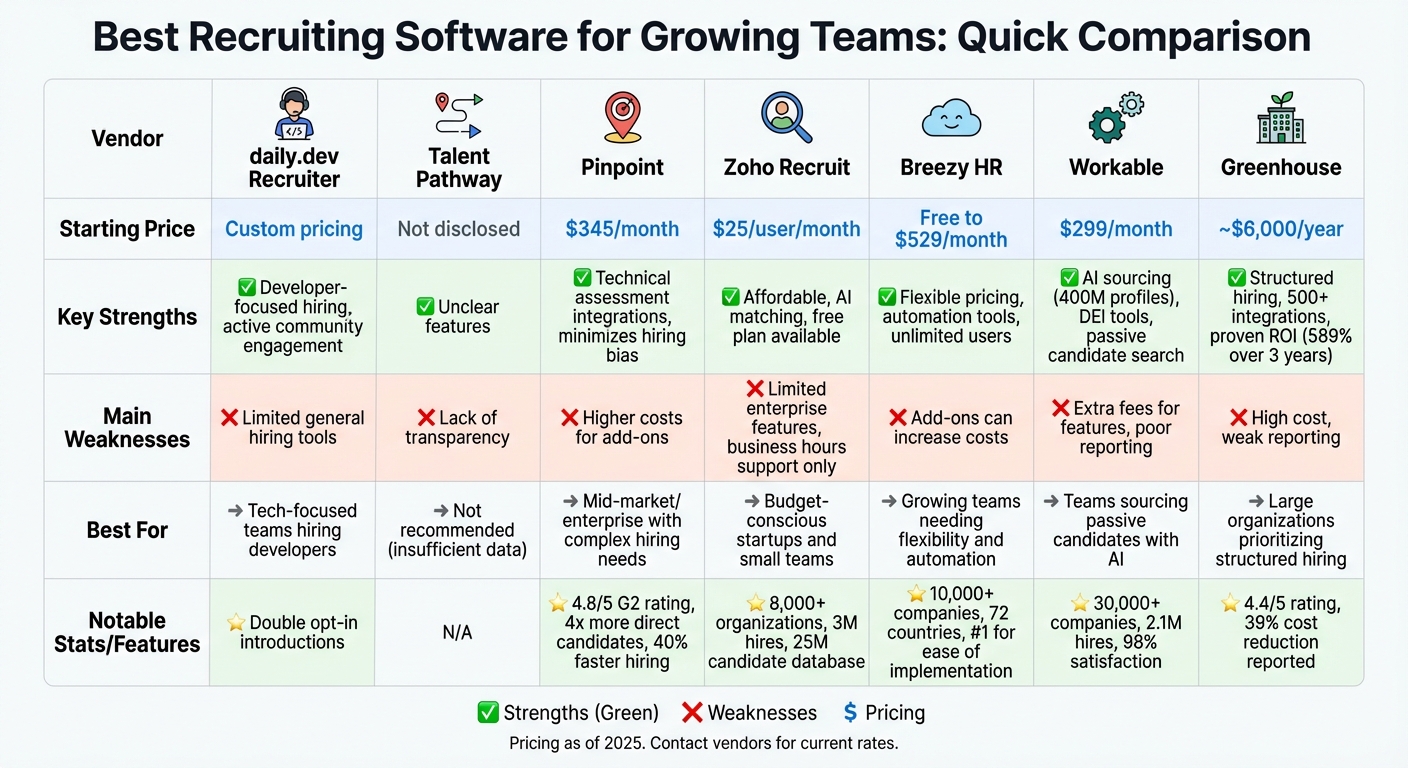 {Recruiting Software Comparison: Features, Pricing & Best Use Cases for 7 Top Platforms}
1. daily.dev Recruiter
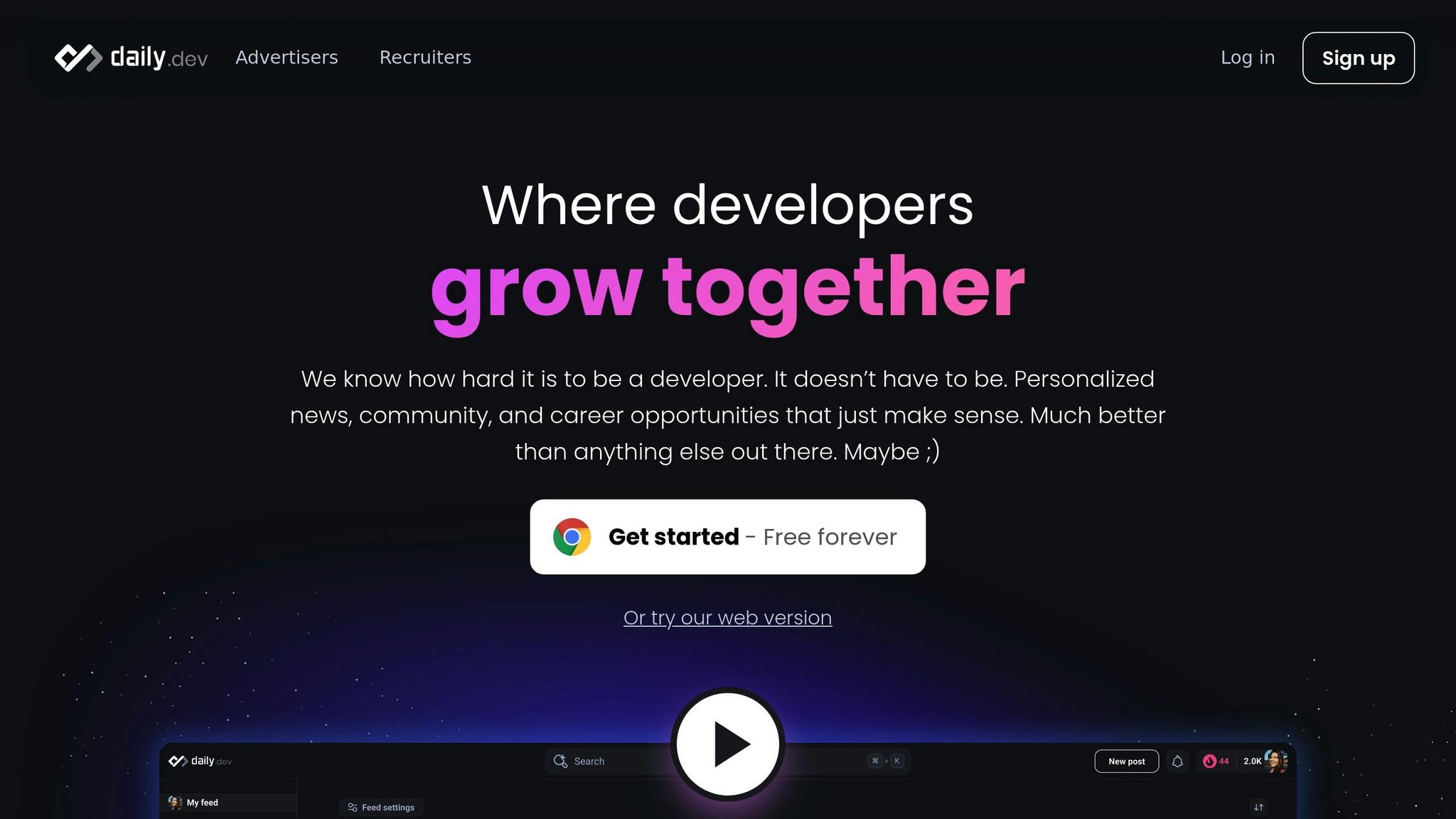
daily.dev Recruiter taps into a vibrant community of developers to transform the way tech hiring is done. The platform connects recruiters with developers who are already active on daily.dev, consuming industry-relevant content and staying engaged. Every introduction is double opt-in, meaning developers express genuine interest before any conversations take place. This thoughtful approach, combined with a strong developer network, makes daily.dev Recruiter a powerful tool for targeted hiring.
Scalability
daily.dev Recruiter grows with your hiring needs, offering precise candidate matches as your technical requirements evolve. Built-in screening criteria ensure candidates align with the specific skills and qualifications you're looking for. This saves recruiters time by narrowing the focus to developers who are a strong fit for the role.
Tech Recruitment Features
Built specifically for hiring developers, the platform offers features like engineer-friendly job briefs, targeted role visibility within the daily.dev community, and tools for optimizing job ads. By aligning job opportunities with developers' skills and career aspirations, daily.dev Recruiter creates a hiring process that's both transparent and relevant.
Integration Capabilities
The platform seamlessly integrates with your existing ATS and sourcing tools, making it easy to centralize your recruitment data while tapping into a global network of active developers.
Pricing (USD)
With a straightforward pricing model, daily.dev Recruiter ensures costs align with your actual hiring needs. This predictability makes budgeting simpler, especially as your team continues to grow.
2. Talent Pathway
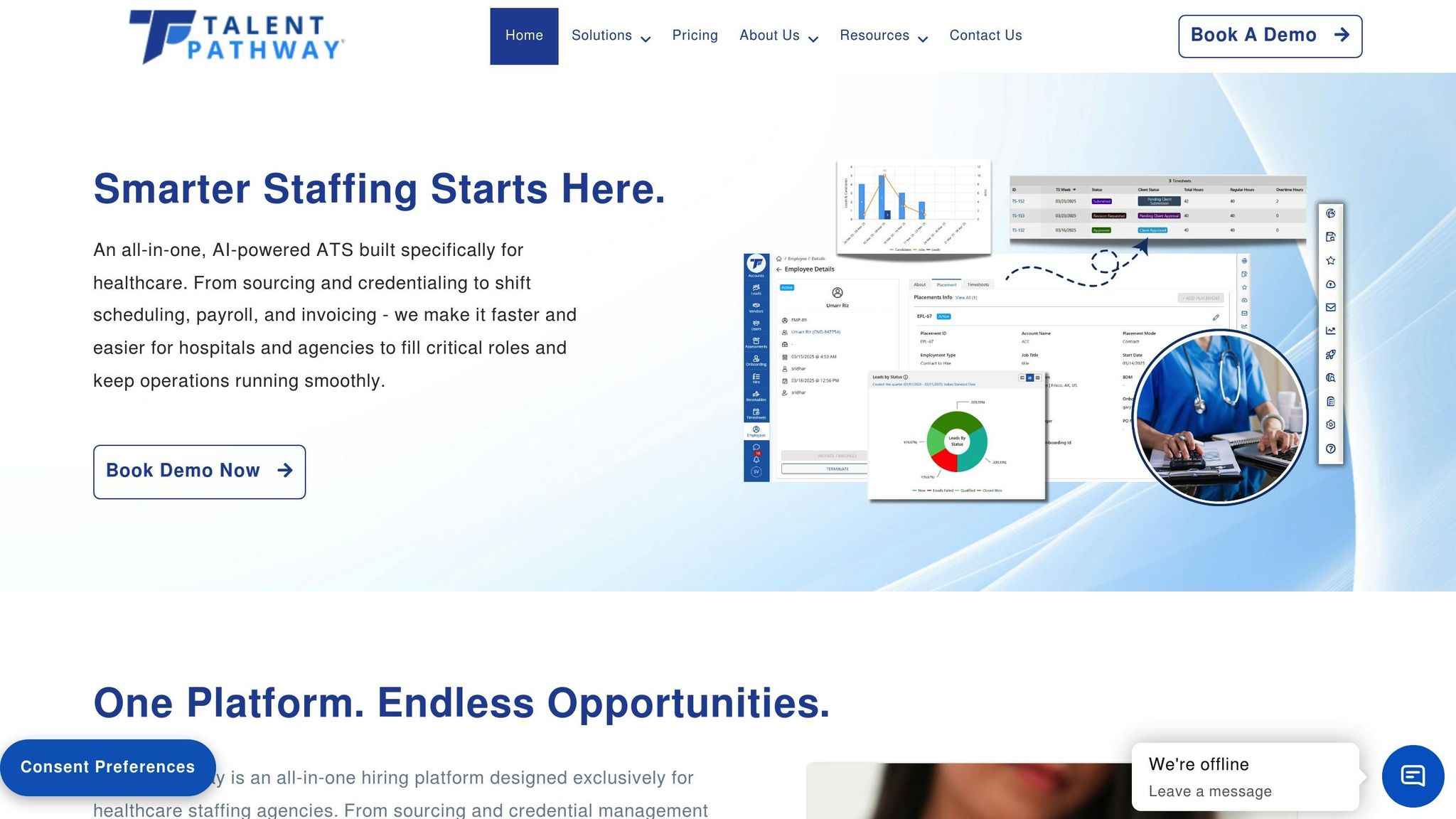
Talent Pathway provides minimal public information about its features, pricing, and integrations, which makes evaluating its effectiveness for tech recruitment a challenge. This lack of transparency can leave questions about whether it meets the specific needs of developer hiring. For expanding tech teams seeking reliable, scalable tools, platforms with detailed documentation and a proven history of success tend to inspire more trust. Below, we’ll explore top tech recruiting platforms that offer clear insights into their capabilities, helping teams make well-informed hiring decisions.
3. Pinpoint
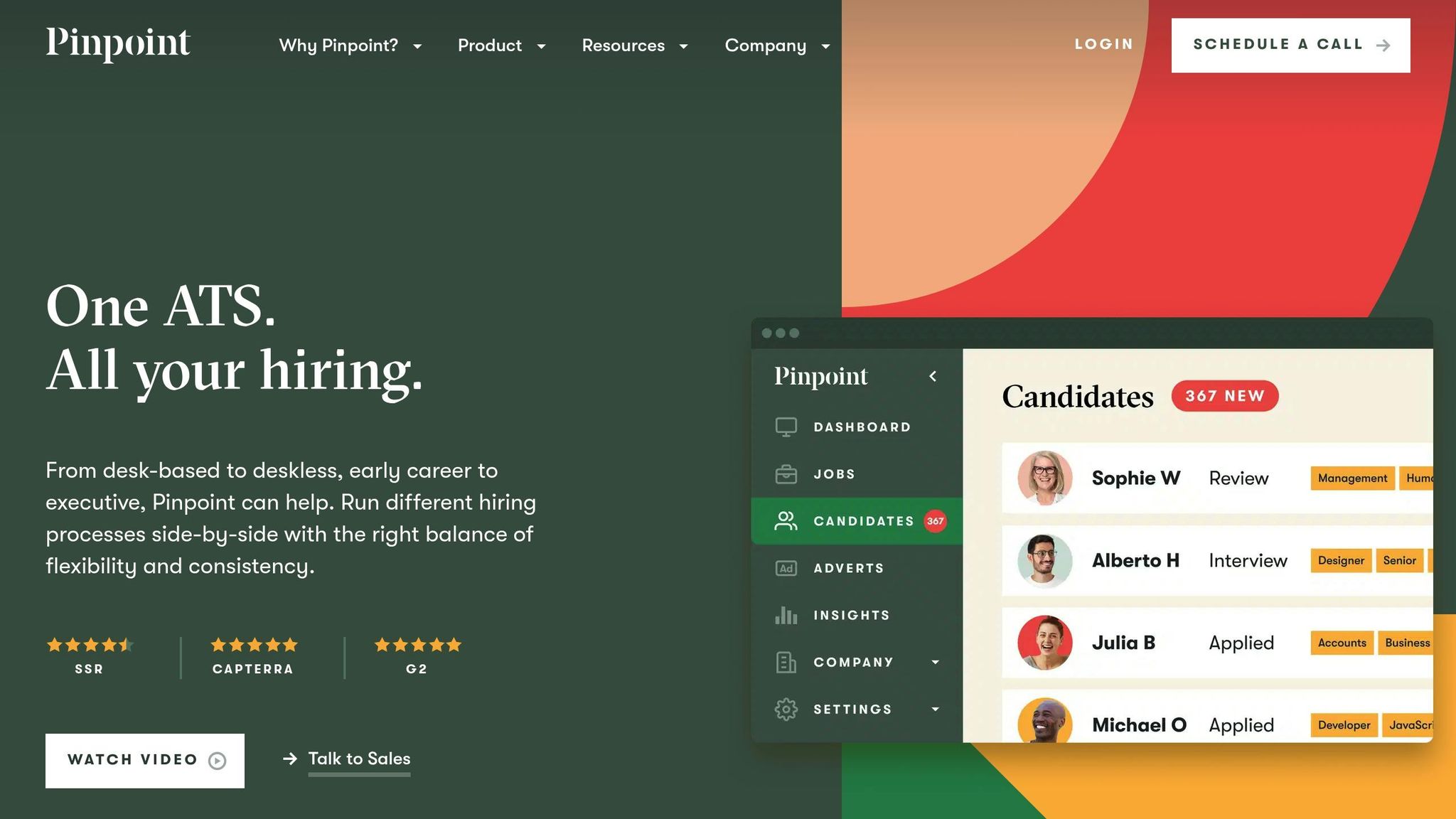
Pinpoint is designed for mid-market and enterprise teams that face the challenge of managing complex hiring across multiple locations. The platform boasts an impressive 4.8/5 rating on G2 as of Fall 2025, standing out for its user-friendly interface (rated 9.3 compared to the category average of 8.6) and exceptional support quality (scoring 9.7 versus the industry’s 8.4) . According to US-based talent teams, Pinpoint helps attract four times more direct candidates and speeds up hiring by 40% . Let’s dive deeper into its tech recruitment features.
Tech Recruitment Features
When it comes to hiring developers, Pinpoint integrates seamlessly with popular assessment tools like HackerRank, Codility, Coderbyte, CodeSubmit, and TestDome to streamline candidate evaluations . A Google Chrome extension makes sourcing candidates from external websites a breeze, allowing recruiters to transfer profiles directly into the ATS [18,20]. To promote fairness in hiring, the platform includes a blind recruitment feature that anonymizes applications, helping to minimize unconscious bias during initial screenings for software engineering roles [18,20].
For engineering teams, integrations with tools like Jira, Slack, and Microsoft Teams provide real-time hiring updates, keeping managers in the loop . Additionally, Pinpoint's Talent CRM feature helps teams build a database of strong candidates who weren’t selected for current roles, making it easier to fill future technical positions quickly [19,22].
Integration Capabilities
Pinpoint supports connectivity with over 500 platforms, offering both pre-built integrations and an open API for custom configurations [21,24]. It integrates with major HRIS systems like BambooHR, Rippling, HiBob, Workday, and ADP Workforce Now, enabling automatic transfer of hired candidate data into these platforms [21,25]. For compliance in the US, it handles EEOC and OFCCP reporting as well as I-9 document workflows . The platform also partners with background check providers such as Checkr, Sterling, and First Advantage, and integrates with communication tools like Zoom, Microsoft Teams, and Google Meet for smooth interview scheduling [21,25].
Pricing (USD)
Pinpoint’s pricing is transparent and listed in USD, though specific costs depend on a consultation with the sales team . The platform does not offer a free version or trial period . However, support response times are impressively quick, averaging under two minutes, and 94% of users report they would recommend the platform [19,24].
4. Zoho Recruit
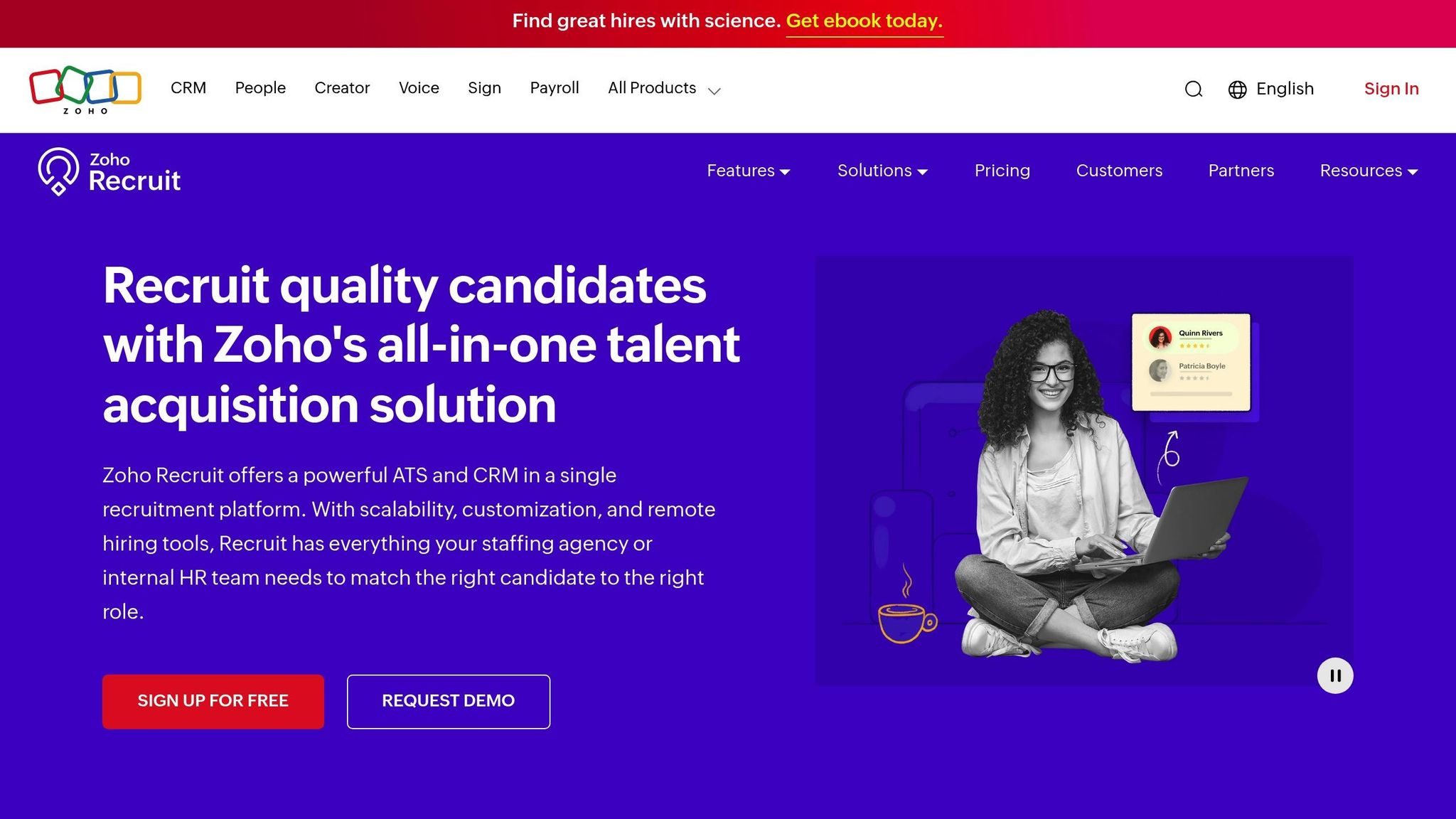
Zoho Recruit supports over 8,000 organizations, has facilitated 3 million hires, and manages a database of 25 million candidates . With a 4.5/5 rating on major review platforms, it was also recognized as a leader in the 2022 Talent Acquisition Technology Value Matrix by Nucleus Research . A notable success story comes from Broadcast, where Chief Innovation Officer Oleksii Tsymbal used Zoho Recruit to grow the workforce from 50 to 350 employees . Let’s dive into how this cloud-based platform helps tech teams thrive.
Scalability
Zoho Recruit is designed to grow alongside your team. For startups, the Forever Free plan allows up to 1,000 records per module and includes one active job opening - perfect for businesses making their first hire . As your recruitment needs expand, the platform offers tiered plans and territory management tools that support multi-location hiring with region-specific access controls . Features like Blueprints simplify interview scheduling and candidate tracking, while Zia, the AI assistant, ranks and matches candidates based on their skills, cutting down on manual effort as your talent pool grows . These tools make scaling up recruitment not just possible but efficient.
Tech Recruitment Features
When it comes to hiring developers, Zoho Recruit stands out with its tech-specific capabilities. It integrates with HackerEarth for technical assessments and uses semantic search to pinpoint candidates with particular programming skills . Recruiters can set "must-have" and "nice-to-have" skills, enabling the AI to score applicants automatically .
Mike Tozer, CEO of Xceptional, shares, "Our process from profiling to shortlisting candidates has gone from days to hours" .
The platform also includes a Vendor Portal, which lets external recruiters submit candidates directly into your database - a handy feature for teams looking to scale their sourcing efforts . Combined with seamless integration, these tools make hiring for technical roles much more streamlined. Using the best hiring tools for technical roles ensures your team stays competitive.
Integration Capabilities
Zoho Recruit connects effortlessly with popular tools like Slack, Microsoft Teams, and Google Meet, making team collaboration and virtual interviews a breeze . It also integrates with Google Workspace and Microsoft 365, offering features like a Gmail add-on that allows recruiters to capture candidate data without leaving their inbox. For automation enthusiasts, Zapier integration links Zoho Recruit to thousands of third-party apps. Developers can take advantage of the platform’s robust APIs to build custom extensions, while e-signature integrations with DocuSign and Adobe Sign simplify the process of sending and signing offer letters .
Pricing (USD)
Zoho Recruit offers straightforward, per-user pricing billed annually. The Forever Free plan costs $0 and includes one active job opening per recruiter . For corporate HR teams, the Standard plan is $25 per recruiter per month and includes 10 active jobs, a branded career site, and social recruiting tools. The Enterprise plan, at $50 per recruiter per month, supports 20 active jobs, AI-powered matching, and advanced customization options . A 15-day free trial (no credit card required) allows teams to explore Enterprise features before committing . Additional add-ons include Video Interview credits at $12 per job and the Vendor Portal for $6 per month .
5. Breezy HR
Breezy HR is trusted by over 10,000 companies across 72 countries and has earned the title of #1 ATS for Ease of Implementation on G2 Crowd . More than 17,000 businesses rely on its 800+ HR and recruiting templates to streamline their hiring processes . As Breezy HR user Sarah Corbliou puts it:
"Now that we use Breezy, hiring takes us way less time."
Scalability
Breezy HR offers a flexible pricing structure designed to grow with your organization. There are four main plans - Bootstrap, Startup, Growth, and Business - plus a customizable Pro option [37,39]. All paid plans include unlimited users and candidates, keeping costs predictable as your team expands . The Bootstrap plan is completely free for one active position, making it an excellent choice for startups hiring their first employee .
As your hiring needs increase, Breezy HR's automation tools take over repetitive tasks like sending emails, scheduling interviews, and even SMS communication . Its multi-language career pages and job postings make it easier to recruit talent globally . Features like @mentions, shared notes, and team scorecards promote collaboration and help teams stay aligned without unnecessary friction . These tools provide a solid framework for managing tech recruitment and scaling efficiently.
Tech Recruitment Features
Breezy HR offers specialized tools for technical hiring. It integrates with platforms like HackerRank and Criteria Corp, allowing automated coding tests to be triggered as candidates move through the hiring process . Its "Breezy Intelligence" feature uses AI to evaluate and score candidates, helping recruiters identify top technical talent faster . One-way video assessments make remote screenings more efficient, while job postings are shared on niche boards to attract highly skilled candidates . Understanding what developers want is key to optimizing these postings. The platform’s drag-and-drop visual pipeline makes it simple to track candidates, while automated questionnaires and follow-up emails save time .
Integration Capabilities
Breezy HR connects seamlessly with popular HRIS platforms such as Gusto, BambooHR, ADP, Rippling, and Paylocity, ensuring an easy transition from hiring to payroll and employee management . Its native Slack integration provides real-time updates, and compatibility with Google Workspace and Microsoft 365 keeps calendars and emails in sync . With just one click, job postings can be shared across more than 50 job boards . For added security, Breezy HR supports single sign-on with Okta and 1Password Business . Businesses on the Pro plan can also access a full API for custom integrations .
Pricing (USD)
| Plan | Annual Price | Monthly Price | Features |
|---|---|---|---|
| Bootstrap | Free | Free | 1 active position, branded career site, 50+ job boards |
| Startup | $157/mo | $189/mo | Unlimited positions/candidates, automated scheduling, video assessments |
| Growth | $273/mo | $329/mo | Employee referrals, reference checking, e-signatures |
| Business | $439/mo | $529/mo | AI candidate matching, HRIS integrations, nurture campaigns |
Annual plans come with two months free . Optional add-ons include SMS/text messaging starting at $41/month and Breezy Intelligence AI credits starting at $30 for 100,000 credits . The custom Pro plan offers advanced features like dedicated account management, data migration, and detailed reporting .
Hiring engineers?
Connect with developers where they actually hang out. No cold outreach, just real conversations.
6. Workable
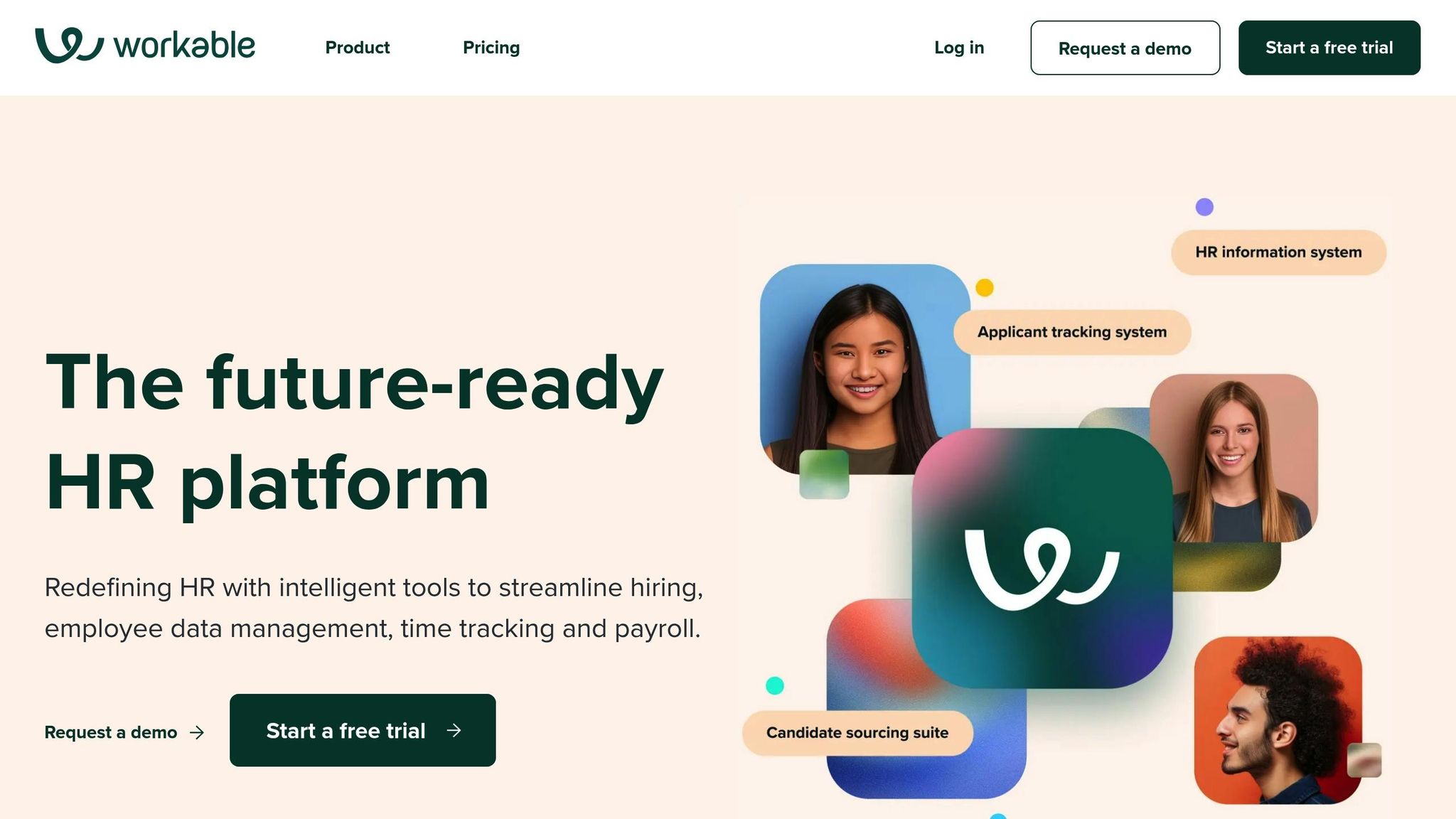
Workable has become a trusted partner for over 30,000 companies, helping facilitate 2.1 million hires with an impressive 98% satisfaction rate . Recognized by Forbes Advisor as the "Best AI-Powered Recruiting Platform for 2024" , it also boasts a solid 4.5/5 star rating on G2 . Anna Hoffmann, COO at dltHub, shares her experience:
"I'm a huge fan! Workable is super easy to set up and use. Setting it up took just a couple of hours, and I can fully recommend it."
With its focus on efficient talent sourcing and unbiased evaluations, Workable addresses the specific challenges of tech hiring. Let’s take a closer look at how it supports growing organizations.
Scalability
Workable is designed to grow alongside your business. Its Hiring Plan & Requisition Management feature replaces tedious spreadsheets with real-time tracking for budgets and approvals . The Department Hierarchy tool allows admins to set up custom structures, making it easy to filter career pages and reports by department or location. Time-consuming tasks like email notifications and candidate assessments are handled through Automated Actions, while Bulk Actions let recruiters manage hundreds of candidates at once. Additionally, the platform supports hiring in six languages and ensures compliance with GDPR, CCPA, and EEO/OFCCP regulations across different regions . Features like interview self-scheduling significantly reduce back-and-forth communication, saving valuable time .
Tech Recruitment Features
Workable offers tools tailored to tech recruitment, building on its scalable foundation. Its AI Recruiter and People Search tools comb through a database of over 400 million passive profiles, using Boolean search to pinpoint skills, keywords, and locations as part of a broader strategy involving various developer sourcing channels . Mark Dolman of EnerMech highlights the benefits:
"The AI features within sourcing is excellent, and also the AI screening has saved hours in searching through candidates."
To support diversity, equity, and inclusion (DEI) goals, Workable provides anonymized screening during resume reviews. Teams can also use customizable interview kits, scorecards, and science-backed assessments to standardize hiring criteria as they grow. A Chrome extension simplifies the process of adding LinkedIn profiles to the ATS with a single click, while the LinkedIn Recruiter System Connect (RSC) integration ensures seamless access to candidate details without leaving the platform .
Integration Capabilities
Workable integrates with over 270 third-party tools, including popular platforms like Slack, Zoom, Google Meet, and Microsoft Teams . It also connects with more than 70 recruiting and HR tools for technical assessments and background checks . For those seeking custom solutions, the open API allows developer teams to create automations or link to business intelligence tools . Job postings are automatically distributed to over 200 job boards, and the mobile app for iOS and Android ensures managers can review candidates and schedule interviews from anywhere .
Pricing (USD)
Workable offers a 15-day free trial with full access to its features, no credit card required . Pricing adjusts based on company size, starting with the following tiers for businesses with 1–20 employees:
| Plan | Monthly Price | Annual Price | Key Features |
|---|---|---|---|
| Standard | $299 | $3,588 | Unlimited active jobs, AI sourcing suite, ATS, basic HRIS, 200+ job boards, mobile app |
| Premier | $599 | $7,188 | Everything in Standard plus Video Interviews, Assessments, Texting, Performance Reviews |
For additional customization, the Standard plan can be enhanced with premium add-ons: Texting+ ($79/month), Video Interviews+ ($99/month), Assessments+ ($59/month), and Performance Reviews+ ($39/month) . Pricing increases at employee milestones, such as 21–50, 51–100, and beyond, up to 1,000+ employees . Bundling recruiting and HR tools can save businesses up to 30% compared to purchasing them separately .
7. Greenhouse
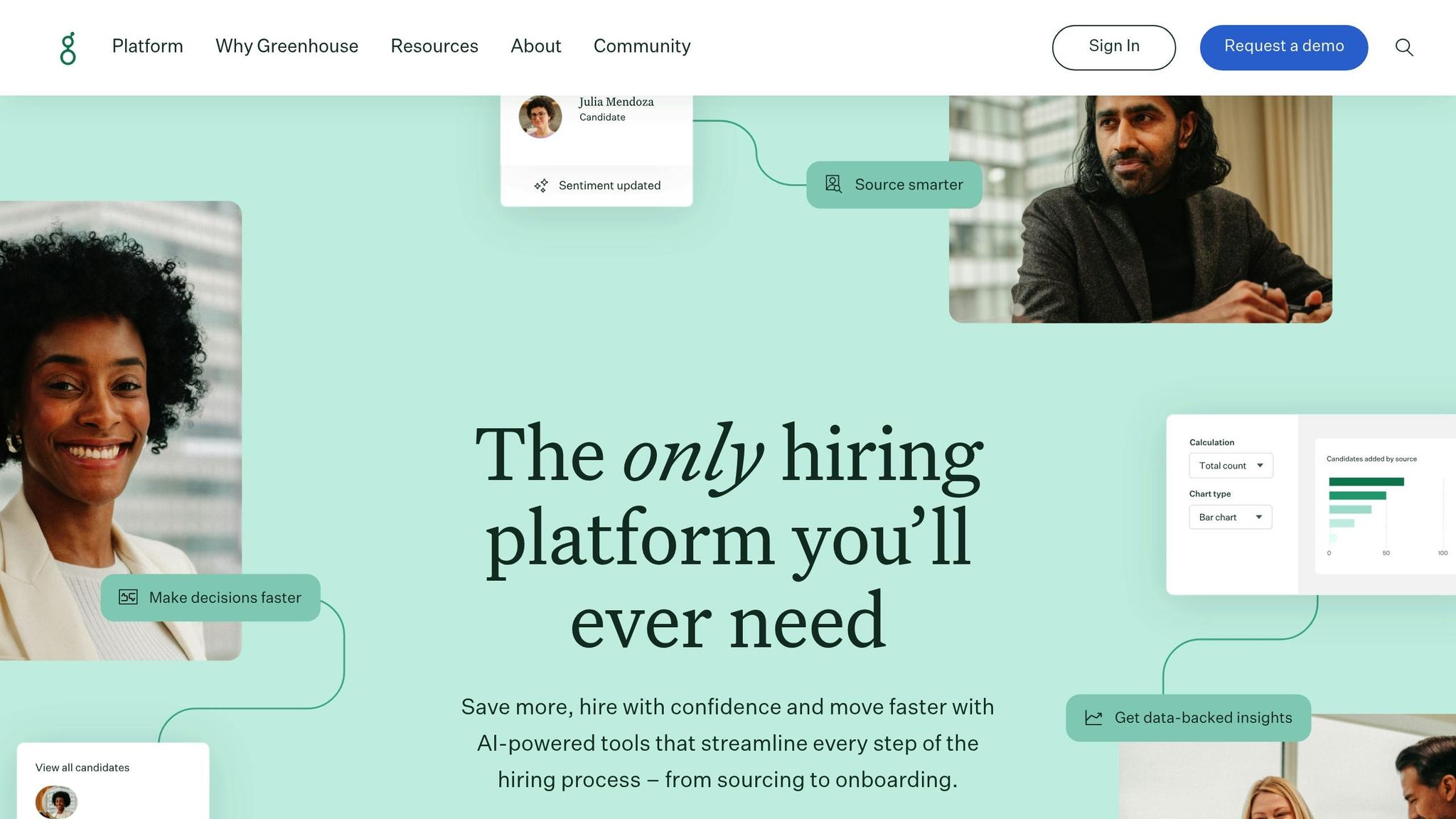
Greenhouse stands out as a leader in applicant tracking systems, boasting a 4.4/5 rating from 3,405 reviews and earning the title of "G2 Leader in Applicant Tracking Systems" for Winter 2026 . The platform delivers measurable benefits, including a 589% three-year return on investment and notable savings for recruiters. Kriss D., Senior Director of Talent & Recruitment, shared:
"Greenhouse has streamlined our entire hiring process. It allows us to move candidates through the pipeline efficiently and make faster, more informed hiring decisions."
Its structured approach and seamless integrations are particularly effective for scaling tech recruitment efforts.
Scalability
Greenhouse offers three pricing tiers - Essential, Advanced, and Expert - designed to grow alongside your organization . High-volume hiring becomes more manageable with features like bulk candidate management and automated workflows . These workflows include task management, stage transition rules, and auto-advance or reject functions, minimizing manual tasks . Security features, such as advanced permissions, single sign-on (SSO), and automated user management, ensure the platform scales securely . Greenhouse also tracks multiple applications and repeat candidates, giving recruiters a complete view of their talent pool . This scalability forms the backbone of Greenhouse’s advanced recruitment tools.
Tech Recruitment Features
Greenhouse leverages AI to streamline talent acquisition, offering tools to identify top candidates, generate summaries, and filter applications effectively . For unbiased technical assessments, the Expert tier includes anonymized take-home tests . The platform standardizes technical hiring with structured interview kits, scorecards, and AI-generated interview questions . Recruiters can post job listings to over 1,000 boards and manage referral programs, all within a system that supports 19 languages for job boards and 6 languages for interviews . In July 2025, Ocado Group reported a nearly 30% reduction in time-to-hire after implementing Greenhouse, a project led by Talent Acquisition Enablement Manager Peter Tam .
Integration Capabilities
Greenhouse offers over 500 pre-built integrations and an open API, giving teams the flexibility to create custom tech stacks . It integrates with popular communication tools like Slack, Microsoft Teams, Zoom, and Google Meet, as well as HRIS platforms such as BambooHR, Workday, and Zenefits . The HRIS Link solution ensures seamless data synchronization between Greenhouse and existing HR systems, reducing manual errors during large-scale recruitment efforts . Additional integrations cover talent sourcing, background checks (Checkr, GoodHire), e-signatures (DocuSign), and technical assessment tools . For advanced users, the Expert tier provides a Business Intelligence Connector and a developer sandbox for custom reporting and testing .
Pricing (USD)
Greenhouse uses a custom pricing model based on company size, allowing flexibility for businesses as they grow .
- Essential Plan: Includes core features for structured hiring, basic sourcing (CRM Essential + 1 event), and standard reporting.
- Advanced Plan: Adds bulk actions, approvals, SSO, custom reports, candidate self-scheduling, and automated user management.
- Expert Plan: Offers the Business Intelligence Connector, anonymized take-home tests, CRM Expert with unlimited events, and enhanced security features like sandbox sync and audit logs .
Additional solutions, such as Onboarding, Sourcing Automation, and HRIS Link, are available as paid add-ons. While pricing details require a custom quote, companies have reported cutting recruitment costs by 39% after implementing Greenhouse .
Strengths and Weaknesses
Recruiting platforms come with their own sets of strengths and trade-offs, which can significantly influence how teams find, track, and hire developers. Knowing these differences is key to aligning a platform’s features with your workflow needs and budget.
Greenhouse stands out for its structured hiring process, offering over 500 pre-built integrations and AI-driven tools for tasks like interview scheduling and candidate matching. However, its reporting capabilities leave much to be desired. Sarah Katherine Schmidt, Vice President at Peoplelogic, explained:
"The reporting and analytics features [in Greenhouse] are lacking; we would like more detailed metrics on time to hire and candidate pass-through rates" .
Greenhouse also comes with a steep price tag, starting at approximately $6,000 annually and typically requiring a one-year upfront payment .
Workable is known for its AI-powered sourcing, tapping into a database of 160 million job seekers and 400 million profiles. This highlights the shift toward modern candidate sourcing tactics that leverage massive datasets to find passive talent. On the downside, its reporting functionality is limited, and additional fees for features like video interviews and texting can quickly drive up costs beyond the base rate of $299 per month. Angela Lowry, Fractional Head of Talent & Recruitment, remarked:
"Workable's reporting functionality is poor. I had to create my own reports in Google Sheets using the basic data exported from Workable" .
Zoho Recruit is the budget-friendly choice, priced at $25 per user per month. It offers strong automation features and even includes a free-forever plan. However, its support is limited to business hours, and it lacks some advanced enterprise-level features .
The table below provides a quick comparison of each platform’s main strengths, weaknesses, and starting prices:
| Vendor | Key Strengths | Main Weaknesses | Starting Price |
|---|---|---|---|
| Greenhouse | Structured hiring, 500+ integrations, AI tools | Weak reporting, high cost | ~$6,000/year |
| Workable | AI sourcing, 160M candidate database, passive search | Poor reporting, extra fees for features | $299/month |
| Zoho Recruit | Affordable, strong automation, free plan | Limited support hours, fewer enterprise tools | $25/user/month |
| Pinpoint | Customizable, strong support | Extra fees for assessments, higher costs | $345/month |
Across the board, many platforms face technical hurdles that impact recruitment efficiency. For instance, even the top systems often struggle to parse resumes with complex formatting or symbols like <>, {}, or #. Recruitment Strategist Amanda Menin highlights another common issue:
"Misunderstanding the functionalities of your ATS can lead to overlooking qualified candidates" .
Additionally, systems may miss candidates if technical acronyms aren’t both spelled out and abbreviated (e.g., "SQL" versus "Structured Query Language") . These challenges underscore the need for careful configuration and understanding of recruitment tools to avoid missing out on top talent.
Conclusion
Selecting the right recruiting software comes down to understanding your team's priorities, budget, and growth plans. Each platform on our list addresses different recruitment challenges, offering features tailored to a variety of needs.
If you're focused on recruiting developers, daily.dev Recruiter is a top choice. It connects with developers who are already engaged with industry-specific content, making it highly effective. For teams working within tight budgets, Zoho Recruit is a solid option, offering a free plan and affordable paid plans starting at $25 per user per month . On the other hand, if rapid scaling is your goal, Greenhouse provides measurable cost savings and a strong return on investment .
It's worth noting that nearly 99% of Fortune 500 companies now rely on recruiting technology to streamline their hiring processes . Additionally, the best systems enhance hiring workflows for 94% of recruiters . Whether you're just starting to build your team or preparing to hire at scale, choose a platform that aligns with your immediate needs, integrates effortlessly with your existing tools, and grows alongside your organization. The right software can ease administrative tasks, enhance the candidate experience, and help you assemble stronger, more capable teams.
FAQs
What should I look for in recruiting software to support a growing tech team?
When selecting recruiting software for a growing tech team, it’s essential to focus on tools that can grow with your company, integrate smoothly with your existing systems, and handle your hiring demands effectively. The best platforms cover every step of the hiring process - from sourcing candidates to onboarding - and let you adjust features to match your evolving needs.
Some key features to look for include AI-driven tools for sourcing and screening candidates, robust applicant tracking systems with customizable scorecards, and features that improve the candidate experience, like mobile-friendly career pages and automated updates. Integrations with developer-centric tools, such as code assessment platforms or repositories, can also make the hiring process more efficient while keeping data consistent.
Don’t overlook the software’s pricing structure - it should fit your budget now and as your team expands. Security is another major consideration; the platform must safeguard sensitive candidate data. Lastly, consider whether the software has a clear plan for future updates, such as adding more automation or AI capabilities. A flexible, modular platform can meet the unique challenges of a tech-driven organization while staying cost-effective as your business grows.
How does recruiting software help reduce bias and promote diversity in hiring?
Recruiting software plays a crucial role in reducing bias by bringing consistency to key hiring steps. Features like blind résumé screening, standardized interview scorecards, and predefined evaluation criteria help ensure that hiring decisions are rooted in a candidate's skills and experience rather than personal or subjective factors. Some platforms even take it a step further by concealing personal details such as names or graduation years, which can help curb unconscious bias.
In addition, advanced tools powered by AI, like candidate matching and diversity analytics, offer valuable insights to support fair hiring practices. These features can identify biased language in job descriptions, recommend more inclusive alternatives, and pinpoint diversity gaps within the hiring process. By encouraging impartial decision-making, recruiting software not only minimizes bias but also expands the talent pool, paving the way for more diverse and effective teams.
What integration features should I prioritize in recruiting software?
When selecting recruiting software for a growing team, focus on integration capabilities that simplify hiring and work seamlessly with your current tools. Prioritize software that connects with HRIS and payroll systems to automate onboarding tasks, as well as email and calendar platforms like Outlook or Google Calendar to streamline interview scheduling. Integration with CRM tools is also key for efficiently managing candidate pipelines.
Make sure the software supports job board connections and platforms like LinkedIn or GitHub to help source top talent. Features like assessment tools and video-interview integrations can further enhance your hiring workflow. Communication options, such as SMS, email, or Slack, are essential for maintaining a smooth and professional candidate experience. Lastly, look for tools offering AI-powered insights, analytics dashboards, and career-site builders to support data-driven hiring decisions and scale effectively as your team grows.
.png)