Recruiter burnout is a growing issue that impacts both individuals and organizations. It’s caused by overwhelming workloads, repetitive tasks, and unrealistic hiring goals. Burnout leads to exhaustion, disengagement, and reduced performance, with 53% of recruiters reporting burnout in 2023. This affects hiring timelines, candidate experiences, and overall team morale.
Key Causes:
- Low-quality applications: Sorting through unqualified resumes drains time and energy.
- Repetitive admin tasks: Manual scheduling, follow-ups, and tracking create mental fatigue.
- Unrealistic targets: Rushed processes and lack of control lead to stress and frustration.
Solutions:
- Focus on quality metrics: Prioritize meaningful hires over volume.
- Use AI and automated candidate sourcing: Streamline repetitive tasks like scheduling and screening.
- Support healthy habits: Set boundaries, encourage breaks, and promote well-being.
Tools like daily.dev Recruiter reduce burnout by connecting recruiters with pre-qualified, interested candidates and automating time-consuming tasks. This approach saves energy, improves efficiency, and helps recruiters focus on building strong connections. Addressing burnout is essential for better hiring outcomes and healthier work environments.
::: @figure 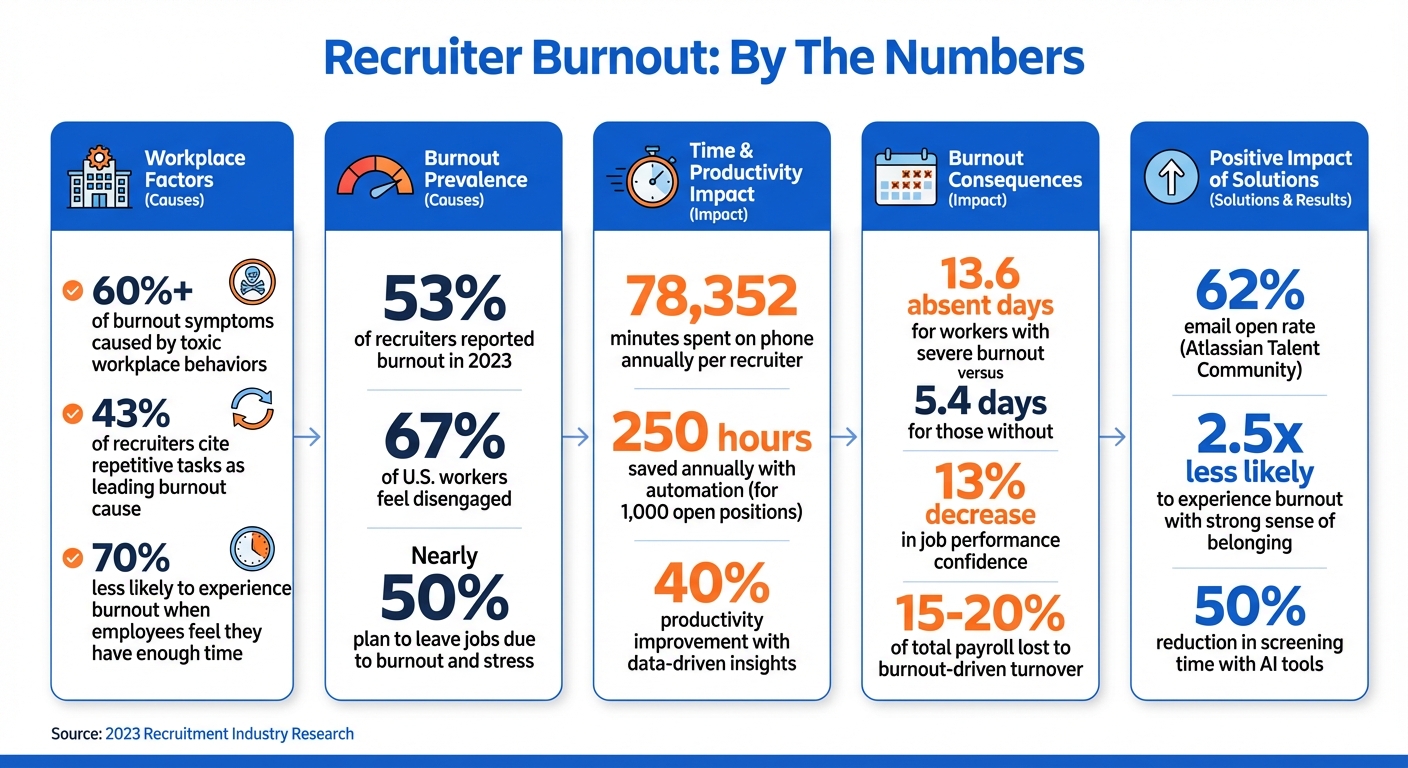 {Recruiter Burnout Statistics and Impact 2023}
What Causes Recruiter Burnout
Recruiter burnout often arises from dealing with a flood of low-quality applications, monotonous administrative tasks, and unrealistic hiring goals. These relentless pressures - ranging from sorting through unqualified candidates to juggling endless paperwork - can take a serious toll on mental and emotional well-being.
Too Many Low-Quality Applications
Sifting through unqualified resumes is one of the most draining parts of a recruiter’s job. Hours are spent reviewing applications that don’t meet the requirements, forcing recruiters to constantly shift focus between roles, which can be mentally exhausting .
This issue is often amplified when companies stick to outdated referral systems or rely too heavily on generic job postings. A great example of improvement comes from Talking Rain, which revamped its job descriptions and broadened its posting platforms. This approach not only improved the diversity of applicants but also eased the frustration recruiters felt from dealing with unsuitable candidates . Unfortunately, this is just one piece of the burnout puzzle, as repetitive administrative tasks add even more strain.
Long Hours and Repetitive Admin Work
Recruitment involves far more than simply screening resumes. Tasks like manual scheduling, formatting interview notes, tracking candidates, and sending follow-up emails can quickly drain energy . Catherine Jaeger, Talent Acquisition Manager at Walmart, sums it up well:
"You're having very similar conversations every day", .
This repetitive nature of the job leads to emotional exhaustion that even regular breaks struggle to alleviate. Statistics back this up - 67% of U.S. workers report feeling disengaged, and nearly half say they plan to leave their jobs due to burnout and stress . And it’s not just the daily grind; the pressure of meeting unattainable hiring quotas adds to the strain.
Unrealistic Hiring Targets
The pressure to meet speed and volume targets often forces recruiters to rush through processes, leaving little time to build meaningful relationships with candidates . This often results in a poor candidate experience, which further complicates the hiring cycle. Gallup research highlights how crucial time management is: employees who feel they have enough time to complete their tasks are 70% less likely to experience severe burnout .
Rachelle Roberts, Senior Recruiter at ICF, sheds light on the challenges recruiters face:
"A lot of the time, we don't have all the information we need and we're unable to control the process. We are working for the customer, trying to manage the recruiting process plus the candidate experience and feel stuck in the middle."
This lack of control, combined with accountability for hiring outcomes, creates a never-ending cycle of stress and fatigue that only worsens over time .
How to Reduce Recruiter Burnout
Preventing burnout requires more than quick fixes - it demands a shift in how workplaces handle stress. The World Health Organization describes burnout as "an occupational phenomenon resulting from chronic workplace stress that has not been successfully managed" .
A strong starting point for addressing burnout is rethinking performance metrics and focusing on strategies that prioritize long-term well-being.
Focus on Quality Metrics Instead of Volume
When recruiters are measured by the sheer number of hires, stress levels tend to skyrocket. Prioritizing quality over quantity can ease this pressure while still achieving excellent hiring outcomes. For instance, Spreetail enhanced their candidate experience by incorporating NPS tracking and integrating an ATS, enabling them to hire over 1,000 people while building meaningful relationships .
Atlassian took a different approach with their "Talent Community", which focuses on engaging highly qualified candidates over time. This strategy grew their community to 13,000 active members, achieved a 62% email open rate, and led to nearly 300 hires. By nurturing relationships rather than chasing immediate numbers, they created a more sustainable recruitment process . Plus, leveraging data-driven insights in recruitment can improve productivity by as much as 40% .
Use AI and Automation Tools
Recruiters often lose valuable time on repetitive administrative tasks, which can drain energy and reduce focus on strategic efforts. Automating tasks like interview scheduling can save significant time - up to 250 hours annually for companies managing 1,000 open positions . AI tools can also assist with transcription, note-taking, and follow-up emails, freeing recruiters to concentrate on meaningful candidate interactions.
Platforms like daily.dev Recruiter simplify candidate sourcing, allowing recruiters to focus on high-value interactions. Instead of sending hundreds of cold emails or screening unqualified applicants, they can directly engage with candidates who have already shown interest. These tools not only save time but also make the recruitment process more impactful.
Support Healthy Work Habits
Burnout isn’t just about long hours - it’s about how those hours feel. Toxic workplace behaviors are a major factor, accounting for over 60% of global burnout symptoms and turnover intentions . Managers play a key role in combating burnout by setting clear expectations, removing roadblocks, and offering emotional support .
Carlos Rios, Human Resources Director at Nordstrom, highlights the importance of protecting mental energy:
"Boundaries are my love language" .
Encouraging healthy work habits can make a big difference. For example, setting boundaries around communication - like avoiding email or Slack until 11:00 AM to allow for focused work - can help reduce stress . Promoting recovery cycles that include proper sleep, balanced nutrition, exercise, and 30-minute micro-breaks can also improve overall well-being . Small changes like these can have a lasting impact on reducing burnout.
How daily.dev Recruiter Helps Prevent Burnout
daily.dev Recruiter tackles burnout by cutting out unnecessary steps and improving how recruiters connect with candidates. Burnout among recruiters often stems from wasted time - like sending countless cold emails, screening unsuitable candidates, and facing constant rejection. By streamlining the process and focusing on meaningful connections, daily.dev Recruiter helps recruiters break free from these exhausting cycles and engage only with candidates who are genuinely interested.
Connecting with Interested Candidates Only
One of the standout features of daily.dev Recruiter is its double opt-in system, which ensures that recruiters only interact with developers who have already shown interest in hearing about job opportunities. This dramatically reduces the "rejection fatigue" that comes with reaching out to uninterested candidates . Instead of the typical cold outreach that often gets ignored, every interaction starts as a warm, mutual connection - both parties agree to the conversation before any contact takes place .
Nimrod Kramer, CEO of daily.dev, sums up the platform’s philosophy perfectly:
"Recruiting should be built on context, not spam. Developers shouldn't have to sift through irrelevant offers from strangers who don't understand their work" .
With a network of over 1,000,000 developers, daily.dev Recruiter uses real-time behavioral signals - like what developers are reading, learning, or building - to identify qualified technical candidates. This approach moves beyond outdated resumes or static profiles, connecting recruiters with developers who are truly aligned with the role, not just those who happen to have a matching job title.
Screening and Matching
After ensuring quality engagement, daily.dev Recruiter takes screening to the next level with AI-driven matching. Traditional manual screening is not only time-consuming but also mentally draining . Recruiters spend an average of 78,352 minutes on the phone annually, much of it on unproductive initial screening calls .
Using its exclusive developer network, daily.dev Recruiter employs AI to surface pre-qualified candidates based on real-time engagement data. This cuts screening time in half , allowing recruiters to shift their focus from tedious administrative work to building meaningful relationships and strategic partnerships . Considering that 43% of recruiters cite repetitive tasks as a leading cause of burnout , this automated matching process - powered by behavioral insights rather than static databases - provides immediate relief while ensuring better candidate alignment.
Hiring engineers?
Connect with developers where they actually hang out. No cold outreach, just real conversations.
Tracking the Results of Burnout Prevention
To gauge whether your efforts to prevent burnout are hitting the mark, you need to assess both how recruiters feel and how they perform. Burnout often stems from an imbalance between job demands and available resources, so it’s crucial to measure metrics that reflect both recruiter well-being and their effectiveness on the job . These insights help validate how burnout prevention strategies, like those offered by daily.dev Recruiter, contribute to broader organizational success.
Metrics for Recruiter Well-Being
Burnout can have a direct impact on retention, so monitoring turnover rates and the intention to leave is essential . Absenteeism is another key indicator; for example, research shows that workers experiencing severe burnout average 13.6 absent days compared to just 5.4 days for those with lower burnout levels .
Using tools like the Maslach Burnout Inventory (MBI) can provide deeper insights into emotional exhaustion, cynicism, and diminished feelings of efficacy . Additionally, tracking a sense of belonging can be revealing - employees with a strong sense of belonging are 2.5 times less likely to experience burnout . Other useful metrics include after-hours work activity and workload fluctuations, which can signal whether recruiters are able to disconnect and recharge effectively .
Metrics for Hiring Performance
Recruiter well-being doesn’t just influence retention - it also directly impacts hiring outcomes. Metrics like strategies for reducing time-to-hire and cycle times can offer clues; for instance, reduced cognitive fatigue often leads to faster and more efficient hiring processes . Similarly, tracking application quality and hiring manager satisfaction can highlight improvements, as burnout has been linked to a 13% decrease in confidence regarding job performance . When burnout is addressed, recruiters are likely to make fewer mistakes, exhibit greater professionalism, and find better candidate matches .
Turnover costs are another critical factor. Burnout-driven voluntary turnover can cost organizations 15% to 20% of their total payroll . Segmenting these metrics by team or shift can help pinpoint areas where workloads are unevenly distributed . The aim is to identify and address potential issues early, preventing them from escalating into long-term problems that harm both team morale and hiring results.
Conclusion
Recruiter burnout is a widespread challenge, but it’s one that organizations can address effectively. As highlighted earlier, burnout contributes to higher turnover rates and increased absenteeism, leading to substantial costs for businesses . These factors make it clear that taking action is not just beneficial - it’s necessary.
The solution lies in shifting the focus from quantity to quality in recruiting efforts. By leveraging automation and AI tools, recruiters can offload repetitive administrative tasks that often lead to exhaustion. Tools like daily.dev Recruiter eliminate the need for cold outreach by connecting recruiters with developers who are already engaged and interested. This allows recruiters to spend less time chasing unresponsive candidates and more time building genuine, impactful relationships. In this way, recruiters move beyond simply filling positions - they become strategic partners in the hiring process.
"Recruiter burnout doesn't happen because people care too little. It typically occurs because recruiters care a lot, but don't have the systems and support to sustain their effort." - Metaview
Focusing on recruiter well-being has tangible benefits: fewer sick days, reduced turnover costs, and better hiring outcomes. Teams that feel supported and valued are better equipped to maintain high performance over time. Moreover, fostering a sense of belonging isn’t just an act of kindness - it’s a smart business decision that helps prevent burnout and strengthens the workplace .
FAQs
What are the key signs of burnout for recruiters?
Burnout in recruitment often shows up in ways that are hard to ignore. You might feel exhausted all the time, even after a good night's sleep. Little things could start to get under your skin, leading to irritability or frustration. That once-burning passion for your work? It may feel like it’s slipping away, replaced by a loss of motivation or excitement.
Other signs include cynicism - feeling disconnected from candidates or colleagues - and a noticeable drop in productivity or work quality. These red flags can creep up gradually, but catching them early is key to protecting your mental health and staying on top of your game.
How can AI tools help prevent recruiter burnout?
AI-powered tools are transforming recruitment by tackling the most tedious and repetitive tasks, giving recruiters more time to build meaningful relationships and make thoughtful decisions. For instance, AI can take over resume screening, rank candidates based on their suitability, and highlight the most relevant profiles - cutting down hours of manual work. It also simplifies processes like scheduling interviews and sending follow-ups, reducing the administrative load and making workflows smoother.
Platforms such as daily.dev Recruiter take things further by integrating AI into a developer-focused hiring network. This approach connects recruiters with pre-qualified, motivated engineers through warm, double opt-in introductions. By removing the need for cold outreach and addressing low response rates, these tools not only make the process more efficient but also reduce emotional stress, creating a more manageable and predictable recruitment experience - essential in preventing burnout.
Why is it important to prioritize quality over quantity in recruitment?
Focusing on quality over quantity in recruitment can significantly ease recruiter stress while delivering better long-term hiring outcomes. Instead of sifting through a flood of unqualified applicants, prioritizing the search for truly suitable candidates streamlines the hiring process and makes it more manageable.
This method doesn’t just save time and effort - it also strengthens team performance and boosts employee retention. A deliberate, quality-first strategy enables recruiters to form genuine connections with candidates, building trust and ensuring a stronger match for both the company and the new hire.
.png)