Cold emails often fail with developers because they lack relevance, trust, and respect for their time. Developers receive countless generic, mass-blasted messages that feel impersonal and irrelevant. Here’s why these emails fall short and what works instead:
- Low Open and Reply Rates: By 2025, fewer than 24% of cold emails are opened, and reply rates drop to just 4.1%.
- Generic Messaging: Bulk emails with personalization mistakes are ignored 95% of the time.
- Irrelevant Roles: Pitching mismatched roles (e.g., Java jobs to Python developers) alienates recipients.
- Missing Key Details: Omitting salary, tech stack, or specific challenges wastes developers' time.
- No Trust Building: Developers are unlikely to engage with strangers who haven’t shown genuine interest in their work.
To connect with developers, recruiters should focus on relevance, technical context, and trust. Instead of cold emails, use warm, trust-driven approaches like engaging in developer communities, referencing specific technical contributions, and leveraging platforms like daily.dev Recruiter for double opt-in introductions. Short, targeted, and respectful outreach aligned with developers’ interests leads to meaningful conversations and higher response rates.
::: @figure 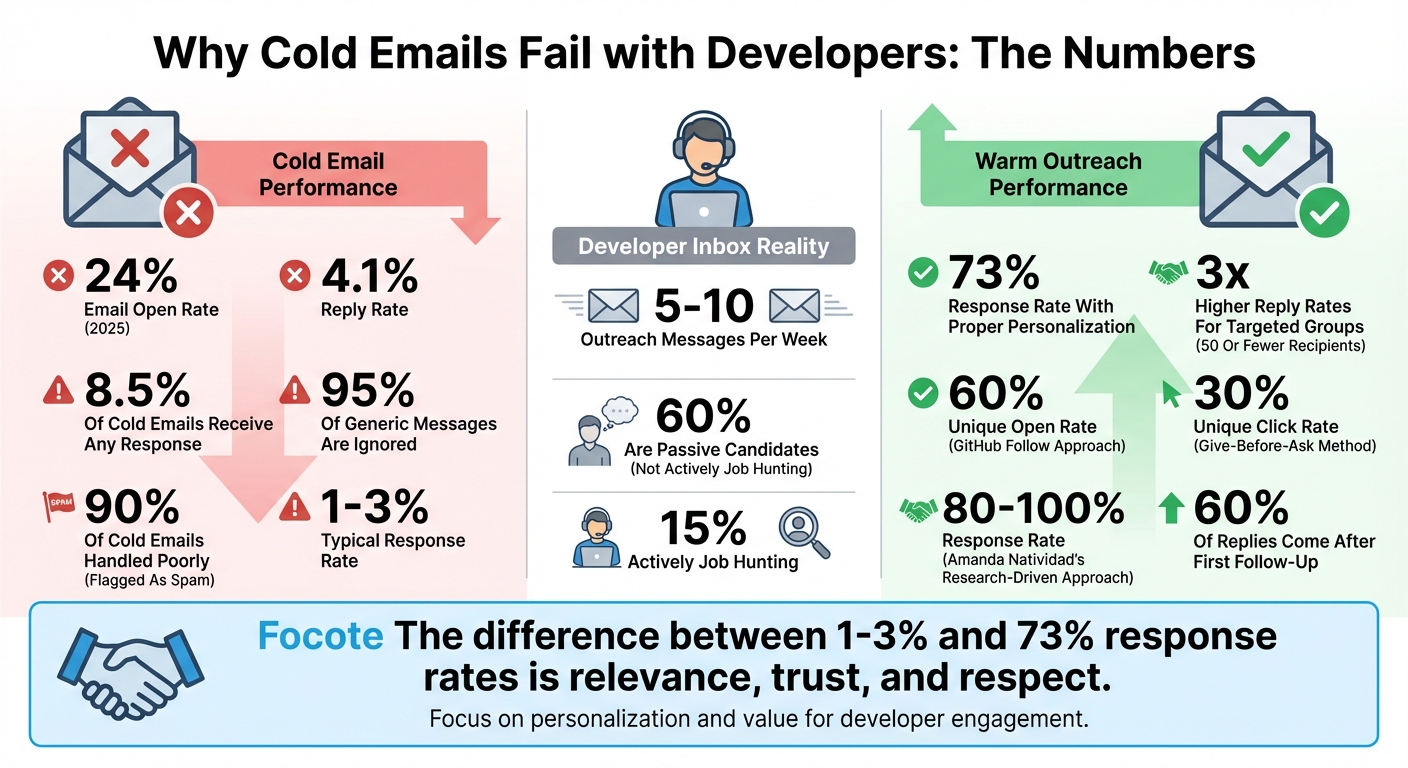 {Cold Email vs Warm Outreach Statistics for Developer Recruitment}
Why Cold Emails Don't Work with Developers
The issue with cold emails isn't that developers are inherently hard to reach - it's that most outreach strategies miss the mark entirely. To improve engagement, it's crucial to understand the common mistakes that make these emails ineffective. Let’s break it down.
Generic Messages and Mass Blasts
Cold email campaigns sent to smaller, targeted groups - 50 or fewer recipients - see reply rates three times higher than mass emails. Yet, only 8.5% of all cold outreach emails ever receive a response. Why? Impersonal, bulk-sent emails not only fail to connect but can also harm your employer brand, making future communications even tougher.
Surface-Level Personalization
True personalization goes beyond simply name-dropping an article or LinkedIn post. It involves referencing a developer’s actual technical contributions, like a GitHub repository, a Stack Overflow answer, or a blog discussing a specific technology. As Zack Olivas, Founder & CEO of LeadLoft, puts it:
"The biggest issue with cold email personalization... is that it tends to feel fake or sales-y. Most people prefer a short, to-the-point email rather than a personalized one, especially if the only personalization is a mention of an article or LinkedIn post."
When done right, personalization can lead to a 73% response rate, but shallow attempts can feel insincere and fall flat.
Irrelevant Roles and Missing Details
Developers quickly tune out emails pitching roles that don’t align with their skills or interests. A glaring example? Offering a Java position to a Python expert or sending a frontend role to a backend engineer. This kind of mismatch - often due to recruiters not reviewing profiles - results in 95% of their messages being ignored.
On top of that, leaving out critical information like salary ranges or the tech stack forces developers to invest unnecessary time just to determine if the role is worth considering. Since compensation is a top priority for many developers, failing to include these basics signals a lack of effort and respect for their time.
Long-Winded, Jargon-Filled Emails
Developers value efficiency, so emails packed with buzzwords and long-winded paragraphs are a sure way to lose their attention. The most effective emails are short - three to five sentences - and focus on what matters to the developer, not just what the company wants.
Overly promotional language, like highlighting company accolades or vague promises of "exciting opportunities", often comes across as self-serving. Developers want to know upfront how the opportunity benefits them before they’re willing to engage.
Lack of Trust or Relationship Building
Cold emails often fail because they ask for something without first establishing trust. Without prior interaction or shared context, developers have little reason to engage. In fact, 90% of cold emails are handled poorly, leading them to be flagged as spam.
Building trust requires showing genuine interest in a developer’s work. For example, in September 2023, Zevi Reinitz at Livecycle tested a "give before you ask" approach for the open-source tool Preevy. Instead of pitching immediately, he followed developers on GitHub, acknowledged their contributions, and sent plain-text emails discussing shared technical interests. This approach led to a ~60% unique open rate and a ~30% unique click rate, along with hundreds of GitHub stars and numerous collaborative responses.
"If the recruiter clearly demonstrates that they know what I do and what I can do, then they probably have something genuinely relevant for me."
- Petr Belousov, CEO and cofounder of CandyJar
Without trust and relevance, cold emails only add to the clutter in developers’ inboxes. A sincere, thoughtful approach is essential for cutting through the noise and making meaningful connections.
Core Principles for Engaging Developers
Once you understand why cold emails often fall flat, the next step is figuring out what actually works. Instead of relying on generic outreach, the key is to focus on relevance, trust, and respect. Engaging developers isn’t about flashy sales tricks - it’s about building genuine connections. Let’s break down how these three elements can replace ineffective cold email tactics with warm outreach.
Start with Relevance and Technical Details
Developers respond when your outreach resonates with their technical interests. Aligning with their tech stack is crucial. After compensation and location, the technologies a company uses are among the top factors developers consider when evaluating opportunities. They’re drawn to roles that involve tools they already know or aspire to work with.
To make your outreach relevant, reference specific, recent activity - like contributions on GitHub, Stack Overflow, or other platforms within the last six months. Highlighting a particular project or repository shows you’ve done your homework and aren’t just sending out a template. As Petr Belousov, CEO and Cofounder of CandyJar, explains:
"After salary and location, one of the most important factors for developers when evaluating employers is the tech stack used by a company. Developers are more interested in projects that use a stack they already know or one they would like to explore in the near future."
Move beyond LinkedIn to find authentic insights. Platforms like GitHub, Stack Overflow, Kaggle, and GitLab offer a wealth of information about a developer’s technical interests. Partner with your own technical team to review candidate profiles and ensure your outreach reflects a solid understanding of the role’s technical vision, rather than relying on vague descriptions.
Build Trust Before Asking for Anything
Trust isn’t earned with a clever subject line - it’s built by giving before asking. Show genuine appreciation for a developer’s work before making any requests. Acknowledge their contributions, engage with their projects, and demonstrate that you’re invested in their interests. This approach establishes credibility and sets the stage for meaningful conversations.
Amanda Natividad, VP of Marketing at SparkToro, emphasizes the importance of thoughtful preparation. She dedicates significant time to researching her audience and curating personalized outreach. Her efforts consistently lead to an 80% to 100% response rate on cold campaigns. The secret? Showing real interest in someone’s work before making any kind of ask.
Respect Their Time and Decision-Making
Developers receive 5–10 outreach messages per week. With that kind of volume, they’ve developed a sharp filter: if your message doesn’t immediately provide value, it’s likely to be ignored. About 60% of developers aren’t actively job hunting but remain open to the right opportunity, so their time is precious, and they’re selective about how they spend it.
Keep your messages short and to the point: three to five sentences are ideal. Skip lengthy introductions and excessive details. Instead, offer a quick overview of the tech stack and the specific challenge your team is tackling. When it comes to your call-to-action, make it as easy as possible - something simple like, “Does this align with your current interests?” works far better than asking for a resume or a 30-minute meeting right away.
As Amanda Natividad puts it:
"You cannot demand attention from a stranger... remind yourself that you're both still strangers, and they don't owe you anything."
Developers value their independence and autonomy. Respect that by ensuring your outreach is concise, opt-in, and directly relevant to their technical journey.
Moving from Cold Emails to Warm Introductions
Shifting from cold outreach to warm introductions means connecting with developers by understanding what they want in spaces where they naturally learn, collaborate, and engage. Instead of sending unsolicited pitches, the focus should be on building relationships in environments where developers are already active. This approach emphasizes trust and context, creating meaningful connections that resonate with technical professionals.
Meet Developers Where They Already Spend Time
Developers are highly active in technical communities and open-source projects. By contributing authentically in these spaces, you can establish familiarity long before initiating direct communication. Platforms like GitHub, Stack Overflow, and other developer-centric hubs are excellent places to engage meaningfully. For instance, participating in discussions, contributing to projects, or even just showing appreciation for their work can build recognition over time.
The key is consistency without being intrusive. Following developers whose expertise aligns with your needs and engaging thoughtfully with their contributions creates a foundation of trust. This groundwork ensures that when the right opportunity comes along, your outreach feels natural and welcome.
Use Developer-First Platforms Like daily.dev Recruiter
To take this a step further, consider leveraging developer-first platforms tailored to their habits and interests. Traditional outreach methods often rely on outdated databases, leaving recruiters guessing about a developer's availability or interest. In contrast, platforms like daily.dev Recruiter connect you with developers in real-time, in spaces where they are already consuming technical content, learning, and staying updated on industry trends.
What sets daily.dev Recruiter apart is its warm, double opt-in introductions. Developers only receive opportunities that align with their skills and interests, engaging when they’re genuinely open to new challenges. This eliminates the guesswork and spam often associated with cold emails, replacing interruptions with meaningful opportunities.
The platform’s job briefs are designed with developers in mind, focusing on essential details like the tech stack, technical challenges, and the potential impact of the role. By providing this level of clarity, recruiting becomes less about selling and more about creating a mutually beneficial connection, where both parties approach the conversation with clear intent.
Maintain Long-Term Presence and Connections
Building warm introductions is a long game. It requires consistent, authentic engagement over time. By sharing technical content, joining discussions, and showing a genuine interest in the developer community, you can move from being an outsider to a trusted contact. This steady presence builds the trust necessary for meaningful recruitment conversations.
Adopting a multi-touch strategy can further enhance your efforts. Instead of simply "checking in", offer value with every interaction - share industry articles, highlight innovative projects, or comment on emerging trends. Research indicates that about 60% of replies in outreach campaigns come after the first follow-up message . This highlights the importance of persistence combined with value-driven communication.
Personalized outreach efforts, grounded in research, can achieve response rates as high as 73% . Compared to the minimal engagement of generic cold emails, this demonstrates the tangible benefits of investing in genuine relationship-building. When it’s time to discuss opportunities, these relationships ensure a far more productive and positive conversation.
Hiring engineers?
Connect with developers where they actually hang out. No cold outreach, just real conversations.
How to Implement a Warm Outreach Strategy
Shifting from cold emails to warm introductions isn't just a tweak in tactics - it's a complete overhaul of how you approach developer outreach. It requires rethinking your mindset, redefining success metrics, and refining your methods. This shift lays the groundwork for building trust and starting conversations that actually matter.
Rethink Success Metrics
If you want authentic connections, start by redefining what success looks like. Instead of focusing on how many emails you send, pay attention to the quality of the interactions you create. Cold emails typically have a dismal 4.1% reply rate. But campaigns targeting smaller, more focused groups - 50 recipients or fewer - can triple your chances of hearing back.
"Success isn't about being seen, it's about being answered"
- James Milsom, Head of Marketing at Hunter.io
Forget about open rates for a moment. What you really want to track are reply rates and meaningful conversations. This means creating smaller, highly targeted lists of developers. When you shift to warm introductions, measure your progress by tracking double opt-in response rates - the percentage of developers who actively choose to engage with you.
Spot and Prioritize Developer Activity Signals
Developers leave clear signs of intent through their technical activity. For example, they might open GitHub issues, execute CLI commands, star repositories, or interact with specific API documentation. Collaborate with your technical leads to review profiles on platforms like GitHub or Stack Overflow. This ensures your outreach aligns with the technical vision of the role.
"If the recruiter clearly demonstrates that they know what I do and what I can do, then they probably have something genuinely relevant for me"
- Petr Belousov, CEO and Cofounder of CandyJar
Focus on developers showing intent - those exploring competitor technologies, using complementary tools, or working on proof-of-concepts are often more open to conversations. Keep in mind that while only 15% of developers are actively job hunting, nearly 60% are passive candidates who could be persuaded by the right opportunity.
Leverage Warm Introductions with daily.dev Recruiter
daily.dev Recruiter helps you connect with developers where they already engage with technical content. Its double opt-in system ensures that developers only see opportunities that match their skills and interests, making every conversation more intentional.
When creating job briefs, lead with the technical details. Developers care about the tech stack, specific challenges, and the potential impact of the role - these rank just below salary and location in their priorities. Highlight the key technical challenges and growth opportunities the role offers.
While daily.dev Recruiter automates much of the introduction process, your authenticity still matters. Work with your tech leads to ensure that the job description reflects real challenges and opportunities for growth. This approach turns recruitment from a cold call into a meaningful, trust-driven conversation that resonates with developers.
Conclusion
Cold emails often miss the mark with developers because they fail to align with how developers prefer to engage. Generic templates, surface-level personalization, and irrelevant pitches are ignored 95% of the time. Developers don’t respond to noise - they respond to messages that respect their time, provide technical context, and are genuinely relevant.
This gap in cold outreach highlights the value of warm introductions that truly connect. The difference between a 1% to 3% response rate and a 73% response rate is striking. By approaching developers in spaces they already frequent, focusing on technical details, and building trust before making an ask, you move from impersonal mass outreach to conversations that matter.
"The best cold outreach is actually warm outreach. No one likes hearing from complete strangers."
- Amanda Natividad, VP of Marketing, SparkToro
To make this shift more tangible, tools like daily.dev Recruiter offer a practical solution. By connecting you with the 60% of passive developers, the platform’s double opt-in system ensures that every interaction begins with mutual interest. This approach not only avoids the spammy feel of traditional outreach but also protects and enhances your employer brand.
FAQs
Why is it important to personalize outreach to developers?
Personalization matters because developers are often bombarded with generic, cookie-cutter emails that lack relevance and are easy to dismiss. When you take the time to craft a message that mentions a developer's recent project, highlights their specific skills, or addresses challenges they’ve tackled, it shows genuine effort. This approach not only grabs attention but also fosters trust.
The stats back this up: cold, impersonal emails usually see response rates of just 1–5%. On the other hand, personalized, context-aware outreach can boost those rates to an impressive 21–34%. Beyond the numbers, tailoring your message demonstrates respect for a developer's time and shows that your outreach aligns with their interests and goals. This makes it far more likely to spark a meaningful connection.
How can recruiters establish trust with developers?
Recruiters can earn developers' trust by prioritizing personalized and thoughtful outreach over impersonal mass emails. Developers are far more receptive to warm introductions - those that resemble referrals - because they convey respect for their time and establish credibility. Crafting messages that demonstrate how a role aligns with their career aspirations, emphasizing opportunities for autonomy and impactful work, and being upfront about the hiring process are essential steps.
Leveraging platforms tailored for developers can further streamline this approach. Engaging with developers in communities where they are already active and adopting a double opt-in method ensures that every interaction feels intentional and mutually agreed upon. By focusing on clear, honest communication and valuing their time, recruiters can move beyond cold outreach and foster authentic, trust-based connections.
Why are warm introductions more effective than cold emails when reaching out to developers?
Warm introductions outperform cold emails because they’re rooted in trust and credibility. When a developer is referred by a trusted colleague or community member, the interaction feels personal and relevant - far from the impersonal nature of spam. This personal touch often leads to much higher response rates, easily surpassing the typical 1%-5% seen with cold outreach.
Another advantage of warm introductions is the context they provide. They offer insights into a developer's skills and interests, allowing for more meaningful conversations right from the beginning. Developers are naturally more receptive when they know the recruiter has been vouched for by someone they respect. This not only leads to deeper, more engaging discussions but also increases the chances of progressing in the hiring process. By prioritizing trust and reducing barriers, warm introductions create a smoother and more positive experience for everyone involved.
.png)