Community-based recruiting is transforming how companies connect with developers. Instead of relying on outdated job boards or impersonal mass emails, this approach focuses on engaging with developer communities where they already frequent - like GitHub, Stack Overflow, and daily.dev. These platforms are where developers code, solve problems, and stay updated, making them ideal for meaningful, targeted outreach.
Key insights:
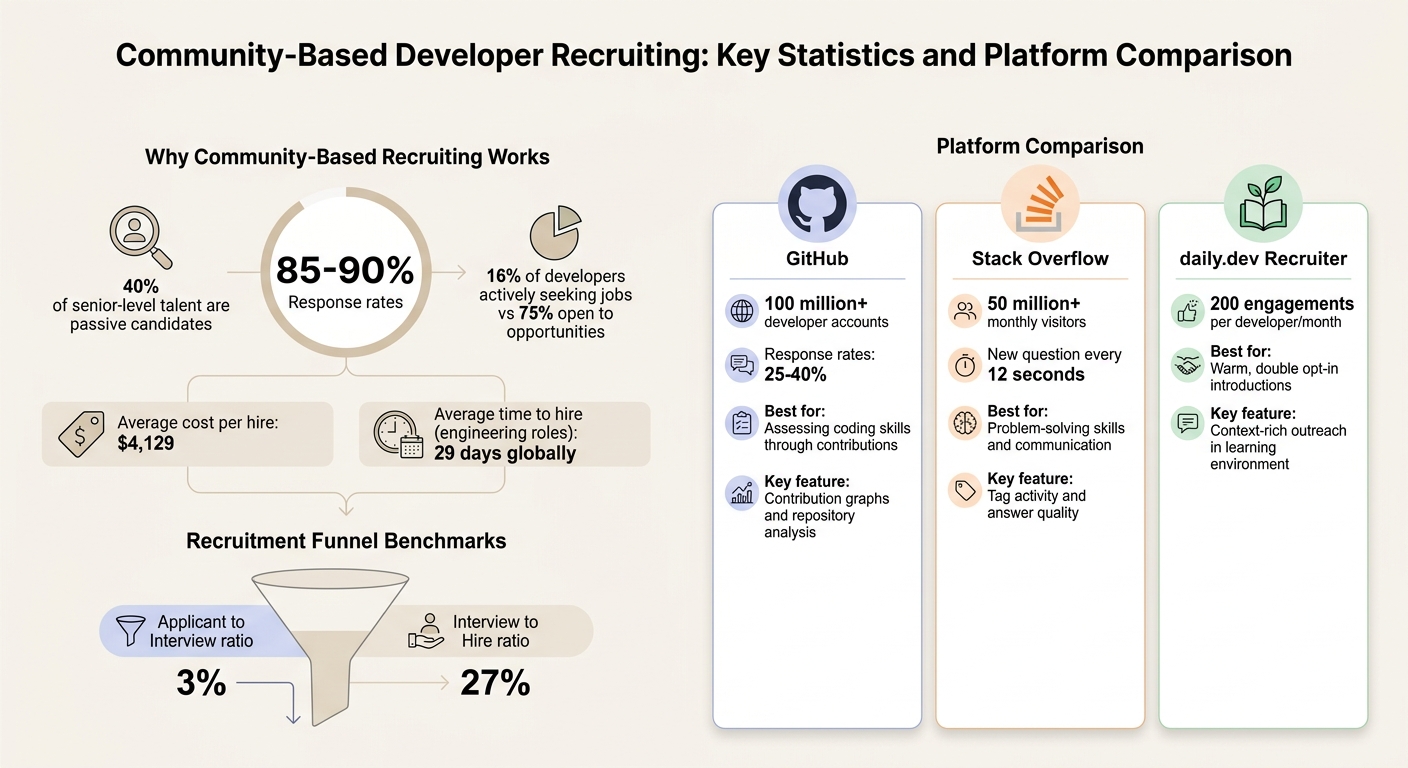
- Response rates of 85–90% make this method far more effective than traditional recruiting strategies.
- It’s especially useful for reaching senior-level talent, with 40% of them being passive candidates who avoid job boards.
- Developers today value transparency, autonomy, and meaningful work over flashy perks.
Where to look:
- GitHub: Assess coding skills through contributions, repositories, and commit quality.
- Stack Overflow: Spot problem-solvers by evaluating their answers and activity in relevant tags.
- daily.dev Recruiter: Connect with developers in their learning environment through opt-in introductions.
How to engage:
- Personalize outreach by referencing specific work or contributions.
- Offer value upfront, like resources or opportunities to participate in events.
- Use tools like daily.dev Recruiter to match developers with roles that align with their skills and interests.
Where to Find Active Developer Communities
The best developers aren't hanging out on traditional job boards - they're actively coding, learning, and collaborating in trusted spaces. To connect with them, you need to meet them where they already spend their time. Here are three platforms that can help you identify and engage with talented developers. Each offers unique insights into their skills and activity, making your outreach more targeted and effective.
GitHub: Discover Developers Through Open-Source Contributions
GitHub is a treasure trove for understanding developers' actual coding work. With over 100 million developer accounts, it’s the largest hub for verified coding activity. One standout feature is the contribution graph, which displays daily coding activity (though keep in mind private repository work isn’t visible). GitHub also automatically detects programming languages used in repositories, offering proof of skills based on actual work rather than self-reported proficiency.
To assess a developer’s expertise, look at their repositories, contribution history, and commit quality. High-quality commits often include clear messages, logical structure, tests, and evidence of participation in code reviews. A well-documented README file is another strong indicator of professionalism, showcasing a developer's ability to communicate and organize - key traits for team collaboration.
For example, in 2025, Mercedes-Benz streamlined its engineering processes by centralizing its source code on GitHub. Fabian Faulhaber, an Application Manager, highlighted how this approach enhanced onboarding:
"It helps us onboard new software engineers and get them productive right away. We have all our source code, issues, and pull requests in one place... GitHub is a complete platform that frees us from menial tasks and enables us to do our best work."
To find developers, use advanced search filters like language, location, and followers. This helps you identify qualified technical candidates more efficiently. For instance, searching language:react followers:>50 can surface influential React developers. Check out contributor lists on popular projects, and when reaching out, personalize your message by mentioning specific contributions, like a middleware tool or a bug fix they worked on. This approach can boost response rates to 25–40%, compared to just 10–15% on LinkedIn .
Stack Overflow: Spot Problem-Solvers and Communicators
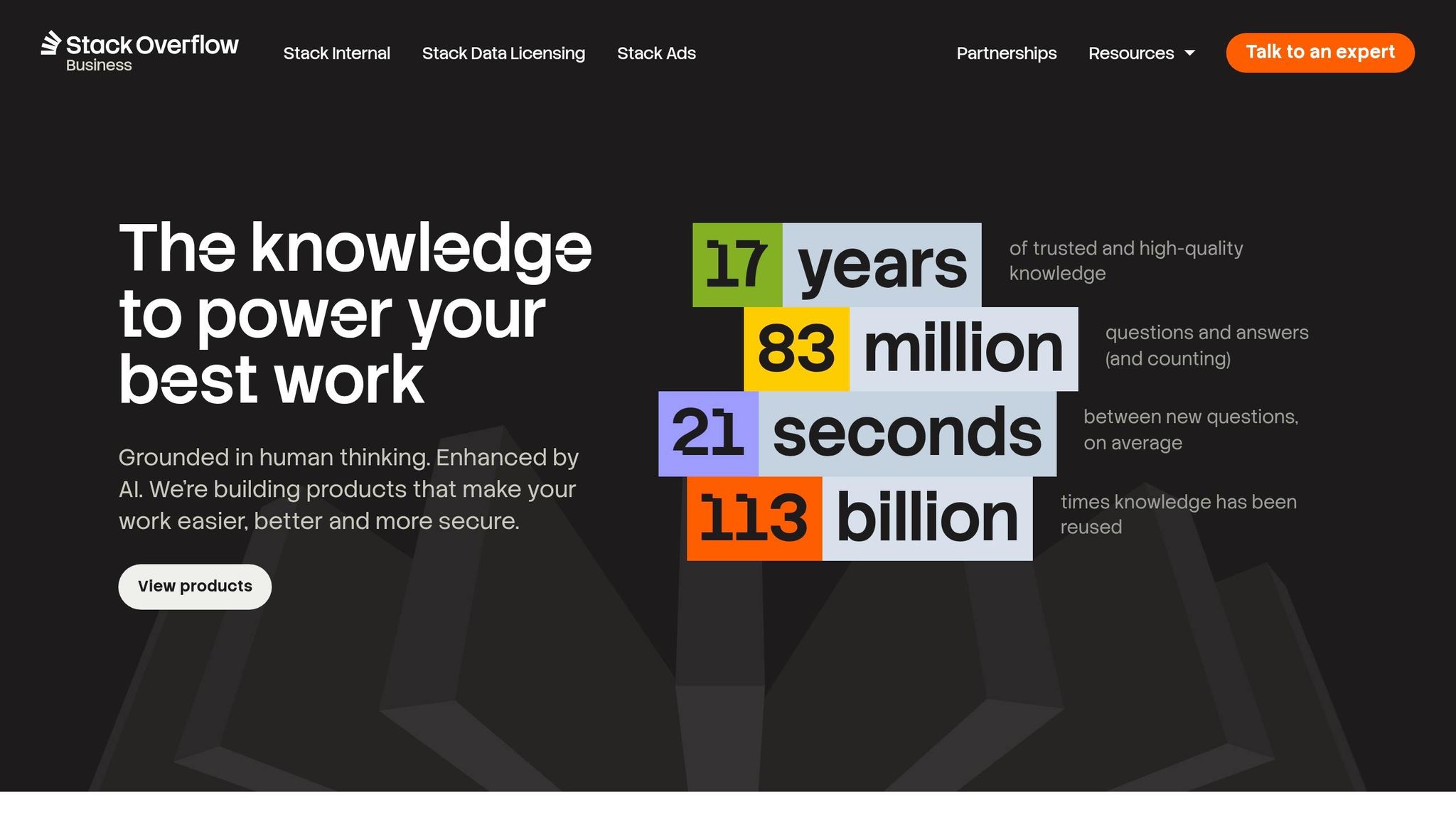
While GitHub showcases coding expertise, Stack Overflow highlights problem-solving skills and the ability to explain complex concepts. With over 50 million monthly visitors and a new question posted every 12 seconds , it’s the go-to platform for developers tackling technical challenges. Stack Overflow doesn’t just reveal what developers know - it shows how they think, approach problems, and communicate solutions.
To find talent, focus on tag activity related to specific technologies. Developers active in tags like "javascript" or "python" often demonstrate deep knowledge. Explore the top users lists within these tags to identify experts who are not only highly skilled but also active contributors. Evaluate the quality of their answers - look for clear explanations, working code snippets, and thoughtful follow-ups. These traits often indicate developers who could also be strong mentors.
Interestingly, while only 16% of developers are actively seeking jobs, 75% are open to hearing about new opportunities . Stack Overflow’s advanced candidate search and messaging tools (available with paid accounts) allow you to connect with developers who may not be job hunting but are open to discussions.
daily.dev Recruiter: Engage Developers in Their Learning Environment
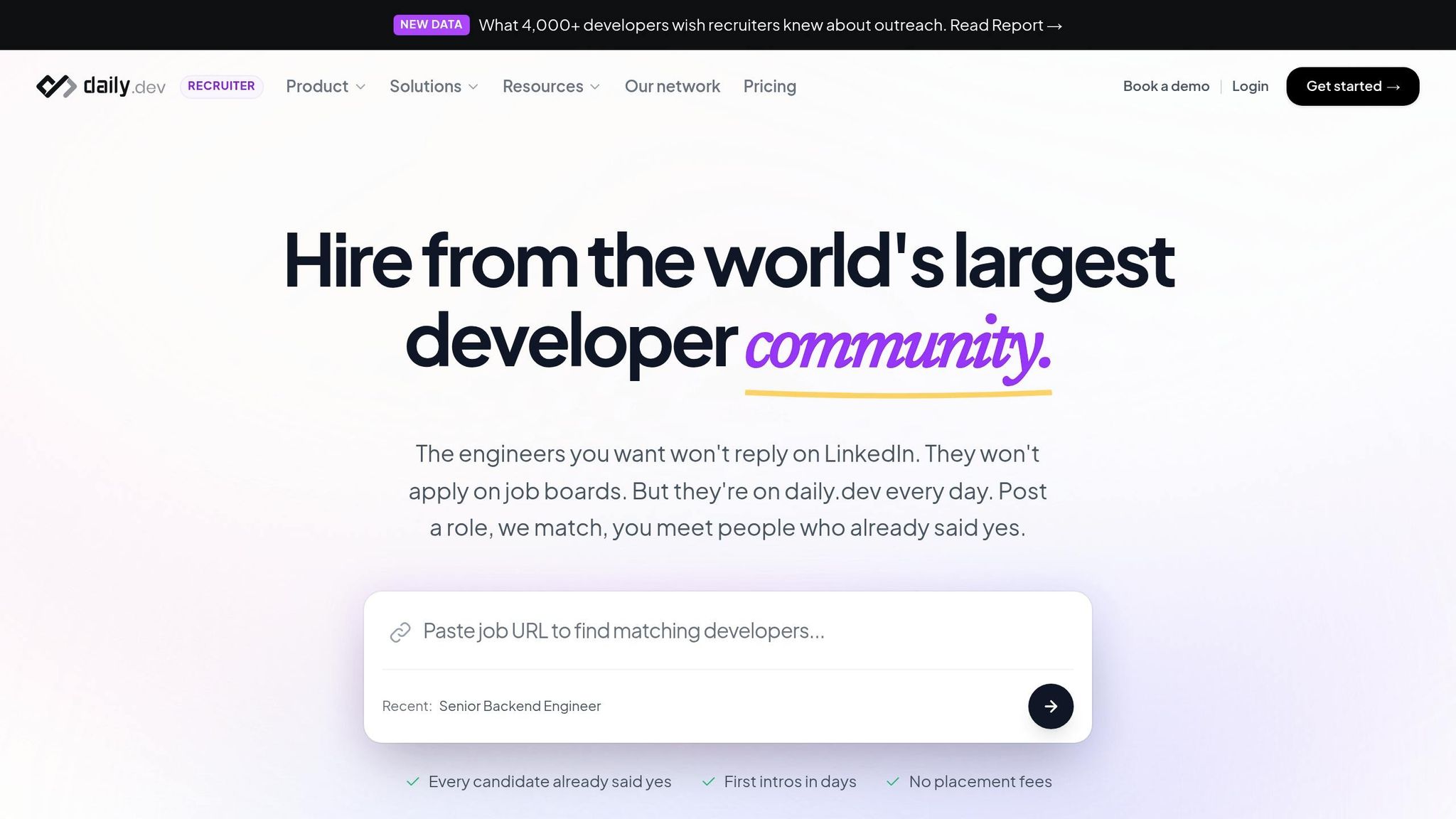
daily.dev Recruiter offers a unique way to connect with developers by integrating into their daily routines. This platform focuses on developers who are actively learning and staying updated in their field. Unlike cold outreach or scraped databases, it enables warm, double opt-in introductions to pre-qualified developers who have explicitly opted in to hear about opportunities.
This approach ensures you’re connecting with developers who are genuinely interested and aligned with your role. Every introduction is tailored, meaning developers receive opportunities that match their skills and interests - not generic messages. This creates more meaningful conversations and builds trust with developers who are already engaged in their professional growth.
How to Engage Developers Effectively
Finding developers is one thing; connecting with them in a meaningful way is a whole different challenge. Developers value communication that’s clear, honest, and avoids the fluff. They respond best to authenticity, transparency, and technical depth . This approach ties into community-based recruiting - building trust within the spaces where developers are already active. The secret? Respect their time, show you’ve done your homework, and offer something valuable before making any requests.
Personalizing Messages Based on Developer Activity
Generic messages don’t cut it. When reaching out, referencing a developer’s specific work or contributions makes a huge difference, especially when writing non-spammy recruiter emails. For example, instead of a vague comment like, "I saw your React work", aim for something more precise: "I noticed your middleware tool in the payment-processing repo; your error logging approach was particularly elegant." This kind of detail shows you’ve taken the time to understand their work.
You can also draw from their activity on platforms like Stack Overflow. For instance, you might say, "Your answer on managing complex state with useReducer helped clarify a concept I’d been struggling with." Developers often share their technical interests - whether they’re tackling maintainability challenges or diving into new programming languages. Use this information to tailor your outreach and make it resonate .
Providing Value Before Asking for Anything
Here’s a pro tip: give before you ask. Share resources that developers will find genuinely helpful, like top-notch documentation, interactive tutorials, or sandbox environments where they can experiment . If you know a developer has recently discussed a specific challenge, sending them a targeted resource or offering constructive feedback can help establish a real connection.
Another way to engage is by inviting developers to participate in hackathons as mentors or judges. This gives them a chance to expand their network and gain visibility, while also positioning your company as a supportive partner in their career journey. When the time comes to discuss opportunities, it won’t feel forced - it’ll be a natural progression of an already positive relationship .
These thoughtful, value-driven interactions lay the groundwork for meaningful, context-rich conversations through tools like daily.dev Recruiter.
Using daily.dev Recruiter for Context-Rich Outreach
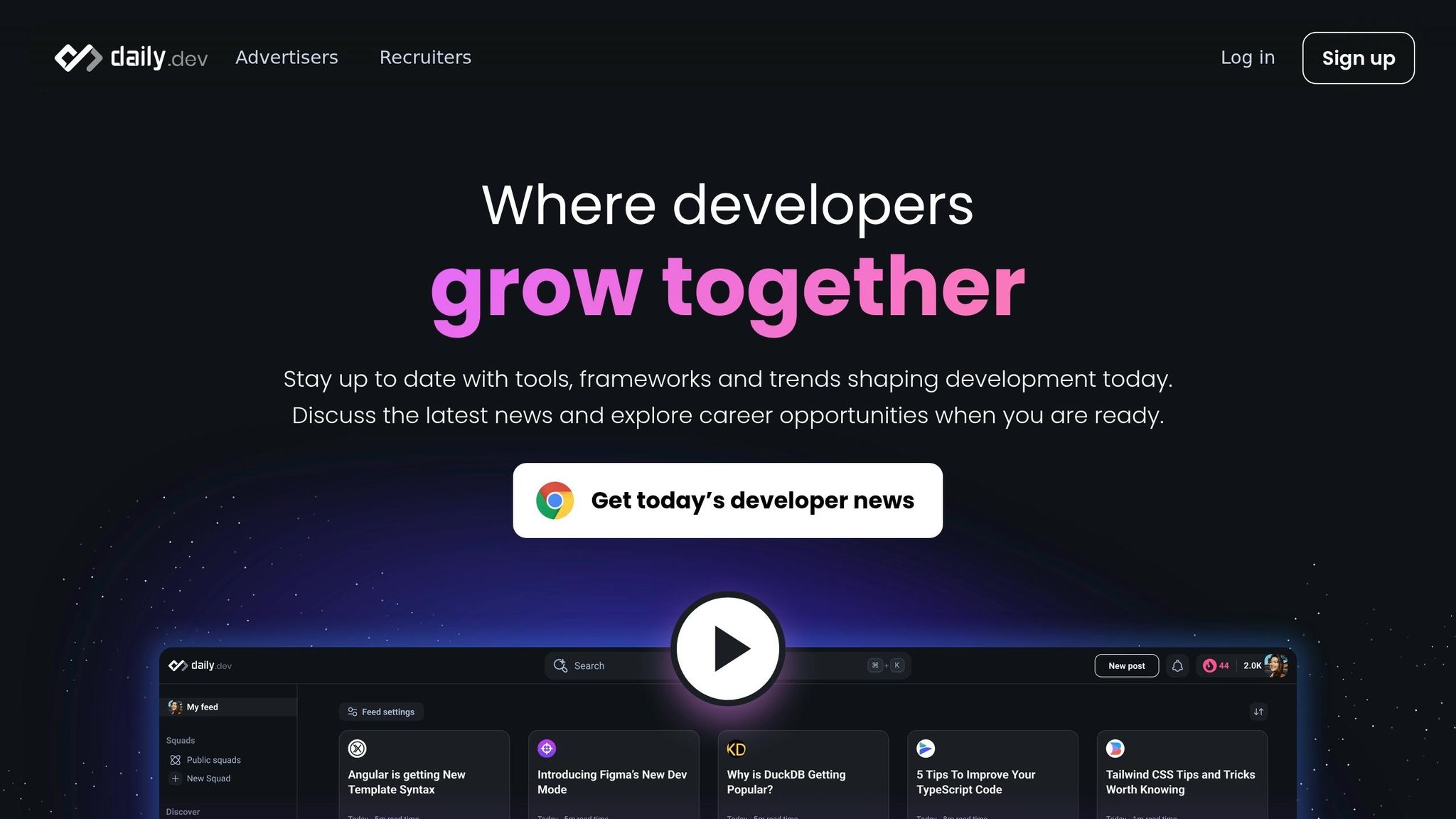
Once you’ve nailed personalized messaging and value-driven engagement, daily.dev Recruiter can take your efforts to the next level. This platform uses real-time developer insights to refine your outreach. By tracking what developers are reading, building, and following, it matches them with roles that align with their interests . Job opportunities are shared privately within a developer’s daily learning environment, making your outreach feel more like a trusted suggestion than an intrusive pitch. With developers engaging with daily.dev around 200 times a month , you’re connecting with them in a space they trust.
When creating job postings, skip the generic language. Be specific - highlight what developers will work on, the tools they’ll use, and what sets your team apart . You can even filter candidates with custom screening questions. For example, asking, "How do you handle state management in large Astro applications?" helps identify serious candidates right away . Plus, the platform provides feedback when a developer passes on a role, giving you actionable insights to improve your approach .
"We built a place where engineers can turn off the noise. To enter this space, you don't need a hack. You need trust."
– Nimrod Kramer, CEO & Co-Founder, daily.dev
Tracking and Improving Your Recruitment Results
Keeping tabs on your recruitment efforts is crucial when using community-based recruiting. Start by analyzing your Source of Hire to see which platforms - like GitHub, Stack Overflow, or daily.dev - are delivering actual hires . If a platform isn't producing results, it might be time to shift your budget elsewhere. This kind of data helps ensure your outreach stays targeted and effective.
Next, focus on the quality of your candidates by monitoring key performance metrics. For example, use Quality of Hire measurements, such as first-year performance and retention rates, to gauge success . A single high-performing developer who stays with your team can be far more valuable than a large pool of unproductive applicants. Keep an eye on your Yield Ratio, which tracks the percentage of candidates moving from introduction to the first interview . If you notice that candidates are engaging with your initial outreach but dropping off before interviews, it could signal a flaw in your process. Low response rates might point to poor personalization - are you referencing their specific work or offering something meaningful upfront? Additionally, check your application completion rates. If candidates start but don’t finish, your process might be too complex or not optimized for mobile use . With industry averages showing an applicant-to-interview ratio of 3% and an interview-to-hire ratio of 27% , even small tweaks can make a big difference.
Combine these insights with analytics from developer hiring platforms vs ATS (Applicant Tracking System) to identify bottlenecks and track Time to Productivity - how quickly new hires become fully effective . If there's a long gap between screening and interviews, you risk losing candidates to companies that move faster . On average, it takes 29 days to hire for engineering roles globally , but community-sourced candidates often have multiple offers, so speed is critical. When candidates decline offers, ask for feedback - it might reveal unmet expectations around company culture or autonomy .
Platforms like daily.dev Recruiter can integrate with your current systems to provide insights when candidates pass on roles, helping you fine-tune your approach. These data-driven adjustments can lower the average $4,129 cost per hire .
Conclusion
Community-based recruiting thrives by connecting with developers in the places where they actively learn, code, and collaborate. Instead of relying on cold emails or outdated candidate databases, this approach focuses on entering spaces where trust and engagement already exist. Whether it's through open-source contributions on GitHub, technical discussions on Stack Overflow, or the learning environment of daily.dev, the emphasis is on personalization and respecting developers' time and expertise.
Platforms like daily.dev Recruiter change the game by replacing disruptive outreach with intentional matchmaking. With a double opt-in model, conversations only happen when both parties express genuine interest. By providing context-rich introductions and clear role details, these platforms minimize wasted time and increase the likelihood of finding the right fit.
To make the most of this strategy, regular evaluation is essential. Track how your outreach performs and refine your approach based on the results. For example, if candidates respond to your initial message but don't proceed further, revisit your personalization tactics. Highlight their specific contributions and offer clear value before making any requests. Even small tweaks can have a noticeable impact on your success rate.
This shift from traditional databases to community-driven recruiting isn't just a passing trend - it reflects how developers prefer to be approached. They prioritize technical culture, autonomy, and meaningful opportunities over superficial perks. Tailored, thoughtful outreach not only fills roles more efficiently but also fosters long-term relationships with skilled professionals.
FAQs
How do I reach developers without spamming them?
To reach developers without coming across as spammy, focus on engaging with communities authentically. Align your outreach with their interests and join the spaces they frequent, such as tech forums, meetups, or online groups. Instead of relying on mass messaging, build trust by starting genuine conversations. Participating in virtual or in-person events and being active on platforms like Reddit or Discord are great ways to form real, meaningful connections.
What should I look for on GitHub to judge skill fairly?
To evaluate a developer's skills on GitHub effectively, pay attention to a few critical factors. Start by looking at the originality of their repositories - projects they’ve built themselves rather than just forks of others' work. Next, consider community validation through metrics like stars and forks, as these indicate how others value their contributions.
Take a close look at their README files too. Well-written README files not only showcase their professionalism but also demonstrate how clearly they can communicate their ideas. Additionally, review their contribution graph for consistent activity, and check how recent their commits are. This helps you understand their current level of engagement and whether they’re actively honing their skills.
These indicators often provide a more accurate measure of their expertise than a traditional resume.
How can I prove community recruiting is working in my ATS?
To prove that community recruiting is working within your ATS, focus on tracking engagement metrics that highlight developer interest and involvement.
Pay attention to how developers respond to your outreach efforts, especially personalized messages. Are you seeing more replies or interactions? Over time, measure whether these interactions are increasing.
Also, keep an eye on participation in community events, forums, or the social platforms where you're active. Look for signs like growing engagement or positive feedback from participants. These metrics provide clear evidence of how well your recruitment strategies are performing.
.png)