Developers are notoriously hard to recruit because they’re not actively job hunting, and generic outreach won’t cut it. To attract top talent, you need to focus on three things:
- Go where developers are: Platforms like GitHub, Stack Overflow, and technical communities are where developers showcase their skills. Evaluate their work before reaching out.
- Build relationships over time: Developers value personalized, respectful communication. Stay in touch with updates on projects or tech insights, tailored to their interests.
- Track your pipeline performance: Use metrics like conversion rates, time-to-hire, and source effectiveness to refine your approach and focus on what works.
The best pipelines create long-term connections, align hiring plans with business goals, and prioritize roles that have the most impact. Tools like daily.dev Recruiter can help you connect with developers in a more targeted way, improving response rates and hire quality.
Planning Your Developer Hiring Needs
To build a strong development team, start by clearly defining who you need to hire and when. Aligning your hiring timeline with your business objectives is crucial. For instance, if you're planning a Q3 product launch, you'll want to ensure the right developers with the necessary skills are onboarded well before deadlines.
"A proactive approach starts by building personas... take a look at your business growth plans. Then, build a corresponding workforce hiring strategy that gives you insight into when hires need to be made across the year to sustain your company's vision." - Sedef Buyukataman, Talent Brand Strategist, Proactive Talent Strategies
This strategy emphasizes the importance of syncing hiring efforts with broader business goals.
Connect Hiring Plans to Business Objectives
To make your hiring effective, tie it directly to your company's goals. For example, if you're shifting to a cloud-native infrastructure, you'll need DevOps engineers with cloud expertise. Similarly, scaling AI capabilities means bringing in machine learning specialists. The trick is identifying gaps between your current team’s skills and the demands of upcoming projects.
Work closely with hiring managers to pinpoint essential skills versus those that are more flexible. Conversations with experienced developers can also provide a clearer picture of the day-to-day requirements, which may differ from what’s listed in formal job descriptions. Set measurable 90-day goals to ensure new hires contribute to business outcomes right away.
Pay attention to why candidates might decline your offers. If recurring issues like concerns about the tech stack, remote work policies, or compensation arise, they may signal areas where adjustments are needed to attract the right talent.
Once your hiring plans are aligned with business goals, your next focus should be prioritizing the roles that will have the biggest impact.
Determine Which Developer Roles to Prioritize
Not all roles have the same level of urgency or impact. Use tools like the Scarcity-Impact Framework to decide where to concentrate your efforts. For example, "unicorn" roles - those with limited talent availability but high business impact - require a more hands-on approach, such as active sourcing and personalized outreach. Implementing effective sourcing strategies ensures you reach these high-impact candidates. On the other hand, roles with a larger talent pool can often be filled through job postings or employee referrals.
Consider the consequences of delays in filling each role. For critical positions, apply the 24-Hour Test: if delaying the hire by a day could cause significant setbacks, it’s a high-priority role .
Review your historical hiring data to identify positions with high turnover rates. For these roles, maintaining a steady talent pipeline can help you fill openings faster. Sourced candidates, for instance, tend to convert at twice the rate of external applicants . By prioritizing effectively, you can streamline your hiring process and focus on filling the roles that drive the most value.
Hiring engineers?
Connect with developers where they actually hang out. No cold outreach, just real conversations.
Where to Source Developer Talent
::: @figure 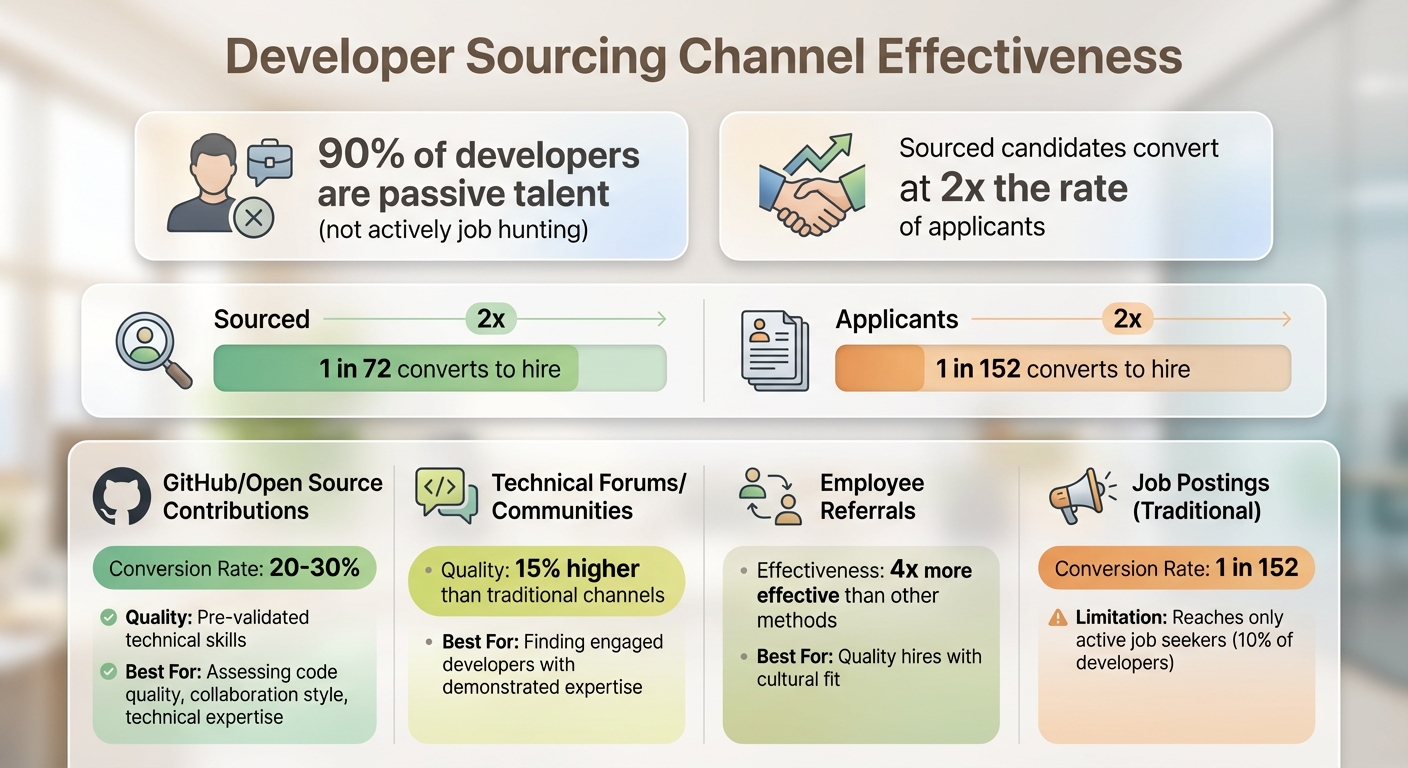 {Developer Pipeline Sourcing Channels: Conversion Rates and Effectiveness Comparison}
Finding top developers isn’t as simple as posting a job ad. In fact, 90% of developers are passive talent, spending their time on projects, solving complex problems, and honing their skills - not browsing job boards . To connect with them, you need to be where they already are.
Here’s why sourcing matters: sourced candidates are more than twice as likely to convert into hires compared to those who apply through job postings. On average, 1 in 72 sourced candidates gets hired, compared to 1 in 152 applicants . This efficiency makes multi-channel sourcing a critical strategy for building a strong talent pipeline.
Find Developers Through Open Source Contributions
Platforms like GitHub offer a unique way to evaluate developers’ skills and work habits. By examining public repositories, you can assess their code quality, collaboration style, and areas of technical expertise - all before reaching out.
Focus on developers who maintain active repositories or contribute to projects that align with your tech stack. For instance, a backend engineer contributing to Python frameworks or a frontend developer maintaining a React library demonstrates both technical skill and commitment. Look at their contribution frequency, pull request complexity, and feedback handling to gauge their reliability and problem-solving abilities.
Don’t overlook commit histories and issue discussions. Developers who document their work clearly, help others troubleshoot, and contribute consistently over time showcase qualities that go beyond what a traditional resume can reveal.
Connect with Developers in Their Communities
Developers often gather in online communities to share knowledge and keep up with industry trends. Platforms like Stack Overflow, technical forums, and networks like daily.dev are where they actively engage - not necessarily to find jobs, but to build their professional profiles.
On Stack Overflow, you can identify developers who provide detailed answers, earn reputation points in relevant technology categories, and explain concepts with clarity. Similarly, on daily.dev, developers interact with technical content and discuss emerging technologies, signaling both expertise and a passion for their craft.
The key to success in these spaces is authentic engagement. Instead of treating these platforms as recruiting grounds, focus on building genuine connections. Comment on their contributions, share relevant opportunities, and establish a relationship before pitching a role. Developers are quick to spot insincere outreach, and transactional approaches can harm your reputation and your company’s brand.
Use daily.dev Recruiter for Double Opt-In Introductions
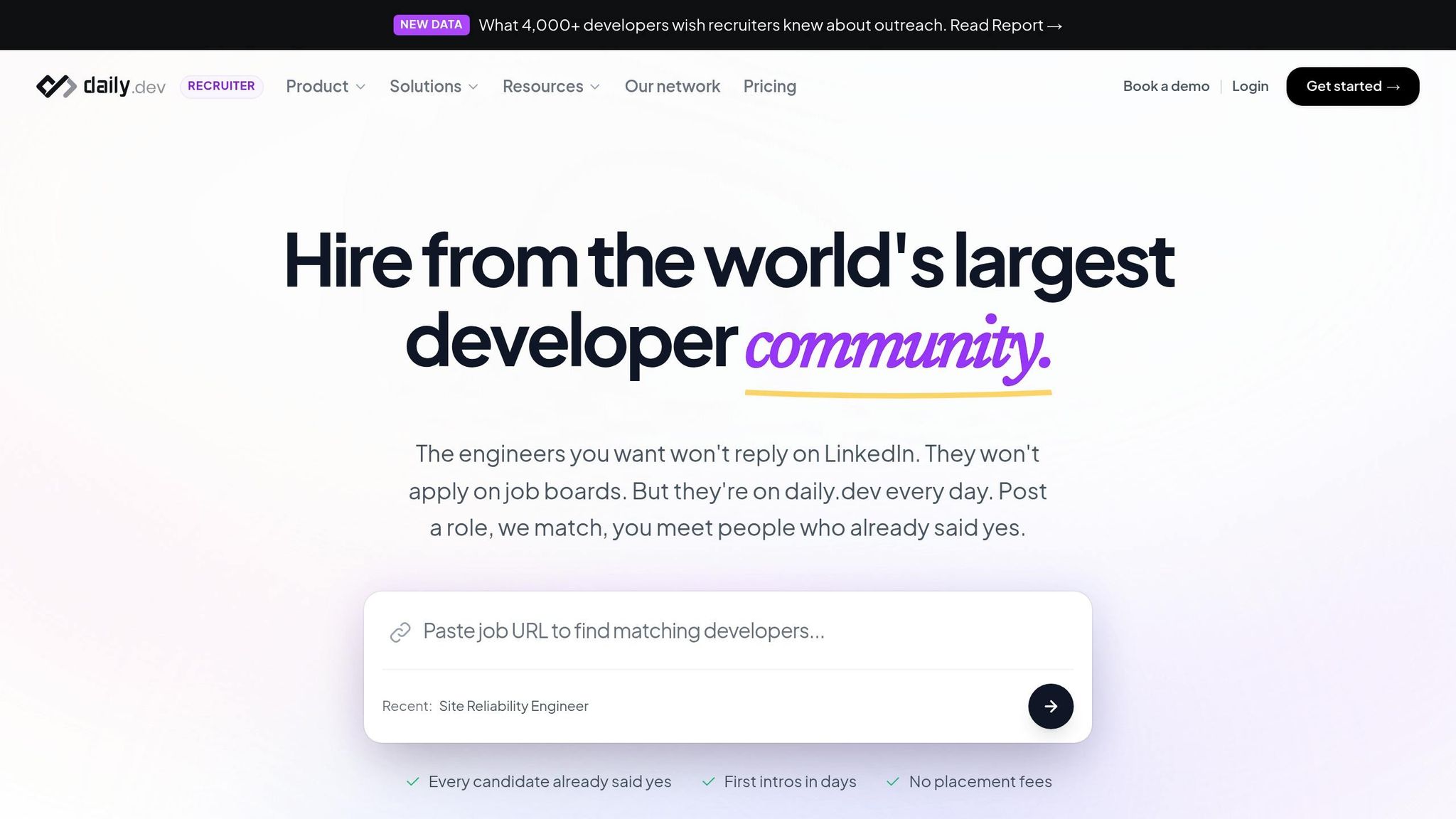
daily.dev Recruiter offers a smarter way to connect with developers. Instead of relying on cold outreach, it facilitates warm, double opt-in introductions with developers who have already expressed interest in opportunities.
The platform pre-screens candidates based on your specific criteria, ensuring you only engage with developers who meet your technical needs and are open to learning more. This eliminates the inefficiency of cold emails vs. warm introductions, allowing you to focus on meaningful conversations.
Because daily.dev Recruiter operates within a professional network where developers already spend their time, you’re reaching them in the right context - when they’re thinking about their careers, exploring new technologies, and staying informed about industry trends. This timing significantly improves response rates and the quality of your interactions compared to unsolicited messages on LinkedIn or email.
How to Nurture Developer Relationships
Once you've identified potential developers, the next step is building genuine trust - not rushing into quick hires. The focus should be on fostering meaningful connections that lead to collaboration when the timing works for both sides.
Stay in Touch Without Overwhelming
Keep yourself on their radar by reaching out every 4–8 weeks with updates that add value. Share things like technical insights, invitations to events, or news about your projects. When you do, reference something specific to them - a recent GitHub commit, a new technology they're exploring, or a trend that aligns with their expertise. This shows you're paying attention and aren't just working through a generic list.
Instead of asking for a quick phone call, provide a detailed technical overview they can review at their convenience. This approach respects their time while keeping your company in their mind. To make your efforts more effective, segment developers based on their readiness to engage.
Organize Developers by Hiring Timeline
Not all developers in your pipeline are ready for a new opportunity right away. By segmenting them into groups, you can tailor your communication to their current situation. Here's a breakdown of how you can organize and engage them:
| Segment Category | Criteria | Engagement Strategy |
|---|---|---|
| Ready-Now | Actively engaged and available | Immediate outreach with specific role details and next steps |
| Warm | Responded to messages or polls in the last 6 months | Regular, lighter touchpoints like check-ins and event invites |
| Nurture | Passive talent with niche skills (e.g., Rust, Go) | Quarterly updates with technical insights and product news |
For the Ready-Now group, focus on sharing clear details about roles and actionable next steps. Warm prospects, who might be open in 3–6 months, benefit from consistent but less frequent engagement, like personalized content or invites to roundtables. The Nurture category, often made up of specialists with rare skills, will appreciate occasional updates that establish your company as a credible and forward-thinking player in the field - without pressuring them.
Use your ATS or CRM system to tag developers with categories like "Evergreen Skills" (e.g., backend, frontend), "Relationship" (e.g., past candidates, boomerangs), or "Interests/Niche" (e.g., open-source contributors, specific language enthusiasts). This makes it easier to scale personalized communication.
Write Job Descriptions Developers Want to Read
Most job descriptions miss the mark because they’re written to check HR boxes rather than what developers want. Developers value clarity and technical detail, so avoid vague terms like "modern tech stack" or "competitive pay." Instead, focus on specifics.
Here’s how you can adjust your approach:
| Outreach Element | Traditional Approach (Avoid) | Developer-First Approach (Adopt) |
|---|---|---|
| Subject Line | "Exciting Opportunity at Acme Inc" | "Question about your [Project Name] on GitHub" |
| Personalization | Name and current company | Reference a specific pull request, talk, or tech stack |
| Job Details | "Modern tech stack", "Competitive pay" | "React 18, Go, Kubernetes", "$140,000–$170,000 range" |
| Call to Action | "Apply here" or "Send resume" | "Interested in a quick technical chat about our API scaling?" |
Be upfront about the technologies you'll use, how the team is structured, and the compensation range. For example, if the role involves building microservices with Go and Kubernetes, say so. If the salary range is $140,000–$170,000, put that information front and center. Transparency saves time by allowing developers to self-select based on their interests and needs.
Even your call to action should reflect how developers think. Instead of saying "Apply now", try something like, "Would you be open to a 15-minute chat about our API scaling challenges?" This communicates that you're interested in their expertise, not just their resume.
Tracking and Improving Pipeline Performance
Many hiring teams get stuck focusing on surface-level stats instead of diving into outcome-based metrics. This approach can hide deeper issues that impact long-term hiring success. For example, nearly 18% of new hires leave during probation , and shockingly, 29.6% of teams don’t track any metrics at all . If your goal is to build a pipeline that supports retention and high performance, paying attention to the right data is non-negotiable.
Outcome-based metrics are where the real insights lie. By tracking conversion rates at each stage, you can spot where candidates drop off and determine if your pipeline is delivering quality hires or just creating noise. For instance, if candidates accept offers but don’t show up on their start date, it might point to weak relationship-building during the hiring process.
Another key area to monitor is source effectiveness. Candidates sourced from GitHub or open-source contributions tend to have a 20–30% conversion rate because their skills are often pre-validated . Similarly, technical forums produce candidates with roughly 15% higher quality than traditional channels . And let’s not forget employee referrals - they’re four times more effective than other sourcing methods . By tagging candidates by source, you can track which channels bring in developers who not only start but also stick around past probation. This kind of tracking keeps your multi-channel strategy both focused and actionable.
Measure These Pipeline Metrics
Start by focusing on a few core metrics before adding more complexity:
- Pipeline Velocity: Measure the time from first contact to offer acceptance. This helps you identify bottlenecks in your process.
- Stage Conversion Rates: Track the percentage of candidates moving through each stage - from application to offer, acceptance, and start. This reveals where your funnel might be breaking down.
- Source Effectiveness: Compare hires or interviews across sourcing channels (e.g., GitHub, forums, referrals) to see which strategies deliver quality hires.
- Early Attrition: Monitor the percentage of new hires leaving during probation. Aim to keep this below 18% .
- Diversity by Stage: Look at representation at every stage of the funnel to spot potential biases in screening, interviews, or offer processes.
| Metric | What to Track | Why It Matters |
|---|---|---|
| Pipeline Velocity | Days from first contact to offer acceptance | Identifies bottlenecks; faster pipelines attract competitive talent |
| Stage Conversion Rates | % moving from application → offer → start | Highlights where candidates drop off and why |
| Source Effectiveness | Hires per channel (GitHub, forums, referrals) | Shows which sourcing strategies bring in quality hires |
| Early Attrition | % exiting during probation (<18% target) | Reflects pipeline quality and role-fit accuracy |
| Diversity by Stage | Representation at each funnel stage | Uncovers bias in screening, interviewing, or closing |
Once you’ve established these metrics, the next step is integrating your tools for a seamless flow of data.
Connect daily.dev Recruiter to Your ATS
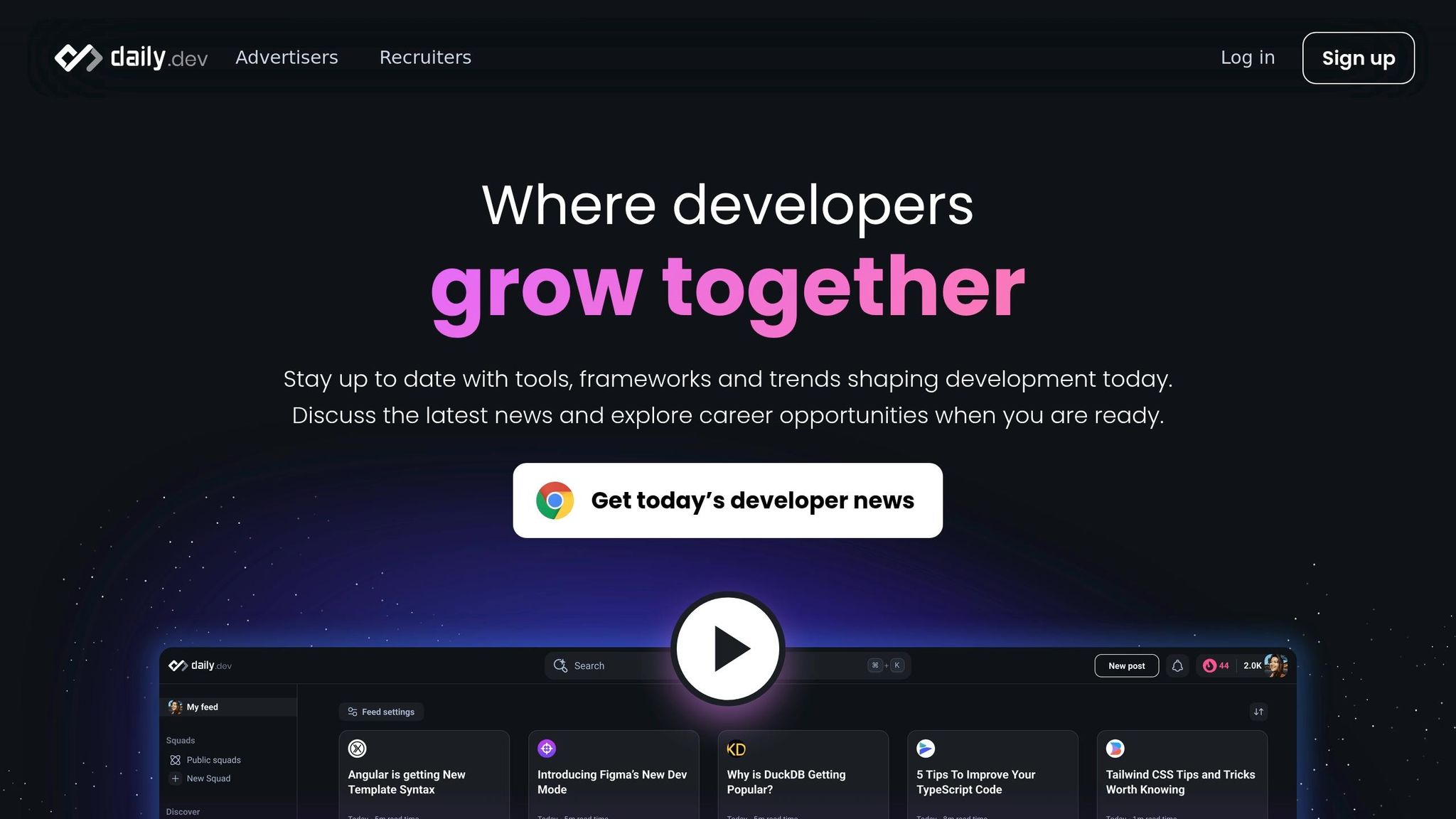
Integrating daily.dev Recruiter with your applicant tracking system (ATS) simplifies your workflow by centralizing all candidate data. When a developer opts in through daily.dev Recruiter, their profile, engagement history, and technical interests sync directly to your ATS. This eliminates manual data entry and ensures your recruiting team has all the context they need. Plus, this integration enables centralized reporting, letting you track which daily.dev Recruiter campaigns drive the best conversion rates and compare opt-in candidates’ performance across different channels.
Use Data to Adjust Your Approach
Once your metrics are set up and integrated, use them to fine-tune your pipeline. Regularly review your data to identify trends and address weak spots. For example, analyze conversion rates by sourcing channel to focus your efforts on the most productive ones. Don’t overlook candidate feedback - it’s a goldmine of actionable insights. If candidates often mention unclear job descriptions or compensation details, update those areas. Similarly, if the interview process feels too lengthy, look for ways to streamline it. The key to building a strong developer pipeline is continuously refining your approach based on what the data - and your candidates - are telling you.
Conclusion
Creating a developer talent pipeline that delivers results hinges on three main pillars: multi-channel sourcing, relationship-centered engagement, and data-driven refinement. Relying solely on platforms like job boards or LinkedIn won’t cut it. Instead, tap into diverse sourcing channels such as GitHub contributions, open-source projects, technical communities, and employee referrals. These sources allow you to connect with developers in spaces where they actively showcase their skills.
Developers value engagement that resonates with their interests, technical challenges, and career aspirations. By maintaining consistent, meaningful interactions, you build trust and reduce the likelihood of candidates dropping out of the process. This ensures that the talent entering your pipeline is genuinely excited about the opportunities you offer.
Data plays a critical role in keeping your pipeline efficient and effective. Monitor metrics like pipeline velocity, stage conversion rates, source performance, and early attrition. These insights help identify bottlenecks and fine-tune your strategy. For example, top-performing development teams typically achieve cycle times under 26 hours, compared to over 167 hours for less efficient teams .
The right tools can further simplify and optimize your process. daily.dev Recruiter aligns perfectly with this approach, offering warm, double opt-in connections with developers who are already engaged and open to new opportunities. Instead of relying on cold outreach or outdated profiles, you can connect with developers through the technical content they interact with. Integrating daily.dev Recruiter with your ATS also helps centralize candidate data and improve campaign tracking for better results.
FAQs
How do I start a developer talent pipeline with limited time?
Building connections within active developer communities like GitHub and Stack Overflow can be a game-changer when it comes to sourcing talent. The key is to focus on creating genuine relationships rather than relying on generic, high-volume outreach.
Start by clearly defining the roles you're targeting. This helps you tailor your approach and ensures you're reaching out to the right individuals. Engage with developers authentically - comment on their projects, contribute to discussions, and show genuine interest in their work. Avoid sending impersonal or spammy messages that can damage your credibility.
Consistency is essential. Establish regular touchpoints to stay on their radar, but make sure every interaction adds value. Share useful resources, offer insights, or provide opportunities for collaboration. Over time, this approach helps nurture trust and builds stronger relationships.
Finally, when evaluating your sourcing pipeline, prioritize the quality of engagements over sheer numbers. Tracking meaningful interactions and the depth of relationships ensures your efforts lead to sustainable, long-term results.
What should I look for on GitHub to assess a developer quickly?
To get a quick sense of a developer's skills on GitHub, start by looking at their open-source contributions, code quality, and community involvement. Pay attention to their repositories - check for recent activity, the complexity of their commits, and whether they’re contributing to impactful projects. Dive into their pull requests to see the kind of feedback they provide or receive, as this can give you insight into their coding abilities and how well they collaborate with others. This method helps highlight developers with hands-on experience and solid technical know-how.
Which metrics best predict whether a developer will stay past probation?
Key indicators to watch include employee retention rate, code quality, developer satisfaction, and engagement markers such as GitHub activity and intent signals. These measures provide insight into whether a developer feels fulfilled and connected to their position, which can boost the chances of lasting success in the role.
.png)