Developers often ignore recruiter messages because they’re overwhelmed with generic, irrelevant, and impersonal outreach. On average, response rates hover between 10-30%, with most messages failing to grab attention. The reasons are clear:
- Too many messages: Developers receive dozens weekly, leading to message fatigue.
- Lack of personalization: Copy-paste templates with no effort to understand the recipient’s skills or goals.
- Irrelevant roles: Messages often mismatch a developer’s expertise or career focus.
- Missing details: Vague job descriptions and no salary information waste their time.
- Distrust from spam history: Years of poor outreach have eroded trust in recruiter communications.
To fix this, recruiters need to focus on clarity, transparency, and genuine effort. Share upfront details like salary, tech stack, and role requirements. Personalize messages by referencing specific achievements or projects. Keep outreach concise, respectful, and timed effectively. Developers also prefer engaging on platforms they trust, like niche forums or opt-in spaces.
The solution isn’t sending more messages - it’s sending better ones. By addressing these issues, recruiters can rebuild trust and connect meaningfully with top talent.
Developer Response Rates: The Current State
Industry Benchmarks by Channel
When it comes to reaching developers, response rates can vary widely depending on the channel. Here's how different platforms stack up:
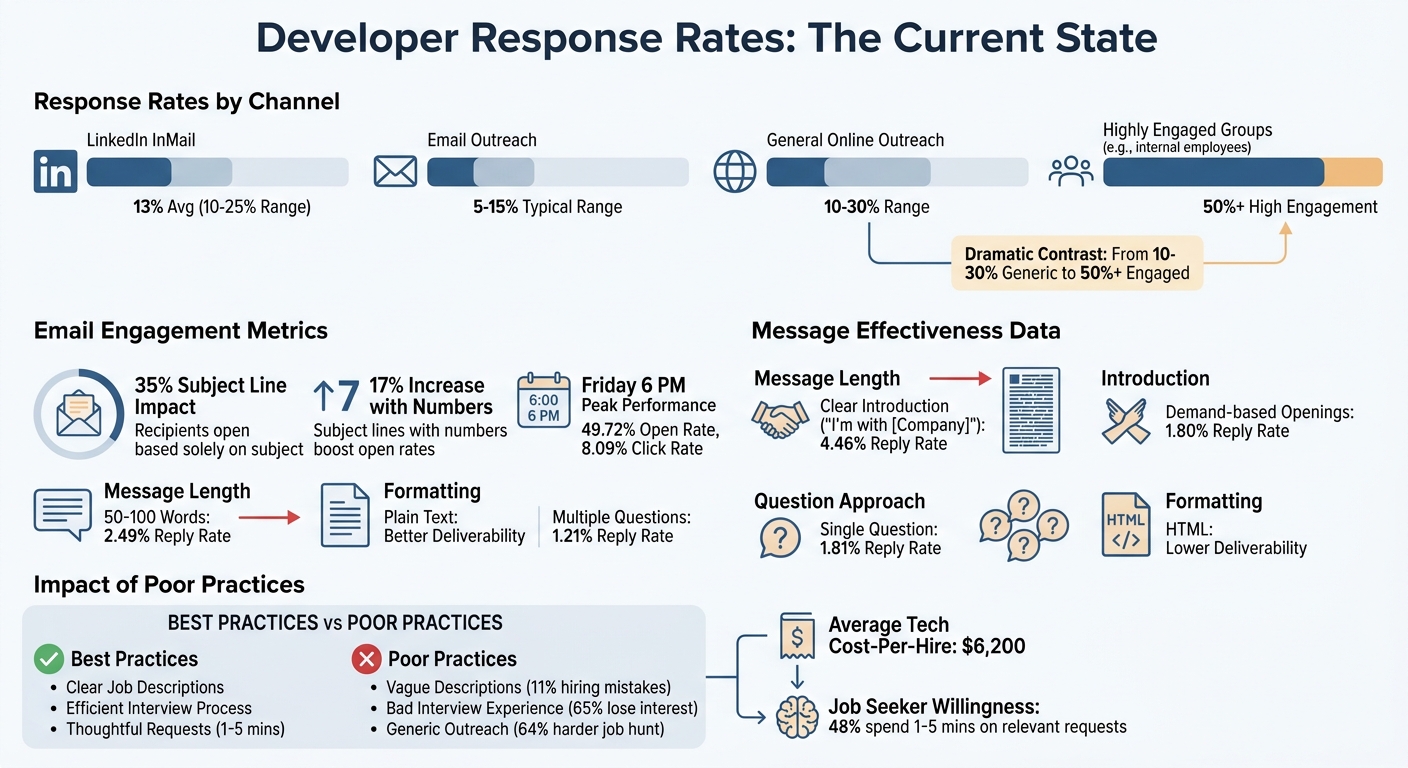
LinkedIn InMail averages a response rate of 13% . In practical terms, that means roughly 13 out of every 100 developers contacted will reply. However, this range can fluctuate between 10% and 25%, depending on factors like the candidate's seniority, area of expertise, and the precision of the outreach effort.
Email outreach tends to perform worse, with response rates typically falling between 5% and 15% . The sheer volume of emails developers receive, combined with spam filters, often contributes to these lower numbers.
For some perspective, general online outreach efforts usually see response rates between 10% and 30%. Meanwhile, outreach to highly engaged groups, like internal employees, can exceed 50% . Compared to these groups, developers often land on the lower end of the spectrum, making them a tougher audience to engage.
These variations underscore the challenges recruiters face and why low response rates can have a ripple effect on their efforts.
Why Low Response Rates Matter for Recruiters
Low response rates aren't just a minor inconvenience - they pose real challenges for recruiters.
For one, fewer responses mean recruiters need to send significantly more messages, each requiring a degree of personalization. This adds up to higher costs in terms of time and resources.
Another issue is nonresponse bias . When developers don’t reply, recruiters may unintentionally overlook highly skilled, passive candidates. As a result, they often send even more messages in an attempt to make up for the lack of engagement. This can lead to message fatigue, where recipients become even less likely to respond, creating a frustrating cycle of diminishing returns.
These metrics highlight the importance of understanding why developers often ignore recruiter messages. With this foundation, it’s easier to explore strategies that can improve outreach effectiveness.
Why Developers Don't Respond to Recruiters
Understanding why developers often ignore recruiter messages can help address this ongoing issue. Let’s explore the main reasons behind this challenge.
Copy-Paste Templates That Lack Personalization
One of the biggest turn-offs for developers is receiving templated messages that show no effort to research their background. These messages often only swap out the recipient's name, making it clear they are generic. Everett Griffiths, a software developer, shared that in an entire year, only one recruiter referenced specific details from his profile. The rest relied on generic templates that failed to reflect any understanding of his expertise or career focus .
Irrelevant Roles or Technology Mismatches
Another frustration for developers is being contacted about roles that don’t align with their skills or career goals. For example, a developer who has moved away from PHP might still get messages about PHP positions. Recruiters also frequently use vague terms like "full-stack" or "backend" without providing specifics about the technologies involved. Without clear details - such as programming languages, tools, or frameworks - developers can’t determine whether the role is a good fit .
Missing Salary Information and Vague Job Descriptions
Recruiters often omit key details, like salary ranges or clear job descriptions, which can make developers lose interest immediately. A lack of transparency can signal that the company either doesn’t understand the role or is trying to hide something. As Griffiths bluntly puts it:
"If there isn't a job description, there isn't a job" .
Receiving vague messages forces developers to spend unnecessary time trying to figure out the role, which most are unwilling to do. The Career Contessa team also notes:
"When a hiring team doesn't know what they are looking for or they have something to hide, they are more likely to use buzzwords and corporate jargon to make the role and company sound great" .
Terms like "passionate self-starters" or "lean organization" can sometimes be red flags, hinting at unstable work environments or expectations of constant availability. These unclear descriptions waste a developer’s time and reflect poorly on the recruiter’s professionalism.
Overwhelming Message Volume and Spam History
Many developers receive dozens of LinkedIn messages daily . The sheer volume, combined with irrelevant or poorly targeted outreach, has led to widespread distrust of recruiter messages. Aggressive tactics, such as demanding immediate calls, further alienate developers. Griffiths highlights this issue:
"Some developers have set up email filters to trash messages containing the phrase 'jump on a call' because it is almost always a waste of my time" .
Unscheduled calls disrupt productivity and suggest a lack of respect for the developer’s time. Over time, this constant flood of irrelevant or pushy messages has eroded trust in recruitment outreach.
What Developers Actually Want to See
When it comes to attracting developers, the formula is simple: specificity, transparency, and genuine effort. Surveys and discussions with developers consistently highlight these as the key factors. Let’s dig into what this means, starting with the need for clarity about the tech stack and role expectations.
Clear Tech Stack and Role Requirements
Developers aren’t interested in vague job descriptions. They want specifics. Instead of general statements, list the exact technologies they’ll be working with - think React, Vue, PostgreSQL, MongoDB, AWS, or Azure. This gives them a clear picture of the tools and frameworks they’ll need to know.
But it’s not just about the tools. Developers also care about the team’s approach to work. Will they have the freedom to choose their tools? Does the team focus on code quality and best practices, or is it all about delivering as fast as possible? Will they get a say in technical decisions, or is the role more about following orders? These details help developers assess whether the job aligns with their goals and values.
For remote roles, don’t forget to address practical concerns like time zone compatibility, how the team handles asynchronous communication, and the quality of documentation practices. These factors can make or break a remote working experience.
And, of course, transparency around compensation and career growth is absolutely essential.
Upfront Salary Range and Career Path
Sharing salary details upfront builds trust. As SurveyMonkey puts it, "Transparency is a major trust-builder" . Developers don’t want to waste time guessing whether a role meets their financial expectations.
Beyond pay, they’re looking for clarity about their future. What does career progression look like? Are there opportunities for mentorship? Developers want to know if the role offers a path for growth, not just a paycheck.
Real Personalization, Not Just Name Insertion
Personalization matters - but it has to go beyond simply dropping a candidate’s name into a template. Developers can spot a generic message from a mile away.
True personalization involves research. For example, mention a specific career milestone or technical achievement, like scaling a team from 10 to 50 members or playing a key role in a startup’s Series B funding round . Reference their open-source contributions, blog posts, or projects from platforms like GitHub or LinkedIn. This shows you’ve taken the time to understand their work and value their expertise.
If you can’t personalize deeply, at least show genuine enthusiasm. As recruiter Aline Lerner explains, "If you can't go personal, you should at least go enthusiastic - it may be in your best interest to hire good recruiters who know how to hit the right notes" .
How Years of Spam Broke Developer Trust
The Credibility Problem
Years of impersonal, high-volume outreach have taken a toll on developer trust. For developers with sought-after skills, it’s not just a handful of messages hitting their inbox each week - it’s thousands. Ambra Benjamin, Global Leadership Recruiting Leader at Facebook, highlights the challenge:
"In my opinion, the greatest obstacle for recruiters is connecting with candidates through the noise of all the other 2,000 recruiters trying to reach out to the same candidates" .
This constant barrage is only part of the problem. Developers frequently encounter recruiters who ghost them, pitch roles that don’t align with their expertise, or misrepresent salary details. Add to that a lack of technical understanding in recruiter communications, and the frustration compounds. Automation tools have further widened the gap, replacing meaningful interactions with impersonal processes that alienate candidates. Amy Spurling, CEO of Compt, sums it up perfectly:
"AI tools should enhance human connection, not replace it. Having candidates jump through hoops, submit video resumes, write cover letters, and all of these extra steps to be ignored is a recipe for disaster" .
The numbers paint a clear picture: 64% of job seekers report the job hunt has become harder over the past six months , and 65% lose interest in a role after a single bad interview experience . This erosion of trust has pushed developers to seek interactions in spaces where they feel respected and valued.
Where Developer Attention Has Moved
Tired of the noise and spam on platforms like LinkedIn, developers are shifting their focus to communities that prioritize meaningful interactions. These niche spaces - such as Reddit, Hacker News, and other specialized forums - offer an escape from constant pitching. Here, discussions remain technical and collaborative, not transactional. Developers are even going so far as to remove certain technologies from their public profiles to avoid keyword-based spam from recruiters .
This shift reflects a deeper change in how developers want to engage. They’re drawn to environments that emphasize learning and genuine connections over aggressive outreach . Instead of cold pitches, they prefer opportunities that arise naturally from mutual interest and authentic interaction. Recognizing this, daily.dev Recruiter has adopted a different approach, focusing on warm, double opt-in introductions to ensure developers never feel overwhelmed or spammed by recruiters.
Bad vs Good Recruiter Messages: Real Examples
Building on why developers often ignore recruiter outreach, these examples show how small adjustments in message structure can lead to better response rates. The difference between a message that gets ignored and one that sparks interest comes down to specific details. Let’s break it down by comparing common mistakes with more effective approaches.
Messages That Get Ignored
Generic messages with vague job descriptions tend to miss the mark. They attract unqualified candidates, drag out the hiring process, and increase the likelihood of hiring mistakes by 11% . In industries like tech - where the average cost-per-hire is $6,200 - these types of messages are often dismissed in favor of more tailored outreach .
Ignored messages typically have a few key issues:
- They’re too long, often exceeding 150 words.
- They rely on flashy HTML formatting instead of keeping it simple.
- They start with impersonal greetings like "Hi {FirstName}" .
- They use off-putting language, such as "You need this to stay relevant."
- They demand high-effort actions like "Book a 30-min call here" .
These messages often come across as tone-deaf, showing little understanding of the developer's skills, career goals, or current work.
Messages That Get Responses
On the other hand, great messages stand out by being concise and relevant. Effective outreach is short and to the point - usually between 50 and 100 words - and achieves a reply rate of around 2.49% . Recruiters who stick to plain text formatting instead of HTML designs benefit from better deliverability and a more professional appearance . A simple structure - one line for an introduction, three lines for the body, and one line to wrap up - makes the message easy to scan .
Here’s what sets successful messages apart:
- They start with a clear introduction, like "I'm with [Company] - we help with..." This approach achieves a 4.46% reply rate, compared to 1.80% for messages that dive straight into demands .
- They include personalized details, such as referencing a developer’s recent project or a company’s new funding round .
- Instead of asking for a call, they pose a single, low-pressure question like "Worth a quick look?" This tactic yields a 1.81% reply rate, compared to 1.21% for messages with multiple questions .
The tone is key, too. Effective messages feel collaborative rather than critical. They highlight opportunities that align with the developer’s expertise and respect their time. By doing proper research and showing genuine interest, these messages create a much stronger connection .
How to Improve Your Response Rates
The difference between a message that gets ignored and one that sparks a reply often lies in how it's executed. These strategies tackle the challenges developers point out when explaining why they skip over recruiter outreach.
Personalization That Goes Beyond Surface Details
Simply referencing a GitHub repository no longer cuts it. To make an impact, demonstrate genuine understanding by discussing specific technical decisions. For instance, explain why server-side rendering was chosen instead of client-side rendering or how state management was optimized in a particular project.
Dive deeper into a company’s challenges by exploring their recent blog posts, funding news, or updates to their tech stack. Let’s say a startup just secured Series A funding and highlighted scaling issues - mention how the role you’re presenting could address those infrastructure hurdles. Focus on engineering essentials like memory management, system design, and data structure optimization. These are far more compelling to senior developers than vague terms like "full-stack" .
"Great engineers don't write code. Great engineers solve problems. And AI can write code, but it can't understand the problem." - Devrim Ozcay, Software Engineer
This level of understanding also helps you time your outreach effectively and choose the right communication channels.
When and Where to Send Messages
Timing can make all the difference. Messages sent between 8–11 AM tend to see higher open rates, while the 8–9 PM window often brings more clicks and replies . Interestingly, Friday at 6 PM stands out, with both open rates (49.72%) and click rates (8.09%) peaking at the same time .
Steer clear of the inbox chaos during the first week of January, particularly January 5–6. Instead, target January 8–31, when hiring budgets are fresh, and managers are actively building pipelines . Use time zone delivery to ensure your messages reach recipients at the optimal local time.
While LinkedIn and email remain popular, developers' attention is shifting. Some are moving away from GitHub due to its heavy interface and mandatory JavaScript . Explore where your target audience spends their time - whether it’s Discord communities, niche forums, or platforms like daily.dev, where developers regularly interact.
Once you’ve nailed the timing and channels, the next challenge is crafting subject lines that grab attention.
Subject Lines That Get Opened
With 35% of recipients deciding to open an email based solely on the subject line, avoiding generic phrases like "Job Opportunity" is critical . Instead, lead with specifics - highlight the job title, company, salary range, or remote work options.
A straightforward formula like "Job Title + Company" works well. Examples include: "Senior Python Engineer at [Company Name]" or "React/Node.js Role - Remote, $140,000–$160,000." Adding numbers can increase open rates by 17% . If applicable, mention a mutual connection, such as, "[Name] mentioned your work on [specific project]", to establish trust immediately.
Keep subject lines under 50 characters to ensure they display properly on mobile devices. Avoid spammy terms like "Urgent", "Last chance", or using all caps, which can land your email in junk folders. Questions can also be effective as pattern disruptors. Phrases like "Worth a quick look?" or "Saying no?" often spark curiosity and engagement .
"A bland subject line like 'Job Opportunity' will likely get lost in the inbox graveyard." - Aditya Sheth
Creative subject lines can make a difference. For example, "Did I lose you?" achieved a 47% open rate . However, context is key - use curiosity sparingly to avoid appearing manipulative. The goal is to stand out while staying honest about the opportunity you’re offering.
Moving from Cold Outreach to Inbound Interest
Shifting from cold outreach to building inbound interest is a game-changer for developer recruitment. The goal isn’t to send more messages but to create an environment where developers come to you. This approach counters the fatigue caused by generic, high-volume outreach and focuses on building trust by engaging in spaces developers already value.
Participating in Developer Communities
Developers can quickly spot when recruiters only show up to fill roles. To genuinely connect, you need to be a consistent presence in their trusted spaces - whether that’s Stack Overflow, Reddit programming threads, or niche Discord servers .
The key is to provide value. Answer technical questions, share helpful resources, and interact as a peer rather than a corporate representative. Developers value authentic, one-on-one conversations, so your outreach should feel personal, not like a sales pitch . Building relationships with influential "community champions" - those who naturally advocate for your company - can also enhance your credibility [33,34].
"Developers notice when a company is just there to sell them a solution rather than to truly partner and engage." – Darren Yuen
This type of trust-building takes time, but it pays off. Engaged audiences can lead to response rates of 50% or more, compared to the typical 10–30% seen with cold outreach . Beyond community participation, thought leadership can further draw developers toward your opportunities.
Using Content to Attract Candidates
Well-crafted technical content can bring developers to you before you even reach out. Blog posts about engineering challenges, contributions to open source projects, podcasts, and conference talks showcase your technical culture and expertise .
You can also host regular office hours for developers to ask questions or observe your projects. Speaking at meetups or workshops increases your visibility [35,36]. Additionally, encourage your engineers to share job openings and technical insights within their networks - recommendations from employees often carry more weight than formal corporate messaging .
While this inbound strategy requires time and effort upfront, it builds a sustainable talent pipeline and strengthens your brand over time . When combined, community engagement and high-quality content create a powerful system for attracting talent, as seen with daily.dev Recruiter.
How daily.dev Recruiter Solves the Cold Outreach Problem
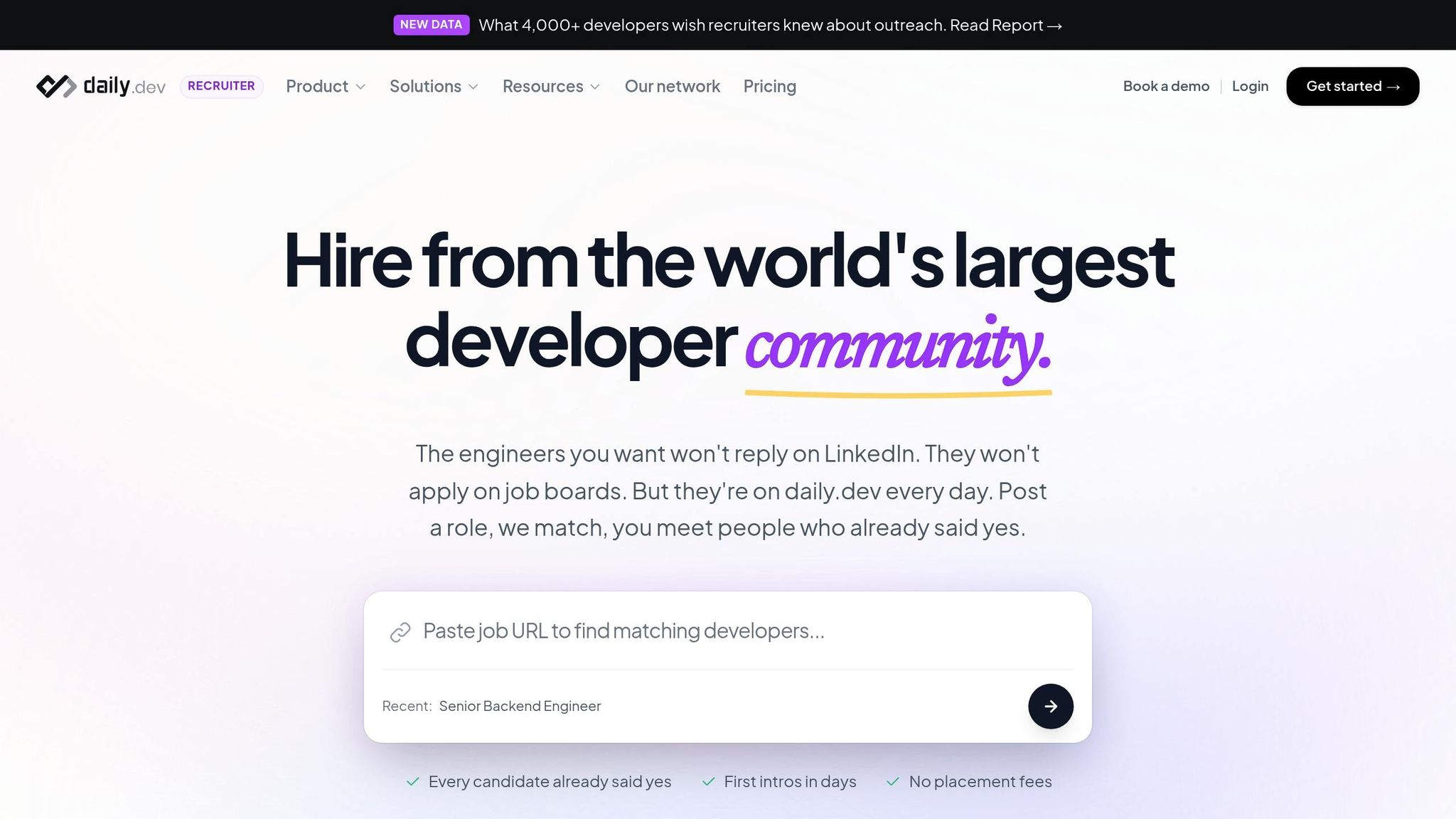
daily.dev Recruiter addresses the root issue of unwanted contact. The platform connects recruiters with developers who have opted in and are active within the daily.dev community. Every introduction is warm, double opt-in, and highly contextual - developers only hear from you if they’ve shown genuine interest [recruiter.daily.dev].
By engaging developers in environments where they already spend time - reading technical content, learning, and connecting with peers - you eliminate the spam-like feel of cold outreach. Developers control their visibility, ensuring recruiters only connect with those open to exploring opportunities.
This approach fosters higher reply rates and more meaningful conversations. Instead of interrupting developers with unsolicited messages, you meet them on their terms, in spaces they trust, and at moments when they’re ready to engage.
Conclusion
The underlying problem is evident: generic, impersonal, and overwhelming recruiter messages have eroded trust with developers. Messages fail when they rely on cookie-cutter templates, omit salary details, and flood inboxes with irrelevant content. The data highlights a critical gap - most outreach lacks the trust, clarity, and relevance needed to shift from spam to meaningful conversations.
Here’s how to fix it:
- Go beyond basic personalization. Developers can easily spot lazy, templated messages. Instead, craft clear and concise outreach - 48% of people are willing to spend one to five minutes on a request if it feels thoughtful and relevant.
- Be transparent. Sharing details like salary, tech stack, and role expectations upfront shows respect for a developer’s time and demonstrates you value their expertise.
- Choose the right timing and channels. Reaching out early in the work week and ensuring your messages are mobile-friendly can reduce unnecessary friction.
By making these changes, recruiters can bridge the gap, addressing frustrations on both sides and rebuilding trust.
But the bigger picture isn’t just about improving cold outreach - it’s about creating trust-based, opt-in platforms. When developers willingly engage in spaces they already trust, the dynamic shifts completely. Platforms like daily.dev Recruiter enable recruiters to connect with developers who have opted in, turning cold outreach into warm, intentional connections.
As SurveyMonkey wisely puts it:
"Simplicity is your superpower."
Keep it simple. Avoid jargon, communicate value immediately, and respect the developer's inbox. Recruiters who send thoughtful, well-timed messages will build stronger connections and stand out to top talent.
FAQs
What should I include in the first recruiter message to a developer?
When reaching out to a developer, make sure your message stands out by being personalized, direct, and respectful of their time. Skip the generic templates - they won’t cut it. Instead, reference something specific, like a project they’ve worked on, a skill they excel in, or a contribution they’ve made to the tech community. This shows you’ve done your homework and genuinely value their expertise.
Be clear about why you’re reaching out. Highlight how the role aligns with their background or interests, and if possible, include compensation details upfront. Developers appreciate transparency, and sharing this information can make your message more appealing.
Finally, choose a platform where developers are active - whether that’s LinkedIn, GitHub, or even Twitter. A thoughtful, concise message that demonstrates genuine interest is much more likely to get a response than a long, impersonal pitch.
How can I personalize outreach without being creepy?
To make outreach more effective, zero in on authentic and relevant details from the candidate's profile. This could include mentioning a recent project they worked on, a shared interest, or a noteworthy professional accomplishment. Steer clear of using generic templates - craft short, thoughtful messages that reflect genuine effort and respect for their experience.
While personalizing, remember to maintain a balance. Focus on details that are publicly available or professionally relevant. This approach ensures your message feels tailored and thoughtful without crossing into overly personal or intrusive territory.
Where should I contact developers besides LinkedIn?
To effectively connect with developers outside LinkedIn, email can be a powerful tool, especially when messages are personalized. Developers also tend to gather in online communities such as forums, Reddit, or Hacker News, making these platforms excellent for building trust and increasing visibility. Another option is using native ads or targeting specific platforms where developers are active, ensuring your message reaches them in spaces they already trust. By mixing up your strategies, you'll not only improve response rates but also create stronger, more meaningful connections.
.png)