Recruiting developers today requires a new approach. Traditional cold outreach is losing effectiveness, with 43% of developers muting recruiters due to irrelevant messaging. Trust is low, with recruiters scoring just 2.5 out of 5 in trust among developers. Mass outreach, often perceived as copy-pasted or AI-generated, has turned into noise.
Instead, intent-driven recruiting focuses on developers' real interests and behaviors, like the technologies they engage with or the content they consume. This method helps recruiters craft personalized and relevant outreach, aligning with developers' goals and increasing trust.
Key insights:
- 80% of developers are open to new opportunities, but they value transparency in job posts (e.g., salary and tech stack upfront).
- Skills-based hiring improves diversity by 45% and retention by 35%. This approach allows teams to identify qualified technical candidates more efficiently than traditional resume screening.
- Platforms like daily.dev Recruiter utilize intent signals for more targeted, meaningful connections, achieving response rates as high as 85–90%.
Bottom line: Recruiters must prioritize relevance, respect developers' time, and use intent data to build trust and make stronger connections.
Intent-Driven Recruitment vs. Traditional Outreach
::: @figure 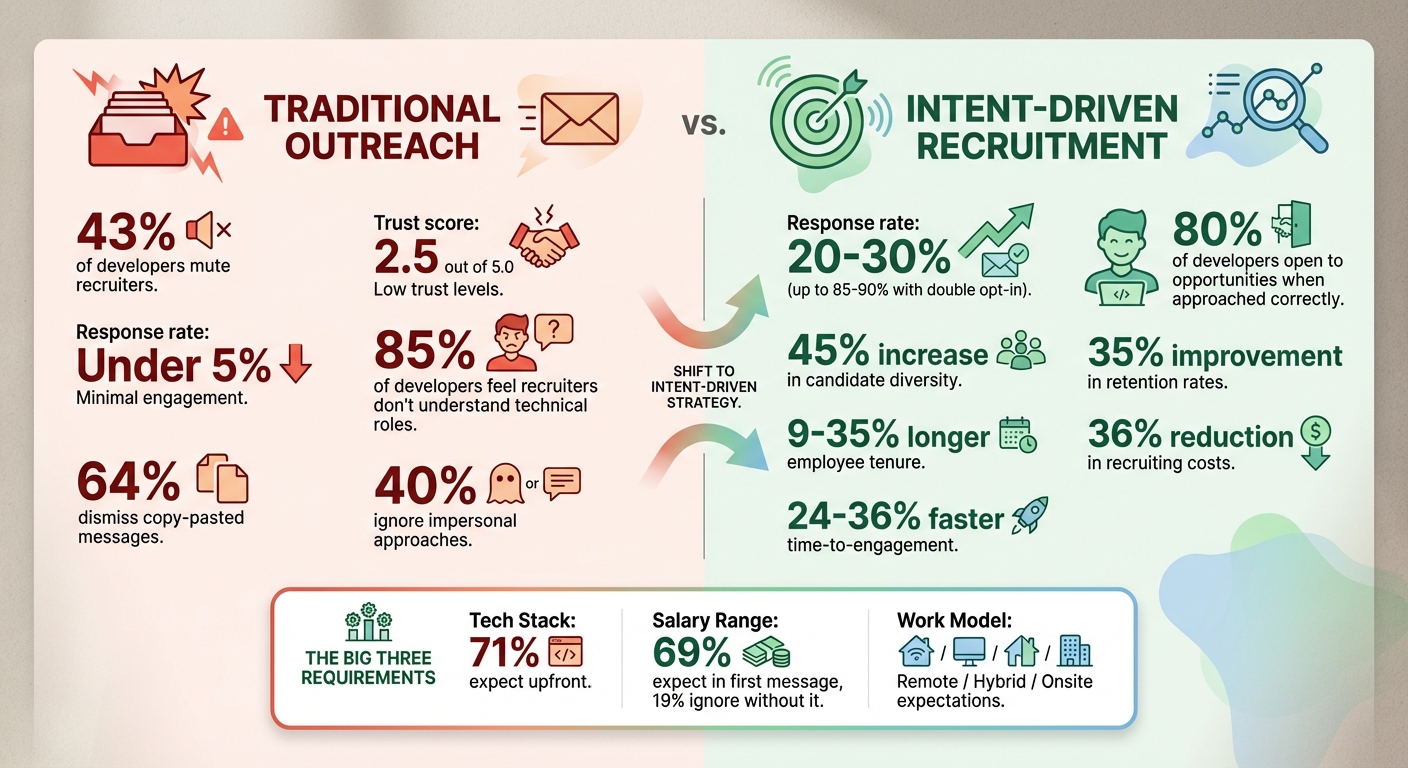 {Intent-Driven vs Traditional Recruiting: Key Statistics and Outcomes}
Intent-driven recruitment shifts the hiring process to focus on genuine candidate interest, addressing the limitations of conventional outreach. As trust between recruiters and candidates continues to erode, this approach offers a way to rebuild connections in a more meaningful and effective way.
What Intent-Driven Recruitment Means
This method zeroes in on candidates based on their behaviors rather than static job titles. By analyzing how developers engage with content and technologies, recruiters can identify those already showing interest in specific areas or career paths. For example, if a developer frequently reads about Kubernetes, participates in cloud computing forums, or interacts with remote work content, these actions signal their professional interests and potential career trajectory. Using this behavioral data, recruiters can craft personalized outreach that resonates on a deeper level - achieving something a LinkedIn profile alone cannot. This approach transitions recruitment from a volume-based strategy to one of precision and relevance.
Why Traditional Outreach Falls Short for Tech Hiring
Traditional outreach often fails to connect with developers, as it tends to rely on generic messaging that lacks personalization. This approach not only results in low engagement but also risks damaging trust. A striking 85% of developers feel that recruiters don’t fully understand the technical roles they’re hiring for . Additionally, mass emails and templated LinkedIn messages can harm an employer's reputation, especially when negative experiences are shared within developer communities. Considering that 80% of developers remain open to new opportunities , the real challenge isn’t finding candidates - it’s earning their trust and standing out in a way that feels genuine. Intent-based strategies address these shortcomings by focusing on what truly matters to developers.
Why Intent Matters When Hiring Developers
Behavioral insights - like tracking engagement with educational content or participation in relevant discussions - reveal aspirations that static resumes simply can’t. For instance, if a developer is actively exploring microservices architecture, attending DevOps webinars, or engaging with startup-related content, these actions provide a clear window into their professional goals. With this information, recruiters can tailor their outreach to align with the developer’s interests, creating a stronger connection. This approach not only improves hiring outcomes but also fosters a collaborative, trust-driven relationship between recruiters and developers, ensuring that recruitment efforts align with what candidates genuinely care about.
Hiring engineers?
Connect with developers where they actually hang out. No cold outreach, just real conversations.
How to Identify and Use Developer Intent Signals
Recognizing developer intent means looking at what developers are actively doing, not just what’s on their resumes or LinkedIn profiles. The strongest signals come from actions that reflect their current professional interests. For example, when a developer starts diving into new technologies, joins niche communities, or takes steps to learn new skills, these behaviors reveal where their career focus is heading.
Intent Indicators Worth Tracking
Some key behaviors to monitor include developers' reading habits - like articles on microservices, Rust, or GenAI frameworks. Activities such as completing take-home coding projects or participating in coding challenges show a higher level of engagement and commitment compared to casual browsing. Joining specialized groups or shifting their use of technology can also hint at a developer’s evolving interests. The most direct and reliable signal? When developers explicitly opt in to express interest in specific roles or career paths. These actions showcase their intent clearly and are invaluable for recruitment efforts .
How to Read Intent Signals
Interpreting these signals requires considering their context and weight. For instance, spending 2–4 hours on a take-home coding project is a much stronger sign of interest than simply updating a profile. This principle mirrors findings from marketing: 93% of marketers report that intent data improves conversion rates . The same logic applies to hiring. By piecing together signals - like reading about Kubernetes, engaging in cloud computing discussions, and joining DevOps communities - you can form a detailed picture of a developer’s interests.
However, context is critical. For example, 69% of developers want salary details included in the first outreach message, while 19% will ignore messages entirely if that information is missing . Even the most promising intent signals won’t lead to success if your approach doesn’t align with what developers value. Using these insights effectively can help you tailor your outreach and make better use of tools like daily.dev Recruiter.
Finding Intent Signals on daily.dev
daily.dev Recruiter is designed to help you tap into these signals effortlessly. It identifies developers based on what they read, code, and engage with, providing real-time insights into their interests. For instance, you might see that "Ethan is actively learning React, exploring remote roles, and engaging with startup-related content." The platform’s double opt-in system ensures developers explicitly agree to receive role briefs, so you’re only reaching out to those genuinely interested.
Additionally, you can include up to three custom screening questions for candidates to answer before any conversation begins. This step ensures technical alignment and saves time. Instead of sending cold messages to hundreds of developers and hoping for a 20% response rate, you’ll connect with candidates who are actively engaged - achieving response rates as high as 85–90%. This approach transforms recruitment into a more focused and efficient process.
Building Trust with Developers
Developers often start with a low level of trust in outreach efforts - scoring just 2.5 out of 5.0 on the trust scale. The challenge? Generic or copy-pasted messages are a major turnoff, with 64% dismissing them outright and 40% ignoring impersonal approaches altogether . This means every interaction counts, and using intent-driven insights can make all the difference. By personalizing messages based on real interests, you not only catch their attention but also begin to build a foundation of trust.
Personalizing Messages Based on Intent
The key to connecting with developers lies in aligning your message with what they’re already exploring. For instance, if someone has been engaging with Kubernetes content, participating in DevOps discussions, and interacting with cloud infrastructure articles, your outreach should reflect that knowledge. A message like, "Our team is building a cloud-native platform using Kubernetes and Terraform - technologies I noticed you've been exploring on daily.dev", shows genuine effort and understanding. This approach mirrors technical hiring best practices, which has been linked to a 45% increase in candidate diversity and a 35% improvement in retention rates . By tailoring your message to their current interests, you immediately establish credibility and set the stage for a meaningful conversation.
The Warm Introduction Approach
Cold outreach often feels intrusive and impersonal. Instead, warm introductions - facilitated through a double opt-in system - create a more inviting experience. With this method, developers indicate they’re open to hearing about specific roles, ensuring you’re engaging with individuals who already show interest. This approach is similar to employee referral systems, which consistently yield higher-quality hires who are more likely to stick around . By focusing on intent-driven interactions, you foster conversations that are not only more engaging but also more likely to lead to successful outcomes.
Respecting How Developers Want to Be Contacted
When reaching out, it’s crucial to respect developers’ preferences. For example, 71% expect to see the tech stack and role details upfront . Keep your initial message concise - under 100 words - with one clear purpose. Include the "Big Three" essentials: tech stack, salary range, and work model, all in the opening line . Additionally, provide an easy opt-out option and only follow up with developers who show genuine interest. This thoughtful approach goes a long way in building the trust necessary to successfully close the hire.
Setting Up Intent-Driven Recruitment Workflows
Incorporating intent-driven recruitment into your hiring process allows you to connect with developers who are already showing interest in relevant opportunities. Here's how you can integrate these intent signals into your workflow effectively.
Steps to Add Intent Analysis to Your Process
To start, use intent signals from platforms like daily.dev, where you can track developer activity such as article reads, technical discussions, or profile updates. With these insights, you can build a clearer picture of potential candidates. Leverage your ATS (Applicant Tracking System) integrated with data analytics to gather a comprehensive view of each candidate, including their skills, engagement history, and career progression.
Once you’ve identified intent signals, personalize your outreach. Reference specific topics or areas of interest the developer has been exploring. For example, if someone has been engaging with content on AI ethics, your message could say: "I noticed your interest in AI ethics. Our role in AI model training aligns with your expertise and offers flexible remote work options." This level of personalization demonstrates genuine interest and increases the likelihood of a response. After initial contact, nurture these connections with automated follow-ups and provide timely feedback to keep the conversation moving forward.
Matching Your Message to Developer Career Goals
After capturing intent signals, it’s essential to align your messaging with the developer’s career objectives. Developers often value growth opportunities, flexibility, and meaningful work. By analyzing their activity, you can uncover clues about their goals - whether they’re learning a new framework, diving into cloud technologies, or seeking remote roles.
Frame your job opportunities as a way to help them achieve these goals. For instance, instead of saying, "We have an opening," try something like, "Advance your React expertise on scalable projects with 20% dedicated learning time." This approach resonates more and has proven results: companies using it report 9% higher tenure among new hires and better long-term alignment .
Also, don’t forget the essentials. Developers expect transparency early on. Include the Big Three - tech stack, salary range, and work model - in your initial message. This is critical, as 69% of developers expect salary information in the first outreach .
Scaling Intent-Driven Hiring with daily.dev Recruiter
daily.dev Recruiter takes intent-driven hiring to the next level by combining real-time signal tracking, AI-powered personalization, and automated workflows. The platform transforms generic outreach into meaningful, trust-based interactions. Its double opt-in system ensures that you’re only engaging with developers who’ve reviewed your role details and opted to connect, turning cold outreach into warm introductions.
With live match signals, you get real-time updates like "Ethan is actively learning React hooks," so you know exactly when to reach out. Custom screening questions help you assess technical fit early in the process. Companies using similar AI-driven tools have significantly reduced hiring times and costs - some have cut recruiting expenses by 36% through automated sourcing and signal-based shortlisting .
daily.dev Recruiter enables you to scale your hiring efforts without losing the personal touch developers appreciate. It’s a powerful way to handle high-volume recruitment while maintaining the quality and relevance that stand out in today’s competitive market.
Measuring Success: Metrics for Intent-Based Recruitment
When it comes to intent-driven recruitment, success isn’t just about numbers - it’s about the quality of interactions. Unlike traditional methods, this approach focuses on meaningful engagement, using metrics that reflect the shift from mass outreach to targeted, intent-focused hiring.
Key Metrics for Intent-Based Recruitment
Reply rates are a standout metric. Personalizing outreach based on intent signals - like a developer’s activity on platforms such as daily.dev - can lead to response rates of 20–30%. Compare that to the dismal under-5% reply rate for cold emails, and the difference is striking .
Time-to-engagement measures how quickly you connect after spotting intent signals. The aim is to reach out within 48 hours, while interest is still fresh. Companies leveraging AI-enhanced workflows report engagement times that are 24–36% faster than traditional methods , though it's vital to use tech recruiting AI to automate tasks rather than replace human connection .
Candidate quality scores bring precision to the hiring process. By combining intent data with developer assessment tools, candidates are rated on a 1–100 scale. This method helps identify top talent 24% more effectively, evaluating not just technical skills but also alignment with role requirements and workplace culture .
Retention rates offer a long-term perspective. Employees hired through intent-driven strategies tend to stay 9–35% longer than those recruited through conventional methods . When candidates join organizations that resonate with their interests and career goals, they’re more likely to remain engaged and productive well beyond their first year.
How Intent Metrics Differ from Traditional KPIs
Intent-based recruitment metrics shift the focus from volume to quality. Traditional KPIs, like the number of applications or time-to-hire, emphasize speed and quantity. For instance, sending 500 generic emails might yield 10 responses, but many of those responses may not match your needs.
In contrast, intent metrics prioritize interactions with genuinely interested candidates. By aligning hiring practices with intent signals, companies have reported a 45% increase in candidate diversity and a 36% reduction in recruiting costs, thanks to more precise targeting .
The takeaway is clear: while traditional metrics track activity, intent-based metrics measure effectiveness. This distinction is especially critical in the competitive world of tech hiring, where quality engagement can make all the difference.
Conclusion
Moving away from outdated outreach methods to an intent-driven recruitment model isn't just a shift - it's a smarter way to connect with developers. With many developers feeling dissatisfied and trust levels averaging only 2.5 out of 5 , it's clear that traditional approaches often miss the mark. Developers value relevance, honesty, and respect for their time.
Intent-driven recruitment tackles these issues by focusing on real-time developer activity - what they’re reading, learning, and building right now - rather than relying on generic, impersonal tactics. As Nimrod Kramer, CEO of daily.dev, explains:
"Trust is our moat. We protect it at all costs. Most recruiting tools burn trust to scale - we'll scale because we protect it" .
This mindset is the foundation of daily.dev Recruiter, ensuring every interaction is warm, double opt-in, and built on genuine interest from both sides.
Focusing on the "Big Three" - tech stack, salary range, and work model - not only speeds up placements but also creates transparent, meaningful connections. By prioritizing intent, recruiters can fill roles faster while building stronger relationships with candidates.
With daily.dev Recruiter, you gain access to a network of active and passive talent spanning 177+ countries . Instead of sifting through endless databases or sending generic messages, you step into a trusted environment where developers are already active and open to opportunities that align with their goals. The platform handles the heavy lifting - behavioral matching, double opt-in introductions, and real-time intent tracking - so you can focus on meaningful engagement.
FAQs
How does intent-driven recruiting build trust with developers?
Intent-driven recruiting emphasizes meaningful, personalized interaction over generic outreach, building trust with developers. Recruiters who take the time to understand a developer's unique skills, achievements, and career aspirations show genuine respect for their expertise and time. This thoughtful approach earns credibility and increases the likelihood of positive responses.
By focusing on intent signals - like customized applications, active involvement in developer communities, or contributions to relevant projects - recruiters align with what truly matters to developers. This alignment fosters a transparent connection, making developers feel appreciated and understood. The result? Stronger relationships and more successful hiring outcomes.
What are the key signs that a developer is genuinely interested in a role?
Recruiters should seek strong signs of genuine interest when assessing developers. Look for tailored applications that mention specific technologies or challenges tied to the role. Another key indicator? Public contributions on platforms like GitHub - polished projects with thoughtful documentation can speak volumes about a developer's passion and dedication.
Beyond that, behavioral cues are equally telling. Active involvement in developer communities, contributions to open-source projects, and a willingness to engage with personalized outreach are all positive signals. Developers who show meaningful engagement and align with your company’s mission are more likely to be motivated and stick around for the long haul. Spotting these intent signals allows recruiters to connect with candidates who are not only skilled but also genuinely invested in growing with the team.
Why is transparency essential in tech recruiting?
Transparency plays a crucial role in tech recruiting, as it helps establish trust between employers and developers - who often approach traditional outreach methods with skepticism. Developers appreciate straightforward, honest communication and are far more likely to engage when they feel respected and well-informed.
When recruiters provide clear details about job roles, company values, and expectations upfront, it creates an opportunity to build genuine connections with potential candidates. This not only increases response rates but also attracts professionals who genuinely align with the company’s mission, resulting in stronger, more lasting hires. Transparent recruiting practices enhance the overall experience for developers and lend credibility to your recruitment efforts.
.png)