

When hiring managers expect 10 years of experience in a 5-year-old technology or want top talent at below-market salaries, it creates hiring challenges. Unrealistic expectations - like demanding niche expertise, advanced degrees for entry-level roles, or overly ambitious timelines - often lead to prolonged vacancies and missed opportunities.
Here’s how to address this disconnect:
- Clarify priorities: Focus on "must-have" skills versus "nice-to-haves" during intake meetings.
- Use market data: Share salary benchmarks, hiring timelines, and talent availability to set realistic goals.
- Simplify job descriptions: Highlight core responsibilities and avoid exhaustive skill lists.
- Adjust timelines: Acknowledge that roles take time to fill - 47.5 days on average for tech positions in 2023.
- Focus on growth potential: Hire candidates meeting 70% of requirements and train for the rest.
Regular communication, measurable success metrics, and tools like daily.dev Recruiter can streamline the process and improve outcomes. Aligning expectations with market realities ensures better hires, faster timelines, and stronger retention.
::: @figure  {Technical Hiring Expectations vs Market Reality: Key Statistics}
Why Technical Hiring Managers Set Unrealistic Expectations
Technical hiring managers often set the bar too high, not out of malice but due to business pressures and outdated market insights. These unrealistic expectations can make finding the right candidate a longer, more challenging process. The root of the issue lies in the pressures they face and the limited information they sometimes rely on.
Business pressures are a big driver of inflated demands. Managers are often juggling tight deadlines, constrained budgets, often calculated using a tech hiring budget calculator, and teams that are already stretched thin . In these situations, they may feel the need to find a candidate who can "hit the ground running" without requiring much onboarding or training, leading to overly ambitious job requirements.
Past hiring successes can also skew expectations. A manager might assume that what worked before will work again, even if the talent market has shifted. For example, they might still prioritize traditional markers of qualification, like a four-year degree or a specific number of years of experience, while overlooking the many ways tech professionals now gain skills - through bootcamps, self-study, or hands-on experience.
Another factor? Many hiring managers don’t have access to the latest market data . Instead, they rely on outdated salary benchmarks or hiring trends from previous cycles. Without accurate data on current salaries, availability of candidates, or recruiting timelines, they may unknowingly make decisions based on incomplete or outdated information. Understanding these dynamics is the first step toward aligning expectations with reality.
Finding the Must-Have Skills vs. Nice-to-Have Qualities
One way to manage expectations is to help hiring managers separate the "must-haves" from the "nice-to-haves." During your intake meeting, ask focused questions like: "If you could only choose three requirements from this list, which ones would they be?" or "What are the key tasks this person needs to handle in their first 90 days?"
By framing the conversation around practical job responsibilities instead of a laundry list of skills, you can help managers identify what’s truly essential. For example, if the role requires a developer familiar with React, they might not need to insist on Vue.js expertise since React proficiency often translates well. This approach can reveal where flexibility exists without compromising on core needs.
Common Gaps Between Expectations and Market Reality
One frequent mismatch is between compensation and experience. Managers may want candidates with senior-level expertise but only offer mid-level salaries, not fully accounting for rising market trends . Another disconnect is the expectation for candidates to have deep experience with niche tools or technologies, even when the talent pool for such expertise is incredibly limited.
Timeframes are another area where expectations often misalign with reality. While managers might hope to fill a role in just a couple of weeks, technical hires typically take much longer . Unrealistic timelines, combined with overly specific requirements, can shrink the pool of qualified candidates and lead to frustration on both sides.
Next, we’ll dive deeper into strategies for distinguishing essential skills from those that are flexible.
How to Set Realistic Expectations from the Start
The best way to address unrealistic expectations is to tackle them before they even begin. Start with an intake meeting to set the tone for the hiring process. Use this time to identify the non-negotiable skills required for the role versus those that are simply nice to have. Discuss key details like the budgeted salary range - does it include bonuses or equity? What should success look like in the first 90 days? These early conversations help clarify what’s truly needed .
It’s also important to share market data upfront. For example, the average time to fill a position is 47.5 days, and US tech salaries typically range from $111,193 to $141,618. Sharing this kind of data replaces guesswork with reality and helps set grounded salary expectations . From here, crafting job descriptions and timelines that align with market conditions becomes much easier.
Writing Accurate Job Descriptions
A well-written job description does two things: it attracts the right candidates while filtering out those who aren’t a good fit. Start by highlighting the core responsibilities of the role and the must-have skills needed to perform them. For instance, if the position requires building React applications, make that clear. Avoid listing unnecessary extras, like experience with unrelated frameworks, if they aren’t truly required.
Be thoughtful about how you frame requirements. Relying on traditional criteria, like a four-year degree, can unintentionally exclude talented candidates. Consider this: 57% of tech professionals have less than five years of professional coding experience, and many are self-taught . Instead, focus on what the role entails and the results you expect the person to deliver. Including a realistic salary range based on current US market data also helps attract candidates who fit your budget while discouraging those who don’t .
Setting Achievable Timelines and Candidate Profiles
Once you’ve nailed the job description, the next step is to establish realistic timelines and flexible candidate profiles to align expectations with the realities of the hiring market.
One of the quickest ways to derail a hiring process is by setting an unrealistic timeline. Hiring for technical roles takes time, and rushing it often leads to poor fits or losing top candidates to competitors. Use industry benchmarks to guide expectations - if similar roles typically take six to eight weeks to fill, communicate that upfront. This avoids frustration when the "perfect" candidate doesn’t appear overnight.
Instead of chasing perfection, focus on growth potential. A candidate with a solid foundation in the required skills, coupled with the ability to learn and adapt, can often outperform someone who checks every single box. Have an open conversation with the hiring manager about which skills can be developed on the job and which ones are critical from day one. This approach broadens your candidate pool and recognizes the diverse pathways into tech, including bootcamp graduates, career changers, and self-taught developers .
Using Data to Educate Hiring Managers
Hiring managers sometimes have expectations for candidates or compensation that don't align with market realities. This is where data steps in as a game-changer, replacing guesswork with solid evidence. The trick is to present the information in a way that's both clear and compelling, making it hard to dispute.
How to Present Market Data
Start by collecting up-to-date salary benchmarks and time-to-fill statistics from trusted sources. For instance, if a hiring manager proposes a compensation package that's lower than the regional average for a similar role, you can use market data to show realistic salary ranges. Similarly, if their hiring timeline feels overly ambitious, industry metrics can help set more achievable expectations.
Visual aids like charts are especially helpful. For example, if the role demands expertise in multiple technologies, you can illustrate how each additional requirement shrinks the available talent pool. Presenting this data early in the hiring process helps align expectations upfront, paving the way for more practical and creative sourcing strategies.
Connecting with Pre-Qualified Developers Through daily.dev Recruiter
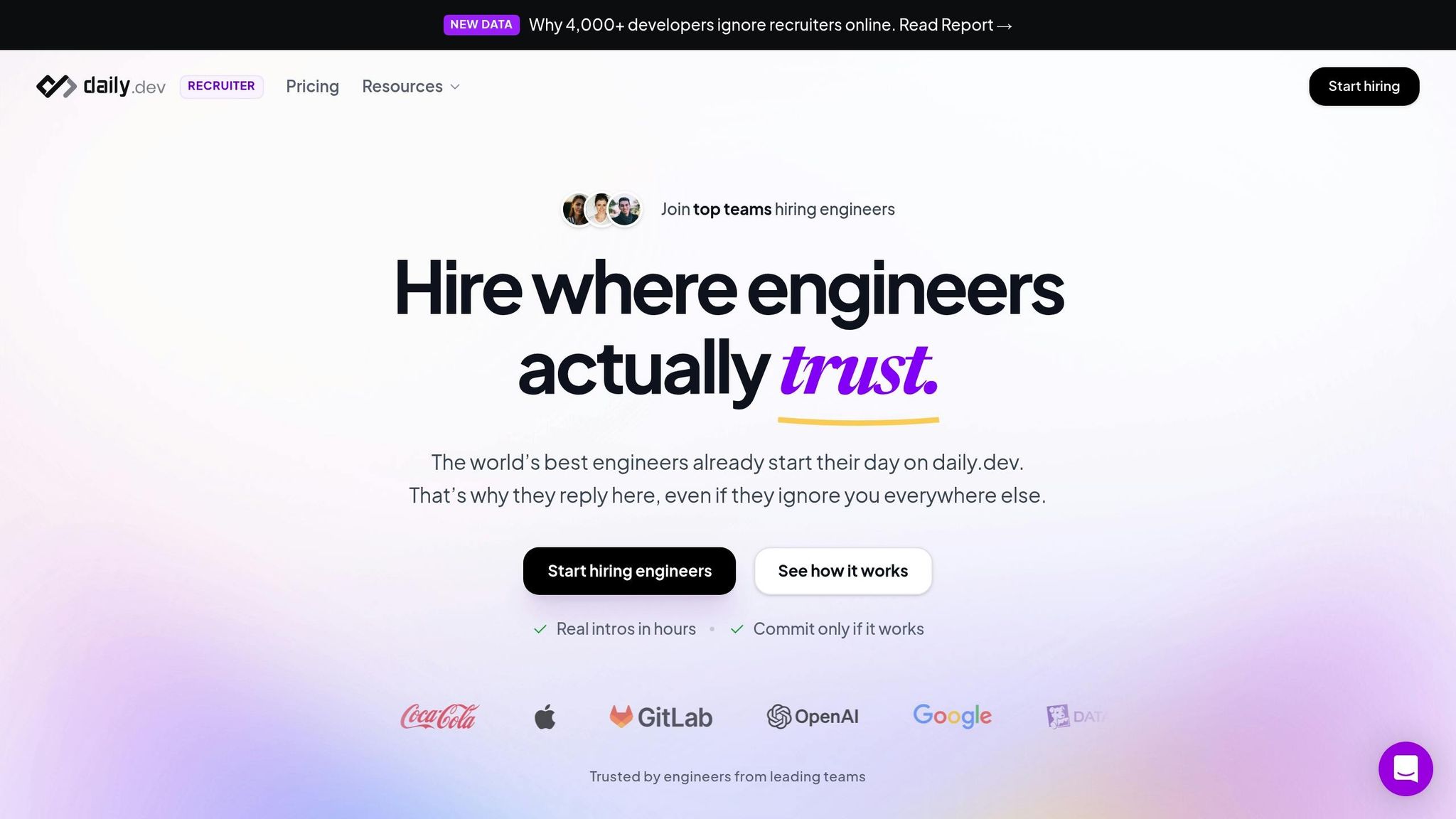
Traditional hiring methods often involve sifting through outdated profiles and dealing with low response rates. Enter daily.dev Recruiter, a platform that connects you directly with over 1,000,000 active, pre-qualified developers who are open to new opportunities . Every introduction is warm and double opt-in, meaning developers have already expressed interest in roles that match their skills.
This approach gives you real-time access to a network of qualified candidates. Sharing this with hiring managers shifts the narrative from "we can't find anyone" to "here's a direct and efficient way to connect with the right talent." By leveraging this targeted pathway, you can streamline the hiring process and meet expectations more effectively.
Hiring engineers?
Connect with developers where they actually hang out. No cold outreach, just real conversations.
How to Push Back on Unrealistic Demands
When faced with unrealistic hiring demands, redirecting the conversation toward what's achievable can sharpen your candidate search. The goal is to move away from an exhaustive wish list and zero in on the qualities that actually drive success in the role.
Focusing on Core Requirements
Start by separating the essentials from the extras. A simple question like, "What are the three non-negotiable skills needed for success in the first 90 days?" can help prioritize what's truly important. This approach forces clarity and ensures the focus stays on critical capabilities rather than aspirational traits.
This mindset aligns with the growing trend of skills-based hiring practices. By 2024, 81% of employers reported implementing skills-based hiring practices, a jump from 56% in 2022. Even more compelling, 94% of these employers believe this approach better predicts job performance than traditional resume screening . And with technical skills now having a half-life of just four years - down from ten years in the 1980s and potentially dropping below two years soon - hiring for potential and adaptability has become more important than ever. This shift highlights why assessing soft skills is now a critical component of the evaluation process. This shift in focus sets the stage for introducing practical and realistic hiring solutions.
Offering Alternative Solutions
Once priorities are clear, propose a structured alternative to meet hiring goals. If expectations remain high, consider presenting the 70/30 hiring rule. This strategy involves hiring candidates who meet 70% of the job requirements and addressing the remaining 30% through training and mentorship . For example, you might suggest, "We can bring on someone skilled in backend development and cloud architecture now, then train them on Kubernetes over two months so they can handle basic deployments by Week 4."
The data backs this up. Companies using skills-based hiring report 91% higher employee retention, with these hires staying 9% longer than those brought on through traditional processes . Additionally, focusing on core skills can expand the talent pool by nearly 19 times, shifting the conversation from "we can't find anyone" to "here's how we can effectively fill this role while building the skills we need."
Maintaining a Productive Working Relationship
Once you've aligned expectations, the key is to keep that momentum going. Continuously reinforcing these alignments ensures the hiring process stays on track. A solid partnership between the recruiter and hiring manager is the backbone of effective hiring. Without regular communication and shared accountability, even the most productive initial discussions can lose focus over time.
Setting Up Clear Communication Channels
Consistent communication is essential to prevent minor issues from escalating into major obstacles. Scheduling regular check-ins - weekly or bi-weekly - provides an opportunity to review candidate progress, address any concerns, and tweak strategies as necessary. These ongoing touchpoints allow for quick adjustments and help maintain alignment.
Poor communication can significantly slow down the hiring process. That’s why it’s critical to establish clear communication channels right from the start. Tools like Applicant Tracking Systems (ATS) can streamline this process by centralizing candidate information and updates. Having a single, reliable source of truth minimizes confusion and ensures both you and the hiring manager stay aligned.
"Regular and transparent communication between recruiters and hiring managers is paramount for a successful hiring process." - Dice Staff
Once communication channels are firmly in place, the next step is to focus on tracking and sharing measurable outcomes.
Measuring and Sharing Success Metrics
Tracking key performance indicators (KPIs) - such as time-to-fill, quality of hire, and retention rates - provides an objective way to measure success. For example, in 2023, the average time to fill open tech roles was 47.5 days. By presenting measurable progress, you not only build trust with the hiring manager but also validate your hiring strategies.
Sharing metrics regularly, like time-to-fill and retention rates, strengthens your partnership by providing tangible evidence of progress. This data-driven approach not only enhances trust but also improves hiring pipelines, leading to faster hiring, reduced costs, better-quality hires, and stronger retention rates.
Monitoring metrics at every stage of the process allows you to quickly identify and address bottlenecks. If delays arise, tackling them promptly with the hiring manager shows your commitment to continuous improvement. This proactive mindset reinforces your collaboration and supports the broader goal of maintaining alignment throughout the hiring journey.
Conclusion
Navigating unrealistic expectations from technical hiring managers is all about fostering partnerships grounded in market realities. The strategies outlined here highlight the importance of collaboration, honest communication, and data-driven decision-making in achieving success in technical recruiting.
To make real progress, focus on distinguishing between essential skills and those that are merely nice-to-have. Leverage market data to recalibrate expectations and, when addressing unrealistic demands, prioritize core requirements. This helps avoid common mistakes when hiring technical talent. Offer practical alternatives that align with business goals while broadening your talent pool.
Sustaining this alignment requires regular check-ins, open communication, and shared metrics for success. When both hiring managers and recruiters understand the challenges and opportunities, the hiring process not only becomes faster but also results in higher-quality candidates.
Platforms like daily.dev Recruiter can play a vital role in this process by connecting you with over 1,000,000 engaged developers . Through warm, double opt-in introductions, you can move away from managing unattainable wish lists and instead focus on building meaningful connections with qualified talent.
FAQs
How can recruiters help hiring managers set realistic expectations?
To assist hiring managers in setting practical expectations, recruiters should prioritize transparent, data-backed communication. This means sharing key insights about the current job market, including trends, candidate availability, and realistic timelines. Such information helps bridge any gaps in understanding and aligns everyone on the same page.
For example, use concrete data to illustrate your points - like average salaries for specific roles, the most sought-after skills in the industry, or typical time-to-fill statistics. When hiring goals are aligned with market realities, it creates a collaborative environment and paves the way for a more efficient and smoother hiring process.
How can recruiters identify must-have skills versus nice-to-have qualities in candidates?
To identify the must-have skills for a role, start by working closely with the hiring manager to outline the key competencies that are critical for success in the position. Focus on the abilities that directly affect performance and contribute to achieving team objectives. It’s also helpful to analyze current market trends and the availability of talent to establish practical expectations.
Beyond technical expertise, take into account a candidate's potential for growth and their ability to learn new skills on the job. By emphasizing flexibility and maintaining open lines of communication, the hiring process becomes more streamlined and better aligned with the realities of the job market.
Why is focusing on a candidate's growth potential important in the hiring process?
Focusing on a candidate's potential to grow opens up access to a wider range of talent while keeping hiring expectations in tune with current market realities. By emphasizing traits like a willingness to learn and the ability to adapt, you can spot individuals who might not meet every technical requirement right now but show promise to excel in the role with time.
This mindset promotes deeper engagement, supports ongoing skill-building, and makes the hiring process more cooperative. It also addresses challenges like overly demanding skill requirements or tight timelines, resulting in hiring decisions that are more balanced and effective in the long run.
.png)


