Developers often ignore recruiter messages - not because they’re uninterested, but because most outreach feels generic, irrelevant, or wastes their time. Here’s how to fix that and create outreach developers actually respond to:
- Understand your audience: Only 15% of developers are actively job hunting, but 60% are open to the right opportunity. Your message needs to stand out.
- Personalization is key: Reference their work, like GitHub contributions or LinkedIn activity. Avoid generic templates and irrelevant roles.
- Be transparent: Include key details upfront - tech stack, salary range, and remote work options.
- Keep it concise: Messages under 200 words with clear, specific subject lines perform best.
Developers value clear, relevant communication. Do your homework, skip the corporate jargon, and respect their time. Thoughtful outreach can turn a cold email into a meaningful connection.
::: @figure 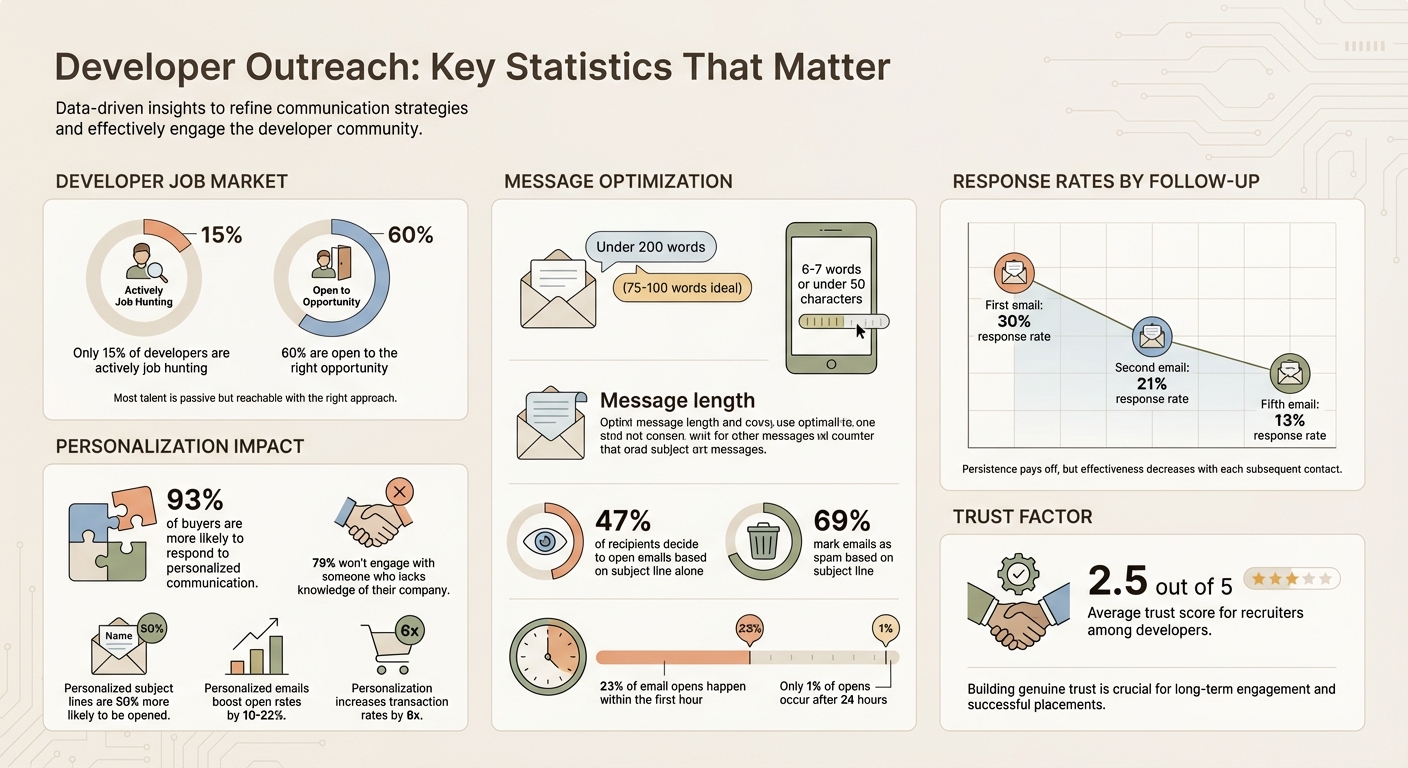 {Developer Outreach Statistics: Personalization and Engagement Metrics}
What Developers Want in Outreach Communication
Developers appreciate communication that prioritizes logic, clarity, and technical relevance over flashy corporate buzzwords. They can quickly gauge whether you understand their work and if your message offers genuine value.
The stats back this up: 93% of buyers are more likely to respond to personalized communication, while 79% won’t engage with someone who lacks knowledge of their company. For developers, this means your outreach needs to show that you’ve done your homework. A well-crafted message should reflect a clear understanding of their technical world. Let’s dive into how to make your outreach truly resonate.
Why Authenticity and Relevance Matter
Authenticity in outreach isn’t about being overly friendly - it’s about being professionally relevant. Developers expect messages that feel real and pass what experts call the "reality check." Would you say this in a real conversation, or does it sound like a canned script?
"If you wouldn't bring it up in a face-to-face conversation, don't put it in an email. Focus on professional relevance, not personal details, to build trust and credibility." - Aurelien Mottier, memoryBlue
This means referencing specific milestones such as recent LinkedIn activity, open-source contributions, or product launches. Avoid crossing into personal social media - it’s invasive and breaks trust. Instead, focus on their professional achievements, the technologies they’re working with, or challenges their team might be tackling.
"Salespeople are unloading the library when, in fact, the prospect is just looking for a page of a book. So, instant problem-solving is the biggest thing we see right now." - Lewis Gadsdon, Founder, SDRs of London
Once you’ve established authenticity, the next step is tailoring your message to reflect each developer’s unique career path.
How to Avoid Spam and Corporate Jargon
Developers can spot generic templates a mile away and prefer interactions that feel effortless and genuine. Mass-produced messages are an immediate turnoff.
"Developers still possess a finely-tuned 'bullshit sniffer' and favor touchless experiences. The key to successful outbound marketing lies in delivering genuine value." - Gonto and Matteo Tittarelli, HyperGrowth Partners
Buzzwords like "synergy", "rockstar developer", or "fast-paced environment" scream that you don’t understand their world. Instead, write as if you’re messaging a colleague - keep it conversational, direct, and free of fluff. Aim for brevity: stick to 75–100 words and make your point in under 12 seconds.
Avoid gimmicky formatting, such as all-caps subject lines, excessive exclamation points, or quirky fonts. These tactics come across as unprofessional and desperate. Your message should feel like it was crafted specifically for the recipient, not blasted to every developer in the industry. These principles lay the groundwork for effective, personalized outreach.
Common Developer Frustrations with Recruiter Outreach
The main frustrations developers have with recruiter outreach boil down to wasted time and lack of transparency. Messages that omit key details - like the role’s requirements or benefits - are a quick way to lose their interest.
Another major issue is misaligned technical skills. When recruiters misuse technical jargon or pitch roles that don’t align with a developer’s expertise (e.g., contacting a backend engineer about a frontend role), it signals a lack of understanding and erodes trust.
"Bridging the language gap between technical and non-technical team members is not just about understanding the jargon; it's about fostering an environment of clear, efficient, and mutual understanding." - Andrew McCracken, Tech Manager
To avoid these pitfalls, focus on transparency and technical accuracy. Include essential details upfront - such as the tech stack, salary range, and remote work options. This not only respects developers’ time but also builds credibility in your outreach.
How to Personalize Your Outreach Messages
When reaching out to developers, authenticity and relevance are key. Personalization goes far beyond simply inserting a name into a generic message. It’s about showing you’ve taken the time to understand their work and what truly matters to them.
Think of research as a way to build trust. Developers can spot a mass email from a mile away, but a thoughtful, tailored message? That’s what gets their attention. Below, we’ll explore how to research effectively, reference their work meaningfully, and craft opportunities that align with their goals.
Research the Developer Before You Reach Out
Start by digging into the developer’s LinkedIn activity. Look for recent posts, shared articles, or updates about their company. Are they discussing specific challenges, celebrating milestones, or highlighting particular technologies? These details can provide natural conversation starters that feel genuine, not forced.
Platforms like daily.dev can also give you insight into what content developers are engaging with. For example, if they’re frequently bookmarking articles about Kubernetes or serverless architecture, you’ve got a clear indication of their current technical interests. Use this knowledge to tailor your outreach to topics they care about.
If they have a public GitHub profile, dive into their repository activity. Are they actively contributing code, or are they more focused on leadership within a project? Check out the technologies they’re using and the types of problems they’re solving. This can help you frame your message in a way that resonates with their expertise.
Lastly, segment your outreach by job role, industry, and company size. A frontend engineer at a startup will have different priorities than a backend architect at a large enterprise. Understanding these nuances ensures your message speaks directly to their unique challenges.
Reference Their Projects and Contributions
When referencing their work, be specific. Mention the exact bug they fixed in an open-source project, a recent performance optimization they implemented, or a technical blog post they authored. Vague compliments won’t cut it - developers appreciate concrete details that show you’ve done your homework.
For instance, if they’ve made impactful contributions on GitHub, highlight a particular pull request or repository. If they’ve spoken at conferences or been featured in tech publications, call out those achievements by name and date. Saying, “I saw your talk at ReactConf 2025 on state management patterns” carries much more weight than a generic “I heard you spoke at a conference.”
You can also reference team dynamics by noting recent hires in their department or mentioning colleagues by name. This level of detail demonstrates that you understand their team’s growth and current focus.
"By harnessing data and AI, companies can now create outbound campaigns that resonate with developers' specific needs and interests, transforming what was once seen as intrusive into a welcome source of personalized support and information." - HyperGrowth Partners
However, it’s important to respect boundaries. Stick to professional platforms like LinkedIn, GitHub, and technical blogs. Avoid delving into personal social media, as the goal is to honor their professional contributions, not make them feel like they’re being watched.
Match the Opportunity to Their Career Goals
Once you’ve done your research, it’s time to connect the dots. Tailor your opportunity to align with the developer’s career path and aspirations. Focus on what they value, not just what you want to pitch.
Analyze their current technical stack and highlight how the role incorporates technologies they’re passionate about. If their department has been hiring for specific roles, like multiple DevOps engineers, that’s a clue about their team’s priorities. Frame your message to address those challenges or opportunities directly.
For top-tier candidates, consider "high-touch" tactics. Before making your ask, share content that aligns with their interests - like a case study or article related to their goals. For example, if they’ve expressed a desire to improve developer experience, send them a relevant resource and follow up with how your opportunity supports that mission.
"It's not about abandoning the community-centric approach of DevRel, but rather enhancing it with bottom-line-focused methodologies that resonate with both developers and business executives." - Gonto and Matteo Tittarelli, HyperGrowth Partners
Finally, tie the role to their professional trajectory. If they’ve transitioned from an individual contributor to a leadership role, highlight opportunities for team management. If they prefer staying hands-on, emphasize the technical challenges they’ll get to tackle. Show them that this role is not just another job but a natural next step in their career journey.
Writing Messages That Developers Actually Read
When it comes to reaching out to developers, crafting a message that stands out is no small feat. Developers are inundated with recruiter emails, most of which are ignored or deleted within seconds. So, how do you ensure your message gets noticed and, more importantly, prompts a reply? It all comes down to thoughtful structure and a clear focus. Let’s break down the tactics.
Keep Messages Short and Focused on Value
The golden rule here: keep it brief. Your message should be under 200 words - ideally just 3–4 sentences . Every word should serve a purpose.
Start with a genuine compliment, like referencing a specific GitHub project or a talk they gave at a conference. Then, quickly explain why you’re reaching out and what’s in it for them. Highlight what makes this opportunity worth their time - whether it’s creative control over the tech stack, tackling a complex technical challenge, or being part of something built from scratch. Skip the fluff like your company’s mission statement or history.
Short paragraphs also make your message easier to read . And above all, make your outreach feel personal. As Matthew Deutsch puts it:
"The ideal message length? Under 200 words. Stick to one goal: Get a response" .
Show them you’re contacting them specifically, not just blasting out emails to anyone with a similar job title.
Write Subject Lines That Get Opened
Your subject line is your first (and sometimes only) chance to grab attention. Nearly half of email recipients - 47%, to be exact - decide whether to open an email based on the subject line alone . On the flip side, 69% of people mark emails as spam based on that initial impression .
Here’s what works: keep it short - 6–7 words or under 50 characters . This ensures the subject line displays fully on mobile devices, where many developers check their emails. Personalization is key. Emails with personalized subject lines are 50% more likely to be opened and can boost open rates by 10% to 22% .
Some effective subject line strategies include:
| Strategy | Example |
|---|---|
| Hyper-Specific Reference | "Your Kubernetes security talk at KubeCon 2025" |
| Tech Stack Match | "Backend role using Rust and PostgreSQL" |
| Pattern Interrupt | "Did I lose you?" |
| Simple Question | "Connect?" |
Avoid spammy words like "urgent", "free", or "must-see" . Instead, try a casual tone - something like "more wins for [company]" feels personal and conversational .
A particularly successful format for sales outreach is: "Quick call [Date] [Company Name] - [Account Name]." This approach has achieved a 75% open rate because it’s specific and direct .
Use a Casual, No-Pressure Call to Action
Once you’ve captured their attention, your next step is to guide them toward a simple action. End your email with an easy, low-pressure call to action. The goal is to make it effortless for developers to respond.
For example, you could say: "Are you open to a quick 15-minute chat this week? I can adjust to your schedule" . This shows respect for their time and avoids the commitment of something too open-ended.
Avoid pleading or sounding desperate by using phrases like "please respond." Instead, frame your ask as an invitation to explore something mutually beneficial. If you don’t hear back, follow up on the same email thread. The "Re:" in the subject line not only boosts open rates but also shows persistence without being overbearing. Keep in mind, response rates drop with each follow-up: 30% for the first email, 21% for the second, and 13% by the fifth . Make each attempt count.
Hiring engineers?
Connect with developers where they actually hang out. No cold outreach, just real conversations.
Using daily.dev Recruiter for Warm Developer Introductions
Once you've nailed the skill of crafting messages that developers actually want to read, there's an even smarter way to connect: skip the cold outreach altogether. daily.dev Recruiter takes personalized outreach to the next level by linking you directly with developers who are already exploring new opportunities. It’s a solution that builds on the strategies discussed earlier but eliminates the guesswork.
How daily.dev Recruiter Works
daily.dev Recruiter taps into a vibrant community of developers who regularly engage with technical content and upskill themselves. Instead of relying on scraping or sending cold emails, this platform connects you with developers right where they’re already active.
Here’s how it works: You craft a job brief tailored to developers, detailing the tech stack - like React 18 with TypeScript or Rust with PostgreSQL - the technical challenges they’ll tackle, and what sets your team apart. Developers who are open to new roles review your listing privately. If they’re interested, they’ll take the next step by expressing interest in your role. This ensures you’re only connecting with candidates who’ve already reviewed your job and are genuinely interested.
To make the process even more efficient, you can include up to three custom screening questions during the opt-in phase. These questions help confirm technical alignment before moving on to scheduling a call.
This approach not only connects you with the right talent but also boosts engagement, as explained in the next section.
Why daily.dev Recruiter Gets Better Response Rates
daily.dev Recruiter uses real-time insights to understand what developers are currently reading and following. Combined with a double opt-in process, the platform ensures you’re matched with developers who are already interested in your role. They’ve seen your job brief, answered your screening questions, and opted in - making them far more likely to respond compared to cold emails or bulk campaigns.
On top of that, the platform integrates seamlessly with your ATS, automatically syncing candidate data without creating duplicates or requiring manual updates. This lets you focus on what really matters: meaningful, technical conversations with candidates.
The result? Higher engagement and more productive discussions, thanks to the thoughtful double opt-in system, which we’ll dive into next.
How Double Opt-In Builds Trust with Developers
Developers are often wary of unsolicited, generic outreach. A double opt-in process respects their time and autonomy. It allows them to discover opportunities on their own terms and only move forward if the role aligns with their goals.
This approach transforms recruiting into a trust-based process. By connecting with candidates who are already interested, you’re not just filling roles - you’re building stronger, long-lasting professional relationships. It’s a win for everyone involved.
Tracking and Improving Your Outreach Performance
Once you've crafted outreach messages tailored to your audience, the next step is figuring out how well they're working. Measuring the effectiveness of your outreach is essential for refining your strategy and connecting more effectively with developers.
Start by keeping an eye on engagement metrics like open rates, click-through rates, and reply rates. These numbers give you a sense of how well your messages are grabbing attention and sparking interest . Dive deeper into response sentiment by categorizing replies as "Positive", "Objection", "Referral", or "Unsubscribe." This helps you assess the quality of the engagement, not just the quantity .
Another important metric is lead response time - how quickly you follow up after a developer shows interest. This can make or break your chances of building a meaningful connection . The faster you respond, the better your odds. Also, track conversion metrics, such as how many leads turn into scheduled meetings or eventual hires .
Which Metrics to Track
To understand if your outreach is hitting the mark, focus on metrics like open rates, reply rates, deal velocity (how quickly a developer moves from initial contact to a booked meeting), average response time, and reasons for losing leads. These numbers can reveal whether your subject lines are effective and if your message content resonates. For example, if you're frequently hearing, "The tech stack isn't a fit", or "The compensation isn't competitive", it might be time to tweak your targeting or messaging .
Quick response times are also critical. Studies show that faster follow-ups often lead to more meaningful conversations . The key is to identify patterns in this data and adjust your approach accordingly.
Test Different Message Approaches
A/B testing can help you make smarter decisions by replacing guesswork with data. Test one variable at a time, such as whether a casual or formal tone works better, the ideal message length, or the specific value proposition you're emphasizing .
"A/B testing is for more than just your subject lines. You need to conduct A/B testing to fine-tune all the strategies underpinning your personalized sales emails to make decisions based on real data." - Outreach
Segment your tests based on developer personas. For instance, a Senior Backend Engineer might respond well to discussions about technical challenges and system architecture, while a Junior Frontend Developer might be more interested in mentorship opportunities. Timing also matters - a significant 23% of email opens happen within the first hour of delivery, while the chances drop to just 1% after 24 hours . Experiment with different send times to hit that critical window.
Once you identify trends in your tests, use those insights to refine your messaging further.
Use Feedback and Data to Improve
Your data isn't just numbers; it's a guide for improvement. Look for patterns in engagement to see which approaches resonate most. Track not just the initial responses but also progression metrics - how well your personalized messages move developers through your pipeline .
Pay attention to direct feedback from developers. If someone says, "This isn't relevant to me", take a closer look at your research and targeting to pinpoint where you might have missed the mark . Also, persistence can pay off. Thoughtful, respectful follow-ups often lead to higher conversion rates, so use the insights you gather to build follow-up sequences that balance persistence with respect for developers' time .
Conclusion
Reaching out to developers doesn’t have to feel like shouting into the void. The key difference between messages that get ignored and those that spark meaningful conversations lies in personalization and respect. When you invest the effort to understand a developer’s work, you’re signaling that your message isn’t just another cookie-cutter email. In fact, personalized communication can boost engagement by 93% and increase transaction rates by six times .
Here’s the truth: developers can spot insincere outreach a mile away. 79% of buyers won’t engage with professionals who lack a clear understanding of their company or work . That’s why doing your homework and crafting genuine, thoughtful messages isn’t optional - it’s essential. When your outreach reflects real effort and technical understanding, it stops feeling like an interruption and starts feeling like a professional opportunity.
"Unlike the generic outreach of the past, modern DevMarketing can offer developers insights, solutions, and opportunities that are specifically relevant to their work and challenges - bypassing their BS sniffer altogether." - HyperGrowth Partners
The right tools can take these principles to the next level. For example, platforms like daily.dev Recruiter make personalization easier by facilitating warm, double opt-in introductions. This approach ensures you’re connecting with developers who’ve already expressed interest, removing the spammy feel and building mutual respect from the very first interaction. Considering the average trust score for recruiters among developers is just 2.5 out of 5 , leading with relevance and respecting their autonomy puts you ahead of the curve.
FAQs
What’s the best way to personalize outreach messages for developers?
To connect with developers in a more personal and effective way, focus on the details that matter most to them. Don’t just stop at using their name - mention specific projects they’ve worked on, the technologies they’re skilled in, or their areas of expertise. This extra effort shows you’ve taken the time to understand their work and appreciate their talents.
Steer clear of generic or overly formal messages. Developers are often bombarded with outreach that feels impersonal and irrelevant. Instead, tailor your communication to their professional journey and career aspirations. Highlight how your opportunity aligns with what they’re passionate about. By crafting thoughtful, personalized messages, you not only increase the chances of getting a response but also build trust and credibility. This approach helps you stand out from the flood of cookie-cutter emails that often get ignored.
What are the biggest mistakes recruiters make when reaching out to developers?
Recruiters often stumble when reaching out to developers, and a major pitfall is sending generic, impersonal messages. These types of messages overlook a developer’s unique skills, projects, or interests, making it clear that little effort was put into understanding their background. Developers tend to respond better to communication that feels tailored and demonstrates a real understanding of their expertise.
Another common error is leaving out important details like the salary range, the technologies involved, or clear expectations for the role. Transparency matters. When this information is provided upfront, developers are much more likely to engage. On the flip side, over-relying on automation or surface-level personalization - like simply adding a first name - can come off as insincere and damage trust.
Lastly, neglecting to connect meaningfully with developer communities or failing to acknowledge previous interactions can make outreach feel purely transactional. Developers value authentic engagement and respect for their time, so building trust and fostering genuine connections are key to effective communication.
What are the benefits of using a double opt-in process for engaging developers?
Using a double opt-in process is a smart way to ensure that developers truly want to hear from you. It not only builds trust but also reduces the chances of your messages being flagged as spam. This method shows that your outreach is thoughtful and respectful, leaving a positive impression.
When developers confirm their interest, they’re more likely to engage with your messages. This often results in better response rates and more productive conversations. It’s a straightforward approach that helps you establish genuine connections with potential candidates.
.png)