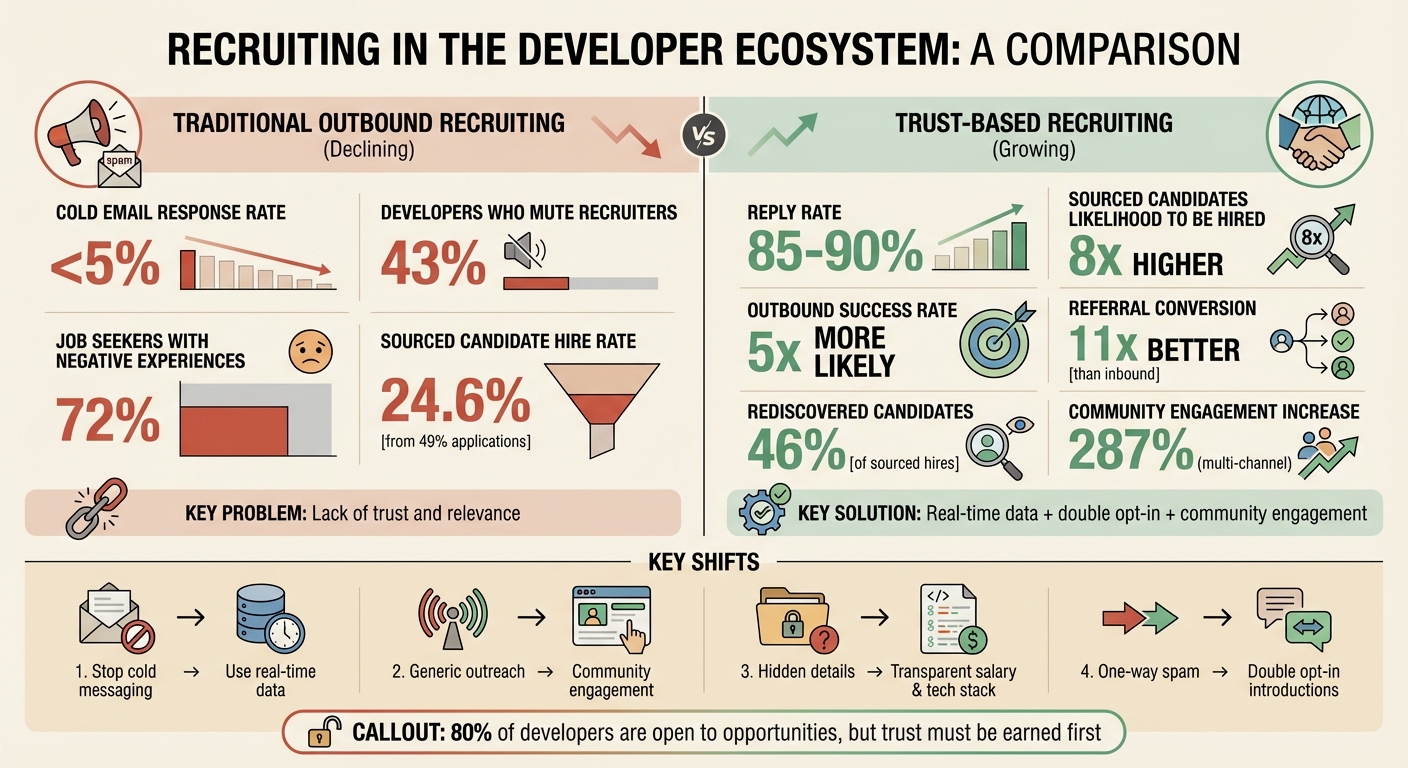
Cold outreach is failing. Developers are tired of mass messages, outdated profiles, and recruiters who don’t understand their roles. Response rates for cold emails are below 5%, and 43% of developers have muted recruiters entirely. The problem? A lack of trust and relevance.
What’s replacing outbound recruiting? Trust-based recruiting. This approach focuses on building connections within developer communities, using real-time activity data instead of static résumés. Platforms like daily.dev Recruiter enable double opt-in introductions, ensuring developers only engage when they’re interested. This method leads to reply rates as high as 85-90%.
Key shifts in recruiting:
- Stop cold messaging: Developers ignore generic outreach.
- Use real-time data: Match candidates based on current skills and activity.
- Engage in communities: Meet developers where they already collaborate.
- Be transparent: Share salary, tech stack, and role details upfront.
The future of hiring isn’t about spamming inboxes. It’s about earning trust and connecting with developers on their terms.
Why Outbound Recruiting No Longer Works
Low Response Rates and Spam Fatigue
Cold emails in recruiting are struggling to make an impact, with response rates sitting below 5%. Compare that to job boards, which bring in 49% of applications but result in only 24.6% of actual hires . Think about it: over 95% of cold emails are ignored, often caught in spam filters or dismissed outright . Developers, in particular, are inundated with spam every single day. These ineffective sourcing strategies have backfired badly - 77% of organizations now face hiring challenges because developers are simply tuning out unsolicited outreach . These dismal engagement rates highlight a deeper issue: a disconnect in how candidates are being approached and assessed.
Outdated Profiles and Missing Context
The problem goes beyond just getting ignored - outdated candidate information is another major hurdle. Resumes and LinkedIn profiles often fail to capture current contributions on platforms like GitHub or highlight involvement in ongoing projects. They also miss out on signaling a developer's current interests or skillsets. This lack of context leads to poor matches, like offering Java roles to JavaScript experts or pitching senior positions to mid-level engineers. Interestingly, 46% of sourced hires now come from rediscovered candidates in existing databases, proving how quickly profile data becomes irrelevant . Without real-time insights - like recent coding activity or participation in forums - recruiters risk sending out irrelevant, ineffective messages.
Loss of Trust in Developer Networks
Low engagement and outdated data are just part of the story. The overuse of cold outreach has eroded trust among developers. Many don’t just ignore recruiters - they actively distrust them. A staggering 72% of job seekers report negative experiences, such as being ghosted by recruiters, and every generic message only makes things worse . The numbers tell the story: referrals convert 11 times better than inbound applications, while cold outreach lags behind nearly every other hiring channel . Shannon Pritchett sums it up well: top-tier developers aren’t applying to job posts - they need engagement built on trust, not spam that tarnishes an employer's reputation . And with 78% of job seekers researching a company’s reputation before responding, every poorly crafted cold email becomes a potential risk .
The Shift to Trust-Based Recruiting
Traditional outbound recruiting methods have hit a wall. Cold emails and unsolicited messages simply don't work anymore. Instead of trying to improve these outdated tactics, it's time to rethink the approach entirely. Enter trust-based recruiting - a strategy that prioritizes meeting developers in spaces where they naturally spend their time and engage. This method treats trust as a foundation, not an afterthought, replacing interruptions with authentic connections.
Recruiting Within Developer Communities
Developer communities, such as daily.dev, thrive because they’re built around learning and collaboration, not job hunting. Over 500,000 developers use daily.dev to explore personalized feeds from more than 1,300 tech sources, join specialized Squads (focused on React, AI, and other technologies), and actively participate in discussions .
This is a game-changer compared to job boards, where nearly half of all applications yield only about a quarter of hires . Communities offer something different: they connect you with passive talent - developers who aren't actively looking but are open to the right opportunity. Multi-channel, community-driven approaches increase engagement by an impressive 287% compared to single-channel outreach .
For instance, engaging with a Squad focused on a specific tech stack or commenting on a developer’s post relevant to your hiring needs builds relationships instead of spamming inboxes. This method taps into genuine developer interactions, effectively addressing the shortcomings of cold outreach compared to warm introductions.
Using Real-Time Activity Data
Static profiles only tell part of the story - they’re snapshots of the past. Real-time activity data, on the other hand, reveals what developers are doing right now. On daily.dev, actions like upvoting React tutorials, commenting on AI discussions, or reading about specific frameworks provide a dynamic view of current expertise and interests .
This behavioral data allows for precise matching, offering insights that outdated résumés simply can’t. Candidates sourced using these real-time signals are 8x more likely to be hired than those who apply directly, and outbound efforts based on this data are 5x more likely to succeed . By identifying developers weeks before they update their profiles, real-time data gives recruiters a valuable edge, bridging the gap left by static résumés .
How daily.dev Recruiter Works
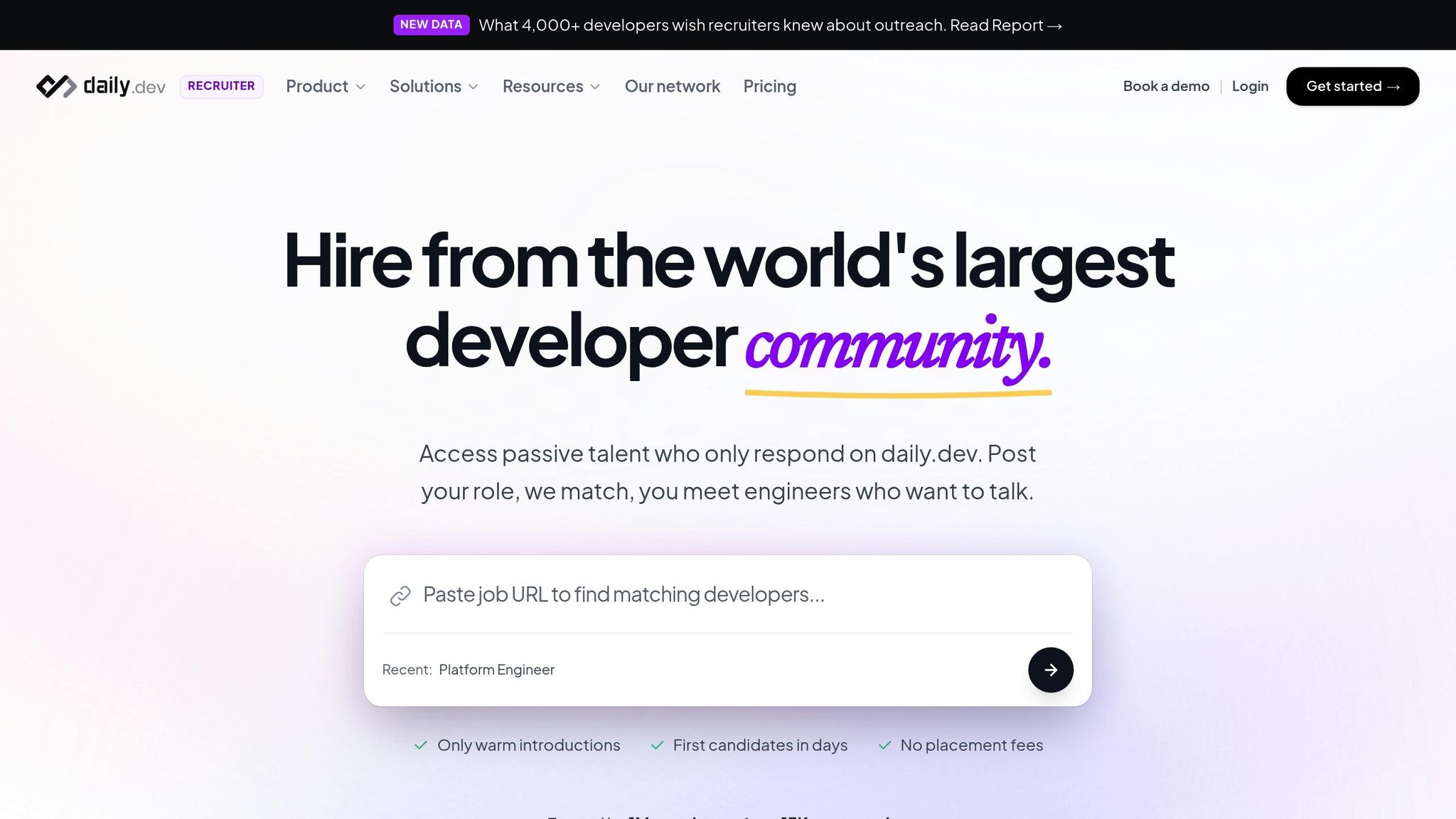
daily.dev Recruiter transforms traditional recruiting by replacing cold outreach with a system grounded in mutual consent and real-time developer activity. The process unfolds in four steps: Share (submit a role brief), Match (find developers based on their current activity), Pitch (privately present roles), and Intro (start a conversation only if the developer opts in). By ensuring every interaction is based on agreement, this system fosters trust between recruiters and developers.
Double Opt-In Introductions
At the heart of daily.dev Recruiter is a double opt-in system. Here’s how it works: recruiters send a connection request that includes a detailed role brief. Developers then review the request and decide whether to opt in. Once they agree, the connection is finalized. This approach eliminates ghosting and ensures developers can provide additional context by answering up to three custom screening questions during the opt-in phase. Nimrod Kramer, CEO & Co-Founder of daily.dev, sums it up perfectly:
"Trust is the only sustainable currency in recruiting. Platforms that protect trust - by design, not by accident - will outlast the spam machines" .
Matching Based on Developer Activity
Instead of relying on outdated résumés, daily.dev Recruiter focuses on what developers are actively reading, building, and learning. For example, if a developer frequently engages with advanced topics, the platform identifies them as a strong candidate. Using real-time activity signals - like tech stack usage, seniority, and timezone - the system assigns each role a "Fit Score." This ensures recruiters can connect with candidates even before they update their profiles.
85-90% Reply Rates
Thanks to its precise matching and emphasis on mutual consent, the platform boasts reply rates of 85-90%. These impressive engagement levels stem from connecting developers with roles that align closely with their current interests. Transparency, detailed role briefs, and prompt communication - outlined in the platform's "Recruiter Compact" - further strengthen this trust-driven approach.
How to Implement Trust-Based Recruiting
Shifting from cold outreach to a trust-based recruiting method means rethinking how you connect with and nurture developer talent. The approach focuses on three key practices: targeted outreach using real-time insights, clear and respectful job briefs, and ongoing relationship-building within the developer community.
Using daily.dev Recruiter for Targeted Outreach
Forget outdated résumés - focus on real-time activity to identify potential candidates. Platforms like daily.dev Recruiter let you filter developers by their current activity, such as tech stack, seniority, and recent engagement within the community. You can also leverage network signals for double opt-in introductions, which create a more personalized and respectful connection. This multi-channel, intent-driven strategy replaces generic keyword searches with behavioral matching, connecting you with developers who are actively interested in roles that align with their expertise. It’s a smarter way to start the conversation and ensures your outreach feels relevant and timely.
Writing Developer-Friendly Job Briefs
After identifying candidates, your next step is crafting a message that resonates. Developers value clarity and efficiency, so focus on three key elements: tech stack, salary range, and work model. Research shows that 69% of developers expect salary details upfront, while 71% want to know the tech stack and role scope .
For example, instead of vague descriptions, try something like this: "Senior React Engineer at ScaleAI: Build AI training tools with React/Next.js and TypeScript; $180K–$220K base + equity; remote US." Avoid overused terms like "rockstar" or "ninja", and instead highlight measurable impact, such as "scale to 1M users" or "reduce API latency by 40%." Including 2-3 tailored screening questions can help you assess technical fit while demonstrating that you value their time. A/B testing your job briefs can also boost response rates by 10-20%, attracting more qualified candidates .
Building Long-Term Developer Relationships
Trust-based recruiting doesn’t end with the initial contact. To sustain it, focus on meaningful, ongoing engagement. Share valuable resources like tech articles, host webinars, or participate in community discussions without pushing a hard sell. Engaging authentically in platforms like daily.dev forums helps build your reputation as someone who genuinely understands the developer world.
Interestingly, 46% of sourced hires come from rediscovered candidates - those who weren’t ready to make a move initially but engaged later . Maintaining transparency and consistency is key; avoid spammy tactics that lead to 72% negative sharing, which can harm your employer brand . Companies that actively participate in developer communities often see 11x higher referral conversion rates, creating a steady pipeline of talent for future hiring needs .
Conclusion
The inefficiency of traditional outbound recruiting is becoming more evident as developers increasingly see mass messages as impersonal and untrustworthy . The challenge isn’t finding developers - 80% are open to new opportunities - it’s earning their trust .
As Nimrod Kramer, CEO & Co-Founder of daily.dev, explains:
"Trust is the currency of modern recruiting" .
This shift in approach means recruiters must focus on building trust by engaging developers where they already spend their time, respecting their boundaries, and being transparent from the start. Developers value upfront details like the tech stack, salary range, and work model, and they’re quick to disengage when this information is missing .
daily.dev Recruiter changes the game by leveraging its extensive developer network to provide warm, double opt-in introductions. Using real-time activity data, it connects you with developers who are genuinely interested, eliminating the need to chase outdated résumés or send impersonal mass emails. This approach ensures higher reply rates and fosters conversations that feel authentic rather than transactional.
The future of recruiting isn’t about sending more messages - it’s about connecting with the right candidates. A trust-based strategy doesn’t just work better; it’s a smarter, more sustainable way forward.
FAQs
What is trust-based recruiting, and how is it different from traditional outbound recruiting?
Trust-based recruiting shifts the focus of hiring to building genuine, respectful connections with developers. Rather than relying on impersonal cold outreach or mass messaging, this approach emphasizes meaningful interactions, clear communication, and aligning with what developers truly value. It recognizes that developers appreciate honesty and real engagement, making trust the cornerstone of effective recruitment.
In contrast to traditional outbound recruiting - which often involves unsolicited emails or generic, spam-like messages - trust-based recruiting centers on opt-in engagement. This means sharing detailed, transparent job descriptions and connecting with developers in the communities they already participate in. By prioritizing trust and meeting developers on their terms, this method fosters stronger relationships and leads to more successful hiring experiences.
How does real-time activity data make candidate matching more effective?
Real-time activity data offers a clear and up-to-date snapshot of a developer's skills, interests, and engagement. Unlike traditional resumes, which can quickly become outdated, this dynamic information showcases what developers are currently exploring, creating, or learning. It provides a more nuanced view of their technical focus and ongoing growth.
For recruiters, analyzing this data makes it easier to pinpoint candidates who are genuinely immersed in relevant technologies. This not only improves the chances of finding the right match for a role but also helps minimize mismatches, simplifies the sourcing process, and builds stronger, trust-based relationships - all of which contribute to more effective hiring.
Why does transparency matter in tech recruiting?
Building trust with developers starts with transparency, which is crucial for effective recruiting. Developers are often wary of vague job descriptions, misleading roles, or overly generic outreach. These practices can quickly erode credibility. By clearly sharing key details - like salary, tech stacks, and the hiring process - recruiters demonstrate respect for a candidate’s time and career goals. This approach sets the tone for honesty and integrity from the start.
Transparency also tackles some of the most common frustrations developers face during recruitment, such as impersonal cold outreach or a lack of follow-up. These issues have created a noticeable trust gap in the industry. When recruiters focus on clear communication and genuine interactions, they build stronger connections. This not only improves engagement but also leads to better hiring outcomes. By prioritizing openness, recruitment evolves into a relationship grounded in mutual respect, rather than just another transactional exchange.
.png)