Ghosting during the hiring process is a growing frustration for tech recruiters. Developers may stop responding due to slow processes, unclear communication, or misaligned expectations. Here’s how you can minimize ghosting:
- Use a developer hiring checklist to simplify your process: Reduce interview rounds, use automated scheduling tools, and make decisions quickly. Long, drawn-out timelines push candidates away.
- Communicate clearly and regularly: Outline the process upfront, send weekly updates, and provide timely feedback. Silence from your side often leads to disengagement.
- Personalize your approach: Tailor your messages, reference specific skills, and thank candidates for their time. Generic outreach feels impersonal and drives disinterest.
- Ensure role alignment: Be upfront about salary, responsibilities, and expectations to fix what's broken about developer hiring. Misalignment is a common reason candidates disappear.
- Leverage tools like daily.dev Recruiter: Engage developers in their communities, using mutual opt-in connections to create meaningful interactions.
::: @figure 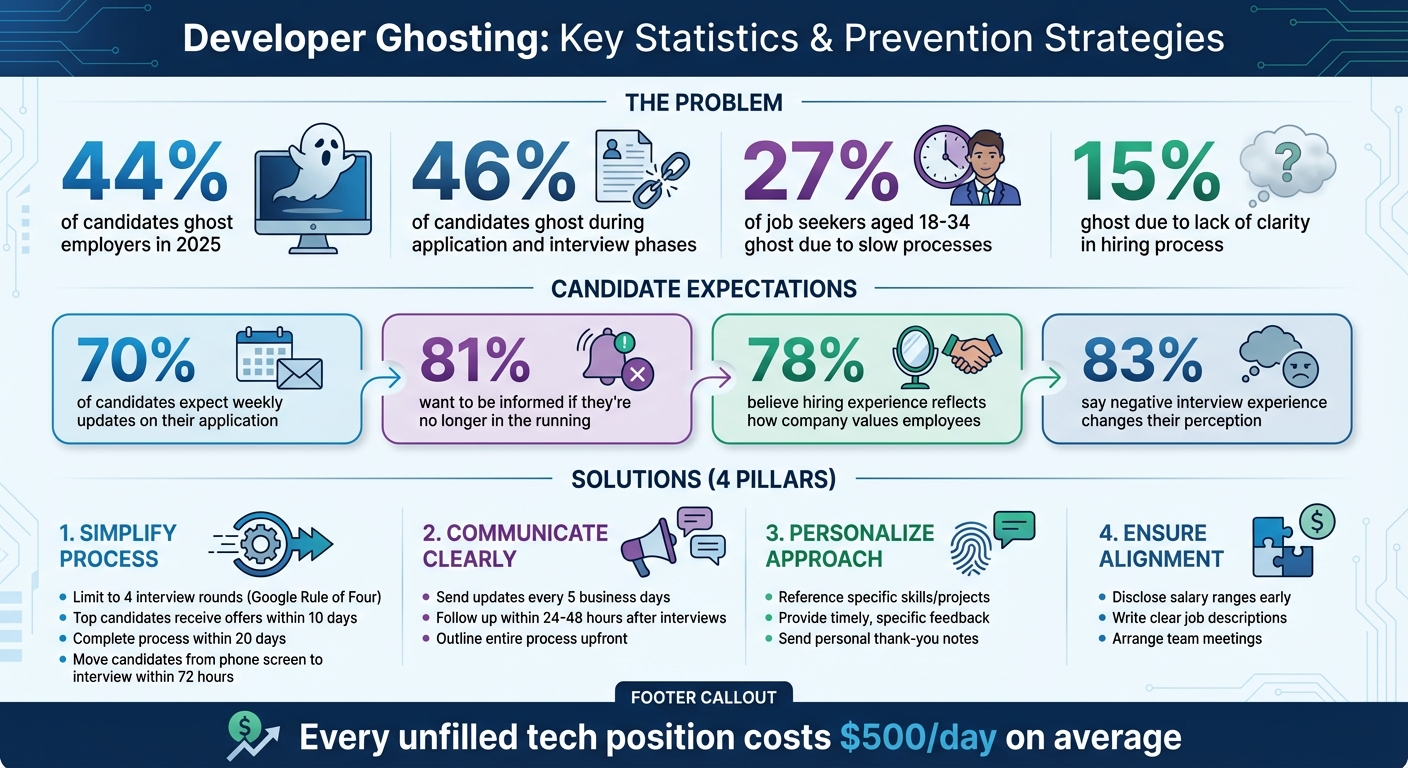 {Developer Ghosting Statistics and Key Prevention Strategies}
Simplify Your Hiring Process
A complicated hiring process can push candidates to disengage or even ghost entirely. When your hiring workflow drags on with too many stages, vague timelines, or scheduling hassles, developers are quick to move on to companies that value their time. In fact, 27% of job seekers aged 18–34 who ghosted an employer said the process was "too slow" . Streamlining your hiring process is key to keeping candidates interested. Efficient scheduling and quicker decisions can make all the difference. Here’s how you can simplify your hiring steps with coding-focused candidate sourcing tools.
Cut Down on Interview Rounds
Start by reducing the number of interviews. Every extra round increases the risk of candidates dropping out. A staggering 46% of candidates ghost employers during the application and interview phases , often due to repetitive conversations that lead to frustration. To combat this, consider the "Google Rule of Four", which limits the process to four interviewers and four rounds . Quick action is crucial - top candidates often receive offers within just 10 days . Keeping your interviews concise and to the point ensures you don’t lose out on great talent.
Leverage Automated Scheduling Tools
Scheduling interviews shouldn’t feel like a game of email tag. Automated scheduling tools let candidates pick interview slots that work for them, cutting down on delays and showing that your company values efficiency. Additionally, set up automated email updates to keep candidates informed about their status every five business days . This is important because 70% of candidates expect weekly updates on their application . Silence from your end can easily be misinterpreted as rejection, so consistent communication is key.
Accelerate Your Hiring Timeline
Speed is everything when it comes to avoiding ghosting. As Dr. John Sullivan, a leading HR expert, puts it:
"Slow hiring is a key driver of candidate ghosting" .
Many candidates accept the first solid offer they get, so if you’re still scheduling interviews while your competitors are making offers, you’re likely to lose top talent. The most efficient companies wrap up their interview process within 20 days . To stay competitive, set internal deadlines - like moving candidates from phone screens to formal interviews within 72 hours . If delays are unavoidable, consider extending a verbal offer to keep candidates engaged . Waiting over a month to hire often means losing your best option .
Communicate Clearly and Regularly
Uncertainty is a dealbreaker for candidates. When developers don’t hear from you, they’re likely to assume you’ve moved on - and they’ll do the same. In fact, 15% of job seekers who ghosted an employer did so because the hiring process lacked clarity . The key to avoiding this? Consistent and transparent communication. Candidates don’t need constant good news, but they do need to know where they stand. Even the most efficient hiring process can falter without clear, regular updates, though developer-first hiring platforms reduce ghosting by automating these touchpoints.
Outline the Process Upfront
Start by setting clear expectations right from the beginning. During your first conversation, map out the entire hiring process. Share details like the number of interview rounds, who they’ll meet (including names and job titles), and your timeline for decisions. This upfront clarity helps eliminate confusion and gives candidates the chance to bow out early if your timeline doesn’t work for them . For example, if your company takes three weeks to approve an offer, let them know immediately . Don’t forget to include logistical specifics - clear details leave less room for candidates to assume the worst during quiet periods.
Send Regular Status Updates
Silence is the quickest way to lose a candidate. Even if there’s no new progress, a quick update can make all the difference. A whopping 70% of candidates expect weekly updates on their application status , and 81% want to be informed if they’re no longer in the running . Use your applicant tracking system to send automated acknowledgments, and always follow up within 24–48 hours after an interview. As Matt Thomas, President and Founder of WorkSmart Systems, Inc., explains:
"The longer it takes for recruiters to respond to candidates or provide updates, the easier it is for those candidates to set their focus elsewhere, leaving your company in the dust" .
Be Honest About the Role
Trust comes from transparency - overpromising only damages it. While 72% of hiring managers believe they provide clear job descriptions, only 36% of candidates feel the same . Be upfront about the specifics: include details about the tech stack (down to frameworks and versions), the code review process, and daily responsibilities. If the job involves maintaining legacy code or requires on-call rotations, say so. Address potential concerns head-on. Steve Browne, Chief People Officer at LaRosa's Inc., emphasizes:
"Provide clear expectations on what the role is and isn't" .
When candidates discover that the reality of the role doesn’t match what was promised, they’re far more likely to ghost. By setting clear role expectations from the start, you build trust and can focus on keeping candidates engaged throughout the process.
Personalize Your Approach
Once you've established clear communication, the next step is to make your outreach personal. Generic messages are a quick way to lose a candidate's interest. This is a common reason why developers ignore recruiters. Developers, like anyone else, can tell when they're just another name on a list. When candidates feel recognized as individuals, they're more likely to stay engaged. In fact, 78% of job seekers believe their experience during the hiring process reflects how a company values its employees. So, personalization isn't just courteous - it's a smart strategy.
Customize Your Messages
Show candidates you're paying attention by referencing something specific about their work. Highlight a project on their GitHub, mention a technical blog they've written, or call out their contributions to an open-source library. This kind of detail not only grabs attention but also shows you're serious about their expertise.
When you reach out, focus on the challenges and technologies they'll encounter in the role. For example, mentioning tools like React 18 or Python 3.11 is far more compelling than listing generic perks. Developers want to know how they'll grow and what they'll be building. Keep your message concise - include the role, the tech stack, and why you see them as a great fit.
Give Timely Feedback
Speed matters. Set internal deadlines to follow up within a day or two after interviews to keep the momentum going. If a candidate isn't moving forward, provide thoughtful, specific feedback. Point to particular aspects of their interview or technical assessment. As HR Consultant and Career Coach Claire Stroh explains:
"If you leave a candidate floating out there with no feedback after an interview, the chances of being ghosted go up".
Even when delivering rejection feedback, being constructive and specific can leave a positive impression. This approach not only maintains goodwill but also keeps the door open for future opportunities.
Thank Candidates for Their Time
A simple thank-you can leave a lasting mark. Recognize the effort candidates put into technical tests, interview prep, and discussions with your team. Remember, 83% of talent say a negative interview experience can change their perception of a company or role. Failing to show appreciation is one of the quickest ways to sour that experience.
End every interaction with a personalized thank-you. Reference specific skills or points from your conversations. And here's a pro tip: send your thank-you notes from a personal email address instead of a generic "recruitment@" alias. This small but meaningful touch shows genuine appreciation and helps build trust, setting the tone for a strong working relationship.
Hiring engineers?
Connect with developers where they actually hang out. No cold outreach, just real conversations.
Ensure Role Alignment
When expectations about a role don’t match reality - whether it’s pay, responsibilities, or team dynamics - candidates often leave the hiring process without explanation. Research from Robert Half highlights that unmet salary expectations are one of the main reasons employers lose strong candidates. The solution? Be specific and transparent from the start. Clear communication not only sets the tone but also ensures candidates fully understand what’s expected of them.
Write Clear Job Descriptions
Focus on the essentials when crafting job descriptions. Highlight the key skills and daily responsibilities, such as working with React 18, Python 3.11, maintaining older systems, or developing new projects from scratch. Skip the long list of "nice-to-haves" - these can discourage qualified candidates who may not meet every single criterion.
Steve Browne, Chief People Officer at LaRosa's Inc., emphasizes the importance of clarity:
"Provide clear expectations on what the role is and isn't".
Being upfront about the role helps weed out candidates who aren’t a good match while attracting those genuinely excited about the opportunity. Once responsibilities are clear, address compensation early in the process, perhaps by using a developer salary calculator to benchmark your offer.
Disclose Salary Ranges Early
Don’t wait until late in the hiring process to discuss pay. Share salary ranges during the very first conversation to avoid wasting time on misaligned expectations. If a candidate’s salary requirements exceed your budget, address it immediately. Being upfront about compensation isn’t just considerate - it saves time and builds trust.
And if compensation becomes a dealbreaker? Be direct. Ghosting candidates over budget issues damages your reputation and disrespects the effort they’ve put into the process. Remember, 81% of candidates expect to be informed when they’re no longer being considered.
Arrange Team Meetings
Once job details and pay are clear, use a developer hiring timeline planner to map out the next steps: introduce candidates to the team. Let them meet the people they’ll be working with and get a feel for the workplace culture. Whether it’s a casual chat or a full tour, this helps candidates see the environment firsthand. As Steve Browne puts it:
"Have candidates tour the workplace, and make them feel at home. That way, it's not an interview about the culture; it's a peek inside the culture".
Before these meetings, share brief team bios so candidates can prepare questions and start building connections. After an offer is accepted, use the time before their start date to keep them engaged. Encourage team members to reach out on LinkedIn, schedule a coffee chat, or even send a personalized welcome video. Talent acquisition expert Matt Staney explains:
"If they are integrated and excited to begin, they may not listen to another recruiter coming at them".
This proactive approach turns the waiting period into an opportunity for relationship-building, reducing the chances of last-minute ghosting.
Use daily.dev Recruiter
Once you've streamlined your hiring processes and improved communication, the next step is to use specialized tools to tackle ghosting and improve engagement.
Traditional outreach methods often fail because developers are inundated with messages - many even use bots to filter out recruiter emails. With 44% of candidates reportedly ghosting employers in 2025, it's clear that old strategies aren't cutting it anymore. The main issue? Cold emails feel impersonal and spammy, and developers have become adept at ignoring them. That's where daily.dev Recruiter steps in, offering a fresh approach by connecting recruiters with developers in spaces where they already spend time - learning, reading, and engaging with their professional network. Here's how its features create a more effective and respectful recruitment experience. For more tips, check out our tech recruiting cheatsheet.
Connect Through Double Opt-In Introductions
On daily.dev Recruiter, every connection starts with mutual consent. Developers first review a concise role summary that outlines the key challenges, growth opportunities, and the tech stack involved. Only if both parties express interest does the conversation begin. This eliminates the awkwardness and inefficiency of cold outreach, ensuring you're only speaking with developers who are genuinely interested in the role.
To make the process even more efficient, you can include up to three custom screening questions to pre-qualify candidates before the introduction is finalized. By the time you connect, both sides are clear on expectations, making the conversation more productive from the start.
Access Active Developers
The platform connects you with developers who are actively engaged in their professional growth. These aren't passive profiles pulled from outdated databases; instead, they're developers who regularly use the platform to sharpen their skills and join industry discussions. Because they're already engaged in the community, your job opportunity feels like a natural part of their day, not an unwelcome distraction. Considering that 1 in 2 developers is thinking about leaving their current job within the next year, reaching them in a space where they're already invested makes a significant impact.
Build Trust-Based Connections
daily.dev Recruiter also prioritizes trust and transparency, which are key to reducing ghosting. Many candidates ghost simply to avoid the discomfort of rejecting an opportunity. This platform addresses that by fostering trust-based, high-context matches right from the start. Developers voluntarily share their information and actively participate on the platform, so there's no reliance on scraped data or impersonal mass messaging.
Additionally, daily.dev Recruiter integrates seamlessly with developer hiring platforms and ATS, automatically syncing introduction details and avoiding duplicate candidates. This keeps your workflow efficient while maintaining a personal touch. By replacing cold emails with warm introductions and intentional, credible interactions, the platform keeps developers engaged and minimizes drop-offs throughout the hiring process.
Conclusion
Developer ghosting isn’t just about candidates disappearing - it’s often a sign that something’s off in your hiring process. With recruiters reporting high ghosting rates and 27% of younger job seekers blaming slow hiring processes for their decision to disengage , it’s clear that speed, transparency, and respect are non-negotiable.
To address this, focus on three key principles:
- Streamline your process. Cut unnecessary interview rounds and establish internal SLAs to move candidates through stages within 72 hours .
- Communicate consistently. A staggering 81% of job seekers say regular updates - even when there’s no news - would greatly improve their experience .
- Personalize your approach. Treat developers as individuals, not just names in a database. Be upfront about salary and expectations right from the start.
Tools like daily.dev Recruiter embody these principles by creating warm, double opt-in connections. This trust-driven approach ensures you’re engaging with developers who are genuinely interested in advancing their careers, cutting through the noise of impersonal, automated outreach.
Consider this: every day a tech position stays unfilled costs an average of $500 . And top talent? They move fast, often accepting the best offer on the table . By adopting a developer-first hiring strategy that values their time and expertise, you’re not just reducing ghosting - you’re positioning your company to win the race for top talent.
Think of ghosting as a wake-up call, a sign that your hiring process could use a tune-up. Fix the flaws, and you’ll not only boost engagement but also gain a competitive edge in securing the best developers out there.
FAQs
Why do developers sometimes stop responding during the hiring process?
Developers might stop responding for several reasons. Common culprits include unclear or delayed communication, insufficient feedback, or roles that don’t match their expectations for responsibilities, career growth, or pay. Another factor? Generic, impersonal outreach. When messages feel templated or lack effort, developers may lose interest. Plus, in a competitive market, they often receive other offers that align more closely with their goals, prompting them to disengage.
To minimize ghosting, ensure your communication is clear and timely, set realistic expectations, and make your outreach personalized to demonstrate genuine interest. Consistent follow-ups and a focus on building trust can go a long way in keeping developers engaged.
How does personalized outreach help prevent developer ghosting?
Personalized outreach demonstrates to developers that you’ve genuinely taken the time to understand their specific skills, interests, and career aspirations. This thoughtful approach helps build trust, makes your communication feel authentic, and ensures it rises above the flood of generic messages that often go unnoticed.
When you craft messages that align with what truly matters to each developer, the interaction becomes far more engaging and relevant. This approach doesn’t just boost the chances of getting timely responses - it also lowers the risk of being ignored. Developers are much more likely to respond to recruiters who respect their time and acknowledge their priorities.
Why should salary ranges be disclosed early in the hiring process?
Sharing salary ranges early in the hiring process establishes clear expectations between recruiters and candidates, cutting down on potential misunderstandings and saving valuable time for everyone involved. Being open about compensation signals trust and respect, which can boost candidate interest and lower the chances of candidates dropping out unexpectedly.
When candidates are aware of the salary range from the start, they can quickly evaluate whether the role meets their needs. This leads to more focused discussions and ensures that only those genuinely interested continue in the process. The result? A smoother, more efficient hiring experience built on mutual trust.
.png)