Finding developers who rarely update their LinkedIn profiles requires thinking beyond traditional recruitment methods. Many developers focus on coding, contributing to open-source projects, and engaging in technical communities rather than maintaining professional profiles. Platforms like GitHub, Stack Overflow, and daily.dev Recruiter are where they actively showcase skills and collaborate. Here's how to connect with them:
- GitHub: Review pinned repositories and code contributions to evaluate technical skills. Use advanced search filters to find candidates by programming language, location, or activity.
- Stack Overflow: Look at reputation points and badges that reflect expertise. Consider using sponsored content or ads to engage developers in their workflow.
- daily.dev Recruiter: Use this platform for mutual-interest introductions, ensuring candidates are genuinely interested before engaging.
To succeed, build trust by participating in developer communities, writing clear job descriptions with technical specifics, and avoiding generic outreach. This approach helps you tap into a talent pool that's often overlooked by recruiters relying solely on LinkedIn.
Why Many Developers Don't Use LinkedIn
They Prioritize Coding Over Networking
Developers are problem-solvers at heart, dedicating their time and energy to writing code and tackling complex challenges. Updating a LinkedIn profile often falls to the bottom of their priority list. With demanding jobs that involve creating critical features or contributing to open-source projects, their focus is naturally elsewhere. And when they do find a rare moment of downtime, they'd rather dive into new technologies or squash persistent bugs than spend time tweaking their professional profiles.
LinkedIn's emphasis on traditional networking doesn't always align with what developers value most: technical credibility and hands-on skills. As Jackye Clayton, Editor at RecruitingTools.com, explains:
"It is counterintuitive to assume that LinkedIn, a site that's not exactly known for its cutting edge technology or killer code and innovative design, would be a place that passive tech professionals would voluntarily spend time on..."
For many developers, the platform feels more like a distraction than a tool to enhance their craft or reputation.
Another reason for steering clear? The endless stream of recruiter messages - many of which are generic and irrelevant. By avoiding LinkedIn, developers can maintain their focus and sidestep the noise.
Privacy and Technical Communities Take Priority
Privacy is another big concern. Whether it's startups operating in stealth mode, non-compete agreements, or probationary periods, many developers prefer to keep their professional details under wraps.
But it's not just about privacy. Developers are drawn to platforms that value technical expertise over job titles. Sites like GitHub and Stack Overflow provide tangible proof of skill through code contributions and problem-solving. In contrast, LinkedIn allows users to list roles and achievements without verification. For developers, a robust commit history or a high Stack Overflow reputation often speaks louder than a polished LinkedIn profile. These platforms focus on what truly matters: building, learning, and solving real-world challenges - not curating a traditional professional image.
Ultimately, these preferences highlight why developers often look to technical communities instead of LinkedIn to showcase their skills and connect with peers.
Where to Find Developers Outside LinkedIn
::: @figure 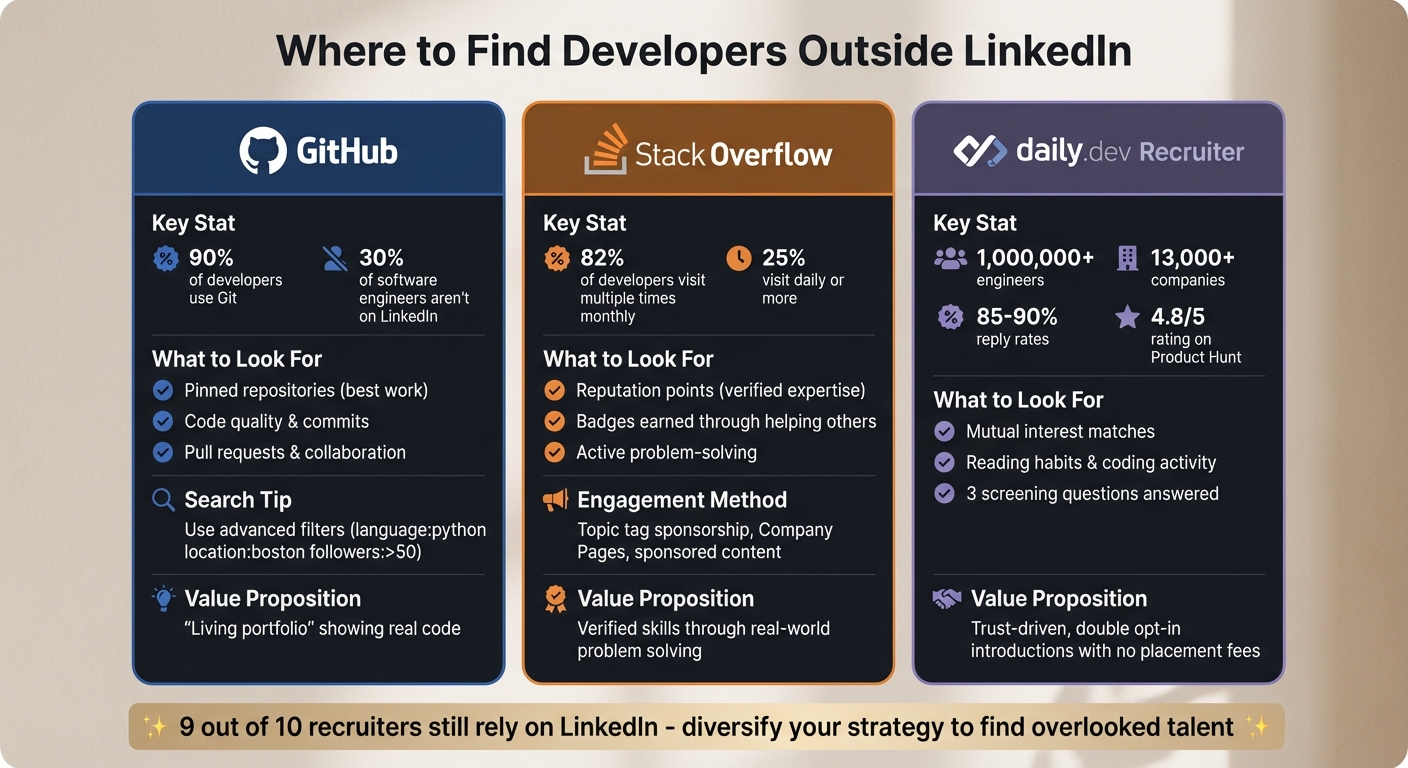 {Where to Find Developers: Top 3 Platforms vs LinkedIn}
If LinkedIn isn’t the go-to platform for developers, you’ll need to meet them where they actually spend their time. Developers often showcase their skills on platforms designed for coding and collaboration. Here’s where you can find them.
Search for Talent on GitHub
Think of GitHub as a living portfolio rather than a static resume. With over 90% of developers using Git, GitHub is a treasure trove for discovering skilled candidates. Interestingly, 30% of software engineers aren’t even on LinkedIn, making GitHub a must-visit for finding talent you might otherwise overlook.
Start by diving into a developer’s pinned repositories - these often highlight their best work. Evaluate their code quality, how they handle edge cases, and their ability to collaborate through commits, pull requests, and discussions. This gives you insight into their technical expertise and communication skills.
Use advanced search filters to narrow down candidates. For example, a search like language:python location:boston followers:>50 can help you find Python developers in Boston with a decent following. Pay attention to repositories they own for original work, but also check forked repositories to see what tools or frameworks they’re exploring. For instance, if someone has forked FastAPI, they’re likely learning or actively using it.
When reaching out, personalize your message by referencing a specific project or unique solution they’ve worked on. However, watch for red flags like profiles filled with cloned projects or overly simplistic apps, as these may not reflect the ability to build scalable, real-world solutions.
Next up: Stack Overflow, where active problem-solvers shine.
Connect With Experts on Stack Overflow
Stack Overflow isn’t just a Q&A site - it’s where developers solve real-world problems in real time. 82% of developers visit the platform multiple times a month, and 25% are there daily or even more frequently. Unlike LinkedIn, where skills can be self-proclaimed, Stack Overflow profiles showcase reputation points and badges earned through helping others.
These reputation points provide a verified measure of expertise, which is especially valuable in a world where 66% of developers are frustrated by vague or inaccurate AI-driven solutions. This makes Stack Overflow an ideal place to find developers who are not only skilled but also actively engaged in their craft.
Instead of sending cold messages, consider topic tag sponsorship to reach developers when they’re actively engaged. For example, you can target tags like Python, Rust, or React to appear to developers working within those ecosystems. Build a Company Page to establish your presence and stay visible without being intrusive. As Stack Overflow explains:
"Our targeted advertising options allow you to get ads in front of developers in their workflow in a non-intrusive way."
You can also engage developers through sponsored content like podcasts, newsletters, or technical blog posts. This approach focuses on offering value, which resonates with developers who prefer substance over sales pitches.
Get Warm Introductions Through daily.dev Recruiter
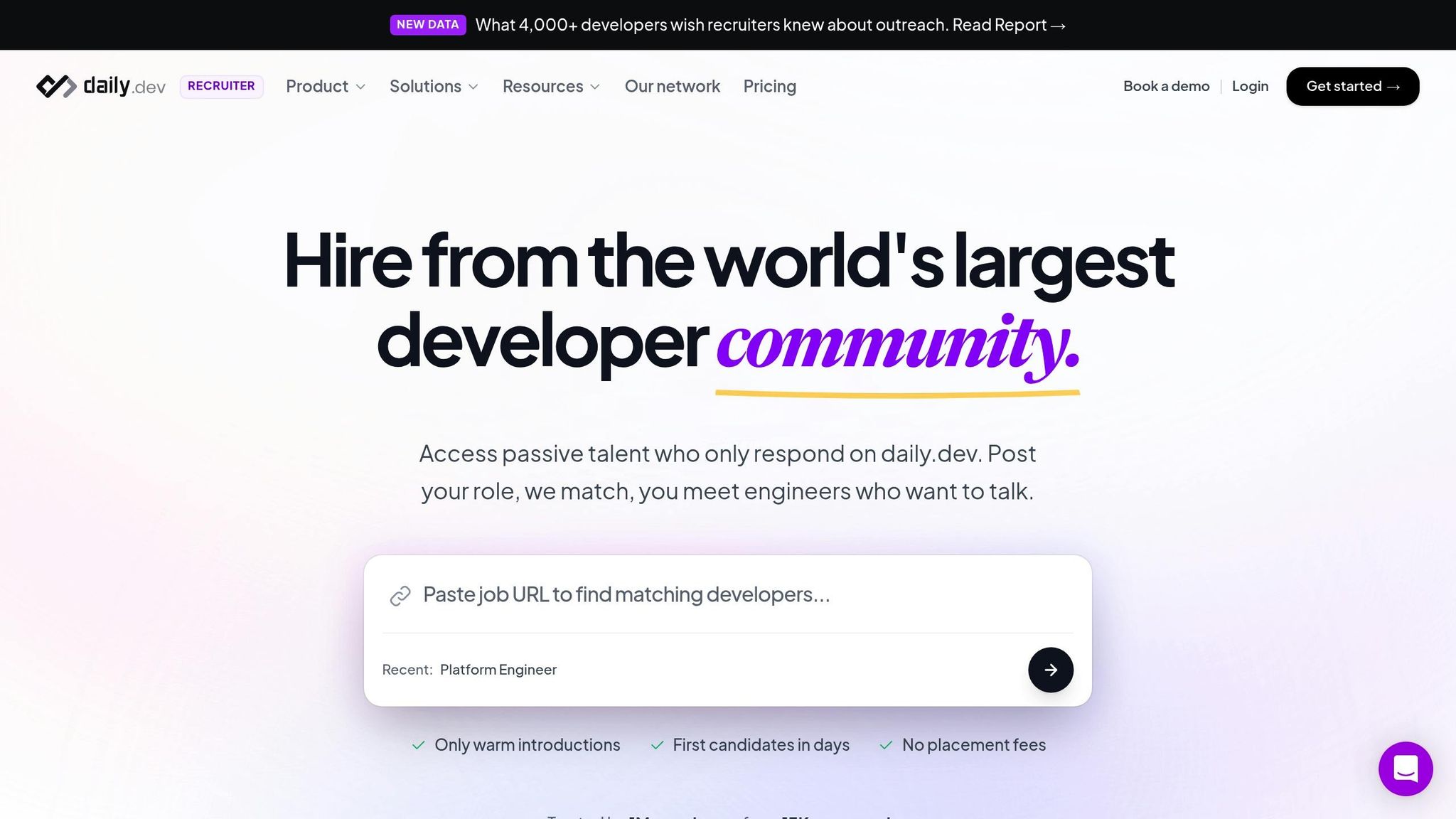
Cold outreach rarely works. That’s where daily.dev Recruiter comes in, connecting you with developers who are already engaged and interested. This platform is home to over 1,000,000 engineers across more than 13,000 companies. It’s a vibrant community where developers actively read, learn, and interact with technical content.
The key difference? Every introduction is based on mutual interest. Developers opt in and answer up to three short screening questions before you’re introduced, ensuring they meet your criteria and are genuinely interested in the role. This eliminates the noise of generic outreach and creates a trust-driven connection.
daily.dev Recruiter matches candidates based on their reading habits and coding activity, not just resume keywords. This means you’re connecting with developers whose interests align with the role you’re hiring for. As Nimrod Kramer, CEO & Co-Founder of daily.dev, puts it:
"We built a place where engineers can turn off the noise. To enter this space, you don’t need a hack. You need trust."
With a 4.8/5 rating on Product Hunt and recognition as Product of the Year, daily.dev Recruiter has proven that developers respond positively when approached with respect and context. Plus, there are no placement fees, making it an affordable way to connect with passive talent who wouldn’t typically respond to LinkedIn messages.
Hiring engineers?
Connect with developers where they actually hang out. No cold outreach, just real conversations.
How to Build Trust With Developers
Building trust with developers starts by meeting them where they are, understanding their priorities, and speaking their language.
Join Developer Communities
To earn credibility, immerse yourself in developer communities before attempting to recruit. This could mean sponsoring open-source projects, attending hackathons, or sharing valuable resources in forums.
When engaging, follow the community's unwritten rules. Use appropriate channels like #jobs for recruitment instead of cluttering unrelated threads. Pay attention to the tone of discussions and match it. Rather than jumping straight into pitching roles, leave thoughtful comments on technical posts about frameworks or projects. In these spaces, trust is built through problem-solving and meaningful contributions - not through flashy titles or brand recognition.
Another way to establish credibility is by optimizing your recruiter profile. Highlight your tech recruiting experience, list specific frameworks like React 18 with TypeScript, and share success stories. This way, when developers check out your profile, they’ll see you understand their world.
By building this foundation of trust within the community, you create a natural pathway to clear and transparent job communications.
Write Job Descriptions That Developers Want to Read
Once you've gained trust in the community, reflect it in your job postings. Avoid corporate jargon and generic buzzwords - developers value clarity and technical specifics. For example, instead of saying "modern frameworks", specify the exact tools, like React 18 with TypeScript. Be upfront about the challenges they’ll face, whether it’s working with legacy code or navigating a lean team structure. Honesty goes a long way in building trust.
Developers also appreciate being treated as professionals, not sales targets. Use a conversational yet professional tone, and steer clear of pushy follow-ups. Respect their time by ensuring your outreach is thoughtful and relevant. Platforms like daily.dev Recruiter, for instance, use a double opt-in system, guaranteeing that every connection is mutual and respectful. This approach shows developers you've done your research and that they’ve already expressed interest - trust is built into the process.
Conclusion
Finding developers who don’t keep their LinkedIn profiles updated requires you to look beyond traditional platforms. Instead, connect with them where they’re most active - on spaces like GitHub, Stack Overflow, and daily.dev Recruiter. These are the places where developers collaborate, share knowledge, and engage with their community.
But identifying the right platforms is just the first step. Building trust is where the real work begins. Immerse yourself in developer communities, contribute in meaningful ways, and demonstrate that you genuinely understand their world. When you reach out, skip the generic templates. Instead, tailor your message to highlight the specific tech stack, challenges, and growth opportunities your role offers. Developers can quickly spot - and appreciate - authentic, personalized outreach.
Once you’ve built that foundation of trust, tools like daily.dev Recruiter can help you connect efficiently while respecting developers’ time. With its double opt-in system, this platform ensures that conversations start on the right foot, boasting reply rates of 85–90%. It’s a refreshing alternative to the impersonal methods many recruiters still use.
Speaking of traditional methods, it’s worth noting that at least 9 out of 10 recruiters still rely heavily on LinkedIn. This outdated approach often overlooks top talent - developers who are more focused on coding than networking. By diversifying your sourcing strategy and prioritizing authentic engagement, you’ll gain access to candidates your competitors might miss.
Start small: pick 2–3 platforms where developers are active, measure your results, and fine-tune your approach. With the right strategy, you’ll unlock access to a pool of talent that goes far beyond LinkedIn.
FAQs
How can recruiters connect with developers on GitHub effectively?
To engage with developers on GitHub effectively, start by delving into their activity on the platform. Take a close look at their contributions to open-source projects, commit history, and repositories. This not only helps you spot candidates with strong technical skills but also provides a glimpse into their coding style and expertise - something a traditional resume can't always reveal.
When reaching out, make your message personal. Reference their specific work or contributions to show that you've done your homework. Express genuine interest in their projects and clearly explain how their skills match the opportunity you're offering. Thoughtful, tailored communication builds trust and significantly improves the chances of a positive response. By engaging with developers in the context of their ongoing work, you create authentic connections and make recruitment discussions feel more natural.
Why do developers prefer technical communities instead of LinkedIn?
Developers are naturally drawn to technical communities because these platforms provide a space to share knowledge, collaborate on projects, and highlight their skills in a way that feels genuine and purposeful. Unlike LinkedIn, which leans heavily on professional networking, platforms like GitHub and Stack Overflow focus on what truly matters to developers: coding, solving problems, and contributing to open-source projects.
These communities also encourage peer recognition and continuous learning, creating an environment where meaningful connections thrive. For recruiters, engaging in these spaces offers a chance to better understand developers' professional landscapes and build trust-based relationships. Developers tend to value real, meaningful interactions over surface-level connections, making technical communities the go-to space for authentic engagement.
What makes daily.dev Recruiter effective for finding developers who don’t use LinkedIn?
daily.dev Recruiter is a standout platform for connecting with developers who aren't active on LinkedIn or other mainstream job boards. It opens the door to a vibrant, engaged community of developers, many of whom are passive candidates willing to explore new opportunities. This means you can tap into a talent pool that might otherwise remain out of reach.
What sets daily.dev Recruiter apart is its focus on real-world developer skills and contributions. Instead of relying on outdated resumes or profiles, the platform highlights candidates' work on developer-focused platforms and their involvement in tech communities. This approach allows you to evaluate their expertise and practical experience more effectively. Plus, by fostering trust within these developer networks, daily.dev Recruiter helps you build genuine connections, making it easier to find and hire top-tier talent.
.png)