Hiring technical talent on a budget is tough but achievable. Here’s the quick takeaway:
- Referrals work best: Candidates referred by employees are 85% more likely to be hired.
- Clear job descriptions save time: Focus on 3–4 must-have skills to attract the right candidates.
- Use free platforms: GitHub, Stack Overflow, and Slack communities are great for finding developers.
- Set realistic salaries: Use market data to avoid losing candidates to better offers.
- Streamline hiring: Top candidates are available for just 10 days, so align with hiring managers early. Avoiding common technical hiring mistakes is crucial when resources are limited.
Tools like daily.dev Recruiter can help you connect with engaged developers while staying within budget. The key? Be specific, use free resources, and focus on candidates who show genuine interest.
::: @figure 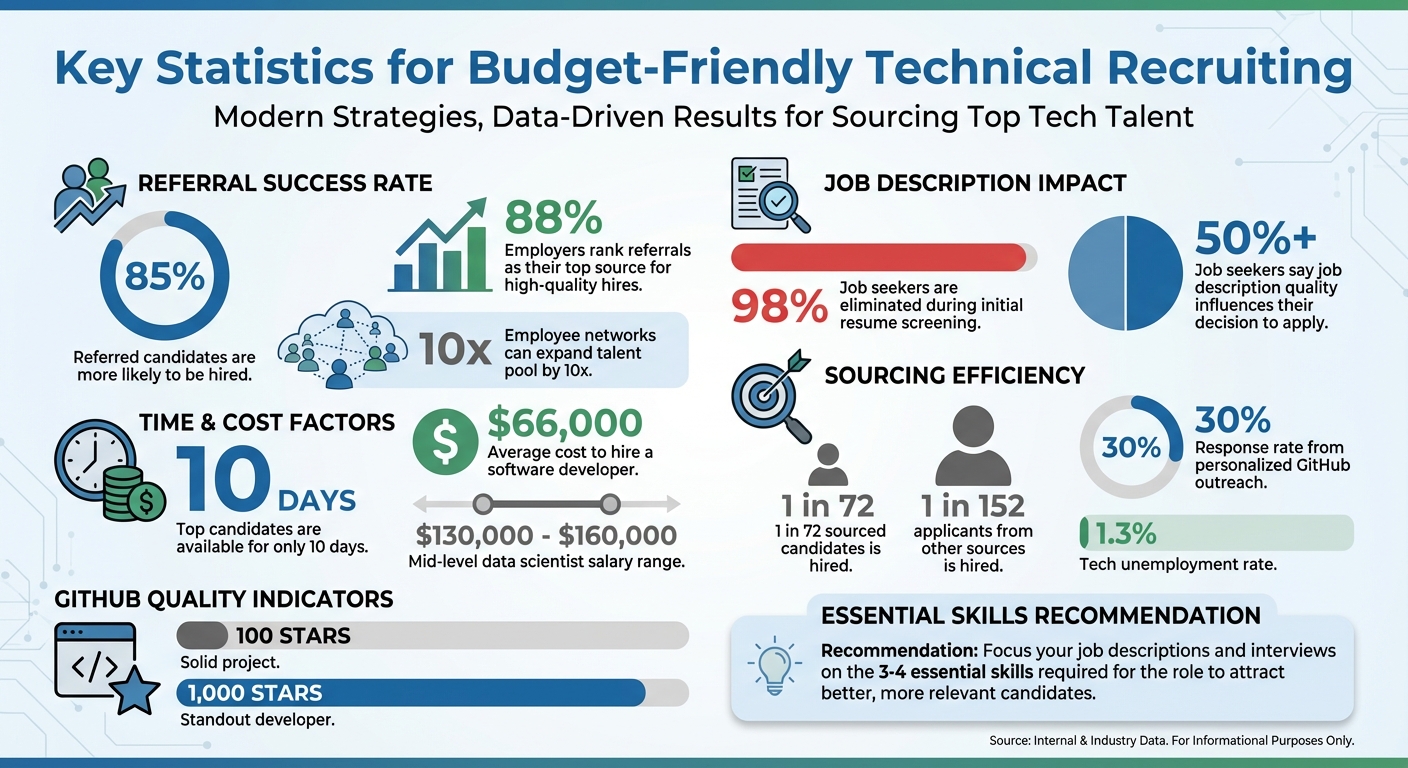 {Key Statistics for Budget-Friendly Technical Recruiting}
Define Clear Role Requirements to Avoid Wasted Resources
Why Specific Role Definitions Matter
A poorly defined job description can drain both time and money. Did you know that 98% of job seekers are eliminated during the initial resume screening process? When job postings are vague, it only adds to the pile of unqualified applications, making it harder to find the right fit.
For instance, hiring a software developer can cost around $66,000 . On top of that, top candidates are usually available for just 10 days . If your job posting says something generic like "a developer with experience in various technologies", you might end up spending hours sorting through resumes that don't align with your actual needs.
Veronika Henderson, a Corporate Recruiter at the American College of Radiology, emphasizes the importance of narrowing down requirements:
When you start working with the hiring manager, have them whittle down their preferred candidate skills from 20 down to three or four that are absolutely essential. It's nice to have additional skills, but what are the must-haves?
Stick to listing the top 3–4 essential skills. For example, if you're hiring a data scientist, focus on key qualifications like expertise in Python, TensorFlow, and 5–7 years of experience. Avoid overwhelming candidates with a long list of 20 technologies. This focused approach not only saves time but also ensures you're attracting candidates who meet your core needs .
Additionally, clear role definitions should include competitive compensation to attract the right talent.
Set Competitive Salary Ranges Using Market Data
Unrealistic salary expectations can quickly turn away qualified candidates. For example, if you're searching for a senior DevOps engineer with 10 years of experience but only offering $90,000 - when the market rate is much higher - you're likely to waste both your time and theirs.
Veronika Henderson advises recruiters to address these issues early:
If you're asked to find a DevOps engineer with 10 years of experience for $90,000, but that salary isn't possible, speak up in your first conversation... It's our job to communicate that to them.
Before posting a job, use reliable U.S. salary data to set realistic compensation ranges. For example, in 2024, a mid-level data scientist typically earns between $130,000 and $160,000 . Offering $100,000 for such a role will likely deter qualified candidates who know their worth. Tools like Glassdoor, Levels.fyi, and the Bureau of Labor Statistics can provide accurate salary benchmarks to guide your decisions.
By aligning salary expectations with market data, you increase your chances of attracting the right candidates from the start.
Align with Hiring Managers Early
Once you've defined the role and set a competitive salary, early collaboration with hiring managers is key to avoiding wasted efforts. Misalignment often leads to sourcing candidates who are ultimately rejected, which can be a costly mistake. Interestingly, sourced candidates are more efficient to hire - 1 in 72 sourced candidates is hired compared to 1 in 152 applicants from other sources .
To avoid inefficiencies, schedule an intake meeting as soon as a job requisition opens. Use this meeting to clarify must-have skills, agree on realistic salary ranges, and set expectations for the hiring process.
Since top candidates tend to move quickly, it's crucial to streamline your interview process to reduce time to hire. Lengthy hiring cycles can cost you the best talent . One effective way to align with hiring managers is by preparing a calibration profile. This involves gathering 4–7 examples of real candidates from platforms like LinkedIn or GitHub. Reviewing these profiles together ensures everyone is on the same page about what a strong candidate looks like before you invest significant time in sourcing.
Taking these steps early on can save resources and help you secure the right hire without unnecessary delays.
Use Free and Low-Cost Sourcing Channels
Once you’ve nailed down the specifics of your open role, the next step is finding the right candidates - without overspending. The good news? There are plenty of free or budget-friendly ways to source talent. For instance, personalized outreach on GitHub can yield a 30% response rate from developers . Let’s dive into how you can make the most of these online communities.
Find Developers in Online Communities
Developers often gather in online spaces to share ideas, collaborate, and tackle technical challenges. Platforms like GitHub are more than just code repositories - they’re treasure troves of talent. Seek out developers who actively contribute and maintain consistent projects. On GitHub, a project with 100 stars is solid, while hitting 1,000 stars often signals a standout developer . You can even use Boolean search strings like:
site:github.com (inurl:resume OR inurl:CV) software AND (engineer OR developer) -job -jobs
to locate resumes directly on the platform .
Other platforms are just as valuable. Stack Overflow allows you to find experts by technology tags and gauge their skills through public discussions . For direct interaction, check out Slack and Discord communities - many have job-specific channels where you can post openings for free. Hacker News runs monthly "Who is hiring" threads, offering visibility to technical talent . Broader platforms like Indeed and ZipRecruiter also allow free job postings to reach a wider audience . Additionally, you can use Boolean searches to explore niche subreddits on Reddit for specialized candidates . Tools like RecruitEm streamline the process by conducting multi-platform X-ray searches, saving you time .
For startup-friendly options, Wellfound (formerly AngelList) offers a free tier for job postings and candidate sourcing . The key to success in these communities is genuine engagement - answer questions, offer insights, and build connections before sharing job opportunities. This approach keeps costs low while establishing trust.
Write Job Descriptions That Developers Want to Read
Over half of job seekers say the quality of a job description influences their decision to apply . Yet too many companies post vague or uninspiring descriptions that fail to attract the right talent. Start with clear, standard titles like "Software Engineer" or "Web Developer" instead of quirky ones like "Java Wizard", which can hurt SEO and searchability .
Be specific about the tech stack - mentioning tools, languages, and frameworks ensures your job ad shows up in relevant searches . Use bullet points to break up dense text and include headers like "Job Duties" and "Benefits" to make the listing mobile-friendly, as most candidates browse on their phones . Don’t forget to list salary ranges in USD and highlight benefits - this transparency appeals to top candidates .
Streamline the application process by reducing clicks and time requirements. Using structured data (schema) can help your job postings rank higher on Google and allow filtering by salary and location . For example, TripAdvisor cleverly embedded a hidden invitation to apply within their website’s source code, appealing directly to tech-savvy candidates .
When external channels don’t deliver, turn to your internal networks for quality referrals.
Get Referrals from Employees and Alumni Networks
Employee referrals remain one of the most efficient ways to hire. Referred candidates are 85% more likely to get hired than those from traditional job boards , and 88% of employers rank referrals as their top source for high-performing hires . By tapping into employees’ networks, you can expand your talent pool significantly - sometimes by as much as 10× .
Encourage your team to review their LinkedIn connections and personal networks for potential candidates . Early outreach from your CTO or engineering managers can make a big difference. When engineers connect with engineers, it creates an open and honest conversation about the work environment right from the start . For instance, Marcus Turner, CTO of Enola Labs, implemented a peer-to-peer sourcing strategy. His engineering team actively networked on LinkedIn, and the company offered a $2,500 referral bonus. This approach led to one in five contacted candidates accepting job offers .
If cash bonuses aren’t an option, consider alternatives like extra vacation days, gift cards, or event tickets . Don’t overlook the value of "silver medalists" - candidates who came close in previous hiring rounds or former interns who’ve gained more experience. Reconnecting with these individuals can save time, as they’re already familiar with your company’s culture .
As Marcus Turner explains:
We don’t just reach out when we have a job to fill. We help people progress and plot a career path... Serving as mentors creates goodwill, encourages referrals and introductions, and builds a pipeline of candidates .
This approach not only stretches your budget but also strengthens your ability to attract top talent.
How daily.dev Recruiter Simplifies Technical Hiring
Free sourcing channels and referral programs can be effective, but they often require a lot of time and effort to manage. daily.dev Recruiter takes a different approach - one designed specifically to connect with developers where they already spend their time. By tapping into a community of developers actively engaging with technical content, this platform streamlines the hiring process for recruiters working with tight budgets. Every interaction is intentional, adding value rather than wasting time.
Unlike traditional sourcing methods, which rely on broad and often impersonal outreach, daily.dev Recruiter focuses on relevant, context-driven connections. Instead of sending out generic messages, the platform connects you with developers when they’re already engaged with the technologies you’re hiring for. Here’s a closer look at how daily.dev Recruiter transforms technical hiring with its targeted features.
Connect with Developers Through Warm Introductions
Cold outreach typically comes with low response rates and wasted energy. daily.dev Recruiter changes the game with a double opt-in process. Here’s how it works: developers review your job details and actively choose to engage before any connection happens. This means you’ll only be speaking with candidates who are genuinely interested in your role.
When your job opportunity appears, it feels natural rather than intrusive. Plus, you can include up to three custom screening questions to ensure candidates meet specific requirements before initiating a conversation. This way, your first interaction is meaningful and productive - not a basic discovery call to figure out whether they know the necessary tech stack.
The platform’s strength lies in its contextual introductions. For instance, if a developer is actively engaging with React tutorials or articles, you can connect with them at the peak of their interest in that technology. This approach builds credibility and relevance right from the start. To make things even smoother, the platform integrates with popular Applicant Tracking Systems like Greenhouse and Workday, syncing candidate data automatically and avoiding duplicate entries.
Once you’ve secured initial interest, the platform’s advanced filtering tools help you refine your candidate pool even further.
Filter Candidates by Custom Criteria
Finding the right candidate is faster when you can filter by technical skills, programming languages, frameworks, experience level, location, and availability. daily.dev Recruiter tracks developers’ engagement with specific coding content, giving you real-time insights into what they’re learning and working on. For example, if you’re hiring a Python developer, you can identify candidates who are currently reading Python tutorials or contributing to open-source projects in that language. This ensures you’re connecting with developers who are actively honing their skills - not just those who listed them on a profile months ago.
You can also filter candidates by career interests and goals, ensuring the role aligns with their professional aspirations. Combined with the custom screening questions, this layered approach to filtering helps you zero in on high-quality matches without wasting time scrolling through endless generic profiles.
Predictable Pricing That Fits Your Budget
One of the biggest hurdles in technical hiring is managing costs. daily.dev Recruiter simplifies this with a clear and predictable pricing model. There are no hidden fees, so you can plan your budget with confidence. This transparency makes it easier to allocate resources effectively and justify spending to leadership, especially when budgets are tight. By reducing time-to-hire and offering cost clarity, the platform helps you stay efficient and focused on finding the right talent.
Hiring engineers?
Connect with developers where they actually hang out. No cold outreach, just real conversations.
Build a Simple, Cost-Effective Sourcing Process
The goal of any sourcing process is to consistently fill your hiring pipeline without wasting time or money. A structured, repeatable workflow ensures every step takes you closer to securing the right hire. While perfection isn’t necessary, consistency is key to making the process efficient and effective.
Create a Weekly Sourcing Schedule
When working with limited resources, planning is everything. Instead of spending hours each day randomly searching for candidates, block out specific times each week for sourcing. Start by reviewing your Applicant Tracking System (ATS). Past applicants who were qualified but not hired could be a great fit for current roles, saving you both time and money on screening . This one habit can significantly reduce your time-to-fill for tech roles.
For solo recruiters or smaller teams, every interaction needs to be intentional . Dedicate time at the start of each week for intake meetings with hiring managers. Focus on essential skills and realistic candidate profiles instead of chasing the elusive "purple squirrel" . By aligning expectations early, you can streamline your efforts and stay on budget.
Use a multi-touch outreach strategy to connect with passive candidates. Combine email, text, and social media touchpoints to stay on their radar without coming across as pushy . With tech unemployment as low as 1.3% in 2020, most top developers aren’t actively job hunting . Consistent, spaced-out communication ensures you’re top-of-mind when they decide to make a move.
Focus on Candidates Who Show Real Interest
Time is better spent on candidates who are genuinely interested in the role. Tools like daily.dev Recruiter ensure you're starting with candidates who’ve already opted in. Once you identify potential fits, apply a 10-second scan: if there’s no immediate disqualification, move them to a phone screen . This approach keeps your pipeline moving and avoids overanalyzing.
Even when candidates aren’t the right fit for your current opening, don’t cut off communication. Offer career advice or networking tips to build goodwill and strengthen your long-term talent pool . Automate follow-ups with periodic check-ins, like sharing company news or congratulating them on milestones. This keeps you on their radar without requiring constant manual effort .
Simplify your interview process to respect both the candidate’s time and your own. A faster, smoother process reduces the chance of losing top talent to competitors.
Monitor Key Hiring Metrics
Tracking the right metrics is essential to fine-tuning your sourcing process. Here are four metrics to focus on:
| Metric | What It Measures | Why It Matters |
|---|---|---|
| Time-to-Fill | Days from job posting to offer acceptance | Shorter cycles save money and help secure top talent before they’re hired elsewhere |
| Source-of-Hire | Where successful candidates come from | Helps you identify which channels deliver the best results |
| Cost-per-Hire | Total cost to hire a candidate | Tracks how efficiently you’re using your budget |
| Candidate Conversion Rates | Movement through hiring stages (sourced-to-screen, screen-to-interview) | Pinpoints where candidates are dropping out |
Free tools like Google Analytics can help you monitor career page traffic and identify where applicants drop off . This data reveals which sourcing channels are producing quality hires and which ones aren’t worth the investment. If you’re using daily.dev Recruiter alongside other tools, compare the ratio of applicants to hires for each channel to see where your budget is best spent .
Benchmark your metrics against industry standards. For example, in 2022, hiring an in-demand software developer cost around $66,000 . If your cost-per-hire is higher, assess your process and cut underperforming channels. Don’t forget to include hidden costs, like the time hiring managers spend interviewing, when calculating your true cost-per-hire .
Finally, keep a close eye on employee referrals, which 88% of employers rank as the top source for high-quality candidates . If your referral rate is low, consider modest incentives. Some tech companies offer $2,500 referral bonuses to encourage internal recommendations . Tapping into employees’ networks can expand your talent pool by up to 10x , making it one of the most effective strategies available.
Conclusion
Hiring technical talent on a tight budget isn't about cutting corners - it's about being strategic. Start by clearly defining the role and aligning with hiring managers to avoid wasting time on mismatched candidates. As Chuck Groom, Director of Engineering at VTS, advises:
Get everyone to agree on what success looks like... before you start interviewing .
A few key strategies stand out: consistent, low-cost sourcing methods often yield dependable results. Employee referrals, for instance, are incredibly effective - referred candidates are 85% more likely to be hired compared to those from traditional job boards . Another smart move? Re-engage with pre-vetted candidates to save both time and money .
Tools like daily.dev Recruiter simplify the process by connecting you with developers through warm, double opt-in introductions. This approach helps you tap into passive candidates who are already engaged with your technology. With transparent pricing and advanced filtering options, you can focus on reaching qualified candidates without wasting resources.
Ultimately, success comes down to combining structured processes with the right tools. Pay attention to metrics like time-to-fill, source-of-hire, and cost-per-hire to identify what works best. And don’t underestimate the power of employer branding - it can triple your chances of securing top talent . Even modest efforts to enhance your company’s reputation can lead to significant long-term benefits.
FAQs
What are some budget-friendly ways to find technical candidates in online communities?
Engaging with free online communities offers a budget-friendly way to connect with highly skilled technical talent. Start by exploring platforms where developers actively participate - think subreddits like r/forhire or r/techjobs, Discord or Slack groups centered on specific technologies, GitHub repositories, or even threads on Hacker News. Be genuine in your involvement: answer questions, share your expertise, and build trust within these spaces.
Once you identify potential candidates, tools like daily.dev Recruiter can help you gather public profiles, jot down notes, and craft personalized messages. Reference your interactions in the community when reaching out, and make sure your approach feels personal. Highlight shared interests or relevant discussions to make your outreach more relatable and engaging.
To keep these connections alive, contribute valuable content to the communities. Share tech insights, spotlight open-source projects, or host virtual Q&A sessions. By doing this, you position your organization as a go-to resource, while also building a network of passive candidates for future hiring opportunities.
How can I write job descriptions that attract skilled developers on a budget?
To write an engaging job description for developers, start with a clear and straightforward title that accurately represents the role and its level, like Senior React Engineer. Use terms developers are likely to search for, and steer clear of unnecessary jargon that might confuse or deter potential candidates.
Your description should focus on three main areas:
- Role Details: Clearly explain the responsibilities, day-to-day tasks, and the specific tech stack involved (languages, frameworks, tools).
- Skills and Experience: List the qualifications and expertise required for the position, ensuring these align with the job's expectations.
- Impact of the Role: Highlight how the role contributes to the product or company’s success, making it clear why this position matters.
Use bullet points to make responsibilities and requirements easy to scan. Additionally, emphasize growth opportunities, such as learning new technologies or advancing within the company.
To make the listing more appealing, showcase your company’s values and perks. Highlight aspects like inclusivity, flexible work options (e.g., remote work), and tangible benefits such as salary ranges, equity, or health coverage. Avoid overused buzzwords like "rockstar" or "ninja." Instead, focus on real-world challenges and measurable achievements to attract skilled, motivated candidates.
How can I set salary expectations that align with the market and attract candidates?
To match salary expectations with market trends, begin by exploring free salary benchmarking tools or reliable industry surveys. Use this data to compare your offer against the median or 75th-percentile pay for similar roles, ensuring it remains competitive. After refining your salary range, communicate this openly with candidates to establish trust and set clear, achievable expectations.
Being transparent about how your compensation stacks up against market standards can keep candidates engaged and help avoid last-minute surprises during negotiations. If your budget has limitations, emphasize non-monetary perks like flexible work options or opportunities for professional growth to make your offer more appealing.
.png)