Tech recruiting feels broken. Response rates are plummeting, trust is low, and finding qualified candidates is harder than ever. Here’s why:
- Low response rates: 43% of developers mute recruiter outreach, and 40% ignore messages they perceive as spam.
- Talent shortages: Only 17% of tech professionals are actively job searching, while demand for skills like AI has surged.
- Outdated methods: Overreliance on job boards and generic outreach erodes trust and wastes time.
- Long hiring processes: Cumbersome applications and irrelevant screenings drive candidates away.
The Fix
Shift from cold, high-volume outreach to a trust-based, targeted approach. Platforms like daily.dev Recruiter connect with developers based on their interests and skills, offering double opt-in introductions for an 85–90% response rate. Clear communication - detailing salary, tech stack, and work model upfront - builds trust and improves candidate experience.
The solution? Focus on meaningful connections, respect candidates’ time, and leverage tools that align with how developers engage today.
::: @figure  {Tech Recruiting Crisis: Key Statistics on Developer Trust and Response Rates}
Why Tech Recruiters Feel Powerless
Tech recruiters often find themselves grappling with a sense of helplessness, and it’s not hard to see why. Three major challenges - each feeding into the next - create a cycle of frustration. These hurdles slow down hiring, drain resources, and make it harder to connect with the right talent.
Low Response Rates and Candidate Ghosting
One of the biggest obstacles? Getting candidates to respond. Generic outreach is a major culprit. About 40% of developers ignore messages because they resemble spam. The numbers paint a grim picture: developers rate recruiters with an average trust score of just 2.5 out of 5, and 43% of them have actively muted recruiter outreach.
But it’s not just about quantity - it’s the quality of communication too. Developers quickly lose trust when recruiters make technical missteps, like confusing Java with JavaScript or asking for unrealistic years of experience. Only 15% of developers feel recruiters truly understand the roles they’re hiring for. And when essential details like the tech stack, salary range, or work model are left out, it’s no surprise that 69% of developers want salary information upfront, while 19% dismiss the message entirely.
These communication gaps and technical inaccuracies erode trust and engagement, setting the stage for even bigger challenges in the recruitment process.
Talent Shortages and Skills Gaps
Even if you nail the outreach, the market itself presents significant hurdles. The demand for tech talent is skyrocketing, while the pool of available candidates is shrinking. By 2034, the U.S. is projected to have 7.1 million tech jobs, yet 90% of tech leaders say recruiting and retention are among their top challenges.
Emerging technologies only add fuel to the fire. Job postings requiring Generative AI skills have surged by 1,800%, but the half-life of technical skills has dropped to just 2.5 years. On top of that, 70% of technical workers had multiple offers when accepting their most recent role, making competition for talent even fiercer. And it’s not just about hiring - 70% of digital leaders say skill shortages are stalling their ability to keep up with tech advancements.
In this environment, traditional recruiting methods struggle to engage passive candidates, while active candidates are in short supply. Combine that with inefficient hiring processes, and the challenge becomes even tougher.
Long Time-to-Hire and Poor Applicant Quality
Reducing time-to-hire and streamlining cumbersome processes are another major pain point. When 60% of job seekers abandon applications midway because they’re too long or complicated, you’re losing qualified candidates before they even make it into the pipeline. For top-tier talent - those juggling multiple offers - waiting through endless take-home tests and interview rounds simply isn’t an option.
Then there’s the issue of applicant quality. Relying on outdated LinkedIn profiles means recruiters often evaluate candidates based on past roles rather than current skills. In fact, 64% of developers feel their LinkedIn profiles reflect their history, not their potential. This leads to a numbers game, where recruiters send out more messages just to hit KPIs, further contributing to the noise that candidates are already tuning out.
The result? Recruitment teams lose credibility with hiring managers, resources are wasted, and time-to-fill metrics continue to climb, making the entire process feel like an uphill battle.
What Causes These Problems
The struggles faced by tech recruiters don’t happen by chance - they’re deeply tied to outdated practices. Let’s break down how an overdependence on old data and impersonal outreach methods exacerbates the issue.
Overreliance on Job Boards and Scraped Databases
Job boards and scraped databases turn hiring into a numbers game, prioritizing quantity over quality. While application volumes for open roles have doubled, two-thirds of recruiters say finding qualified candidates has only gotten harder. Why? These platforms often feature outdated profiles that fail to reflect the current skills and realities of today’s developer workforce.
The filters on traditional platforms don’t help much either, often delivering irrelevant results. This forces recruiters to over-message unsuitable candidates in a desperate attempt to cover all bases. On top of that, 64% of developers believe their LinkedIn profiles only showcase past experiences, not their up-to-date skills or potential. When recruiters rely on outdated CVs, they risk wasting time on candidates who no longer align with the roles they’re trying to fill. This reactive approach traps recruiters in endless screening cycles rather than helping them build meaningful talent pipelines.
The numbers paint a grim picture: 46% of employers struggle to attract qualified candidates, and 90% of hiring managers find it hard to source skilled talent using traditional methods. And it’s not just about poor quality - there’s a growing risk of fraud. By 2028, projections suggest that one in four profiles could be fake. These data issues directly contribute to low response rates and disengaged talent, leaving recruiters feeling stuck and ineffective.
Cold Outreach That Erodes Trust
The way recruiters approach candidates is another major roadblock. Cold outreach, once a staple of recruiting, is now widely dismissed as spam. A staggering 40% of developers ignore these messages because they feel impersonal and generic. This puts recruiters at a disadvantage from the very first interaction.
"The outbound model - blasting strangers and hoping someone replies - is dying. Developers ignore it. Response rates are in freefall."
- Nimrod Kramer, CEO, daily.dev
This “spray and pray” approach has conditioned developers to tune out recruiter messages entirely. And as AI continues to flood inboxes with automated noise, developers have become experts at identifying - and ignoring - irrelevant outreach. The trust issue runs deep: only 15% of developers believe recruiters truly understand the roles they’re pitching. This lack of understanding doesn’t just hurt trust - it nearly obliterates it.
How to Regain Control with daily.dev Recruiter
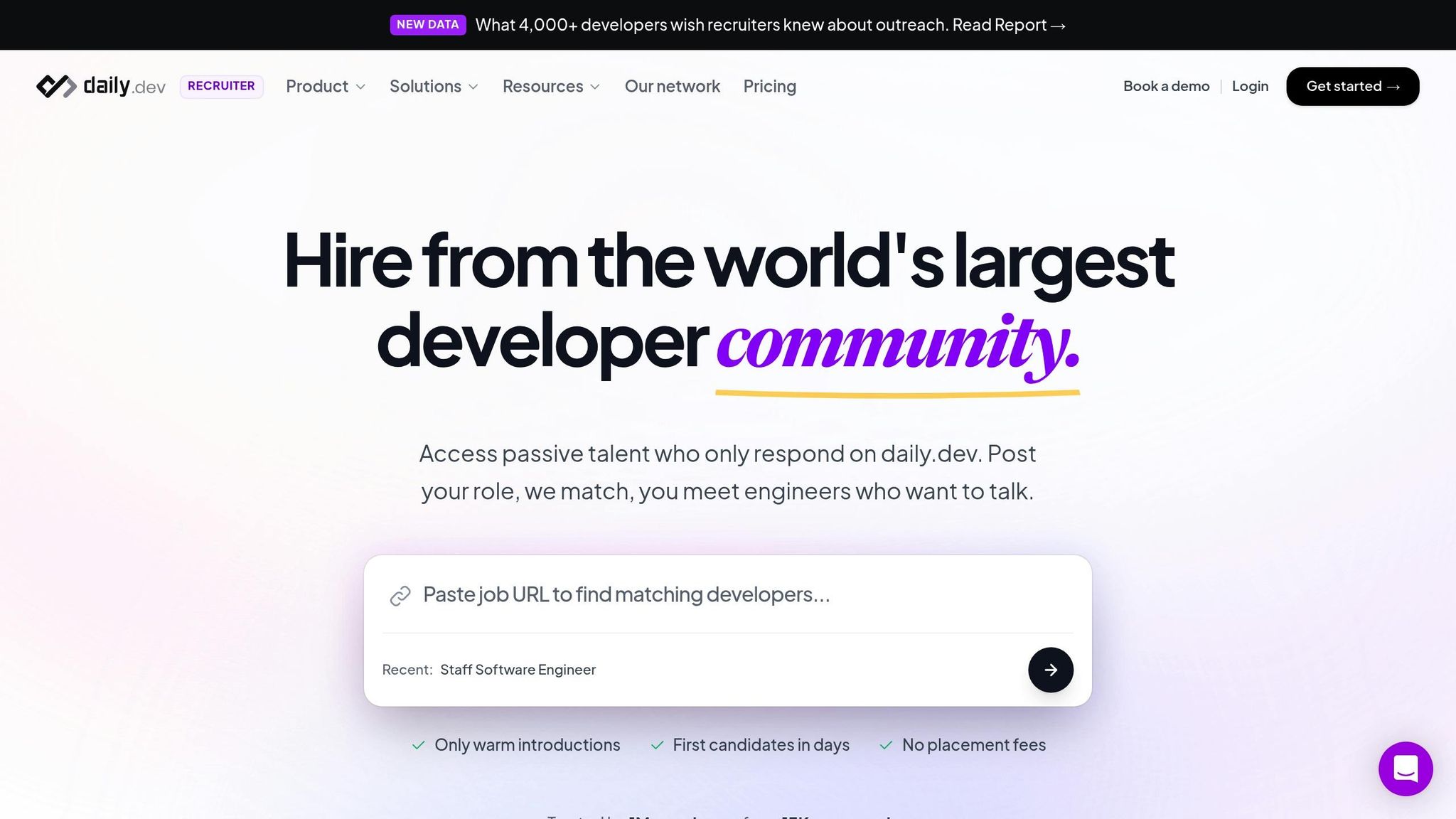
Traditional recruiting methods often feel outdated and ineffective, leaving recruiters frustrated and disconnected from the talent they’re trying to reach. Enter daily.dev Recruiter - a platform designed to align with how developers actually work and engage. With over 1 million engineers already using daily.dev to read, learn, and connect, this tool transforms the hiring process. Instead of relying on outdated resumes or impersonal emails, you’re connecting with developers who are genuinely open to the right opportunity. It’s a smarter, more human approach to recruitment.
Warm, Double Opt-In Introductions
Forget cold outreach. With daily.dev Recruiter, roles are presented privately to developers based on their actual interests and coding behaviors - not just a list of keywords on a resume . If a developer is intrigued by a role, they can opt in, ensuring every conversation starts with genuine curiosity instead of irritation. This method achieves an impressive 85–90% response rate .
"We built a place where engineers can turn off the noise. To enter this space, you don't need a hack. You need trust."
- Nimrod Kramer, CEO & Co-Founder, daily.dev
That trust is key. In fact, 90% of developers on daily.dev ignore recruitment outreach on other platforms . To spark interest before they opt in, make sure your job brief includes the essentials right at the top: tech stack, salary range, and work model (remote or hybrid) .
Targeted Role Visibility and Screening
daily.dev Recruiter takes targeting to the next level. Leveraging data from over 1 billion developer sessions, the platform identifies candidates who are actively engaging with topics like advanced state management or GenAI. You can also add up to three custom screening questions to ensure candidates meet your technical requirements before you even reach out . This level of precision eliminates mismatches and saves time.
ATS Integration and Advanced Targeting
Streamlining your workflow is just as important as finding the right talent. That’s why daily.dev Recruiter integrates directly with your existing ATS, automatically removing duplicate candidates already in your pipeline . Its Smart Career Match feature takes targeting further by focusing on developers’ specific reading habits - whether they’re diving into Rust, LLMs, or cloud architecture - rather than relying on static keywords . With 40% of the network made up of senior contributors and technical leaders, you’re gaining access to top-tier talent that’s not actively job hunting . And with no placement fees, the pricing model is as straightforward as it is results-driven .
Hiring engineers?
Connect with developers where they actually hang out. No cold outreach, just real conversations.
How to Build Trust Through Better Communication
Developers rate recruiter trust at just 2.5 out of 5 , which clearly shows that impersonal outreach isn't cutting it. But here’s the thing: developers aren’t closed off to new opportunities - 80% are open to hearing about them . The real issue? A staggering 64% feel recruiter messages come across as copy-pasted , and 40% ignore outreach simply because it feels generic . If your communication lacks personalization and transparency, you’re starting on the wrong foot. Refining your outreach and job descriptions is the key to turning this around.
Personalize Outreach Based on Developer Activity
One way to stand out is by tailoring your messages based on real-time developer activity. With tools like daily.dev Recruiter, you can access insights like recent posts, comments on technical discussions, bookmarked resources, and participation in developer communities. Why does this matter? Personalized outreach can boost response rates by 30–50% compared to generic cold emails . By aligning your messaging with what developers actually care about, you’re not just sending another email - you’re starting a meaningful conversation.
Here’s an example of how to personalize your message:
"Hi Alex, I really enjoyed your daily.dev post on optimizing Node.js APIs for scalability - it’s a challenge our backend team at ScaleTech is tackling right now. We’re looking for a Senior Node Engineer with a $150,000+ base salary in San Francisco, and your experience seems like a perfect fit. Would you be open to chatting?"
This kind of message shows you’ve done your homework. By referencing specific contributions or interests, you’re not just reaching out - you’re building trust from the very first interaction.
Write Clear and Engaging Job Briefs
Transparency in job descriptions is another way to earn trust. Developers value clarity, and the numbers back it up: 69% want salary details upfront , and 19% will ignore a recruiter if this information is missing . Beyond salary, developers prioritize knowing the tech stack (71%), role scope (71%), and work model (63%) .
To make your job brief stand out, lead with the essentials. Don’t bury important details halfway through the description. For instance, instead of saying “JavaScript experience,” be specific: mention frameworks like React 18, Node.js, AWS Lambda, or Terraform. Avoid over-the-top buzzwords like “rockstar” or “ninja” - these can feel unprofessional and off-putting . Developers appreciate honesty, so if the role involves maintaining legacy code, be upfront about it. It’s better to set clear expectations than to oversell.
Also, give insight into how the team operates. Share details about code review practices, deployment processes, and quality control measures. Outline the team structure, the scope of projects, and the potential impact of the role. If there are opportunities for professional growth - like training budgets, conference access, or leadership tracks - highlight them. Lastly, be clear about the interview process. Specify the number of rounds, the type of technical assessments, and the expected timeline. This level of clarity not only eases candidate anxiety but also shows you’re professional and organized - a crucial step in addressing the 38% of recruiters who cite poor candidate experience as a major challenge .
How to Improve the Candidate Experience for Developers
Improving the candidate experience is a critical piece of streamlining tech recruiting. In fact, it's becoming a key differentiator in the competitive hiring landscape. According to recent findings, 38% of recruiters have ranked improving candidate experience as a top priority for 2026 . A hiring process that is respectful and efficient not only engages developers but also increases the likelihood of offer acceptance. However, there’s a gap: 39% of recruiters report struggling with inflexible processes , while 80% of job seekers feel unprepared to navigate the job market . This mismatch highlights the need for hiring practices that align with what developers want, moving beyond outdated, one-size-fits-all methods. These adjustments also build on the trust-focused strategies discussed earlier.
Keep Interactions Quick and Respectful
Developers are often immersed in deep, focused work, so respecting their time is crucial. Instead of interruptive phone calls, opt for asynchronous communication methods like email or messaging platforms. If a call is necessary, be upfront about its purpose and duration - such as a concise 30-minute technical discussion - rather than scheduling vague, drawn-out exploratory conversations.
Focus Calls on Meaningful Discussions
To make communication more effective, reserve live calls for discussions that truly require them. These might include detailed technical conversations, insights into team culture, or final-stage negotiations. Avoid using calls for routine screening questions that can easily be addressed through asynchronous messaging. By doing so, you not only save time but also ensure that every interaction adds genuine value to the hiring process.
Conclusion
Take charge of your tech recruiting. The hurdles you’re facing - low response rates, candidate ghosting, mismatched skills, and cold, impersonal outreach - aren’t roadblocks you can’t overcome. These problems stem from a system overly dependent on mass outreach, scraped databases, and generic communication. It’s time to move away from these volume-driven strategies.
Developers typically start with a trust score of just 2.5 out of 5, highlighting that the real challenge isn’t finding candidates - it’s earning their trust . Warm, double opt-in introductions paired with transparent outreach - clearly stating details like the tech stack, salary range, and work model - can help you stand out in a crowded field .
Improving the candidate experience is key. Keep your interactions concise, respectful, and centered on meaningful conversations. Showing that you value developers’ time and expertise can lead to better responses and stronger hiring outcomes.
In today’s competitive recruiting environment, trust and clear communication are non-negotiable. Success depends on cutting through the noise with high-value, trust-based outreach instead of relying on automated, impersonal messages. By leveraging a platform designed for developer communities and focusing on authentic connections, you can take control of your hiring process. This approach not only helps you engage top tech talent but also turns recruitment challenges into opportunities to build stronger relationships and better teams.
FAQs
What are the best ways for tech recruiters to get more responses from developers?
To encourage more responses from developers, aim for authentic and personalized communication. Customize your outreach to show how the opportunity aligns with their specific skills and interests. Be upfront by sharing clear details about the role, the company, and what’s expected.
Trust is essential - whenever possible, leverage mutual connections or professional networks to make warm introductions. Keep your messaging concise, respectful of their time, and demonstrate that you understand their work and priorities. This kind of thoughtful, trust-driven approach can greatly improve engagement and response rates.
How can tech recruiters build trust with potential candidates?
Building trust with tech candidates is essential for effective recruitment. Start by being clear and upfront in your communication. Share important details about the role - like salary, the tech stack, and how the team is structured. This openness helps build credibility and reduces any doubts candidates might have.
Another important aspect is personalization. Customize your outreach to reflect the candidate’s specific skills, experiences, and career ambitions. This not only demonstrates genuine interest but also shows you value their time. Using warm introductions or mutual connections can further enhance the authenticity of your approach.
Steer clear of spammy, generic messages that can harm trust. Instead, focus on thoughtful, respectful communication that aligns with what the candidate is looking for. By emphasizing honesty, tailoring your outreach, and engaging meaningfully, you can establish strong, lasting connections with tech professionals.
How does daily.dev Recruiter simplify and improve tech hiring?
daily.dev Recruiter is changing the game in tech hiring by bridging the gap between recruiters and active developer communities. This direct connection allows for more tailored and trust-driven communication, helping recruiters establish credibility and engage with candidates in a way that feels genuine. It’s a fresh way to tackle common issues like low response rates and lack of interest from potential hires.
The platform simplifies the hiring process with developer-focused strategies, handling tasks like screening and scheduling through automation. At the same time, it emphasizes transparency and meaningful interactions, which not only speeds up hiring but also enhances the candidate experience. By doing so, daily.dev Recruiter makes it easier to attract and keep top tech talent in an increasingly competitive market.
.png)