Hiring for technical roles is tough. Companies face challenges like screening massive talent pools using effective sourcing strategies, vetting technical skills accurately, and reducing hiring delays. Tools can help by automating tasks, improving candidate assessments, and integrating with existing systems. Here's a quick overview of six tools that make technical hiring more efficient:
- daily.dev Recruiter: Connects employers with a community of developers through double opt-in introductions. Automates pre-qualification and integrates with ATS systems.
- GoodTime: Simplifies interview scheduling with AI-powered tools and self-scheduling portals. Designed for larger teams.
- Manatal: Combines AI-powered screening, job board integration, and social media recruitment. Affordable and user-friendly.
- iMocha: Focuses on technical skills assessments with automated testing for various domains.
- SeekOut: Proactively finds candidates using AI, with advanced search features like GitHub activity and patent data.
- HackerRank and Codility: Specialize in coding assessments, offering automated scoring, plagiarism detection, and live coding interviews.
Quick Comparison:
| Tool | Key Focus | Notable Features | Ideal For |
|---|---|---|---|
| daily.dev Recruiter | Community sourcing | Double opt-in, ATS integration | Finding engaged developers |
| GoodTime | Scheduling interviews | AI tools, self-scheduling portal | Large teams |
| Manatal | Recruitment management | AI screening, social media job posting | Small teams, budget-friendly |
| iMocha | Technical assessments | Automated skill testing | Pre-screening candidates |
| SeekOut | Candidate sourcing | GitHub search, public profile data | Proactive hiring teams |
| HackerRank/Codility | Coding assessments | Plagiarism detection, live coding tests | Developer hiring |
Each tool addresses specific hiring pain points. The right choice depends on your team size, hiring goals, and budget.
::: @figure  {Comparison of 6 Best Technical Hiring Tools: Features and Ideal Use Cases}
1. daily.dev Recruiter
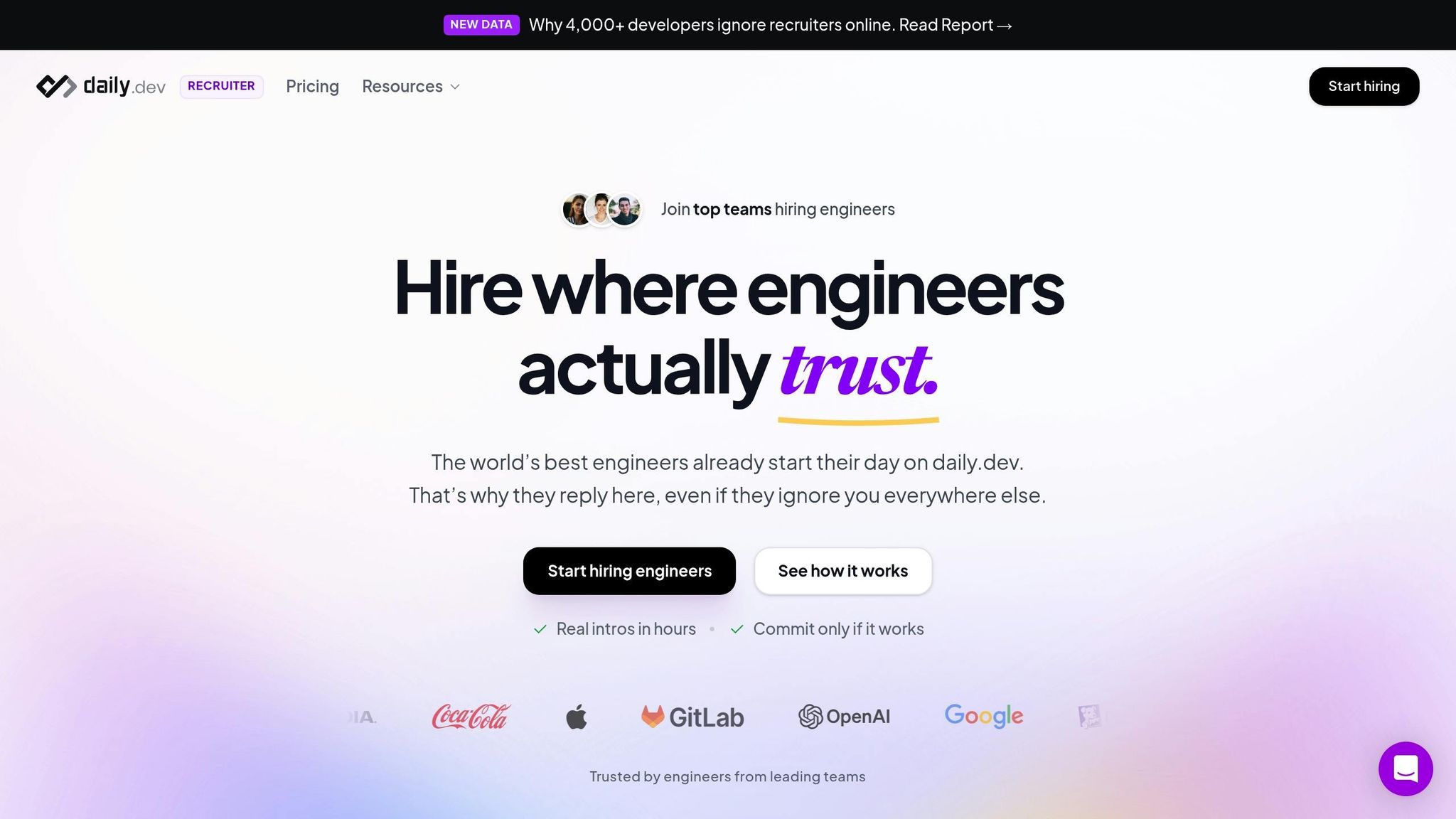
daily.dev Recruiter simplifies technical hiring by connecting employers with a vibrant community of software engineers. Through warm, double opt-in introductions, it ensures every interaction starts with genuine interest and a clear understanding of the opportunity. Let’s explore how its features tackle common challenges in technical recruitment.
Sourcing Effectiveness
Built with developers in mind, daily.dev Recruiter taps into a community of professionals who actively engage with industry content and continuously refine their skills. This focus leads to better response rates and more meaningful connections.
Automation Features
Streamlining the hiring process, it automates tasks like pre-qualification, candidate screening, and sending targeted job briefs. This automation helps you identify qualified technical candidates more efficiently. This means only candidates who are genuinely interested and meet the criteria enter your pipeline.
Technical Role Fit
Designed specifically for software engineers, daily.dev Recruiter encourages conversations centered on technical expertise and career aspirations, ensuring discussions remain relevant to the role.
Integration Capabilities
It works seamlessly with popular Applicant Tracking Systems and sourcing tools, using advanced targeting to place your job ads directly in front of the right technical talent.
2. GoodTime
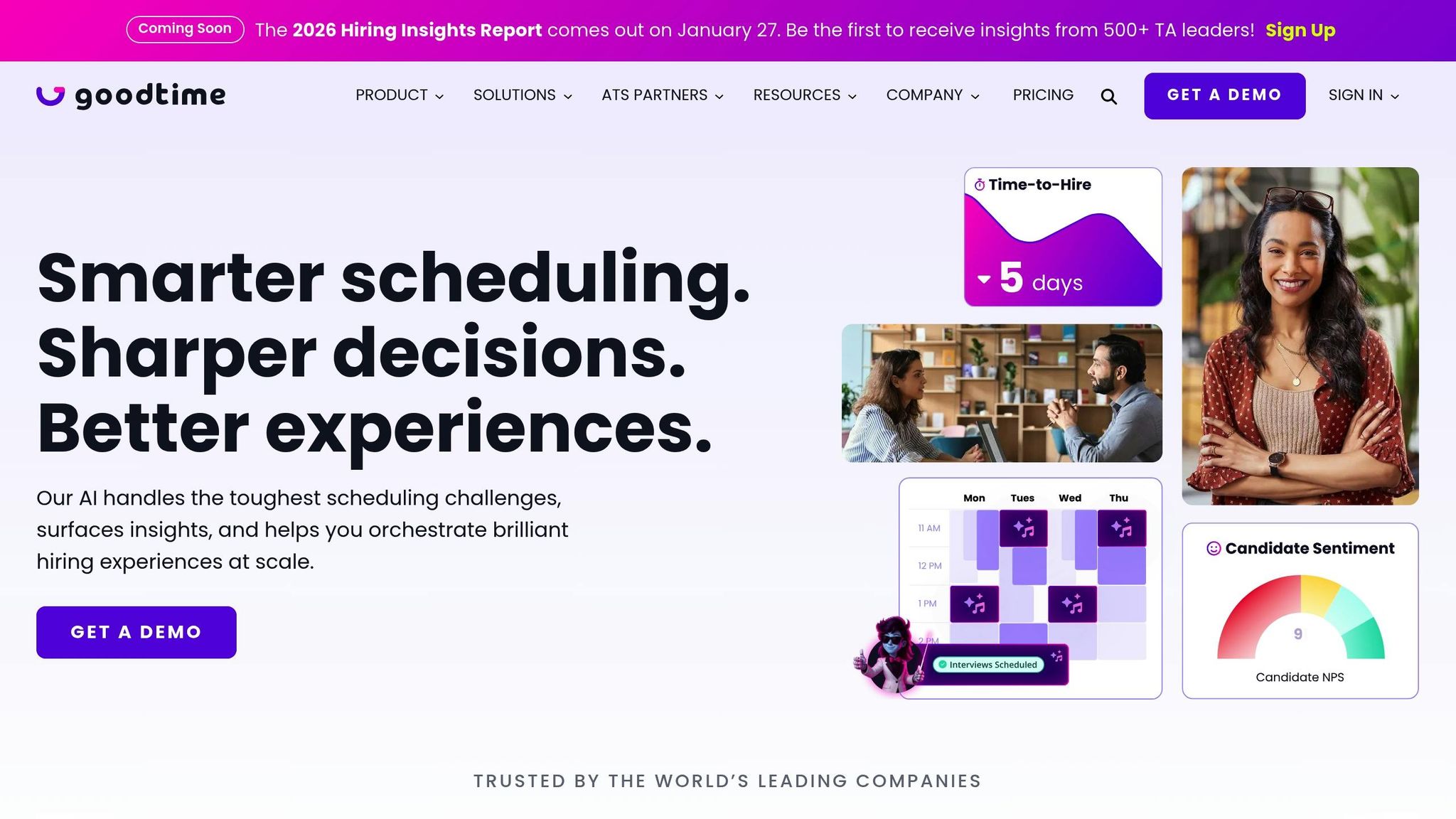
GoodTime focuses on tackling one of the biggest challenges in technical hiring: interview scheduling. By simplifying coordination across teams, time zones, and calendars, GoodTime's platform aims to make the process as smooth as possible. Let’s take a closer look at how its automation tools and integrations improve hiring workflows.
Automation Features
GoodTime leverages AI-powered agents, known as Orchestra, to handle scheduling tasks. These agents check team calendars, distribute workloads evenly, and quickly set up panel interviews. Coordinators get real-time notifications about any scheduling changes, keeping everyone in the loop. Candidates can also use a self-scheduling portal to pick interview times that align with their own time zones, while automated updates reduce the need for constant back-and-forth communication. GoodTime has earned recognition for its ability to streamline scheduling and improve the overall candidate experience .
Integration Capabilities
Rather than replacing your existing applicant tracking system, GoodTime integrates seamlessly with it, helping you audit your tech hiring stack to ensure a lean setup. Designed for companies with 250 or more employees, its pricing is tied to annual candidate volume and includes all essential features. Many users praise the platform’s AI-driven scheduling for its efficiency. The operational dashboard is another standout feature, helping teams identify bottlenecks and offering actionable recommendations to speed up the hiring process. Some teams have even managed to complete their candidate pipelines in as little as two weeks. However, feedback highlights a few challenges, including a steep learning curve, occasional glitches in the portal, and an interface that can be tricky for first-time users .
3. Manatal
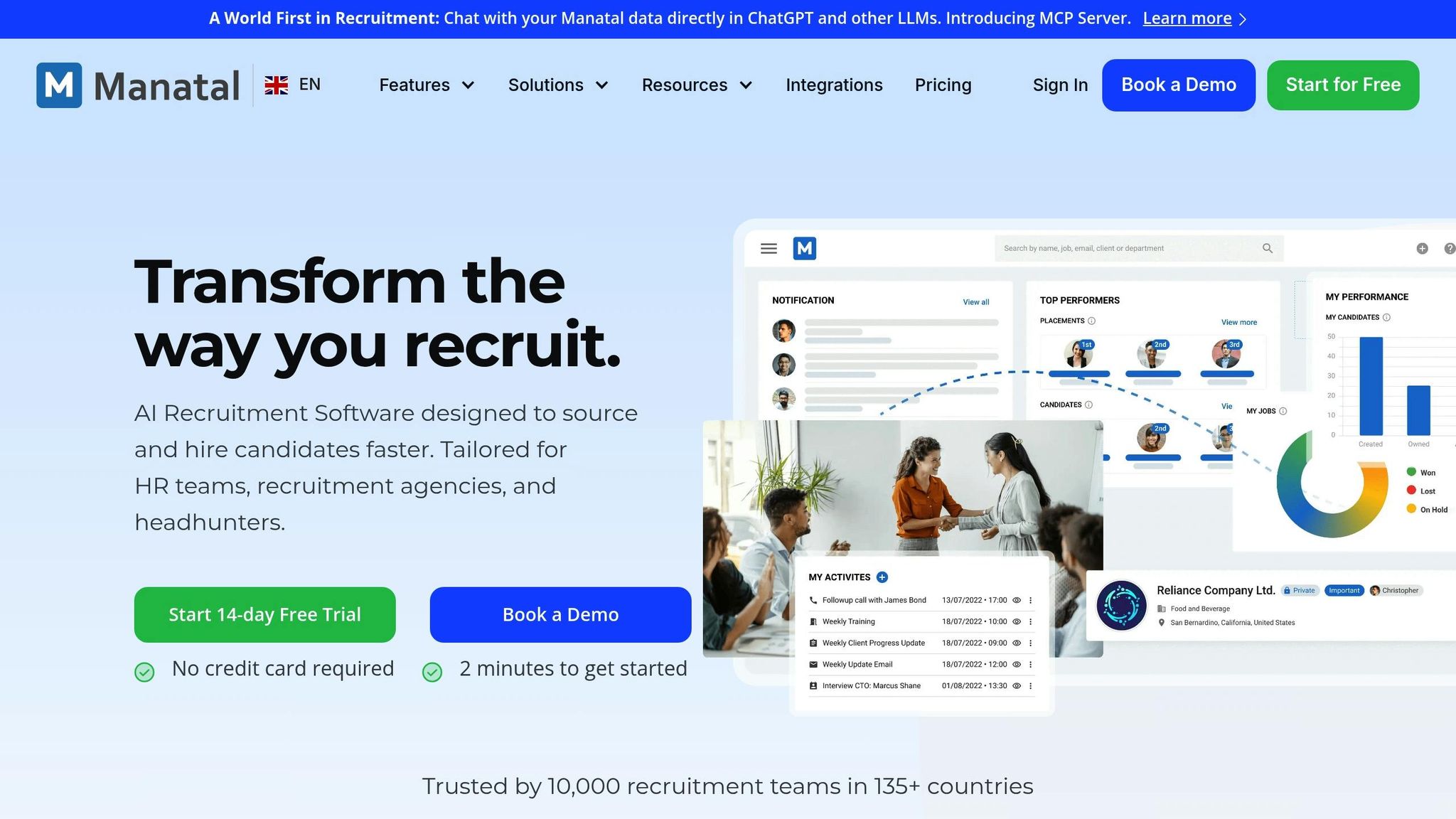
Manatal offers a recruitment solution that blends AI-powered automation with applicant tracking and CRM tools. Designed with smaller teams in mind, it’s available at an affordable starting price of $15 per user per month .
Sourcing Effectiveness
Manatal simplifies job posting by automatically distributing openings to a network of over 2,500 job boards, making it easier to connect with a wide range of candidates without the hassle of managing multiple sites . The platform also shines in social media recruitment, enabling teams to share job postings on platforms like Facebook, WhatsApp, WeChat, and Line . To top it off, a Chrome extension streamlines the process of importing profiles directly from LinkedIn . This is particularly useful when sourcing candidates for technical roles on a tight budget.
Automation Features
Manatal’s AI tools take the guesswork out of candidate screening by suggesting individuals whose profiles align closely with job requirements. The platform also enriches candidate profiles by pulling publicly available data, creating a more complete picture of each applicant. Recruitment pipelines can be customized using a drag-and-drop interface, and the Kanban board feature helps teams stay organized, particularly when managing technical hiring workflows .
Integration Capabilities
Manatal connects seamlessly with popular communication and productivity tools like Gmail, G Suite, Microsoft Outlook, Office 365, and LinkedIn, centralizing outreach efforts. For those needing advanced connectivity, the platform offers Zapier integration and API access through custom plans. With an easy-to-use interface that requires minimal training, teams can adopt the system quickly and start optimizing their recruitment processes right away . These integrations make it easier than ever to manage workflows efficiently.
4. iMocha
iMocha focuses specifically on developer assessment tools rather than handling the entire recruitment process. Pricing details are provided upon request .
Technical Role Fit
This platform stands out for its ability to conduct remote tests across a wide range of technical fields. It allows hiring teams to evaluate a candidate's actual skills before moving them further in the interview process . By concentrating on technical competencies, iMocha ensures that only qualified candidates are shortlisted. This helps in reducing time to hire for technical roles by complementing earlier recruitment tools that handle tasks like sourcing and scheduling.
Automation Features
iMocha simplifies the assessment process by automating tasks, making it easier to conduct tests quickly and gather precise skill data .
Hiring engineers?
Connect with developers where they actually hang out. No cold outreach, just real conversations.
5. SeekOut
SeekOut takes a proactive approach to finding technical talent, focusing on identifying candidates rather than waiting for them to apply. Like similar tools, it prioritizes precision and efficiency in technical recruitment. Powered by AI, SeekOut taps into a vast database of candidates and uses advanced search tools to go beyond the usual resume keyword searches.
Sourcing Talent
What sets SeekOut apart is its ability to combine keyword searches with technical indicators. Recruiters can pinpoint candidates based on factors like GitHub activity, contributions to open-source projects, or participation in conference talks. This method uncovers skilled professionals who might not be actively searching for jobs but fit the role perfectly. It’s no surprise that SeekOut boasts a strong G2 rating of 4.5 out of 5 .
Automation Tools
SeekOut streamlines the hiring process by automated candidate sourcing. It can define complex search parameters, enrich candidate profiles with contact details, and even create shortlists of individuals with highly specific skill sets - all with minimal manual effort.
Seamless Integration
To make recruiters' lives easier, SeekOut integrates smoothly with applicant tracking systems (ATS). It allows for clean data exports, transferring technical details effortlessly into your ATS. This eliminates the need for manual data entry, making it easier to move candidates from discovery to engagement.
6. HackerRank and Codility
HackerRank and Codility are popular platforms for assessing technical candidates through hands-on coding tests. HackerRank is geared toward technical and developer hiring, offering tools for screening and live interviews. Codility, on the other hand, specializes in algorithmic and coding assessments tailored specifically for development teams . Both platforms enjoy strong ratings on G2, with HackerRank scoring 4.5 out of 5 and Codility slightly higher at 4.6 out of 5 .
Automation Features
Both platforms save time by using automated scoring to evaluate candidates. HackerRank employs AI-driven plagiarism detection, complete with tab-switch tracking and alerts for leaked questions . Codility simplifies the test creation process for HR teams by providing a robust question library and ensures the integrity of assessments with built-in plagiarism detection and proctoring tools .
Technical Role Fit
When it comes to matching candidates to technical roles, HackerRank offers customizable skill assessments across various domains, using certified content to evaluate practical technical and soft skills through coding challenges and live coding interviews . Codility emphasizes real-world tasks that mimic actual engineering work. It supports over 40 programming languages and includes project-based assessments . While HackerRank provides a broader range of customizable assessments, Codility’s focus lies in algorithmic challenges that reflect everyday development scenarios. For teams looking to assess technical skills without coding tests, alternative methods like portfolio reviews can also be effective.
Integration Capabilities
Both platforms integrate seamlessly with applicant tracking systems (ATS), making the hiring process smoother. HackerRank supports enterprise-level integrations with major ATS platforms , while Codility connects with systems like Manatal and provides detailed reports to analyze candidates' problem-solving approaches . These integrations reduce the need for manual test result reviews by engineers , creating a more efficient and streamlined hiring pipeline.
Advantages and Disadvantages
Every tool in the recruitment space brings something different to the table, along with its own set of limitations. For instance, daily.dev Recruiter simplifies the process by cutting out cold outreach, instead offering warm, double opt-in introductions to developers who are already engaged. GoodTime shines by automating interview scheduling and managing panel coordination. Manatal stands out with its LinkedIn Chrome extension for candidate management, though access to APIs is limited to Custom plans. iMocha excels at quickly evaluating candidate strengths through targeted assessments, while SeekOut streamlines outbound sourcing by pulling data from public profiles, GitHub, and even patents. While these features are impressive, the overall efficiency of your hiring process often hinges on advanced automation and seamless integration between tools.
Interestingly, machine learning has been shown to boost success predictions in candidate evaluations by 51% . However, there’s a catch - 71% of Americans are against employers relying solely on AI for final hiring decisions . This underscores the irreplaceable role of human judgment in recruitment, even as technical hiring best practices continue to evolve.
When it comes to integration and cost, the landscape varies widely. Some tools come with limited customization options or lack budget-friendly plans . On the flip side, platforms that scale well can quickly become expensive . The trick is to establish your system of record - whether that’s your ATS or CRM - and then choose tools that offer strong API and webhook support . It’s also essential to outline your must-haves early on, such as API access, role-based permissions, audit trails, and scalability . Tools that enhance communication or make the application process smoother can significantly improve the candidate experience , which is critical when competing for top-tier technical talent. At the end of the day, aligning these tools with your recruitment strategy is what will drive better hiring results. To ensure you don't miss a step, follow a structured developer hiring checklist.
Conclusion
In today’s fast-paced hiring landscape, finding the right tool can transform how you recruit for technical roles. It’s about more than just filling positions - it’s about connecting with skilled, pre-qualified developers who are genuinely open to new opportunities. With daily.dev Recruiter, you gain access to a network of over 1,000,000 engaged professionals. Each connection is carefully crafted through a warm, double opt-in process, ensuring you’re only reaching candidates ready for meaningful conversations. Designed with developers in mind, this platform offers personalized job opportunities, cutting through the noise of cold outreach vs. warm intros and tackling the challenges of efficiency and quality head-on.
FAQs
How does daily.dev Recruiter help boost engagement with top tech talent?
daily.dev Recruiter helps you connect with top tech talent by enabling personalized communication that speaks directly to developers. It simplifies outreach, saving valuable time while encouraging community-driven interactions. These tools create stronger connections, increasing the chances of candidates responding and staying engaged throughout the hiring journey.
What are the main integration features offered by GoodTime?
GoodTime provides a variety of integration features aimed at making the hiring process smoother and more efficient. For instance, it syncs effortlessly with calendar platforms, making scheduling a breeze. It also offers tools to organize panel interviews and sends automated reminders to ensure everyone stays on schedule. If plans change, rescheduling is straightforward, and the platform connects seamlessly with applicant tracking systems to maintain a cohesive workflow.
By simplifying these tasks, GoodTime not only saves valuable time but also elevates the candidate experience, ensuring the hiring process feels polished and efficient.
How does iMocha deliver accurate technical skill assessments?
iMocha delivers accurate technical skill assessments using AI-driven evaluation methods that replicate practical, on-the-job scenarios. These methods include coding challenges specifically designed to match industry requirements, strict anti-cheating protocols, and sophisticated scoring systems that offer an unbiased review of a candidate's abilities.
This system enables hiring teams to pinpoint top tech talent with efficiency, ensuring the process remains both fair and precise.
.png)