Finding developers has become increasingly challenging in 2026, with 90% of recruiters struggling to locate qualified candidates. Traditional tools like LinkedIn Recruiter are falling short due to high costs, low response rates, and difficulty reaching active vs passive developer talent. This has driven companies to explore specialized platforms that streamline hiring by focusing on verified talent pools, tailored engagement methods, and integration with existing workflows.
Here are 10 alternatives to LinkedIn Recruiter for hiring developers:
- daily.dev Recruiter: Connects with developers via a tech-focused network using warm, double opt-in introductions. Ideal for engaging passive candidates.
- GitHub Talent: Evaluates developers through their actual code contributions on GitHub, perfect for niche or senior roles.
- Stack Overflow Talent: Targets active, problem-solving developers based on their community contributions.
- Dice: A tech-specific job board focusing on mid- to senior-level engineers actively seeking jobs.
- AmazingHiring: Aggregates profiles from 50+ platforms, highlighting passive candidates with technical contributions.
- HireEZ: AI-driven sourcing tool with automated outreach and access to 800 million profiles.
- SeekOut: Focuses on diversity and specialized technical roles, leveraging data from academic papers and patents.
- Hired: Reverse job board where developers opt-in to receive interview requests, speeding up hiring for startups.
- Wellfound (AngelList Talent): Designed for startups, connecting them with candidates who value equity and entrepreneurial work environments.
- Turing: Matches companies with pre-vetted remote developers, specializing in distributed teams.
These platforms cater to different hiring needs, whether you're targeting passive talent, assessing technical skills, or reducing time-to-hire for technical roles. Below is a quick comparison to help you decide.
Quick Comparison
| Platform | Best For | Key Feature | Pricing |
|---|---|---|---|
| daily.dev Recruiter | Passive developers | Real-time engagement with tech content | Transparent, custom |
| GitHub Talent | Niche/senior roles | Code-based evaluation | Custom |
| Stack Overflow Talent | Problem-solving developers | Tag-based search | Custom |
| Dice | Active job seekers | Tech-specific job board | Affordable |
| AmazingHiring | Passive technical talent | Aggregates 50+ platforms | $4,800/year/user |
| HireEZ | Specialized searches | AI Boolean Builder | $169–$199/month/user |
| SeekOut | Diversity/specialized roles | Position Magnet tool | $200+/month/user |
| Hired | Startups/mid-sized companies | Pre-vetted candidates | 15–25% of first-year salary |
| Wellfound | Startups | Focus on equity and entrepreneurial candidates | Freemium |
| Turing | Remote teams | AI-vetted developers | Custom |
Each platform offers distinct advantages depending on your hiring priorities, budget, and technical requirements. Choose the one that aligns best with your goals.
::: @figure  {LinkedIn Recruiter Alternatives Comparison: Features, Pricing, and Best Use Cases for Developer Hiring}
1. daily.dev Recruiter

daily.dev Recruiter is a developer-focused hiring platform built on a professional network where over 1 million software engineers spend time daily. They use it to read tech content, learn new skills, and stay updated on industry trends. Instead of relying on impersonal cold outreach, this platform connects you with developers where they’re already engaged and open to opportunities.
The platform uses warm, double opt-in introductions. Developers see your job opportunities while browsing content and can choose to engage. This approach avoids spamming inboxes or chasing uninterested candidates. Every interaction begins with mutual interest, resulting in higher response rates compared to traditional cold outreach methods.
Best Use Case
daily.dev Recruiter is ideal for connecting with passive developers who aren’t actively job hunting but are open to the right opportunity. If you’re struggling with low response rates or overwhelmed by unqualified applicants from job boards, this platform offers access to pre-qualified engineers already committed to professional growth.
Key Differentiator
The platform stands out by connecting you with developers in real time as they engage with tech content. This gives you access to candidates who demonstrate a growth mindset and technical curiosity. Plus, it screens candidates based on your criteria before introductions, so you only interact with developers who meet your specific needs.
Candidate Pool Size
You’ll gain access to a global network of actively engaged engineers with diverse skill sets, experience levels, and specializations.
ATS Integrations
daily.dev Recruiter integrates seamlessly with major ATS and sourcing tools, letting you keep your current workflow intact while accessing a fresh talent pool. Its transparent pricing structure helps you budget effectively and track ROI without the complications of tiered licenses. With these features in mind, let’s explore other platforms that bring unique approaches to developer recruitment.
Hiring engineers?
Connect with developers where they actually hang out. No cold outreach, just real conversations.
2. GitHub Talent
GitHub Talent provides a unique way to evaluate developers by focusing on their actual code contributions instead of relying on self-reported skills. With a massive community of over 23 million users, GitHub is home to countless open-source projects and active developer contributions. You can search for candidates based on the programming languages they use, the repositories they contribute to, and the quality of their work.
Best Use Case
This platform is especially useful for hiring in niche technologies or senior-level roles where proven coding expertise is critical. By spotlighting real coding work, GitHub Talent offers a more reliable alternative to traditional tools like LinkedIn Recruiter, which often depend on self-reported information.
Key Differentiator
GitHub Talent stands out by showcasing what developers actually create rather than what they claim to know. As André Farah, Co-founder of Leonar, explains:
"A talented developer with minimal LinkedIn presence but a thriving GitHub repository is invisible to LinkedIn Recruiter."
This means you can uncover highly skilled developers who might not be active on professional networking platforms but consistently prove their technical abilities through their GitHub activity. It’s a direct window into their skills and dedication.
Candidate Pool Size
With over 23 million users, GitHub provides access to a vast and diverse pool of developers. Many of these individuals focus more on their technical work than on self-promotion, making them a valuable resource for finding engaged and capable candidates.
ATS Integrations
GitHub Talent doesn't just stop at evaluation - it also supports seamless integration with modern ATS platforms. By using APIs and third-party tools, it connects efficiently with your existing hiring systems, streamlining the recruitment process.
3. Stack Overflow Talent
Stack Overflow Talent taps into a thriving developer community, drawing over 100 million visitors every month . Known as a go-to Q&A hub, it’s where developers tackle real-world technical challenges. For recruiters, this means gaining insights into how candidates think and solve problems - not just what they list on their resumes. This dynamic user base provides a unique edge for targeted recruitment.
Best Use Case
This platform is especially effective for finding passive technical talent for niche roles . With 75% of developers open to new opportunities , Stack Overflow Talent connects you with top-tier professionals who may not actively maintain their LinkedIn profiles but are deeply engaged in the developer ecosystem.
Key Differentiator
One standout feature is Tag Search, which allows recruiters to pinpoint candidates based on their contributions to specific topics. Whether you’re looking for expertise in JavaScript, Python, or another skill, you can filter by top users to identify developers with both proven skills and strong reputations in the community . With a new programming question posted every 12 seconds , the platform ensures a consistently active and engaged talent pool.
Candidate Pool Size
Stack Overflow Talent offers access to a vast, highly engaged developer audience.
ATS Integrations
To streamline recruitment, Stack Overflow integrates seamlessly with major ATS platforms. This allows recruiters to manage candidates from sourcing to hiring in one system . Features like automated job postings and centralized analytics simplify workflows, saving time and boosting efficiency.
4. Dice
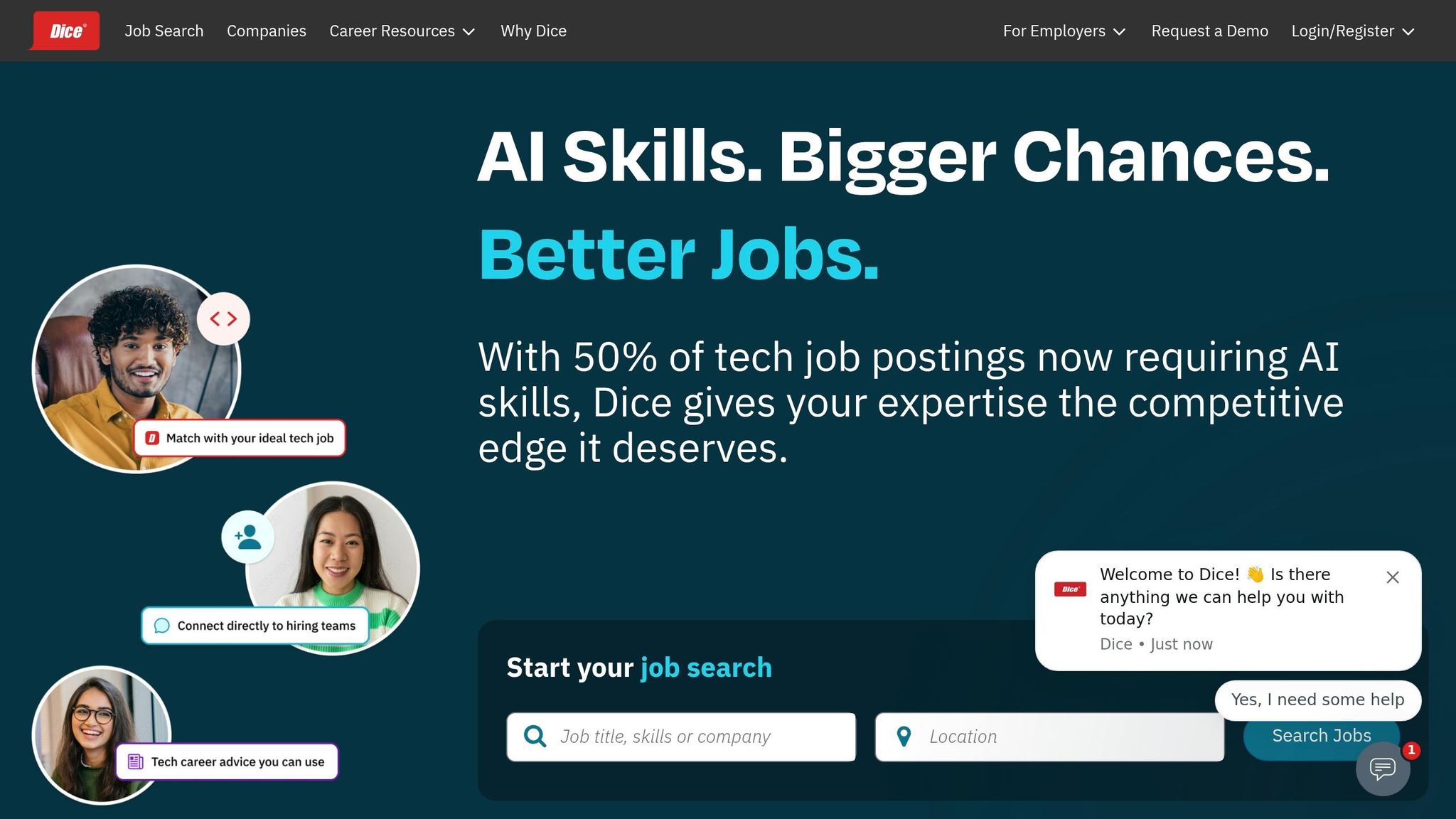
Dice is a job board tailored specifically for tech professionals. While platforms like LinkedIn cater to a broad range of industries, Dice zeroes in on tech talent. Whether you're looking for software engineers, data scientists, cybersecurity specialists, or IT leaders, Dice narrows the field to candidates in this space. This focus makes it a go-to option for recruiters aiming to quickly and effectively fill developer roles.
Best Use Case
Dice shines when you're hiring active job seekers in the tech industry. It's especially effective for finding mid- to senior-level engineers, offering a pool of proactive candidates who tend to respond more quickly.
Key Differentiator
The standout feature of Dice is its exclusive focus on tech. By eliminating irrelevant profiles, it delivers more precise matches compared to general job boards.
Candidate Pool Size
Dice boasts millions of tech-focused candidates. While its network is smaller than LinkedIn's, the relevance of its talent pool makes it a strong choice for developer-specific roles.
ATS Integrations
Dice works seamlessly with major applicant tracking systems (ATSs), simplifying job posting and candidate management. This integration enhances its efficiency, making it a reliable tool for tech recruitment.
Next, we’ll look at another platform designed to further sharpen the focus on tech candidates.
5. AmazingHiring
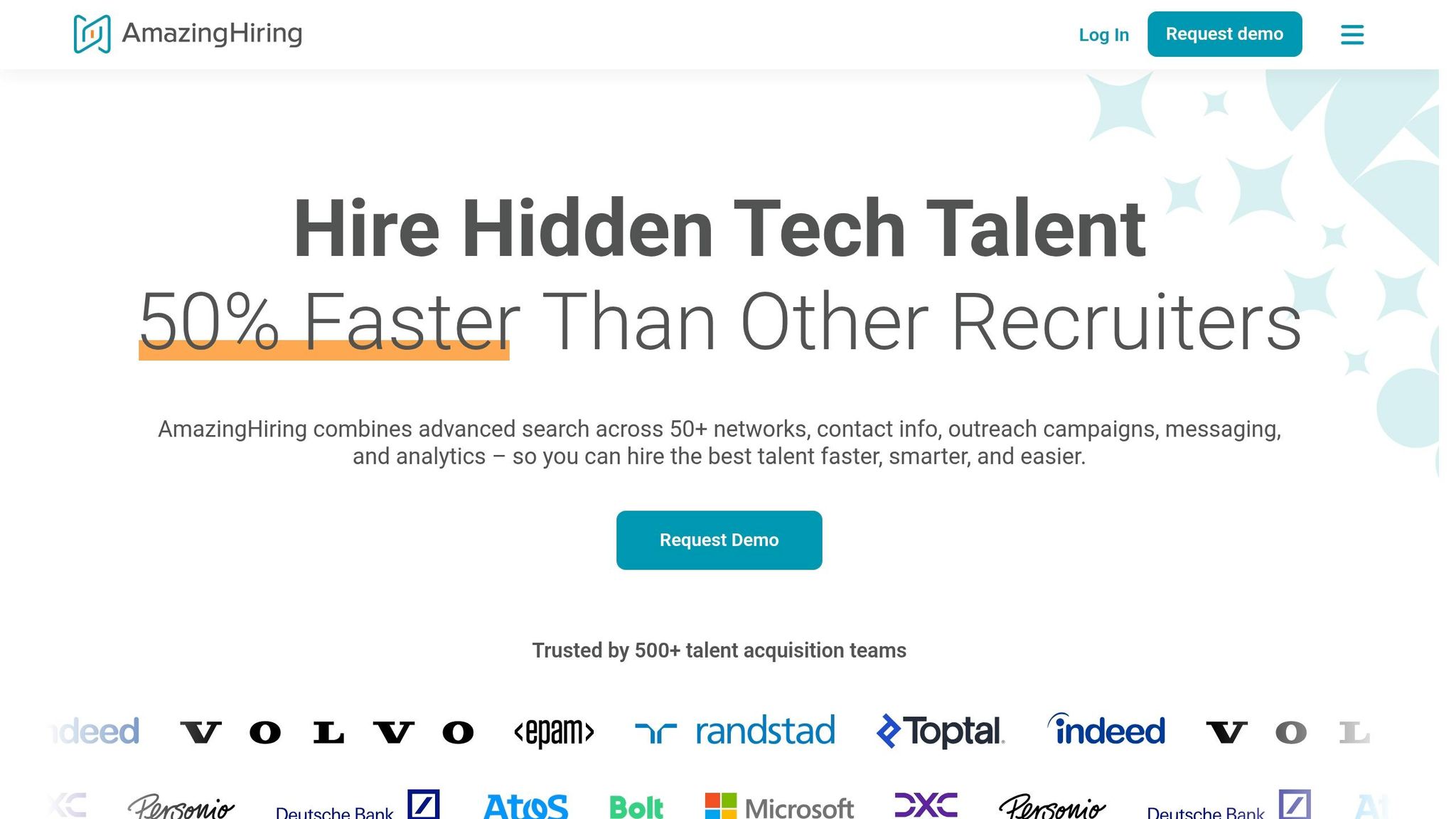
AmazingHiring scans over 50 technical platforms - like GitHub, Stack Overflow, and Kaggle - to create a detailed profile of a developer's skills. It evaluates code commits, forum activity, and open-source contributions to provide a clear picture of their technical abilities.
Best Use Case
This platform shines when it comes to finding "hidden" technical talent - developers who may not be active on LinkedIn but have a strong presence on other platforms. For instance, if you're looking for someone who contributes to open-source projects or provides detailed answers on Stack Overflow but hasn't touched their LinkedIn profile in years, AmazingHiring can help you find them.
Key Differentiator
AmazingHiring's strength lies in its ability to aggregate data from multiple platforms and highlight recent technical activity. It goes beyond just showing profiles by enabling recruiters to personalize outreach. You can reference a candidate's recent GitHub commits or their Stack Overflow reputation, making your communication more relevant and skill-focused rather than relying on generic messages.
Pricing
The platform is priced at $4,800 per user per year (about $400 per month, billed annually). For a team of five recruiters, this totals around $24,000 annually. While it sits at a higher price point compared to some alternatives, users often find the investment worthwhile, as it significantly reduces the time spent on hiring - allowing them to complete 5–7 projects in the time it used to take for 1–2.
ATS Integrations
AmazingHiring also integrates seamlessly with popular applicant tracking systems (ATS) like Greenhouse, SmartRecruiters, Lever, and Workable. Its Chrome extension is a handy tool, revealing social media links and contact information directly from candidate profiles. Verified details sync automatically with your ATS, simplifying the recruitment process even further.
6. HireEZ

HireEZ pulls candidate profiles from over 45 platforms, giving access to a database of more than 800 million profiles. Its standout feature, the AI Boolean Builder, transforms plain language job descriptions into Boolean search strings. For instance, if you input "senior Python developer with Django experience in fintech", the tool generates the precise Boolean string needed for your search.
Best Use Case
HireEZ shines for mid-market and enterprise teams working on specialized technical roles that require searching across multiple platforms. For example, if you're hiring for a niche position - like a Rust developer with blockchain expertise - HireEZ gathers data from developer-focused platforms where these candidates are most active.
Key Differentiator
HireEZ doesn’t just aggregate data; it also includes automated email sequencing. This feature allows you to set up multi-step follow-ups as soon as you identify candidates, reaching them directly in their inboxes with verified email addresses (accuracy is estimated at 70–80%). Combining data from over 45 sources with this automation makes HireEZ a robust tool for modern recruiting.
Pricing
HireEZ offers three pricing tiers: Starter at $169 per user per month, Professional at $199 per user per month, and a custom-priced Enterprise plan. They also provide a 15-day free trial. For example, a team of five on the Professional plan would cost roughly $11,940 annually.
ATS Integrations
HireEZ includes a Chrome extension that lets you capture candidate profiles from any website and sync them directly to your applicant tracking system. It integrates with popular ATS platforms like Greenhouse, Lever, and Workable, ensuring verified contact details flow smoothly into your recruitment process. These integrations help streamline workflows, making HireEZ an effective alternative to LinkedIn Recruiter in 2026. If you're evaluating your options, it's worth exploring other coding-focused candidate sourcing tools that prioritize technical depth.
7. SeekOut
For recruiters grappling with high costs and limited reach on traditional platforms, SeekOut presents a compelling alternative. This platform taps into over 40 specialized data sources - like academic journals and patents - to create detailed technical profiles that go beyond self-reported information. Its semantic AI analyzes job requirements to pinpoint qualified candidates effectively.
Best Use Case
SeekOut shines for enterprise teams managing complex technical roles, security-cleared positions, or large-scale diversity hiring efforts. With access to an impressive database of 96 million academic papers and patents, it’s particularly suited for highly specialized recruitment needs.
Key Differentiator
The platform’s Position Magnet tool is a standout feature, helping recruiters find candidates with profiles similar to their top-performing engineers. Additionally, SeekOut offers access to a pool of 330 million underrepresented candidates, making it a strong choice for diversity initiatives. Its "Blind Hiring" mode further supports unbiased recruitment by hiding photos and names, reducing unconscious bias during the hiring process. These advanced functionalities align with its enterprise-level pricing structure.
Pricing
SeekOut starts at about $200 per month for individual users, while enterprise plans average $27,000 annually. Custom quotes are required for access to advanced features.
ATS Integrations
SeekOut integrates with major ATS platforms like Workday, Greenhouse, iCIMS, Bullhorn, Lever, and SAP SuccessFactors. It also provides a Sourcing Assistant Chrome extension for easier profile and contact management. However, users have reported occasional inconsistencies in contact data accuracy and note that mastering the platform’s advanced features can take some time.
8. Hired
Hired flips the traditional recruiting process by allowing developers to create profiles and receive interview requests from employers. This approach ensures you're engaging with candidates who are actively seeking new roles, leading to quicker response times compared to cold outreach.
Best Use Case
Hired is particularly effective for startups and mid-sized tech companies aiming to fill engineering roles quickly without investing heavily in sourcing efforts. If your goal is to connect with pre-screened developers ready to interview within days, Hired is a strong option. It works well for positions like full-stack, frontend, and DevOps, where speed is crucial.
Key Differentiator
What sets Hired apart is its curated pool of pre-vetted developers who have already expressed interest in new opportunities. According to the platform, these candidates represent the top 3% of applicants, having passed initial technical screenings. This means you spend less time filtering through unqualified leads and more time engaging with candidates who meet your job requirements.
Pricing
Hired uses a success-based pricing model, meaning you only pay when you successfully hire a candidate. While exact fees are customized, reports suggest costs range from 15-25% of the candidate's first-year salary. This can be more expensive than a flat subscription service like top recruiting software platforms, especially if you're making multiple hires. However, it minimizes upfront costs, making it a low-risk option for companies testing the platform or hiring infrequently.
ATS Integrations
Hired offers a streamlined recruiting environment by consolidating core tools like ATS functionality, AI-driven sourcing, CRM, and analytics into a single platform. This reduces the hassle of managing multiple APIs or third-party tools. Additionally, Hired integrates with services for payroll, background checks, and developer assessment tools, making it easier to manage the entire hiring process - from initial contact to onboarding.
9. Wellfound (AngelList Talent)
Wellfound (previously known as AngelList Talent) is a hiring platform tailored specifically for startups and early-stage companies aiming to recruit tech professionals. It’s designed to connect these businesses with developers who are drawn to high-growth, entrepreneurial settings.
Best Use Case
This platform works best for early-stage firms, whether seed-funded or venture-backed, that are looking for candidates who appreciate equity compensation and thrive in the fast-moving world of startups.
Key Differentiator
What sets Wellfound apart is the detailed insights it offers about candidates. You can see their preferences for hiring remote developers, interest in equity, and the types of company stages they’re most excited about. This ensures you're reaching candidates who are already aligned with the innovative and high-growth nature of startups.
Pricing
Wellfound operates on a freemium model. Basic features, such as job postings and candidate searches, are available at no cost. For access to premium tools, pricing varies depending on your hiring needs. You’ll need to contact Wellfound for specific details. This flexible pricing approach is designed to match the budget constraints and fast-paced hiring demands of startup environments.
10. Turing
Turing is a platform designed to connect companies with pre-vetted remote software developers, making it easier to build distributed engineering teams. By using an AI-driven technical assessment, Turing ensures that only qualified candidates are presented for consideration.
Best Use Case
Turing is perfect for companies looking to quickly assemble distributed teams, especially when hiring for senior engineering positions. The platform significantly reduces the time spent on screening candidates for these roles. Using a developer hiring checklist can further streamline this stage.
Key Differentiator
What sets Turing apart is its AI-powered vetting process. Developers go through a rigorous 5–10 hour assessment that evaluates both their technical expertise and soft skills. This guarantees that the candidates you review have already demonstrated their coding abilities and communication skills. Plus, Turing offers a 2-week risk-free trial period for each hire, giving you added peace of mind.
Pricing
Turing uses a custom pricing model based on your specific hiring needs. There are no upfront search fees - you only pay for results. To get an exact quote, you'll need to reach out to Turing directly. This performance-based pricing aligns with the platform's goal of simplifying developer recruitment while avoiding the challenges of traditional hiring methods.
Platform Comparison: Pros and Cons
Here's a quick breakdown of what each platform brings to the table, along with its potential drawbacks:
| Platform | Pros | Cons |
|---|---|---|
| daily.dev Recruiter | Warm, double opt-in introductions; high reply rates from engaged developers; no cold outreach; built on an active developer community | Newer platform with a smaller candidate pool compared to established tools; exclusively focuses on developers |
| GitHub Talent | Access to developers' code contributions; credibility through technical work samples; integrates with GitHub workflow | Limited to active GitHub users; lacks built-in communication tools; requires technical expertise to assess candidates |
| Stack Overflow Talent | Engaged problem-solvers; reputation scores validate expertise; strong recognition among developers | Smaller active user base; higher hiring costs; limited geographic reach in some areas |
| Dice | Large tech professional database; strong presence in the U.S.; affordable; effective for active job seekers | Primarily attracts active candidates, not passive talent; outdated interface; lower overall response rates |
| AmazingHiring | Aggregates profiles from 50+ sources; advanced search filters; great for sourcing hard-to-find skills and passive candidates | Time-intensive candidate verification; no direct communication tools; steep learning curve for advanced features |
| HireEZ | AI-powered candidate matching; Chrome extension for sourcing; integrates with major ATS platforms; automated outreach sequences | Can be pricey for small teams; AI matching quality varies; requires frequent adjustment of search settings |
| SeekOut | Detailed diversity insights; comprehensive candidate profiles; strong Boolean search capabilities; ideal for compliance-focused hiring | Premium pricing; complexity may overwhelm smaller teams; better suited for enterprise-level needs |
| Hired | Reverse job board where candidates express interest; pre-vetted talent pool; upfront salary expectations; speeds up hiring | Limited to candidates actively seeking jobs; placement fees can hit 15–20% of the first-year salary; smaller pool than traditional job boards |
| Wellfound | Tailored for startups focused on equity and team fit; free basic tier available | Mostly U.S.-based candidates; less effective for larger enterprises; free plan lacks advanced search tools |
| Turing | Rigorous AI-powered vetting; 2-week risk-free trial; focuses on senior engineering roles; manages payroll and compliance for remote hires | Custom pricing requires a sales call; primarily targets full-time remote positions |
This comparison underscores the unique strengths and limitations of each platform. When choosing, think about what matters most - whether it's cost, candidate quality, or how quickly you need to hire. For a more structured approach, using a tech recruiting cheatsheet can help streamline your process. For more targeted results, these platforms can offer a focused alternative to LinkedIn Recruiter's broader approach.
Conclusion
Selecting the best LinkedIn Recruiter alternative comes down to your specific hiring needs, candidate preferences, and integration goals. Each platform offers tools tailored to unique challenges - whether it's attracting passive developers or evaluating technical skills. For example, daily.dev integrates seamlessly into developers' daily learning routines, while GitHub Talent and Stack Overflow Talent allow you to assess candidates' actual contributions and problem-solving abilities.
Cost is a big factor. With LinkedIn Recruiter's corporate license costing over $12,000 per seat annually, startups often need more budget-friendly options. Platforms like Dice or Wellfound provide affordable entry points, while enterprise-level solutions like SeekOut and HireEZ justify their higher price tags with advanced features.
Beyond pricing, aligning a platform's capabilities with your hiring strategy is crucial. Be sure to consider the full cost of ownership - subscription fees, placement costs, and the accuracy of candidate data - when comparing platforms.
Think about your specific goals. If you're hiring for a remote team, Turing offers a vetted talent pool and takes care of compliance. For startups aiming to build teams that align with their values, Wellfound is a strong option. And if you're targeting developers who are actively learning and open to new opportunities, daily.dev Recruiter connects you with candidates in real time.
At the end of the day, success isn’t about how big the database is - it’s about finding the right developers at the right time with the right message, all while keeping costs and efficiency in check. Be sure to check out our migration checklist and ROI metrics to make your transition as smooth as possible.
.png)