When hiring developers, relying solely on LinkedIn means missing out on candidates who showcase their skills elsewhere. Platforms like GitHub, Stack Overflow, and Reddit allow recruiters to evaluate real-world contributions, technical discussions, and community engagement. These channels provide a deeper understanding of a developer’s expertise compared to traditional resumes or profiles.
Key Takeaways:
- GitHub: Analyze repositories, contributions, and follower counts to assess coding skills. Use advanced search tools for targeted talent discovery.
- Stack Overflow: Leverage reputation scores, tags, and badges to find specialists. Personalize outreach by referencing their answers or discussions.
- daily.dev Recruiter: Offers warm, opt-in introductions to developers based on their activity and interests, ensuring higher engagement.
- Reddit: Engage with developers in relevant subreddits by adding value to discussions before introducing job opportunities.
- Other Communities: Platforms like Hacker News, Dev.to, and Hashnode are ideal for connecting with developers who actively share knowledge and publish content.
Using multiple sourcing channels ensures better hiring outcomes by reaching developers where they are most active and engaged. Tailor your approach, focus on building genuine connections, and prioritize technical contributions over static profiles.
::: @figure 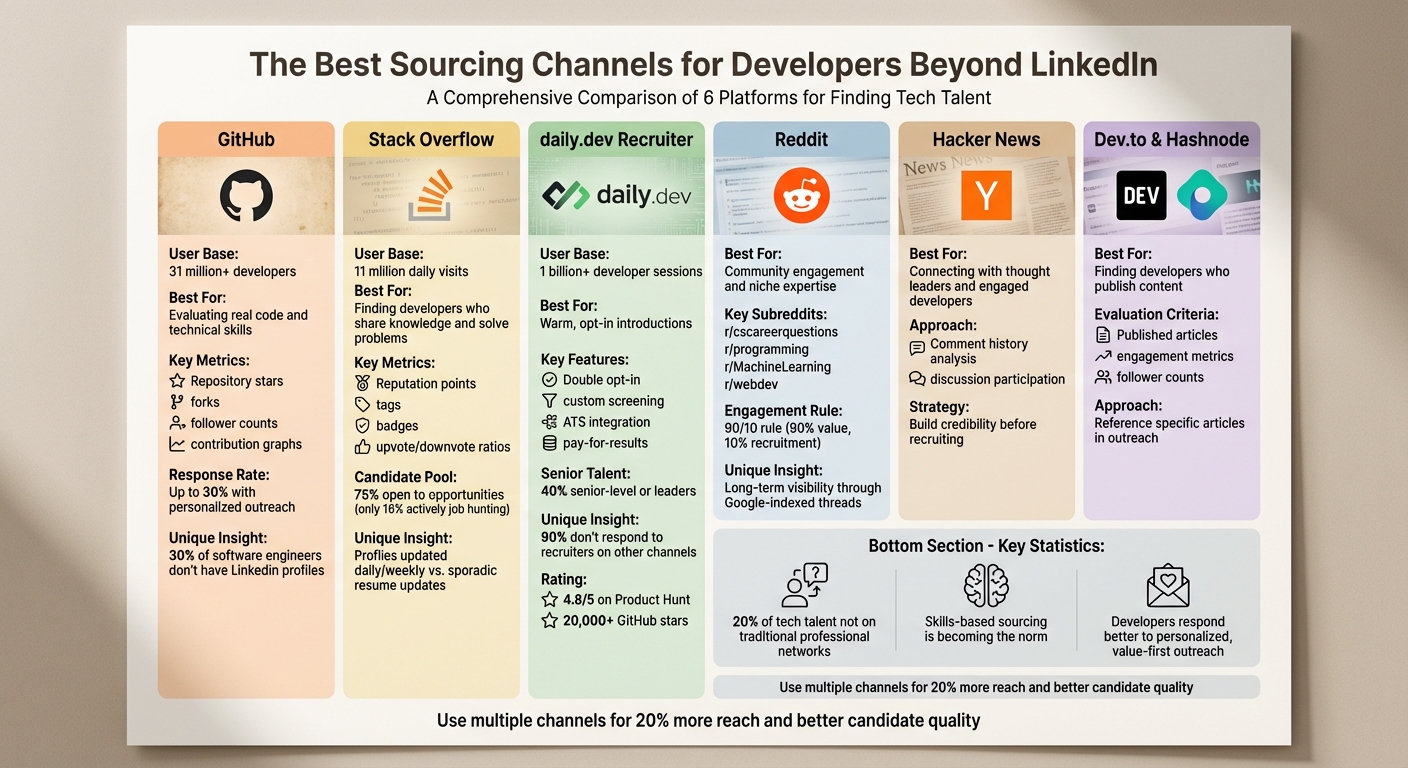 {Best Developer Sourcing Channels Beyond LinkedIn: Platform Comparison Guide}
GitHub: Finding Developers Through Their Code
GitHub goes beyond LinkedIn by offering a window into a developer's actual skills through their code and collaboration. With over 31 million developers actively using the platform, GitHub serves as a live portfolio showcasing real-world projects and contributions . It’s where you can see a developer's expertise in action.
In 2018 alone, users made 1.1 billion contributions. With 90% of developers relying on Git, GitHub provides an active, real-time snapshot of their work and technical abilities.
How to Find Developers Using Repositories and Activity
Start by diving into repositories, where developers store their projects. These repositories are split into two types: original sources, which contain unique code, and forks, which are copies of existing projects . To gauge technical skill, focus on the original repositories.
A green contribution graph that’s consistently filled in reflects an active and engaged developer. Pay attention to pinned repositories too - these are projects developers choose to highlight, often representing their best work .
GitHub's advanced search tools can help you narrow down your search. For example, you can use specific qualifiers like:language:python location:"san francisco" followers:10..30
to find mid-level developers in a particular area . Another approach is to search for popular repositories related to your tech stack and browse the Contributors list. Developers who submit pull requests to these projects are often highly skilled .
Metrics like stars and forks offer insights into a repository’s impact. A repository with 100 stars and 50 forks is impressive, while 5,000 stars or forks indicates someone with significant influence in the developer community . Follower counts also provide a clue: 10 followers is solid, 11–30 is strong, 31–75 is excellent, and 75+ suggests widespread recognition .
Be cautious of repositories filled with practice problems or simple clones, as they might not reflect senior-level expertise . Instead, prioritize projects with well-documented README files, which demonstrate a developer’s ability to communicate technical details effectively .
How to Reach Out to Developers on GitHub
Personalized outreach on GitHub can result in response rates as high as 30% . Avoid generic, copy-paste messages. Instead, reference a specific repository or commit to show that you’ve taken the time to review their work .
"GitHub recruiting is most effective when you focus on relevance and relationship-building, not volume."
– Laura Clayton, Warmup Inbox
Before reaching out, ensure your GitHub profile is complete with a photo, your role, and a personal touch . While some developers keep their email addresses private, you can often find contact details in their bio, linked websites, or even commit metadata .
Outreach from hiring managers or engineers tends to carry more weight. If possible, have an engineer from your team initiate contact, or at least demonstrate technical understanding in your message .
"The goal here isn't to reach out to as many coders as possible, as quickly as possible. It's to build relationships with people who might potentially join your team."
– Rohma Abbas, Content Marketing Manager, Workable
It’s worth noting that about 30% of software engineers don’t have a LinkedIn profile, making GitHub an essential channel for connecting with talent that might otherwise go unnoticed . This focused approach complements other platforms where developers showcase their skills authentically.
Stack Overflow: Sourcing Developers Who Share Knowledge
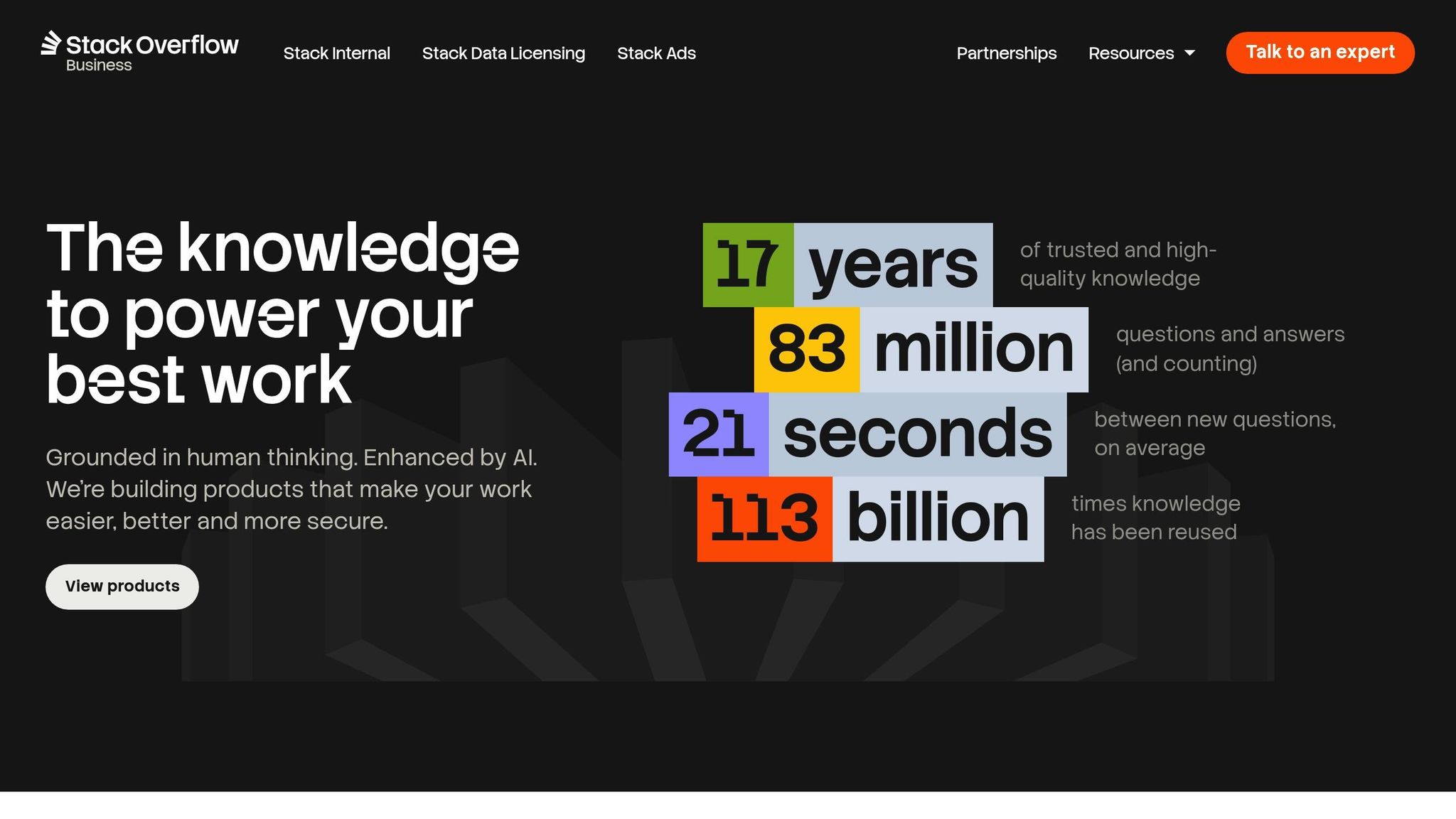
Stack Overflow isn’t just a site where developers troubleshoot issues - it’s a dynamic hub that showcases their technical skills in action. With 11 million daily visits from programmers , it’s a place where users solve problems, break down complex topics, and share their expertise. This makes it a goldmine for recruiters looking to identify talent based on real-world technical engagement.
Unlike traditional resumes, which may only get updated sporadically, Stack Overflow profiles reflect a developer’s ongoing activity, often updated daily or weekly . This real-time insight is incredibly valuable, especially when you consider that while only 16% of developers are actively job hunting, a whopping 75% are open to hearing about new opportunities . Stack Overflow bridges this gap, making it an ideal platform to connect with passive candidates.
Using Tags and Reputation Scores to Find Specialists
Once you’ve identified active users, dig deeper into their reputation scores and tags to understand their expertise. Reputation points are a direct measure of community trust - users earn points when their answers are upvoted and lose points when they’re downvoted . A high reputation score signals that a developer’s knowledge has been vetted and valued by peers.
The platform’s tag system is another powerful tool for pinpointing specialists. Tags like Python, React, or Scikit-learn categorize questions and highlight a user’s areas of expertise. For instance, a high score in Scikit-learn suggests a focus on machine learning, while a strong Ruby-on-Rails profile hints at web development skills .
To find top contributors, navigate to the "Tags" section in the sidebar, select a technology, and check out the "Top users" list. If the platform’s search feels limiting, try a Google X-ray search (e.g., "Seaborn display multiple plots") to locate detailed and high-quality answers from specific users .
Badges also provide a glimpse into a developer’s consistency and helpfulness, while reviewing their answers can reveal their communication skills - an essential trait for effective teamwork .
| Metric | What It Tells You |
|---|---|
| Reputation Points | Community trust and technical expertise |
| Top Tags | Areas of specialization and niche skills |
| Badges | Indicators of consistency, helpfulness, and milestones |
| Upvote/Downvote Ratio | Quality and accuracy of contributions |
Writing Outreach Messages That Developers Will Read
Stack Overflow thrives on technical accuracy and a no-nonsense approach, so generic outreach messages just won’t cut it. Developers on the platform are particularly wary of recruiter spam, so respecting these norms is essential to maintaining credibility .
"While LinkedIn endorsements can be easily attained, Stack Overflow reputation points and badges are relatively hard-earned in comparison."
– Glen Cathey, Boolean Black Belt
When reaching out, reference a specific answer or technical discussion the developer has contributed to recently. This personal touch shows that you’ve taken the time to understand their work, rather than sending a mass message .
Stick to the "Four Rules" of outreach: disclose your company, recruit for a specific role, ensure the role matches the developer’s expertise, and provide enough context about the opportunity . Many profiles also include links to GitHub repositories or personal blogs, offering additional ways to connect .
"The ones I really pay attention to are ones written by 'real' people, like programmers and Engineering VPs and CTOs."
– Chris Jester-Young, Developer with 204k+ Reputation
Remember, over 92% of developers are employed at least part-time, and about 65% are satisfied with their current jobs . If you want to grab their attention, focus on what matters most: better salaries (70%), the chance to work with new technologies (58.5%), and curiosity about other opportunities (57.1%). Tailor your message to address these motivators directly.
Next, we’ll explore how to recruit developers through open source and communities to expand your talent sourcing strategy.
daily.dev Recruiter: Connect With Developers Through Warm Introductions
daily.dev Recruiter stands apart by using warm, double opt-in introductions to connect recruiters with developers. Instead of cold outreach, it matches opportunities with developers who have explicitly expressed interest. With over 1 billion developer sessions logged on the platform, it ensures that your role reaches the right candidates - and only those candidates. Developers see roles that align with their skills and interests, and recruiters interact only with individuals who've opted in.
The platform uses live signals like browsing patterns, coding activity, and career preferences to craft developer-friendly job briefs. Contact details are shared only after developers consent.
"We built a place where engineers can turn off the noise. To enter this space, you don't need a hack. You need trust."
– Nimrod Kramer, CEO & Co-Founder, daily.dev
This trust-first approach is reflected in the numbers: 90% of developers on the platform don’t respond to recruiters on other channels, and 40% of the talent pool consists of senior-level contributors or leaders.
What daily.dev Recruiter Offers Recruiters
daily.dev Recruiter tackles common challenges in developer hiring, such as low response rates, unqualified candidates, and difficulty engaging passive talent. Here's how:
- Custom Screening Questions: Recruiters can define up to three questions to pre-qualify candidates. Whether you're looking for React 18 expertise or experience with distributed systems, you can screen for specific skills upfront.
- ATS Integration: The platform works seamlessly with major ATS tools like Greenhouse and Workday, automatically deduplicating candidates and streamlining workflows.
- Pay-for-Results Pricing: Forget per-seat licenses. Costs are tied to successful hires, aligning expenses with outcomes.
- Smart Career Match: Real-time engagement data ensures your roles are shown to developers actively exploring related topics, like GenAI or LLMs.
| Feature | Benefit |
|---|---|
| Double Opt-In Introductions | Engage only with developers who want to hear from you |
| Custom Screening Questions | Ensure candidates meet your criteria before the first conversation |
| ATS Integration | Simplifies workflows and avoids duplicate profiles |
| Live Signal Matching | Matches roles with developers' current interests |
| Pay-for-Results Pricing | Pay based on hires, not licenses |
This approach not only simplifies hiring but fosters genuine connections with developers.
Why Developers Respond Better on daily.dev Recruiter
Developers respond more positively on daily.dev because the platform integrates seamlessly into their routines. As their go-to content feed and homepage, daily.dev makes job opportunities feel organic rather than intrusive.
"When your role shows up inside that flow, it doesn't feel like outreach. It feels like an opportunity. That's why it just works."
– daily.dev
The platform’s reputation backs this up: it boasts a 4.8/5 rating on Product Hunt, was named Product of the Year, and has earned over 20,000 GitHub stars.
Unlike LinkedIn, where recruiters compete for attention in overcrowded inboxes, daily.dev ensures developers only see opportunities they've opted into. There’s no cold outreach, no interruptions, and no spam. Highlighting your tech stack and challenges - like building real-time data pipelines with Apache Kafka - can further increase opt-in rates.
Ultimately, daily.dev Recruiter creates a space for meaningful, efficient conversations with developers who are genuinely interested, saving time and boosting hiring success.
Hiring engineers?
Connect with developers where they actually hang out. No cold outreach, just real conversations.
Reddit: Reaching Developers in Their Communities
Reddit is a treasure trove for connecting with technical candidates who frequent the platform to discuss everything from coding challenges to career decisions. What sets Reddit apart is its emphasis on genuine engagement rather than traditional outreach. For recruiters who can navigate the platform authentically, it becomes a goldmine of opportunities.
However, Reddit isn't the place for generic job pitches. Developers on the platform are quick to spot insincerity, and posts that come across as purely promotional often get downvoted or even removed. To make an impact, focus on adding value first. Participate actively in discussions - answer questions, share insights, and build trust - before introducing any job opportunities . Let’s take a closer look at the subreddits where you can find the right talent.
Which Subreddits to Target for Developer Recruiting
Different subreddits cater to different types of developers, making it easy to find sourcing strategies that work for your specific hiring needs. For instance:
- r/cscareerquestions: Perfect for connecting with active job seekers.
- r/programming and r/Coding: Great for discovering a broad spectrum of developers.
- Specialized subreddits: Communities like r/MachineLearning, r/iOSProgramming, r/rust, r/reactjs, r/webdev, and r/python are ideal for finding candidates with niche expertise.
- r/SideProject and r/RoastMyStartup: Excellent for engaging with developers working on personal or entrepreneurial projects.
Reddit’s search function is another powerful tool. You can use it to find users mentioning their job search, giving you direct access to active candidates . What's more, Reddit threads often rank highly on Google for extended periods, meaning your thoughtful contributions could enjoy long-term visibility .
Once you've identified the right communities, the key to success lies in how you engage.
How to Engage Without Getting Banned or Ignored
To thrive on Reddit, follow the 90/10 rule: dedicate 90% of your activity to providing value and only 10% to recruitment . A more structured approach is the 3-2-1 strategy - for every one promotional post, make three helpful comments and two posts that don’t involve self-promotion.
Credibility is everything on Reddit. Use an account that already has a history of meaningful contributions rather than a fresh corporate profile. Personalize your interactions by responding thoughtfully to individual posts, showing you’ve taken the time to understand the discussion . Avoid generic outreach - it’s a surefire way to get downvoted or ignored .
For more complex discussions, consider taking the conversation to direct messages or private channels instead of hashing everything out in public . You can also use social listening tools to track technical keywords across subreddits, helping you spot the right moments to connect with developers who may be considering new career opportunities .
Developer Communities: Sourcing From Hacker News, Dev.to, and Hashnode
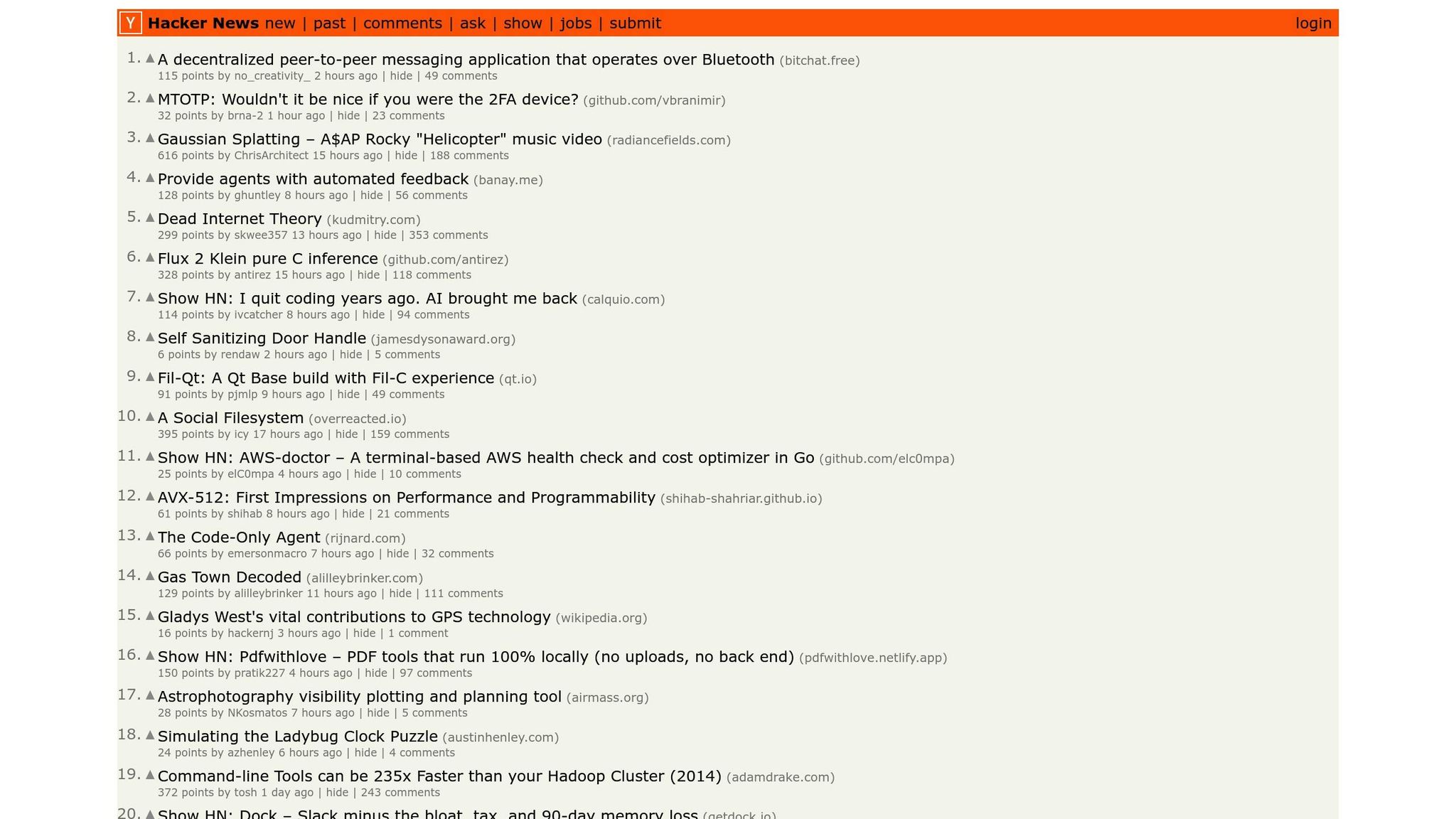
Hacker News, Dev.to, and Hashnode are thriving hubs where developers actively share knowledge, publish content, and build their professional reputations. These platforms are goldmines for connecting with developers who are deeply engaged in their craft. Unlike traditional job boards, these spaces attract individuals who are passionate, curious, and eager to contribute to their communities. The key to success here isn’t aggressive outreach - it’s about earning trust and establishing yourself as a credible resource.
Recruitment today is evolving from merely filling roles to fostering meaningful, collaborative relationships. Modern recruiters focus on building connections within these communities rather than simply pitching opportunities . Offering genuine advice or sharing insights into industry trends before discussing job openings creates trust and opens the door to thoughtful, career-focused conversations.
Participating in Discussions to Build Credibility
To make an impact, engage authentically in discussions. Comment on Hacker News threads, respond thoughtfully to Dev.to posts, or contribute to Hashnode articles with well-informed technical insights. Sharing data-driven insights on topics like compensation trends or in-demand skills can further establish you as a knowledgeable and helpful presence.
Even when your efforts don’t result in an immediate hire, offering value - whether through advice or sharing content - helps build lasting relationships. Developers often remember and appreciate these interactions, especially when they’re not actively searching for new opportunities.
Finding Candidates Through Profiles and Published Content
Once you’ve built credibility, you can dive deeper into developers' published content to evaluate their skills and interests. Platforms like Dev.to and Hashnode provide a window into a developer’s expertise, communication style, and areas of focus. Articles, engagement metrics (such as reactions and follower counts), and even the comments they receive can offer insights into their influence within the community. On Hacker News, reviewing a user’s comment history often highlights individuals who consistently contribute thoughtful and relevant insights.
Pay attention to what developers subscribe to - like newsletters or specific content series - to understand their learning priorities. When reaching out, make your message personal. Avoid bot-written outreach that developers can spot instantly. Mention specific articles they’ve written or discussions they’ve participated in to show you’ve taken the time to understand their work. This tailored approach leads to more meaningful conversations and stronger connections.
Conclusion: Using Multiple Channels to Find Better Developer Candidates
Relying on a single platform narrows your reach and misses out on 20% of tech talent who don’t actively use traditional professional networks. Developers are active across platforms like GitHub, where they showcase their code, Stack Overflow, where they solve problems, and communities like Reddit, Hacker News, Dev.to, and Hashnode, where they engage in discussions and share insights. Each of these channels provides a unique glimpse into a developer’s skills, interests, and professional standing.
Expanding your sourcing strategy to include multiple platforms not only increases the number of candidates you can reach but also helps you better gauge their abilities. For example, GitHub offers a direct view of coding proficiency, Stack Overflow highlights problem-solving abilities, and platforms like daily.dev Recruiter facilitate warm introductions, leading to more meaningful engagement. Meanwhile, communities like Reddit and others help you identify thought leaders in specialized areas of tech.
This approach shifts recruitment from impersonal cold outreach to trust-based interactions. Developers are more likely to respond positively to personalized messages - like referencing a project on GitHub, commenting thoughtfully on their Dev.to post, or reaching out through a trusted platform. This “give-first” mindset fosters genuine connections, turning recruitment into a conversation about career growth rather than just filling a position.
Skills-based sourcing is quickly becoming the norm, with recruiters prioritizing technical contributions over outdated resumes. By understanding where developers spend their time and tailoring your outreach to their preferences, you can significantly improve your hiring outcomes. Use multiple channels, personalize your approach, and focus on building relationships that go beyond the immediate hiring need.
FAQs
How can I use GitHub to evaluate a developer's skills effectively?
GitHub serves as a dynamic portfolio where you can gauge a developer's coding abilities far beyond what a résumé might reveal. By diving into their repositories, you get a closer look at the technologies they work with, the complexity of their projects, and the quality of their code. Things like code readability, documentation, and test coverage can help paint a clearer picture of their technical expertise. Plus, their commit history and contribution patterns can shed light on how consistent they are, how well they follow workflows, and how they respond to feedback.
Open-source contributions add another layer of insight, showcasing their problem-solving skills, ability to collaborate, and engagement with the development community. Reviewing README files and project documentation can highlight their knack for creating maintainable, production-ready code. And with GitHub's advanced search tools, you can easily find developers with the specific skills or contributions you're looking for, streamlining the process of finding candidates who match your hiring goals.
How can I effectively reach out to developers on Stack Overflow?
To effectively connect with developers on Stack Overflow, treat the platform as a professional community rather than just another job board. Start by digging into the developer's activity - check out their answers, the tags they frequently use, and their reputation. When reaching out, reference their contributions to show you’ve done your homework and genuinely value their expertise. This kind of personalization can make all the difference in getting a response.
Keep your message short and to the point, focusing on what matters most to them. Skip the generic pitches and instead explain how the opportunity aligns with their skills and interests. Highlight aspects like technical challenges, tools they’d enjoy working with, or projects that match their expertise. Be sure to include a clear next step, whether it’s scheduling a quick chat or sharing more details about the role.
Before reaching out, take some time to engage authentically. Join discussions, upvote meaningful answers, and contribute valuable insights. When you eventually contact them, mention these interactions to establish credibility and trust. Always respect the community’s norms - avoid mass messaging and honor any “Do not contact” preferences. By approaching the platform thoughtfully and respectfully, Stack Overflow can become a highly effective channel for finding top talent.
What makes daily.dev Recruiter an effective tool for connecting with developers?
daily.dev Recruiter takes a unique approach by offering warm, double-opt-in introductions to passive developer candidates who have already been pre-qualified. This method results in impressive engagement rates of 85–90%, paving the way for meaningful and trust-driven conversations.
By prioritizing tailored outreach and connecting with developers who show genuine interest, daily.dev Recruiter enables hiring teams to form real connections and achieve stronger recruitment results.
.png)