LinkedIn Recruiter is expensive - $10,800 per year per seat - and comes with hidden costs like extra InMails ($10 each) and long-term contracts. If you're sourcing candidates for technical roles on a tight budget, here are 8 alternatives to consider:
- daily.dev Recruiter: Charges by active roles, starting at $350/month. Offers unlimited recruiter seats, AI matching, and pre-verified developer contacts.
- SeekOut: Starts at $833/month per seat. Great for diversity hiring and sourcing via GitHub, patents, and publications.
- HireEZ: Starts at $169/month. Uses AI to automate sourcing and offers high email accuracy for outreach.
- AmazingHiring: Costs $4,800/year per user. Focused on technical talent with data from GitHub, Stack Overflow, and more.
- Juicebox (PeopleGPT): Starts at $99/month. Uses natural language search and provides verified contacts for outreach.
- ZoomInfo TalentOS: Starts at $14,995/year. Offers a large database of professional contacts but is better suited for enterprise teams.
- GitHub/Stack Overflow: Free but requires manual effort. Ideal for reviewing real developer contributions.
- Workable: Starts at $149/month. Team-based pricing with integrated ATS and AI tools for hiring.
Quick Comparison:
| Tool | Starting Price | Best For | Key Feature |
|---|---|---|---|
| daily.dev Recruiter | $350/month | Developer-focused hiring | Charges by active roles, not seats |
| SeekOut | $833/month | Diversity hiring | GitHub and patent-based sourcing |
| HireEZ | $169/month | High-volume recruiting | AI-powered automation |
| AmazingHiring | $4,800/year | Technical talent | Data from 50+ tech platforms |
| Juicebox (PeopleGPT) | $99/month | Small teams | Natural language search |
| ZoomInfo TalentOS | $14,995/year | Large enterprises | Large database of verified contacts |
| GitHub/Stack Overflow | Free | Skill verification | Direct access to developer profiles |
| Workable | $149/month | Small businesses | Team-based pricing, ATS integration |
These tools offer flexible pricing, better sourcing options, and advanced features tailored to developer hiring - without LinkedIn Recruiter's high costs.
::: @figure 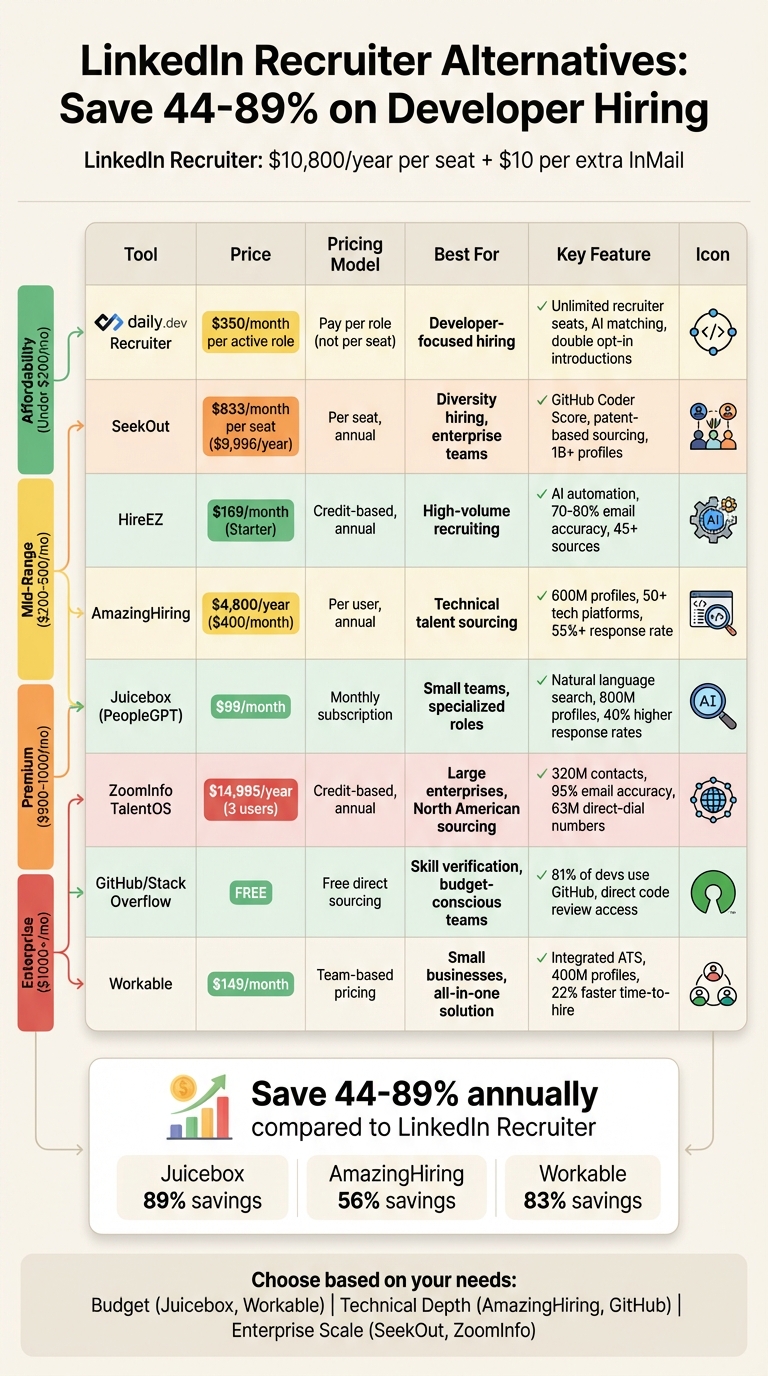 {LinkedIn Recruiter Alternatives: Pricing and Features Comparison for Developer Hiring}
1. daily.dev Recruiter
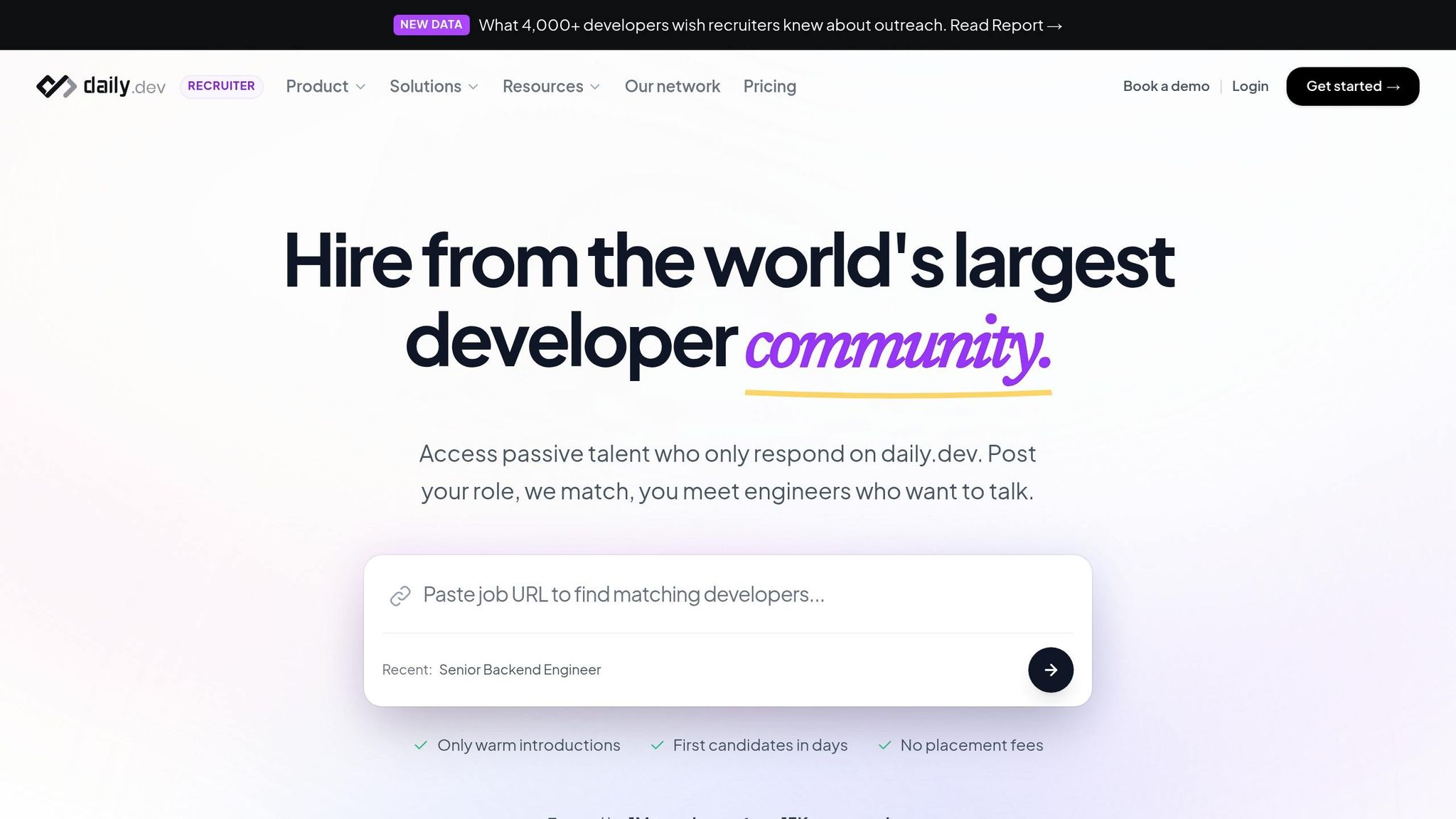
daily.dev Recruiter takes a fresh approach to hiring by charging based on active roles rather than per recruiter seat. The Agent Plan is priced at $350 per month for each active role, while the Super Agent Plan costs $1,000 per month per role . Both plans include unlimited recruiter seats, making it easier for teams to work together without additional costs.
Pricing
You’re charged only for roles that are live and active . If a role is paused, moved to draft, or closed, billing stops immediately . There are no placement fees or long-term contracts to worry about . This flexible model adapts to changing hiring needs, ensuring you pay only for the roles you’re actively working on.
This pricing structure is paired with powerful tools for technical sourcing.
Technical Sourcing Strength
daily.dev connects you with developers from over 150 countries, covering major technical areas like Frontend, Backend, DevOps, AI/ML, and Mobile . It uses behavioral data to verify critical details like time zone, location, tech stack, and seniority . This approach minimizes the risk of dealing with outdated resumes or inflated skill claims.
AI Features
On top of its sourcing capabilities, daily.dev uses advanced AI to enhance the hiring process. Its Intelligent Matching feature tracks developer activity, surfacing potential candidates before they even update their resumes or start searching for jobs . For those on the Super Agent Plan, matches are delivered three times faster, and the platform integrates seamlessly with leading ATS/CRM tools like Greenhouse, Lever, and Ashby .
A standout feature is its double opt-in system, known internally as "TinDev." This ensures that both the recruiter and the developer express mutual interest before any interaction begins, guaranteeing only warm introductions .
Contact Verification
Every introduction is pre-verified, meaning you’ll only connect with developers who are actively engaged on daily.dev. This ensures you’re reaching engineers who are genuinely interested. The platform’s commitment to quality and trust earned it Product Hunt’s "Product of the Year" award . As CEO Nimrod Kramer puts it:
"We built a place where engineers can turn off the noise. To enter this space, you don't need a hack. You need trust" .
Hiring engineers?
Connect with developers where they actually hang out. No cold outreach, just real conversations.
2. SeekOut
SeekOut is a sourcing platform with a database of over 1 billion profiles . It pulls data from sources like LinkedIn, GitHub, Stack Overflow, research publications, patents, and social media . This makes it especially helpful for finding developers who may not actively update their LinkedIn profiles but are involved in open-source projects or technical publications.
Pricing
SeekOut Recruit starts at $833 per month per seat when billed annually, totaling $9,996 per year . Pricing depends on the tier and negotiation. The Essentials tier typically ranges from $3,000 to $6,000 per seat annually, the Professional tier costs $5,000 to $9,000, and Enterprise pricing can go from $8,000 to over $15,000 per seat . Discounts average around 16% off initial quotes , with median contract values hovering near $20,000 .
For teams needing managed support, SeekOut Spot offers flexible pricing without requiring annual commitments. Options include paying per candidate slate, a monthly fee per contractor, or an outcome-based model . SeekOut claims this approach reduces costs by 70% compared to traditional recruiting agencies .
In addition to its pricing flexibility, SeekOut is known for its technical sourcing tools.
Technical Sourcing Strength
SeekOut excels in technical sourcing by analyzing code contributions, open-source projects, and programming languages directly from GitHub . This approach uncovers expertise that traditional resumes often fail to highlight. Standard searches can overlook up to 70% of qualified candidates, but SeekOut bridges this gap by using non-traditional data like patents and GitHub activity .
The platform also uses semantic AI search, allowing recruiters to input natural language queries like "Senior Python developers in Seattle with ML experience" instead of relying on complex Boolean strings. Additionally, its ATS integration helps identify "silver medalists" - highly qualified candidates already in a company’s database. Remarkably, 44% of successful hires are often sourced from existing ATS records .
In 2025, Daniel Camilleri, Co-Founder of Shaped, shared his experience using SeekOut Spot to fill a specialized role:
"Spot exceeded our expectations for quality and time to hire. Every candidate sourced by Spot was worth talking to and we found our ideal candidate three weeks after the initial intake meeting" .
This level of insight extends to reliable contact verification.
Contact Verification
SeekOut offers up-to-date contact details and supports automated, personalized outreach campaigns . Its AI-driven messaging has been shown to triple response rates . However, users occasionally report issues with outdated contact data, with bounce rates ranging from 20–30% . Despite this, SeekOut’s detailed candidate profiles and flexible pricing often deliver better ROI compared to pricier per-seat models like LinkedIn Recruiter.
3. HireEZ (formerly Hiretual)
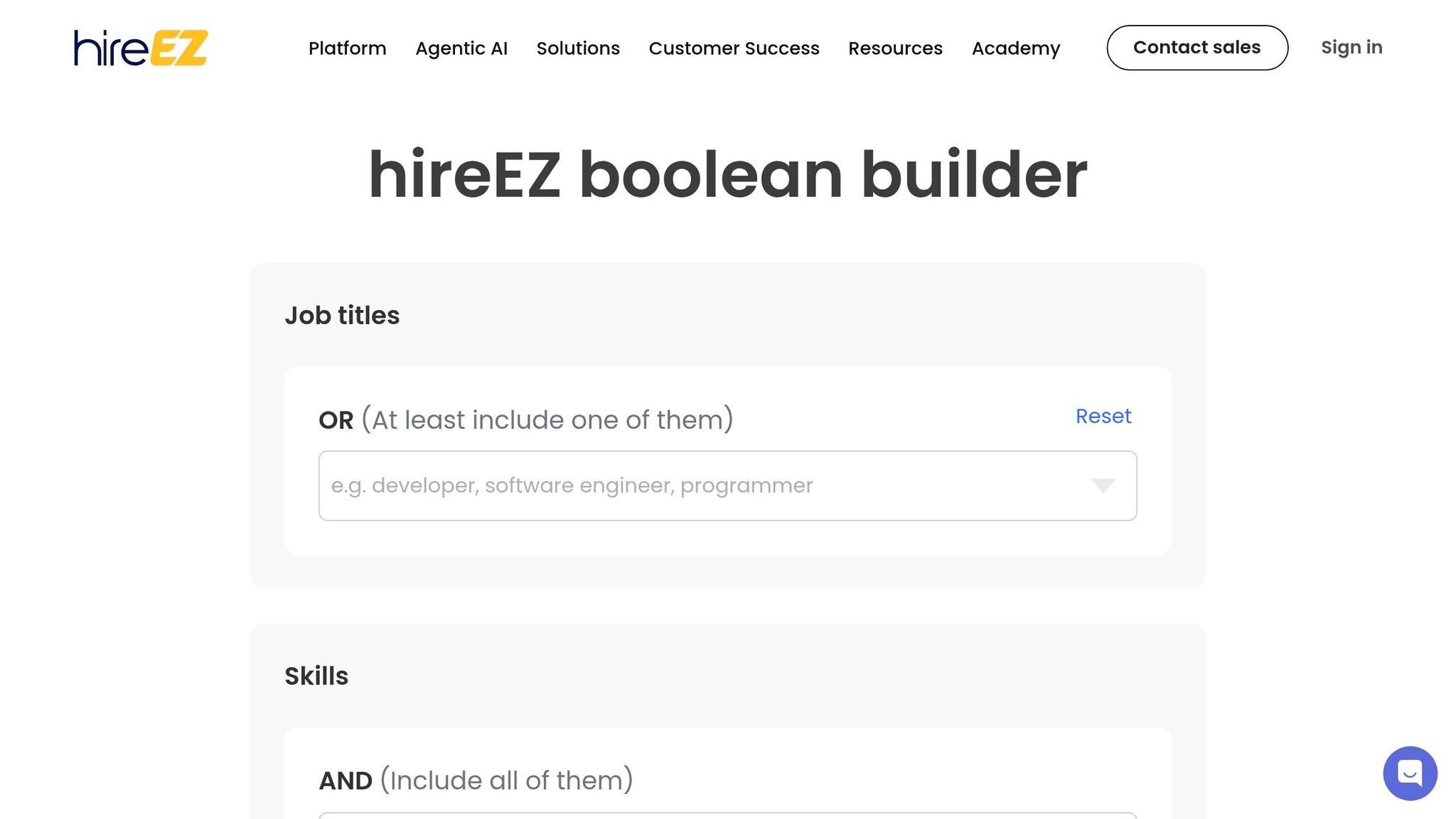
When it comes to recruiting tools that balance cost and efficiency, HireEZ stands out with its blend of competitive pricing and automation. The platform pulls candidate data from over 45 sources, including LinkedIn, GitHub, and Stack Overflow . This means you can find developers with active technical profiles beyond just LinkedIn. HireEZ uses a credit-based subscription model, where credits are spent on tasks like candidate searches, contact discovery, and outreach .
Pricing
HireEZ offers several pricing options, all billed annually:
- The Starter Plan is $169 per user/month (or $2,028 annually) and includes 100 contact credits per month .
- The Professional Plan costs $199 per user/month (or $2,388 annually) and comes with 4,000 monthly search credits as well as AI matching capabilities .
- For larger teams, Enterprise Pricing starts at $250 per user/month (over $7,000 annually) and includes custom features. Some users have also reported one-time setup fees ranging from $1,000 to $2,500 .
These plans provide access to advanced AI tools, making them appealing for teams looking for high functionality without breaking the bank.
AI Features
HireEZ incorporates several AI tools to make recruiting faster and easier. Its AI Boolean Builder transforms natural language queries into complex search strings, eliminating the need for highly experienced technical sourcers . Another standout feature is EZ Agent, which automates tasks like sourcing, screening, and scheduling. This tool has been credited with cutting time-to-hire by up to 50% and boosting recruiter productivity by 35% . Additionally, the ResumeSense feature helps identify fake resumes and flags inconsistencies .
These AI-driven tools reduce the time and effort required for hiring, especially for small teams, offering a clear return on investment. As Steven Jiang, CEO and co-founder of HireEZ, puts it:
"We are not automating recruiters out of the hiring process; we are giving them more leverage. Agentic AI handles high-volume, repetitive tasks while keeping recruiters at the center of strategic decision-making."
Contact Verification
HireEZ simplifies direct outreach by providing verified personal emails and phone numbers, achieving 70–80% email accuracy with bounce rates of 20–30% . It integrates with over 30 ATS systems like Greenhouse, Lever, and Workday, enabling teams to update and revisit candidate profiles already in their database . For outreach, the platform supports automated email sequences and multi-channel campaigns, offering a smoother alternative to LinkedIn Recruiter's manual InMail process .
With its focus on accurate contact details and streamlined engagement, HireEZ is a practical option for teams looking to maximize their recruiting efforts without overspending.
4. AmazingHiring
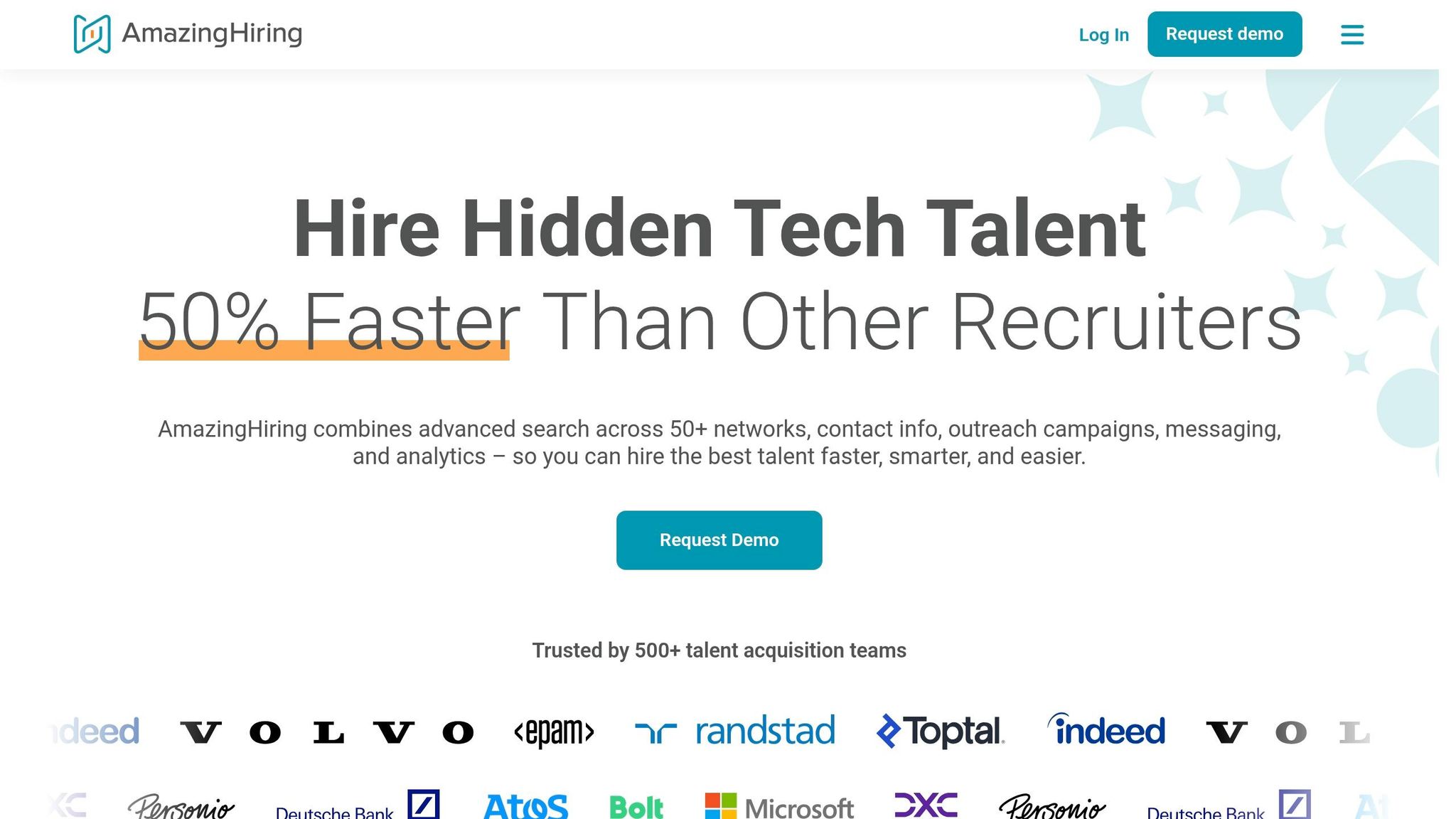
AmazingHiring is designed specifically for technical recruitment, making it a go-to tool for hiring developers. Unlike LinkedIn, which relies on self-reported profiles, AmazingHiring pulls data from over 50 professional networks and communities like GitHub, Stack Overflow, Kaggle, and Behance . This method gives recruiters a clearer picture of a developer's skills by analyzing their actual technical contributions.
Pricing
AmazingHiring costs $4,800 per user annually (around $400 per month) , which is less than half the price of LinkedIn Recruiter Corporate. For those hesitant to commit, the platform offers a freemium model. This includes a free Chrome extension that displays social media profiles and provides limited access to the search engine . This allows teams to explore the platform’s features before investing fully. Its database-driven approach also streamlines technical sourcing for recruiters.
Database Size
AmazingHiring’s database includes over 600 million profiles globally . While this is smaller than LinkedIn’s 1 billion+ members, it focuses on technical communities, offering access to candidates with verified coding activity and open-source contributions. Recruiters report spending 50% less time on sourcing, and the platform increases candidate response rates by up to 60% thanks to personalized and automated outreach . This specialized database proves invaluable for narrowing down top technical talent.
Technical Sourcing Strength
The platform stands out for its ability to identify developer talent by consolidating data from various sources into a single, comprehensive candidate profile. This approach highlights technical contributions and allows recruiters to search for specific skills across platforms where traditional tools fall short . It’s especially effective at finding passive developer candidates who might not actively use LinkedIn for job hunting . Nikolai Kabatsikov, Head of Talent Acquisition at Bolt, shared:
"With the help of AmazingHiring we are able to source candidates on the non-obvious resources. And thanks to that, our response rate is higher than 55%."
Contact Verification
AmazingHiring provides public emails and social media links , reducing reliance on LinkedIn’s InMail system. However, some users have noted occasional spam issues and quarterly data updates, which may lead to outdated information at times . Even with these minor drawbacks, the platform maintains a strong 4.8/5 rating on GetApp, based on 16 verified reviews . Users frequently praise the Chrome extension and its ability to uncover talent beyond LinkedIn’s usual reach .
5. Juicebox (PeopleGPT)
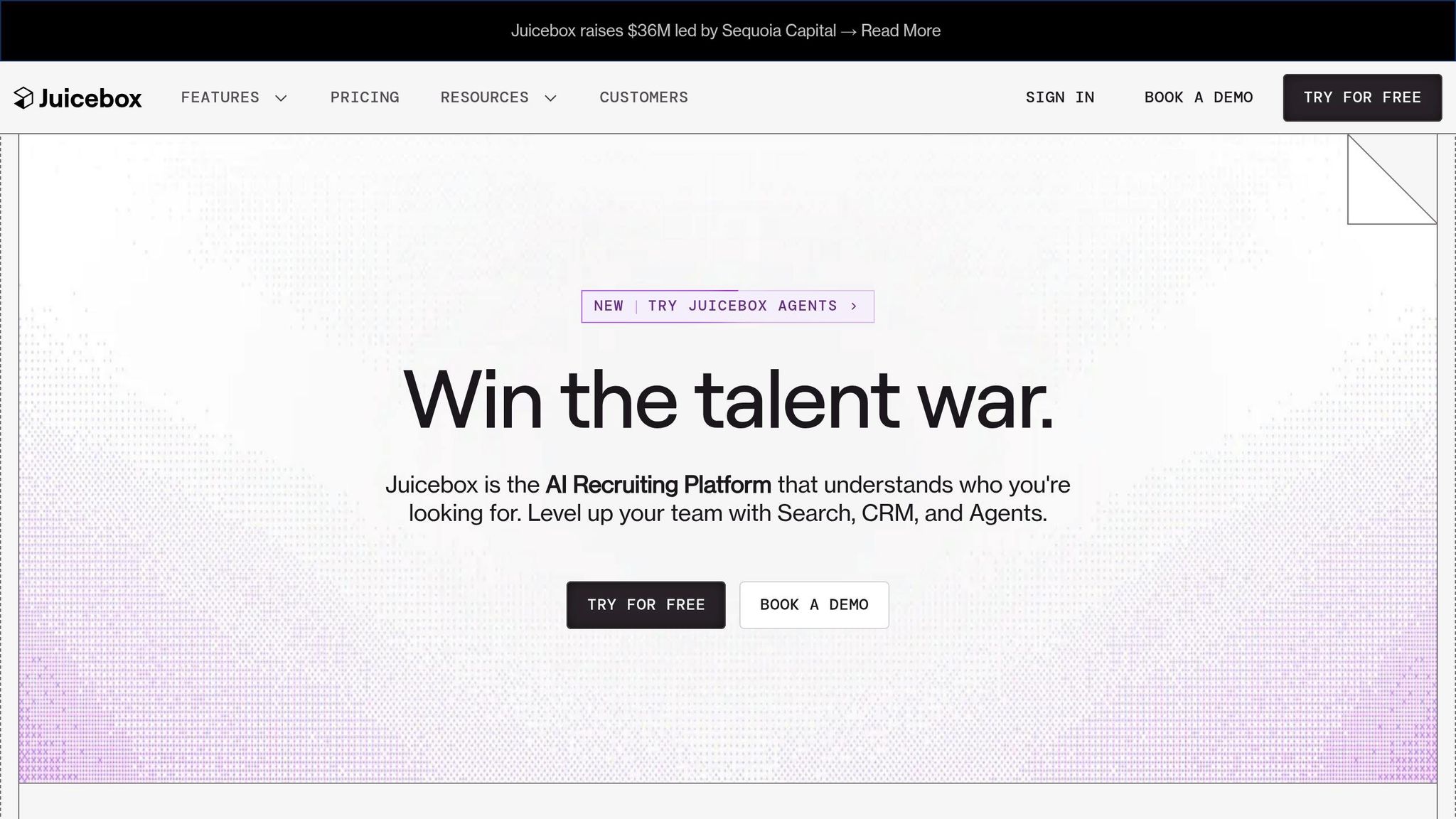
Juicebox, also known as PeopleGPT, simplifies the recruiting process by replacing complex Boolean search strings with plain English queries. Instead of learning intricate search syntax, recruiters can describe their ideal candidate using everyday language, and the platform's AI interprets the request accurately . This makes it user-friendly for teams lacking sourcing expertise while still delivering precise results for technical roles, such as software engineers and data scientists. It directly addresses the inefficiencies and high costs often associated with traditional recruiting tools.
Pricing
Juicebox offers a Starter Plan priced at $99 per month (billed annually), which includes unlimited searches, 250 contact credits, and access to AI email templates. A free tier is also available, though with limited features . For teams, the Growth Plan costs $129 per month (billed annually) and supports up to five seats, with each seat receiving 1,000 contact credits . For larger organizations, custom Enterprise pricing is available, offering unlimited contact credits and ATS integration.
Database Size
The platform aggregates data from over 800 million profiles sourced from more than 30 platforms, including GitHub, Stack Overflow, and academic research papers . While LinkedIn boasts over 1 billion users, Juicebox’s multi-source approach offers a broader perspective by including profiles beyond LinkedIn's self-reported data. For example, in early 2026, the recruiting team at Ramp reported a 75% reduction in time-to-source during their first week using PeopleGPT . Similarly, Silo's talent team built their first qualified candidate pipeline in under 30 minutes after adopting the platform in January 2026 .
AI Features
Juicebox leverages its extensive database with advanced natural language processing. Its standout feature is natural language search, which completely removes the need for Boolean operators . Recruiters can simply type queries like "senior React developer with open-source contributions" and receive accurate results. Additionally, the platform offers AI Recruiting Agents as an optional add-on for $199 per agent per month. These agents autonomously source candidates and manage outreach campaigns . Aditya Sheth, a Content Marketer at Juicebox, highlighted:
"The competitive edge is no longer who has the biggest database, but who has the smartest system for navigating it."
Contact Verification
Juicebox also streamlines outreach by providing verified contact information through a credit-based system. This includes emails and phone numbers, eliminating the reliance on LinkedIn's InMail system, which costs around $10 per additional message . The platform also generates AI-driven personalized email sequences with automated follow-ups to improve engagement . Users have reported a 40% increase in candidate response rates compared to traditional sourcing methods .
6. ZoomInfo TalentOS
ZoomInfo TalentOS, originally a sales-focused database, has expanded its utility into recruitment by offering access to a massive pool of over 320 million professional contacts and 100 million company profiles . While it excels in North American coverage, its limited global reach and lack of technical signals - such as GitHub activity or Stack Overflow contributions - may not meet the needs of recruiters sourcing highly specialized technical talent .
Pricing
ZoomInfo TalentOS uses a credit-based pricing model and requires annual contracts . Here's a breakdown of its plans:
- Professional Plan: Priced at $14,995 annually for three users and 5,000 credits. This comes out to about $5,000 per seat, making it less expensive than LinkedIn Recruiter Corporate, which costs $10,800 per seat per year .
- Advanced Plan: Costs $24,995 per year and includes 10,000 credits.
- Elite Plan: Priced at $39,995 annually, this plan includes premium features like ZoomInfo Copilot .
Additional features can significantly raise costs. For instance, Global Data access is $9,995 annually, while Intent Data ranges from $5,000 to $10,000 per year. Unused credits expire monthly or at the end of the contract, and mid-contract credit purchases cost $0.25 to $0.60 per credit . Users have also reported price hikes of 10% to 40% upon renewal .
Contact Verification
One of ZoomInfo TalentOS's standout features is its detailed contact verification. The platform boasts an impressive database, including over 63 million direct-dial phone numbers and 100 million verified emails. It claims 95% accuracy for emails and 90% for phone numbers, with direct-dial hit rates between 60% and 75% .
This level of precision enhances passive outreach efforts. Verified email campaigns through ZoomInfo can achieve response rates of 25–35%, significantly outperforming LinkedIn InMail's 10–15% response rate. However, each contact export consumes a credit, meaning unverified contacts can quickly drain your allocation .
AI Features
The Elite Plan introduces ZoomInfo Copilot, a generative AI tool designed to streamline pipeline management and automate playbooks . Other AI-powered tools include Scoops, which provide alerts on company layoffs, executive changes, and IPOs to help recruiters time their outreach effectively .
Additional features include:
- Interactive Organizational Charts: These help visualize talent distribution within companies.
- Recommended Similar Companies: This suggests organizations with comparable talent pools .
- ZoomInfo Engage: Enables teams to create automated drip campaigns and personalized email templates.
While ZoomInfo TalentOS allows recruiters to filter candidates by technologies like Python or Salesforce, its technical filtering lacks the depth of developer-specific platforms .
A Complementary Tool
Recruiters often find ZoomInfo TalentOS most effective as a supplementary tool rather than a standalone solution. Bonnie Lewinstein, President of a recruiting firm, highlighted its strength in direct sourcing across various developer sourcing channels but noted that many recruiters still rely on LinkedIn to fill in the gaps . Overall, ZoomInfo TalentOS shines in providing verified contact details but may not replace LinkedIn Recruiter as the primary sourcing tool .
7. GitHub and Stack Overflow (Direct Sourcing)
For teams working with limited budgets, GitHub and Stack Overflow offer a budget-friendly alternative that prioritizes hands-on engagement over automated tools. These platforms provide free access to thriving developer communities, making them a practical choice for technical sourcing strategies without significant monetary investment. According to recent data, 81.1% of developers use GitHub for version control and collaboration . Similarly, 82% of developers check Stack Overflow at least a few times a month, with 25% visiting daily . This level of activity makes both platforms valuable resources for identifying technical talent - if you're willing to put in the extra effort.
Pricing
Unlike many paid tools, GitHub and Stack Overflow allow you to explore developer profiles and evaluate technical skills without spending a dime. On GitHub, you can browse public profiles, review code repositories, and assess contributions - all for free. While GitHub does offer subscription plans, these are geared toward development teams rather than recruitment. Similarly, Stack Overflow's paid tiers focus on internal team collaboration and knowledge sharing, not candidate sourcing. For recruiters, the free access to these platforms is a clear financial advantage, though it comes with the trade-off of more manual work.
Technical Sourcing Strength
These platforms shine when it comes to assessing technical expertise directly. On GitHub, you can dive into a developer's repositories, examine their code, and see which programming languages and frameworks they use. This level of transparency provides a deeper understanding of their skills than a résumé or LinkedIn profile ever could. Stack Overflow adds another layer by showcasing how developers contribute to problem-solving within the community. Reviewing their answers and interactions can offer valuable insights into their technical knowledge and collaborative abilities.
Contact Verification
Reaching out to developers on these platforms requires some extra effort. GitHub only displays email addresses if the user has made them public . However, recruiters have found creative ways to uncover contact details. For example, appending .patch to a commit URL (e.g., github.com/user/repo/commit/[hash].patch) can reveal commit metadata, including email addresses. Another option is using the GitHub API (api.github.com/users/username/events) to search for email strings in public event data. Since GitHub no longer supports private messaging, recruiters often tag developers in issues or pull requests to get their attention. Stack Overflow also lacks built-in tools for automated contact verification, so prepare to spend time manually tracking and validating contact information .
8. Workable
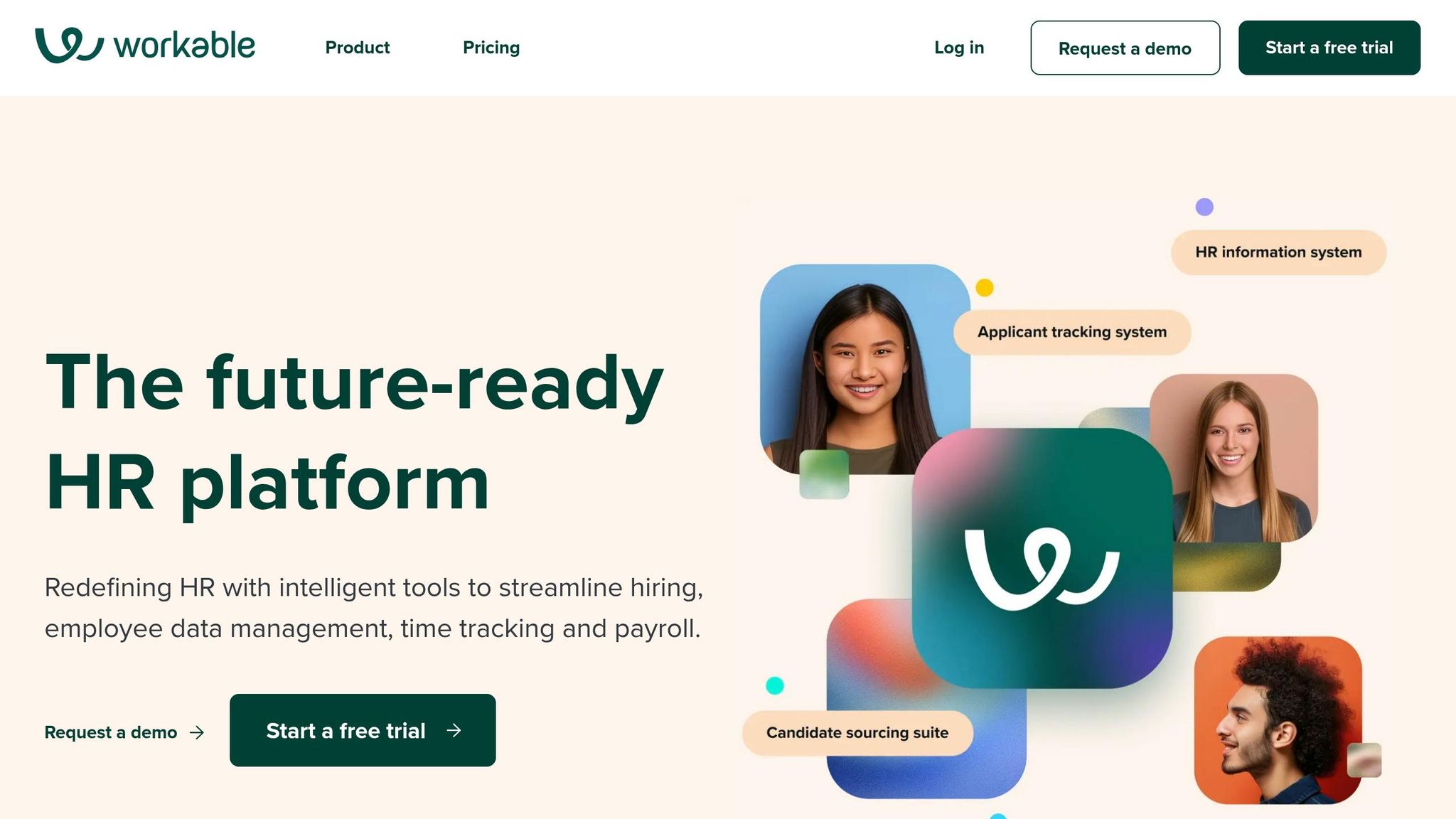
Workable stands out with a pricing model that caters to teams rather than individual recruiters, making it an appealing choice for small businesses and startups. Unlike LinkedIn Recruiter Corporate, which charges roughly $1,080 per seat, Workable uses a tiered, company-based pricing structure based on employee count. For example, a company with 1–20 employees can subscribe to the Standard plan for $299 per month (annual billing) or $360 per month (monthly billing) [32, 61, 63]. This setup allows entire teams to access the platform without incurring additional costs for each recruiter, making it a budget-friendly option.
Pricing
Workable offers four pricing tiers to meet different needs:
- Starter Plan: $149 per month, includes up to 2 active jobs and 200 AI-sourced profile views per month .
- Standard Plan: $299 per month (billed annually), provides unlimited active jobs and 1,000 AI-sourced profile views each month [63, 64].
- Premier Plan: $599 per month, adds features like video interviews, assessments, and texting - offered as optional add-ons in lower plans [63, 64].
- Enterprise Plan: $719 per month, includes advanced tools like single sign-on (SSO) and priority support .
Optional add-ons for lower tiers include texting ($79/month), video interviews ($99/month), and assessments ($59/month) [63, 65].
Database Size
Workable grants access to a database of over 400 million candidate profiles, integrated with an Applicant Tracking System (ATS) [62, 63]. This simplifies the recruitment process by combining sourcing and tracking in one platform. Additionally, Workable offers one-click job posting to over 200 job boards . While its database is smaller than LinkedIn's pool of more than 1 billion members, Workable's focus is on active recruitment rather than general networking.
Technical Sourcing Strength
Workable leverages AI-powered semantic search to match candidates based on their skills and experience, rather than relying on basic keyword searches [66, 68]. For technical roles, the platform integrates with tools like SkillPanel and Codility, enabling automated coding assessments as candidates move through the hiring pipeline . For instance, Spartez used SkillPanel within Workable and reduced the number of interviews needed by a factor of 8.6 . However, for highly specialized roles, additional tools might still be necessary .
AI Features
Workable includes several AI-driven tools to streamline hiring. Its AI screening assistant analyzes candidate profiles using semantic technology, assigning match scores and highlighting essential qualifications . The platform can also identify qualified candidates from past applications when new roles are posted. Additionally, Workable generates job descriptions tailored to specific roles and provides industry-relevant interview questions for consistency . The "Search with AI" feature locates over 1,000 passive candidates and promotes job ads on social media .
Contact Verification
Workable's Chrome extension allows users to source profiles directly from LinkedIn and other websites. Its "Candidate Sourcing Suite" helps find contact details for passive candidates within its database . Users report that Workable reduces time-to-hire by 22% within the first six months . With ratings of 7.6/10 on TrustRadius and 4.5/5 on Alternatives.co, users appreciate its intuitive interface and ease of use [61, 64]. These features make Workable a practical and efficient choice for teams looking to optimize their recruitment efforts while keeping costs low.
Comparison: Pros and Cons
When it comes to picking the right recruiting tool, the choice often boils down to your hiring needs, budget, and the level of technical sourcing required. For teams prioritizing cost-efficiency, there are several alternatives to LinkedIn Recruiter that offer more flexible pricing and tailored features. LinkedIn Recruiter, for instance, costs about $10,800 per year per seat, with a monthly cap of 150 InMails (additional messages costing $10 each). In contrast, many competitors provide lower-cost options and fewer restrictions, often including specialized tools for hiring developers.
If your hiring needs fluctuate or you're working with a smaller team, monthly subscription models can be a game-changer. For example, Juicebox starts at $119 per month with no annual commitment, while AmazingHiring costs between $3,600 and $4,800 per year per seat - roughly a third of LinkedIn's pricing. These options allow you to scale up or down based on your hiring demands without being locked into costly long-term contracts. Similarly, Workable offers team-based pricing starting at $149 per month, giving recruiters unlimited access, unlike LinkedIn's per-seat pricing .
For enterprise teams focusing on diversity hiring, SeekOut stands out, despite its higher price of $12,000+ annually. It offers standout features like advanced diversity filters and GitHub indexing, which assigns developers a "Coder Score" (1–5 stars) based on their code's impact . Meanwhile, HireEZ appeals to high-volume recruiters with its AI-powered "EZ Agent", capable of ranking candidates across more than 45 platforms. On the higher end, ZoomInfo TalentOS provides access to a database of over 600 million profiles but starts at $16,000 per year, making it more suitable for large organizations .
For technical roles, sourcing candidates through open source and developer communities can give you a clear picture of their skills via code reviews and community reputation. However, this approach often requires significant manual effort. AmazingHiring bridges this gap by aggregating data from over 50 technical networks to uncover "invisible" developers who may not have traditional profiles .
Here’s a quick breakdown of the tools for easy comparison:
| Tool | Starting Price ($) | Best For | Key Strength | Main Limitation |
|---|---|---|---|---|
| daily.dev Recruiter | Custom pricing | Senior technical talent | Warm, double opt-in introductions within a native developer network | Limited to the developer community |
| SeekOut | ~$12,000+/year | Enterprise diversity hiring | Advanced diversity filters and GitHub "Coder Score" | Higher price point |
| HireEZ | Custom pricing (annual) | High-volume recruiting | AI-powered ranking across 45+ platforms | Requires annual commitment |
| AmazingHiring | $3,600–$4,800/year | Niche passive talent | Aggregates data from 50+ tech sources | Focused on technical roles |
| Juicebox | $119–$179/month | Specialized engineers | Natural language search | Smaller database |
| ZoomInfo TalentOS | $16,000+/year | Large-scale sourcing | Access to 600M+ profiles | Enterprise-level pricing |
| GitHub/Stack Overflow | Free | Skill verification | Direct insights via code reviews and reputation | High manual effort |
| Workable | $149/month | All-in-one hiring | Team-based pricing with integrated ATS | AI sourcing costs extra |
Each tool has its strengths and trade-offs, making it important to align your choice with your specific hiring priorities and budget. Whether you're seeking cost-effective flexibility, advanced diversity filters, or large-scale sourcing capabilities, there's a solution out there that fits your needs.
Conclusion
Throughout this discussion, it's clear that spending heavily on LinkedIn Recruiter often delivers less-than-ideal results, especially when hiring developers. At $10,800 per year per seat, the cost can outweigh the benefits, offering minimal additional reach. By exploring alternative tools, companies can save between 44–89% annually while achieving better targeting and engagement .
For startups and solo recruiters, budget-friendly options like Juicebox (PeopleGPT) at about $50/month or AmazingHiring at $3,600–$4,800/year offer effective technical sourcing without the burden of long-term commitments. Free resources like GitHub and Stack Overflow, combined with smart Google X-Ray searches, can also be great starting points - though they require more manual effort.
Mid-sized organizations, on the other hand, need scalable solutions that balance automation with cost. Platforms like Workable, with its team-based pricing and integrated ATS features, or HireEZ, which uses AI for candidate ranking, can help avoid LinkedIn's per-seat pricing model as your team grows.
For enterprises managing large-scale sourcing or specialized hiring needs, tools like SeekOut and ZoomInfo TalentOS provide advanced features such as diversity filters and extensive candidate databases. While these platforms may come with a higher price tag, they often deliver better results for technical and diversity-focused hiring, offering a more tailored and cost-effective solution than LinkedIn Recruiter.
Ultimately, the key is to choose a tool that aligns with your hiring priorities - whether that's personalized introductions, deep technical insights, or access to a broad talent pool. By moving away from a one-size-fits-all approach, you can achieve better ROI and more effective hiring outcomes.
FAQs
What’s the real annual cost of LinkedIn Recruiter per seat?
The annual cost for a LinkedIn Recruiter seat is around $12,960 as of the 2026 pricing for the Corporate package. This price reflects LinkedIn's enterprise-level rate structure, which operates on a per-seat model.
How do I pick a cheaper alternative based on my hiring volume?
When selecting a budget-friendly option, align your hiring needs with the platform's pricing structure.
- For smaller hiring volumes, pay-per-search or pay-per-contact plans can help you cut costs.
- For larger hiring volumes, tiered or subscription-based models often lower expenses as your usage grows.
If your hiring is occasional or low in volume, platforms like daily.dev Recruiter, which charge per successful connection, can provide predictable costs and a better return on investment.
How can I calculate ROI when switching from LinkedIn Recruiter?
To figure out ROI, start by comparing your current LinkedIn Recruiter expenses - like seat fees and InMail costs - with the costs of the new platform. Look at potential savings and better results, such as higher response rates or shorter time-to-hire. Then, use this formula to measure the financial impact:
ROI = [(Value of improvements + cost savings) - current costs] / new platform costs x 100
This formula gives you a clear way to evaluate the financial advantages of making the switch.
.png)